

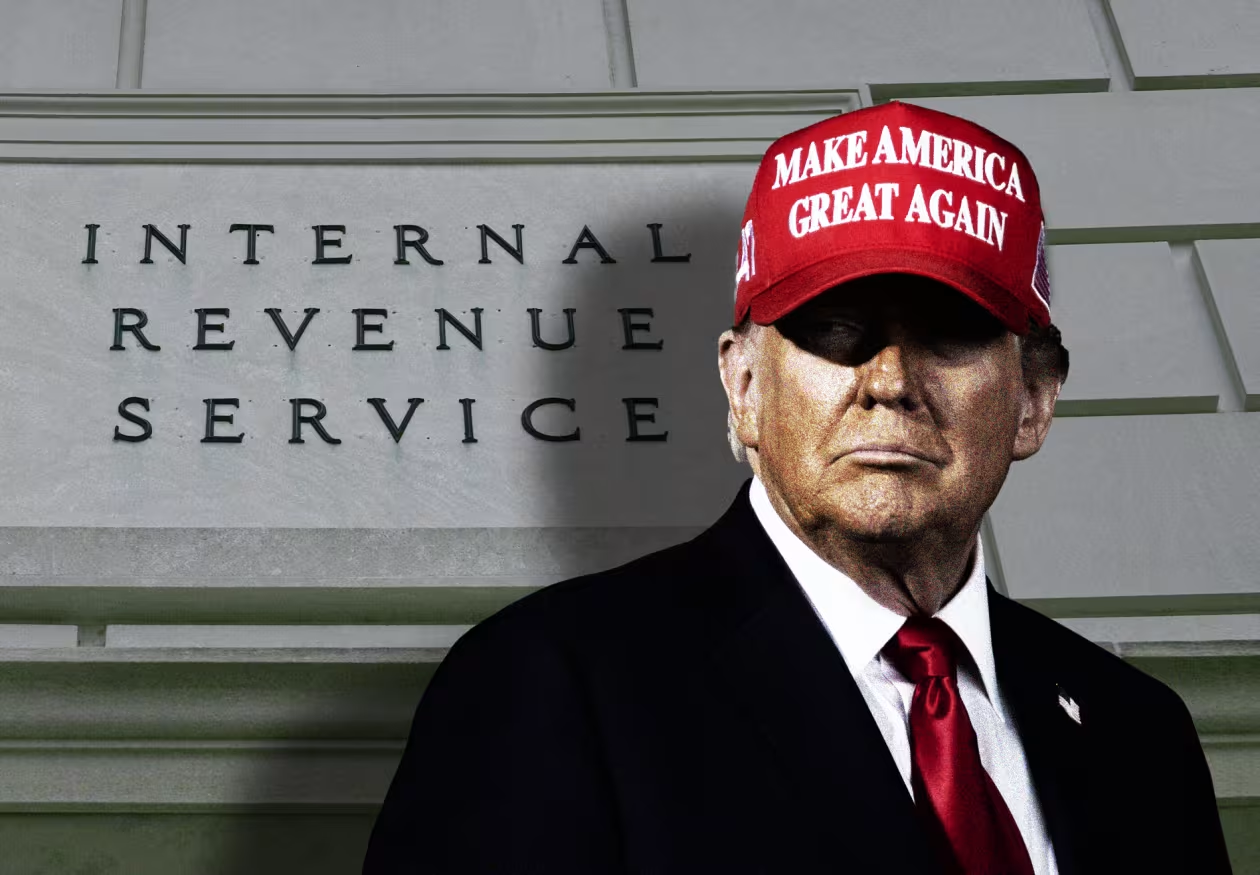


MIAMI, Florida – President Donald Trump, joined by Donald Trump Jr., Eric Trump, and the Trump Organization, filed a civil lawsuit Thursday in federal court in Miami against the Internal Revenue Service (IRS) and the U.S. Department of the Treasury.
The complaint asks for at least $10 billion in damages and accuses the agencies of failing to protect confidential tax records that were exposed years ago. The case focuses on disclosures from 2019 and 2020.
The lawsuit says former IRS contractor Charles “Chaz” Littlejohn gained access to the plaintiffs’ tax returns and related files, then shared that information without permission.
Littlejohn pleaded guilty in 2023 to the unlawful disclosure of tax information and later received a prison sentence. News outlets, including The New York Times and ProPublica, published reports based on the leaked materials, describing Trump’s tax history and what he paid, or didn’t pay, in certain years before and during his first term.
Background of the Trump Tax Return Fight
Trump has pushed back for years against releasing his tax returns, breaking a long-running norm for presidential candidates and presidents. During the 2016 campaign and throughout his first term, he pointed to ongoing audits as his reason for keeping them private. The leaked documents, though, fueled public debate about his tax approach.
Reports said he paid $750 in federal income taxes in 2016 and again in 2017, used large reported losses to reduce taxable income in other years, and paid no federal income tax in 10 of the 15 years before his first election.
Those reports sparked political backlash, congressional interest, and fresh scrutiny of possible conflicts connected to his business holdings. Trump and his supporters have repeatedly said the coverage was driven by politics, and they’ve described the outlets involved as biased.
The new lawsuit brings that argument back to the center. It claims the IRS and Treasury are responsible for the breach because they failed to follow required safeguards.
The complaint says the agencies ignored “mandatory precautions” that should have blocked improper access. It points to federal protections for taxpayer privacy and references Section 7433 of the Internal Revenue Code, which allows damage claims when officials recklessly or intentionally disregard rules tied to tax administration and privacy.
Claims of Negligence and Damage
The plaintiffs say the leak caused serious and lasting harm. They list reputational damage, financial losses, public embarrassment, and harm to business standing. They also argue tthat he released information casts them in a misleading light andhurtst how the public views them.
A key point in the filing is access. The complaint claims Littlejohn had what amounted to staff-level access to sensitive tax records, and it argues the government did not reduce that risk.
Legal analysts have noted that federal law can allow claims over wrongful tax data disclosures, but they also say proving $10 billion in damages will be difficult. In past cases, payouts for unauthorized disclosures have usually been far smaller, often in the thousands or low millions. The large number may be meant to send a message and apply pressure, not reflect a detailed accounting of losses.
The IRS and Treasury did not immediately comment on the lawsuit. The timing, early in Trump’s second term, is also drawing attention, as it arrives during renewed debate about how federal agencies operate and whether they treat certain public figures unfairly.
Political and Legal Backdrop
The lawsuit lands during a period of tension between the administration and parts of the federal workforce. Trump has often attacked what he calls the “deep state” and has promised changes at agencies such as the IRS. This case could become a high-profile test of whether government agencies can be held financially responsible for internal failures that expose private records.
Critics, though, have called the $10 billion demand over the top and politically motivated, since the leaks happened during Trump’s first administration,n and the person who took and shared the data has already been convicted and sentenced.
Others say the lawsuit could be aimed at discouraging future leaks and shifting attention away from what the returns showed, focusing instead on how they were obtained and released.
The case was filed in the Southern District of Florida, a court that has handled several Trump-related matters in recent years. The litigation is expected to move slowly. The government may try to dismiss it, including arguments tied to sovereign immunity and other defenses.
What it Means for Taxpayer Privacy
Beyond the Trump name, the lawsuit puts a spotlight on a bigger issue: use, taxpayer privacy, and the security of IRS systems. Littlejohn’s case raised concerns about how contractors are monitored and how access is controlled. After the incident, the Treasury canceled contracts with Booz Allen Hamilton, the firm that employed Littlejohn, signaling an effort to reduce similar risks.
For everyday taxpayers, the episode is a reminder that the IRS holds extremely personal financial data. When that data leaks, it can weaken trust in the tax system, even as the agency handles millions of returns each year. Privacy advocates have long warned that breaches, especially high-profile ones, can make people less confident that their information is safe.
As the lawsuit gets underway, it reopens a story many assumed had ended. Whether the case leads to a major judgment, a settlement, or a dismissal, it keeps Trump’s tax returns and the government’s duty to protect private records in the public spotlight.