Connect with us

Politics

Senate Democrats and White House Strike Deal to Head Off Shutdown

VORNews

Published

on

Senate Democrats , white house, government shutdown

WASHINGTON, D.C. – Late Thursday, Senate Democrats and the White House agreed on a plan to prevent a partial government shutdown. The deal would fund most federal agencies through the end of the fiscal year, while giving the Department of Homeland Security (DHS) a short-term extension.

The announcement came after tense talks, with a funding deadline set for midnight Friday, January 30, 2026. The agreement avoids an immediate interruption to many government services and gives lawmakers more time to fight over immigration enforcement rules.

The dispute centered on a broader spending package often called a “minibus” bill. It combined funding for several departments and was meant to replace another short-term continuing resolution.

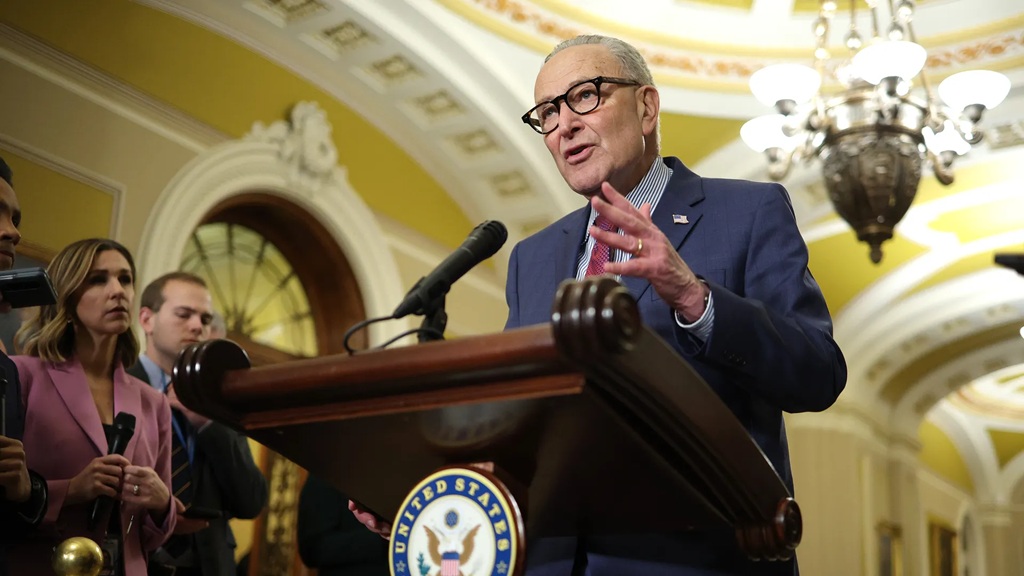
But the plan hit trouble earlier in the week after Senate Democrats, led by Minority Leader Chuck Schumer of New York, warned they would block it unless it included tighter rules for federal immigration agents under President Donald Trump’s administration.

Democrats pointed to recent incidents tied to immigration enforcement, including the fatal shooting of U.S. citizen Alex Pretti in Minneapolis during an ICE operation. They argued these events showed the need for stronger oversight.

Their proposals included limits on what they described as “indiscriminate” patrols, a requirement for judicial warrants before agents enter homes, required body cameras, and a ban on officers covering their faces during operations. Republicans and the White House pushed back, saying those changes were policy add-ons that didn’t belong in must-pass spending bills.

By Thursday, the conflict had raised the stakes. The Senate failed an initial procedural vote to move the full package forward, fueling shutdown worries. Federal workers and contractors faced uncertainty, and disruptions to services such as national parks and air traffic control were on the table. Concerns also spread to Social Security payments, IRS work, and military readiness.

Key Terms of the Agreement

The final agreement, worked out among Senate Democratic leaders, Republicans, and White House negotiators, pulls DHS funding out of the main package. The rest of the spending moves forward on a full-year basis.

Five spending bills will fund the Departments of Defense, Health and Human Services, Education, Labor, Transportation, State, and Treasury, along with the federal judiciary, through September 30, 2026. That keeps most government operations funded for the remainder of the fiscal year.

DHS, which includes Immigration and Customs Enforcement (ICE) and Customs and Border Protection (CBP), would receive only a two-week extension at current levels. The short window gives negotiators time to keep working on the “guardrails” Democrats want, aimed at limiting what they call overly aggressive tactics tied to Trump’s mass deportation push.

President Trump backed the plan in a Truth Social post. He said Republicans and Democrats had agreed to fund most of the government until September, while noting the shorter DHS fix. He urged lawmakers to support it and called for a bipartisan “YES” vote.

Schumer confirmed the deal and said splitting DHS from the larger package allows funding to move ahead while immigration oversight talks continue. People familiar with the negotiations said the White House stayed involved throughout, a sign of pressure to avoid broader disruption.

Political Impact and Early Reactions

The compromise reflects a divided Congress. Democrats influence the Senate, even in the minority, while Republicans control the House and the White House. Separating DHS lets both sides claim wins. Democrats keep focus on immigration reforms without taking the blame for a wider shutdown, while Republicans and the administration lock in funding for major defense and domestic programs.

Some Democrats welcomed the deal but cautioned that the two-week clock is tight. Sen. Mark Warner (D-Va.) said he was encouraged by the White House staying engaged, but he also stressed that real changes should be written into law, not left to informal promises.

On the right, some conservatives complained about giving ground to Democrats. Still, Trump’s public support helped quiet much of the pushback.

The episode also shows the ongoing strain in Washington’s budget process. Shutdown threats have become a regular tactic, often tied to policy fights that go far beyond spending levels. This time, the pressure point was immigration, a core Trump issue, and the conflict quickly collided with a hard funding deadline.

What Happens Next

Senate leaders moved to fast-track the agreement, using a “hotline” process to speed up a vote, possibly as soon as Thursday night. If the Senate approves it, the bill would head to the House when members return Monday. The final passage would send it to the president for signature. A breakdown at any stage could still trigger a short lapse in funding, but the late-week momentum suggested the deal had a strong chance.

The two-week DHS extension sets up another round of high-stakes talks. Democrats want clear limits on ICE and CBP conduct, and the administration wants room to carry out its deportation agenda. Whether that ends in a lasting compromise or another deadline crisis remains unclear.

For now, the agreement avoids immediate disruption and shows that bipartisan cooperation can still happen when essential services are on the line. At the same time, it leaves federal workers and the public facing another round of uncertainty tied to the next funding cliff.

government shutdown 2026, Senate Democrats White House deal, avert partial shutdown, DHS funding extension, Chuck Schumer immigration reforms, Trump spending agreement, ICE guardrails negotiations, bipartisan funding package, minibus appropriations bill, Alex Pretti Minneapolis shooting.

Related News:

Democrats Join Republicans to Advance Contempt Resolution Against Bill Clinton

Politics

Hillary Clinton Calls for Transparency Wants Televised Congressional Hearing

VORNews

Published

on

By

Hillary Clinton Calls for Transparency

WASHINGTON, D.C. – In a sharp twist in the House investigation into Jeffrey Epstein’s sex-trafficking network, former Secretary of State Hillary Clinton is calling for her testimony, and that of her husband, former President Bill Clinton, to happen in a public, televised hearing.

She says it shouldn’t take place in a closed-door setting.

Her demand comes only days after the Clintons agreed to sit for depositions with the House Oversight Committee, a move that helped them avoid a possible contempt of Congress vote.

On February 5, 2026, Hillary Clinton posted on X and directly challenged Rep. James Comer (R-KY), who leads the House Oversight and Government Reform Committee. She wrote: “Let’s stop the games. If you want this fight, @RepJamesComer, let’s have it, in public.

You love to talk about transparency. There’s nothing more transparent than a public hearing, cameras on. We will be there.” The message landed hard because it contrasted with the Clintons’ earlier stance. When the committee issued subpoenas in August 2025, they pushed back and fought them.

What the Committee Is Investigating

The House Oversight Committee’s Epstein probe has looked at Epstein’s ties to powerful people and how the government handled related cases. Lawmakers have been reviewing items like flight logs, visitor records from Epstein’s properties, and actions taken by officials across multiple administrations.

The focus has stayed on who knew what, when they knew it, and whether opportunities to act were missed.

Comer’s committee subpoenaed both Clintons last summer. The subpoenas were part of a larger sweep that also targeted former attorneys general, FBI directors, and records tied to the Department of Justice.

The committee wants answers about any knowledge of Epstein’s conduct. Bill Clinton’s connection has drawn attention because he is documented as having taken flights on Epstein’s private jet and had a social relationship with Epstein before Epstein died in federal custody in 2019.

At first, the Clintons challenged the subpoenas. They argued the requests lacked a real legislative purpose and were driven by politics. The conflict escalated in January 2026, when the committee advanced steps toward holding both Clintons in contempt of Congress. That effort had some bipartisan support, including votes from a few Democrats. A contempt vote could have sent the issue to the Justice Department for possible prosecution.

On February 2, the Clintons changed course. Their attorneys told Comer they would comply. Hillary Clinton’s deposition is set for February 26, and Bill Clinton’s is scheduled for February 27. Both sessions are expected to be transcribed and video-recorded, but held privately.

Why Comer Wants Closed-Door Depositions

Comer has said private depositions are routine in investigations like this. He argues they allow detailed questioning without the pressure of live coverage. He has also left the door open to a public hearing later if the depositions justify it.

He has framed the approach as a way to deliver “transparency and accountability” while keeping the process controlled, especially when sensitive information could come up.

Clinton Tries to Flip the Script

By demanding an open hearing, Hillary Clinton is trying to reset the story. She is casting the Clintons as willing to show up on camera, while suggesting Republicans are only “pro-transparency” when it suits them.

Her criticism echoes what many Democrats have been saying. They question why the committee is putting so much attention on the Clintons, while other well-known people connected to Epstein, across both parties, have not faced the same level of focus in this specific House probe.

The Politics Around Epstein Still Burn Hot

Epstein’s case remains explosive. In recent years, unsealed court filings have described parts of his network and included the names of prominent figures. Still, for many of those people, the documents have not led to new criminal charges.

Ghislaine Maxwell, Epstein’s convicted associate, is still serving her sentence. At the same time, public anger continues over why more cases were not brought, and why the system seemed to stall for so long.

Supporters of the Clintons say the subpoenas look like a partisan hit job under a Republican-led House. Critics, including some conservatives, say a public hearing is the best way to test the Clintons’ statements about their Epstein ties and expose any gaps or contradictions.

Comer’s allies have pushed back on Clinton’s demand. They describe it as a way to turn the process into a media spectacle. Some Republicans on the committee argue private sessions help protect sensitive details while still creating a full record.

What Happens Next

With the February deposition dates close, the fight over format could grow louder. If Comer keeps the depositions private, the Clintons may still appear as planned while continuing to call for cameras. If either side backs out, the threat of contempt could return, though the recent agreement makes that less likely.

The Epstein investigation has already produced document releases and witness interviews. So far, it has not produced major new public findings beyond what has surfaced through civil lawsuits and reporting.

For now, Hillary Clinton’s demand has added fresh tension to an already charged debate, and it puts a spotlight on what Congress means when it says “transparency.”

Related News:

Democrats Join Republicans to Advance Contempt Resolution Against Bill Clinton

Continue Reading

Politics

CNN Delivers Stark Reality Check to Democrats Over Voter ID

CNN Polling Numbers Clash With “Jim Crow” Claims in the SAVE Act Fight

VORNews

Published

on

By

CNN Delivers Stark Reality Check to Democrats Over Voter ID

WASHINGTON, D.C – CNN chief data analyst Harry Enten laid out polling this week that challenges Senate Minority Leader Chuck Schumer’s claim that strict voter ID rules amount to modern “Jim Crow” policy.

The discussion aired as Congress argues over the Safeguard American Voter Eligibility (SAVE) Act. Enten’s numbers point to broad public support for photo ID at the polls, and that support holds across race, ethnicity, and party.

The SAVE Act has cleared the House and now sits at the center of Senate talks. The bill would require proof of U.S. citizenship when registering to vote in federal elections. It would also strengthen photo ID requirements in many places.

Republicans say the bill is about election integrity and stopping non-citizen voting. Schumer and other Democrats say it would block eligible voters, hitting minority communities and low-income voters hardest, especially people who may not have easy access to ID documents.

Schumer’s “Jim Crow” Warning

Speaking on the Senate floor, Schumer said he would oppose any package that includes the SAVE Act. He called it “Jim Crow type laws” pushed nationwide and described it as a “poison pill” that could blow up bipartisan deals. He framed Democratic resistance as a stand against voter suppression.

Enten’s Take: The Public Is Mostly On Board

Enten pointed to recent Pew Research Center polling that CNN has used in its coverage. The top-line number was clear: 83% of Americans support requiring a photo ID to vote. He noted that support has stayed high for years, sitting around the mid-70s since 2018 and rising to the current level.

Party Numbers Show Rare Agreement

Enten also broke down support by party, and it wasn’t the sharp split many expected on election policy.

  • 95% of Republicans support photo ID requirements.
  • 71% of Democrats support them.

Talking with anchor John Berman, Enten said this kind of overlap is unusual on a political issue that gets so much attention. His point was simple: the gap exists, but the common ground is bigger than many assume.

Support Holds Across Racial and Ethnic Groups

Enten also highlighted the racial and ethnic breakdown from Pew. These figures cut against the claim that voter ID is broadly seen as unfair in communities of color.

  • 85% of White Americans support photo ID requirements.
  • 82% of Latino Americans support them.
  • 76% of Black Americans support them.

Enten described photo ID as a low-drama issue for most Americans. He said it isn’t a major point of conflict by party or race, based on what the polling shows.

A Pop Culture Moment That Helped the Segment Travel

The segment picked up extra attention after a reference to rapper Nicki Minaj, who has voiced support for voter ID on social media. Enten joked that the public is “with Nicki Minaj,” which helped the clip spread beyond the usual political crowd.

A Tough Spot for Democrats on Messaging

For Schumer and other Democratic leaders, the numbers create a messaging problem. Democrats often argue that opposing voter ID laws protects voters who face higher hurdles.

But when majorities of Black, Latino, and Democratic voters say they support photo ID, that framing gets harder to sell. Enten’s segment stood out because it used straightforward polling to challenge a familiar party argument, and it happened on a network many viewers see as friendly to progressive viewpoints.

Where the Fight Goes Next

The SAVE Act debate is happening while election integrity remains high on many voters’ lists, shaped by disputes from recent cycles and renewed attention under the current administration. The bill includes more than photo ID, especially the proof-of-citizenship requirement, but Enten’s polling breakdown suggests verification policies still have strong backing, including from many Democrats.

Enten’s analysis is a reminder for both parties that public opinion does not always match the loudest talking points in Washington. Schumer has drawn a hard line, and Senate procedure gives him ways to slow or block action.

Still, the data Enten highlighted adds pressure to explain why a policy with wide voter ID support is being described in the starkest terms.

As Congress moves through funding deadlines and broader policy fights, the voter ID debate shows something that gets overlooked: on some election rules, voters are more aligned than the politicians who speak for them.

The polling doesn’t decide the SAVE Act’s future, but it does narrow the gap between claims and what many Americans say they want.

Trending News:

Senate Democrats and White House Strike Deal to Head Off Shutdown

Continue Reading

Politics

Dan Bongino Blast MEGA Grifters as Dipshits Bums and Losers

VORNews

Published

on

By

Dan Bongino Has a Brutal Message for MAGA Grifters

FLORIDA – Former FBI Deputy Director Dan Bongino stormed back into conservative media with a message aimed at his own side. In his first show since leaving government, the longtime podcaster and Trump ally said parts of the MAGA movement are being used by people chasing money and attention. He accused them of turning real frustration into clicks, donations, and chaos, and he said he’s done staying quiet.

Bongino’s comeback episode aired live in early February 2026. It was his first full broadcast since his rocky run as the FBI’s second-in-command under Director Kash Patel. The stream started late because of technical problems, but once it began, Bongino went straight into attack mode.

He called himself the “podfather” again and promised to “take back this movement.”

“I want to address the grifters out there who mistakenly thought I wasn’t coming back,” he said during the livestream. He also claimed the MAGA movement “has been hijacked by a small group of dipshits and bums and losers,” adding that they sell doom under the frame of accountability.”

Those comments matched what he posted online when he left the FBI. At the time, he said he wouldn’t let the movement be handed to “black-pillers, life-losers, grifters and bums.” In pro-Trump circles, “black-pillers” is slang for people who push nonstop defeat and cynicism, the opposite of the action-first attitude Bongino says the base needs.

Dan Bongino is back

Bongino’s time at the FBI drew heat from day one. He’s a former Secret Service agent who became a right-wing commentator with a huge audience. For years, he built his brand by attacking the “deep state” and promoting claims about election interference, January 6, and other flashpoint topics. When he landed the job in 2025, critics pointed to his lack of Fan BI background and his history of conspiracy-leaning commentary.

While in the role, he dealt with internal friction and outside pressure. Reports described disputes tied to high-profile issues, including review and release decisions around files connected to Jeffrey Epstein. Some online MAGA voices blasted Bongino and the bureau for not producing the kind of shocking disclosures they wanted. Bongino now says that outrage wasn’t all organic; he framed a lot of it as bad-faith attacks.

On the relaunch episode, he defended how the FBI handled sensitive cases, then pivoted hard toward his critics. He said too many influencers are more focused on drama, merch, and fundraising than on helping conservatives win, especially with midterm elections getting closer. President Trump also called into the show, praising Bongino and hinting that his media platform might matter more than his time in government.

A fresh fight over “grifting” inside MAGA

Bongino’s rant reopened a long-running argument in the pro-Trump world. Claims of “grifting,” meaning cashing in on outrage with products, subscriptions, or constant fundraising without real results, have followed the movement for years. Other figures have made similar complaints, but Bongino’s former insider status and blunt tone gave this round extra punch.

Many supporters applauded him and said someone needed to call out the worst actors. Others saw it as rich coming from a host who’s earned big money in the same media space, often covering the same themes.

The show also put a spotlight on a bigger split, expectations for what the Trump administration should deliver, and how fast. Some supporters say progress has been too slow on promises like draining the swamp or launching major investigations, and that frustration feeds the “doomer” attitude Bongino attacked. He pushed back by calling for unity and action, saying internal fights only help the opposition.

What it means for the midterms and the movement’s direction

Bongino framed his return as a push to get focused again. He wants Republicans thinking about winning elections, not tearing each other apart online. He said the movement should stick to core conservative beliefs instead of chasing the latest outrage cycle or turning on its own people.

It’s still unclear if his push will weaken the voices he’s targeting. The MAGA world is spread across podcasts, social media, and independent outlets, and no single person controls it. Still, Bongino has a loyal audience built overthe years, and that gives him real influence.

For now, he’s made his position clear. He sees an internal threat to MAGA that’s as serious as any outside enemy. And even without naming every target directly, he signaled that his post-FBI chapter won’t just be commentary; it’ll be a fight over what MAGA becomes next.

Related News:

FBI Deputy Director and Patriot Dan Bongino to Step Down

Continue Reading

Get 30 Days Free

Express VPN

Create Super Content

rightblogger

Flight Buddies Needed

Flight Volunteers Wanted

Trending