

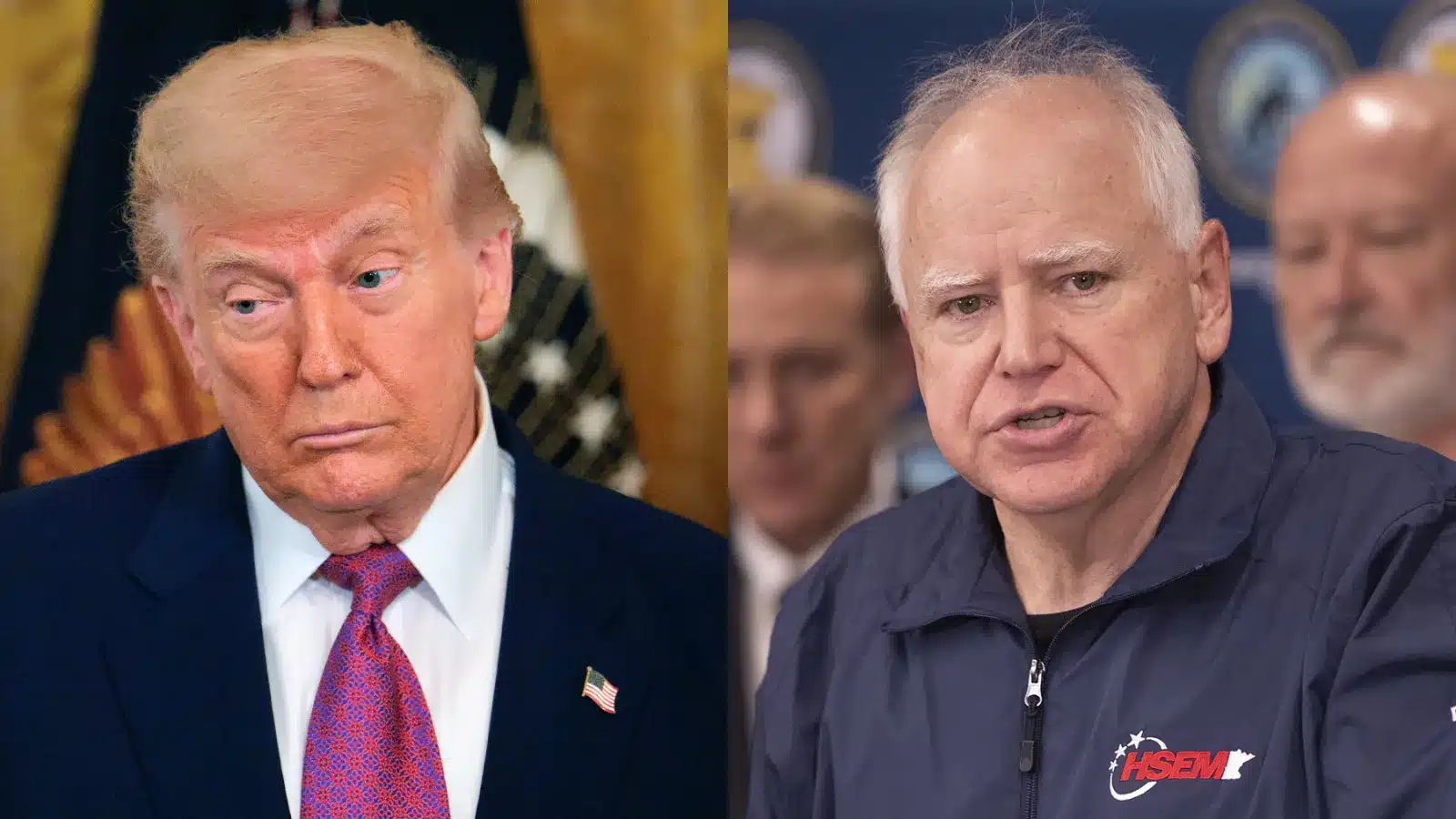


ST. PAUL, Minn. – Governor Tim Walz, a Democrat, is pushing back hard against former President Donald Trump’s comments about widespread fraud in Minnesota’s public assistance programmes.
Walz accuses Trump of using the problem for political gain while highlighting large, costly failures in the state system. At the same time, the Governor is rolling out new, broad anti-fraud measures across state agencies, a move that feels more urgent as similar large-scale fraud cases surface in places like Ohio.
Public anger has grown after federal prosecutors charged dozens of people in what they call the largest single pandemic fraud case in the country. The case centres on the non-profit “Feeding Our Future” and an alleged $250 million scheme involving federal child nutrition funds.
The total losses across different state-run benefit programmes remain disputed, but a former U.S. Attorney for the District of Minnesota has said the full amount could top $1 billion, a figure Trump has repeated often.
Trump has stepped up his focus on the scandal in recent weeks. He has used the Minnesota fraud cases to launch harsh attacks on the state’s large Somali community, where many of the defendants come from.
His comments, including a threat to end Temporary Protected Status for Somalis in Minnesota and calling the community “garbage”, have drawn criticism from both parties, while also putting even more national attention on Minnesota’s oversight problems.
“The buck stops with me, and my focus now is on making sure not a single pound is stolen,” Walz said last week, accepting responsibility for failures on his watch. He then turned sharply to Trump’s role, arguing that the former President’s words are a harmful distraction.
“What is not helpful is the President of the United States demonising an entire community or pardoning someone single-handedly responsible for $1.6 billion in fraud,” Walz wrote in a recent opinion piece, referring to separate federal matters. He argues that Trump is turning a serious policy issue into a political weapon, while the root problem stems from rushed federal relief money with weaker safeguards during the pandemic.
A New Push Against Fraud In State Programmes
With Republicans making fraud a centrepiece of their campaigns against him, Walz is trying to show firm leadership by building new layers of protection. On Friday, he announced a centralised anti-fraud structure and appointed the state’s first Director of Program Integrity.
Walz chose Tim O’Malley for the job, a former FBI agent and former head of the Minnesota Bureau of Criminal Apprehension. O’Malley has worked for both Republican and Democratic governors. He stressed that he is politically neutral and said his only goal is to serve Minnesotans and rebuild trust in public institutions.
As Director, O’Malley will work across every state agency to create shared standards for investigations, reporting, and data sharing. A key aim is to block fraudsters who move between different programmes at the same time.
Minnesota has also hired the forensic firm WayPoint, Inc. to help build a full fraud prevention “toolkit” that will be used across the state government. These moves are meant to go beyond the high-profile Feeding Our Future scandal and tackle deeper weaknesses in programmes such as Medicaid and Housing Stabilization Services, where credible fraud claims have also surfaced.
A National Pattern Shows Wider Risk
Federal officials often point to the Minnesota case as the largest single scheme of its kind, but the state is not alone. Walz himself has noted a string of large Medicaid fraud cases around the country, naming Ohio, Arizona, Nebraska, and Texas as examples.
The Ohio case, which echoes some of the same problems seen in Minnesota’s pandemic schemes, involves alleged false claims in the Medicaid system. The details are different, often tied to overcharging or billing for care that never took place in disability and behavioural health services, but the basic pattern is similar.
A huge, complex benefits system, combined with fast government spending, gave criminals room to slip through weak controls. The spread of these multi-state schemes shows that the problem is national, rooted in rapid government payouts without strong enough checks.
By appointing a new integrity chief, Walz is trying to show that he is taking charge and not just reacting to criticism from Trump and Republican challengers. His administration is counting on O’Malley’s experience and new central controls to restore public trust and push back on claims that Minnesota has become a “hub of fraudulent money laundering activity”.
Conservative critics argue that the actions come too late and say the state allowed years of large losses before acting. The real test will be whether these new steps reduce fraud in a clear way, protect public money, and help decide Walz’s political fate.