Politics
Trump’s “Core 5” Alliance Leaked Plan Outlines Bold Strategy To Avoid World War III
Promethean Action Paper Proposes New Security System That Puts Sovereignty Above Old Alliances
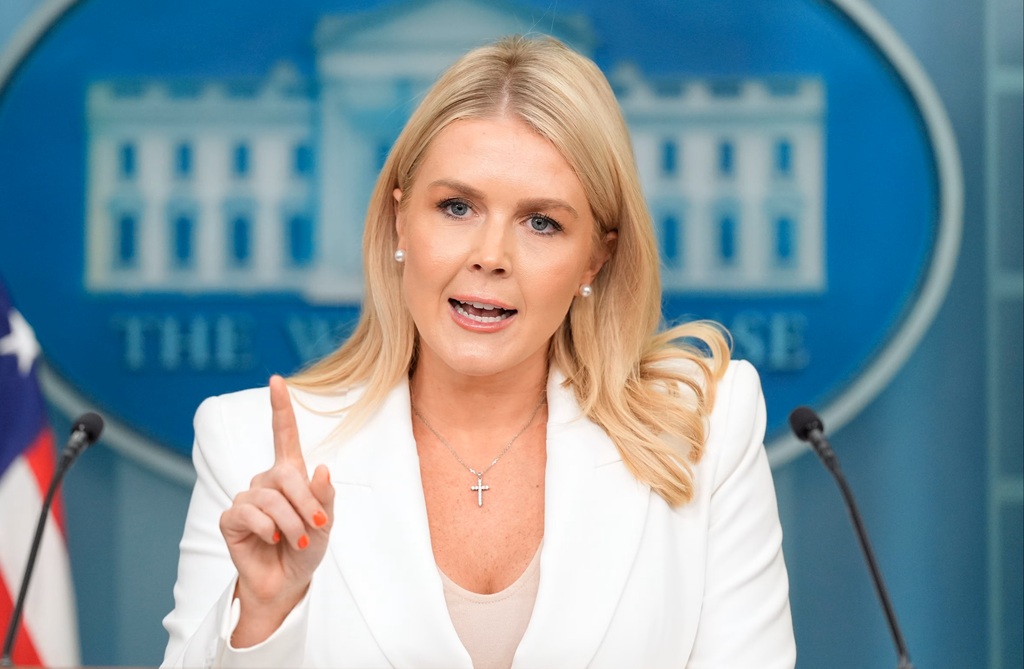
WASHINGTON D.C. – The international political landscape has been rocked by the leak of a classified document outlining an extraordinary and radical new foreign policy strategy from the Trump Administration. Trump’s plan, dubbed the “Revolutionary Alliance,” reportedly seeks to dismantle the post-World War II global architecture—including institutions like the G7 and, controversially, the NATO alliance—to establish a new “Core 5” council of major world powers.
The paper, which looks and reads like a high-level administration strategy document (although the White House has not commented), calls for a deep reset of American foreign policy. It urges the United States to move away from large, treaty-based alliances built after the Second World War. In their place, it proposes a tighter, deal-focused system built around five central principles, which it calls the “Core 5”.
Promethean Action’s Worldview
Promethean Action is not an official arm of the White House, but analysts have long linked its ideas to the current administration. Commentators often describe the group’s outlook as “neo-sovereigntist”. It strongly backs absolute national independence and treats open-ended mutual defence treaties as a dangerous limit on national choice.
The Core 5 plan is framed as a break from both old alliances and classic isolationism. It argues that the United States should pull back from conflicts where its direct interests are not clearly involved. By doing so, it seeks to lower the risk of mistakes or local clashes growing into a global war.
The authors put forward a blunt claim: the very alliance systems created to stop world wars now increase that danger. By tying many states together, they say, regional disputes can turn into international crises when obligations are triggered.
The Five Pillars Of The “Core 5” Strategy
The leaked document rests on a set of major policy changes. Together, they aim to build a new balance of power based on clear, bilateral deals instead of wide, shared commitments. The five pillars are:
- Sovereignty-First Security Accords (S-FSA)
The paper calls for a full review, and possible cancellation, of current defence treaties, including NATO’s Article 5 and key Pacific agreements. In their place, the United States would sign time-limited, strictly reciprocal bilateral accords. Support under an S-FSA would be conditional and transactional. Two factors would shape any American military help: the partner’s direct financial contribution and its clear alignment with U.S. national interests. The approach treats security as a paid-for service and openly rejects the idea of automatic, collective defence. - The “Expeditious Stability” Doctrine
This doctrine offers a new way to handle wars such as the conflict in Eastern Europe. Instead of insisting on a full return to pre-war borders, it calls for a rapid halt to fighting and a quick peace deal, even if the weaker side must surrender territory. The main goal is to freeze conflicts and keep them from spiralling into clashes between nuclear powers. VORNews analysts argue that this may reflect President Trump’s still-unclear plan for a fast end to the war in Ukraine. - The New Technological Sphere (NTS) Coalition
The Core 5 plan proposes a tight club of states that would work together to secure and dominate advanced technologies like artificial intelligence, quantum computing, and high-end manufacturing. The framework names the United States, Israel, Japan, the United Kingdom, and India as the founding members of this “inner circle”. This coalition would apply tough export controls to rivals and create a technology barrier aimed at keeping long-term Western superiority. It would also limit the bargaining power of competitors such as China. - The “Trump Corollary” To The Monroe Doctrine
Echoing signals in the official National Security Strategy, the Promethean Action paper sets out what it calls a “Trump Corollary”. This policy claims absolute U.S. primacy in the Western Hemisphere. It expects all countries in the region to shape their security, trade, and border policies in line with U.S. interests. The document also warns that any hostile outside move into the hemisphere, economic or military, will trigger a firm unilateral American response. Supporters see this as a bid to lock in supply chains and energy flows, so that turmoil abroad cannot easily threaten the U.S. home front. - The “Managed De-Leveraging” Initiative
The fifth pillar is an ambitious economic project. It calls for a planned, multi-year effort to reduce U.S. economic dependence on major rivals, with a strong focus on China. Rather than rely on tariffs alone, it urges Washington to actively shift key manufacturing and pharmaceutical production back to the United States or to trusted S-FSA partners. The document claims that deep economic ties, once praised as a force for peace, now act as tools of pressure. It argues that real national security needs economic separation, so that hostile states cannot disrupt or control American industry.
Global Response: Fear, Doubt, And New Openings
The leak has caused deep concern among long-standing allies. European governments, already under pressure from Washington to boost their own defence spending, are likely to see the Sovereignty-First Security Accords as a direct blow to NATO’s 75-year-old foundation. The basic message is clear: the era of open-ended U.S. guarantees to collective defence is coming to an end.
At the same time, some countries may spot advantages. India, for example, is listed as a core player in the NTS Coalition. For New Delhi, that status might offer a way to work more closely with Washington without joining older Western clubs that carry heavy expectations.
Rival powers receive mixed signals from the plan. The “Expeditious Stability” Doctrine hints that the U.S. could accept less-than-perfect peace deals in current conflicts. Yet the hard line in the “Trump Corollary” and the closed nature of the NTS Coalition suggest sharper, more focused competition ahead.
High-Risk Strategy With Unclear Outcomes
The Promethean Action proposal represents a major gamble. By discarding much of the post-war security model, President Trump is staking his foreign policy on a simple idea: a world of firm borders and limited, interest-based alliances is less likely to slide into total war than a world of dense, mutual defence ties.
“The logic is terrifyingly simple,” said Dr Elias Vance, a senior fellow at the Center for Global Strategic Studies, in an interview with VORNews. “If you remove the tripwire, you remove the trigger. The President wants to swap collective defence for clear deterrence, stating that America will only fight for American interests. The danger is that this could open gaps in the system and tempt local aggression, because a joint response is no longer guaranteed.”
The administration has not formally adopted the Core 5 paper, but many of its themes already show up in recent policies and diplomatic talks. If carried out in full, the framework would mark the biggest change in U.S. foreign policy since the end of the Cold War. Supporters believe it could bring stable, separate spheres of influence. Critics warn that it might create a harsh world where each state stands alone.
VORNews will keep following the story, tracking both the authenticity of the leak and any steps toward putting this bold, and to some, reckless security vision into practice.
Related News:
Trump Calls European Leaders Weak, Warns Over Mass Migration
Politics
Ilhan Omar Melts Down Over Jerry Seinfeld Over Palestinian Comments
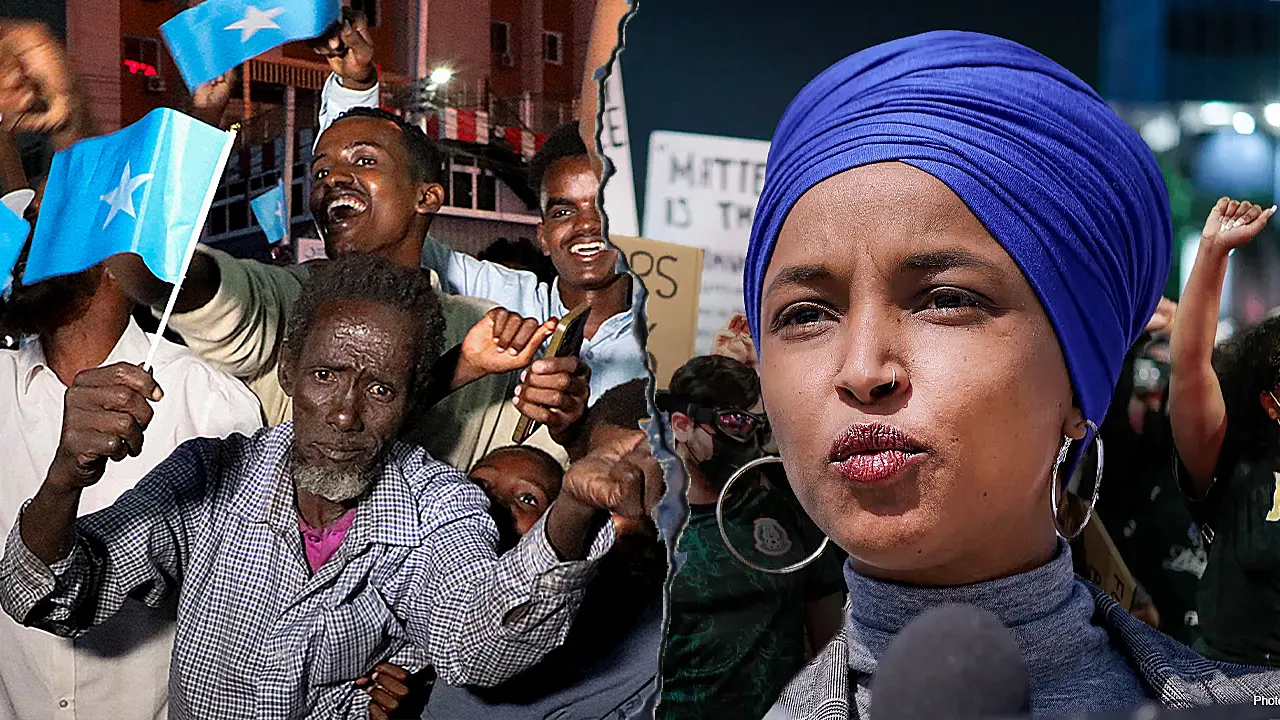
WASHINGTON, D.C. – A tense public confrontation has spilled over into the halls of Congress this week. Representative Ilhan Omar of Minnesota has publicly attacked comedian Jerry Seinfeld for his recent comments regarding the Israeli-Palestinian conflict. The exchange began after Seinfeld was filmed responding to an activist who asked him to speak on the status of Palestine.
Seinfeld, who was leaving an NBA Finals game in New York, dismissed the activist’s prompt by stating, “It doesn’t exist.” This brief interaction quickly went viral, drawing sharp condemnation from Representative Omar when she was asked for her thoughts on Capitol Hill. Omar did not hold back, labeling the comedian a “horrific human being” for his remarks.
Key Takeaways
- Representative Ilhan Omar criticized comedian Jerry Seinfeld for saying “Palestine doesn’t exist” during a recent interaction with an activist.
- Omar described Seinfeld’s comments as “genocidal” and argued that his language contributes to the erasure of Palestinian history and identity.
- The conflict highlights the ongoing, deeply polarized debate in American politics regarding the Israeli-Palestinian conflict and the rhetoric used by public figures.
The initial incident occurred outside Madison Square Garden following a New York Knicks victory. A social media activist approached Seinfeld, attempting to elicit a comment on the situation in Gaza. When pressed to declare “Free Palestine,” the comedian replied with a blunt dismissal of the region’s statehood.
This video reached Representative Omar, who has long been a vocal advocate for Palestinian rights and a critic of Israeli government policies. Speaking to reporters from TMZ, Omar described Seinfeld’s words as “disgusting” and “disturbing.” She argued that such language is dangerous because it ignores the lived reality of Palestinians.
Omar further expressed frustration that a member of a community that historically suffered from the Holocaust would use what she termed “genocidal language” against another group. Her comments have sparked a new wave of debate across social media platforms. Critics and supporters of both figures are now digging into their past statements to bolster their own political arguments.
A History of Tense Rhetoric
Representative Omar is no stranger to controversy regarding her statements on Israel and the Jewish community. Throughout her time in office, she has frequently faced backlash for remarks that many critics view as antisemitic tropes. Supporters, however, argue that she is simply holding a powerful ally to account for its treatment of Palestinians.
The American Center for Law and Justice (ACLJ) recently reported on the incident, framing Omar’s response as an “unhinged” attack on the comedian. The organization highlighted past instances where Omar suggested that U.S. support for Israel was driven by financial interests. They argue that her latest comments about Seinfeld reflect a persistent and problematic pattern in her political discourse.
This latest feud underscores the volatility surrounding the Middle East crisis in American public life. When celebrities and politicians clash on these sensitive topics, the conversation often shifts away from policy and toward personal character attacks. As the rhetoric continues to heat up, it remains unclear if any productive dialogue can emerge from such polarized exchanges.
The Broader Impact on Public Discourse
The speed at which these comments traveled from a New York sidewalk to the steps of the Capitol shows the power of digital media. One short, unscripted interaction can trigger a nationwide debate involving high-profile political figures within hours. This dynamic leaves little room for nuance, often forcing individuals to take rigid sides on complex geopolitical issues.
As the political climate remains intense, observers expect more clashes between public figures on both sides of the aisle. For now, the exchange between the Minnesota congresswoman and the legendary comedian remains a stark reminder of the deep divisions currently defining American culture. The public is left watching as these figures continue to trade sharp words, with no sign of a cooling-off period in sight.
Trending News:
Ilhan Omar Seeks Another Term as Minnesota Fraud Probe Deepens
Ilhan Omar Under New Investigation For Immigration Fraud
Politics
Many California Voters Side With Trump and Musk Over Voter Fraud Claims
LOS ANGELES, California – Federal investigators have officially launched a wide-reaching probe into the recent California primaries amid growing public concern. Surprisingly, a rising number of California voters are siding with Donald Trump and Elon Musk over possible election fraud. As debates heat up, vocal critics are pointing to specific state election laws that they believe invite serious foul play.
Key Takeaways:
- Federal authorities are actively investigating the California primaries due to widespread allegations of voting irregularities and potential fraud.
- High-profile figures like Donald Trump and Elon Musk are gaining significant local support for their criticisms of the voting system.
- Reality TV star Spencer Pratt has publicly joined the debate, drawing more mainstream attention to the state’s election security issues.
- Critics strongly argue that universal mail-in ballots and legalized ballot harvesting create massive vulnerabilities in the democratic process.
The Federal Probe Brings New Scrutiny
The political landscape in California is facing an unexpected earthquake this week as federal investigators step into the state. They have announced a formal probe into the state’s recent primary elections to examine how votes were collected and counted. Many residents are shocked by the news, while others feel that this major federal action is long overdue.
For years, state officials have proudly defended their election methods as safe, secure, and highly effective for everyday citizens. However, the sheer scale of this new investigation suggests that federal authorities have found credible reasons to look closer. The primary focus of the probe involves the handling of millions of paper ballots across several large metropolitan counties.
Investigators are currently requesting documents, voter rolls, and internal communication records from local election officials across the entire state. This deep dive comes after months of mounting public pressure from unhappy voters who reported various unusual voting irregularities. Citizens have flooded hotlines with reports of receiving multiple ballots or spotting suspicious activities at local ballot drop boxes.
Trump and Musk Rally the Golden State
Donald Trump has long been a highly vocal critic of how California manages and runs its massive statewide elections. Recently, he has doubled down on his claims that the state’s voting system is deeply flawed and vulnerable to cheating. Interestingly, his conservative message is now resonating with a much larger group of everyday Californians than ever before.
Tech billionaire Elon Musk has also amplified these same concerns to his massive online audience over the past year. Musk frequently uses his popular social media platform to question the security and basic logic of modern voting practices. When Musk moved his business operations to Texas, he cited many deep frustrations with California’s broad state policies.
Now, his sharp critiques of the election system are directly validating the lingering fears of many local state voters. Both Trump and Musk argue that without strict voter ID laws, the current system is essentially built on blind trust. They firmly believe that this severe lack of tight security makes large-scale fraud highly probable during important national elections.
Reality TV Star Spencer Pratt Speaks Out
The fierce debate over election security is not just limited to seasoned politicians and wealthy tech billionaires anymore. Reality television star Spencer Pratt has surprisingly stepped into the political spotlight to voice his own serious security concerns. Known for his candid opinions, Pratt has taken to social media to directly discuss the election with his followers.
He recently shared frustrating stories with his audience about the highly confusing nature of voting in Los Angeles County. Pratt pointed out that many people he personally knows have received mail-in ballots for people who moved away long ago. His comments quickly went viral online, striking a deep chord with thousands of frustrated voters across the entire state.
By speaking out publicly, Pratt has brought the complex issue of election integrity to a younger, pop-culture-focused audience. His sudden involvement shows just how deeply this specific issue has penetrated everyday California culture and regular daily conversations. People who usually ignore political news are now paying very close attention to the details of the ongoing federal probe.
The Core Issue of Universal Mail-In Ballots
To fully understand why critics are so upset, we must look closely at how the state currently conducts its elections. California is one of the few states that automatically mails a live ballot to every single registered active voter. While this broad policy was designed to increase voter turnout, critics strongly argue it creates a massive security nightmare.
Millions of pieces of official election mail are sent out, and many land at outdated or completely incorrect home addresses. When loose ballots pile up at old apartment buildings or empty houses, they can be easily intercepted by bad actors. Critics consistently point out that the current signature verification process is simply not strong enough to catch sophisticated fraud.
Election workers are forced to process millions of envelopes in a very short and highly stressful amount of time. This rushed environment naturally leads to human mistakes, and many fear that fraudulent votes are easily slipping through the cracks. The entire system relies heavily on the local postal service, which adds another layer of potential error and mail delay. For more information on varying voting rules, you can visit the National Conference of State Legislatures.
How Ballot Harvesting Changes the Game
Another major point of contention in the current federal probe is the highly controversial practice officially known as ballot harvesting. In California, it is completely legal for a designated third party to collect and submit ballots on behalf of voters. This means political operatives, union members, or organized campaign workers can legally gather hundreds of ballots and drop them off.
Supporters loudly claim this helps elderly or disabled voters, but critics strongly argue it is a dangerous recipe for disaster. When a partisan campaign worker collects a ballot, the secure chain of custody is immediately and completely broken forever. There is absolutely no reliable way to ensure that the voter was not secretly pressured into voting a certain way.
Furthermore, critics worry that partisan harvesters might conveniently “lose” collected ballots from neighborhoods that heavily support their political opponents. Trump and Musk have both repeatedly highlighted ballot harvesting as the most dangerous fundamental flaw in the entire system. They argue that as long as this practice remains completely legal, true election security will remain an impossible dream.
A System Allegedly Set Up for Fraud
Many concerned citizens genuinely believe that these combined policies essentially design a system perfectly suited for massive election fraud. When you mix universal mail-in ballots with legalized ballot harvesting, the potential for systemic abuse naturally grows exponentially fast. Critics argue that the state has intentionally removed all the traditional safeguards that historically protect a fair and secret ballot.
For instance, without mandatory in-person voting and strict photo ID checks, it is very hard to accurately verify a voter’s identity. Furthermore, the state’s massive voter rolls are notoriously difficult for local county officials to keep completely clean and up to date. People regularly move away or pass away, yet their names often remain on the active mailing lists for several years.
This massive oversight creates a huge pool of floating ballots that can be easily exploited by highly organized political groups. Those siding with Trump and Musk feel that these are not accidental flaws, but rather intentional and highly calculated legal loopholes. They are loudly demanding a complete and total overhaul of the state’s voting laws to finally restore public trust.
What the Federal Investigators Are Looking For
The federal officials currently leading this major probe have a very clear and highly specific legal mandate to follow. As outlined by agencies like the Department of Justice, investigators are actively examining whether voting procedures violate federal civil rights laws. Investigators are reportedly looking into specific instances where massive batches of ballots were dropped off at very unusual hours.
They are also closely reviewing the internal software and counting machines used to process the massive influx of paper ballots. Here is a brief look at the specific areas federal investigators are likely targeting during this unprecedented statewide probe:
- Voter Roll Accuracy: Checking if deceased or relocated residents were successfully removed from the active state mailing lists.
- Chain of Custody: Reviewing the specific access logs at ballot drop boxes to ensure no unauthorized physical tampering occurred.
- Signature Verification: Auditing the exact methods election workers use to match envelope signatures with official state driver records.
- Harvesting Practices: Investigating political groups that collected large numbers of ballots to ensure no illegal voter intimidation took place.
If the federal probe uncovers clear evidence of coordinated fraud, it could directly lead to major federal criminal charges. It could also legally force the state to completely rewrite its election playbook before the next major national presidential race.
How Californians Are Reacting Today
The current mood on the streets of California is a volatile mix of high public anxiety and deep political division. Many loyal voters feel that the federal probe is nothing more than a coordinated partisan attack on their progressive state. They firmly believe the current system is perfectly fair and that the loud allegations of fraud are completely baseless and false.
On the other hand, the highly vocal group siding with Musk and Trump feels finally heard and properly validated. Local town hall meetings have quickly become highly emotional battlegrounds as passionate citizens openly debate the future of their elections. Even casual conversations at local coffee shops very often turn into heated discussions about strict ballot security and voter fraud.
The recent addition of celebrity voices like Spencer Pratt has only added more fuel to this already burning political fire. As the ongoing investigation moves forward, it is very clear that the state’s political climate will remain highly charged. The ultimate findings of this unprecedented federal probe will likely shape California’s election laws for many decades to come.
Trending News:
Federal Prosecutor Launches Fraud Probe into California Primary Elections
Gavin Newsom’s Alleged Plan to RIG the California Governor’s Election Exposed
Politics
Bill Maher Reveals Why Democrats Keep Losing Voters On Live TV
LOS ANGELES – Late-night host and political commentator Bill Maher has never been one to bite his tongue. But recently, on his hit HBO show Real Time with Bill Maher, the veteran comedian delivered one of his most blistering and honest critiques of the Democratic Party to date. The question on the table was simple but painful: Why do Democrats keep losing everyday voters?
Maher’s answer was blunt, unapologetic, and struck a chord with millions of Americans tuning in. He did not blame foreign interference, right-wing media, or bad campaign financing. Instead, he pointed the finger directly at the political left itself. According to Maher, the Democratic Party has abandoned the working class, become obsessed with “woke” culture, and transformed into a party of out-of-touch coastal elites.
Let’s dive into exactly what Bill Maher said on live television and why his viral warning is serving as a massive wake-up call for politicians everywhere.
The Great Working-Class Exodus
For decades, the Democratic Party was known universally as the champion of the working class. It was the political home for union members, factory workers, teachers, and everyday Americans simply trying to make ends meet. However, Maher argues that this is no longer the case. On live TV, he laid out a harsh reality: Democrats have traded the factory floor for the faculty lounge.
Maher noted that the party has increasingly alienated blue-collar voters. Instead of focusing on everyday, kitchen-table issues like the rising cost of groceries, affordable housing, and good-paying jobs, the party’s messaging often feels tailored exclusively to highly educated, wealthy voters living in cities like New York and Los Angeles.
“You can’t be the party of the working class if you look down on them,” is the core of Maher’s argument. When politicians lecture voters about complex, academic social theories while those same voters are struggling to pay for a tank of gas, a massive disconnect happens. This elitist attitude, Maher explained, is exactly why millions of blue-collar workers have walked away from the Democratic Party and shifted their votes to the right.
The Obsession with “Woke” Culture and Identity Politics
One of Maher’s most frequent targets is “woke” culture, and he held nothing back during his recent broadcasts. He argued that the modern left has become deeply obsessed with identity politics. Rather than uniting people under common, shared goals, Maher claims the left insists on dividing everyone into hyper-specific categories based on race, gender, and sexual orientation.
For the average American voter, this constant focus on identity politics feels exhausting and disconnected from reality. Maher pointed out that while social media activists and far-left politicians spend their time policing language and arguing over pronouns, average voters are worried about inflation, crime in their local neighborhoods, and the quality of their public schools.
Maher warned that when Democrats allow the loudest, most extreme voices on social media platforms to dictate their official platform, they alienate the quiet majority of common-sense Americans. By catering to the fringes, the party is practically handing moderate and independent voters over to their political rivals.
Cancel Culture and the Purity Tests
Another major reason Democrats are losing voters, according to Maher, is the toxic environment of cancel culture and political purity tests. In the past, political parties operated as large tents where people with different ideas could debate, disagree, and still work together for a common cause. Today, Maher argues, the left demands absolute perfection and total agreement on every single issue.
If a voter agrees with the Democratic Party on 90% of issues but disagrees on just 10%, they are often branded as a traitor, a bigot, or a right-wing extremist. Maher correctly pointed out that you cannot build a winning, sustainable political coalition by constantly excommunicating people who do not pass a strict ideological purity test.
This rigid intolerance for differing opinions pushes away moderate Democrats, independent voters, and anyone who does not want to spend their life walking on eggshells. Voters simply want leaders who will solve problems, not politicians who spend all day scolding them for having the “wrong” opinions.
What Everyday Voters Actually Want
To highlight the massive gap between left-wing politicians and everyday Americans, Maher broke down what normal voters actually care about. The contrast is staggering. According to the Real Time host, the Democratic Party is completely missing the mark by ignoring basic common sense.
Here is a clear breakdown of the disconnect Maher highlighted:
- The Economy: Voters want lower inflation, cheaper gas, and affordable housing. They do not want to be told that the economy is secretly doing great while they are struggling to pay their monthly bills.
- Public Safety: People want safe streets, fully funded police departments, and violent criminals kept off the streets. They aggressively reject fringe slogans like “Defund the Police.”
- Education: Parents want their children to learn math, reading, and history. They do not want extreme political ideologies or heavy-handed activism pushed into elementary school classrooms.
- Border Security: Every day, Americans want a secure border and a highly organized, legal immigration system. They reject the idea that wanting border security automatically makes someone a bad person.
- Common Sense: Most voters are inherently moderate. They want fairness and equality, but they are tired of being told that traditional common sense is somehow offensive.
A Dire Warning for the Future
As his segment came to a close, Bill Maher delivered a sobering warning to Democratic leaders. He stated that the writing is clearly on the wall. If the party continues down this current path of elitism, identity politics, and constantly scolding the working class, they will continue to lose elections that they should otherwise easily win.
Maher is not a conservative; he has been a lifelong liberal. His critique comes from a place of tough love. He wants the Democratic Party to succeed, but he recognizes that a massive course correction is urgently needed right now. The party must return to the political center, embrace common sense, and start treating working-class voters with the respect and dignity they deserve.
Bill Maher’s bold statements on live television shattered the political echo chamber. By directly calling out the Democratic Party’s shift toward elitism and wokeness, he voiced the silent frustrations of countless voters who feel left behind by a party that used to represent them. To win back the heartland, the working class, and the moderate middle, politicians will need to log off social media and step back into the real world.
Trending News:
Tennessee Redistricting War: Democrats Stripped of Power Amid Capitol Chaos
Democrats Go Postal After USPS Unveils Strict Mail-In and Absentee Ballot Rules
-
News3 months agoNATO Chief Says 22 Nations Working With US to Keep the Strait of Hormuz Open
-
Politics3 months agoCNN Reveals Trump Has a Perfect 100% Approval Rating Among MAGA Voters
-
Crime3 months agoMissing Virginia High School Coach Update, March 2026
-
Politics3 months agoCNN Shows Shocking 2028 Polling Numbers for Marco Rubio
-
Entertainment3 months agoChuck Norris Dies at 86, Family Withholds Official Cause
-
News3 months agoIs Ilhan Omar at Risk of Deportation? The Facts and U.S. Immigration Law
-
News2 months agoStacey Abrams $2B Nonprofit Faces Alleged Fraud Allegations
-
Politics3 months agoAdam Schiff Told to ‘Resign’ After Whistleblower Claims, FBI Opens Investigation