Politics
Karoline Leavitt Slams CNN’s Kaitlan Collins Over Killed U.S. Soldiers


WASHINGTON, D.C. – A tense moment erupted at Wednesday’s White House press briefing when Press Secretary Karoline Leavitt snapped back at CNN anchor Kaitlan Collins. The exchange put a spotlight on the widening split between the Trump administration and major news outlets over the U.S.-led campaign against Iran.
At the center of the dispute were six U.S. service members killed after an Iranian drone strike hit a U.S. site in Kuwait. Their deaths came as the administration continues to promote Operation Epic Fury, the joint U.S.-Israeli campaign that began in late February.
Operation Epic Fury began in the early hours of February 28, 2026. The first wave included large U.S. strikes using B-2 stealth bombers, F-22 fighters, and other aircraft. In the first 72 hours, the campaign hit more than 1,700 targets, according to the administration. Those strikes reportedly focused on Islamic Revolutionary Guard Corps (IRGC) facilities, ballistic missile sites, air defenses, naval assets, and command-and-control locations.
White House officials have framed the operation as a major blow to Iran’s leadership and military infrastructure. Reports also claim widespread damage, including the reported death of Supreme Leader Ayatollah Ali Khamenei and other senior Iranian figures.
President Donald Trump has said the strikes reverse what he called “decades of cowardice” in U.S. policy toward Iran, which the U.S. has long accused of backing terrorism and seeking nuclear capabilities.
Still, the campaign has brought U.S. losses. On Sunday, an Iranian drone strike hit a U.S. tactical operations center at Shuaiba Port in Kuwait, killing six service members. The Army has named four:
- Sgt. 1st Class Nicole Amor (White Bear Lake, Minnesota)
- Capt. Cody Khork (Lakeland, Florida)
- Sgt. 1st Class Noah Tietjens (Bellevue, Nebraska)
- Sgt. Declan Coady (Des Moines, Iowa)
Officials have not released the other two names yet, pending family notification. Reports say the drone hit a temporary office inside a triple-wide trailer used by U.S. personnel.
Trump has said he plans to attend the dignified transfer at Dover Air Force Base in Delaware. Leavitt described it as the president standing “in grief alongside their families.”
Hegseth’s comments set off a backlash
Earlier on Wednesday, Defense Secretary Pete Hegseth, often labeled in administration messaging as “Secretary of War,” spoke to reporters at the Pentagon about the operation. He praised the mission and promised to “avenge” the fallen troops. At the same time, he criticized how the media has covered the deaths.
“When a few drones get through or tragic things happen, it’s front-page news,” Hegseth said. “I get it. The press only wants to make the president look bad. But try for once to report the reality.”
He also pointed to what the administration calls broader gains, including U.S. control of Iranian airspace and waterways without sending ground troops. In his view, outlets focus on setbacks to hurt Trump politically.
Critics responded quickly, saying reporting on U.S. casualties is a basic responsibility of the press, not a partisan act.
Karoline Leavitt versus CNN’s Collins
During the afternoon briefing, Collins pressed Leavitt on Hegseth’s remarks.
“Is it the position of this administration that the press should not prominently cover the deaths of U.S. service members?” Collins asked.
Leavitt fired back and defended Hegseth, saying Collins twisted his meaning.
“That’s not what the secretary said, Kaitlan, and that’s not what the secretary meant, and you know it,” Leavitt replied. “You know you are being disingenuous.”
She argued that news outlets should also report what she called the successes of Operation Epic Fury and the damage done to Iran’s military and leadership. Leavitt then warned that Iran poses a direct threat to Americans.
“If the Iranian regime had their choice, they would kill every single person in this room,” she said. “So we can all be very grateful that we have an administration and that we have men and women in our armed forces who are willing to sacrifice their own lives for the rest of us in this room and for every American across the country.”
Collins continued, quoting Hegseth’s words and saying he appeared to be “complaining” that the soldiers’ deaths made front-page news. Karoline’s response grew more pointed.
“The press does only want to make the president look bad. That’s a fact,” she said. “Especially you, and especially CNN.”
Karoline Leavitt also said Hegseth “cares deeply about our warfighters” and travels around the country to meet with service members. She added that CNN rarely highlights those visits.
In response, Collins again read Hegseth’s quote and questioned whether the White House wanted to minimize the sacrifices. Karoline rejected that framing and returned to her message of gratitude and mission focus.
Karoline Leavitt and the mainstream media
The dispute reflects the long-running conflict between Trump’s White House and major media outlets. Supporters say news coverage leans negatively to weaken the administration. On the other hand, critics say the White House attacks reporters to avoid tougher scrutiny, especially when the military faces losses.
Clips of the exchange spread quickly online. Some conservative voices praised Leavitt’s pushback, while others said the moment crossed a line and chilled press freedom.
Meanwhile, Operation Epic Fury continues with no clear end date. The six deaths have become a painful reminder of the cost of this conflict. The administration says the campaign stays focused on dismantling Iranian threats, yet questions keep building around strategy, congressional approval, and long-term stability in the region.
Trump has signaled no quick pullback, saying operations will continue until threats are neutralized. Leavitt echoed that stance and said the fallen service members’ sacrifices won’t be in vain.
For now, the White House has not shared details on the next phase, although officials say they will keep providing updates, with an emphasis on progress as well as setbacks. The briefing room argument may fade, but it shows how the battle over public narrative is running alongside the fighting overseas.
Related News:
CNN’s Harry Enten Calls the 2028 Democratic Primary a Clown Car
Karoline Leavitt Slams CBS News Over ICE Deportation Numbers

Western society has spent the last decade caught in a heated, highly emotional debate with regards to empathy. People are constantly arguing about whether deep empathy should be our ultimate core value. Some cultural leaders praise it as a vital superpower, while others dismiss it as a dangerous pathology.
This ongoing debate recently reached a massive boiling point in the modern public eye. Books on the topic are currently topping non-fiction bestseller lists all around the world. Meanwhile, famous celebrities and powerful tech billionaires are actively clashing over the true meaning of modern compassion.
Key Takeaways
- Modern political empathy is often used as a moral shield rather than a genuine tool for understanding others.
- Many social policies marketed as pure compassion have actually resulted in negative, measurable real-world consequences.
- Famous historical philosophers constantly warned that abstract pity usually masks deep personal narcissism and a desire for control.
The Billionaires and the Hollywood Elite
In May, author Gad Saad released a highly controversial book titled “Suicidal Empathy.” The provocative book quickly climbed the ranks and went straight to the top of the New York Times bestseller list. This sudden public popularity signaled a massive cultural shift in mainstream political thinking.
Billionaire Elon Musk quickly championed the controversial book on his massive social media platform. He had previously told popular podcast host Joe Rogan that empathy is the fundamental weakness of Western civilization. Musk genuinely believes that unchecked political compassion will inevitably lead to total societal collapse.
However, many influential Hollywood figures strongly disagree with this incredibly harsh and pessimistic assessment. Actor John C. Reilly recently stated the exact opposite in a widely shared public interview. He firmly argued that empathy is absolutely not a trap, but rather a profound human superpower.
The Viral Speech of Anne Hathaway
Recently, a resurfaced video clip of actress Anne Hathaway went incredibly viral across social media. She was speaking passionately at a very high-profile Human Rights Campaign charity dinner. During her emotional speech, she made some very sweeping claims about the structure of modern society.
Hathaway loudly declared that her exact birth circumstances placed her at the center of a damaging cultural myth. She argued that gayness is socially forced to constantly orbit around traditional straightness. Furthermore, she emphatically stated that all minority races are forced to orbit around historical whiteness.
She elegantly closed her speech with a very intense and highly dramatic promise to the captive audience. Hathaway vowed that her wealthy peers would not merely question this damaging cultural myth. Instead, she loudly promised the entire room that they were going to completely destroy it.
When Compassionate Policies Face Harsh Reality
We no longer need to rely purely on grand political rhetoric to settle this ongoing cultural debate. The progressive social policies built on this modern version of empathy now have a very clear track record. Unfortunately, that public record has proven to be quite disastrous in many major metropolitan areas.
For example, safe supply drug programs were originally designed to carefully help highly vulnerable populations. Instead, these costly initiatives have often drastically worsened local addiction rates and downtown homelessness. Cities across the entire country are now desperately struggling to manage these unintended negative consequences.
Similarly, lenient bail and relaxed sentencing reforms were introduced with very noble and good intentions. Optimistic lawmakers wanted to create a significantly fairer and much more compassionate criminal justice system. However, these sweeping changes arrived directly alongside a massive, undeniably destructive wave of urban violent crime.
The Economic Impact on Local Communities
Mass migration policies were also fundamentally built on the lovely promise of boundless global empathy. Yet, these rapid demographic shifts have severely fragmented many traditional, blue-collar working-class communities. Top news outlets like The Wall Street Journal have reported extensively on the heavy economic strain these policies cause.
This rapid population influx has aggressively driven up the basic cost of living in almost all major cities. At the exact same time, it has effectively suppressed hourly wages for the absolute lowest-earning local workers. The struggling people who were originally supposed to heavily benefit are now facing even harder economic times.
Additionally, billions of federal tax dollars have been generously administered on behalf of marginalized indigenous communities. These massive public funds were desperately meant to fix historical wrongs and show true societal empathy. Yet, they have absolutely not fundamentally improved the material living conditions on most poor rural reserves.
Sweeping Massive Political Failures Under the Rug
Another highly controversial area involves young teenagers actively struggling with severe gender dysphoria. Many confused young people were very quickly given life-altering prescription hormones by modern medical professionals. However, this was routinely done on a flimsy scientific evidence base that was never properly established.
These radical policies were all heavily marketed to the trusting public as acts of pure compassion. The passionate creators promised voters that they would easily fix deep, historical societal inequalities. Yet, they have clearly produced almost no tangible, positive societal benefits for the average struggling citizen.
Instead of honestly facing these catastrophic public disasters, many elected leaders are simply hiding them away. These massive, undeniable political failures are now being quietly swept entirely under the rug. Arrogant politicians absolutely do not want to publicly admit that their highly empathetic ideas backfired terribly.
Reframing the Original Political Motive
Some sensible local jurisdictions are slowly starting to finally reverse their legal courses on these complex issues. However, it genuinely seems that almost none of the original policy architects are learning the real lesson. They still stubbornly believe their grand original ideas were completely flawless and morally perfect.
The comforting takeaway for voters would be that these leaders just had genuinely good intentions. We desperately want to believe they operated inside a highly rational worldview to help suffering people. We often safely assume they simply failed the poor people they desperately meant to save.
However, we might need to totally reframe the true psychological motive behind these failed social policies. When you look closely at the results, you could easily argue that these political leaders actually succeeded. Their real underlying goal was never about helping, but rather about entirely destroying the current social system.
The Ultimate Goal of Cultural Destruction
Consider exactly how actress Anne Hathaway boldly finished her viral, highly publicized political speech. The ultimate long-term goal she proudly named to the cheering crowd was pure cultural destruction of the norm. She did not politely ask for slow reform, communal healing, or building a slightly better alternative.
Therefore, the ongoing failure of each individual progressive social policy is now entirely undeniable to voters. The tragic, depressing results are highly visible on the littered streets of nearly every major Western city. Yet, the dangerous, destructive worldview that produced all of them stubbornly remains in full effect today.
Until we completely strip the shiny moral cover of empathy away from this worldview, absolutely nothing will change. This radical ideology will keep conjuring entirely new, creative ways to destroy the societal status quo. It will simply keep falsely marketing its incredibly destructive political goals as profound, saintly human compassion.
The False Historical Quote of Hannah Arendt
Many modern cultural critics have contrasted Elon Musk’s harsh warning with a very famous historical quote. People online often share a quote mistakenly attributed to Hannah Arendt, the great philosopher of totalitarianism. They wrongly claim she once said that the death of human empathy leads directly to societal barbarism.
However, there is one very large and incredibly embarrassing problem with this highly viral internet quote. Absolutely nobody on the internet can actually produce a real, verifiable historical source for it. It simply does not exist anywhere within any of her heavily published philosophical writings.
We cannot even generously call this fake internet quote a simple fib or a loose historical paraphrase. It is actually much closer to a complete, intentional anti-truth meant to manipulate modern readers. It is a total, bizarre inversion of what Arendt actually believed and wrote about during her lifetime.
The Real Philosophy of Hannah Arendt
Hannah Arendt actually wrote about this exact political topic at great length during her incredible academic career. She actually powerfully argued something dangerously close to the exact opposite of that fake viral quote. In her brilliant book “On Revolution,” she famously contrasted the historical American and French revolutions.
Arendt asked a very brilliant, deeply probing question about these two massive historical political events. Why did the famous American Revolution finally produce a very stable, highly functioning democratic republic? And why did the French Revolution quickly produce a horrifying, incredibly bloody reign of terror?
Her historical answer was incredibly insightful and highly relevant to our current, deeply polarized political climate. The American founding fathers focused heavily on carefully building a pragmatic, stable government of strict laws. They relied entirely on realistic checks and balances rather than grand, sweeping emotional political gestures.
The Highly Dangerous Politics of Pity
The French revolutionaries, however, were entirely different in their radical approach to building a new government. They were much more concerned with totally reorganizing human society from the absolute ground up. They desperately wanted to violently enact a perceived form of absolute, perfect social justice.
Instead of carefully using pragmatic political thought, the French Jacobins used raw, untamed human emotion. They successfully implemented what philosopher Hannah Arendt perfectly called a highly toxic “politics of pity.” She deeply understood that this political pity is absolutely not the same thing as true compassion.
Pity inherently relies on the dramatic, highly visible spectacle of deep human suffering in the streets. It is always observed safely from afar by those who do not actually suffer themselves. This quickly creates a terrible, deeply unequal dynamic between the fortunate elites and the unfortunate masses.
The Deep Arrogance of the Empathetic Elite
This twisted dynamic eventually creates a toxic social hierarchy where the pitier gets to feel incredibly morally superior. A very moralizing, highly judgmental brand of strict politics is quickly created directly from this arrogant feeling. This new, emotional system completely ignores the established rule of law and basic universal principles.
Arendt boldly argued that this exact pity is what allowed Maximilien Robespierre to easily justify his bloody terror. His desperate, overwhelming desire to eradicate the suffering of the masses was incredibly dangerous to society. It totally overrode any basic societal respect for individual human rights or standard legal procedures.
She had actually made a brilliant version of this exact same argument many years earlier in her career. In her definitive work on terrifying totalitarianism, she discussed the immense danger of speaking for the oppressed. Once you arrogantly see yourself as speaking on their behalf, you quickly replace them entirely.
Redefining True Empathy in the Modern Age
You are absolutely no longer speaking to the suffering people, but rather speaking directly for them. This historical reality brings us right back to the modern, highly weaponized concept of political empathy. It perfectly explains why empathy is not an accurate description of modern progressive political motivations.
The modern, wealthy preachers of ultimate equality justify their radical beliefs by constantly appealing to public empathy. However, it genuinely seems they do not even truly understand what the word actually means anymore. The Merriam-Webster Dictionary officially defines empathy as truly understanding, safely sharing, and experiencing the feelings of another.
That basic definition is simply not what modern political elites and wealthy progressives are actually doing. They do not truly understand the struggling working-class people they constantly claim to care so much about. Instead, they just lazily project their own idealized, extremely wealthy version of themselves onto everyone else.
The Total Illusion of Understanding Others
These wealthy political elites assume that absolutely everyone on Earth naturally shares their highly specific, cultured values. They then easily treat that incredibly false, arrogant assumption as a deep form of spiritual empathy. They look at a struggling person from a developing nation and happily think, “They are just like me.”
They do this constantly with absolutely zero real, foundational understanding of that foreign person’s complex culture. The absolute best example of this is not even a deep moral issue, but a simple practical one. For instance, some radical people loudly claim it is highly racist to suggest newcomers might struggle with local driving laws.
However, driving cultures and local road rules naturally vary wildly across the entire diverse globe. Someone who spent their whole life driving in the chaotic, crowded streets of a foreign nation has drastically different habits. They will not instantly internalize all complex Western driving etiquette the very moment they finally arrive.
Adam Smith and the Human Chess Pieces
To truly, genuinely empathize with these nervous newcomers would be to honestly understand their incredibly unique experience. It would lead you to quickly and safely recognize that their cultural background is quite different from your own. None of this modern revolutionary, leftist empathy actually survives a real, brutal collision with actual reality.
The famous, highly influential historical economist Adam Smith famously argued that complex human feelings simply do not scale up. He heavily warned the trusting public about the highly dangerous “man of system” in national politics. This is a powerful political leader who is terribly pleased with his own incredibly noble ideas for society.
This arrogant leader wrongly thinks he can effortlessly arrange regular people on a board exactly like little wooden chess pieces. He completely forgets that the living human pieces he is carelessly rearranging have deeply complex emotions. They have their own unpredictable motions, daily desires, and deep cultural habits that simply cannot be ignored.
The Inevitable Total Breakdown of the Game
Believing you can just carelessly take people deeply inculcated in their own incredibly unique society is foolish. You absolutely cannot expect them to easily drop their deeply learned social norms and distinct community behaviors. Importing them into a totally different culture with absolutely no negative consequences is simply a childish, dangerous fantasy.
It is strongly and undeniably akin to trying to illegally move a simple pawn horizontally on a wooden chessboard. If you completely ignore the basic, foundational rules of human nature, the entire political game quickly breaks down. You absolutely cannot force stubborn reality to easily bend to your own grand, sweeping emotional theories.
The great, highly respected Russian author Fyodor Dostoevsky beautifully depicted this exact psychological issue in his famous novels. One of history’s greatest, most insightful writers deeply understood the tragic, fatal flaw of abstract political pity. He absolutely knew that love in empty dreams and grand political ideals is incredibly greedy and ultimately useless.
The Dangerous Trap of Abstract Love
Abstract, theoretical love is very good for easily winning cheap public applause, but it does very little else. True, meaningful love, on the other hand, requires incredibly difficult daily action and immense personal patience. It is incredibly easy to proudly say that one must always love humanity in the abstract.
It is very easy to preach loudly about boundless love in a comfortable, safe college political theory class. However, it is much more difficult to actually practice this when face-to-face with a highly annoying local neighbor. Real, breathing people are often deeply, fundamentally flawed and incredibly hard to genuinely love on a daily basis.
This is the absolute, undeniable totality of the modern leftist revolutionary spirit operating in politics today. They have endless, boundless love and deep care in the safe, abstract realm of grand ideas. Yet, that profound, supposedly life-changing care is almost never actually actualized in the real, incredibly messy world.
The Dark Hypocrisy of Jean-Jacques Rousseau
The highly influential, wildly famous historical leftist Jean-Jacques Rousseau is a perfectly tragic example of this exact flaw. His influential philosophical work famously and permanently birthed the deeply flawed “noble savage” myth into Western culture. He incredibly even wrote an entire massive, detailed book on how to properly raise and educate a perfect child.
However, his actual, hidden personal life eventually revealed a very dark and incredibly hypocritical truth to the world. Rousseau actually cruelly abandoned all five of his own biological children to a bleak, miserable local orphanage. He preached beautifully to the world about perfect childcare while completely failing his own deeply innocent offspring.
Psychological projection and a deep, unshakeable superiority complex explain this common phenomenon much better than true, genuine empathy. A stubborn political worldview that strongly persists despite its unending, highly visible list of failures is very dangerous. It is clearly not interested in discovering the objective truth, but solely in acquiring and keeping raw power.
Blindly Ignoring the Clear Policy Failures
Consider exactly how these modern, wealthy leftists respond to the total, undeniable breakdown of their own progressive policies. They absolutely never simply believe that their grand, sweeping theory of total multiculturalism actually failed the public. Instead, they loudly claim they just did not forcefully implement it hard enough on the unwilling population.
They firmly claim they did not sufficiently propagandize the stubborn host nation into accepting forced, artificial compassion. They completely refuse to admit that eagerly promoting untested, dangerous medical interventions on confused youth might be a mistake. Instead, they loudly argue that traditional society just did not aggressively normalize their radical, progressive ideas enough.
When highly expensive safe supply drug programs fail, they absolutely do not rethink their basic, foundational strategy. They loudly argue that the disastrous, deadly program was simply not scaled up enough with infinite taxpayer money. They wrongly believe that decriminalizing violent crime isn’t a bad idea, but that criminals just need more free public things.
Friedrich Nietzsche’s Warning on Pathological Softness
The famous, highly controversial historical philosopher Friedrich Nietzsche actually put this exact concept into his own brilliant words. He perfectly described this precise, dangerous idea nearly a massive century and a half before Gad Saad finally did. In his legendary, highly studied book “Beyond Good and Evil,” he clearly writes about a crumbling, dying society.
He perfectly describes a failing culture grown so pathologically soft and tender that it eventually destroys itself completely. It slowly begins to foolishly and blindly side even with the very violent criminals who actively harm it. Once a grand civilization reaches this truly tragic stage, Nietzsche noted, lazy mediocrity becomes the absolute highest public achievement.
Anyone who proudly raises themselves above the lazy, unthinking herd or slightly intimidates their neighbor is immediately declared totally evil. A short year later, in the “Genealogy of Morals,” Nietzsche brilliantly took this profound thought even further. He deeply described a manipulative character known simply as the highly dangerous “ascetic priest.”
The Rise of the Manipulative Ascetic Priest
This clever priest figure absolutely does not actually cure the very real suffering of the weak, desperate masses. Instead, he simply redirects their deep emotional pain and cleverly uses it to his own massive personal benefit. He gladly gives the hopeless, angry sufferer a highly convenient political scapegoat to constantly and aggressively blame.
Meanwhile, the manipulative priest’s own immense political authority naturally grows in exact proportion to how totally sick his subjects stay. True, genuine empathy cannot possibly explain a terrible moral system that actively harms those it loudly claims to serve. However, raw human envy and deep, unshakeable political resentment definitely explain it absolutely perfectly.
The brilliant author George Orwell saw the exact same dark, twisting pathology play out in his own historical era. In his classic, highly regarded book “The Road to Wigan Pier,” he extensively wrote about wealthy, middle-class socialists. He astutely noted that while theoretically pining for a perfect classless society, they behaved very differently in actual reality.
Clinging Desperately to Elite Social Prestige
These wealthy socialists would desperately and pathetically cling like superglue to their miserable little fragments of high social prestige. Elsewhere in that very same highly insightful chapter, Orwell casts deep, serious doubt upon their true, hidden motives. He strongly questions the popular notion that the intellectual, wealthy socialist is actually driven by a genuine love of anybody.
He astutely noted that they are completely, physically removed from the gritty working class they loudly claim to passionately defend. Modern, popular author Rob Henderson has recently created a brilliant psychological framework that helps perfectly build on Orwell’s sharp observation. Henderson highly accurately calls these modern, destructive progressive ideas by the perfect name of “luxury beliefs.”
Luxury beliefs are essentially elite opinions and grand ideas that confer incredibly high social status upon those who hold them. However, these exact same popular beliefs directly and violently harm the actual people lower down on the socioeconomic ladder. The Atlantic frequently covers exactly how these elite, wealthy opinions often totally disconnect from brutal, working-class realities.
The Tragedy of Modern Luxury Beliefs
A truly perfect modern example that Henderson frequently and effectively uses is the infamous “defund the police” political movement. Upper-middle-class, highly educated wealthy white citizens loudly supported the radical, dangerous idea online and in the mainstream media. They safely lived in heavily guarded, gated neighborhoods extremely far away from the brutal, bloody real-world consequences.
Meanwhile, completely impoverished minorities were the vulnerable ones who truly and deeply suffered the absolute most from this terrible idea. They were the true, bloody victims of the totally unchecked violent urban crime that immediately followed the disastrous policy change. This terrible dynamic clearly and undeniably shows dark elite resentment cleverly masquerading as genuine, helpful public empathy.
Many everyday, hardworking people have unfortunately experienced this highly toxic fake empathy firsthand in their own daily lives. When you politely disagree with a supposedly highly empathetic wealthy elite, their kind, loving mask inevitably drops instantly. They very quickly resort to brutal, highly classist insults to desperately protect their own fragile, high social standing.
The Mask of Empathy Finally Drops Completely
Consider a highly common scenario where a very wealthy modern socialist is fiercely debating a struggling working-class individual online. The wealthy socialist loudly claims to want a totally new, perfect society entirely reorganized around helping the people at the absolute bottom. They preach constantly and loudly about generously lifting up the deeply uneducated and the truly poor.
However, the exact moment the working-class person bravely disagrees with their grand, sweeping political theories, the friendly tone drastically changes. The angry socialist will very often use the person’s lower education level or meager income as a direct, brutal insult. They will aggressively try to painfully place the dissenter at the very bottom of society to aggressively discount their totally valid perspective.
This is exactly why the term “suicidal narcissism” describes this highly toxic modern political behavior much better than “suicidal empathy.” It is genuinely and truly suicidal even for the wealthy elites, as they are actively, blindly destroying their own host society. They sit incredibly comfortably on top of a grand structure while blindly and arrogantly eroding the foundational safety layers beneath them.
The Devastating Long-Term Consequences of Narcissism
The immediate social status payoff for publicly holding these highly destructive luxury beliefs is incredibly swift and highly rewarding. The wealthy elites get instant, glowing praise and loud applause from their wealthy peers at incredibly fancy, exclusive dinner parties. However, the inevitable, total cultural collapse that ultimately and undeniably follows takes many long decades to fully realize.
They eagerly get absolutely all of the wonderful short-term personal benefits of sounding wonderfully compassionate and highly caring to their friends. Meanwhile, they are carelessly and aggressively collectivizing the long-term, devastating downfall of their entire once-great Western civilization. They are cruelly forcing the absolute poorest among us to finally pay the ultimate, bloody price for their endless elite vanity.
In the end, we as a society must finally learn to safely separate real, demanding human compassion from cheap, performative political pity. True, genuine empathy constantly requires brutal honesty, incredibly difficult personal boundaries, and a brave willingness to face very harsh daily realities. Anything less than that is simply a highly dangerous, totally destructive public exercise in hidden, elite narcissism.
Frequently Asked Questions (FAQ)
What is “suicidal empathy”?
Suicidal empathy is a highly critical term recently popularized by modern author Gad Saad. It perfectly describes a cultural condition where a society becomes so totally obsessed with appearing wonderfully compassionate that it implements terrible policies that ultimately harm or completely destroy the host society itself.
How did Hannah Arendt view political pity?
Hannah Arendt strongly believed that raw political pity is incredibly dangerous to a functioning society. She brilliantly argued that it heavily relies on the dramatic spectacle of public suffering and quickly creates a highly toxic moral hierarchy. This terrible dynamic often allows arrogant leaders to easily bypass standard laws and basic human rights in the name of a grand, sweeping emotional cause.
What are “luxury beliefs”?
Modern author Rob Henderson intelligently coined the term “luxury beliefs” to perfectly describe ideas that give high social status to the wealthy elites who publicly hold them, but inflict terrible real-world harm on lower-income individuals. The disastrous “Defund the police” movement is a highly common and frequently cited example of a dangerous luxury belief.
How is true empathy different from modern political empathy?
True, genuine empathy naturally involves genuinely attempting to honestly understand and safely share the exact personal feelings of another struggling person. Modern political empathy very often involves arrogantly projecting one’s own wealthy values onto a marginalized minority group without actually trying to deeply understand their highly unique culture or harsh daily struggles.
Why do critics argue this behavior is actually narcissism?
Cultural critics firmly argue it is actually deep narcissism because the primary, hidden goal seems to be gaining high social status and feeling incredibly morally superior to others. When the supposedly “empathetic” public policies inevitably fail, the proud leaders often totally refuse to change course, effectively proving they naturally care much more about their own pristine elite image than actual, helpful results.
Trending News:
How Progressivism Replaced Religion With A New Secular Faith
Behind Carney’s $1-Trillion Canada Investment Scheme

OTTAWA – The United States is making aggressive shifts in its global trade strategy. The Trump administration recently secured critical resources from unconventional international partners. This bold move sends a direct, unignorable message to Canadian leadership.
Mark Carney is now facing mounting pressure from Washington. The message is clear: the US has other options and is not afraid to use them. Canada can no longer rely on its status as America’s default resource provider.
Key Takeaways
- Trade Shifts: The US is bypassing Canada for resources, importing aluminum from Venezuela and potash from Belarus.
- Internal Divide: A recent minority win by a separatist party in Quebec intensifies domestic pressure on Mark Carney.
- Security Concerns: Carney’s recent comments about a potential US invasion are drawing heavy criticism from national security experts.
Sourcing Aluminum From Venezuela
The United States recently received a massive shipment of aluminum from Venezuela. This marks a massive pivot in global trade relations. For decades, the US heavily favored Canadian aluminum imports.
Now, things are changing rapidly under the new administration. Doug Burgum, the US Interior Secretary, recently highlighted this strategic shift. He noted that the US is actively expanding its resource partnerships.
The recent Venezuelan delivery contained 15,000 metric tons of aluminum. This material is essential for everyday American life. It is used in cars, microwaves, cell phones, and airplanes.
Currently, the US imports roughly 75% of its required aluminum. Burgum stated that America needs to develop more domestic smelting operations. However, securing reliable foreign supply chains remains a top priority.
Venezuela offers a new, direct supply line to the Gulf Coast. This move is designed to lower prices for American consumers. It also aims to improve national security for US industries.
The economic cooperation between the US and Venezuela is shocking. It represents a massive turnaround from the last 25 years of tense relations. Abandoned shipyards in Louisiana are now buzzing with hundreds of new jobs.
Meanwhile, Venezuelan smelters are operating at just a fraction of their capacity. This leaves massive room for future economic development. It is a clear economic win for both the US and Venezuela.
The Message Sent to Ottawa
This trade pivot is not just about economics. It is a calculated political message sent directly to Mark Carney. The US wants to show that it is not dependent on Canada.
These actions speak louder than standard diplomatic warnings. American leaders know that the Canadian-American relationship is critical. They are using this leverage ahead of the upcoming US midterm elections.
Canada will not lose its US partnerships overnight. These deep economic ties take years to build and dismantle. However, the immediate signal from Washington is undeniably clear.
The US can easily find other global customers for critical goods. If Canada refuses to play ball, America will look elsewhere. This reality puts Mark Carney in a very difficult negotiating position.
Belarus Potash Stuns the Market
Aluminum is not the only resource causing friction. The global potash market is also experiencing a major shakeup. According to the Financial Times, the US will soon receive potash from Belarus.
This development stunned many international trade analysts. Just weeks ago, a deal with Belarus seemed highly unlikely. Most experts believed Belarusian potash was already completely spoken for.
Saskatchewan has long been the dominant potash supplier for America. Replacing Canadian potash with Belarusian exports is a tough logistical sell. Yet, the first shipment is expected to arrive in the coming weeks.
This unexpected trade agreement serves a specific purpose. It is another deliberate tactic to squeeze Canadian negotiators. The US is proving its willingness to explore extreme alternatives.
Saskatchewan remains a vital source of fertilizer for US agriculture. A complete trade decoupling is not happening anytime soon. However, these stories are designed to increase leverage over Mark Carney.
Demands for a Trade Deal
Canadians from all political backgrounds want a rapid resolution. Recent polling shows massive support for renewed trade talks. Over 75% of surveyed Canadians want Carney back at the negotiating table.
This desire crosses all major political party lines. Conservatives, Liberals, and NDP supporters all agree on this core issue. They simply want a stable, functioning relationship with their biggest trading partner.
Critics argue that Carney is purposely stalling the negotiations. They believe he is trying to wait out the American administration. Unfortunately, this strategy is actively hurting Canadian industries and workers.
The US is proving that Canada’s leverage is rapidly shrinking. Six months ago, Canada held a much stronger negotiating hand. Today, that advantage is slowly slipping away as America secures new partners.
Quebec Separatists Gain Ground
Mark Carney is not just facing external pressure from Washington. He is also dealing with massive internal turmoil across Canada. The political landscape is becoming increasingly fractured and volatile.
A major crisis is currently brewing in Quebec. According to reports from the BBC, a separatist party recently won a provincial election. This victory adds a severe new test to Canada’s national unity.
The Parti Québécois (PQ) secured a minority government. They will need to work with other parties to pass legislation. However, their core message of separation is gaining serious momentum.
The PQ leader recently made a bold political promise. He vowed to break ties with the monarchy if elected. This rhetoric threatens the very foundation of the current Canadian arrangement.
Quebec is not the only province expressing deep dissatisfaction. Alberta has also been locked in ongoing disputes with the federal government. Both Eastern and Western Canada are visibly unhappy with the status quo.
A Nation Divided
This internal division creates a perfect storm for Mark Carney. He must manage a fractured country while fighting a massive trade war. The pressure is coming from every conceivable direction.
American officials are fully aware of Canada’s domestic struggles. They know that a divided Canada is a weaker negotiating partner. This knowledge gives the US even more leverage at the trading table.
Rumors suggest the PQ sought meetings with the US State Department earlier this year. The exact nature of those discussions remains unknown. However, the mere existence of these talks is highly concerning for Ottawa.
This political instability weakens Canada’s global standing. It shows allies and rivals that the federal government is vulnerable. Carney must find a way to unite the provinces quickly.
If he fails, the country could face unprecedented political gridlock. A united front is essential for dealing with aggressive US trade policies. Right now, that national unity is nowhere to be found.
Carney’s Extreme Tail Risk Comments
Amidst this chaos, Mark Carney made a highly controversial public statement. He sat down for a major interview with the New York Times. During this chat, he discussed a potential US invasion of Canada.
Carney described this scenario as an “extreme tail risk.” He admitted that the Canadian military is actively running contingency plans. They are preparing for the highly unlikely event of an American attack.
This financial jargon was used to describe a catastrophic geopolitical event. The phrasing immediately muddied the waters of public discourse. It left many citizens confused and incredibly anxious about the future.
Critics argue this was a calculated political move. By bringing up an invasion, Carney effectively instilled fear into the population. Fear is a powerful tool for controlling the public narrative.
He remained very vague about why these military exercises were happening. He simply stated that the government was thinking about all possibilities. That was enough to send shockwaves through the Canadian media.
The Power of Suggestion
People heard exactly what they feared the most. They learned that their leaders were planning for a US invasion. The sheer mention of this scenario caused widespread public panic.
Carney is a highly intelligent and experienced leader. He likely knew exactly how the public would react to these words. It was a perfect way to distract from the ongoing trade failures.
By shifting focus to a massive external threat, he rallies support. Citizens often unite behind their leaders during times of perceived danger. This strategy temporarily takes the heat off his struggling domestic policies.
However, this tactic comes with incredibly high risks. Stoking unfounded fears can easily backfire on a political leader. It drastically damages the remaining trust between the US and Canadian governments.
The Bureau Breaks Down the Threat
National security experts are now heavily criticizing Carney’s reckless language. A recent article in The Bureau took a deep dive into the situation. The piece explored the real dangers of discussing extreme tail risks publicly.
The article was penned by Ian Bradbury, a former defense practitioner. Bradbury has extensive experience in Canadian national security and defense strategy. He currently works as a highly respected private security consultant.
Bradbury carefully broke down what actually constitutes a legitimate national threat. He explained how intelligence experts analyze and categorize these different dangers. His assessment paints a very troubling picture of Carney’s recent actions.
According to Bradbury, preparing for a catastrophe does not mean it is likely. Canada faces many established threats from hostile actors like Russia and China. An American invasion does not rank highly among these immediate dangers.
Retired General Wayne Eyre also weighed in on the massive controversy. He served as the Chief of the Defense Staff from 2021 to 2024. Eyre described a US attack as a “very, very small probability.”
Irresponsible Use of Media
However, Eyre noted that publicly discussing it reflects a changing security environment. The digital media landscape moves at a blindingly fast pace today. A few carefully chosen words can easily spark massive public outrage.
People are quickly spun up into false narratives that defy reality. The average citizen does not understand the nuances of military contingency planning. They simply hear that an invasion is possible, and they panic.
Mark Carney exercised this exact psychological trigger during his interview. He knew that mentioning an invasion would whip people into a frenzy. It gives Canadians a reason to fear and resent the Americans.
This type of political maneuvering is incredibly dangerous. It actively damages diplomatic relations with Canada’s closest and most powerful ally. It also diverts attention from the very real threats facing the nation.
How Fabricated Crises Cause Harm
Bradbury’s article dives deeper into the mechanics of threat assessment. He explains that a communicated threat must be rigorously verified. Intelligence agencies must determine if the sender actually intends to act.
They must also assess if the sender possesses the required military capabilities. A statement of intent is very different from idle political gossip. Authenticity and context are crucial when evaluating any potential national crisis.
A fabricated or exaggerated threat tells us very little about reality. However, it tells us a lot about the person spreading the fear. It often reveals an effort to intimidate, disrupt, or provoke a response.
False threats have incredibly real and damaging consequences for society. They can consume valuable police and national security resources. They can also interrupt vital government operations and create unnecessary negative publicity.
A National Security Threat
Most importantly, fabricated threats frighten communities and force institutions to change behavior. In many political scenarios, causing this disruption is the actual objective. The fact that the threat never materialized does not matter.
The fabricated threat still acted as a highly effective tool of disruption. This reality makes Mark Carney’s New York Times interview so alarming. He used the concept of war to manipulate public perception.
Many analysts now argue that Carney himself is a national security threat. By weaponizing fear, he is destabilizing the country from the inside out. He is purposefully altering how the Canadian population reacts to the United States.
Introducing the concept of an American invasion into the Canadian lexicon is reckless. It distracts from real hostile actors who are attacking the country via cyber warfare. It leaves the nation vulnerable while citizens worry about imaginary border wars.
Navigating a Complex Future
The relationship between the United States and Canada is entering uncharted territory. The historical bonds of friendship and open trade are being severely tested. Both nations are prioritizing their own immediate economic and political survival.
The Trump administration will likely continue to apply maximum pressure. They have proven their willingness to bypass Canada for critical industrial resources. Venezuela and Belarus are just the beginning of this new global strategy.
Canada must realize that its traditional diplomatic leverage is completely gone. Relying on past loyalties will not secure future economic prosperity. The global market is shifting, and Ottawa must adapt quickly.
Mark Carney faces a monumental task in the coming months. He must somehow bridge the massive political divides within his own country. Reconciling with furious provinces like Quebec and Alberta is absolutely essential.
Rebuilding Trust and Stability
Furthermore, Carney must abandon the dangerous rhetoric of fear and division. Scaring the public with tales of American invasions is a losing strategy. It only further alienates the very trading partners Canada desperately needs.
The Canadian public is demanding a return to sensible, productive trade negotiations. They want their leaders to focus on economic growth and stable employment. Political gamesmanship is no longer acceptable to the average struggling worker.
The upcoming months will dictate the economic future of North America. Both governments must find a way to de-escalate the current political rhetoric. A mutually beneficial partnership is still entirely possible.
However, achieving that partnership requires honesty, transparency, and a willingness to compromise. If Mark Carney cannot provide that leadership, the pressure will only intensify. The world is watching to see how Canada responds to this massive challenge.
The Trickle-Down Effect of Trade Wars
When massive resource shifts happen, the everyday citizen ultimately pays the price. The aluminum and potash disputes are not just high-level political drama. They directly impact the cost of living for millions of people.
Aluminum is a foundational material for modern manufacturing and construction. If the US sources cheaper aluminum from Venezuela, American consumer goods become cheaper. This is a massive win for the US economy and its citizens.
Conversely, Canadian aluminum producers could face devastating financial losses. Decreased demand from the US leads to massive domestic job cuts. This economic pain will be felt deeply in provinces like Quebec and Ontario.
The same harsh reality applies to the agricultural fertilizer market. Saskatchewan relies heavily on potash exports to sustain its provincial economy. If Belarus takes a massive chunk of that market, Canadian farmers suffer.
The Cost of Stalling
This economic reality highlights why citizens want Carney at the table. Waiting out the US administration is a luxury that workers cannot afford. Every day without a solid trade deal costs the Canadian economy millions.
Small businesses that rely on cross-border trade are also highly vulnerable. Uncertainty makes it impossible for business owners to plan for the future. They hesitate to hire new staff or invest in new equipment.
The federal government must prioritize economic stability over political posturing. The livelihoods of countless families depend on a healthy US-Canada relationship. Ignoring this reality to score cheap political points is a massive failure.
The pressure on Carney is not just coming from angry politicians. It is coming from the grocery store aisles and the factory floors. The public is demanding immediate action and tangible economic results.
Global Powers Watch Closely
The tensions between the US and Canada are not happening in a vacuum. Other global powers are watching this diplomatic breakdown very closely. Russia, China, and other nations see an opportunity to exploit the friction.
A divided North America is a weaker presence on the global stage. When the US and Canada are fighting, they are distracted from bigger threats. This is exactly what hostile foreign actors want to see happen.
The US decision to partner with Venezuela and Belarus is highly complex. These nations have historically troubled relationships with Western democracies. Doing business with them requires a massive shift in foreign policy priorities.
It proves that the US prioritizes secure supply chains above all else. Ideological differences are being overlooked in favor of cold, hard resources. This pragmatism is a massive wake-up call for the entire Western alliance.
Canada’s Waning Influence
Canada can no longer rely on shared democratic values to secure trade. The global market is becoming increasingly ruthless and fiercely competitive. Economic output is the only currency that truly matters right now.
Mark Carney must quickly realize that Canada’s global influence is waning. The country must offer undeniable economic value to maintain its standing. Resting on historical laurels is a recipe for diplomatic disaster.
The next steps taken by Ottawa will shape the country for decades. They must decide whether to engage competitively or retreat into isolation. The clock is ticking, and the rest of the world is not waiting.
A Defining Moment for Leadership
Mark Carney is facing the most difficult test of his political career. The pressure from the US administration is unprecedented and highly strategic. The internal fractures within Canada threaten to tear the nation apart.
Using fear tactics and extreme tail risks is a dangerous gamble. It may distract the public momentarily, but it solves zero actual problems. In fact, it creates entirely new national security vulnerabilities for the country.
Canadians deserve clear, honest, and effective leadership during this massive crisis. They need a government that will actively fight for their economic interests. The time for vague financial jargon and political games is over.
The United States has made its next move on the geopolitical chessboard. Now, the burden of action falls squarely on Mark Carney’s shoulders. The future prosperity of Canada depends entirely on his next massive decision.
FAQ
Why is the US buying aluminum from Venezuela instead of Canada?
The US is looking to diversify its supply chains and lower costs. Partnering with Venezuela provides a new, direct source of aluminum to the Gulf Coast. This move also serves as a political signal to pressure Canada during trade negotiations.
How does the Belarus potash deal affect Canada?
Saskatchewan, Canada, has traditionally been the primary supplier of potash to the US. The US importing potash from Belarus threatens Canada’s dominance in this market. It shows that the US is willing to find alternative agricultural resources if trade talks with Canada stall.
Why are Quebec and Alberta unhappy with the Canadian government?
Both provinces feel their unique economic and cultural needs are not being met by the federal government. Recently, a separatist party won a minority government in Quebec, promising to distance itself from traditional federal ties. This internal division puts massive pressure on the country’s national unity.
What did Mark Carney say about a US invasion?
In a New York Times interview, Mark Carney referred to a potential US invasion of Canada as an “extreme tail risk.” He mentioned that the military was running contingency plans for this highly unlikely event.
Why are security experts criticizing Carney’s “invasion” comments?
Experts argue that publicly discussing an invasion stokes unnecessary fear and panic among citizens. Fabricated or exaggerated threats can cause massive societal disruption and damage diplomatic relations. Critics believe Carney used this extreme scenario to distract from ongoing domestic and trade issues.
Trending News:
Canada Sheds 68,000 Jobs As Economic Fears Deepen
Pierre Poilievre Critiques Reporter Who Questions His Leadership

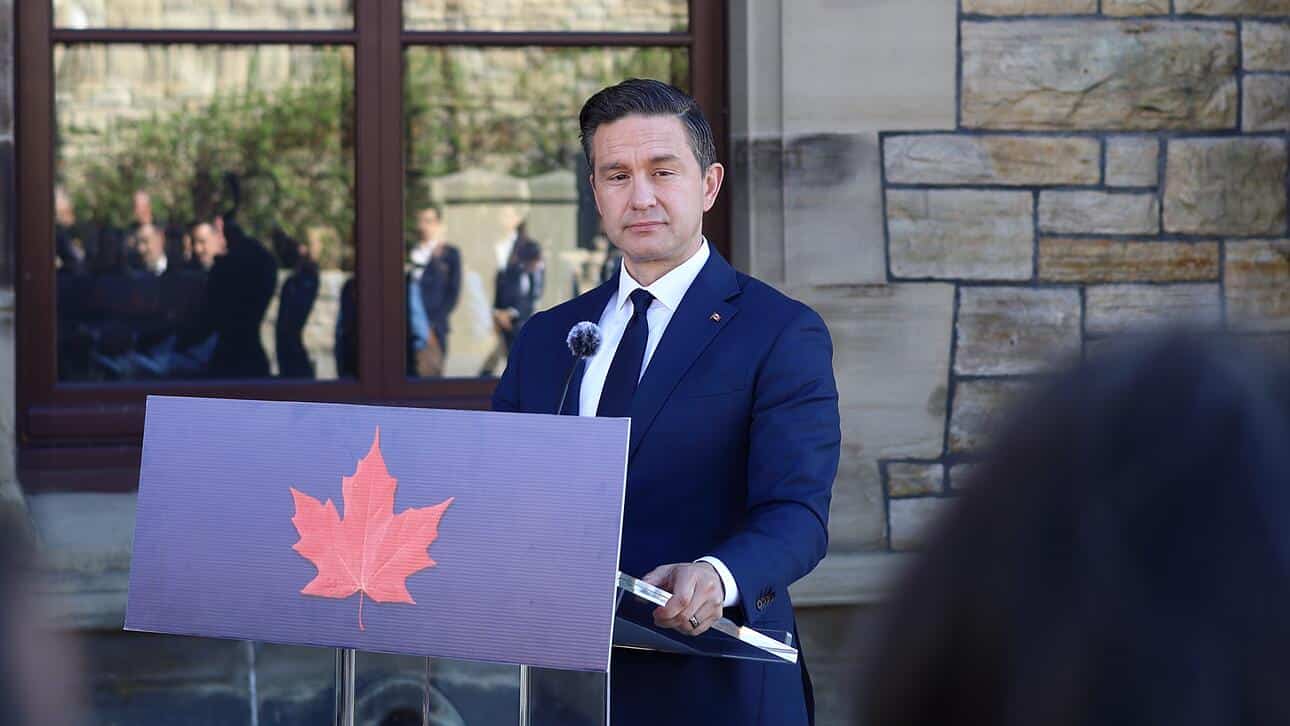
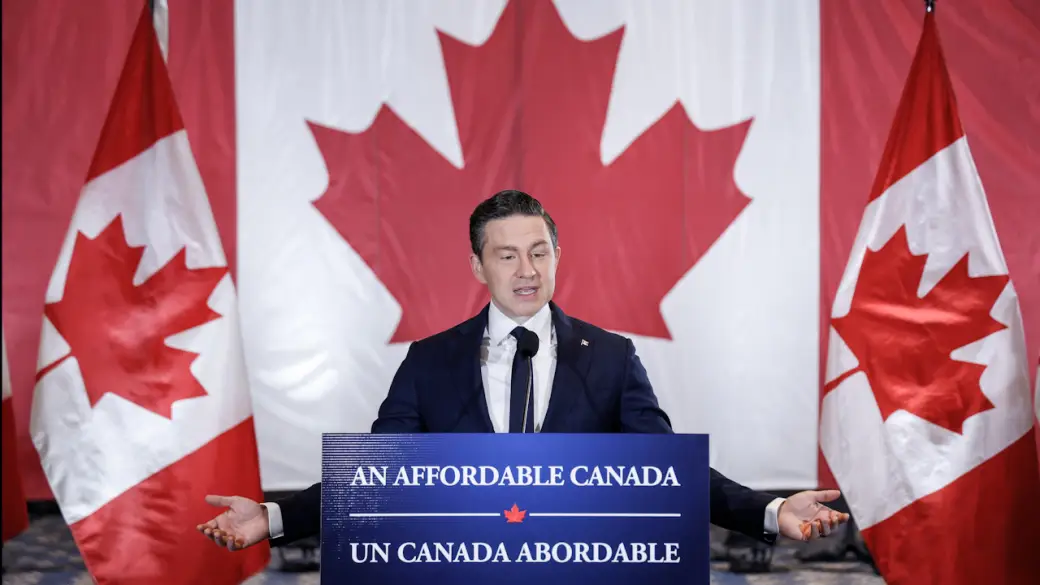
OTTAWA – Conservative Leader Pierre Poilievre faced a barrage of tough questions on Friday regarding the stability of his party caucus. However, the seasoned politician quickly shifted the media’s spotlight toward Canada’s struggling economy and mounting job losses.
Speaking in front of an idle steel plant, Poilievre completely dismissed Ottawa’s political gossip. He urged reporters to focus on the real struggles of working-class citizens who are terrified about missing their next mortgage payment.
Key Takeaways
- Poilievre deflected questions about departing Conservative members, choosing to prioritize critical economic issues over internal party struggles.
- He directly criticized the media for giving Prime Minister Mark Carney a pass on the country’s rising unemployment numbers.
- The Conservative leader brushed off Elon Musk’s tweets supporting Canadian separatism, reinforcing his commitment to a strongly united country.
Deflecting Ottawa Gossip for Real Issues
The press conference took place against the gloomy, quiet backdrop of a shut-down steel facility. The towering smokestacks stood dormant, serving as a powerful visual aid for the Conservative leader’s economic message. Hundreds of workers had just been sent home, completely unsure of how they would buy groceries or pay their upcoming bills.
A reporter challenged Poilievre about recent unrest within his own conservative ranks. They specifically mentioned Scott Aitchison and the ongoing departure of eight different caucus members. The journalist wondered aloud if the Conservative team felt demoralized about their chances of ever forming a government.
Poilievre did not hold back in his fiery response to the press pool. He called it amazing that reporters would focus on political drama while standing in front of a factory where hundreds had just lost their livelihoods. For him, the media’s priorities seemed entirely disconnected from everyday reality.
He noted that these desperate steel workers are joining the 68,000 Canadians who lost their jobs just last month. Furthermore, he highlighted a grim statistic about the national housing market. According to Poilievre, 56 percent of Canadians do not own a home and strongly believe they never will.
Taking Aim at Prime Minister Carney
Instead of dwelling on his own political headaches, Poilievre turned his rhetorical fire toward Prime Minister Mark Carney. He suggested that the national media has been entirely too soft on the current Liberal leadership in Ottawa. He demanded equal scrutiny for the governing party, noting that the Liberals have faced their own internal crisis.
Poilievre claimed reporters have spent the last year exclusively asking about Conservative infighting. Meanwhile, he argued, they happily ignore the people leaving Carney’s own caucus and the citizens struggling under his policies. He stressed that the true focus should remain on citizens who are fighting just to survive.
The Conservative leader argued that Parliament Hill politics might be very interesting to wealthy insiders. However, he insisted this drama means absolutely nothing to everyday blue-collar workers. He firmly stated his core mission is to save Canadians money and create reliable, well-paying jobs.
He wants to give young people genuine hope that they will be able to afford homes and start families. Poilievre stated these are the real problems of real people across the nation. He then openly challenged the media to ask Prime Minister Carney some difficult questions about these exact issues.
Brushing Off Foreign Social Media Interference
The conversation then took an unexpected turn toward the topic of foreign influence and social media antics. Katherine Manny, a reporter from the Canadian Press, asked for his thoughts on billionaire Elon Musk’s recent controversial statements. Musk is widely known for stirring the pot on global political issues.
Musk had reportedly posted messages on social media throwing his support behind separatist movements in Quebec, Alberta, and Saskatchewan. These movements seek to break away from the federal government and establish independent nations. The reporter asked if Poilievre was deeply concerned about this kind of foreign interference coming from a high-profile figure in the United States.
Poilievre firmly and quickly dismissed the billionaire’s online activities as completely irrelevant to the daily lives of citizens. He stated clearly that Conservatives believe in building stronger provinces within a completely united and independent Canada. He refused to give the billionaire’s comments any serious political weight.
He urged the public and the press to spend significantly less time worrying about silly tweets from foreigners. According to the Conservative leader, no social media post from an outsider can ever challenge the strength of the nation. He believes Canadians firmly control their own destiny.
A Nationwide Campaign for Canadian Unity
Poilievre emphasized that internet tweets and viral memes do not affect the country’s actual economic or political trajectory. He declared that only the hard choices made by the Canadian people can truly shape their own destiny. He wants voters focused on their wallets, not their smartphones.
To counter the rising separatist narrative, Poilievre announced his continuing nationwide campaign focused purely on national unity. He confirmed he will be traveling back to Alberta next week to deliver another highly anticipated keynote speech. This will be his third major address dedicated entirely to keeping the country together.
He plans to pair these large speeches with heavy, on-the-ground grassroots campaigning. His goal is to connect directly with concerned voters in every single province. He wants to ensure that western alienation does not fracture the national identity.
He warmly invited Canadians of all political stripes to join his ambitious mission for a safer and more affordable country. Poilievre concluded the press conference by promising to deliver a fully independent nation that finally works for everyone. He believes this unity will ultimately solve the ongoing economic crisis.
Frequently Asked Questions
Who is the current leader of the Conservative Party of Canada?
Pierre Poilievre is the leader of the Conservative Party of Canada. He regularly campaigns on economic issues, housing affordability, and national unity.
What did Elon Musk say about Canada?
Elon Musk recently posted social media messages supporting separatist movements in Quebec, Alberta, and Saskatchewan. Pierre Poilievre quickly dismissed these comments as “silly tweets” that do not affect the nation.
What is Pierre Poilievre’s stance on Canadian separatism?
Poilievre strongly opposes separatism in any province. He advocates for a united Canada, arguing that strong provinces like Alberta and Quebec are essential to a thriving, independent nation.
Why was Pierre Poilievre speaking at a steel plant?
He chose the idled steel facility as a backdrop to highlight recent job losses and economic struggles. He used the location to pivot away from political gossip and focus on the real-world impact of unemployment.
Trending News:
How Canada’s Combating Hate Act Stifles Free Speech
Behind Carney’s $1-Trillion Canada Investment Scheme

Is Modern Political Empathy Actually Just Hidden Narcissism?
US Trade Moves Put Massive Pressure on Canada

Canada Sheds 68,000 Jobs As Economic Fears Deepen
Pierre Poilievre Critiques Reporter Who Questions His Leadership
How Canada’s Combating Hate Act Stifles Free Speech

Uncovering the Truth Behind Inequality: A Bold New Vision

How Progressivism Replaced Religion With A New Secular Faith
Behind Carney’s $1-Trillion Canada Investment Scheme
Poilievre Blasts Carney’s Plan To Sell Off Airports

Food Insecurity and Surging Prices: Canada’s Inflation Squeeze
Uncovering the Truth Behind Inequality: A Bold New Vision
How Progressivism Replaced Religion With A New Secular Faith
Canada Sheds 68,000 Jobs As Economic Fears Deepen
Food Insecurity and Surging Prices: Canada’s Inflation Squeeze
Poilievre Blasts Carney’s Plan To Sell Off Airports
Behind Carney’s $1-Trillion Canada Investment Scheme
How Canada’s Combating Hate Act Stifles Free Speech
Pierre Poilievre Critiques Reporter Who Questions His Leadership
US Trade Moves Put Massive Pressure on Canada
Is Modern Political Empathy Actually Just Hidden Narcissism?

Jimmy Kimmel Slammed for “Vile” Melania Trump “Expectant Widow” Joke

President Trump Addresses Nation on War with Iran

Trump Warns NATO Allies: America Won’t Protect Slackers After Iran Clash

Senate Hearing on Fraud and Foreign Influence Turns Tense Over Minnesota Scandals

CNN Forced to Backtrack Its Reporting on Trump’s Iran Talks

Joe Rogan Slams Gavin Newsom for Mocking Nick Shirley

Mosque Set Ablaze in Iran a Citizens Revolt Against the Islamic Regime

AOC Accuses Jessie Watters of Fox News of Sexualizing and Harassing Her

JD Vance Exposes Walz’s Fraud and CNN’s Lies in White House Presser

Milestone Card Credit: How the Milestone MasterCard Can Transform Credit


-

 News9 months ago
China-Based Billionaire Singham Allegedly Funding America’s Radical Left
-
Crime10 months ago
YouTuber Nick Shirley Exposes BILLIONS of Somali Fraud, Video Goes VIRAL
-
Politics10 months ago
Ilhan Omar Faces Renewed Firestorm Over Resurfaced Video
-
Politics9 months ago
2026 Midterms Guide: Candidates, Key Issues, and Battleground States
-
Politics8 months ago
CNN Delivers Stark Reality Check to Democrats Over Voter ID
-
Politics8 months ago
Ilhan Omar’s Connections to Convicted Somali Fraudsters Surface
-
Politics7 months ago
Rep. Ilhan Omar Faces Heat as Minnesota Voters Seek Change
-
Politics8 months ago
Trump Approval Rating (February 2026 Poll Results, Approve vs Disapprove)