

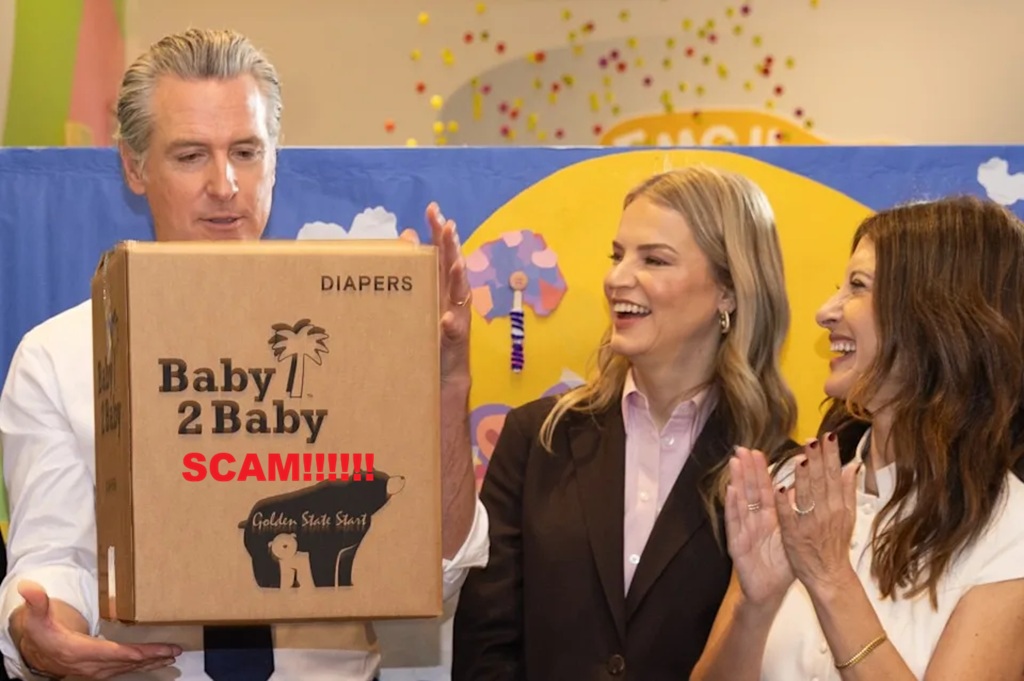

SAN FRANCISCO, California – It sounded like the perfect plan to help struggling parents. On a Friday afternoon at a science museum in San Francisco, California, Governor Gavin Newsom smiled for the cameras. He announced a brand new program to give free diapers to families with newborn babies.
The state calls it the “Golden State Start” program. The main goal is to hand out free diapers to parents right as they leave the hospital.
At first glance, this sounds like a great idea. Diapers cost a lot of money. Raising a child is very expensive, especially in California. However, when you look closely at the details, the true story begins to change.
Many experts and community leaders are now speaking out. They say the numbers do not add up. They are worried that the state is throwing away millions of dollars on a broken system. Some are even calling the plan a massive trap that could ruin the local charities already doing this important work.
Let’s take an honest look at the facts behind the $20 million diaper controversy.
The Big Promise: 400 Free Diapers
The governor says the new program will help low-income families right away. The state plans to hand out exactly 400 diapers to every newborn delivered at certain hospitals.
California is partnering with a charity called Baby2Baby to make this happen. This group says it can make diapers for 80% less than the normal store price. To pay for the project, the state has already set aside $7.4 million from last year’s budget. Now, the governor is asking for another $12.5 million for the upcoming year. This brings the total price tag to nearly $20 million.
Newsom says the 400 diapers will give families enough supplies to last for three months. According to local news reports, health officials claim this will ease the painful financial stress of bringing a new baby home.
But does it really work out that way?
The Math Does Not Make Sense
The first major problem with the diaper plan is simple math. The governor’s office claims that 400 diapers will last a family for three whole months. Any parent knows this is simply not true.
A newborn baby goes through about eight to ten diapers every single day. If you do the math, 400 diapers will only last about 40 days. That is just over a single month.
Critics say it is incredibly unfair for the government to promise families three months of peace of mind, only for the diapers to run out in a few short weeks. The state is building a huge public campaign around a promise it cannot keep. This clear mistake has left many people wondering who actually planned this program.
Why Critics Call It a “Money Trap”
The harsh reality is that California already has a system for giving out free diapers. For years, the state has worked closely with local food banks, shelters, and community groups.
According to the Pacific Research Institute, the old system worked very well. In the past, the state spent $30 million over three years to give out 144 million diapers. These local groups helped families for years as their babies grew, not just for a few weeks after birth.
Matthew Fleming, a researcher who looked deeply into the new plan, says the whole idea is an “inefficient money trap.” Critics point out several massive flaws in the governor’s logic:
- Shorter Help: The old charities helped families for years. The new plan cuts that down to just 40 days.
- Wasted Money: Creating a brand new government system to ship, store, and manage diapers costs a lot of extra money.
- Slow Rollout: Right now, the program will only reach about 25% of the births in the state. It only helps families at about 60 to 75 hospitals.
- No Long-Term Plan: The state only has plans for the first two years. No one knows what will happen to these families in year three.
When you look at these simple facts, it becomes clear why people are so upset. Why spend $20 million to build a new program when the old one was already doing the job?
Hurting the Charities That Actually Help
One of the biggest fears is what will happen to the local groups that already give out diapers. These local charities have spent years building deep trust in their neighborhoods.
Now, they are worried the state will cut their funding. The state government only has so much money to spend. If they throw $20 million at the governor’s new hospital program, they might take that money away from the community food banks.
When reporters asked the state if the old charities would lose their funding, officials did not give a clear answer. This silence has caused panic among local leaders. If these groups have to close their doors, poor families will have nowhere to turn after the state’s 400 diapers run out. This means the governor’s new plan could actually leave low-income parents worse off than they were before.
A History of Broken Promises
Many people in California are also worried because the state has a long history of failing at big projects like this.
A few years ago, the state tried a very similar plan to make its own cheap medicine, like insulin for diabetes. That program was called CalRx. The state promised to make medicine fast and cheap. Instead, the project is years behind schedule. The real costs are hidden, and people still do not have the cheap medicine they were promised.
Critics look at the new diaper plan and see the same warning signs. Building a giant network to make, ship, and pass out millions of diapers is very hard. It takes a lot of careful planning. If the state cannot even make insulin on time, how will it manage to pass out millions of diapers without mistakes?
By taking the job away from local charities that know exactly what they are doing, the state is taking a huge risk. If the plan fails, the taxpayers will lose $20 million, and the babies will go without diapers entirely.
How Do Other States Compare?
It is also helpful to look at how other parts of the country handle this exact issue. California is not the only state trying to help parents pay for baby supplies.
Two years ago, states like Tennessee and Delaware started offering free diapers to poor families. However, they did it in a much safer way. In Tennessee, families can go to a local drug store to pick up 100 free diapers every month for children under the age of two. In Delaware, the state gives families up to 80 diapers a week for the first few months.
Notice the big difference? These states use systems that are already built, like local pharmacies. They also spread the help out over a long period of time. They did not try to build a brand new factory and shipping network from scratch.
California could easily copy these safer, cheaper ideas. Instead, the state wants to go its own way. By trying to completely control how the diapers are made and handed out, the governor is choosing the hardest and most expensive path possible.
A Play for Headlines?
So, why is the governor doing this? Some political experts believe the answer is very simple: he wants good headlines.
Announcing a “first-in-the-nation” free diaper program sounds amazing on the evening news. It makes for a great speech. It looks wonderful when politicians smile for the cameras next to piles of baby supplies.
But good headlines do not always mean good rules. When you strip away the fancy speeches, the actual program is full of giant holes. It forces the state to spend millions on building a new shipping network. It gives parents less help than the old charities did. It makes false promises about how long the diapers will last. Finally, it threatens to destroy the local groups that have supported mothers for years.
What Comes Next for Parents?
Right now, the $12.5 million request is sitting in the state budget. Lawmakers will soon have to decide if they want to approve the money.
Parents, charity workers, and taxpayers are all watching closely. They are loudly asking the state to slow down. They want the government to support the local groups that are already doing the hard work, rather than building a flashy new system from the ground up.
Every single baby deserves a healthy start in life. But true help means creating a system that actually works in real life, not just a system that looks good on television. Californians must demand clear answers from their leaders. Until the state can prove this $20 million is being spent wisely, the new diaper plan looks less like a lifeline and more like an expensive political trick.
Let’s Look at the Bottom Line
The truth is always found in the details. Here is a quick summary of what we know about the program so far:
- The Cost: Nearly $20 million of taxpayer money.
- The Promise: 400 diapers for every newborn at participating hospitals.
- The Reality: 400 diapers only last about 40 days, not the promised three months.
- The Risk: Existing community charities might lose their funding and close down for good.
- The Record: Past state plans, like the CalRx medicine program, have completely failed to meet their goals.
Before California hands over another huge check, the voters need to ask the tough questions. Taking care of young families is important. We simply cannot afford to get this wrong.
Trending News:
Joe Rogan Slams Gavin Newsom for Mocking Nick Shirley
California Democrats are Panicking Over the 2026 Governor’s Race