
Canada
Canada Sheds 68,000 Jobs As Economic Fears Deepen

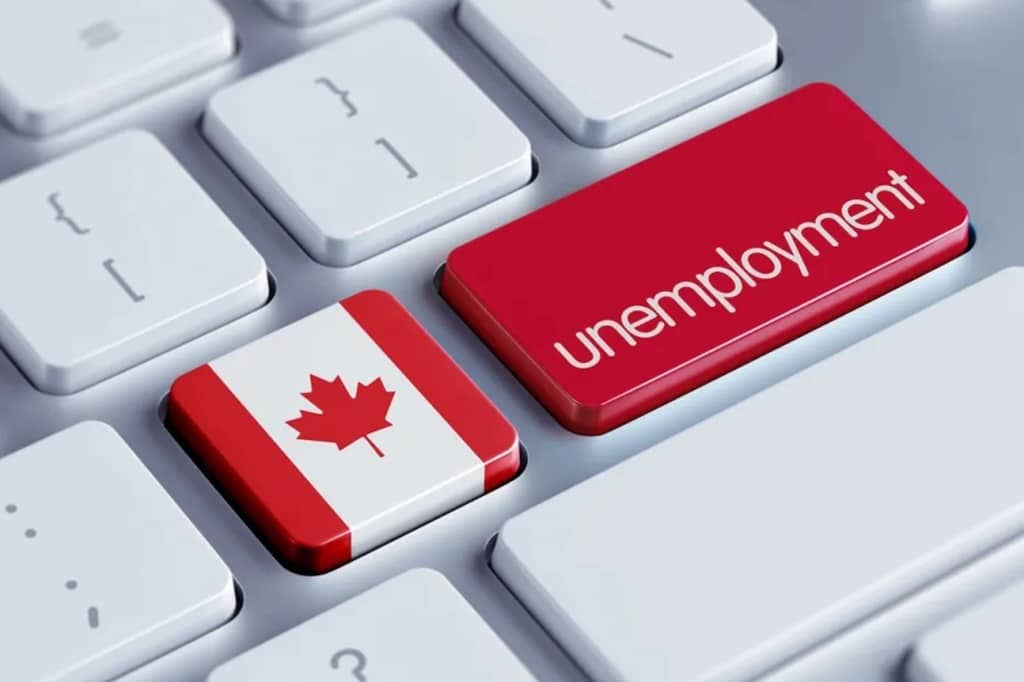
OTTAWA – Canada’s job market is facing a sudden and brutal reality check. Employers unexpectedly slashed 68,000 jobs in September 2026, marking a second consecutive month of significant economic contraction.
This steep drop pushed the national unemployment rate up to 6.5 percent. The alarming figures completely shattered the expectations of financial experts, who had confidently predicted a modest gain of about 9,200 positions for the month.
Key Takeaways
- Massive Job Losses: Canada lost a net 68,000 jobs in September 2026, heavily impacting youth, women, and public sector workers.
- Political Fallout: The severe economic slump sharply contradicts recent claims by Prime Minister Mark Carney about a rapidly growing, job-creating economy.
- Trade War Impact: Industry leaders warn that aggressive U.S. tariffs are devastating Canadian manufacturing, threatening the survival of the auto and steel sectors.
A Devastating Blow to the Canadian Labor Market
The sheer scale of these job losses has sent shockwaves through the entire country. After a promising spring that saw steady employment growth, the late summer and early fall have painted a grim picture. September’s decline follows an equally troubling loss of roughly 42,000 jobs in August.
According to a recent report by Global News, the job market hemorrhage was split almost evenly between full-time and part-time positions. This broad-based decline suggests systemic issues rather than isolated industry hiccups. It is a troubling sign that businesses of all sizes are frantically tightening their belts to survive.
For young Canadians, the numbers are particularly disheartening. Youth aged 15 to 24 bore a massive brunt of the economic pain, losing a staggering 48,000 jobs in a single month. Women aged 25 to 54 also faced severe headwinds, with total employment in this demographic dropping by 28,000.
These specific demographic hits mean that families and young people are feeling the squeeze right now. It is getting incredibly difficult for new graduates to find their footing in this current economic climate. Everyday workers are increasingly anxious about their future and their ability to pay the bills.
Public Sector and Education Bear the Brunt
When looking at specific industries, the public sector stands out for all the wrong reasons. The number of public sector employees dropped by an astonishing 70,000 in September. This represents the fourth consecutive monthly decline for government-funded roles across the nation.
Educational services saw a heavy blow, shedding 35,000 jobs in just four weeks. Healthcare and social assistance followed closely behind, losing an additional 23,000 crucial positions. Statistics Canada suggests that a smaller influx of international students may be partly responsible for the severe downturn in the education sector.
However, the sheer volume of public sector cuts has raised eyebrows among political observers. Year-over-year, the public sector is now down by 119,000 jobs. This massive contraction is drastically reshaping the Canadian workforce and placing immense pressure on vital social services.
The Political Blame Game Heats Up
These new statistics arrive at a highly awkward moment for the current federal government. Prime Minister Mark Carney recently stood in the House of Commons, enthusiastically touting the creation of 140,000 new jobs under his leadership. He proudly declared that Canada boasted the fastest-growing economy in the G7.
Carney emphasized that incomes were growing, rents were coming down, and housing affordability was finally improving. Yet, the stark reality of the September jobs report completely contradicts this rosy political narrative. Instead of booming growth, Canada has effectively lost a net 41,200 jobs so far this year.
This sharp decline stands in stark contrast to the same period just one year ago. During that previous stretch, the Canadian economy added a solid 211,300 jobs. The sudden reversal of fortune has left many swing voters questioning the government’s competence and economic management strategies.
Echoes of Past Election Promises
The political irony of the situation is not lost on seasoned Ottawa insiders. During the last federal election, the Liberal Party heavily campaigned on the fear of Conservative budget cuts. They explicitly warned voters that a government led by Pierre Poilievre would aggressively slash the public service.
Liberals argued that Conservative policies would ruthlessly gut government jobs and compromise vital public services. Poilievre himself openly admitted he wanted to trim the federal bureaucracy, though he voiced support for flexible remote work arrangements. Union leaders fiercely pushed back, claiming that reckless public service cuts would ultimately cost Canadians dearly.
Now, under Carney’s leadership, the public sector is experiencing the exact massive job losses that the Liberals previously warned about. Furthermore, the government is forcing federal employees back into the office, mirroring policies championed by American politicians like Donald Trump. This stunning reversal has understandably sparked deep frustration and buyer’s remorse among progressive voters.
During passionate debates, Liberal candidates repeatedly assured the public that a strong, well-funded government workforce was essential to the nation’s success. Yet, the current reality paints a vastly different picture of who is actually wielding the budgetary axe. Union leaders, who previously backed the government, are now expressing profound disappointment over these aggressive staffing cuts.
American Tariffs Take a Heavy Toll
While domestic politics play a major role, external pressures are also crushing the Canadian economy. The September report represents the first full month of data since a brutal new set of American tariffs went into effect. These restrictive trade measures are creating a nightmare scenario for cross-border commerce.
A comprehensive report from CBC News highlights that the U.S. trade war is taking a massive toll on Canadian resilience. Accounting giant Deloitte even lowered its economic growth forecast for Canada by 20 percent due to these punishing tariffs. The pain is particularly acute in industries heavily reliant on North American integration.
Manufacturing took a direct hit, shedding 13,000 jobs in September alone. Factory floors are going quiet, and industrial communities are bracing for widespread layoffs. Without immediate relief from these trade barriers, the manufacturing sector faces a potentially catastrophic collapse in the coming year.
Steel Industry Sounds the Alarm
The Canadian steel industry is currently fighting for its very survival. Executives and industry experts recently testified before a Senate committee, painting a terrifying picture of the near future. They explained that U.S. Section 232 tariffs have caused a massive 60 percent drop in Canadian steel shipments to the United States.
These trade actions are heavily penalizing Canada, despite it being America’s most integrated and reliable trading partner. Compounding the misery, the U.S. has specifically targeted steel-containing products derived from the Canadian market. Meanwhile, cheap, unfairly traded offshore steel continues to flood into Canada, heavily undercutting domestic producers.
Industry leaders are now desperately demanding stronger protections from the federal government. They insist on closing glaring loopholes in “Buy Canadian” public procurement policies. True domestic policies must require steel to be melted and poured in Canada, rather than allowing foreign steel to be simply modified and slapped with a local label.
The Auto Industry Faces an Existential Threat
Much like the steel sector, the Canadian automotive industry is staring into the economic abyss. The historic, deeply intertwined North American auto supply chain is actively fracturing under intense political pressure. The share of U.S.-built vehicles sold in Canada has plummeted from 43 percent in 2024 to a mere 28 percent today.
Automotive experts warn that this drastic decline severely weakens the fundamental competitiveness of the entire industry. Bizarrely, it is now more cost-effective for companies to build a vehicle in Japan, Germany, or Korea and export it to the U.S. than to build it in Canada. This logistical nightmare threatens tens of thousands of well-paying union jobs.
An astonishing 92 percent of all Canadian vehicle production is exclusively destined for the American market. There is simply no viable Canadian auto industry without seamless, tariff-free access to the United States. Diversifying to European or Asian markets is geographically and economically impossible for these specific vehicle assembly plants.
A Call to Return to the Negotiating Table
The clock is loudly ticking for these foundational manufacturing industries. Over 15 percent of Canadian manufacturers explicitly state they will be unable to sustain operations beyond a single year without additional government support. These are not merely statistics; these represent real factories, hardworking people, and entire communities.
Industry heads are practically begging the federal government to aggressively get back to the negotiating table. They believe a mutually beneficial trade agreement with the U.S. is still achievable if leaders are willing to do the hard work. After all, Canada remains the single largest destination for American vehicle exports globally.
If Prime Minister Carney ignores these desperate pleas, the economic consequences could be absolutely disastrous. Industry experts predict that the crucial mold, tool, and die sectors could be entirely wiped out within six months. Without immediate diplomatic intervention, the heartland of Canadian manufacturing will likely face irreversible devastation.
Regional Divides and the Road Ahead
The economic pain of this labor market contraction is not being felt equally across the country. A distinct geographic divide is rapidly emerging, heavily impacting provinces that traditionally support the Liberal government. Eastern Canada is currently bearing the absolute worst of the rising unemployment numbers.
Quebec led the nation in catastrophic job losses, shedding a massive 49,000 positions in a single month. Ontario, the industrial engine of the country, is also seeing unemployment rates steadily tick upward. Regions heavily reliant on manufacturing, public administration, and international trade are bleeding jobs at an alarming rate.
Conversely, Western Canada is demonstrating a surprising degree of economic resilience amid the chaos. Alberta managed to buck the national trend completely, adding a highly impressive 23,000 jobs during the exact same timeframe. Saskatchewan also saw decent declines in its unemployment rate, showcasing a stark contrast between the resource-heavy West and the manufacturing-dependent East.
What This Means for Everyday Canadians
For the average Canadian family, these troubling numbers translate into profound economic anxiety. Job security is quickly becoming a luxury of the past for many workers. The rising unemployment rate means harder job searches, intense wage stagnation, and growing financial pressure on household budgets.
The bleak labor force survey has also drastically shifted expectations for the Bank of Canada. Previously, financial experts believed the central bank might aggressively hike interest rates due to lingering inflation concerns. Now, markets widely expect the Bank to hold rates steady, as more hikes would further crush a clearly struggling economy.
The upcoming months will be a monumental test for the current federal government. As the job market slowly starts drowning, political rhetoric will no longer be enough to soothe angry, unemployed voters. If leaders cannot secure crucial trade deals and stabilize the workforce, they will face a harsh reckoning at the ballot box.
Frequently Asked Questions (FAQ)
How many jobs did Canada lose in September 2026?
Canada lost a net total of 68,000 jobs in September 2026. This massive and unexpected decline pushed the national unemployment rate up to 6.5 percent.
Which demographic groups were most affected by the job losses?
Young workers aged 15 to 24 were the hardest hit, losing an incredible 48,000 jobs. Women aged 25 to 54 also saw a significant drop, losing 28,000 positions during the same month.
Why is the public sector losing so many jobs right now?
The public sector shed 70,000 jobs in September, largely driven by massive staffing cuts in educational services, healthcare, and social assistance. Fewer international students arriving have partially contributed to the sharp decline in education jobs.
How are U.S. tariffs impacting the Canadian economy?
Punishing American trade tariffs are heavily restricting Canadian exports, particularly within the steel and auto industries. This has directly led to widespread manufacturing job losses and threatens the long-term survival of cross-border supply chains.
Is the job loss affecting all Canadian provinces equally?
No, the economic pain is highly regional right now. Eastern provinces like Quebec and Ontario are experiencing severe job losses. Meanwhile, Western provinces like Alberta have managed to add jobs and significantly lower their unemployment rates.
Trending News:
How Canada’s Combating Hate Act Stifles Free Speech
Pierre Poilievre Critiques Reporter Who Questions His Leadership


VANCOUVER – Canada is feeling a severe financial squeeze every time they fill up their gas tanks or buy groceries. The rising cost of living remains a heavy burden for households right across the country.
As frequently noted by CBC News, everyday expenses like food and fuel simply continue to drain wallets. People desperately want financial relief, but ongoing inflation pressures are keeping consumer prices stubbornly high.
Recent economic data highlights exactly why affordability remains a central concern for many working families. While the overall national inflation rate has held steady, specific sectors are still seeing rapid price increases. Global events and unexpected supply chain issues play a remarkably large role in these ongoing financial challenges. As a direct result, average shoppers are forced to stretch their paychecks further than they ever have before.
Key Takeaways
- Overall inflation holds steady: Canada’s inflation rate remains around 3%, but core living expenses still feel overwhelming for consumers.
- Gas prices are surging: Ongoing global energy shocks continue to drive up the daily cost of fuel for everyday drivers.
- Food remains expensive: Grocery prices are rising at a slower pace, but the final checkout total remains stubbornly high.
Why the Cost of Living Continues to Climb
Every single month, household budgets face new tests as essential consumer goods become increasingly expensive. The steady rise in Canadian living costs is certainly not just a brief or temporary price spike. Financial experts note that multiple external factors are working together to keep retail prices highly elevated. These stubborn factors include high interest rates, global supply disruptions, and sudden shifts in consumer demand.
When you look closely at the underlying numbers, the difficult reality for consumers becomes incredibly clear. According to recent reports from Statistics Canada, the annual inflation rate hovered around 3% in recent months. This overall figure might seem entirely reasonable, but it effectively masks the severe price hikes in daily essentials. Unavoidable shelter costs, such as monthly rent and mortgage payments, also take a massive bite out of incomes.
Central banks are monitoring these economic trends very closely to carefully decide their next monetary moves. The Bank of Canada has deliberately kept interest rates elevated in an attempt to cool down the economy. However, these higher borrowing costs also make life significantly harder for anyone holding a mortgage or credit card debt. Therefore, finding a perfect balance between controlling overall inflation and helping ordinary consumers remains an incredibly difficult task.
The Shock at the Gas Pumps
If you regularly drive a vehicle, you already know all about the severe financial pain at the pump. Gasoline prices have surged recently, putting massive economic pressure on daily commuters and local businesses alike. This sudden price spike is largely driven by global conflicts and deep uncertainty in the international energy markets. When international oil supplies face unexpected threats, the higher cost trickles down to local gas stations very quickly.
Many leading economists actively refer to this ongoing market situation as a sudden energy price shock. Because fuel is strictly required to transport nearly everything, higher gas prices negatively affect the whole economy. Commercial delivery trucks pay far more for diesel, which naturally increases the final price of shipped retail goods. This predictable chain reaction practically guarantees that elevated fuel costs eventually show up on everyday retail shelves.
Some financial experts genuinely fear that if global oil prices stay high, domestic inflation could accelerate again. Unfortunately, consumers currently have very few realistic options when it comes to cutting back on essential travel. People absolutely still need to drive to their workplaces, take kids to school, and run daily household errands. Consequently, Canadian drivers must simply absorb these extra fuel costs, leaving them with less money for other purchases.
Grocery Bills Remain Uncomfortably High
Basic food affordability is the second major hurdle for average families trying to manage their monthly finances. Although grocery store inflation has slowed down compared to last year, the overall grocery totals remain shockingly high. Retail prices for basic dietary staples like meat, dairy, and fresh produce have mostly stabilized but not dropped. This frustrating reality means that average consumers are still paying significantly more than they did three years ago.
Several unique environmental factors continue to heavily influence the final cost of your weekly grocery store run. Extreme global weather events, such as prolonged droughts, have drastically reduced crop yields and animal herd sizes. Additionally, a slightly weaker Canadian dollar makes importing processed foods and fresh agricultural goods much more expensive. These combined market forces make it almost entirely impossible for major supermarkets to drastically lower their retail prices.
Frugal shoppers are changing their purchasing habits rapidly to somehow cope with these incredibly expensive checkout receipts. Many stressed families are quickly switching to discount stores or relying heavily on weekly promotional sales flyers. Other buyers are cutting back on expensive items like beef, opting instead for much cheaper protein alternatives. Despite utilizing these smart shopping strategies, the heavy feeling of household financial strain continues to linger daily.
What This Means for Everyday Canadians
The combined heavy weight of expensive food and surging gas is fundamentally reshaping modern Canadian consumer lifestyles. Working families are currently making tough choices between basic daily necessities and discretionary spending like family vacations. Local community businesses also suffer greatly when neighborhood consumers have much less disposable income to spend freely. Ultimately, this ongoing cost of living crisis negatively impacts the overall health of the entire domestic economy.
Looking ahead to the future, ordinary Canadians are desperately hoping for some sort of meaningful financial relief. While the overall national inflation rate might not be climbing rapidly, the lasting damage to household budgets is already done. Consumer prices very rarely return to their previous historical lows once they have comfortably settled at a higher baseline. Until average worker wages catch up to these new living expenses, daily affordability will remain the defining economic issue.
Trending News:
Why the U.S. Claims Canada Changed the Trade Deal
If Mark Carney is So Pro Canada Why Are 91% of His Investments U.S.-Based


Alberta’s biggest fortunes did not come from one business model. They came from cleaning up oil-field waste, reading geology, laying cable into homes, renting trailers, operating pharmacies, and moving earth with horses before Alberta became a province.
If you want to understand who has shaped the province’s economy, look beyond oil wells alone. These families and business leaders built companies that touch energy, telecom, sports, construction, housing, railways, health care, and philanthropy.
Why Alberta’s wealth stories are rarely simple
Alberta’s resource economy created huge opportunities, but drilling for oil was never the only way to profit. Some of the people on this list made their money by owning the services, infrastructure, or assets that keep the industry moving through good markets and bad.
That context still matters. Alberta holds much of Canada’s oil-sands wealth, and its economy remains closely tied to resource production, transportation, and export markets. For broader context, see Alberta’s role in Canada’s resource economy.
Private family wealth is difficult to verify. The figures below are estimates, not audited financial statements, and they can change with company valuations, commodity prices, asset sales, and public market movements.
Here is a quick view of the ranking and the businesses behind it.
| Rank | Family or individual | Main source of wealth | Estimated fortune |
|---|---|---|---|
| 8 | Werklund family | Environmental and waste services | About $1.5 billion |
| 7 | Markin family | Energy and philanthropy | More than $1 billion |
| 6 | Riddell family | Oil and gas | More than $1.5 billion |
| 5 | Shaw family | Telecommunications | Changed after the 2023 sale |
| 4 | N. Murray Edwards | Energy investments and acquisitions | $2 billion to $3 billion |
| 3 | Southern family | ATCO and Spruce Meadows | $2 billion to $2.5 billion |
| 2 | Katz family | Pharmacy, sports, and investments | About $7.2 billion |
| 1 | Mannix family | Construction, rail, energy, and real estate | About $3.3 billion |
The order reflects the video’s focus on long-running Alberta dynasties, not a strict net-worth ranking. Daryl Katz, for example, has the largest individual fortune in the group.
8. The Werklund family built wealth on oil’s cleanup work
David Werklund found value in the industry’s leftovers
Oil and gas operations create more than production revenue. They also leave behind contaminated soil, drilling mud, produced water, tank bottoms, and other material that must be handled under environmental rules.
David Werklund built businesses around that constant need. While many Alberta entrepreneurs competed to find the next productive well, Werklund focused on the work that came after drilling, transporting, storing, and closing sites.
That business approach was less glamorous than exploration, but it carried an advantage. Oil companies need waste-management and remediation services when they are expanding, and they need them again when they shut down or reclaim sites.
Tervita worked across oil-market cycles
Werklund’s companies grew into Tervita, an environmental and waste-management business with deep ties to the oil and gas sector. The model did not rely on predicting where oil prices would go next.
When prices rise, drilling activity often increases and creates more industrial waste. When prices fall, operators cut spending, abandon projects, or close facilities, creating cleanup and reclamation work.
“He wasn’t betting on the price of oil. He was betting on the fact that industry is always dirty.”
The Werklund family fortune has been estimated at about $1.5 billion. It is a different kind of Alberta wealth story, built around the costs and responsibilities that come with extraction.
7. The Markin family combined energy with health philanthropy
Allan Markin helped build Canadian Natural Resources
Allan Markin is one of the major figures behind Canadian Natural Resources, one of Canada’s largest oil and gas producers. He spent years as chairman and held a lower public profile than some of the company’s better-known leaders.
Still, a quiet profile should not be confused with a small role. Canadian Natural Resources became one of the central corporate forces in Alberta energy, and Markin’s connection to the company placed him near the center of that growth.
The Markin family fortune has been estimated at more than $1 billion, though no public figure can fully capture the value of private holdings and long-term investments.
Much of the family’s influence is in health care
Markin has directed substantial giving toward health and wellness in Alberta. His support has included mental health, addiction, chronic pain, and preventative care.
Those causes do not always produce a visible monument or a ribbon-cutting moment. Preventative programs can be harder to promote because their best result is often something that never happens, such as a hospital admission or an untreated illness.
Across Alberta, large fortunes often flow back into health and education close to where the money was made. The Markin family’s story fits that pattern, pairing energy wealth with long-term support for community health.
6. The Riddell family turned geological judgment into an energy empire
Clay Riddell understood the rock beneath the deal
Clay Riddell began as a geologist, and that gave him an edge in an industry full of financiers, promoters, and technical experts. He could evaluate geological information himself instead of relying entirely on someone else’s view of a prospect.
In 1976, Riddell founded Paramount Resources. He grew it into a major oil and gas company, and the family’s wealth has been estimated at more than $1.5 billion.
Riddell also held an ownership interest in the Calgary Flames. At Alberta’s highest levels of wealth, energy, professional sports, and real estate often overlap.
The family divided leadership instead of leaving a vacuum
Clay Riddell’s succession plan is one of the clearest parts of his legacy. His son, Jim Riddell, became president and chief executive of Paramount Resources. His daughter, Sue Riddell Rose, took leadership of Perpetual Energy.
That arrangement gave each operating company a defined leader. Many founders talk about succession but resist handing over control until the last possible moment. Riddell put the next generation in place while the businesses could continue operating with clear lines of authority.
Clay Riddell died in 2018. Paramount continued to operate and later expanded through the acquisition of Canadian assets from an American producer. The family story rests on a practical skill: understand the ground, build the company, then plan for who will run it next.
5. The Shaw family saw that the cable wire was the asset
J.R. Shaw started with a small Alberta cable business
In the 1960s, J.R. Shaw began a cable television company in Alberta. At the time, cable was largely seen as a way to improve television reception, not as the foundation for a national communications company.
Shaw saw the bigger opportunity in the physical network. The wire running into a customer’s home could carry television at first, but it could later carry phone service, broadband internet, and other services consumers had not yet imagined.
That physical connection gave the business lasting value. Content providers could change, but the network remained the route into the home.
Shaw Communications became a national company
The small cable company grew into Shaw Communications, one of Canada’s biggest telecommunications firms. The family retained control through a share structure that limited the ability of outside investors to take over the business.
In 2023, Rogers acquired Shaw Communications in a transaction valued at roughly $20 billion in the video’s account. The deal ended the Shaw family’s role as operating owners of the company they had built over decades.
J.R. Shaw died in 2020, before the transaction closed. Yet his name remains highly visible across Calgary through philanthropic projects and institutions. The sale turned a regional cable operation into one of the biggest business exits in Canadian corporate history.
4. N. Murray Edwards built his fortune by buying in downturns
A dry well changed Murray Edwards’s approach
N. Murray Edwards is the lone individual in this lineup rather than the head of a multigenerational family dynasty. He grew up in Regina, worked summer jobs refereeing hockey and collecting garbage, attended the University of Saskatchewan, and later earned a law degree in Toronto.
Edwards initially planned to practice law. He changed direction at age 28 after making a promise to a dying friend, according to his own account.
His early move into oil did not go well. An oil well he backed came up dry. Instead of continuing to chase discoveries, Edwards shifted toward buying companies and assets that already had proven resources.
He became known for buying when others sold
Edwards built his reputation by moving against the mood of the market. When oil prices fell and competitors faced pressure to sell, he looked for valuable assets at lower prices.
That strategy demands patience and a willingness to buy while prices are still declining. It also requires enough capital to act when many other buyers have pulled back.
His major holdings have included Canadian Natural Resources, Ensign Energy Services, and Melcor Aerospace. He also co-owns the Calgary Flames and owns Resorts of the Canadian Rockies, which operates several ski resorts.
Estimates have put Edwards’s wealth between $2 billion and $3 billion, depending heavily on energy markets. The hockey referee who once earned pocket money at the rink later became part-owner of an NHL franchise.
3. The Southern family turned $4,000 and 15 trailers into ATCO
Alberta Trailer Hire began as a family bet
In 1947, father and son put in $2,000 each and bought 15 utility trailers to rent around Calgary. They called the business Alberta Trailer Hire, a name that later became ATCO.
Ron Southern was still in high school when the business started. After earning a science degree at the University of Alberta in 1953, he returned to the company full-time and eventually served as president for 48 years.
The basic idea was straightforward: rent useful equipment to customers who needed it. Over time, however, the company expanded far beyond trailers.
ATCO took modular housing around the world
ATCO became known for workforce housing and modular buildings. When a project requires hundreds of workers to live in a remote location, someone has to build the accommodation, transport it, install it, and keep it running.
That business put ATCO in places far beyond Calgary. Its work has included oil-sands facilities in northern Alberta, construction projects in Abu Dhabi, and shelters in Antarctica.
The company has reported total assets around $18 billion and employs thousands of people. The family’s personal fortune has been estimated between $2 billion and $2.5 billion.
Fifteen rental trailers became an international company with projects in the oil sands, the Middle East, and Antarctica.
Spruce Meadows became a second family institution
In 1975, Ron Southern and his wife, Margaret, built Spruce Meadows on the edge of Calgary because their daughters, Nancy and Linda, were serious competitive riders.
Show jumping might have seemed an unusual fit for a city associated with the Stampede and rodeo. Yet Spruce Meadows became a leading international equestrian venue, welcoming athletes from more than 60 countries and millions of spectators over the years.
Ron Southern died in 2016 at age 85. Nancy Southern became chair and chief executive of ATCO, while Linda Southern leads Spruce Meadows. The family kept both parts of the enterprise connected to the interests that helped build them.
2. The Katz family created Alberta’s biggest individual fortune
Daryl Katz expanded a pharmacy investment across Canada
Daryl Katz grew up in Edmonton, attended Jasper Place High School, and earned a law degree from the University of Alberta. In 1991, he and his father invested $300,000 to acquire the Canadian rights to the Medicine Shoppe pharmacy franchise.
Katz continued to buy and expand. He acquired Rexall, added Pharma Plus, and built the Katz Group into an owner of hundreds of drugstores across Canada.
Pharmacy retail lacks the drama of oil exploration, but it has a dependable base of demand. People need prescriptions regardless of whether oil is trading high or low.
The video cites an estimated fortune of about $7.2 billion for Katz, placing him well ahead of the other individuals associated with Alberta. The ranking places him second because its top spot focuses on the historical depth and influence of a family dynasty.
Owning the Oilers brought a public fight over the arena
Katz bought the Edmonton Oilers in 2008. His ownership became tied to one of Edmonton’s most debated civic projects, the downtown arena that became Rogers Place.
Critics argued that public money helped support an arena tied to a billionaire’s team. Supporters argued that the project gave neglected parts of downtown Edmonton more activity, new development, and a major gathering place.
Both views remain part of the arena’s legacy. Katz also expanded into film financing through Silver Pictures, adding Hollywood to a business career rooted in pharmacies, retail acquisitions, and professional hockey.
1. The Mannix family has shaped Alberta for more than a century
The documented story starts with horses and railway work
The Mannix family is one of Alberta’s most private business dynasties. Public profiles are sparse compared with the attention around sports owners or public-company executives, even though the family’s businesses have shaped construction, railways, energy, real estate, and resource development for generations.
The family fortune has been estimated at about $3.3 billion. Its origin story reaches back to 1898, seven years before Alberta became a province.
Family lore says Frederick Stephen Mannix won an earthmoving machine in a poker game. The documented business history is more grounded: he bought a team of horses and took an earthmoving subcontracting job on Canadian Pacific Railway branch lines. A biographical record of Frederick S. Mannix traces the beginning of his contracting business to that year.
Illness and war tested the first generation
Frederick Stephen Mannix faced severe personal and financial setbacks. He was diagnosed with diabetes in the 1930s and lost both legs in the early 1940s.
During the Second World War, the family needed capital. In 1943, it sold a 51 percent controlling stake in the company to an American firm from Idaho, with one key condition: Frederick C. Mannix, the founder’s son, would remain president.
That condition mattered. In 1951, Frederick C. bought the company back from the American owners. His father died later that year, with an estate estimated at about $1 million.
Loram reflected a long-term family outlook
Frederick C. Mannix expanded the business into the Loram Group, a name connected to “Long Range Mannix.” The wording fits the family’s approach. Mannix businesses tended to be built and held over decades, rather than traded for short-term gains.
Loram Maintenance of Way became one of North America’s largest railway maintenance and equipment companies. By 1983, Frederick C. Mannix owned or controlled a network of 132 companies, according to The Canadian Encyclopedia’s profile of Frederick Charles Mannix.
The group also helped launch careers beyond the family. A young lawyer named Peter Lougheed worked for the Mannix organization before becoming Alberta’s premier.
The family later sued Lougheed’s government
That connection led to an awkward chapter in the 1970s. Lougheed’s government expropriated land from a Mannix ranch to create Fish Creek Park in south Calgary.
The Mannix family sued the government for $41 million. The dispute later settled for $7 million.
The episode captures the family’s independence. A former employee had become premier, but the family still fought his government when it believed its property rights had been compromised.
Two sons split the empire, then sold major assets
Frederick C. Mannix became one of the first two living inductees into the Canadian Business Hall of Fame. During the 1970s, he divided the empire between his sons.
Fred P. Mannix took control of what became Mancal. Ron Mannix took Coral Holdings, with interests across coal, oil and gas, construction, real estate, and railway maintenance.
In 1997, the family sold major energy assets, including Manalta Coal, Pembina Pipeline, and Pembina Resources, for more than $2 billion. The businesses were not sold because they had failed. The family used the sale to simplify estate planning after decades of ownership.
A year later, the family endowed a charitable foundation with $100 million. That sequence, built over a century, helps explain why the Mannix name takes the top spot in a dynasty-focused ranking.
What connects Alberta’s biggest fortunes
The common thread is business ownership, not inherited wealth alone. The Southerns started with $4,000 and 15 trailers. Katz began with a $300,000 pharmacy franchise deal. The Mannix family started with horses and railway earthmoving work. Riddell brought geology to oil, while Werklund found opportunity in industrial waste.
Each fortune also relied on a different bet. The Shaws owned the wire into the home. Edwards bought assets during downturns. The Markins tied energy success to health philanthropy. The Mannixes built, held, divided, and sold businesses across generations.
Alberta’s wealth can be loud, especially when it is attached to hockey teams, arenas, ski resorts, and major public companies. Yet the province’s most enduring fortunes often came from patient ownership and businesses that solved an unglamorous problem.
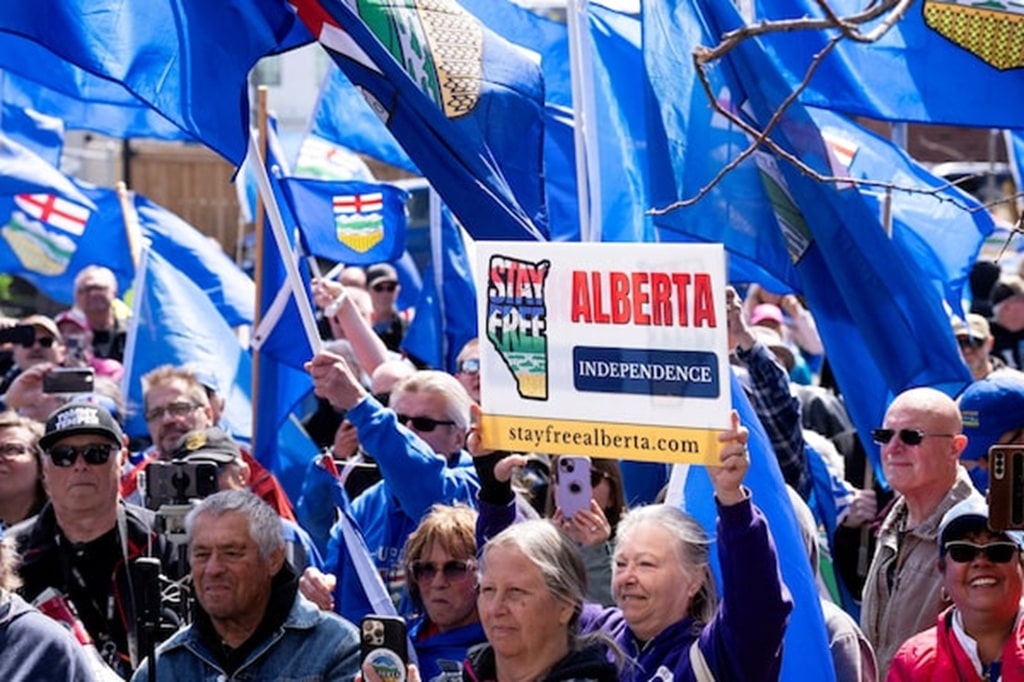
CALGARY, Alberta – When Canada faces pressure from its largest trading partner, Keith Wilson says Ottawa looks west for economic strength. In his view, the Canada-U.S. trade dispute has exposed Alberta’s bargaining power and weakened the claim that the province could not function as an independent country.
Wilson, a constitutional lawyer and co-founder of the Alberta Transition Council, connects the dispute to Alberta’s October 19 referendum. He argues that Alberta’s energy exports, resource industries, and close commercial ties with the United States give the province a stronger position than many critics acknowledge.
His argument centers on a practical question: if Alberta is important enough to be Canada’s economic tool in a trade fight, why should Albertans believe it cannot manage more of its own affairs?
Canada Looks to Alberta During Trade Conflict
Wilson’s response to independence skeptics
Wilson says supporters of Alberta independence have long heard the same objections: Alberta lacks the economic scale to stand alone, it cannot secure market access, or it depends too heavily on Canada.
The current trade conflict, he argues, produces a different picture. When Canada faces uncertainty in its relationship with the United States, federal and provincial leaders look to Alberta’s economy, particularly energy exports, for bargaining power.
“When Canada needs leverage, it turns to Alberta.”
In Wilson’s telling, that instinct is an acknowledgment that Alberta has a mature economy with an unusually important connection to the United States.
Pressure to use Alberta’s exports
Wilson points to comments from Ontario Premier Doug Ford, Manitoba Premier Wab Kinew, and federal officials as evidence that Alberta’s oil and resource exports are being considered part of Canada’s response to U.S. pressure.
The conflict puts Prairie producers in a difficult position. As Alberta’s position in the Canada-U.S. trade dispute shows, Alberta and Saskatchewan have opposed export restrictions and new duties because retaliation could hurt their producers more than it hurts the United States.
Wilson says central Canada’s manufacturing concerns should not be addressed by putting Alberta’s energy industry at risk. He argues that decisions about Alberta’s economy should be made by officials accountable to Alberta voters, rather than by political majorities in Ottawa.
Alberta’s Distinct Trade Relationship With the United States
A different economy than Ontario and Quebec
Wilson contrasts Alberta’s economy with the manufacturing-heavy economies of Ontario and Quebec. In his description, manufacturers in those provinces can benefit when they pay many costs in Canadian dollars but sell products into the United States in U.S. dollars.
A favorable exchange rate can reduce production costs relative to U.S. competitors. However, Wilson says Alberta’s relationship with the American market works differently because Alberta primarily supplies resources and processed goods that U.S. buyers need.
That distinction matters in a tariff dispute. Manufacturing supply chains may be vulnerable to cross-border tariffs, while Alberta’s importance rests on products that can be harder to replace quickly.
The products Wilson says Alberta supplies
Wilson says Alberta sells a broad range of goods into the U.S. market, including:
- Oil, natural gas, petrochemicals, plastics, and fertilizer.
- Beef, cattle, grain, sugar beets, and potatoes.
- Forestry products and other value-added resource goods.
He states that 86% of Alberta’s economy is directed south toward the United States. Wilson also argues that American buyers cannot easily replace certain Alberta exports, particularly energy and products made from natural gas.
He describes Alberta’s oil supply as more than a commercial asset. In his view, production stored underground in Alberta contributes to North American energy security because it can continue to supply U.S. markets.
The Risk of Making Alberta Energy a Bargaining Chip
Wilson’s export-tax warning
A major concern in Wilson’s address is the possibility of a federal export tax on Alberta oil shipped to the United States. He says the federal government has authority, rooted in measures that date back at least to the National Energy Program under Pierre Trudeau, to impose a tax by order in council.
Wilson claims a prime minister could impose a charge of more than $50 a barrel without first calling Parliament. That is a legal and political claim made in the context of his case for independence, rather than an independently established forecast of what the federal government will do.
His point is that Alberta could bear the immediate economic cost if Ottawa decides energy exports should be used to gain bargaining power in negotiations that mainly concern other regions.
The provincial costs Wilson anticipates
Wilson says an export tax or effort to withhold Alberta oil would damage Alberta’s economy while trying to protect manufacturing jobs and market access elsewhere in Canada.
He argues the possible effects would include:
- Hundreds of thousands of job losses.
- A steep decline in provincial revenues.
- Less funding for teachers, classrooms, health care, and social supports.
- Added pressure on funding for nurses, doctors, roads, and bridges.
His broader complaint is that Alberta could be asked to sacrifice its most important industry for a national strategy it did not choose.
Why Wilson Says Canada’s Structure No Longer Fits Alberta
Alberta has changed since 1905
Wilson argues that Canada’s federal structure made more sense when Alberta entered Confederation in 1905 and when it gained greater control over natural resources in 1930. At those points, he says, the province needed a much larger federal role.
Today, he sees Alberta as a major resource-producing economy with the capacity to take on more responsibility. His argument is not that an independent Alberta would face no difficult choices. Rather, he says Albertans should have direct control over the people making those choices.
That claim faces serious legal and political questions. The constitutional hurdles to Alberta independence include negotiations with Canada and concerns involving Treaty rights and First Nations.
Wilson’s accountability argument
Wilson says Alberta independence would place decisions about provincial laws, taxation, public spending, and economic policy in the hands of politicians elected in Alberta.
If voters disagree with those officials, he says, they could vote them out. Under Canada’s current constitutional order, Wilson argues that Alberta cannot remove the federal governments chosen by larger voting blocs in Ontario and Quebec.
He also says Alberta sends more to Ottawa than it receives in transfers, grants, and programs. Wilson estimates the net equalization-related cost to Alberta taxpayers at $20 billion to $30 billion, separate from federal money that later returns to the province through other programs.
Wilson’s equalization argument is that Alberta’s net fiscal contribution gives the province a reason to seek greater control over its own tax base and public spending.
What Wilson Says the October 19 Vote Will Decide
Option one and the status quo
Wilson frames the October 19 referendum as a choice with consequences beyond the wording on the ballot. In his view, a vote for option one would tell Ottawa that Albertans accept the current relationship with the federal government.
He says that message would include acceptance of higher taxes, deficit spending, inflation, affordability problems, current immigration policies, and what he calls a two-tier justice system. These are Wilson’s political assessments, and they form part of his campaign argument.
He also worries a strong option-one result could make Ottawa more willing to use Alberta’s energy exports in later trade negotiations.
Option two would not make Alberta independent
Wilson stresses that option two is not a vote for immediate independence. Instead, he describes it as a vote directing the Alberta government to take the next legal step toward an eventual referendum on independence.
In his view, an option-two result would tell Ottawa that Albertans want a different relationship with Canada and believe the province can do better.
Wilson links the timing to expected trade pressure. He says the effects of U.S. tariffs on Ontario and Quebec could be most severe in January 2027, which could increase demands for Ottawa to draw on Alberta’s economy after the October vote.
The Alberta Transition Plan Focuses on Daily Continuity
Preparing for a possible transition
Wilson and his colleague Dennis Kelma formed the Alberta Transition Council and brought together specialists to prepare working papers on what would happen if Alberta pursued independence.
The Alberta Transition Council’s working papers address the practical side of the proposal. Wilson says the document is intended to explain who delivers services today, what would change during a transition, and where continuity could be maintained.
It is not presented as a proposed constitution or a complete blueprint for a future Alberta government. Wilson says decisions about a military, veterans’ affairs, the final immigration system, and the long-term structure of government should belong to a future government chosen after Albertans make a decision on independence.
Questions the plan says it can address
Wilson says the working papers cover borders, immigration, currency, banking, monetary policy, policing, courts, agricultural research, agriculture, forestry, and oil and gas.
The transition plan is designed to address practical questions that often come up in the independence debate:
| Area | Question Wilson says the plan addresses |
|---|---|
| Banking | Would bank accounts and everyday banking continue? |
| Housing | Would mortgages change during a transition? |
| Courts | How would the existing court system continue? |
| Policing | Who would provide policing services? |
| Transportation | Who would manage services such as air traffic control? |
| Borders and immigration | How would those systems operate after a transition? |
Wilson’s answer on bank accounts and mortgages is simple: he says they would not change. The plan’s purpose, in his words, is to give people confidence that normal economic and social activity could continue with stability and predictability.
How the Let Alberta Decide Campaign Is Organizing
Signs, volunteers, and voter contact
Wilson says the Let Alberta Decide campaign is increasing its sign presence across the province. Because some supporters may not want campaign signs at their homes, he says the group has shifted attention toward larger signs placed in high-traffic areas.
The campaign uses sign crews to assemble frames, install signs, document placements, and report or repair vandalism. Wilson says the campaign tracks traffic counts when selecting locations.
Still, he says signs are only one part of the effort. The more important task is reaching people who have not decided how they will vote or are unsure whether they will cast a ballot.
Voting options and election roles
Wilson encourages voters who will be away for work, travel, or winter trips to use advance voting or a mail-in ballot. Elections Alberta has confirmed that the referendum is scheduled for October 19, 2026, and its referendum information page provides official details as dates and procedures are finalized.
Advance voting is available in the week before election day. Eligible voters can also request a special ballot by mail, according to Elections Alberta’s special-ballot request notice.
Wilson also calls for volunteers to assemble and install signs, as well as people with trucks and tools. He encourages supporters to register as scrutineers, who can observe ballot-box sealing and the vote count, or apply to work at polling stations. Elections Alberta’s voting options and regulations outline the official ways Albertans can vote.
The October 17 Rally at the Alberta Legislature
A final event before voting day
Wilson says Let Alberta Decide plans a rally at the Alberta Legislature on Saturday, October 17, at 3 p.m., two days before the referendum vote. The campaign has asked people to RSVP through its website so organizers can estimate attendance.
The event is intended to build support before voting day and before Thanksgiving weekend conversations about the referendum.
Wilson says planned speakers include himself, co-lead Tanya Clemens, Chris Scott of Let’s Talk Alberta and the Whistle Stop Cafe, John Bolton, BA Proud Dad, Derek Smith, and Corey Morgan. He says the event will feature short, fast-moving speeches and last about an hour and a half.
Buses from communities across Alberta
The campaign is also organizing bus travel for people coming from outside Edmonton. Wilson named Grande Prairie, Lloydminster, Wainwright, Red Deer, Medicine Hat, Lethbridge, and Calgary among the communities expected to have travel options.
He says the buses are meant to lower travel costs, make group travel easier, and reduce congestion near the legislature grounds.
Wilson’s Case Rests on Control and Continuity
Wilson’s argument begins with Alberta’s role in the Canada-U.S. trade dispute. He says the same economy Ottawa may seek to use in a trade fight is proof that Alberta has the commercial strength to consider a new constitutional relationship.
The Alberta Transition Plan is central to that case because it addresses the everyday concerns that follow any talk of independence, including banking, courts, borders, air travel, and public services. Economic strength alone does not settle the constitutional debate, but Wilson says it gives Albertans reason to consider whether decisions affecting Alberta should be made in Alberta.


Is Modern Political Empathy Actually Just Hidden Narcissism?
US Trade Moves Put Massive Pressure on Canada
Canada Sheds 68,000 Jobs As Economic Fears Deepen
Pierre Poilievre Critiques Reporter Who Questions His Leadership

How Canada’s Combating Hate Act Stifles Free Speech

Uncovering the Truth Behind Inequality: A Bold New Vision

How Progressivism Replaced Religion With A New Secular Faith
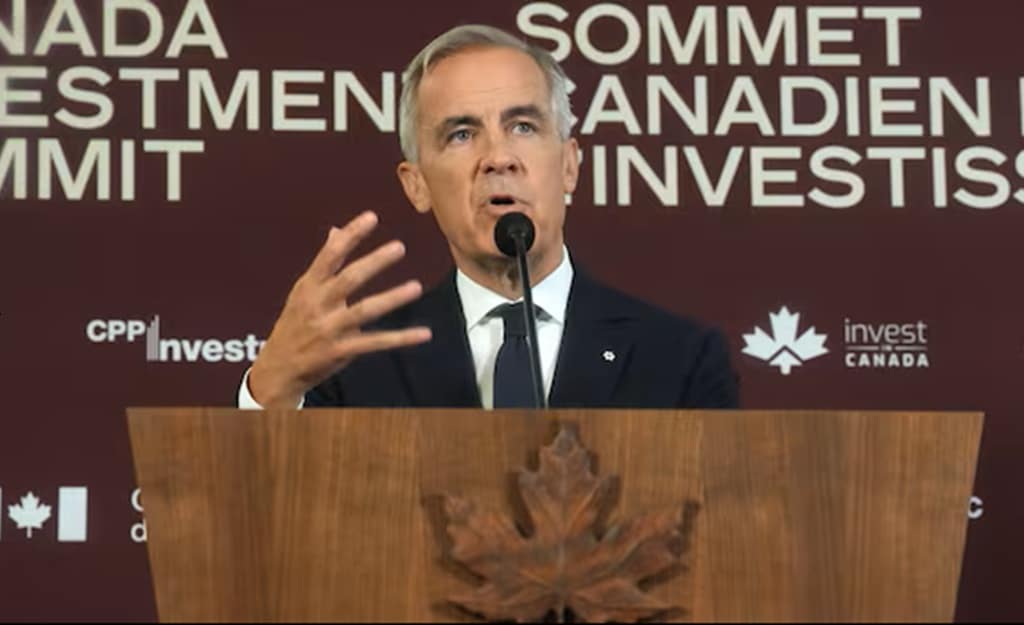
Behind Carney’s $1-Trillion Canada Investment Scheme
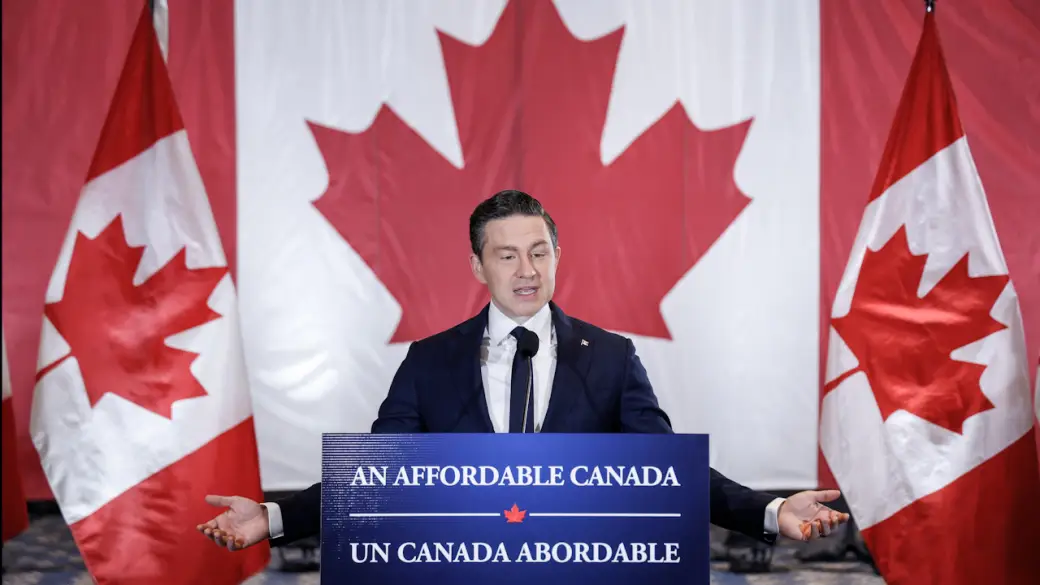
Poilievre Blasts Carney’s Plan To Sell Off Airports
Food Insecurity and Surging Prices: Canada’s Inflation Squeeze
How Progressivism Replaced Religion With A New Secular Faith
Food Insecurity and Surging Prices: Canada’s Inflation Squeeze
Poilievre Blasts Carney’s Plan To Sell Off Airports
Behind Carney’s $1-Trillion Canada Investment Scheme
Uncovering the Truth Behind Inequality: A Bold New Vision
How Canada’s Combating Hate Act Stifles Free Speech
Pierre Poilievre Critiques Reporter Who Questions His Leadership
US Trade Moves Put Massive Pressure on Canada
Is Modern Political Empathy Actually Just Hidden Narcissism?

Jimmy Kimmel Slammed for “Vile” Melania Trump “Expectant Widow” Joke

President Trump Addresses Nation on War with Iran

Trump Warns NATO Allies: America Won’t Protect Slackers After Iran Clash

Senate Hearing on Fraud and Foreign Influence Turns Tense Over Minnesota Scandals

CNN Forced to Backtrack Its Reporting on Trump’s Iran Talks

Joe Rogan Slams Gavin Newsom for Mocking Nick Shirley

Mosque Set Ablaze in Iran a Citizens Revolt Against the Islamic Regime

AOC Accuses Jessie Watters of Fox News of Sexualizing and Harassing Her

JD Vance Exposes Walz’s Fraud and CNN’s Lies in White House Presser

Milestone Card Credit: How the Milestone MasterCard Can Transform Credit


-

 News9 months ago
China-Based Billionaire Singham Allegedly Funding America’s Radical Left
-
Crime10 months ago
YouTuber Nick Shirley Exposes BILLIONS of Somali Fraud, Video Goes VIRAL
-
Politics10 months ago
Ilhan Omar Faces Renewed Firestorm Over Resurfaced Video
-
Politics9 months ago
2026 Midterms Guide: Candidates, Key Issues, and Battleground States
-
Politics8 months ago
CNN Delivers Stark Reality Check to Democrats Over Voter ID
-
Politics8 months ago
Ilhan Omar’s Connections to Convicted Somali Fraudsters Surface
-
Politics7 months ago
Rep. Ilhan Omar Faces Heat as Minnesota Voters Seek Change
-
Politics8 months ago
Trump Approval Rating (February 2026 Poll Results, Approve vs Disapprove)