
Opinion
Opinion: Is Canada in a Deep Crisis Over Trade and Defense


OTTAWA – Geopolitical fault lines are rapidly shifting in Canada and Europe, changing the world as we know it, as the United States is actively reevaluating decades-old military and economic alliances with its most traditional partners.
From the withdrawal of strategic bombers in the United Kingdom to escalating trade disputes with Canada, American leadership is demanding more accountability. Traditional allies can no longer expect unconditional protection or open markets without meeting reciprocal obligations.
Prominent military historian and political commentator Victor Davis Hanson recently delivered a stark assessment of this shifting landscape. Hanson argues that allied nations, particularly Canada, are charting self-destructive paths that threaten their own security and economic stability. He points to leaders who consistently criticize American policies while remaining entirely dependent on the United States for national defense. This dynamic has sparked a growing frustration in Washington, fundamentally altering how America engages with its closest friends.
Key Takeaways
- Security alliances are fraying: The U.S. is withdrawing strategic military assets from foreign bases, demanding that allies take their own defense seriously.
- Trade tensions escalate: Canada’s push to diversify its trade toward China and the EU risks severe economic backlash from a protectionist Washington.
- Arctic defense vulnerabilities: Canada’s reliance on aging military equipment leaves it entirely dependent on the U.S. for protecting its northern territories.
The Strained United Kingdom Partnership
The changing nature of American military cooperation is perhaps most visible right now in the United Kingdom. Recently, alarming reports surfaced regarding severe security vulnerabilities at Royal Air Force Base Fairford. This shared facility, which frequently hosts American strategic assets, reportedly became the target of suspected extremist activity. According to Hanson, unauthorized individuals managed to scout the base with minimal resistance before a local farmer spotted them.
This severe security breach sent a very clear message to American military planners regarding the safety of their personnel. In response to these vulnerabilities, the U.S. reportedly withdrew its multi-billion-dollar fleet of B-1 and B-52 bombers from the facility. The decision highlights a growing concern that European nations are failing to maintain adequate domestic security around critical military installations.
Washington is increasingly reluctant to station high-value strategic assets in countries where political climates seem hostile to American interests. Hanson suggests that left-leaning governments in Europe are often paralyzed by domestic political pressures, preventing rigorous security measures. If an ally cannot guarantee the safety of shared military bases, the United States will simply relocate its forces. For more context on evolving European defense strategies, you can review current coverage from Reuters.
Demanding Accountability Across NATO
The withdrawal of bombers from the U.K. is part of a much broader strategy impacting the entire global landscape. The core philosophy is straightforward: the United States will no longer subsidize the defense of wealthy nations. For decades, American taxpayers have funded the absolute lion’s share of NATO’s operational capabilities and global security operations.
This highly transactional approach to global security is sending shockwaves through foreign capitals from Berlin to Seoul. Leaders in South Korea, Germany, and Spain have frequently voiced strong public criticisms of American foreign policy. In response, voices in Washington are questioning why tens of thousands of American troops remain stationed in these critical countries. If these nations view the United States unfavorably, the argument goes, they should assume the financial burden themselves.
This potential withdrawal of American forces would force a dramatic reckoning for these allied nations. Nations like Poland, which actively support U.S. policies and invest heavily in their own militaries, may become preferred partners. The message from Washington is unmistakable and incredibly blunt for the international community. Security umbrellas are no longer permanent guarantees, but conditional agreements based on mutual respect. You can find detailed updates on these shifting NATO policies through The Associated Press.
Canada Faces a Severe Economic Reckoning
While European defense issues capture major headlines, an equally severe crisis is brewing directly on America’s northern border. Hanson paints a remarkably grim picture of Canada’s current trajectory under its current liberal leadership. He argues that the Canadian government is pursuing incredibly self-destructive economic policies that ignore harsh global realities. At the absolute center of this dispute is the deeply integrated North American manufacturing supply chain.
Canada is currently grappling with a struggling steel industry that simply cannot compete on the fierce global stage. Canadian leaders have historically blamed American tariffs for their domestic industrial woes and factory closures. However, Hanson points out that the true culprit is the unchecked influx of cheap Chinese steel into Canadian markets. Chinese manufacturers are allegedly dumping materials well below the actual cost of production to corner the market.
By allowing these artificially cheap materials into its economy, Canada is undermining its own industrial base entirely. The United States has enacted strict tariffs to protect its own manufacturers from this exact type of predatory dumping. When Canada buys cheap Chinese metal to produce goods meant for America, it effectively bypasses U.S. trade protections. This practice is forcing Washington to reconsider the heavily integrated trade relationship it shares with Canada.
The Illusion of Trade Diversification
In response to growing friction with the United States, Canadian leadership has proposed a radical shift in economic strategy. Officials want to heavily diversify the nation’s trade portfolio by deepening relationships with the European Union and China. The primary goal is to reduce Canada’s overwhelming reliance on American consumers and businesses. Currently, a massive majority of Canadian exports cross the southern border almost entirely tariff-free.
However, replacing the massive American market is a logistical, geographic, and financial impossibility for Ottawa. The infrastructure, transportation networks, and supply chains connecting the U.S. and Canada have been carefully built over a century. Attempting to pivot toward European markets involves immense shipping costs and incredibly complex new regulatory hurdles. Furthermore, engaging more deeply with China introduces severe strategic risks that Canadian leaders seem willing to ignore.
Hanson warns that China has a very well-documented history of exploiting inferior economic powers for political gain. Strengthening ties with Beijing might provide a temporary economic boost, but it often comes with devastating long-term consequences. A hasty pivot toward Beijing could permanently alienate Washington, leaving Canada economically isolated and strategically vulnerable. You can read more about these massive global trade shifts at Bloomberg.
The Automotive Industry Cross-Border Complex
To understand the sheer danger of this trade dispute, one must look at the North American automotive industry. Car manufacturing between the United States and Canada is one of the most integrated processes on the planet. A single car part might cross the border half a dozen times before a vehicle is finally completed. If harsh tariffs disrupt this delicate dance, assembly lines in both countries will immediately grind to a halt.
Canadian leaders believe they can supplement this massive industry by inviting foreign competitors into the mix. However, the rise of cheap, state-subsidized electric vehicles from China poses an existential threat to North American automakers. Hanson points to the British market, which is currently being flooded with Chinese knockoffs of luxury SUVs. These vehicles look identical to domestic brands but are sold at a fraction of the cost.
If Canada opens its doors to these subsidized foreign vehicles, it will devastate the North American auto sector. Millions of well-paying jobs in Michigan, Ontario, and Ohio directly rely on this highly protected market ecosystem. The United States simply will not allow an allied nation to serve as a backdoor for foreign industrial sabotage. The economic stakes are far too high to prioritize diplomatic posturing over actual job security.
The Real Estate Tax Retaliation
The deteriorating relationship between the two countries sadly extends far beyond heavy industry and military bases. It has now reached the personal finances of ordinary citizens through a bitter dispute over real estate taxes. Florida Governor Ron DeSantis recently implemented legislation that significantly increases property taxes for out-of-state homeowners. This bold move directly impacts thousands of Canadian “snowbirds” who maintain winter residences in the Sunshine State.
Canadian officials were incredibly quick to condemn the move, framing it as an unprovoked act of economic aggression. The legislation was specifically designed to alleviate the tax burden for full-time Florida residents who vote locally. However, Hanson highlights the striking hypocrisy in the Canadian government’s profound outrage over this specific policy.
For years, various Canadian provinces have levied heavy, specialized taxes on foreign property owners. These taxes directly impact American citizens holding real estate in places like Toronto, Vancouver, and Montreal. DeSantis simply adopted a protective tax strategy that Canada has happily utilized for many years. This localized tit-for-tat perfectly illustrates the broader breakdown in fundamental diplomatic goodwill.
Arctic Vulnerability and Military Decay
Perhaps the most alarming aspect of Canada’s current geopolitical stance is its severe military vulnerability in the Arctic. Canada claims vast stretches of the resource-rich northern territories, which makes perfect geographic sense on a map. However, defending these massive, icy borders requires advanced military infrastructure that Ottawa simply does not possess today. Canada currently relies on a tiny fleet of aging fighter jets to patrol massive skies.
If a hostile nation like Russia or China decided to aggressively challenge Canadian sovereignty, Ottawa would be largely defenseless. These rival global powers continuously expand their heavy icebreaker fleets and test the boundaries of international waters. If a foreign power sailed through the Northwest Passage and planted a flag, Canada would have no independent recourse. The nation would instantly be forced to beg the United States for urgent, immediate military intervention.
This complete reliance on American military might directly contradicts Canada’s increasingly hostile and independent diplomatic tone. It is completely unsustainable for a nation to demand absolute independence while outsourcing its national survival. Hanson questions what will happen if Washington simply refuses to answer the call the next time Ottawa faces a crisis. You can find comprehensive updates on Arctic military security at Defense News.
The High Cost of Ignored Responsibilities
A central theme in Hanson’s harsh critique is the concept of light responsibility versus heavy military protection. For decades, Canada has enjoyed the absolute ultimate geopolitical luxury available in the modern era. Sharing a massive, peaceful border with the world’s sole military superpower has provided unimaginable national security benefits. This proximity has allowed Ottawa to chronically underfund its defense initiatives while investing heavily in social programs.
This specific dynamic creates a deeply skewed perception of global threats among the Canadian public. Because the U.S. military intercepts incoming threats, Canadian leaders often feel comfortable taking moral high grounds. They can publicly condemn American defense strategies, knowing they are entirely shielded from the consequences of their pacifism. Canada essentially treats the American military as an unpaid, highly effective private security force.
However, the global landscape is becoming increasingly hostile, and the United States is weary of carrying this burden alone. As active threats rapidly multiply in the Pacific, Washington’s patience for free-riding allies is rapidly disappearing. If Canada wants to be treated as an equal partner, it must start paying for its own sovereignty. You can track international military spending trends at The Wall Street Journal.
Supply Chains on the Brink of Collapse
The economic integration between the United States and Canada is not merely a polite political talking point. Factories, energy grids, and transportation networks are tightly bound across the border in an unbreakable web. When political rhetoric actually translates into hard tariffs, the financial devastation is immediate, brutal, and incredibly widespread. Manufacturers in both nations rely on these chains to keep production costs manageable and prices stable.
While American tariffs intend to protect domestic manufacturing, they often result in very uncomfortable realities for local businesses. High import costs on Canadian materials create immense financial pressure for American companies that purchase those goods. Policies designed to perfectly defend specific domestic jobs can unintentionally destroy profitability for businesses relying on imported components. The heavy collateral damage in this trade war is eventually absorbed by ordinary, hardworking consumers.
For the Canadian working class, these high-level political debates have absolutely terrifying real-world consequences today. When major investors sense instability, they quickly postpone financial decisions and aggressively halt corporate expansion plans. A prolonged trade dispute between these historic allies will inevitably lead to massive, widespread layoffs.
Assessing the Chinese Threat to North America
The aggressive push by some Canadian officials to embrace Chinese markets represents a fundamental misunderstanding of global strategy. Trade with China is rarely just about exchanging physical goods in a simple, open marketplace. It is almost always a calculated tool for exerting immense political and economic leverage over smaller nations. By opening its markets to subsidized Chinese goods, Canada is inviting a Trojan horse into North America.
The United States views this economic infiltration as a massive, direct threat to its own national security. When Canada allows cheap Chinese goods to flood its markets, it creates a dangerous backdoor into America. Washington has spent countless years constructing economic defenses against Beijing’s notoriously predatory trade practices. Canada’s willingness to bypass these defenses for short-term profit absolutely infuriates American policymakers.
The aggressive dumping of cheap materials is a strategy designed entirely to bankrupt domestic competitors. Once local industries like the Canadian steel sector fully collapse, the foreign supplier gains an unshakeable monopoly. If Canada fails to recognize this threat, it will find its heavy industries entirely hollowed out forever. A strong, unified North American trade bloc is the only viable defense against this strategy.
A Cross-Border Economic Reality Check
Despite the highly aggressive posturing, replacing the United States as Canada’s primary economic partner is sheer fantasy. America’s enormous consumer market remains the undisputed, heavy engine of Canadian manufacturing and international commerce. The relationship is highly symbiotic, meaning that targeted economic damage will inevitably cause immediate, reciprocal harm. American factories regularly acquire Canadian companies, and U.S. citizens benefit heavily from affordable imported goods.
Turning this historically prosperous relationship into a petty contest of national pride obscures the essential economic interests. Political leaders in both capitals must eventually face their voters and answer for rising costs. These voters include displaced factory workers, anxious business owners, and communities that rely entirely on international commerce. Political rhetoric may win local elections, but sustained economic growth requires incredibly stable, predictable international partnerships.
Canadian leadership must find a practical way to balance national sovereignty with undeniable economic realities. Simultaneously, American officials must calculate whether continued aggressive pressure will permanently fracture a vital, historic alliance. The deeply connected trade network cannot be unraveled without plunging both economies into a severe recession.
Rebuilding a Fractured Alliance
Restoring the United States-Canada partnership will require significant humility and incredibly hard compromises from both sides. Ottawa must completely abandon the illusion that it can detach its economy from America without suffering catastrophic consequences. The Canadian government needs to prioritize domestic industrial strength and significantly increase its contributions to continental defense. Lip service to shared democratic values is no longer sufficient; Washington now strictly requires concrete financial action.
Conversely, American leadership must recognize that constantly threatening widespread tariffs creates an environment of toxic business uncertainty. While demanding totally fair trade is completely justified, weaponizing the entire supply chain can inadvertently harm American consumers. The U.S. desperately needs reliable, stable neighbors to maintain its own economic supremacy in a fractured world.
Diplomacy must finally replace the current vicious cycle of petty retaliation and harsh political grandstanding. Both nations currently share a massive continent, deeply intertwined cultures, and identical long-term geopolitical security interests. A strong, prosperous Canada benefits the United States, just as a secure America guarantees true Canadian freedom.
Final Thoughts on North American Security
As global tensions rapidly continue to rise, the luxury of internal bickering between Western allies is expiring. The severe threats posed by authoritarian regimes require a highly united, absolutely impenetrable front. North America must urgently remain an economic fortress, capable of producing its own energy, materials, and technology.
Canada’s vast natural resources and America’s unmatched industrial might are a natural, completely unbeatable global combination. However, this massive potential can only be realized if both governments stop viewing each other as bitter adversaries. The current path of mutual resentment and economic warfare only benefits rival nations looking to exploit division.
Ultimately, Victor Davis Hanson’s stark warning serves as a highly necessary wake-up call for concerned citizens everywhere. The era of incredibly comfortable assumptions regarding trade and military protection is officially over. Security requires serious investment, economic stability demands fair competition, and alliances only survive through mutual respect. Canada cannot ignore America, and America cannot afford to ignore Canada.
Trending News:
Canadian Manufacturers Face Bankruptcy Amid U.S. Tariffs
Opinion: Canada’s Combating Hate Act Threatens Free Speech


Why Alberta Is Voting on a Future Independence

Alberta Votes on Independence: Advance Polls Open

Opinion: Is Canada in a Deep Crisis Over Trade and Defense

Canadian Manufacturers Face Bankruptcy Amid U.S. Tariffs

Opinion: Canada’s Economy Is Under Pressure From Debt, a Weak Dollar and Steel Tariffs

H1-B Visa Crackdown Rocks Big Tech and India

Millions of Shoppers Boycott Real Canadian Superstore

Opinion: Media Went Easy on Carney After Canada Lost 68,000 Jobs

Mark Carney’s Million Dollar Wind Up and Nickel Delivery

Mark Carney Faces Ethics Backlash Over Heat Pumps

Opinion: Is Modern Political Empathy Really About Self-Image?

US Trade Moves Put Massive Pressure on Canada

How Progressivism Replaced Religion With A New Secular Faith

Opinion: Canada’s Combating Hate Act Threatens Free Speech

Pierre Poilievre Critiques Reporter Who Questions His Leadership

Canada Sheds 68,000 Jobs As Economic Fears Deepen

Uncovering the Truth Behind Inequality: A Bold New Vision

Opinion: What South America’s Political Shift Means for Canada

Food Insecurity and Surging Prices: Canada’s Inflation Squeeze
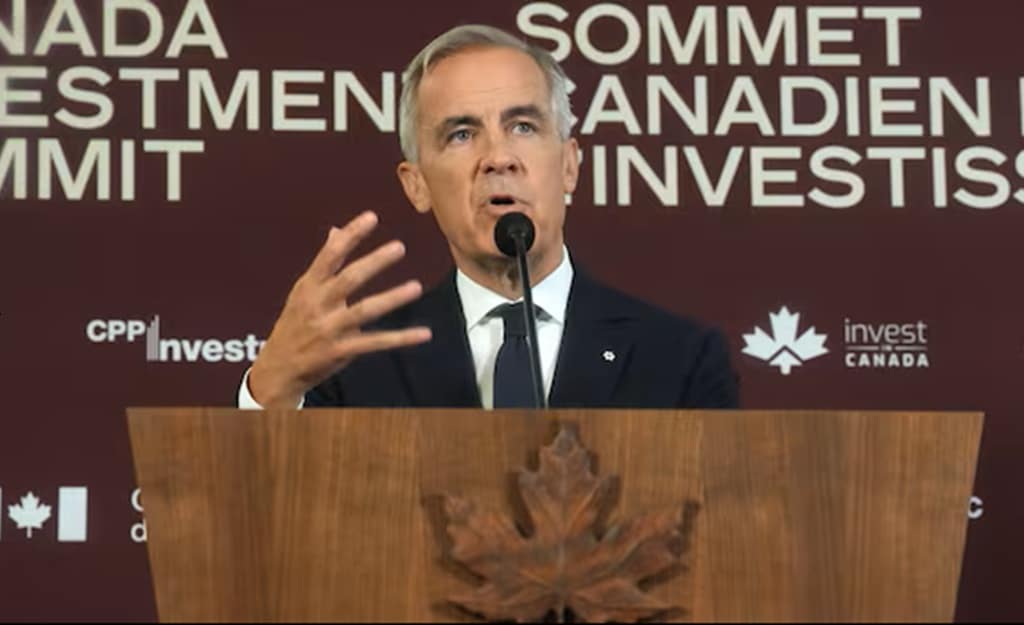
Behind Carney’s $1-Trillion Canada Investment Scheme

Jimmy Kimmel Slammed for “Vile” Melania Trump “Expectant Widow” Joke

President Trump Addresses Nation on War with Iran

Trump Warns NATO Allies: America Won’t Protect Slackers After Iran Clash

Senate Hearing on Fraud and Foreign Influence Turns Tense Over Minnesota Scandals

CNN Forced to Backtrack Its Reporting on Trump’s Iran Talks

Joe Rogan Slams Gavin Newsom for Mocking Nick Shirley

Mosque Set Ablaze in Iran a Citizens Revolt Against the Islamic Regime

AOC Accuses Jessie Watters of Fox News of Sexualizing and Harassing Her

JD Vance Exposes Walz’s Fraud and CNN’s Lies in White House Presser

Milestone Card Credit: How the Milestone MasterCard Can Transform Credit


-

 News9 months ago
China-Based Billionaire Singham Allegedly Funding America’s Radical Left
-
Crime10 months ago
YouTuber Nick Shirley Exposes BILLIONS of Somali Fraud, Video Goes VIRAL
-
Politics10 months ago
Ilhan Omar Faces Renewed Firestorm Over Resurfaced Video
-
Politics10 months ago
2026 Midterms Guide: Candidates, Key Issues, and Battleground States
-
Politics8 months ago
CNN Delivers Stark Reality Check to Democrats Over Voter ID
-
Politics8 months ago
Ilhan Omar’s Connections to Convicted Somali Fraudsters Surface
-
Politics7 months ago
Rep. Ilhan Omar Faces Heat as Minnesota Voters Seek Change
-
Politics8 months ago
Trump Approval Rating (February 2026 Poll Results, Approve vs Disapprove)















