Connect with us

News

Trump Cancels $4 Billion in Federal Funding for California High-Speed Rail

VORNews

Published

on

Trump Cancels $4 Billion in Federal Funding for California High-Speed Rail
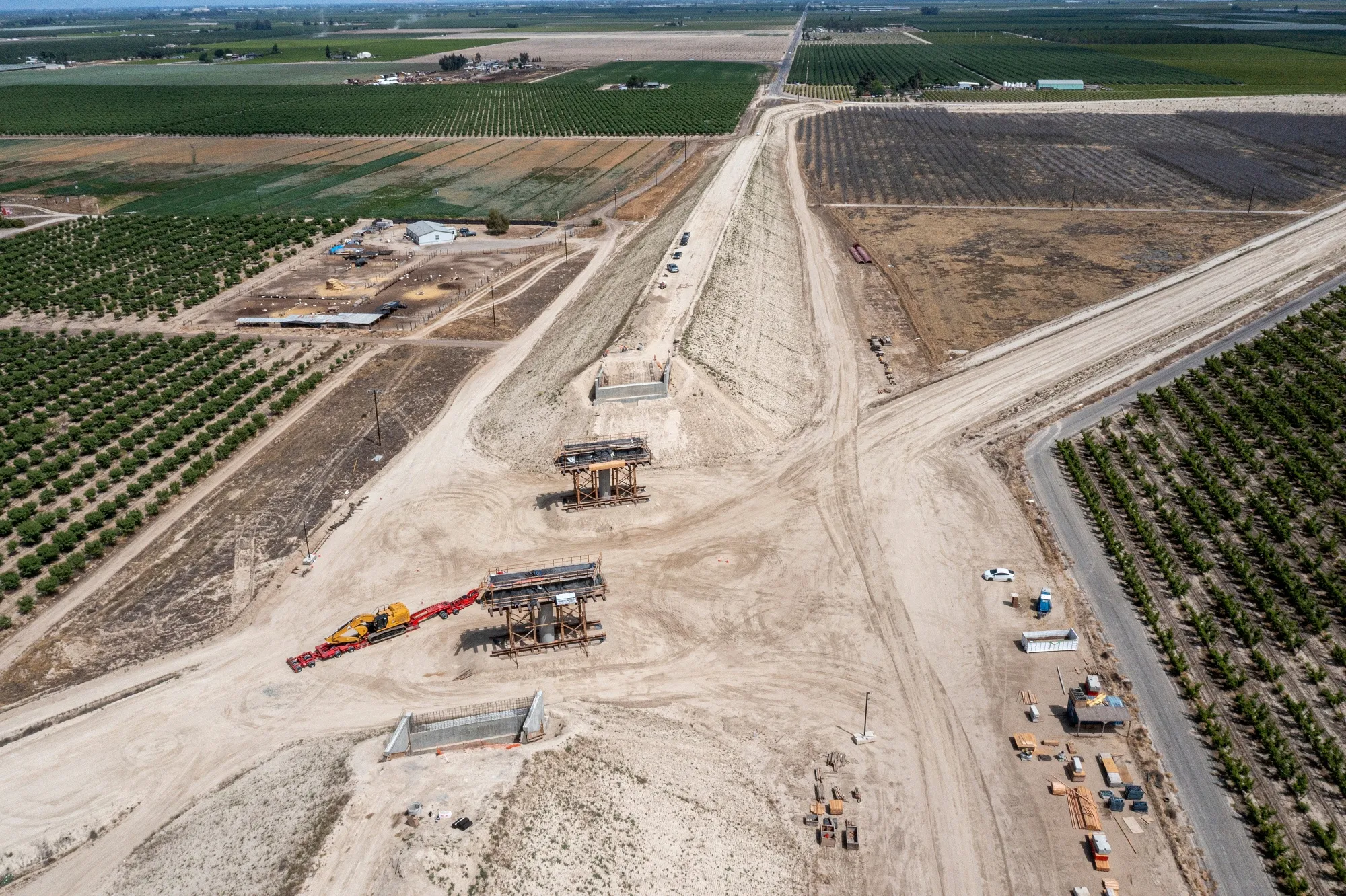
WASHINGTON, D.C. – President Donald Trump has withdrawn $4 billion in federal support for California’s high-speed rail project, dealing a major setback to a long-troubled effort that has faced years of delays, rising costs, and ongoing questions about its management.

The U.S. Department of Transportation, led by Secretary Sean Duffy, confirmed the decision, leaving the project in a vulnerable spot as it struggles to find its footing under Governor Gavin Newsom, who is widely considered a possible contender for the 2028 presidential election. This loss of funding poses a new challenge for Newsom’s campaign to keep the rail effort afloat.

California High-Speed Rail’s Troubled Path

Voters approved the California High-Speed Rail in 2008 with the promise of a bullet train linking Los Angeles and San Francisco in under three hours. Project leaders said it would lower emissions, boost the economy, and create jobs. Back then, the cost was projected at $33 billion, and the opening date was set for 2020.

Seventeen years later, the situation has changed dramatically. Costs have soared to between $89 billion and $135 billion, and completion is nowhere in sight. Not a single mile of high-speed track exists. The timeline for even a shortened 171-mile section between Merced and Bakersfield has been pushed to 2033.

Instead of a full Los Angeles-to-San Francisco line, the project has been scaled back to a Central Valley segment, often labelled the “train to nowhere” by critics.

A recent 315-page report by the Federal Railroad Administration detailed missed deadlines, budget gaps, and shaky ridership estimates. The report noted a $7 billion shortfall just for the Central Valley section and accused the rail authority of having no clear plan to finish even this part on schedule. Acting FRA administrator Drew Feeley wrote that taxpayers had little to show for their $4 billion investment.

The Politics Behind Trump’s Move

Trump’s decision pulls funding from two sources: $929 million granted in 2010 and $3 billion awarded in 2023 during the Biden administration. The move is similar to Trump’s first term, when he tried to cancel almost $1 billion in grants, which were later restored after a court challenge.

Trump has often criticized the project, calling it a “waste” and blaming Governor Newsom for the ongoing problems. In a Truth Social post, Trump insisted, “Not a SINGLE penny in Federal Dollars will go towards this Newscum SCAM ever again,” using a nickname he often uses for Newsom.

Transportation Secretary Sean Duffy echoed Trump’s criticism, pointing to cost increases and calling out “waste and mismanagement.” Duffy said taxpayers had already spent $6.9 billion with no working train. The FRA has given state rail officials 37 days to respond to the findings, after which the funding cut will be final. Federal officials are also considering ways to get back money already spent.

The decision has triggered heated debate. Supporters say cutting funding could stall modern public transportation efforts in California. Critics, like Republican Congressman Kevin Kiley, believe the move is overdue and want money redirected to other needs, such as fire safety or road repairs.

Integrity and Accountability in Question

The Trump administration’s mention of “possible corruption” has reignited debate about the project’s management under California’s Democratic leadership. Newsom has defended the rail as essential for California’s future, both economically and environmentally. But some opponents claim that project decisions have been driven more by politics than by public benefit.

A key point of criticism centers on the decision to route the line through the east side of the San Joaquin Valley, which some argue benefits certain landowners and developers instead of using the more direct Interstate 5 path.

Lou Thompson, who served on the project’s peer review group, has repeatedly criticized what he calls “uncoordinated planning” and political interference. Governing magazine has also pointed to project missteps and favouritism as reasons for cost overruns.

The rail’s funding model is another source of concern. California’s cap-and-trade program, which raises money from companies trying to offset emissions, is a major backer. Newsom’s budget counts on $1 billion a year from this source through 2045, but the FRA report called this funding stream unstable and risky. Some analysts believe contracts have been steered to politically connected firms and unions, inflating costs without visible progress.

On social media, users like @TheKevinDalton have called the rail a “money laundering operation,” while @libsoftiktok has slammed it as a “failed” project. While there is no solid proof behind these claims, the public’s faith in the rail authority has faded.

Legal experts say proving wrongdoing is difficult. Georgetown law professor Eloise Pasachoff noted that California could challenge the funding cut in court as “arbitrary and capricious,” though political clashes alone likely won’t win a legal case. David Freeman Engstrom of Stanford suggests the decision might be seen as a move to damage Newsom politically, but that argument isn’t likely to sway judges.

Newsom Faces New Risks

Governor Newsom has made support for the high-speed rail a key part of his agenda. In January 2025, he visited Bakersfield to highlight construction work and pushed for $1 billion per year in new funding. Newsom has promised to fight the federal cut in court, calling the move “illegal.”

Still, the project’s ongoing problems could hurt his standing as he looks to 2028. Trump and other critics have tied the rail’s failures directly to Newsom’s leadership and say it could make him “unelectable.”

Even some Democrats, like former State Assembly Speaker Anthony Rendon, have lost confidence in the rail. With California facing a $12 billion deficit, Newsom’s push for more rail spending could turn off voters who want to focus on more immediate issues like wildfire response or budget discipline.

What’s Next for the Project?

Despite setbacks, the California High-Speed Rail Authority remains hopeful. CEO Ian Choudri calls the FRA’s report “misguided” and says the project has made real progress, including 119 miles of ongoing construction in the Central Valley.

The authority plans to start laying tracks in 2026 and is seeking private partners to help close the funding gap. Without federal help, though, the project faces tough odds. The state’s Legislative Analyst’s Office warns that current funding may only last another 15 months.

Democrats, with strong backing from labour unions, are pushing to secure more stable funding from the cap-and-trade program. State Senate Budget Chair Scott Wiener says the rail is important for California’s economy and environment and argues for more efficient management.

Opponents like Tony Strickland would rather see the money go toward lowering gas prices or other infrastructure. They point to private projects like Brightline West, linking Las Vegas and Southern California, as examples of how the private sector can deliver rail projects more successfully.

What the Rail Project Means Now

California’s high-speed rail now stands at a turning point. Supporters still see it as a bold step toward greener travel, while critics view it as proof of government waste and poor planning. With Trump’s funding cut in play, the project’s future and Newsom’s political legacy are deeply connected. If California manages to finish the train, it would mark a major achievement. If not, critics will likely remember it as an expensive promise that never delivered.

As the state prepares to challenge the funding cut, the fight over high-speed rail has become a symbol of larger battles over public spending and political rivalry. The outcome could have a lasting effect on California’s future and the way America thinks about big public works during tight budget times.

Related News:

Chipmaking Behemoth ASML Asserts Uncertainty Regarding Growth in 2026.

News

Pentagon Readies 1500 Soldiers for Deployment in Minnesota

VORNews

Published

on

By

Pentagon Readies 1500 Soldiers Deployment Minnesota

WASHINGTON, D.C. –  Minnesota is under intense pressure after the Pentagon directed about 1,500 active-duty troops based in Alaska to get ready for a possible move to the state. The order comes as protests spread in response to a large federal immigration enforcement effort led by Immigration and Customs Enforcement (ICE). The operation has brought thousands of federal agents into Minneapolis and nearby communities for raids and related actions.

The troops are mainly from the Army’s 11th Airborne Division, stationed at Fort Wainwright in Fairbanks, Alaska. They are trained for extreme cold and harsh conditions. Defense officials, speaking on background, said the units are on a “prepare-to-deploy” posture. They stressed that no final call has been made to send them to Minnesota.

The move follows repeated warnings from President Donald Trump that he may invoke the rarely used Insurrection Act, a 19th-century law that can allow active-duty forces to be used in domestic law enforcement, if state and local leaders can’t control protests that have sometimes slowed or blocked federal agents.

The current unrest began in early January after an ICE officer fatally shot Renee Nicole Good, 37, during an encounter in Minneapolis. The death sparked immediate anger. Demonstrations quickly expanded into larger protests aimed at ICE sites, hotels used by federal teams, and staging areas.

Many protesters, including people from Somali, Hmong, and Mexican communities hit hard by the raids, say federal agents have used aggressive tactics. They point to tear gas and pepper balls during clashes as proof that the response has gone too far.

As tensions rose, Minnesota Governor Tim Walz activated the Minnesota National Guard over the weekend to support local law enforcement and emergency management. Guard members have not yet been sent into street operations.

Minneapolis Mayor Jacob Frey has repeatedly described the arrival of about 3,000 ICE and Border Patrol agents as an “occupying force” that has “invaded” the city. He has warned that sending in the military would escalate the situation and cross constitutional lines.

DOJ Opens Inquiry Into Walz and Frey  

The crisis has also moved into the legal arena. The Department of Justice (DOJ) has launched a criminal investigation into Governor Walz and Mayor Frey over allegations they worked together to obstruct federal immigration enforcement.

Sources familiar with the case, reported by outlets including CBS News, CNN, and The New York Times, say the inquiry is tied to public comments by the two Democratic leaders. In those statements, they urged residents to protest peacefully, record ICE activity, and push back against what they called unlawful raids.

Federal officials, including Deputy Attorney General Todd Blanche, have accused Walz and Frey of “encouraging violence” and helping create unrest that interferes with federal officers. That kind of conduct can be charged as a felony under conspiracy-related statutes. A grand jury is also said to have issued subpoenas, although neither Walz nor Frey had confirmed receiving formal notice as of late last week.

Both leaders have responded sharply. Walz called the investigation a “dangerous, authoritarian tactic,” saying it uses the justice system to punish political opponents. Frey described it as “an obvious attempt to intimidate” him for speaking out in defense of Minneapolis residents and local public safety officials amid what he called federal “chaos and danger.” Frey said he will comply if subpoenaed and insists he and Walz “have done nothing wrong.”

The DOJ step adds fuel to a growing federal-state standoff. Critics see it as payback against Democratic leaders who have challenged the Trump administration’s mass deportation push. Minnesota has also filed a lawsuit against the federal government, arguing the enforcement actions violate state authority under the Tenth Amendment.

What This Could Mean for Minnesota

The Pentagon Minnesota deployment preparation highlights just how serious this moment has become. Using active-duty troops inside the United States is rare and highly contested. It would also bring fresh comparisons to past domestic deployments, including the 1992 Los Angeles riots. Civil rights groups warn that troop involvement could raise the risk of excessive force and push the protests toward even more confrontation.

As of January 19, 2026, demonstrations continue in subzero weather. Rival rallies have appeared, and security is heavier around federal buildings and operational sites. The White House has signaled it will keep moving forward with Operation Metro Surge, the name tied to the Minneapolis-focused enforcement effort.

Whether the standby order turns into an actual deployment may depend on what happens next on the streets, including any spike in violence or a drop in protests through talks and cooling tensions. For now, Minnesota remains a central front in the wider fight over immigration enforcement, federal power, and the limits of protest during a deeply divided time.

The days ahead will keep attention on civil rights, executive authority, and the military’s role at home. Watchers across the country are also tracking any new federal actions, including a possible Insurrection Act Trump Minnesota move tied to the ongoing Minneapolis immigration raids protests 2026.

Related News:

Trump Threatens Minnesota With Insurrection Act Over ICE Protests

Continue Reading

News

Trump Positions U.S. Military Assets Closer to Iran Amid Deadly Crackdown

VORNews

Published

on

By

Trump Positions U.S. Military Assets Closer to Iran Amid Deadly Crackdown

WASHINGTON, D.C. – Iran’s nationwide protests have entered a third week, and President Donald Trump is stepping up the U.S. military posture in the Middle East. Key U.S. assets are shifting closer to Iran as Trump issues sharp warnings to Tehran.

The moves come as human rights groups describe an exceptionally violent crackdown, with reports that security forces have killed thousands.

Trump’s comments, often posted on Truth Social, have fueled talk of possible U.S. action. At the same time, he has signaled he may pause strikes after claims that the killing has slowed.

Anti-government protests spread across all 31 Iranian provinces in late December 2025. Demonstrations began amid economic collapse, hyperinflation, and anger over corruption. Many protests later turned into open demands to end clerical rule. Large numbers of Gen Z protesters and people from different ethnic communities have joined, calling for freedom and democracy.

The state response has been severe. Reports say security forces, including the Islamic Revolutionary Guard Corps (IRGC) and police, have used live fire, metal pellets, and beatings against crowds described as mostly peaceful. A near-total internet blackout since early January has made verification harder, but accounts from exiled groups and witnesses describe widespread bloodshed.

Death toll estimates vary and remain difficult to confirm. The U.S.-based Human Rights Activists News Agency has reported more than 2,500 deaths. Iran International, citing internal documents, reported claims of up to 12,000 killed over two nights, January 8 to 9, 2026, during the peak of the crackdown.

Norway-based Iran Human Rights said it documented at least 3,428 protester deaths by mid-January, including children, along with thousands injured and more than 18,000 arrests. Amnesty International and Human Rights Watch have condemned what they describe as unlawful lethal force, arbitrary arrests, and attacks on medical sites, warning these could amount to crimes against humanity.

Footage said to be smuggled out shows people running from gunfire, bodies stored in makeshift morgues, and families grieving. Iranian officials have labeled protesters as foreign-backed “rioters” and warned of rapid trials and executions. One reported case involves 26-year-old Erfan Soltani, who was said to receive a death sentence shortly after being detained.

The violence builds on a long pattern of repression, including the 2022 Mahsa Amini protests and earlier crackdowns. Many observers now describe the current unrest as potentially the deadliest since the 1979 Revolution.

Trump’s Warning to Iran

Trump has used blunt language in public statements. On Truth Social, he urged Iranians to “KEEP PROTESTING” and “TAKE OVER YOUR INSTITUTIONS.” He also promised “HELP IS ON ITS WAY” and said those responsible for the killings would “pay a big price.” He warned of “very strong action” if the government began hanging protesters or continued large-scale killings.

In interviews, Trump said Iran’s leaders face “tremendous” economic pressure and repeated that the U.S. was “locked and loaded.” He pointed to the June 2025 U.S. strikes on Iran’s nuclear facilities as proof of U.S. willingness to act. Trump also said he had “very important sources” indicating the killings had paused, and he suggested that helped him hold off on immediate strikes. Still, he emphasized that “all options remain on the table.”

His messaging has lifted morale for some protesters, but it has also worried regional partners who fear a wider conflict.

U.S. Military Buildup

The U.S. military posture is shifting in visible ways. Sources say at least one U.S. aircraft carrier strike group is moving toward the Middle East. More air, ground, and naval assets are expected to follow in the coming days and weeks. The repositioning gives Trump a broader menu of options, from limited strikes on regime command sites to larger operations.

This comes after a recent drawdown that left fewer major assets close by. Some carriers, including the USS Gerald R. Ford, were redirected to the Caribbean after prior missions. The U.S. has also evacuated nonessential personnel from locations such as Al Udeid in Qatar, a sign officials are preparing for possible Iranian retaliation against U.S. bases. Defense planners say these steps keep choices open without committing the U.S. to a full war.

Analysts note that the on-station force level is smaller than during the 2025 Israel-Iran clashes. Even so, the U.S. can still act quickly, including with long-range bombers flying from the United States. The current U.S. aircraft carrier movement and broader Iranian military buildup appear aimed at deterrence, while also signaling support for protesters without direct involvement on the ground.

Congress Responds With Caution

Lawmakers in Washington are split. Leading Republicans have voiced support for Iranian protesters while pushing caution on military steps. Senators, including Kevin Cramer and Roger Wicker, have pointed to sanctions and diplomacy as preferred tools, and they have said they were not fully briefed on any plan for strikes.

Democrats have raised sharper objections. Senate Minority Leader Chuck Schumer stressed that major military action would require congressional approval under the War Powers Act. Other Democrats warned that strikes could backfire and push some Iranians to rally around the regime.

Polling suggests the public remains uneasy. Many Americans oppose U.S. strikes on Iran and say Trump should seek congressional approval first. Recent U.S. actions in Venezuela have also added to bipartisan concerns about the scope of presidential power overseas.

Related News:

Trump Takes Bold Stand on Corporate Giants Snapping Up American Homes


Continue Reading

News

Erika Kirk’s Early EMP Documentary Fuels CIA Grooming Rumors

VORNews

Published

on

By

Erika Kirk’s Early EMP Documentary Fuels CIA Tie Rumors

WASHINGTON, D.C. – American conservative politics, plus the online spaces that feed on conspiracy claims, rarely stay quiet for long. A new flashpoint hit in early January 2026 when an old documentary clip resurfaced featuring Erika Kirk, the CEO of Turning Point USA (TPUSA) and the widow of the late Charlie Kirk.

Jimmy Dore, a comedian and political commentator known for blunt criticism of establishment power, jumped on the clip and called it a possible “smoking gun.” In his framing, the footage raises uncomfortable questions about Kirk’s early access to national security circles and whether those links go back further than most people knew.

The viral segment shows a younger Erika Frantzve (Kirk’s maiden name) speaking about the risks of an electromagnetic pulse (EMP) attack and how it could knock out the U.S. power grid. In the same film, she appears alongside well-known national security voices, including former CIA Director R. James Woolsey. Some social media accounts first claimed the documentary was a hidden or “buried” CIA project, which added fuel to the rumor mill.

The Documentary Source: Black Start and Why It Went Viral Again

The clip comes from Black Start, an independent documentary made by filmmaker Patrea Patrick through Heartfelt Films LLC. The movie was released publicly around 2017, with some interviews and material that appear to date back to about 2013.

The film focuses on weak points in the U.S. electrical grid and what could take it down, including cyberattacks, physical attacks, natural threats like solar flares, and high-altitude EMP events that could cause major, long-lasting blackouts.

In the resurfaced section, Erika Kirk, then in her mid-20s, delivers a calm, structured presentation. She talks through EMP dangers, basic mitigation ideas, and the chain reaction that could follow a grid failure. The setting looks like a talk given to people with a security or technical background.

Woolsey appears in the documentary as well, and in some circulating edits, he’s labeled as a former CIA leader tied to national security and energy. Woolsey has spent years warning about EMP risks and pushing for grid hardening, so his presence has become a central part of the debate.

Dore’s commentary focused on what he sees as unusual access. He pointed to the polished delivery and the audience as signals that this wasn’t a random appearance. In his view, young outsiders don’t usually get a platform in rooms like that without real connections. He also suggested her comfort level reads like prior coaching or preparation for high-stakes discussions.

Family Backstory

As the clip spread, online commentators started tying it to Kirk’s family history. One common thread involves her mother, Lori Frantzve, who founded companies such as GTeK (later connected in online discussions to E3Tek Group or AZ-Tech International). Those businesses have been linked to Department of Defense (DoD) and Homeland Security contract work, with topics that include network security, risk work, and EMP-related protection tech.

A separate piece of old footage also made the rounds, a 2020 interview clip where Erika Kirk described her family’s move to Arizona. In that clip, she said the relocation was tied to her mother’s growing DoD-related work.

That move also put the family within reach of Fort Huachuca, an Army base known for intelligence training, drone operations, and ISR (Intelligence, Surveillance, Reconnaissance) programs. In conspiracy spaces, those details often get stitched together into a bigger story. Supporters of the theory argue that growing up around defense contracting, plus early exposure to EMP topics, could have created an on-ramp to intelligence networks.

Claims of CIA Links

The loudest claims say Erika Kirk has direct or indirect ties to the CIA, and they treat the documentary clip as proof. Some conspiracy-focused accounts have labeled it a “buried CIA video” or a “leaked briefing,” suggesting she was delivering insider-level knowledge or working in intelligence-adjacent roles.

Public reporting and fact checks push back on that. Black Start has been described as an independent film, not a CIA production, and it has been available publicly (including on YouTube). It features a range of public figures and commentators, including Fox News contributor Jeanine Pirro and former Congressman Trent Franks. Kirk also is not prominently credited on IMDb, and her presence fits a simpler explanation for many viewers: she had subject-matter exposure through family ties to defense and security work, not secret agency involvement.

Dore has treated the story as part of a wider pattern. Even if the CIA claim doesn’t hold up, he argues the overlap between intelligence circles, contractors, and political movements still matters. He has also used the clip to talk about influence and access in conservative organizing, a topic that gained fresh attention after Charlie Kirk’s assassination in September 2025, which elevated Erika into TPUSA leadership.

Critics of the conspiracy narrative say the story is being used to target Kirk during a painful period and a major leadership change. Kirk has compared these kinds of claims to a “mind virus,” saying they feed on tragedy and turn it into content.

Why It’s a Big Story in 2026

This resurfaced clip landed at a moment when trust in major institutions is already low. It also touches a real policy issue, EMP threats and grid security, which figures like Woolsey have warned about for years. The clip sits at the crossroads of national security fear, internet speculation, and political influence, which is why it keeps spreading.

Under Kirk’s leadership, TPUSA remains a high-profile force, so attention comes with the job. The debate around this footage has settled into two camps. One side sees a young speaker drawing on family experience and a public documentary setting. The other side sees early access that feels too connected to ignore. Either way, the revived Black Start segment has kept the conversation going, and it doesn’t look like it will fade soon.

Related News:

Turning Point USA Under Scrutiny Over Alleged Shady Dealings


Continue Reading

Get 30 Days Free

Express VPN

Create Super Content

rightblogger

Flight Buddies Needed

Flight Volunteers Wanted

Trending