


News
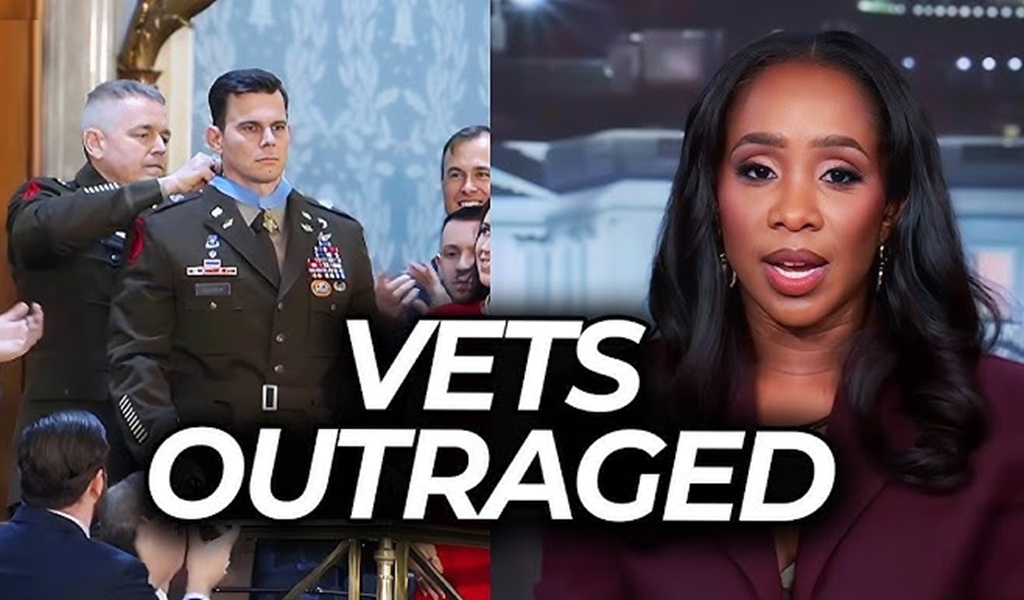
CNN Abby Phillip Ignites Outrage for Comparing Medals for Vets to a Game Show
WASHINGTON, D.C. – President Donald Trump’s State of the Union mixed policy talk with emotional tributes. During the address, he recognized several American war heroes with high military awards, and the chamber responded with loud applause.
Afterward, CNN anchor Abby Phillip drew criticism when she compared those moments to a “game show,” a remark many viewers took as dismissive toward veterans and their sacrifices.
At the same time, fellow CNN journalist Kaitlan Collins pushed a separate critique, pressing on why Trump did not mention Jeffrey Epstein-related files. Together, the comments kicked off a fresh argument about CNN’s tone and standards.
Veteran broadcaster Bill O’Reilly added fuel by calling the network “an embarrassment to journalism.” With politics still hot in 2026, the clash shows how divided media coverage of the Trump administration has become.
Trump’s State of the Union: Policy, Then Personal Tributes
Trump delivered his 2026 State of the Union on February 24, and the speech ran unusually long. He highlighted foreign policy, economic recovery, and national security. Even so, the night’s most talked-about moments came when he paused to honor service members and veterans.
Among the recognitions:
- Medal of Honor for Navy Capt. E. Royce Williams: At 100, Williams received recognition for a 1952 Korean War dogfight. According to the account shared, he shot down four Soviet MiGs while outmatched.
- Medal of Honor for Army Chief Warrant Officer Eric Slover: Trump praised Slover for landing a damaged Chinook while wounded during the January 2026 mission tied to capturing former Venezuelan leader Nicolás Maduro.
- Purple Hearts for National Guard members: Staff Sgt. Andrew Wolfe and another guardsman received Purple Hearts for injuries from a Washington, D.C., ambush, pointing to ongoing concerns about security at home.
The medal presentations brought multiple standing ovations. Some Democrats also rose, and many viewers saw the tributes as a rare moment that cut through a tense Congress. Trump framed the honors as proof of national character, saying, “These heroes remind us why America remains the greatest nation on Earth.” He also covered the economy, border security, and global issues, but the award ceremonies became the emotional center of the night.
During CNN’s post-speech coverage, Abby Phillip offered a critique focused on presentation and tone. Talking about the medal moments, she said, “He utilized almost like these game show-type moments where you’re seeing awards being presented to really bring these moments of togetherness that otherwise might not have been there. I actually thought it was very skillfully done.”
Her broader point was that Trump blended policy with made-for-TV visuals. In Phillip’s view, the honors helped create unity in a speech that otherwise reflected deep political divides.
Still, the wording hit a nerve. Critics said the “game show” line made solemn military recognition sound like entertainment. The clip spread quickly online, and many posts accused CNN of showing disrespect toward veterans.
The Backlash: Claims CNN Mocked Veteran Sacrifice
Criticism of Phillip’s comment came fast, and it got loud. While much of the pushback came from conservative media and social accounts, the outrage spilled into wider circles once the clip went viral. Fox News highlighted the remark as an example of media bias, saying it reduced serious acts of valor to a production trick.
Around the same time, MSNBC’s Jen Psaki described parts of the speech as a “circus entertainer” segment, which added to the claim that major outlets were focused on mocking style instead of acknowledging service.
Several reactions stood out:
- Dave Rubin on The Rubin Report: Rubin shared the clip and argued Phillip was “belittling war heroes” by framing medal presentations as stunts. He also noted that such moments have appeared in past State of the Union addresses, including under President Biden.
- Laura Ingraham on Facebook: Ingraham defended the ceremonies, calling them “stories of American heroes contrasted with the stunts of desperate Democrats,” and said Phillip’s take missed the point.
- Social media response: Hashtags like #CNNDisrespectsHeroes trended, as users pointed out that presidents from both parties have used similar tributes without this kind of commentary.
To many critics, the larger issue was priorities. They argued that some outlets rush to score style points, even when the topic involves military service and sacrifice.
Kaitlan Collins Turns to Epstein Files and What Trump Left Out
The controversy did not stop with Phillip. On the same post-SOTU coverage, CNN’s Kaitlan Collins pressed Trump’s silence on the Jeffrey Epstein files. In a discussion with Speaker Emerita Nancy Pelosi, Collins highlighted that Trump did not address the recently released documents, which describe Epstein’s connections to powerful people in politics and business.
Collins asked Pelosi, “What did you make of that?” referring to the omission and to ongoing complaints about Justice Department redactions raised by Epstein survivors. Some viewers saw the question as a pivot away from the speech itself, and critics argued Collins was trying to undercut the address by shifting to scandal-focused talking points.
The Epstein files, released in early 2026, reportedly include millions of documents and reference figures such as Elon Musk and Howard Lutnick, both linked to the Trump administration. Trump has faced scrutiny for past ties to Epstein, although he has denied wrongdoing. Collins has stayed on the topic for months, including a tense Oval Office exchange in which Trump called her the “worst reporter.” Supporters of Trump framed her approach as partisan, while supporters of Collins said she was doing her job by pushing for answers.
Why the Epstein Story Still Shapes 2026 Politics
Epstein remains a political flashpoint because the public still wants transparency. After the 2026 releases, survivors and advocates again criticized redactions, saying they hide accountability. The administration has defended its handling, but the lack of any mention during the State of the Union gave critics room to say Trump avoided the issue.
That choice also changed the post-speech conversation. Instead of focusing on policy and the medals, part of the coverage shifted toward questions about documents, redactions, and past associations. Critics called that opportunistic, while defenders argued it is fair to raise hard topics when a president speaks to the nation.
Bill O’Reilly Blasts CNN as an “Embarrassment to Journalism”
Bill O’Reilly, speaking on his No Spin News podcast, has repeatedly attacked CNN’s coverage style and editorial choices. In a February 18, 2026, episode, he accused the network of dishonest framing. He also argued CNN downplays some stories while giving extra attention to anti-Trump narratives.
O’Reilly has criticized CNN’s fact-checking segments and use of anonymous sources. In one segment, he said, “CNN should be absolutely ashamed of itself.” After the State of the Union coverage, he sided with critics of both Phillip and Collins, saying their comments showed how far the network has drifted from straight reporting.
His argument lands with viewers who already distrust major news outlets. O’Reilly and others also point to ratings drops and weak trust polling as proof that CNN’s reputation has taken hits in recent years.
What This Says About CNN and Today’s Media Split
CNN, once seen as the model for 24-hour cable news, has faced years of bias accusations, especially since the first Trump era. Critics say the network relies too much on commentary and conflict. Supporters respond that tough questioning is part of responsible journalism, especially on complicated stories like Epstein.
Stepping back, this episode shows a common media problem: balancing sharp analysis with respect for moments many Americans see as sacred. Phillip may have meant to critique the stagecraft, but her phrasing collided with public sensitivity around honoring veterans. Meanwhile, Collins’ focus on Epstein raised another issue, timing. Post-event analysis can hold leaders accountable, but it can also feel off-topic when the country is reacting to a major speech.
As Trump continues his second term, moments like this are likely to deepen existing media divides. Many viewers want coverage that feels fair and steady, especially when it involves the military, national unity, and victims seeking justice. O’Reilly’s “no spin” message speaks to that demand, even as others argue that aggressive questioning is necessary.
Either way, the blowback from this State of the Union shows how much tone matters. A few words can shift the story, and once the public hardens into sides, the fight can drown out everything else.
In the end, the 2026 State of the Union became a test of media judgment. Phillip’s “game show” line, Collins’ Epstein push, and O’Reilly’s condemnation combined into a wider debate about what journalism should look like in a divided America.

Related News:
Supreme Court Orders CNN to Respond in High-Stakes Defamation Case
News
Trump Announces U.S. Forces Totally Obliterated of Iran’s Kharg Island
WASHINGTON, D.C. – President Donald Trump said late Friday that U.S. forces launched a large bombing operation on Iranian military positions on Kharg Island, a small but high-value site in the Persian Gulf.
In his statement, Trump claimed the strikes “totally obliterated every MILITARY target” on what he described as Iran’s “crown jewel.” He also warned that Kharg’s key oil facilities could be hit next if Iran threatens shipping routes.
“Moments ago, at my direction, the United States Central Command executed one of the most powerful bombing raids in the history of the Middle East, and totally obliterated every MILITARY target in Iran’s crown jewel, Kharg Island,” Trump wrote on Truth Social.
He said U.S. forces did not hit oil infrastructure “for reasons of decency.” Still, he added that he could reverse that choice if Iran interferes with maritime traffic. “Should Iran, or anyone else, do anything to interfere with the Free and Safe Passage of Ships through the Strait of Hormuz, I will immediately reconsider this decision.”
The statement landed as the two-week U.S.-Israel war against Iran grows sharper. Reports described blasts on the island and heavy smoke over the struck areas, while Iranian officials promised a response. U.S. officials said the operation focused on military assets, and for now, the oil export terminal remains intact.
What Is Kharg Island? A Key Link in Iran’s Oil Exports
Kharg Island is a dry, compact island of about 20 square kilometers (around 7.7 square miles). It sits roughly 25 to 30 kilometers (15 to 19 miles) off Iran’s southwestern coast in Bushehr province. It’s often called the “forbidden island” because of tight security and long-standing military restrictions. For decades, it has served as the core of Iran’s oil export system.
- Main oil export terminal: Kharg handles 90 to 95% of Iran’s crude exports. Under normal conditions, it can move about 1.3 to 1.6 million barrels per day. In recent months, reports said volumes surged as high as 3 million barrels per day during war preparations.
- Major infrastructure: The island includes deepwater jetties that can load supertankers, large storage tanks holding millions of barrels (including backups up to 18 million barrels), and pipelines tied to key onshore and offshore fields.
- Why it matters to Iran’s finances: Oil sales, mostly to China, bring in cash that supports government spending and activities tied to the Islamic Revolutionary Guard Corps (IRGC). If Kharg goes offline, Iran’s economy could take a severe hit, and money for military operations could shrink.
Analysts often describe Kharg as Iran’s most exposed economic target. One expert called it “the artery connecting the Iranian economy to the global economy.” The facilities can load up to 10 supertankers at once, placing it among the world’s largest offshore crude terminals.
Kharg rose to global importance during Iran’s oil growth years in the 1960s. It also took damage during the Iran-Iraq War (1980 to 1988) but continued operating. Even with newer options, including Iran’s push to expand capacity at terminals like Jask outside the Strait of Hormuz, Kharg remains central to Tehran’s energy plans.
Why the U.S. Hit Kharg’s Military Defenses
Kharg is more than an oil hub. Iran also stations defensive forces there to shield the export system. Reports from multiple sources said U.S. strikes hit air defenses, command sites, and other military positions tied to protecting the island.
- Why start with military targets? Many analysts see this as a measured step. It shows U.S. reach and firepower, while avoiding an immediate shock to global oil supply by holding off on strikes against export facilities.
- A direct message on the Strait of Hormuz: Trump tied future decisions to Iran’s behavior around the waterway, where about 20% of global oil flows. Iran has reportedly placed mines and threatened disruptions as the wider conflict unfolds.
- How this fits the broader campaign: The attack follows U.S. and Israeli strikes on Iranian military and nuclear sites, and some energy-related targets. Until now, Kharg had not been hit, and many experts have warned that damaging it could trigger severe economic fallout and raise the risk of rapid escalation.
Trump said U.S. Central Command (CENTCOM) carried out the operation, which he described as historic in size. At the same time, the U.S. is sending more forces into the region, including 2,500 Marines and an amphibious assault ship. That has fueled talk about possible ground action, although Trump has said taking the island isn’t “high on the list.”
What This Could Mean for Oil Prices and the Risk of Escalation
Energy markets reacted quickly. Oil prices have already risen about 40% since the war began, and they could climb again if Kharg’s oil terminal becomes a target. Because Kharg plays such a large role in Iranian exports, a long disruption could squeeze supply, even if most Iranian crude goes to China.
- Early warnings from Iran: Iranian leaders have warned they could strike U.S. and allied energy assets if Iran’s own facilities are attacked.
- More signs of a widening conflict: The strikes came alongside reports of explosions in Tehran and public rallies showing defiance against the U.S.-Israel campaign.
- Growing international concern: Many analysts warn that hitting Kharg’s export infrastructure could set off a chain reaction, including regional instability and serious humanitarian consequences.
Iranian officials, including parliament speaker Mohammad-Bagher Ghalibaf, have previously said attacks on southern islands like Kharg would end “all restraint.”
What Comes Next for Kharg Island
As the war moves into its third week, Kharg Island is now a central pressure point. Trump’s warning leaves open the possibility of new strikes, while Iran’s next steps may decide whether the “crown jewel” keeps operating or turns into a direct battlefield target.
For now, the world is watching closely because this small island in the Persian Gulf could shape the direction of one of the biggest Middle East crises in decades.
Related News:
Trump Praises Albanese Over Giving Iranian Women Footballers Asylum
News
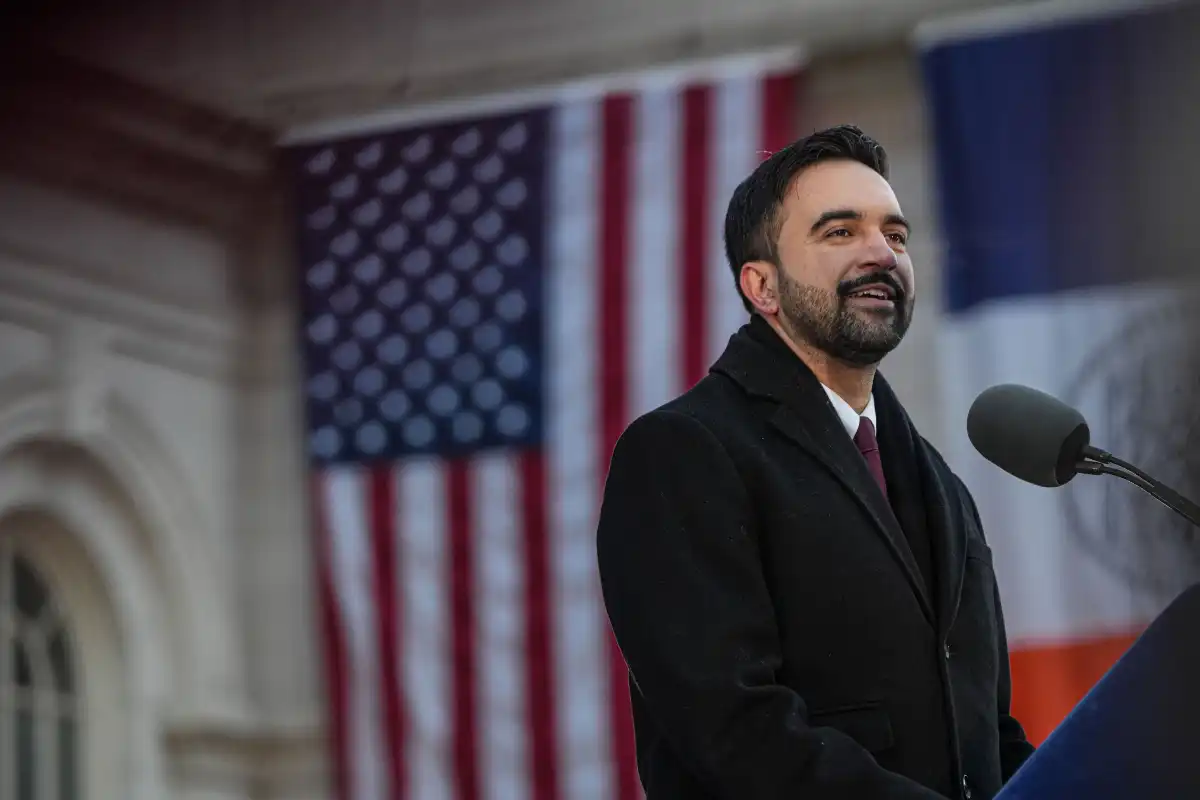
CNN Host Abby Phillip Forced to Apologize Over New York Attack Claims
NEW YORK – CNN anchor Abby Phillip was forced to issue a public apology Wednesday after she misstated key details about an ISIS-inspired attempted attack in New York City. Phillip said on air that the incident targeted Mayor Zohran Mamdani. In fact, investigators said suspects threw improvised explosive devices into a crowd of anti-Muslim protesters gathered near Gracie Mansion, not at the mayor himself.
Phillip’s comment aired Tuesday on CNN NewsNight and quickly drew criticism online. Viewers and media watchers said the wording blurred the facts in a tense story already tied to political arguments about Islamophobia.
Before a commercial break, Phillip teased the segment by saying: “Two Republicans say Muslims don’t belong here after an attempted terror attack against New York’s Mayor Zohran Mamdani, and the House Speaker, Mike Johnson, says nothing, really, to condemn those comments.”
That line made it sound like the mayor was the target. Mamdani is New York City’s first Muslim mayor, so the framing also carried added weight in the broader debate over anti-Muslim rhetoric.
Phillip Issues a Clarification and Apology
Later that day, Phillip corrected herself on X (formerly Twitter). She wrote that her wording was wrong and that she missed the error before it aired.
“I want to correct something I said last night. The bombs thrown in New York City over the weekend by ISIS inspired attackers was thrown into a crowd of anti-Muslim protestors and not specifically targeted at Mayor Mamdani. That wording was inaccurate and I didn’t catch it ahead of time. I apologise for the error.”
Phillip did not share more details about how the mistake happened. Still, people familiar with TV production often point out that show teases come together quickly, sometimes minutes before air.
What Happened Outside Gracie Mansion
Authorities said the attempted attack took place Saturday during a protest outside Gracie Mansion in Manhattan. Anti-Muslim demonstrators were gathered near the mayor’s official residence when two suspects allegedly threw homemade IEDs into the crowd.
Officials said no one was hurt. Even so, the situation raised alarms because investigators described the devices as potentially deadly.
Key details released by law enforcement included:
- Suspects: Emir Balat, 18, and Ibrahim Kayumi, 19, both US citizens from the Philadelphia suburbs.
- Charges: Federal authorities charged both men with terrorism-related offenses. Investigators said one suspect yelled “ISIS” during the arrest. They also said the other admitted he pledged allegiance to the Islamic State.
- Investigation: The NYPD and FBI labeled the case “ISIS-inspired terrorism.” One device reportedly ignited but did not fully detonate. Authorities said the explosives could have caused serious injury or death.
- Motive: Court documents say the suspects wanted an attack bigger than the 2013 Boston Marathon bombing, which killed three people.
Afterward, Mayor Mamdani condemned the attempt as “heinous” terrorism and praised first responders. At the same time, his early remarks avoided the phrase “radical Islamic terror,” a choice that echoed older political fights over language and blame.
Wider Fallout and Media Pressure
The on-air mix-up landed during intense coverage of Mamdani, a progressive Democrat who took office in January 2026. He is also described as the city’s youngest mayor in more than a century, plus its first Asian American and Muslim leader. Since his election, his rise and policy agenda have drawn both support and pushback, including remarks from some Republicans about Muslims in American public life.
CNN also faced criticism in related coverage of the New York terror attack. The network deleted a social media post and added an editor’s note to an online story after critics said the framing minimized what happened. CNN said the original presentation did not meet its editorial standards.
Phillip’s correction sparked mixed reactions. Some commentators demanded stronger accountability, including calls for her to be pulled off the air. Others treated it as a standard correction and said she handled it the right way by addressing it quickly.
Media analysts often warn that breaking-news pressure can lead to mistakes, especially when early details shift and politics heat up fast. Still, critics argue that terrorism coverage leaves little room for sloppy wording, because small errors can change how the public understands what happened.
Mayor Mamdani has not addressed Phillip’s remarks directly. He has continued to stress a focus on stopping extremism and hate across the city.
In the end, the episode shows how quickly a single line can reshape a story, and why accuracy matters most when reporting on terrorism and public safety.
Related News:
Karoline Leavitt Slams CNN’s Kaitlan Collins Over Killed U.S. Soldiers
News
U.S. Forces Hit and Destroy 16 Iranian Mine-Laying Boats Near the Strait of Hormuz
Washington, D.C.- U.S. forces destroyed 16 Iranian mine-laying vessels near the Strait of Hormuz near Iran, according to U.S. Central Command (CENTCOM). The strikes took place on March 10 and focused on boats officials said posed a near-term risk to commercial and military traffic in the area.
CENTCOM shared the announcement on X (formerly Twitter) and posted a video of the operation. The footage shows repeated precision hits on Iranian naval craft, with clear impacts and blasts. Several targets look stationary in the clips. The message from the U.S. is clear: it intends to keep shipping moving through the Strait of Hormuz, where about one-fifth of the world’s crude oil travels each day.
The operation followed strong public warnings from President Donald Trump, who said Iran must not mine the waterway. On Truth Social, Trump wrote that the U.S. had already “hit, and completely destroyed, 10 inactive mine laying boats and/or ships, with more to follow.” He also said any mines placed in the strait must be removed right away. Otherwise, he warned of “military consequences at a level never seen before.”
Those statements came as reports circulated that Iranian forces had begun placing naval mines. Soon after, Defense Secretary Pete Hegseth backed up the White House position on X. He said CENTCOM was “eliminating inactive mine-laying vessels” with “ruthless precision” under the president’s direct orders. He added that the U.S. won’t allow “terrorists to hold the Strait of Hormuz hostage.”
Key takeaways from the strike
- Timing and scale: The strikes happenedon March 10, 2026, and hit multiple Iranian vessels, including 16 mine-layers.
- CENTCOM confirmation: CENTCOM posted about the action on X and included video of the strikes near the Strait of Hormuz.
- Trump’s role: Trump first reported 10 destroyed vessels, then later statements and reporting reflected a total of 16.
- Why it matters: The action targets a mine threat that could endanger or slow commercial shipping in a major energy route.
- Wider conflict: The strikes fit into broader U.S.-Iran fighting, with reports of thousands of U.S. strikes on Iranian targets since late February 2026.
- Iran’s position: Tehran has threatened to block Gulf oil exports in response, raising concerns about a wider regional crisis.
The Strait of Hormuz sits between Iran and Oman and remains one of the most tense hotspots in the Middle East. If traffic there gets blocked or tightly restricted, oil prices could spike fast, and the shock could spread through the global economy.
What the video shows and why the targets mattered
In the footage CENTCOM released, U.S. munitions hit several Iranian vessels one after another. Fires and secondary blasts follow some impacts, which suggests heavy damage. Officials described the targets as mine layers that could place naval mines in shipping lanes. Although some were labeled “inactive,” U.S. leaders treated them as a ready threat because they could move quickly once ordered.
U.S. forces have hit Iranian maritime assets in the region before. One often-cited example is the 1988 Operation Praying Mantis, when the U.S. Navy attacked Iranian platforms and vessels after a mine damaged a U.S. frigate.
By knocking out the mine-laying boats, the U.S. says it’s protecting freedom of navigation through the Strait of Hormuz. Officials have also signaled they may escort commercial tankers if threats continue. Meanwhile, energy markets have moved sharply as traders watch for the next step on both sides.
Iran’s Revolutionary Guards have promised countermoves, including threats to choke off Gulf oil routes. If disruptions drag on, analysts warn crude prices could climb quickly, and supply chains could face a new strain.
Related News:
Trump Praises Albanese Over Giving Iranian Women Footballers Asylum
Canada’s Carney Betrays the US, Condemns Defensive Strikes on Iran
-
Crime3 months agoYouTuber Nick Shirley Exposes BILLIONS of Somali Fraud, Video Goes VIRAL
-
China2 months agoChina-Based Billionaire Singham Allegedly Funding America’s Radical Left
-
Politics3 months agoIlhan Omar Faces Renewed Firestorm Over Resurfaced Video
-
Politics1 month agoCNN Delivers Stark Reality Check to Democrats Over Voter ID
-
Business3 months agoTech Giant Oracle Abandons California After 43 Years
-
Midterm Elections2 months ago2026 Midterms Guide: Candidates, Key Issues, and Battleground States
-
Crime3 months agoMinnesota Fraud Scandal EXPANDS, $10 Billion in Fraudulent Payments
-
Politics3 months agoAccusations Fly Over Alleged Zionist Takeover of (TPUSA) Turning Point USA