News
Trump Positions U.S. Military Assets Closer to Iran Amid Deadly Crackdown
WASHINGTON, D.C. – Iran’s nationwide protests have entered a third week, and President Donald Trump is stepping up the U.S. military posture in the Middle East. Key U.S. assets are shifting closer to Iran as Trump issues sharp warnings to Tehran.
The moves come as human rights groups describe an exceptionally violent crackdown, with reports that security forces have killed thousands.
Trump’s comments, often posted on Truth Social, have fueled talk of possible U.S. action. At the same time, he has signaled he may pause strikes after claims that the killing has slowed.
Anti-government protests spread across all 31 Iranian provinces in late December 2025. Demonstrations began amid economic collapse, hyperinflation, and anger over corruption. Many protests later turned into open demands to end clerical rule. Large numbers of Gen Z protesters and people from different ethnic communities have joined, calling for freedom and democracy.
The state response has been severe. Reports say security forces, including the Islamic Revolutionary Guard Corps (IRGC) and police, have used live fire, metal pellets, and beatings against crowds described as mostly peaceful. A near-total internet blackout since early January has made verification harder, but accounts from exiled groups and witnesses describe widespread bloodshed.
Death toll estimates vary and remain difficult to confirm. The U.S.-based Human Rights Activists News Agency has reported more than 2,500 deaths. Iran International, citing internal documents, reported claims of up to 12,000 killed over two nights, January 8 to 9, 2026, during the peak of the crackdown.
Norway-based Iran Human Rights said it documented at least 3,428 protester deaths by mid-January, including children, along with thousands injured and more than 18,000 arrests. Amnesty International and Human Rights Watch have condemned what they describe as unlawful lethal force, arbitrary arrests, and attacks on medical sites, warning these could amount to crimes against humanity.
Footage said to be smuggled out shows people running from gunfire, bodies stored in makeshift morgues, and families grieving. Iranian officials have labeled protesters as foreign-backed “rioters” and warned of rapid trials and executions. One reported case involves 26-year-old Erfan Soltani, who was said to receive a death sentence shortly after being detained.
The violence builds on a long pattern of repression, including the 2022 Mahsa Amini protests and earlier crackdowns. Many observers now describe the current unrest as potentially the deadliest since the 1979 Revolution.
Trump’s Warning to Iran
Trump has used blunt language in public statements. On Truth Social, he urged Iranians to “KEEP PROTESTING” and “TAKE OVER YOUR INSTITUTIONS.” He also promised “HELP IS ON ITS WAY” and said those responsible for the killings would “pay a big price.” He warned of “very strong action” if the government began hanging protesters or continued large-scale killings.
In interviews, Trump said Iran’s leaders face “tremendous” economic pressure and repeated that the U.S. was “locked and loaded.” He pointed to the June 2025 U.S. strikes on Iran’s nuclear facilities as proof of U.S. willingness to act. Trump also said he had “very important sources” indicating the killings had paused, and he suggested that helped him hold off on immediate strikes. Still, he emphasized that “all options remain on the table.”
His messaging has lifted morale for some protesters, but it has also worried regional partners who fear a wider conflict.
U.S. Military Buildup
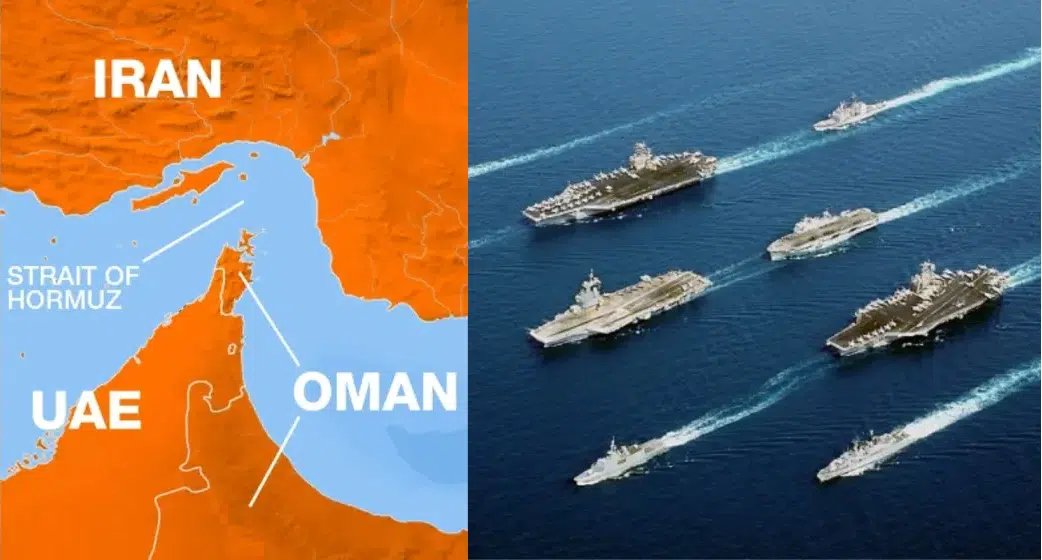
The U.S. military posture is shifting in visible ways. Sources say at least one U.S. aircraft carrier strike group is moving toward the Middle East. More air, ground, and naval assets are expected to follow in the coming days and weeks. The repositioning gives Trump a broader menu of options, from limited strikes on regime command sites to larger operations.
This comes after a recent drawdown that left fewer major assets close by. Some carriers, including the USS Gerald R. Ford, were redirected to the Caribbean after prior missions. The U.S. has also evacuated nonessential personnel from locations such as Al Udeid in Qatar, a sign officials are preparing for possible Iranian retaliation against U.S. bases. Defense planners say these steps keep choices open without committing the U.S. to a full war.
Analysts note that the on-station force level is smaller than during the 2025 Israel-Iran clashes. Even so, the U.S. can still act quickly, including with long-range bombers flying from the United States. The current U.S. aircraft carrier movement and broader Iranian military buildup appear aimed at deterrence, while also signaling support for protesters without direct involvement on the ground.
Congress Responds With Caution
Lawmakers in Washington are split. Leading Republicans have voiced support for Iranian protesters while pushing caution on military steps. Senators, including Kevin Cramer and Roger Wicker, have pointed to sanctions and diplomacy as preferred tools, and they have said they were not fully briefed on any plan for strikes.
Democrats have raised sharper objections. Senate Minority Leader Chuck Schumer stressed that major military action would require congressional approval under the War Powers Act. Other Democrats warned that strikes could backfire and push some Iranians to rally around the regime.
Polling suggests the public remains uneasy. Many Americans oppose U.S. strikes on Iran and say Trump should seek congressional approval first. Recent U.S. actions in Venezuela have also added to bipartisan concerns about the scope of presidential power overseas.
Related News:
Trump Takes Bold Stand on Corporate Giants Snapping Up American Homes
News
Trump Orders Complete Freeze on Economic Ties with Spain
WASHINGTON, D.C. – President Donald Trump said the United States will stop all trade with Spain, ordering Treasury Secretary Scott Bessent to carry out an immediate freeze on economic ties.
Trump framed the decision as payback for Spain blocking U.S. military use of joint bases for actions tied to Iran and for falling short of NATO defense spending goals. The threat stands out as one of the harshest steps aimed at a NATO partner in recent memory.
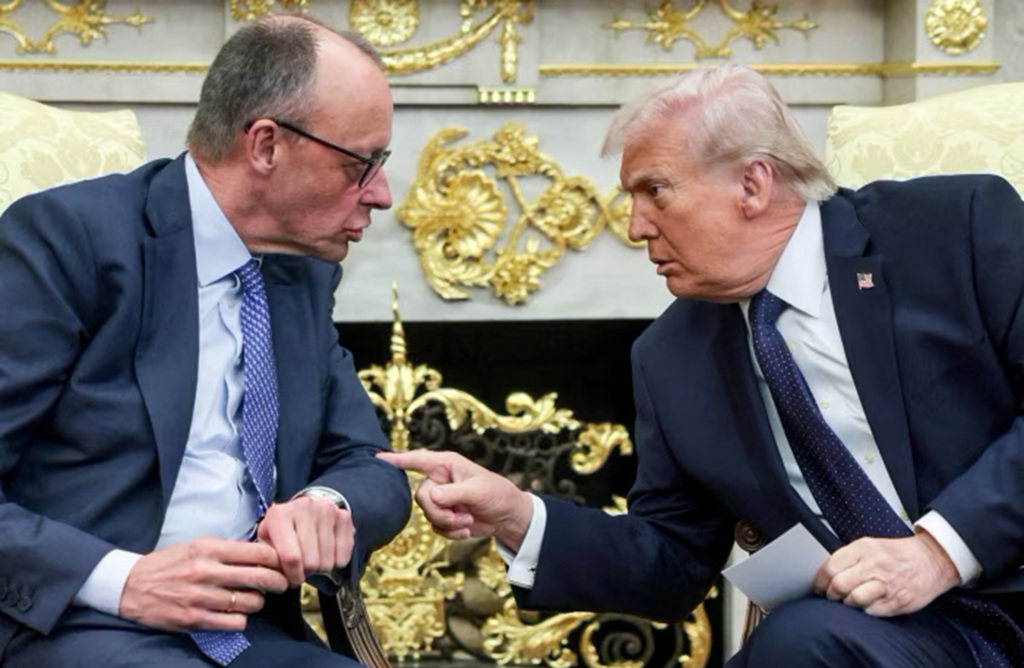
While meeting with German Chancellor Friedrich Merz on Tuesday, Trump blasted Spain’s Socialist-led government under Prime Minister Pedro Sánchez. He told reporters Spain had acted badly, then said the U.S. would cut off all trade and distance itself from Spain.
Trump pointed to two main complaints:
- Spain’s refusal to allow operations from bases in Rota and Morón for aircraft involved in recent strikes on Iran-linked targets.
- Spain’s reluctance to raise defense spending to meet higher NATO targets that Trump has urged, around 3% of GDP or more.
Trump also argued he has broad authority to restrict commerce, citing recent Supreme Court rulings that he said strengthened executive power on trade. He told reporters he could stop business connected to Spain and impose an embargo if he chose. Bessent, according to Trump’s remarks, agreed the president could take those steps.
Why U.S. and Spain Tensions Have Been Building
The dispute grew after the U.S. moved 15 aircraft, including refueling tankers, out of Spanish bases once Madrid blocked their use for missions linked to the Iran conflict. That shift came after U.S. and Israeli strikes on Iranian targets, actions that Spain’s leaders criticized as escalating the situation.
For years, Trump has pushed NATO partners to spend more on defense, often calling out countries that fall below the alliance’s 2% guideline. Under his administration, those expectations have reportedly risen. Spain, which has hovered near or below the benchmark, has remained a frequent target of his criticism.
Trade between the two countries has been meaningful. In 2025, U.S. goods exports to Spain were about $26.1 billion, while imports from Spain were about $21.3 billion, leaving the U.S. with an estimated $4.8 billion surplus. The U.S. sells items such as crude petroleum, machinery, and aircraft parts. Spain exports packaged medications, olive oil, wine, and vehicles to U.S. buyers.
A full cutoff could jolt supply chains, especially in pharmaceuticals, energy, and agriculture. Spanish products like olive oil and wine, already affected by earlier tariffs, could be shut out entirely, putting heavy pressure on producers.
Economic and Diplomatic Fallout
Analysts warn that ending trade with Spain could spread risks well beyond the two countries:
- Market moves: U.S. and European stocks slipped early Wednesday as investors worried about wider cracks inside NATO.
- Supply pressure: Some U.S. companies that depend on Spanish pharmaceuticals or European food imports could face delays or shortages.
- NATO unity: The threat could weaken coordination inside the alliance during a tense period globally.
- EU pushback: EU leaders in Brussels may treat the move as a strike at the single market, raising the odds of retaliation.
Spain has not issued a formal response, though officials in Madrid have stressed Spain’s control over how bases are used. They have also pointed to their NATO commitments while rejecting outside demands.
What Could Come Next
Administration officials have indicated the policy could move quickly, possibly through an executive order tied to national security powers. At the same time, legal fights look likely because targeting a close ally in this way would be highly unusual.
Trump’s order fits his America First approach to trade and alliances. For now, it remains unclear whether the U.S. will carry out a full embargo or use the threat to pressure Madrid, but the announcement has already shaken relations across the Atlantic.
Related News:
Trump Pushes Back on War Hawks, Choosing Deals Over a Long Iran Overthrow Plan
News
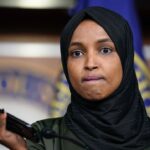
Ilhan Omar Accused of Leaking U.S. Strike Plans to Iran as Tensions Rise
WASHINGTON, D.C. – After recent U.S. and allied strikes on Iranian leaders and facilities, described in some reports as Operation Epic Fury, new accusations have targeted Rep. Ilhan Omar (D-MN). Critics claim she effectively tipped off Iran about the timing of the attacks.
The allegations spread quickly through conservative media and comments from a Republican senator. Still, no official source has backed the claim, and no evidence shows she shared classified information.
The dispute centers on a February 27, 2026, post Omar made on X (formerly Twitter). Omar, who often criticizes U.S. policy in the Middle East, wrote: “It is sickening to know that the U.S. is again going to attack Iran during Ramadan.
The U.S. apparently loves to strike Muslim countries during Ramadan, and I am convinced it isn’t what these countries have done to violate international law but about who they worship.” She also cited a historical claim about Iraq that others later challenged as inaccurate.
Soon after that post, the strikes happened during Ramadan. As a result, opponents argued her message showed advance knowledge of a planned operation.
Key claims and who is pushing them
Conservative commentator Benny Johnson featured Sen. Ron Johnson (R-WI) in a segment titled “Ilhan Omar LEAKED U.S. Military Attack Plans to IRAN, Treason?” During the broadcast, Johnson argued Omar’s public comment amounted to a leak.
He claimed she “told Iran exactly when we would attack” by posting online. The clip then spread across YouTube, podcasts, and social platforms, often framed with terms like “treason” and pulling large view counts.
- Timing of the post: Omar wrote it days before the strikes and mentioned an attack during Ramadan.
- How critics read it: They say it signaled the timing of U.S. action to Iran.
- Sen. Johnson’s comments: He said he was suspicious of treason-like conduct, although no charges, probes, or formal actions have been announced.
So far, no authority has accused Omar of mishandling classified material. Fact-checkers and neutral commentators have described her post as political criticism and public guessing, not a release of details such as targets, tactics, or exact timelines.
Omar’s response and the wider debate
After the strikes, Omar criticized them in statements posted on her congressional website and on social media. She called the action “Trump’s illegal war on Iran.” She also said President Trump acted without Congress, without clear goals, and without an imminent threat to the United States. In her view, the strikes were a reckless use of power that put civilians and U.S. service members at risk.
- She pointed to personal experience, saying she has lived through war and doesn’t believe bombs bring peace.
- She urged diplomacy instead of military escalation.
- She pushed Congress to reassert its role through the War Powers resolutions.
Omar and other members of the “Squad,” including Rep. Rashida Tlaib (D-MI), described the operation as an illegal regime-change war that increases regional risk.
No sign of a classified leak
Public reporting does not show that Omar accessed or shared classified strike plans. As a member of the House Foreign Affairs Committee, she may receive broad briefings, but that alone does not prove she had operational details. Also, treason claims face a very high legal standard, including intent to help an enemy using defense-related information, and nothing public has shown that standard is met here.
- Her post focused on motive and timing in a general sense, not actionable military details.
- Lawmakers often criticize potential or rumored military action in public without legal consequences.
- No Department of Justice case, FBI investigation, or congressional ethics referral has been reported on these allegations.
Political fallout and reactions
The accusations land in a tense moment for U.S.-Iran policy, with negotiations stalled and threats rising. Supporters of the strikes say they weakened Iranian leadership. Critics argue the action lacked authorization and could spark a wider conflict.
- Conservative voices keep promoting the story as part of broader attacks on Omar.
- Progressives say she used protected speech and raised oversight concerns.
- At the same time, some lawmakers from both parties have called for briefings and votes to limit further action.
While scrutiny of the strikes continues, including questions about legal authority and civilian harm, the claims against Omar remain a partisan talking point without documented proof of wrongdoing.
Related News:
Ilhan Omar’s Connections to Convicted Somali Fraudsters Surface
News
Trump Pushes Back on War Hawks, Choosing Deals Over a Long Iran Overthrow Plan
WASHINGTON, D.C. – After the U.S.-Israeli joint operation, “Epic Fury,” hit Iran’s nuclear sites, ballistic missile bases, and senior leadership, foreign policy leaders quickly split over what should come next. Many voices in Washington didn’t focus on whether the strikes were justified. Instead, they zeroed in on President Donald Trump’s apparent refusal to commit to a full, managed regime-change plan.
Former National Security Adviser John Bolton has been the clearest example of that divide. He called the strikes “justifiable and necessary” and described them as the biggest decision of Trump’s presidency.
Still, Bolton has also warned that the White House seems unprepared for what follows, and that this could leave a dangerous vacuum in Iran, fuel wider conflict, and create chaos without a clear replacement for the Islamic Republic.
At the center of the argument is a simple clash of goals. Trump has framed the mission as breaking Iran’s nuclear and missile capabilities, then keeping the option open for talks with whatever leadership comes next.
Bolton and other hawks want something else: a planned push to remove the regime and guide a transition, backed by Western support and organized opposition groups. Bolton pressed for that approach during Trump’s first term, but he never got it.
Bolton’s Message: Support the Strikes, Don’t Wing the Aftermath
Bolton has long argued that diplomacy can’t change Iran’s behavior, and that only regime change can end the threat. In a recent Politico interview, he said Trump has “swung wildly” on Iran, shifting from caution in his first term to actions that look like regime change today, but without the groundwork Bolton thinks is required.
He has pointed to several dangers:
- A power vacuum: Without a planned transition, Iran could fracture, empower hardliners, or fall into drawn-out instability.
- Mixed signals: Bolton says White House statements don’t line up, with some officials denying regime change is the goal and others treating it as a hopeful side effect.
- A missed opening: He argues the regime is weakened right now, and that Trump could waste the moment by acting on impulse instead of strategy.
On NewsNation and other outlets, Bolton also criticized Defense Secretary Pete Hegseth for saying the operation isn’t “a so-called regime-change war.” Bolton called for a shift in Pentagon thinking so that the government speaks with one voice. In addition, he has pushed the administration to back Iranian opposition groups and make regime removal an official policy, warning that the only other path is accepting Iran’s nuclear ambitions.
Trump’s Own Track: Strikes First, No Promise of a Managed Overthrow
Trump has often ignored the standard advice from Washington’s hawks. In his first term, he resisted Bolton’s push for aggressive regime-change efforts in Iran, North Korea, and elsewhere. He also pulled back from escalation more than once. Now, in his second term, he approved major strikes, but he keeps describing them as focused attacks meant to remove key threats, not the start of a long project to rebuild Iran’s government.
Trump’s position includes a few clear themes:
- Nuclear and missile targets come first: He has said the priority is stopping Iran from getting nuclear weapons. He has also claimed earlier strikes “obliterated” parts of the program, although Bolton and others say that wording goes too far.
- Talks are still on the table: After the strikes, Trump said Iran’s emerging leadership signaled interest in discussions. A senior White House official also said Trump is willing to engage “eventually,” and that he prefers direct contact over intermediaries.
- No appetite for open-ended war: Trump has repeated his dislike for nation-building and long commitments. He has also suggested he won’t send ground forces unless events force his hand.
- Uneven public messaging: Some officials, including Secretary of State Marco Rubio, describe regime change as a possible outcome, not the main mission. They keep the focus on damaging Iran’s military abilities.
That gap between Trump’s approach and the hawkish playbook has frustrated many establishment voices. They argue that refusing a structured regime-change plan invites disorder, gives regime remnants a chance to regroup, and risks a longer conflict without a clear endpoint.
The Nuclear Focus: Force, Then Negotiation
The operation hit Iran’s nuclear infrastructure after indirect talks in 2025 and 2026 failed to produce a deal. Those negotiations, mediated by Oman in Geneva, went through multiple rounds. Iran showed some openness to limits on enrichment and inspections, but it resisted concessions on ballistic missiles, which the United States treated as a red line.
Trump grew unhappy with the pace and scope of the talks, and the strikes followed. Even so, he has not shut the door on diplomacy. Reports describe post-strike outreach from transitional figures in Iran, and Trump agreeing to engage.
That stance is the opposite of Bolton’s view. Bolton argues that diplomacy has failed since 1979, and he says only regime change can end the nuclear risk for good.
Trump’s method looks more transactional. He applies heavy military pressure, then tries to negotiate from a stronger position. The end goal appears to be verifiable nuclear limits, which could include removing uranium stockpiles and allowing tougher monitoring, without launching the kind of full regime-removal campaign hawks want.
What It Means: A Bigger Fight Over U.S. Strategy
This dispute highlights a deeper break inside U.S. foreign policy. Establishment voices, including think tanks such as Chatham House and figures like Bolton, argue that air strikes alone won’t deliver lasting political change. They warn that hitting targets without an end plan can raise the risk of escalation.
Trump, on the other hand, seems to trust his deal-making instincts. He has signaled he wants Iran’s nuclear ambitions stopped through pressure and direct talks, not a long U.S.-led transition.
Some critics say that the approach could drag the United States into a messy conflict anyway. Supporters say it avoids the kind of managed interventions that produced mixed results in Iraq and other places.
As the operation continues, potentially for weeks according to Trump, the next step matters as much as the strikes themselves. The attacks have weakened Iran’s capabilities, but for now, the strategy ahead looks driven more by Trump’s instincts than by the traditional Washington blueprint.
Related News:
Trump Says He’s “Very Disappointed” in Starmer Over Iran
-
Crime2 months agoYouTuber Nick Shirley Exposes BILLIONS of Somali Fraud, Video Goes VIRAL
-
China1 month agoChina-Based Billionaire Singham Allegedly Funding America’s Radical Left
-
Politics2 months agoIlhan Omar Faces Renewed Firestorm Over Resurfaced Video
-
Politics3 months agoIlhan Omar’s Ties to Convicted Somali Fraudsters Raises Questions
-
News3 months agoWalz Tried to Dodges Blame Over $8 Billion Somali Fraud Scandal
-
Crime3 months agoSomali’s Accused of Bilking Millions From Maine’s Medicaid Program
-
Crime3 months agoMinnesota’s Billion Dollar Fraud Puts Omar and Walz Under the Microscope
-
Business2 months agoTech Giant Oracle Abandons California After 43 Years