News
Erika Kirk’s Early EMP Documentary Fuels CIA Grooming Rumors
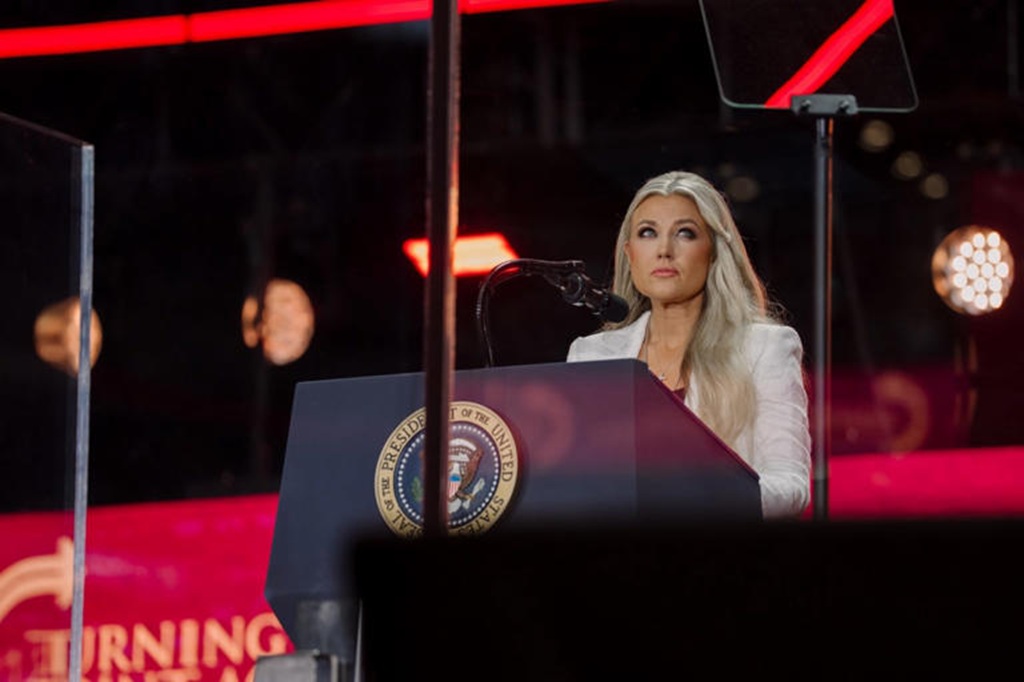
WASHINGTON, D.C. – American conservative politics, plus the online spaces that feed on conspiracy claims, rarely stay quiet for long. A new flashpoint hit in early January 2026 when an old documentary clip resurfaced featuring Erika Kirk, the CEO of Turning Point USA (TPUSA) and the widow of the late Charlie Kirk.
Jimmy Dore, a comedian and political commentator known for blunt criticism of establishment power, jumped on the clip and called it a possible “smoking gun.” In his framing, the footage raises uncomfortable questions about Kirk’s early access to national security circles and whether those links go back further than most people knew.
The viral segment shows a younger Erika Frantzve (Kirk’s maiden name) speaking about the risks of an electromagnetic pulse (EMP) attack and how it could knock out the U.S. power grid. In the same film, she appears alongside well-known national security voices, including former CIA Director R. James Woolsey. Some social media accounts first claimed the documentary was a hidden or “buried” CIA project, which added fuel to the rumor mill.
The Documentary Source: Black Start and Why It Went Viral Again
The clip comes from Black Start, an independent documentary made by filmmaker Patrea Patrick through Heartfelt Films LLC. The movie was released publicly around 2017, with some interviews and material that appear to date back to about 2013.
The film focuses on weak points in the U.S. electrical grid and what could take it down, including cyberattacks, physical attacks, natural threats like solar flares, and high-altitude EMP events that could cause major, long-lasting blackouts.
In the resurfaced section, Erika Kirk, then in her mid-20s, delivers a calm, structured presentation. She talks through EMP dangers, basic mitigation ideas, and the chain reaction that could follow a grid failure. The setting looks like a talk given to people with a security or technical background.
Woolsey appears in the documentary as well, and in some circulating edits, he’s labeled as a former CIA leader tied to national security and energy. Woolsey has spent years warning about EMP risks and pushing for grid hardening, so his presence has become a central part of the debate.
Dore’s commentary focused on what he sees as unusual access. He pointed to the polished delivery and the audience as signals that this wasn’t a random appearance. In his view, young outsiders don’t usually get a platform in rooms like that without real connections. He also suggested her comfort level reads like prior coaching or preparation for high-stakes discussions.
Family Backstory
As the clip spread, online commentators started tying it to Kirk’s family history. One common thread involves her mother, Lori Frantzve, who founded companies such as GTeK (later connected in online discussions to E3Tek Group or AZ-Tech International). Those businesses have been linked to Department of Defense (DoD) and Homeland Security contract work, with topics that include network security, risk work, and EMP-related protection tech.
A separate piece of old footage also made the rounds, a 2020 interview clip where Erika Kirk described her family’s move to Arizona. In that clip, she said the relocation was tied to her mother’s growing DoD-related work.
That move also put the family within reach of Fort Huachuca, an Army base known for intelligence training, drone operations, and ISR (Intelligence, Surveillance, Reconnaissance) programs. In conspiracy spaces, those details often get stitched together into a bigger story. Supporters of the theory argue that growing up around defense contracting, plus early exposure to EMP topics, could have created an on-ramp to intelligence networks.
Claims of CIA Links
The loudest claims say Erika Kirk has direct or indirect ties to the CIA, and they treat the documentary clip as proof. Some conspiracy-focused accounts have labeled it a “buried CIA video” or a “leaked briefing,” suggesting she was delivering insider-level knowledge or working in intelligence-adjacent roles.
Public reporting and fact checks push back on that. Black Start has been described as an independent film, not a CIA production, and it has been available publicly (including on YouTube). It features a range of public figures and commentators, including Fox News contributor Jeanine Pirro and former Congressman Trent Franks. Kirk also is not prominently credited on IMDb, and her presence fits a simpler explanation for many viewers: she had subject-matter exposure through family ties to defense and security work, not secret agency involvement.
Dore has treated the story as part of a wider pattern. Even if the CIA claim doesn’t hold up, he argues the overlap between intelligence circles, contractors, and political movements still matters. He has also used the clip to talk about influence and access in conservative organizing, a topic that gained fresh attention after Charlie Kirk’s assassination in September 2025, which elevated Erika into TPUSA leadership.
Critics of the conspiracy narrative say the story is being used to target Kirk during a painful period and a major leadership change. Kirk has compared these kinds of claims to a “mind virus,” saying they feed on tragedy and turn it into content.
Why It’s a Big Story in 2026
This resurfaced clip landed at a moment when trust in major institutions is already low. It also touches a real policy issue, EMP threats and grid security, which figures like Woolsey have warned about for years. The clip sits at the crossroads of national security fear, internet speculation, and political influence, which is why it keeps spreading.
Under Kirk’s leadership, TPUSA remains a high-profile force, so attention comes with the job. The debate around this footage has settled into two camps. One side sees a young speaker drawing on family experience and a public documentary setting. The other side sees early access that feels too connected to ignore. Either way, the revived Black Start segment has kept the conversation going, and it doesn’t look like it will fade soon.
Related News:
Turning Point USA Under Scrutiny Over Alleged Shady Dealings

News
Vice President JD Vance to Head Anti-Fraud Task Force Targeting California Welfare Abuses
WASHINGTON, D.C. – President Donald Trump is expected to sign an executive order naming Vice President JD Vance as chair of a new White House anti-fraud task force, according to multiple people familiar with the plans.
The task force under JD Vance will focus on alleged welfare abuse and improper payments tied to California and several other states.
The task force has been taking shape for weeks and marks a more public phase of the administration’s campaign against fraud in federal benefit programs. Vance, a former U.S. senator from Ohio who has often criticized large safety-net programs, will lead the effort.
Federal Trade Commission Chairman Andrew Ferguson is expected to serve as vice chair and run day-to-day work, sources said.
Sources briefed on the planning told CBS News the order could be signed as soon as this week. One person described Vance’s role as a signal that the issue sits near the top of the president’s agenda, not just another routine review.
Why JD Vance is headed to California
Republicans have long pointed to California’s large public programs as a risk point for fraud. The task force is expected to look closely at Medi-Cal (California’s Medicaid program), unemployment insurance, pandemic-era relief programs, and child care subsidies.
Audits and reviews in recent years have flagged large amounts of questionable spending, including billions tied to improper claims during and after the COVID-19 period. Vance has also argued publicly that California’s fraud problem is larger than other widely covered cases, including a Minnesota welfare fraud scandal that drew national attention.
“It’s happening in states like Ohio. It’s happening in states like California,” Vance has said when talking about misuse of federal funds.
The task force plans to examine how federal dollars move through California’s social service systems, including eligibility checks and payment controls.
The new task force follows earlier administration steps, including freezes on certain federal funds to states accused of weak oversight. While the group’s mission is nationwide, California has become a main focus. Supporters say tougher audits protect taxpayers and help benefits reach people who qualify.
California officials call it a political attack
California’s Democratic leaders quickly pushed back. State Attorney General Rob Bonta spoke Thursday in Los Angeles, calling the administration’s claims reckless and politically driven.
Bonta said California has been active in fraud cases and has recovered nearly $2.7 billion through criminal and civil actions since 2016. He cited $740 million tied to Medi-Cal matters, $2 billion recovered under the state’s False Claims Act, and $108 million connected to underground economy tax fraud investigations.
“Trump is out there falsely claiming that California is somehow the problem, baselessly claiming that California programs and public servants are perpetrating fraud, when in reality we are the victim of fraud,” Bonta said.
He added that fraud schemes hit states of all political stripes, including Republican-led Texas and Florida, along with Ohio. Bonta also took a shot at Vance’s role, saying the vice president should look closer to home instead of leading what he called an unnecessary political stunt aimed at California.
Concerns about the impact on people who rely on aid
State officials and advocates worry a high-profile federal crackdown could disrupt legitimate benefits, scare off eligible families, or be used to justify bigger policy changes aimed at Democratic-led states. Critics also point to the administration’s past pardons in fraud cases and argue that it undercuts the message of strict enforcement.
The announcement lands in the middle of ongoing tension between the Trump administration and blue states, especially California. Trump has targeted the state on immigration, environmental rules, and other issues, and the new task force fits that pattern of using executive power to increase scrutiny of state-run programs paid for in part with federal funds.
Supporters, including conservative commentators and some budget watchdogs, say the move is overdue. They argue that rising debt and pressure on entitlement spending make tighter controls necessary. They also say putting Vance and Ferguson in visible roles gives the effort more weight than a typical inspector general review.
Skeptics warn that aggressive investigations can create new paperwork hurdles and lead to mistaken benefit cuts, which often hit low-income residents hardest.
As the executive order details roll out, the task force is expected to coordinate with federal agencies that oversee key programs, including the Department of Health and Human Services, the Small Business Administration, and others.
Whether the task force uncovers widespread abuse or runs into court fights is still unknown. For now, the move has revived a familiar argument in American politics: how to balance fraud enforcement, program access, and the federal government’s role in overseeing state-run benefits.
With Vance in the lead role, the effort also puts the vice president front and center on one of the White House’s main domestic priorities, a position that could raise his profile inside the administration and beyond.
Trending News:
Trump Says Iran Should Be Worried U.S. ‘Prepared’ for Iranian Military Action
News
Trump Says Iran Should Be Worried U.S. ‘Prepared’ for Iranian Military Action
WASHINGTON, D.C. – President Donald Trump used a Fox News interview to send a direct warning to Tehran: the United States is ready to answer any Iranian military move. His comments come during a stretch of rising friction in the region, with nuclear talks in Oman only days away. The moment highlights how close diplomacy and conflict now sit.
Fox News correspondent Benjamin Hall discussed the growing U.S.-Iran standoff. Trump said the U.S. is “prepared” if Iran takes military action. He framed that posture around efforts to block Tehran’s nuclear progress and limit Iran’s reach across the region.
The remarks arrive as reports mount of dangerous encounters at sea, including Iranian gunboats trying to board a U.S. oil tanker and U.S. forces intercepting drones.
What’s driving the latest spike in U.S.-Iran tensions
U.S.-Iran relations have slid fast since Trump returned to office, building on years of disputes over Iran’s nuclear program, proxy groups, and ballistic missiles. The temperature climbed last June after U.S. strikes hit Iranian nuclear sites, following Israel’s 12-day campaign against Iran. Iran’s crackdown on protests after that only added fuel to the cycle.
In recent weeks, Iranian vessels have pressed commercial traffic near the Strait of Hormuz. At the same time, U.S. warships have stepped in to stop threats in the Persian Gulf and the Arabian Sea.
Trump has kept up pressure in public, saying Iran must stop moving its nuclear work forward and cut support for groups such as Hezbollah and the Houthis. In one exchange, he pointed to “very big, powerful ships” positioned near Iran. He said he wants diplomacy to work, but won’t hesitate if it fails.
The strategy resembles Trump’s first-term “maximum pressure” approach, but officials now describe it as more urgent. The administration says any agreement must cover nuclear limits, missiles, and proxy networks. Iran has rejected that broader package.
Oman talks: narrow agenda, high stakes
Even with the threats, both sides are still talking. U.S. and Iranian officials are scheduled to meet on Friday in Muscat, Oman. The talks are expected to focus on Iran’s nuclear program and possible sanctions relief.
The meeting location shifted from Istanbul to Oman at Iran’s request. That move also narrowed the agenda to nuclear issues, leaving out wider regional security topics that Washington has pushed.
U.S. envoy Steve Witkoff is expected to attend, and Jared Kushner may also be involved. They are set to meet Iranian Foreign Minister Abbas Araghchi. Oman has played go-between for years and has hosted past indirect talks.
Trump has said Iran is “seriously talking” with the U.S., but many remain doubtful. Secretary of State Marco Rubio has said progress depends on Iran accepting limits on missiles and proxy ties. Iranian officials say they will only discuss the nuclear file, and only “on an equal footing.”
Trump has also tied the talks to the risk of force, warning that if talks fail, future strikes could be “far worse” than earlier action.
Iran’s playbook: proxies, missiles, and pressure points
Iran often relies on indirect power rather than head-to-head fights. Analysts describe a layered plan meant to raise the cost of any attack. That includes large waves of ballistic missiles and drones, plus proxy activity tied to the “Axis of Resistance” in Lebanon, Yemen, Iraq, and Syria.
Tehran also holds a major economic threat over the region: disruption in the Strait of Hormuz. Iranian officials have said they would respond “with everything we have” if attacked. They have pointed to options like cyberattacks and interference with shipping.
Still, the past year has exposed weaknesses, including gaps revealed during last year’s strikes. That has sparked internal debate inside Iran about whether a more flexible approach could reduce risk. Other voices argue the opposite, that only the threat of a long conflict can hold the U.S. back.
U.S. naval buildup near Iran
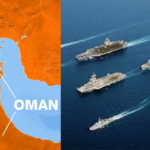
The Pentagon has increased forces in the region to back up Trump’s warnings. The USS Abraham Lincoln carrier strike group is operating in the Arabian Sea, alongside guided-missile ships and aircraft such as F/A-18 Super Hornets and F-35C Lightning IIs.
Other reported assets include the USS Delbert D. Black, USS McFaul, and USS Mitscher near the Strait of Hormuz. Littoral combat ships are also operating in the Persian Gulf, with added air support from bases in Jordan and Qatar.
Satellite imagery has shown expanded activity at sites such as Muwaffaq Salti Air Base. Missile defenses, including THAAD and Patriot systems, are reinforcing protection for U.S. forces and partners. U.S. officials have described the buildup as a large force meant to deter attacks and allow a fast response if needed.
What happens next, and what could go wrong
The next few days could set the tone for months. A deal in Oman could produce a limited nuclear agreement, ease some sanctions, and cool the situation. A breakdown could bring the opposite, with small incidents turning into direct clashes.
Analysts warn the risks are real: a proxy strike could draw U.S. retaliation, or Iran could try to disrupt key shipping lanes. Either outcome could push energy prices higher and shake global markets.
Regional partners such as Saudi Arabia and the UAE could also face attacks, and Israel could be pulled deeper into the conflict. Trump has held off strikes before to leave room for talks, but his latest comments suggest little patience for what he sees as Iranian defiance.
As attention shifts to Muscat, Trump’s Fox News statement stands as both a warning and a show of resolve. The outcome could be a narrow deal or a wider crisis. The stakes include nuclear risk, regional stability, and global security.
Trending News:
Iran’s Supreme Leader Steps Up Threats as Trump Applies Pressure
Hillary Clinton Calls for Transparency, Wants Televised Congressional Hearing
News
Marco Rubio Accuses Iran of Sponsoring Global Terrorism
WASHINGTON, D.C. – During a press availability at the State Department, U.S. Secretary of State Marco Rubio sharply criticized Iran’s leaders. He accused Tehran of backing terrorist activity across the globe and stressed what he called a deep gap between the clerical government and the Iranian people.
Marco Rubio spoke as the United States weighs possible nuclear talks with Iran. His comments reflected the Trump administration’s tough approach. He argued that Iran, a country with significant wealth and potential, is sending money outward to support proxy forces instead of fixing urgent problems at home. He pointed to issues like water shortages, power problems, and economic strain.
“The Iranian regime is sponsoring terrorism around the world,” Rubio said. He added that Iran’s leaders are “spending all their resources, of what is a rich country, sponsoring terrorism, sponsoring all these proxy groups around the world, exporting as they call it, ‘their revolution.’”
The State Department has labeled Iran a state sponsor of terrorism since 1984. Under Rubio, the department has also moved to renew terrorism designations tied to Iran-aligned militias in Iraq. He has pushed allies to tighten sanctions and has urged partners to designate the Islamic Revolutionary Guard Corps (IRGC) as a terrorist organization.
Rubio tied Iran’s foreign activities to the hardship many Iranians face. “One of the reasons why the Iranian regime cannot provide the people of Iran the quality of life that they deserve is because they’re spending all their money” on these operations, he said. He pointed to ongoing domestic unrest, including recent protests tied to the economy and government repression, as signs the state can’t meet basic public needs.
A Wide Gap Between Iran’s Leaders and Its People
A key theme in Rubio’s remarks was his effort to separate the Iranian government from the population. “The Iranian people and the Iranian regime are very unalike,” he said. “In essence, what the Iranian people want, this is a culture with a deep history, these are people that the leadership of Iran at the clerical level does not reflect.”
He argued that the difference is unusually large. “I know of no other country where there’s a bigger difference between the people that lead the country and the people who live there,” Rubio said. He described Iran as a society shaped by a long Persian past, and he suggested the current leadership doesn’t represent that identity.
This message matches Rubio’s past public comments, including statements made during his Senate confirmation process. It also fits a broader U.S. strategy, criticize the regime while showing respect for ordinary Iranians. The goal is to build international support for pressure on Tehran without pushing away internal reformers, dissidents, or civil society voices.
Rubio Lays Out Hard Terms for Any Nuclear Talks
Rubio’s remarks came as the U.S. and Iran explore limited engagement. He confirmed reports that Iran asked to change the location of planned talks that were first expected to take place in Turkey. He said the United States is still open to talks, but he made clear that Washington wants more than a narrow nuclear discussion.
“For talks to actually lead to something meaningful, they will have to include certain things,” Rubio said. “That includes the range of their ballistic missiles. That includes their sponsorship of terrorist organizations across the region. That includes the nuclear program. And that includes the treatment of their own people.”
He said he doubts Tehran will accept a broader agenda, since it appears focused on uranium enrichment and related nuclear issues. Rubio added that President Trump prefers diplomacy and peaceful outcomes, but won’t rule out confrontation.
“Our problem with the Iranian regime isn’t simply, obviously it’s predominantly, their desire to acquire nuclear weapons, their sponsorship of terrorism,” Rubio said, “but it’s ultimately the treatment of their own people.”
He also pointed to recent crackdowns, including arrests tied to alleged spying and assisting foreign actors, as more evidence of repression inside Iran.
What Rubio’s Remarks Signal for U.S. Policy
Rubio’s comments reinforce the administration’s maximum pressure approach. That includes targeting Iran’s proxy groups and working with European partners on sanctions. Critics warn that this kind of rhetoric can raise tensions. Supporters say it’s needed to counter Iran’s influence in the Middle East through groups like Hezbollah, Hamas, and armed factions in Iraq.
With frustration inside Iran driven by economic stagnation and human rights concerns, Rubio’s framing may appeal to dissidents and members of the Iranian diaspora who see the clerical system as separate from Iran’s national identity.
Over the next several days, diplomacy will face the same divides Rubio laid out. For now, the message from the Secretary of State is clear, the U.S. views Iran’s rulers not only as a nuclear risk, but also as a sponsor of instability whose priorities clash with what many Iranians want.
Related News:
Iran’s Supreme Leader Steps Up Threats as Trump Applies Pressure
-
Crime1 month agoYouTuber Nick Shirley Exposes BILLIONS of Somali Fraud, Video Goes VIRAL
-
Politics2 months agoIlhan Omar’s Ties to Convicted Somali Fraudsters Raises Questions
-
China2 weeks agoChina-Based Billionaire Singham Allegedly Funding America’s Radical Left
-
News2 months agoWalz Tried to Dodges Blame Over $8 Billion Somali Fraud Scandal
-
Crime2 months agoSomali’s Accused of Bilking Millions From Maine’s Medicaid Program
-
Asia3 months agoAsian Development Bank (ADB) Gets Failing Mark on Transparancy
-
Politics3 months agoSouth Asian Regional Significance of Indian PM Modi’s Bhutan Visit
-
Crime2 months agoMinnesota’s Billion Dollar Fraud Puts Omar and Walz Under the Microscope