Connect with us

Crime

FBI to Launch Sweeping Crackdown on Left-Wing Extremist in Minnesota

– Patel Promises Fast Response to Alleged Efforts to Block Federal Immigration Enforcement

– Investigators Reviewing Encrypted Signal Chats and Activist Groups as ICE Tensions Rise

VORNews

Published

on

FBI to Launch Sweeping Crackdown on Left-Wing Extremist in Minnesota

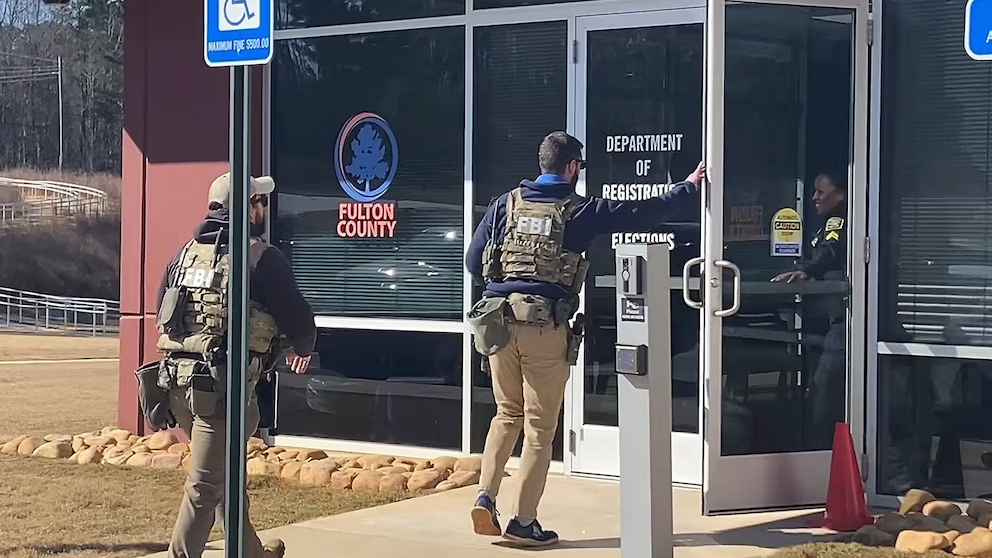
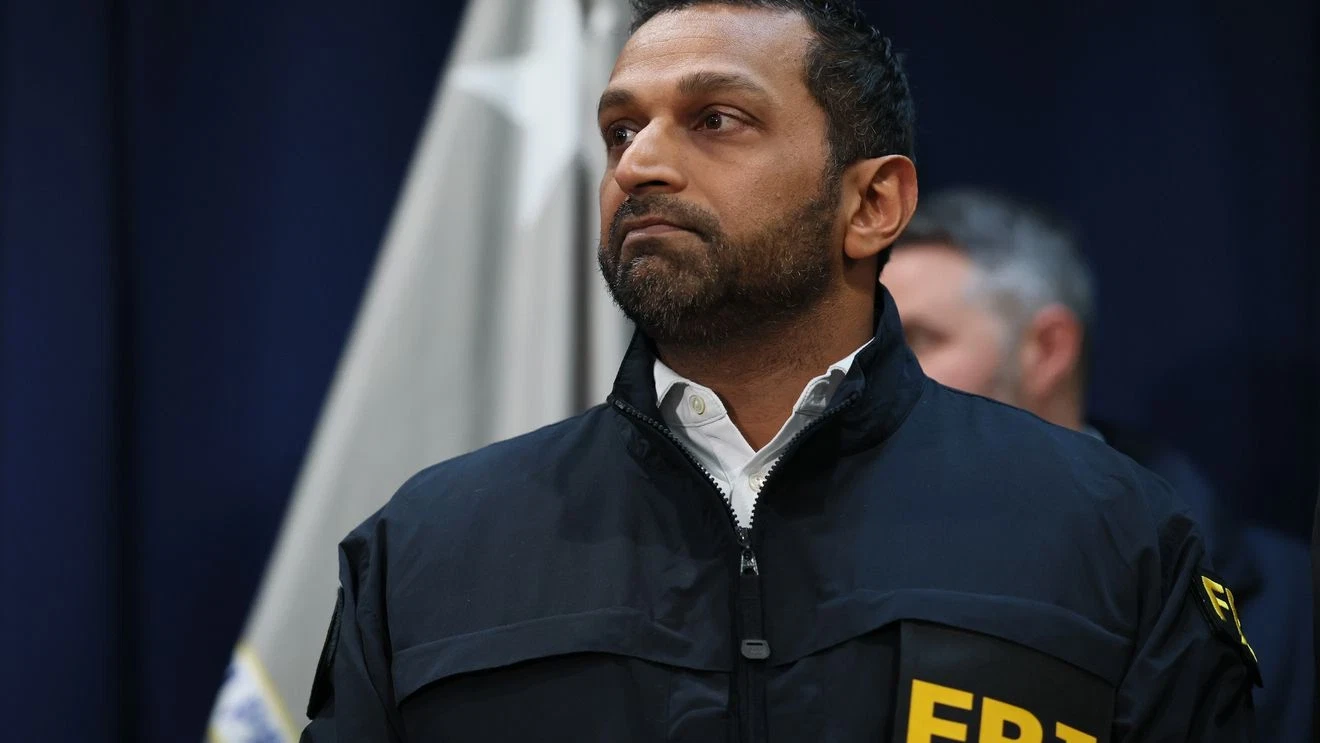
WASHINGTON, D.C. – FBI Director Kash Patel said Monday the bureau has opened major investigations into what he described as a coordinated left-wing network in Minnesota. He alleges the group used encrypted communications to interfere with Immigration and Customs Enforcement (ICE) operations and threaten federal agents.

Patel made the comments during an interview with conservative commentator Benny Johnson. He said the probes began after reports from citizen journalist Cam Higby, who claims he gained access to private Signal group chats used by activists in Minneapolis.

According to those reports, the chats show organized efforts to track ICE agents, share personal details about them, and coordinate resistance to deportations aimed at criminal illegal aliens.

“We’re investigating,” Patel said. “As soon as Higby put that post out, I opened an investigation on it. If that leads to a break in the federal statute or a violation of some law, then we are going to arrest people. They should be worried. If they broke the law, you should be worried.”

Patel’s announcement comes as Minnesota faces growing tension around ICE activity. Protests tied to immigration raids have sometimes turned violent. Reports say activist networks, including some linked to Antifa-aligned groups, have used advanced methods.

Shift in FBI priorities

Those tactics reportedly include license plate readers to spot federal vehicles, databases used to dox agents, and live coordination meant to disrupt enforcement. Patel also suggested the effort may stretch beyond Minnesota and involve people in other states.

The move highlights a shift in FBI priorities since Patel was confirmed as director earlier in 2025. Patel, appointed by President Donald Trump, has put more attention on domestic threats he says are tied to left-wing ideology.

That includes efforts to treat certain anarchist and anti-fascist groups as domestic terrorism concerns. Critics, including current and former FBI staff cited in recent New York Times reporting, say the bureau under Patel has moved resources away from long-standing threats to chase cases they view as political.

Conservative outlets have labeled the Minnesota case “Signal-Gate.” The story gained traction after citizen journalism described what it called a “low-level insurgency” against federal deportation actions.

Higby’s reporting, boosted by outlets such as ZeroHedge and Breitbart, described Signal chats where participants allegedly posted real-time updates on ICE activity.

Some of the chats reportedly included high-level political figures in Minnesota’s Democratic infrastructure, raising questions about a possible conspiracy to injure federal officers or obstruct justice.

Patel credited outside reporting for helping spark the investigation. He said the FBI is also looking for tips and public information tied to the reported activity. “We immediately opened up that investigation because that sort of Signal chat being coordinated with individuals, not just locally in Minnesota, but maybe even around the country,” he said.

Vandalizing FBI vehicles

The timing matches a wider Trump administration push to respond to resistance against immigration enforcement. Recent arrests in Minneapolis include suspects accused of vandalizing FBI vehicles during anti-ICE unrest. One suspect, described as a Latin Kings gang member, allegedly stole government property.

Patel has warned that threats against law enforcement and attacks on federal equipment will bring serious consequences.

Minnesota officials have not directly answered Patel’s remarks. The state has been a flashpoint in disputes over federal immigration policy. Governor Tim Walz and other Democrats have criticized aggressive ICE operations in the past. Some local leaders have framed resistance as a form of community protection, not criminal conduct.

Legal experts say peaceful protest and encrypted messaging are protected under the First Amendment. Still, actions that cross into threats, conspiracy, or obstruction can trigger federal charges. Laws that could apply include 18 U.S.C. § 115 (threats against federal officials), § 372 (conspiracy to impede officers), and other civil rights or obstruction statutes.

Patel’s comments drew strong reactions across party lines. Supporters say the FBI must act to protect federal agents and enforce the law. Critics argue the bureau is being used against political opponents. They point to Patel’s past support for conspiracy claims and his stated goal of reshaping the FBI by going after what he calls “deep state” actors.

As the investigations move forward, Patel’s remarks suggest more arrests could follow if agents find evidence of crimes in the Signal chats or related actions. For now, Minnesota activist networks remain under intense federal scrutiny as the FBI reviews claims of coordinated interference with ICE operations.
Related News:

FBI Top 10 Most Wanted Fugitive Ryan Wedding Arrested

Crime

ICU Nurse Alex Pretti Shot and Killed By Federal Agents in Minneapolis

Jeffrey Thomas

Published

on

ICU Nurse Alex Pretti Shot and Killed

MINNESOTA – Alex Pretti was shot and killed in Minneapolis on January 24, 2026, and the fallout has spread far beyond the city. The case has sparked a national argument over the use of force, federal power, and how states should respond to immigration enforcement.

What appears to have started as a federal immigration operation ended with a 37-year-old U.S. citizen, and ICU nurse, dead at the scene.

Soon after, U.S. Attorney General Pam Bondi called on Minnesota Governor Tim Walz to bring state agencies in line with federal immigration work. Her public push has made an already tense state-federal relationship even more strained, especially in places that lean toward sanctuary-style policies.

On the cold Saturday morning in south Minneapolis, U.S. Border Patrol agents working as part of broader immigration crackdowns under the Trump administration encountered Alex Jeffrey Pretti.

Federal officials first said Alex Pretti was armed and aggressively moved toward agents, leading them to shoot in self-defense. Pretti, who worked as a registered nurse in intensive care at a local VA facility, was hit multiple times and pronounced dead at the scene.

Videos posted quickly to social media showed a different picture. In clips filmed from several angles, Pretti appears to be holding a cellphone, not a gun, as he walks toward the agents. The videos spread fast and drove immediate claims of excessive force and a possible attempt to control the story.

People in the area described Alex Pretti as quiet and community-minded, with no criminal history. Many called the shooting senseless. Within hours, memorials appeared near the site, and vigils drew dozens of neighbors mourning a local man killed during what they saw as an avoidable escalation.

Investigations are still underway. Body camera footage from agents and more witness statements are being reviewed. The Department of Homeland Security has defended the agents, saying they faced a threat while carrying out an operation aimed at immigration violators in the area.

Critics, including civil rights groups, say the incident fits a wider pattern of federal agents working in major cities far from the border, raising concerns about expanded missions and lost trust in communities.

Alex Pretti: Remembering the Man Behind the Headline

Alex Pretti worked in a job where the pressure is constant. As an ICU nurse, he spent his career caring for critically ill patients, often during long and demanding shifts. Friends and coworkers described him as kind, committed, and interested in local issues, though not known as a loud activist.

His death has also triggered anger because he was a U.S. citizen. Many have asked how a native-born American ended up in the middle of an immigration-related operation.

Reports suggest Alex Pretti may have been near a residence agents were focusing on, or he may have been passing by when the encounter began. He grew up in Green Bay, Wisconsin, and later moved to Minnesota for work and community ties.

The claim that he was unarmed, or at least not visibly holding a weapon, has intensified demands for clear answers and public accountability.

Federal Reaction and Pam Bondi’s Pressure Campaign

Within hours of the shooting, Attorney General Pam Bondi sent a sharp letter to Governor Tim Walz. She used the moment to push Minnesota to cooperate more with federal immigration enforcement. Bondi accused state leaders of refusing to fully support federal immigration laws, and she argued that this refusal puts federal agents at risk and weakens national security.

In the letter, Bondi urged Walz to direct state detention facilities, including jails and prisons, to honor ICE detainers, allow immigration interviews, and assist with removals for people identified as removable non-citizens. She said Minnesota’s sanctuary-leaning policies do not just slow enforcement, they make situations more dangerous for officers during field operations.

Bondi’s message came with a clear warning. She called for state support for federal efforts and alignment with national immigration policy, or the state could face consequences. She framed her stance as part of a push for uniform enforcement across the country.

The timing, so soon after Alex Pretti ’s death, drew criticism from people who said she was turning a tragedy into a political weapon. Supporters said she was responding to unrest and a growing safety risk for agents.

Protests started in Minneapolis almost right away. Demonstrators called the shooting another sign of heavy-handed federal tactics, especially in immigrant neighborhoods and communities of color. Many chants focused on “justice for Alex,” along with broader demands to end ICE activity in the city. Some gatherings grew tense, leading to arrests and a larger law enforcement presence.

Governor Walz’s Response and a Familiar State-Federal Standoff

Governor Tim Walz answered publicly with a careful tone. He offered condolences to Pretti’s loved ones and called for a full, independent investigation. Walz also criticized the use of Border Patrol in city neighborhoods, saying the federal deployment was inflammatory and not needed.

Walz has long backed Minnesota’s approach to immigration enforcement, which aims to protect community trust and limits local law enforcement involvement in federal civil immigration actions.

He rejected Bondi’s demands, arguing that state resources should not be pulled into what he views as a politically driven federal plan. In one statement, Walz called on the Trump administration to pull agents back and let local agencies handle public safety without federal interference.

This back-and-forth reflects a deeper divide. Federal leaders want consistent enforcement nationwide, while states argue they should control local policing and detention decisions. Minnesota’s approach, like policies in other Democratic-led states, is built around the idea that fear of deportation can stop people from reporting crimes or seeking help.

Bigger Stakes: Immigration Enforcement Back in the Spotlight

Pretti’s death comes during a period of increased federal immigration activity after the 2024 election. Operations in sanctuary cities have expanded, and agencies such as Border Patrol have taken on more interior enforcement work. Critics say these tactics threaten civil liberties and raise the chance of violent confrontations. Supporters argue the government is enforcing the law and removing people who pose risks.

The Pretti case, where a U.S. citizen died during an immigration-linked encounter, highlights what can happen when enforcement expands beyond its usual setting. It also echoes past disputes over federal use of force and adds fuel to debates about qualified immunity, de-escalation training, and outside oversight.

Bondi’s letter also raises the pressure. By tying the tragedy to state non-cooperation, the Justice Department appears to be trying to push Minnesota into changing its stance. Tools could include subpoenas, funding threats, and lawsuits, options the federal government has used in similar conflicts.

For Minneapolis residents, the shooting brings back memories of other high-profile deaths involving law enforcement. That history has made trust harder to rebuild. Politically, the moment also puts Walz under a brighter spotlight, with demands from his base on one side and national scrutiny on the other.

Transparency, Accountability, and Hard Choices Ahead

Alex Pretti’s shooting is not just a Minneapolis story. It has become a flashpoint in the country’s heated battle over immigration enforcement. A nurse who spent his life helping others died during a disputed encounter, leaving a grieving family and a shaken community.

Attorney General Pam Bondi’s letter to Governor Tim Walz has sharpened the conflict into a simple choice: cooperation or confrontation on federal immigration policy. As investigations move forward, the public needs clear facts, including the release of footage, an independent review, and accountability if wrongdoing is found.

The case also forces a bigger discussion about safety, civil rights, and how power should be shared between states and the federal government. For now, Minneapolis is waiting for answers, and the tension is not easing.

Related News:

Federal Agents Arrest Three Following St. Paul Church Disruption

Continue Reading

Crime

Federal Agents Arrest Three Following St. Paul Church Disruption

Jeffrey Thomas

Published

on

Federal Agents Arrest Three Following St. Paul Church Disruption

ST. PAUL, MN– Federal agents with the FBI and Homeland Security arrested three people this week. The arrests stem from a protest that interrupted a Sunday morning service at Cities Church in St. Paul, Minnesota.

The demonstration on January 18, 2026, has drawn national attention, raising fresh arguments about immigration enforcement and whether places of worship should be off-limits to protests.

Those arrested were Nekima Levy Armstrong, a well-known civil rights attorney, Chauntyll Louisa Allen, a St. Paul School Board member, and activist William Kelly. Federal agents say all three face conspiracy charges tied to depriving others of constitutional rights, including the right to worship without threats or intimidation.

Officials say dozens of protesters entered the church while worship was underway. People chanted “ICE out” and “Justice for Renee Good,” referencing a local woman who was recently killed in a shooting involving an immigration officer.

Protesters focused on this church because one pastor also holds a role with U.S. Immigration and Customs Enforcement (ICE). Demonstrators said they were calling out a public official. Church leaders and federal authorities say the group went too far by disrupting a private religious service.

Attorney General Pam Bondi said the Department of Justice plans to respond firmly to incidents like this. “Religious freedom is the bedrock of this country,” Bondi said. “We will protect our pastors and our churches.”

Don Lemon, Federal Agents, and the “Journalism” Argument

Former CNN host Don Lemon also became part of the story. Lemon was at the church during the protest, recording video and interviewing people for his independent media platform.

Prosecutors sought to charge Lemon along with the protesters, but a U.S. Magistrate Judge initially stopped the arrest warrant. The judge said Lemon appeared to be working as a journalist.

Even so, the Justice Department is reportedly exploring other options to charge him. Assistant Attorney General Harmeet Dhillon said “committing journalism” isn’t a “shield” if someone is involved in a coordinated plan to disrupt a protected event.

Lemon has pushed back publicly. On his YouTube show, he said, “That’s called journalism. You’re not going to diminish my voice.”

The arrests come as Democrats and legacy media have turned up the volume on ICE criticism. Some public figures have used harsh comparisons, calling ICE agents “secret police” and “thugs.” Others have compared today’s immigration enforcement to 1930s Germany.

Critics say this tone doesn’t match how immigration enforcement was discussed years ago. Independent observers point to what they view as uneven standards in how enforcement actions get covered.

Looking Back at the “Deporter-in-Chief” Era

The debate also revived a long-running point about President Barack Obama’s record. During his time in office, more than 3 million people were deported. The text of the debate often highlights that Obama’s first term saw more deportations than the first Trump administration did.

During that period, critics say major outlets rarely treated deportations as a daily crisis story. There were fewer comparisons to a “police state,” and less pushback from leading Democrats.

The Obama administration also recognized Tom Homan, who is often criticized today as a face of “mass deportations.” In 2015, Obama awarded Homan the Presidential Rank Award, the top civil service honor, tied to his work in border security and enforcement.

To many watching now, that contrast makes the current outrage feel more like politics than a steady moral position. Under a Democrat, strong enforcement was praised. Under a different administration, similar actions get labeled “fascism.”

For the three activists arrested in St. Paul, the stakes are high. A conviction for conspiracy to deprive civil rights can bring up to 10 years in prison.

The case could also shape how the government responds to protests on private property, especially inside churches. Protest rights have strong protections, but federal law also protects worshippers from harassment and intimidation while gathering for religious services.

With the 2026 midterm elections getting closer, the “Abolish ICE” push is likely to stay a major issue for progressives. In St. Paul, the more immediate concern is keeping community spaces safe and peaceful.

Related News:

Antifa Accused of Using Homeless Elderly as Human Shield Against Federal Agents

Continue Reading

Crime

FBI Top 10 Most Wanted Fugitive Ryan Wedding Arrested

VORNews

Published

on

By

FBI Top 10 Most Wanted Fugitive Ryan Wedding Arrested

WASHINGTON, D.C. – Ryan Wedding, a former Canadian Olympic snowboarder and a fugitive once listed on the FBI’s Ten Most Wanted, has been arrested and transferred into US custody, according to officials.

Ryan had a $15 million reward tied to his capture after being indicted for allegedly leading a criminal enterprise that involved cocaine trafficking and murder. Authorities said the case spans the US, Canada, Mexico, and Colombia.

Mexico’s Security Secretary Omar García Harfuch said in a post on X that Ryan Wedding voluntarily surrendered before being turned over to the FBI. García Harfuch described the transfer as part of a coordinated effort with US officials and said a Canadian citizen surrendered at the United States Embassy before being handed over.

FBI Director Kash Patel said at a Friday press conference that Wedding was taken into custody in Mexico late Thursday. Officials said he had been living in Mexico for more than a decade and was tied to the Sinaloa Cartel’s cocaine operation, which authorities allege moved drugs from Colombia to the US and Canada.

Attorney General Pam Bondi had previously said Wedding’s alleged network generated more than $1 billion a year in illegal drug profits. Investigators also believed he was in Mexico under cartel protection.

Patel credited cooperation with Mexico for the arrest, naming President Sheinbaum, Secretary Harfuch, Ambassador Ron Johnson, and others in a public post announcing the capture.

Ryan Wedding Arrested

Olympic past, now a major federal case

Wedding once competed for Team Canada and placed 24th in the parallel giant slalom at the 2002 Winter Olympics.

After the arrest, Wedding was transported to the United States on Friday. He arrived at Ontario International Airport in Southern California, where federal officials held a press conference.

During that briefing, officials said they had searched for Wedding for more than a year. They also accused him of ordering killings, including murders involving government officials. Authorities said they seized firearms, luxury vehicles, artwork, and other assets tied to the investigation.

Patel said Wedding is expected to appear in federal court as soon as Monday. FBI officials added that investigators are still looking for other people connected to the alleged operation. Ryan Wedding’s arrest was first reported by NBC.

Patel also pointed to the FBI’s recent progress on top fugitive cases, saying six of the agency’s Ten Most Wanted suspects have been arrested in the past year. That includes the capture in Mexico of a man charged in the 2016 killing of a woman in North Carolina, according to the FBI.

Ryan Wedding Arrested

Not Ryan Wedding’s first run-in with the courts

This is not the first time Wedding has faced federal prosecution. In June 2008, Wedding was arrested with two other people and accused of conspiring to possess cocaine with intent to distribute, according to a criminal complaint. Investigators said Ryan Wedding and others traveled from Canada to San Diego to purchase cocaine as part of a Vancouver-based trafficking group.

Authorities said the deal was part of a sting operation. After the transaction, FBI agents arrested the group, and investigators later reported finding $100,000 in cash in a hotel room, according to an affidavit.

Court records show Wedding’s two co-defendants pleaded guilty. Wedding went to trial, was convicted in November 2009, and was sentenced in 2010 to four years in prison.

At sentencing, Wedding referred to his athletic career and told the court he wanted to rebuild his reputation.

In October 2024, federal prosecutors filed a superseding indictment charging Wedding with running a criminal enterprise that allegedly handled cocaine trafficking and murder across several countries. Prosecutors said the enterprise began around 2011, after Wedding was released from prison.

Prosecutors also allege Wedding and another man ordered multiple killings. They say he directed the November 2023 murders of two family members in Ontario, describing it as retaliation for a stolen drug shipment. Prosecutors also allege he ordered another murder in May 2024, tied to a drug debt. Ryan Wedding had been indicted previously in a case.

Trending News:

Ilhan Omar’s ‘Exploding Wealth Investigated By Federal Authorities

Continue Reading

Get 30 Days Free

Express VPN

Create Super Content

rightblogger

Flight Buddies Needed

Flight Volunteers Wanted

Trending