Crime
FBI Seizes 2020 Election Records in Fulton County, Georgia, Under Renewed Scrutiny

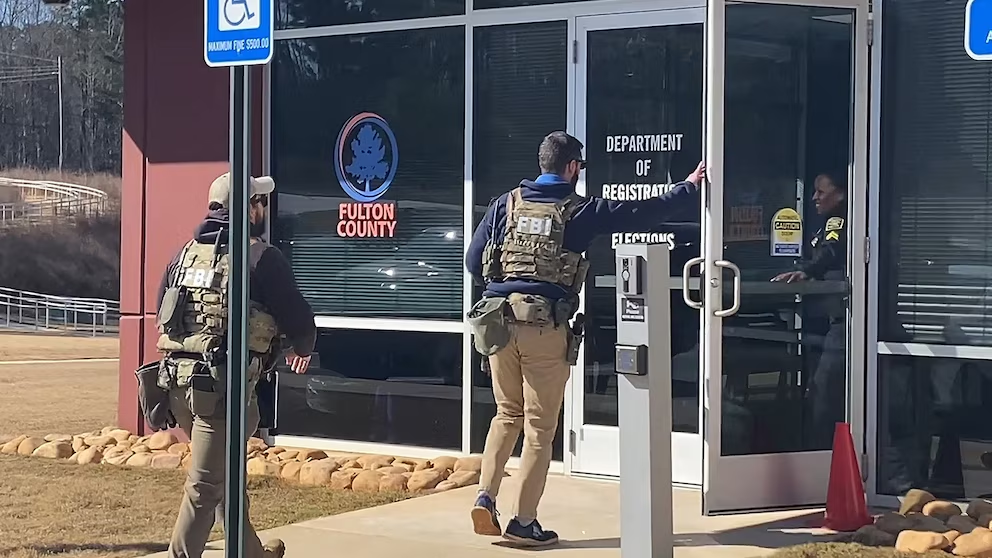
GEORGIA – Federal agents with the FBI carried out a search warrant at the Fulton County Elections Hub and Operations Center in Union City, Georgia, near Atlanta. Agents removed hundreds of boxes of election materials tied to the 2020 presidential contest. Reports put the total at roughly 656 to 700 boxes. The records reportedly include ballots, tabulator tapes, ballot images, voter rolls, and related files.
The seizure has brought Fulton County back into the spotlight. The county, which includes much of Atlanta, is a Democratic stronghold and was one of the most argued-over areas after the 2020 vote. The move has also reopened public debate about election security, claims of voter fraud, and the reliability of voting technology.
President Donald Trump, who lost Georgia to Joe Biden by fewer than 12,000 votes, has long said the state’s results were affected by major problems. Since 2020, Georgia has gone through audits, recounts, and reviews at the state and federal levels. Those efforts upheld the certified outcome and did not find fraud that could have changed the result. Even so, the FBI’s action suggests federal authorities are either following new information or taking another look at old claims.
The warrant was approved by Magistrate Judge Catherine M. Salinas. It called for “all physical ballots from the 2020 general election,” along with connected digital records and voter data. Federal officials described the search as “court-authorized,” but shared few details, citing an ongoing investigation.
Fulton County confirmed the seizure and said the records had been kept as required by law. Some county leaders and staff voiced concern about the scale of the search and the loss of custody over archived materials. They also warned it could affect current election planning. County officials said they were prepared to challenge parts of the warrant in court if needed.
Voter Fraud Claims Return to the Forefront
The search has revived familiar accusations that fraud shaped Georgia’s 2020 result. Critics have pointed to several issues that have circulated for years, including alleged ballot mishandling at State Farm Arena, concerns about unsecured drop boxes, and claimed problems with voter rolls.
Georgia officials have reviewed many of these claims before. Investigations led by Georgia Secretary of State Brad Raffensperger, a Republican, rejected most of them. State reviews often said the claims were unsupported or based on misunderstandings of normal election steps. Still, the arguments have stayed alive online and in political messaging, especially around Fulton County.
A major focus has been on Dominion Voting Machines, which were used in Fulton County and much of Georgia. Some conspiracy theories claimed Dominion systems could be hacked or altered and used to switch votes from Trump to Biden.
Dominion has repeatedly denied those claims. The company has also reached defamation settlements with outlets that promoted the allegations. Supporters of the technology point to hand recounts that matched the machine totals as a key check on accuracy.
Official probes, including cybersecurity reviews by federal agencies, have not found credible evidence of widespread tampering with Dominion equipment. Even so, the FBI’s seizure included tabulator tapes and ballot images, records that could be reviewed to see how votes were recorded and reported. Some observers say that kind of material could support a detailed forensic review of tabulation steps, equipment logs, and reporting outputs.
Election security experts have also warned that broad seizures can create political fallout. They say large-scale federal action, especially years after an election, can deepen distrust if people see law enforcement as taking sides. That concern has grown because the seizure happened more than five years after the 2020 vote, during a period when national leaders have continued to argue about that election.
A Former Employee’s Sworn Statement Draws Attention
Interest in Fulton County’s 2020 records has also been linked to a sworn statement from a former county election employee. The statement has been cited in legal filings and public discussions over the years.
According to summaries of the affidavit, the former worker reported witnessing events they believed raised red flags. Those claims have included access concerns involving voting systems and observations related to ballot handling and chain-of-custody practices. The exact details have differed depending on how the statement is described in court filings and commentary.
Similar affidavits appeared in lawsuits that challenged the 2020 results. Courts often dismissed those cases, saying the claims lacked supporting proof or relied too heavily on hearsay. Still, people pushing for deeper reviews have pointed to the former employee’s sworn statement as a reason to keep pressing for answers, including more scrutiny of Dominion systems and county election procedures.
It is not clear whether that statement played a direct role in the FBI’s warrant. Federal authorities have not explained what triggered the search or what the investigation is focused on. That lack of detail has left space for competing interpretations. Supporters of the seizure see it as a serious step toward accountability, while critics see it as a sign that old claims are being reworked into new investigations.
Legal experts have also raised questions about the sweep of the warrant and the practical impact of taking so many archived records. Some say it is unusual for federal agents to remove large sets of ballots and related materials so long after an election. Others have questioned how the action fits with record retention rules and the normal process for investigating election-related offenses.
Civil rights and election groups watched the situation closely. The ACLU of Georgia sent observers during the operation and documented what they saw, saying transparency matters when law enforcement takes actions that could affect public confidence in elections.
What the FBI Seizure Could Mean for Election Integrity Debates
The Fulton County search happened during a period of intense national disagreement over voting rules and election systems. President Trump has continued to describe the 2020 election as corrupt. Recent moves by the administration, including requests for voter data from states, have also signaled a wider interest in reviewing past election activity. Election officials in many states have pushed back, saying repeated rechecks and broad demands can damage trust and make it harder to run future elections.
Fulton County leaders, including Chairman Rob Pitts, have expressed concern about losing control of records they consider sensitive and irreplaceable, even if only for a time. County officials have said they followed required procedures in 2020. They also point to later elections conducted in the county as evidence that systems and staff can run large contests effectively.
For people who believe the investigation is needed, the seizure looks like a long-awaited step to verify claims that were never fully addressed to their satisfaction. For opponents, it looks like a risky precedent, one that could turn federal power into a tool used against political opponents and local election offices.
What comes next depends on what investigators find and what they choose to make public. Forensic review can take time, and results may not settle the argument for everyone. Even so, the episode shows how the fight over the 2020 election still shapes politics in 2026, from debates about voting technology to basic trust in the people and institutions that run elections.
Related News:
FBI to Launch Sweeping Crackdown on Left-Wing Extremists in Minnesota


Carney’s US Trade War a Failure: Cost Shoppers $100M Weekly

Food Bank Lines Surge in Canada While Carney Pushes Foreign Aid

EU Parliament Erupts Over Canada’s Associate Member Bid

David Eby Campaign Stumbles Amid Mailer Scandal

Alberta Referendum Results Shift as Vote Tally Continues

Fedeal Investigators Obtain Ilhan Omar’s DNA

Has Mass Immigration Has Destroyed Canadian Society

Carney’s Rosy Economy Narrative Clashes With Hard Reality

Bruce Pardy Says The Canada You Remember Is Now Gone

Cost of Living in Canada vs. USA: Which Is Cheaper?
Opinion: Is Modern Political Empathy Really About Self-Image?
Opinion: Canada’s Combating Hate Act Threatens Free Speech
US Trade Moves Put Massive Pressure on Canada

How Progressivism Replaced Religion With A New Secular Faith

Canada Sheds 68,000 Jobs As Economic Fears Deepen
Uncovering the Truth Behind Inequality: A Bold New Vision
Pierre Poilievre Critiques Reporter Who Questions His Leadership

Opinion: What South America’s Political Shift Means for Canada

Why Alberta Separatist Leaders Say It’s Time to Leave Canada

Quebec Election 2026: Will the Province Leave Canada?

Jimmy Kimmel Slammed for “Vile” Melania Trump “Expectant Widow” Joke

President Trump Addresses Nation on War with Iran

Trump Warns NATO Allies: America Won’t Protect Slackers After Iran Clash

Senate Hearing on Fraud and Foreign Influence Turns Tense Over Minnesota Scandals

CNN Forced to Backtrack Its Reporting on Trump’s Iran Talks

Joe Rogan Slams Gavin Newsom for Mocking Nick Shirley

Mosque Set Ablaze in Iran a Citizens Revolt Against the Islamic Regime

AOC Accuses Jessie Watters of Fox News of Sexualizing and Harassing Her

JD Vance Exposes Walz’s Fraud and CNN’s Lies in White House Presser

Milestone Card Credit: How the Milestone MasterCard Can Transform Credit


-

 News9 months ago
China-Based Billionaire Singham Allegedly Funding America’s Radical Left
-
Politics10 months ago
2026 Midterms Guide: Candidates, Key Issues, and Battleground States
-
Politics8 months ago
Ilhan Omar’s Connections to Convicted Somali Fraudsters Surface
-
Politics9 months ago
CNN Delivers Stark Reality Check to Democrats Over Voter ID
-
Politics7 months ago
Rep. Ilhan Omar Faces Heat as Minnesota Voters Seek Change
-
Politics9 months ago
Trump Approval Rating (February 2026 Poll Results, Approve vs Disapprove)
-
Politics10 months ago
Who Is Leading the Democratic Party in 2026?
-
United States10 months ago
Mosque Set Ablaze in Iran a Citizens Revolt Against the Islamic Regime