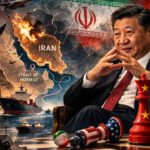



On March 28, 2026, millions of people joined more than 3,300 “No Kings” protest events across all 50 states. Organizers said the rallies pushed back on President Donald Trump’s agenda, including the war with Iran, immigration enforcement, and rising economic stress.
But behind the crowds sat a much larger support system. Reports point to a network of roughly 500 activist groups, with a combined $3 billion in annual revenue, helping drive turnout on a national scale.
Many people who showed up came to protest peacefully. Still, investigators say some socialist and communist groups played a deeper role and used the moment to push calls for “revolution.” Two names appear again and again: the Party for Socialism and Liberation (PSL) and The People’s Forum. Both groups have also been linked to organizing and mobilizing at earlier protest actions.
What Started the “No Kings” Protests?
The “No Kings” movement began in 2025 as opposition to Trump’s second term. The first major event, held in June 2025, reportedly drew about 5 million people. Then the second round in October 2025 reached around 7 million. By March 2026, estimates put turnout at 8 to 9 million nationwide, making it one of the largest one-day protest efforts in modern U.S. history.
Protesters rallied around several main concerns:
- U.S. involvement in the Iran conflict, along with higher gas prices
- Immigration raids and enforcement by ICE
- Broader accusations that the administration showed authoritarian tendencies
Groups such as Indivisible described the protests as grassroots and locally run, with volunteers handling most of the planning. Even so, critics say a movement this large doesn’t happen without serious national backing, coordination, and money.
The $3 Billion Network Behind the Turnout
A Fox News Digital report said about 500 organizations, with roughly $3 billion in yearly revenue, supported the “No Kings” protests. That network included both mainstream left-leaning advocacy groups and groups that openly identify as socialist or communist.
Indivisible, which has ties to major Democratic donors, stood out as one of the more visible leaders. At the same time, more radical groups also urged supporters to take part. Some socialist organizations framed the protests as a chance to move people toward broader revolutionary goals. In some cases, activists also pushed for a nationwide economic strike on May Day, a date long tied to communist movements.
That funding structure has raised doubts about whether the protests were fully “people-powered.” Large budgets can cover permits, transportation, training, event guides, and organizing tools. As a result, national groups can turn local anger into large public demonstrations.
The Role of PSL and The People’s Forum
Two organizations keep showing up in discussions about protest coordination: the Party for Socialism and Liberation (PSL) and The People’s Forum.
- The Party for Socialism and Liberation is a Marxist-Leninist group that supports revolutionary political change. It has organized or backed actions linked to “No Kings” and similar protest efforts. It also works with allied coalitions on broader mobilization campaigns.
- The People’s Forum is a New York-based nonprofit that presents itself as a hub for movement building. It has hosted events, offered meeting space, and worked with PSL and groups such as the ANSWER Coalition. The organization has also taken part in anti-war, pro-Palestine, and anti-ICE activism.
Along with partners like Code Pink and the Freedom Road Socialist Organization, these groups have pushed more radical messages inside the wider “No Kings” coalition. Reports say they also helped support and energize agitators during earlier periods of unrest.
Neville Roy Singham and the Money Behind the Far Left
A major figure in this funding network is Neville Roy Singham, a former U.S. tech executive who now lives in Shanghai, China.
Singham founded Thoughtworks, a global IT consulting company. Around 2017, he sold his stake for an estimated $785 million to $1 billion. After that, he directed much of his wealth toward left-wing causes in the United States and abroad.
Several details about Singham stand out:
- He has described himself as a Marxist and a supporter of socialist causes.
- He moved to Shanghai, where he still has business interests and shares office space with groups that promote Chinese achievements.
- His wife, Jodie Evans, co-founded Code Pink, an activist group often connected to similar protest efforts.
Reports from The New York Times and congressional investigators say Singham has moved money through U.S. nonprofits and donor-advised funds. According to those reports, that money has helped support a wider network of media outlets, think tanks, and activist groups that often repeat Chinese government talking points.
Singham has denied taking orders from any government. Even so, his funding network has drawn heavy attention because of its support for pro-CCP narratives on both global affairs and U.S. politics.
Singham’s Links to the Chinese Communist Party
Singham’s ties to China appear to go beyond where he lives. Investigations have pointed to several connections.
- He has worked with people and organizations tied to Chinese state media and propaganda efforts.
- He has attended or supported events that line up with CCP priorities.
- His funding has reached groups that defend China’s position abroad while attacking U.S. policy at home.
Congressional committees, including the House Ways and Means Committee under Chairman Jason Smith, have looked into those connections. Lawmakers sent letters seeking records from The People’s Forum, citing more than $20 million that allegedly came from Singham-linked sources between 2017 and 2022.
Some lawmakers argue that tax-exempt nonprofits may be shielding foreign-linked political influence. Because Singham lives outside the United States, subpoenas and other legal tools can be harder to use. Some reports say federal authorities are reviewing his activities, although public details remain limited.
Critics say this kind of backing creates a “smokeless war,” shaping public opinion and activism without open foreign control. Supporters of the groups reject that claim and say the money goes toward lawful social justice work.
Congress Pushes for More Transparency
Several House and Senate panels have reviewed parts of Singham’s network.
- The Ways and Means Committee has focused on nonprofit funding and possible foreign agent concerns.
- The Oversight Committee has sought briefings about possible Foreign Agents Registration Act, or FARA, violations.
- Other inquiries have examined dark money moving through shell groups and mailbox nonprofits.
These investigations center on a basic concern, whether U.S. nonprofits are being used as channels for foreign influence. Reports say Singham’s network has supported campus protests, anti-ICE campaigns, and now activity tied to the “No Kings” movement.
People defending the protests say most participants have no ties to radical groups. They also stress that the events were nonviolent and reflected broad opposition to Trump policies. Organizers continue to say the movement is decentralized, and that shared resources were limited to training and basic support.
What the “No Kings” Protests Show About American Activism
The “No Kings” protests highlight a long-running tension in American political activism. Large crowds can reflect real public anger and real community concerns. At the same time, well-funded ideological groups can shape messaging, boost turnout, and guide the broader story people hear.
Several issues remain at the center of the debate:
- How much influence do radical groups have over the tone of the movement?
- Should funding tied to foreign-linked donors face tougher review?
- Can mass protests stay peaceful when more extreme rhetoric enters the mix?
Americans have every right to protest. Still, public trust depends on knowing who is organizing events, where the money comes from, and what goals sit behind the slogans.
As “No Kings” continues, more attention is likely to fall on the $3 billion support network, the role of PSL and The People’s Forum, and Neville Roy Singham’s far-reaching funding ties. Congress and outside watchdogs say they plan to keep pressing for answers.
What may look like a spontaneous wave of public outrage can also reflect years of planning, nonprofit coordination, ideological organizing, and, in some cases, international connections.