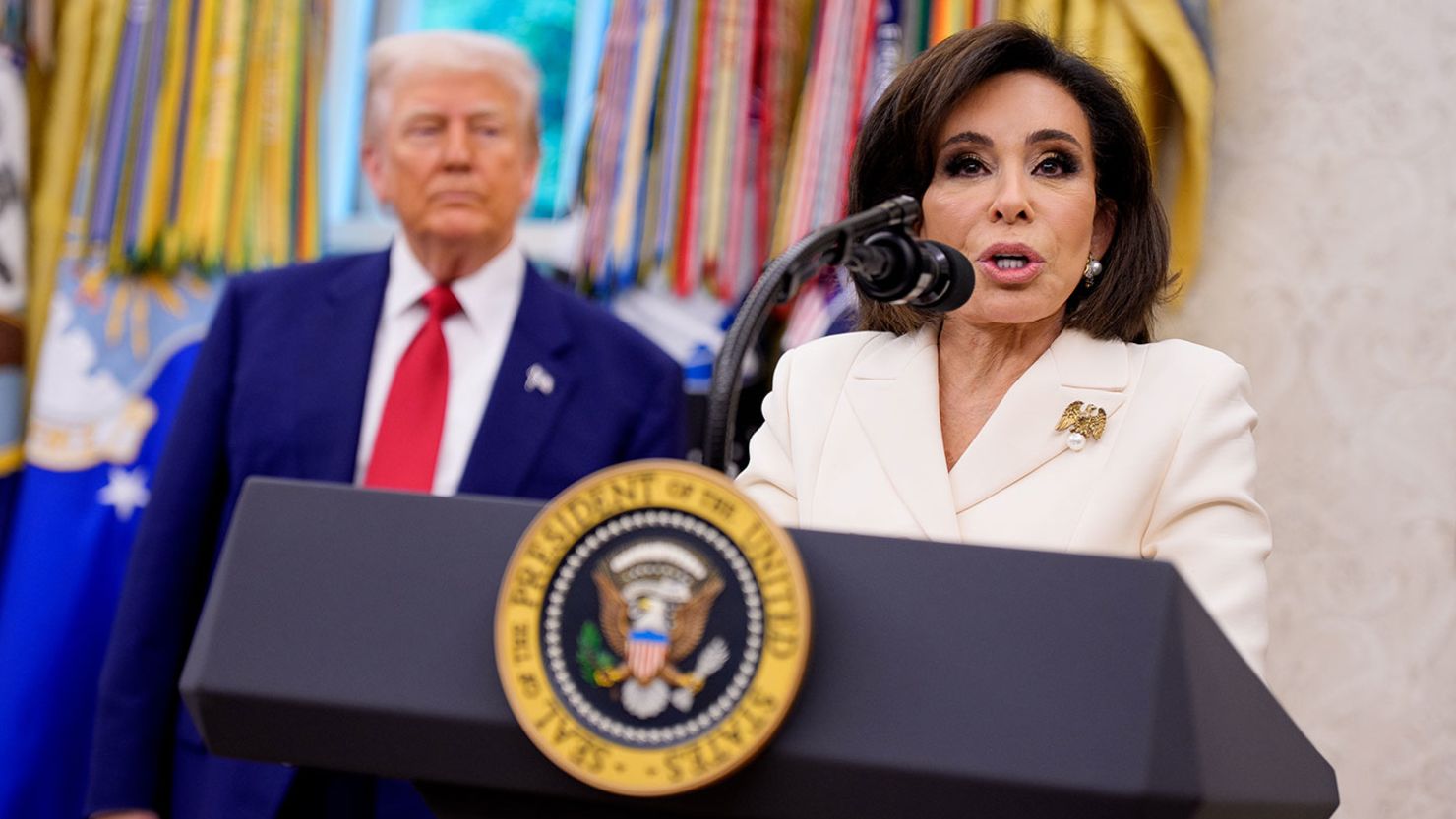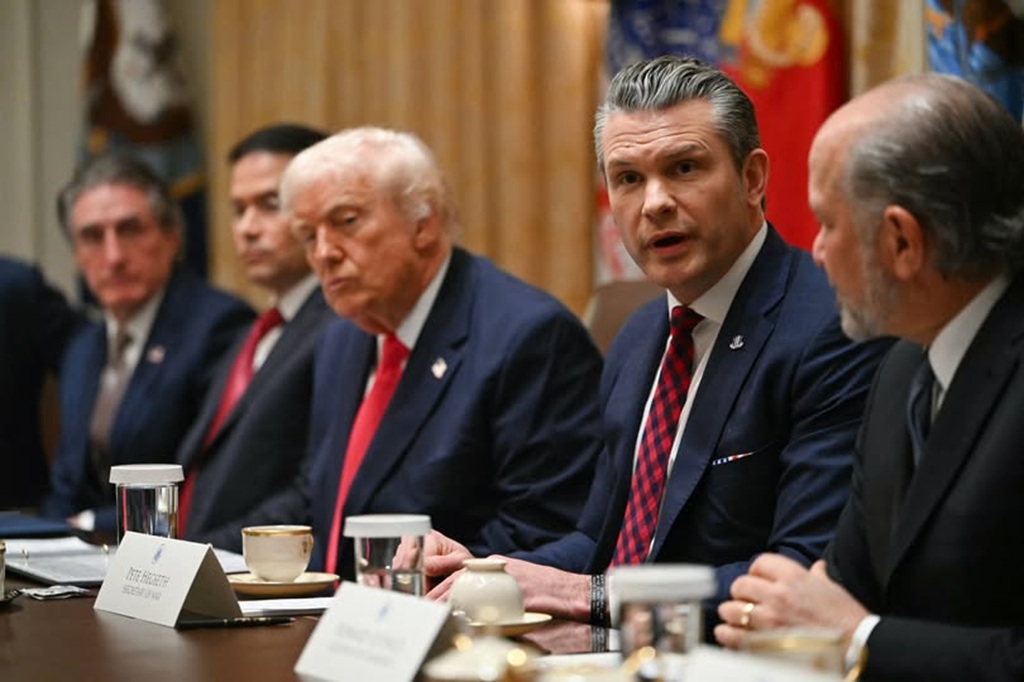


WASHINGTON — NATO, the North Atlantic Treaty Organisation, is facing its deepest crisis since its founding in 1949 after President Donald Trump declared he was “strongly considering” pulling the United States out of the alliance, branding it a “paper tiger” whose European members have failed to stand by America during its military campaign against Iran.
In a series of explosive statements that reverberated across Europe and rattled global financial markets, Trump and his Secretary of State, Marco Rubio, delivered coordinated warnings this week that the 77-year-old transatlantic security alliance may no longer serve American interests — a message that struck at the very foundation of the post-World War II international order.
In an interview with Britain’s The Telegraph newspaper, the president described the alliance as a “paper tiger” and, when asked if he would reconsider the United States’ membership after the Iran conflict ends, said the matter was “beyond reconsideration.” “I was never swayed by NATO. I always knew they were a paper tiger, and Putin knows that too, by the way,” Trump told the newspaper.
The remarks, among the most direct assaults on NATO by a sitting American president, came as the US-Israeli military campaign — codenamed Operation Epic Fury and launched on February 28 — entered its fifth week, with Iran continuing to blockade the Strait of Hormuz, the critical chokepoint through which approximately one-fifth of the world’s oil supply flows.
Rubio Fires the Warning Shot
The warnings from the White House were foreshadowed by Secretary of State Marco Rubio, who told Fox News that Washington would have to “re-examine” its relationship with NATO after the conflict with Iran ends.
“We are going to have to re-examine the value of NATO for our country,” Rubio said, adding: “If we’ve reached a point where the NATO alliance means we can’t use those bases to defend America’s interests, then NATO becomes a one-way street.”
Warning bells reverberated throughout Europe when Rubio — considered one of the most pro-NATO members of Trump’s inner circle — said on Al Jazeera that US allies’ response to the war was “very disappointing” and hinted that Trump would “reexamine” US commitments to them when the war ends.
The significance of Rubio’s intervention was not lost on observers. As a Republican senator from Florida, Rubio had himself co-sponsored bipartisan legislation that bars presidents from unilaterally withdrawing the United States from the security alliance without the approval of Congress — a measure included in the 2024 National Defense Authorization Act, which became law.
That a man who once championed NATO’s legal protection is now openly questioning its worth underscored just how dramatically the political calculus has shifted in Washington.
Experts have noted that Trump could still gut American participation by pulling troops, bases, and command support — effectively hollowing out the alliance without a full exit — even if a formal withdrawal requires Congressional approval.
The Flashpoints: Spain, the UK, France, and Italy
The immediate trigger for Washington’s fury has been the refusal of several NATO members to allow US forces to use their military infrastructure for the Iran campaign. Spain, the most vocal European opponent of the war, announced that the country’s airspace is closed to US military planes involved in the conflict.
Spain had also said last month that the US could not use jointly operated military bases in the war, which Spanish Prime Minister Pedro Sanchez described as “unjustifiable” and “dangerous.” In response, Trump threatened to sever all trade with Madrid.
Italy’s newspaper Corriere della Sera reported that the Italian government denied US bombers use of a military base in Sicily, though the Italian government rushed to clarify there were no tensions with Washington and that each US request would be considered on a case-by-case basis.
Though Rubio did not name specific countries, Trump repeatedly singled out the United Kingdom for its initial refusal to allow US forces to use British bases for strikes on February 28. Spain also denied the US permission to use jointly-operated bases to attack Iran, and earlier this week closed its airspace to US planes involved in the war.
Trump lashed out at Britain on multiple fronts, mocking its naval capabilities: “You don’t even have a navy. You’re too old and had aircraft carriers that didn’t work,” he said.
He also took to Truth Social to lambaste European nations on energy, writing: “All of those countries that can’t get jet fuel because of the Strait of Hormuz, like the United Kingdom, which refused to get involved in the decapitation of Iran, I have a suggestion for you. Number 1, buy from the US, we have plenty, and Number 2, build up some delayed courage, go to the Strait, and just TAKE IT.”
Europe’s Impossible Position
European leaders have found themselves politically squeezed between Washington’s demands and domestic opposition to a war they neither endorsed nor were consulted on before it began.
Trump put European leaders in an impossible position. His year of berating allies — including his demands that Denmark hand over Greenland, tariff assaults, and disdain for the sacrifices of America’s friends in post-9/11 wars — meant they had little room to both help him and save their own political careers.
British Prime Minister Keir Starmer, facing intense domestic opposition to involvement in the conflict, held firm. Starmer defended NATO as “the single most effective military alliance the world has ever seen,” while drawing a firm line on the Iran conflict: “This is not our war, and we’re not going to get dragged into it.”
Rubio had a sharp retort to such arguments. Referring to comments by several European leaders that the conflict was “not Europe’s war,” he noted: “Ukraine is not America’s war, and yet we’ve contributed more to that fight than any other country. So this is something the president will have to take into account going forward.”
Markets React, Oil Surges
The geopolitical turbulence has sent shockwaves through financial markets. As Trump addressed the nation on Wednesday, markets reacted negatively: S&P 500 futures slid 0.75%, Nasdaq futures sold off by 1%, and Dow futures dropped more than 310 points. Oil prices shot higher, with US crude rising from around $98 to nearly $104 per barrel and Brent soaring from $99 to $106. \Already, since the war began on February 28, prices at the pump for US consumers have risen from an average of $2.46 per gallon to more than $4.
Analysts warn that the economic consequences of a permanent fracture in the alliance could far outpace the immediate effects of the conflict itself. As Rosemary Kelanic, director of the Middle East studies program at the Defense Priorities think tank, noted: “Even though the United States is the world’s leading oil producer, that doesn’t insulate US consumers from oil prices because oil prices are global.”
Any formal US withdrawal from NATO remains constitutionally fraught. The legislation Rubio himself co-sponsored with Democratic Senator Tim Kaine of Virginia, included in the 2024 National Defense Authorization Act, means Trump cannot exit the alliance unilaterally. Congressional approval would be required — a steep hurdle even in a polarised Washington.
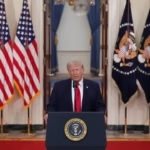
Notably, despite telling Reuters ahead of his primetime address that he was “absolutely” considering withdrawing the US from NATO and would express his “disgust” with the alliance in his speech, Trump did not mention NATO even once during his roughly 19-minute national address. That silence — conspicuous given the days of thunderous rhetoric — suggested the administration may be using the NATO threat as leverage rather than pursuing it as immediate policy.
The Broader Stakes for the Alliance
Analysts say even if the US stops short of a formal exit, the damage to NATO’s credibility may already be severe and lasting.
The fallout of the Iran war now threatens a deep fracture in the transatlantic alliance, underscoring the need for European allies to invest more in their own militaries with the understanding that America’s post-World War II security umbrella has become unreliable.
Britain’s military vulnerabilities have been exposed by the crisis. On Tuesday, the First Sea Lord admitted the Royal Navy was not ready for war; four of Britain’s six destroyers were out of service at the conflict’s start, forcing London to borrow a German warship to meet NATO obligations in the North Atlantic.
Finnish President Alexander Stubb sought to project calm, posting on X after a call with Trump: “Constructive discussion and exchange of ideas on NATO, Ukraine and Iran. Problems are there to be solved, pragmatically.” But behind the diplomatic language, few in European capitals are under any illusion about the gravity of the moment.
For 77 years, NATO has been the cornerstone of Western security — the bedrock assumption beneath every European defence calculation. The alliance has survived the Cold War, the collapse of the Soviet Union, 9/11, the Russian invasion of Ukraine, and waves of transatlantic political turbulence.
Whether it can survive the strains of the Iran war, and the determined ambivalence of the American president who commands its most powerful military, is now the defining question in global security.
Key Facts: US–NATO Crisis at a Glance
- The US–Israel campaign against Iran, Operation Epic Fury, began on February 28, 2026
- The Strait of Hormuz — through which ~20% of global oil flows — remains blockaded by Iran
- Spain, France, and Italy have denied the US use of bases or airspace during the conflict
- Trump has described NATO as a “paper tiger” in multiple interviews this week
- Secretary of State Rubio has twice warned that NATO membership will be “reexamined” post-war
- A formal US withdrawal from NATO requires Congressional approval under 2024 legislation
- US gasoline prices have risen from $2.46 to over $4 per gallon since the war began