

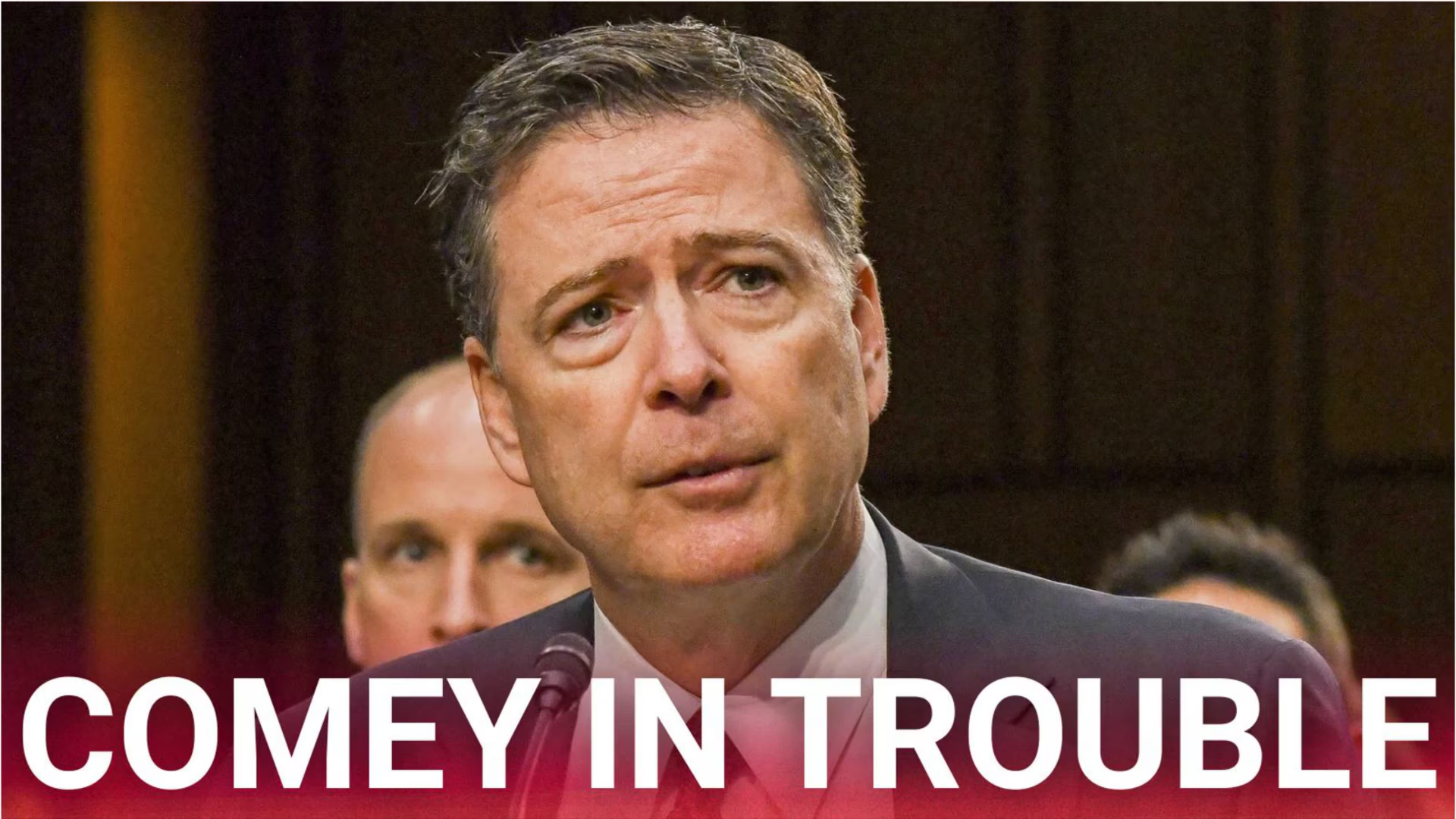


WASHINGTON, D.C. – Former FBI Director James Comey is back in the headlines. In a move that has sparked intense debate across the country, a federal grand jury in North Carolina has indicted the former law enforcement official. The alleged crime? A social media post featuring seashells on a beach.
While it might sound like the plot of a legal thriller, the situation is very real. The Justice Department claims that the photo was a coded, dangerous threat against President Donald Trump. Meanwhile, legal experts and free speech advocates are scratching their heads, wondering how a picture of shells could lead to federal charges.
Let’s break down how a walk on the beach turned into a high-stakes legal battle, the history behind the bad blood between Comey and the president, and why this case could have a massive impact on the First Amendment.
A Walk on the Beach Turns Into a Federal Case
The entire controversy started back in May 2025. According to reports from the Associated Press, Comey was taking a walk along a beach in North Carolina. He snapped a photo of some seashells arranged in the sand. The shells spelled out two numbers: “86” and “47.”
Comey posted the image to his Instagram account with a simple caption: “Cool shell formation on my beach walk.”
Almost immediately, the internet reacted. Some users pointed out that the numbers carried a hidden, political message. In response to the growing uproar, Comey deleted the photo shortly after posting it. He followed up with a message stating that he did not realize some people associated those numbers with violence.
“It never occurred to me, but I oppose violence of any kind, so I took the post down,” Comey wrote.
However, the damage was already done. The very next day, Secret Service agents interviewed Comey. The former FBI director maintained that he simply stumbled upon the shells and did not arrange them himself. Still, the Trump administration saw the post as a clear and present danger, ultimately leading to the recent criminal indictment.
What Does “86 47” Actually Mean?
To understand why the Justice Department cares about a picture of seashells, you have to understand the slang behind the numbers.
The number “47” is straightforward. Donald Trump is the 47th president of the United States. The number “86,” however, is where things get complicated.
In restaurant culture, to “86” an item means to throw it out or remove it from the menu. If a diner runs out of soup, the chef might say, “86 the soup.” By logical extension, some people use “86” as slang for getting rid of a person.
According to the indictment, a reasonable person would view “86 47” as a serious expression of intent to do physical harm to the president. President Trump firmly agreed with this interpretation. In a television interview, he claimed the meaning was obvious.
“A child knows what that meant,” Trump said. “If you’re the FBI director and you don’t know what that meant, that meant assassination. And it says it loud and clear.”
Breaking Down the Federal Charges
The Justice Department is not treating this as a simple misunderstanding. They have formally charged Comey in the Eastern District of North Carolina.
According to reports from PBS News, the indictment includes two specific counts:
- Making threats against the president: The government alleges Comey knowingly and willfully made a threat to take the life of, and inflict bodily harm upon, the president.
- Transmitting a threat in interstate commerce: Because the image was uploaded to the internet and crossed state lines digitally, this triggers a separate federal charge.
Acting Attorney General Todd Blanche, a known loyalist to the president, defended the decision to prosecute during a recent news conference. Blanche pushed back against the idea that the Justice Department was overreaching.
“You are not allowed to threaten the president of the United States of America,” Blanche told reporters. “That’s not my decision, that’s Congress’ decision and a statute that they passed.”
Comey Hits Back: “I Am Still Innocent”
James Comey is not backing down. Shortly after the indictment became public, he released a video statement forcefully denying the allegations.
“This won’t be the end of it,” Comey said in the video. “But nothing has changed with me. I am still innocent, I am still not afraid and I still believe in the independent federal judiciary. So let’s go.”
His legal team echoed this defiant tone. They released a statement declaring they will fight the charges in court and look forward to clearing Comey’s name while defending the First Amendment.
To fully grasp this case, you cannot ignore the deep, bitter history between Donald Trump and James Comey. Their feud has been a defining feature of American politics for nearly a decade.
Here is a quick look at how their relationship unraveled:
- The 2016 Election: Comey led the FBI during the highly controversial investigations into both Hillary Clinton and the Trump campaign.
- The 2017 Firing: Just months into Trump’s first term, the president abruptly fired Comey. This happened while the FBI was looking into potential ties between the Trump campaign and Russia.
- The Loyalty Demand: Comey famously claimed that before his firing, Trump demanded his personal loyalty during a private dinner—a request Comey says he refused.
- The Dismissed 2025 Case: The seashell incident is actually the second time the current Justice Department has tried to prosecute Comey. In late 2025, he was indicted for allegedly lying to Congress. However, a federal judge threw that case out because the interim U.S. attorney who brought the charges was illegally appointed.
Critics of the president argue that this new indictment is just a continuation of a long-running political vendetta. They claim the Justice Department is weaponizing the legal system to punish Trump’s loudest critics.
A Tough Case to Prove in Court
Even if the case goes to trial, legal experts believe the government faces an uphill battle. Proving a “true threat” in a court of law is incredibly difficult in the United States.
As noted by the Washington Post, prosecutors must do more than just show that a message was offensive or in bad taste. They have to prove intent.
Jimmy Gurulé, a law professor at Notre Dame and a former federal prosecutor, expressed serious doubts about the government’s strategy. “Posting numbers constitute a threat? I just don’t accept that,” he said.
Furthermore, a recent 2023 Supreme Court ruling established that prosecutors must show the defendant actually understood the threatening nature of their own words. Because Comey deleted the post and publicly stated he did not intend any harm, prosecutors will have a hard time convincing a jury that he secretly meant to order a hit on the president using seashells.
Beyond the personal drama between two powerful men, this case raises massive questions about free speech in the digital age. Where is the line between a political message and a criminal threat?
If the government can prosecute an American citizen over an ambiguous photo of seashells, free speech advocates worry about the chilling effect it could have on the general public. Will everyday people be afraid to post jokes, memes, or political criticisms online out of fear that a federal agent might knock on their door?
The First Amendment fiercely protects political speech, even when that speech is unpopular, crude, or confusing. For the Justice Department to win this case, they will have to prove that Comey’s Instagram post crossed the line from protected expression into a literal, physical danger.
What Happens Next?
The case now sits with U.S. District Judge Louise Flanagan in North Carolina. In the coming months, Comey’s legal team will likely file motions to dismiss the charges, arguing that the indictment violates his First Amendment rights and lacks hard evidence of a real threat.
Whether the case goes to trial or gets thrown out like the previous one, it guarantees that the bitter feud between James Comey and Donald Trump will remain in the public eye. For now, the nation watches to see if a picture of beach shells is really enough to send a former FBI director to federal prison.
Trending News:
FCC Targets Disney’s ABC Licenses Over DEI and Workplace Discrimination
Alex Jones Announces the Shutdown of Infowars Amid Billion-Dollar Legal Battles