
Asia
Tanoto Foundation Presents Community-Led Early Childhood Parenting Models


MANILA – At the recent Asia-Pacific Regional Network for Early Childhood (ARNEC) Regional Conference 2025, Tanoto Foundation, a nonprofit organisation supporting change in education and healthcare, shared its early childhood parenting models from Indonesia and China.
These community-based programmes, Rumah Anak SIGAP from Indonesia and the HOPE (Harnessing Opportunity through Parenting and Education) programme from China, highlighted clear methods for helping young children thrive in rural and low-resource settings.
Both projects focus on children aged 0 to 3, a stage marked by significant brain growth. During these years, a young child’s brain can reach 80 per cent of its adult size. Research from the Centre on the Developing Child at Harvard University reports that brain cell development can reach 90 per cent in this stage, building the foundation for how children think, move, communicate, and respond to the world.
This period often brings extra challenges in parts of Asia. Research in 2023 by the Australian Council for Educational Research (ACER) found that 57 per cent of children aged 0 to 3 in parts of Indonesia may not reach their full potential.
It also showed that 26 per cent of these children live with poor caregiving at home. In China, there are similar concerns. A 2019 article in the Journal of Comparative Economics noted that over 80 per cent of young children in rural areas missed at least one key developmental milestone.
Impact in Indonesia: The Rumah Anak SIGAP Programme
The Rumah Anak SIGAP programme in Indonesia has shown strong results. An evaluation found that children in rural areas with early developmental delays saw their scores rise by an average of 1.06 points after joining the programme, compared to a 0.53-point rise among children in cities. By 2024, Rumah Anak SIGAP had reached over 3,000 children and parents through 29 centres in Banten, Central Java, East Kalimantan, Jakarta, and Riau.
Empowering local volunteers is at the heart of this programme. These community members play a key role in making sure the work is relevant and lasting. Ancilla Irwan, Education Development Lead, shared that this partnership with local people and government turns the programme into a strong part of community support for families. The value of this approach was shown by the Mayor of Semarang, Agustina Wilujeng Pramestuti, who spoke at the conference about bringing a Rumah Anak SIGAP centre together with a unit for preventing stunting in her city.
Radi Negara, the Impact Evaluation Lead at Tanoto Foundation, reported, “Of 64 parents interviewed, 59 shared positive changes. They mentioned better breastfeeding, improved nutrition, and stronger connections with their children. The biggest progress often happens at home, where parents start engaging with their children more often and with greater care.”
Scaling Up in China: The HOPE Programme
The HOPE programme in China has grown its community-based model to close gaps in child development. So far, 330 facilitators have been trained and 138 centres opened in Beijing, Guizhou, Jiangsu, Jiangxi, and Shandong. The programme now reaches more than 16,000 children under 3 and their families in rural areas.
Wu Wei, Country Head of Tanoto Foundation China, points out that spending on Early Childhood Development (ECD) helps reduce inequality, stops poverty from passing between generations, and builds the skills China needs for the future.
As a core member of ARNEC, Tanoto Foundation continues to support the network’s mission to improve ECD by building strong partnerships, sharing knowledge, and standing up for children’s rights. During the conference’s closing, Eddy Henry, Head of Policy and Advocacy at Tanoto Foundation, summed up this shared goal:
“This conference shows how working together can spread knowledge, help more voices be heard, and move forward the ECD agenda in the Asia-Pacific region. I hope each group here will take these lessons home, put them into practice, and help shape policy so every child has a fair start and access to quality early childhood development.”
About Tanoto Foundation
Tanoto Foundation works to unlock human potential, support thriving communities, and create lasting change. Founded in 1981 by Sukanto Tanoto and Tinah Bingei Tanoto, the foundation is independent and family-run, focusing on giving everyone the chance to achieve their best.
The foundation drives positive change in education and healthcare, always backing up its work with strong evidence and investing for the long term. Tanoto Foundation believes in developing leaders who can continue to create better opportunities and outcomes for future generations.
Related News:
A Statement by Grok and xAI Apologises for Their “Horrific Behavior.”

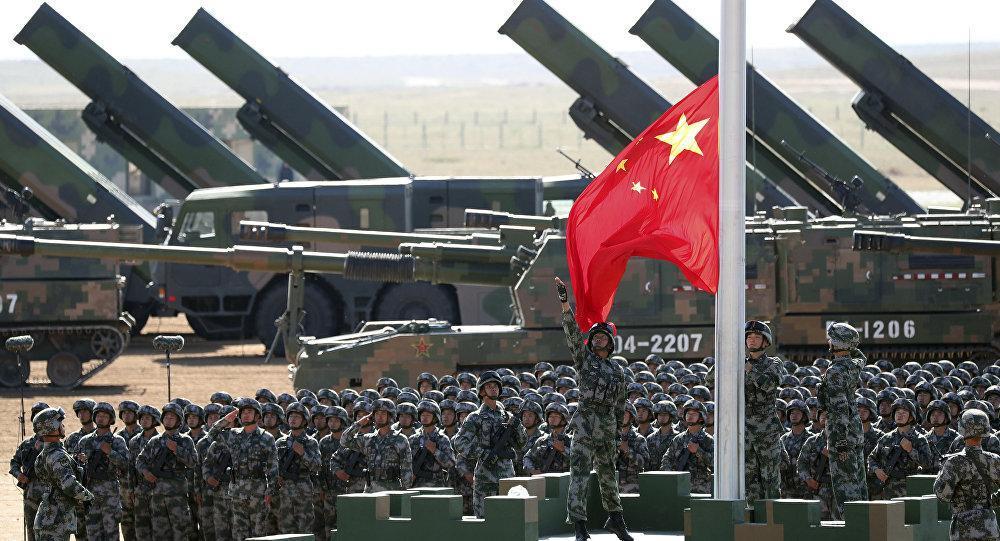
BEIJING – A quiet but striking shake-up is rippling through China’s defense establishment. Some of the country’s top weapons scientists are disappearing from public view. The chief designer of the J-20 stealth fighter is gone from official records. So are senior figures tied to nuclear weapons, radar systems, and missile development.
This looks like much more than a routine personnel change. The removals came soon after Chinese-made military systems reportedly failed badly in combat in Iran and Venezuela.
For years, Beijing promoted major advances in stealth aircraft, hypersonic weapons, and anti-stealth radar. Now those claims are under heavier scrutiny. The key issue is no longer just corruption. It’s whether some of China’s most celebrated defense programs performed far below what officials promised.
Leading Scientists in China Are Vanishing
The latest wave of removals surfaced in mid-March 2026. Profiles of senior experts suddenly disappeared from the websites of China’s top scientific bodies, the Chinese Academy of Sciences (CAS) and the Chinese Academy of Engineering (CAE).
The most eye-catching case is Yang Wei, the 62-year-old chief designer of the J-20 “Mighty Dragon,” China’s flagship fifth-generation stealth fighter. His name and biography vanished from the CAS website on March 17. Yang had already been absent from public events for more than a year. He played a central role in the J-20 program, helped work on the J-10 fighter, and later became vice president of the Aviation Industry Corporation of China (AVIC).
Soon after, three more major names disappeared from the CAE roster:
- Zhao Xiangeng, 72, a former CAE vice president and a leading expert in China’s nuclear weapons program
- Wu Manqing, 60, a radar specialist and head of China Electronics Technology Group Corporation (CETC), which developed systems such as the JY-27A anti-stealth radar
- Wei Yiyin, 63, a chief designer tied to advanced surface-to-air missile systems sold abroad
Chinese media reports say at least 10 academicians have been removed since the 2022 Party Congress. Officials have offered no public explanation. There have been no clear statements, no formal notices, only silent deletion from state-run records.
Key figures reportedly removed include:
- The chief designer of the J-20 stealth fighter
- A senior leader in the nuclear weapons program
- A top radar technology official
- A leading missile systems designer
Xi Jinping has carried out major purges before. The People’s Liberation Army Rocket Force lost senior generals in corruption cases in 2023 and 2024. Still, going after the scientists behind the weapons themselves marks a more serious and unsettling step.
Combat Setbacks in Iran and Venezuela Deepened the Pressure
The timing has drawn intense attention because these removals followed reported battlefield failures involving Chinese-made systems.
In January 2026, during Operation Absolute Resolve in Venezuela, Chinese JY-27A anti-stealth radars reportedly failed to detect incoming U.S. aircraft. These radars had been advertised as capable of tracking stealth fighters such as the F-35 and F-22 from long range. Yet reports say more than 150 aircraft entered Venezuelan airspace without being stopped. Chinese HQ-9B air defense systems launched missiles but failed to score hits. The operation ended with President Maduro’s capture, a major embarrassment for governments that had trusted Chinese military exports.
Then came the strikes on Iran in early March 2026 during Operation Epic Fury. U.S. and Israeli forces hit high-level targets despite multiple layers of Chinese-made air defenses. Iranian leaders, including Khamenei, and many senior officers were reportedly killed. Western analysts said the Chinese systems performed so poorly that they were effectively useless under combat pressure. Even some Chinese state media voices offered muted criticism of their performance.
Earlier setbacks in Pakistan added to the damage. Reports there also suggested that Chinese HQ-9B defenses could not stop advanced strike packages. As a result, systems once presented as strong alternatives to Western weapons began to look far less convincing.
These were not training drills or ceremonial displays. They were real operations. They came one after another, and they exposed weaknesses that had been easy to overlook on paper.
Because of that, defense analysts now question whether China’s military advances were overstated from the start.
Did Beijing Oversell Its Military Technology?
China has spent huge sums on military modernization. State media said the J-20 could compete directly with the U.S. F-35. Officials praised hypersonic missiles as threats to American carriers. Anti-stealth radars were supposed to cancel out the advantage of stealth aircraft. Nuclear programs were presented as a stronger shield against outside pressure.
Now the purge hints at deeper trouble.
Corruption remains one possible reason. Xi’s anti-corruption campaign has already brought down defense ministers and Rocket Force leaders. Some scientists may have diverted research funds or approved weak programs. There are also reports suggesting false test data or heavy reliance on foreign technology that did not deliver the promised results.
Still, the problem may run deeper than graft. China’s defense sector depends heavily on large state-owned firms such as AVIC and CETC. In that system, political loyalty can carry as much weight as engineering results. Controlled testing can hide flaws for years. Combat does not. Once these systems face jamming, saturation attacks, and full operational stress, design gaps become harder to hide.
One Chinese military commentator reportedly called the Iran result a national humiliation. Another pointed out that radar detection itself broke down under U.S. electronic warfare pressure.
Western officials have been blunt. One U.S. defense source, speaking anonymously, said China’s systems often look strong in brochures and military parades, but collapse when faced with stealth aircraft and precision strikes.
The sequence has fueled suspicion. Yang Wei’s profile disappeared only days after the Iran strikes. Other experts in missile and nuclear fields vanished around the same time. To many observers, Beijing appears to be looking for people to blame, or trying to silence those who know how the systems actually performed.
The Purge Fits Xi Jinping’s Wider Style of Control
This campaign matches Xi’s broader approach to power. Since taking office, he has pushed for total loyalty across the military and state system. His message has been clear, no one is untouchable.
Removing names from academy websites follows a familiar pattern in China. It often signals disgrace before any formal charges appear. Families say little. Colleagues stay quiet. In some cases, others linked to the same projects also disappear from view. One report even claimed Yang Wei faced execution after a J-20 test flight went badly in front of Xi, though no major outlet has confirmed that account.
What stands out is the pattern. Since 2022, at least 10 senior academicians have reportedly been removed. Many come from the same sectors China has used to promote its military rise:
- Stealth aircraft
- Nuclear deterrence
- Advanced radar systems
- Missile defense
That focus does not look random. It looks targeted.
Global Buyers Are Reassessing Chinese Weapons
The fallout goes well beyond China’s borders.
Countries that bought Chinese systems, including Pakistan, Iran, and Venezuela, now have reason to review those purchases. Other states that were considering the HQ-9B or related systems may start looking elsewhere, including Russia or Western suppliers.
For the United States and its allies, the recent combat results support a point they have made for years. Western stealth aircraft, electronic warfare, and integrated strike systems still hold a strong edge. The gap with China may not be shrinking. It may be growing.
At the same time, Beijing has not changed its public message. State media still praises the J-20 and other headline weapons. Military displays continue. Official rhetoric remains confident. Yet behind the scenes, the disappearance of top scientists points to anxiety inside the system.
What Comes Next, More Purges or Real Change?
It is still unclear how far this campaign will go. Xi now holds more power than any Chinese leader in years. He could replace removed experts with more politically reliable figures, even if that weakens technical standards.
There is another possibility. The shock of recent failures could force a hard reset. China might invest more in realistic testing, better system integration, and tighter oversight of defense spending.
For now, the signs point to damage control, not open reform. Scientists are disappearing. Doubts about China’s military technology are spreading. And the country’s image as a rising defense powerhouse is starting to crack under the weight of real combat results.
The J-20 was meant to reshape air warfare. Its chief designer has now been erased from official records. Experts tied to China’s nuclear deterrent are gone. Leading figures in radar and missile programs have disappeared as well.
This is not a simple reshuffle. It is a serious test of China’s military credibility.
As one analyst put it, when a country’s top scientists vanish right after its top weapons fail, the issue may be much bigger than corruption. It may signal the collapse of a carefully built myth.
Related News:
Trump Takes Aim at China’s Critical Minerals Control With Project Vault

MANLIA – As the world approaches ten years since the Paris Agreement, civil society groups are raising the alarm over the Asian Development Bank’s (ADB) approach to energy and climate. NGO Forum on ADB Network and its allies have released a sharp critique of ADB’s 2025 Energy Policy Review and draft policy.
In a new scorecard, the Forum concludes that ADB has “failed the test” on climate leadership, human rights, and genuine public participation.
For highly exposed countries such as the Philippines, the climate crisis is not abstract. It affects daily life. In 2025 alone, Typhoon Ragasa displaced about four million families. This scale of loss and disruption highlights the urgent need for strong and fair climate action.
Forum members and allies say that ADB’s review process and proposed changes “ring hollow”. They argue that the policy offers little real protection for communities that already bear the brunt of climate impacts.
Broken promises on information and participation
Civil society groups say that ADB failed to follow its own Access to Information Policy and commitments on stakeholder engagement.
Key concerns include:
- Important documents were released late
- Consultations were short, selective, and poorly designed
- Public feedback was not clearly reflected in the revised text
According to the Forum, this pattern shows a process that looks participatory on paper, but shuts people out in practice.
Shift towards fossil fuels and extractive interests
The proposed amendments point to what the Forum calls “a dangerous pivot toward corporate and extractive interests”.
Several issues stand out:
- Fossil gas is still described as a “transition fuel”
- ADB keeps space to fund new gas exploration and pipelines
- This goes against the scientific view that no new oil and gas fields fit with the 1.5°C goal
The Energy Transition Mechanism (ETM) is also under fire. Instead of helping to retire coal plants, civil society fears it could lock in more fossil fuel infrastructure.
Loopholes in ADB’s coal ban remain, and the Forum warns that the Critical Minerals for Clean Energy Technologies (CM2CET) initiative is “greenwashing” mining. This shift, they say, threatens Indigenous communities, fragile ecosystems, and human rights.
Concerns over nuclear power and “false solutions”
ADB is also weighing the option of lifting its ban on nuclear financing. Forum members call this move reckless and backward.
They argue that:
- Nuclear energy is costly and unsafe
- It produces long-lived radioactive waste
- Small Modular Reactors are unproven and carry high financial risk
The review also promotes what civil society labels “false solutions”. These include:
- Coal co-firing
- Waste-to-Energy plants
- Large hydropower projects
- Geothermal projects in Indigenous territories
According to the coalition, these approaches repeat old harms instead of delivering a fair and science-based transition.
Silence on human rights, gender, and Indigenous consent
The revised energy policy, as drafted, does not contain clear and binding commitments on:
- Human rights due diligence
- Protection of environmental and land defenders
- Gender justice
- Free, Prior, and Informed Consent (FPIC) for Indigenous Peoples
Civil society groups point to a history of ADB projects linked to forced displacement, land grabs, repression, and gender-based harms.
They stress that “energy transitions that violate rights are neither just nor sustainable”. In their words, “ADB’s silence speaks louder than its rhetoric”.
Scorecard from communities: “zero on climate justice”
Over one hundred civil society organisations assessed ADB based on their direct experience with projects. Their scorecard highlights:
- Gas pipelines pushed through Indigenous lands, with no real consent: zero
- Opaque lending through financial intermediaries, hiding coal exposure: zero
- Promotion of nuclear power, large mines, and incinerators while claiming climate leadership: zero
“ADB’s score of zero is a mirror reflecting the Bank’s own choices,” the coalition states.
Civil society demands that the ADB’s Board of Directors
The Forum is urging ADB’s Board of Directors to reject the draft policy in its present form and to act quickly. Their demands include:
- A genuinely transparent and inclusive review process through 2026
- Closing all loopholes in ADB’s coal restrictions
- A clear and time-bound phase-out of fossil gas
- Rejection of nuclear power and extractive-heavy plans, including CM2CET
- An end to “false solutions” that harm communities and the environment
- Strong, binding human rights and just transition standards
- Full alignment with the 1.5°C pathway, with a complete fossil fuel phase-out by 2030
These steps, they say, are the minimum for ADB to claim any real climate leadership.
“A failed test in a time of climate emergency”
“ADB’s Energy Policy Review remains a failed test and a failing grade,” the statement concludes.
For communities across Asia, the message is clear. The climate emergency calls for leadership guided by justice and science, not by profit, risky technologies, or exclusion.
Community groups say they refuse to accept another generation locked into fossil fuels and harmful projects. They insist that ADB must choose a path that protects people, respects rights, and keeps global warming within safe limits.
Trending News:
New Sanctions on Russia and Their Impact on Global Trade, Markets
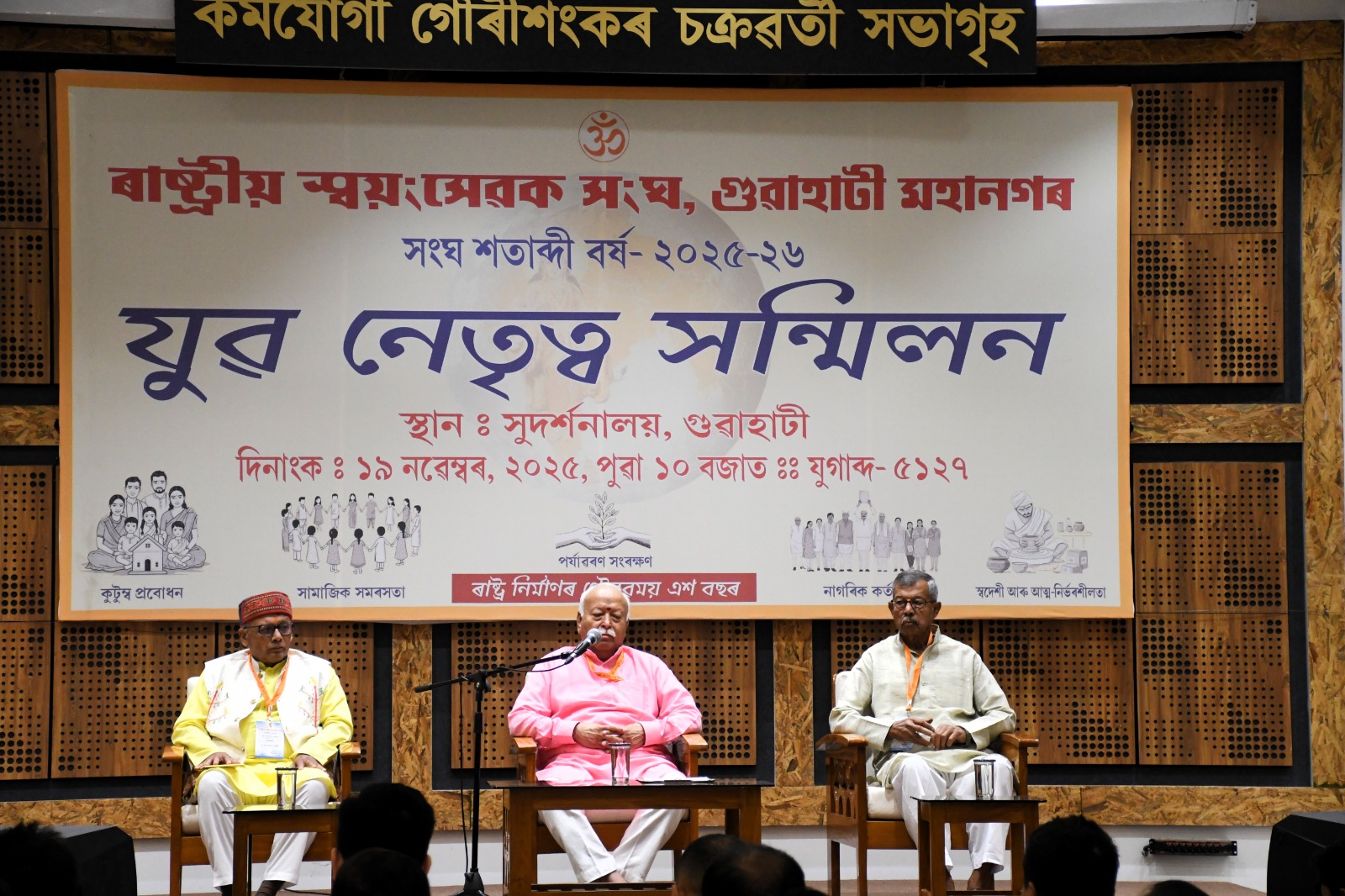
MUMBAI – Anyone who loves Bharat (popularly known as India) and proudly calls themselves Bharatiya is a Hindu, regardless of personal forms of worship, said Dr Mohan Bhagwat, Sarsanghchalak of the Rashtriya Swayamsevak Sangh (RSS).
Speaking to an audience of scholars, intellectuals, editors, writers, and entrepreneurs on 18 November 2025 at Sudarshanalaya in the Barbari area of Guwahati, he stressed that the word “Hindu” is not limited to a religion. He described it as a civilisational identity, rooted in thousands of years of continuous culture and shared heritage.
“Bharat and Hindu are synonymous,” Dr Bhagwat stated, adding that Bharat does not require any formal declaration as a Hindu Rashtra, since its civilisational character already reflects that reality.
During the interactive session, he spoke about the Sangh’s broader vision of civilisation, current national issues, and activities linked to the organisation’s centenary celebrations. He encouraged people to visit an RSS Shakha to understand the organisation first-hand, instead of relying on preconceived views or second-hand narratives.
Concerns on Demography, Culture, and Social Harmony
Responding to questions on demographic change and cultural protection in Assam, Dr Bhagwat called for confidence, alertness, and a deep bond with one’s land and identity. He talked about illegal infiltration, the need for a balanced population policy, including a three-child guideline for Hindus, and the need to resist divisive religious conversions.
He urged responsible use of social media, especially among young people, and warned against the spread of misinformation and hate. Dr Bhagwat also highlighted five core social focus areas: social harmony, family awareness, civic discipline, self-reliance, and environmental protection.
Message to Youth: “Know the RSS First-Hand”
In a separate youth conclave on Wednesday, the Sarsanghchalak requested young people not to form opinions about the RSS based on hearsay, propaganda, or inherited bias. He appealed to the youth of far eastern Bharat to watch the organisation closely and judge it by its work on the ground.
He observed that the RSS has now become a frequent subject of public debate. “These discussions should be based on facts,” he said, claiming that more than half of the information about the RSS available on various global and digital platforms is incorrect. He also spoke of a deliberate misinformation campaign against the Sangh in some media outlets.
RSS Vision: Making Bharat a Vishwaguru
Referring to RSS founder Dr Keshav Baliram Hedgewar, Dr Bhagwat said that the core aim of the Sangh is to help Bharat become a “Vishwaguru”, a guide for the world. For this to happen, he stressed that the society itself must rise first.
A nation can move forward only when its society is united and focused on quality, he said. He urged the youth to study the early growth of developed countries. In his words, the first hundred years of their progress were spent building unity and inner strength within their societies.
Respect for Diversity as Bharat’s Strength
Dr Bhagwat praised Bharat’s long tradition of respecting and accepting differences of language, region, and belief. He said this habit of honouring diversity is rare in many other countries.
According to him, those regions that chose to separate from Bharat lost much of their earlier diversity over time. He reminded the audience that spiritual leaders like Guru Nanak and Srimanta Sankardeva fully respected the country’s varied traditions and always spread messages of unity in their teachings.
A Stronger Bharat to Address North East Concerns
Reaffirming the RSS’s focus on building a stronger Bharat, Dr Bhagwat said that once the nation becomes stronger, issues concerning the North East and its relationship with the rest of India will naturally reduce. He underlined that there is no substitute for strengthening Bharat under the idea of “India First”.
He invited young people to take part in RSS activities according to their time, interest, and capacity. He noted that the organisation’s base in the far eastern region is slowly but steadily growing stronger.
Visit to the North East and Manipur Schedule
Dr Bhagwat arrived in Guwahati on Monday to review various programmes linked to the RSS centenary and to interact with different sections of Assam’s civil society. On Thursday, he left for Manipur for a three-day visit.
This will be his first visit to the Myanmar-bordering state since ethnic violence between Meitei and Kuki-Zo communities erupted there in May 2023. During his stay in Manipur, which is currently under President’s Rule, the RSS chief is expected to meet youth leaders, entrepreneurs, representatives of Janajati communities, and ordinary citizens.
Related News:
South Asian Regional Significance of Indian PM Modi’s Bhutan Visit


The Switzerland Accord: US-Iran Deal Aims to Prevent Global Economic Collapse

Silence on Capitol Hill: ActBlue CEO Invokes Fifth Amendment 22 Times Before House Committee

Elon Musk’s Trillion-Dollar Fortune: The Real Story

Google News Bias Exposed in Left-Leaning Top Stories

Drinking in Pregnancy Is Rising in America, CDC Says

Robert Kennedy’s Health Agenda and the Future of America

Ilhan Omar Melts Down Over Jerry Seinfeld Over Palestinian Comments

Tulsi Gabbard Reveal Massive Global Biolab Network Linked to U.S. Funding

California Elections Expose the Mainstream Media Bias Over Election Integrity

Many California Voters Side With Trump and Musk Over Voter Fraud Claims
Silence on Capitol Hill: ActBlue CEO Invokes Fifth Amendment 22 Times Before House Committee
Elon Musk’s Trillion-Dollar Fortune: The Real Story
Robert Kennedy’s Health Agenda and the Future of America
Google News Bias Exposed in Left-Leaning Top Stories
Drinking in Pregnancy Is Rising in America, CDC Says
The Switzerland Accord: US-Iran Deal Aims to Prevent Global Economic Collapse

Jimmy Kimmel Slammed for “Vile” Melania Trump “Expectant Widow” Joke

President Trump Addresses Nation on War with Iran

Trump Warns NATO Allies: America Won’t Protect Slackers After Iran Clash

Senate Hearing on Fraud and Foreign Influence Turns Tense Over Minnesota Scandals

CNN Forced to Backtrack Its Reporting on Trump’s Iran Talks

Joe Rogan Slams Gavin Newsom for Mocking Nick Shirley

Mosque Set Ablaze in Iran a Citizens Revolt Against the Islamic Regime

AOC Accuses Jessie Watters of Fox News of Sexualizing and Harassing Her

JD Vance Exposes Walz’s Fraud and CNN’s Lies in White House Presser

Milestone Card Credit: How the Milestone MasterCard Can Transform Credit


-
 News2 months ago
Tim Walz Accused of “Enabling Fraud” By Minnesota State Lawmaker
-
 Entertainment3 months ago
Jimmy Kimmel Slammed for “Vile” Melania Trump “Expectant Widow” Joke
-

 News2 months ago
Ilhan Omar Refuses to Turn Over Documents to Minnesota Fraud Committee
-

 Business2 months ago
Jimmy Kimmel and ABC in the Crosshairs of An FCC Investigation
-

 Politics3 months ago
California Democrats are Panicking Over the 2026 Governor’s Race
-

 Business2 months ago
Alex Jones Announces the Shutdown of Infowars Amid Billion-Dollar Legal Battles
-
 Crime3 months ago
DOJ Charges Southern Poverty Law Center With Decade-Long Fraud
-

 Crime2 months ago
FBI Raids Virginia State Senator Louise Lucas’s Office