
Health
JD Vance Warns California and Other Blue States Over Medicaid Fraud


WASHINGTON, D.C. — In a sweeping move to protect American taxpayers and vulnerable patients, the federal government is launching an aggressive crackdown on healthcare fraud. During a recent press conference, Vice President Vance and top health officials outlined a series of bold measures to stop scammers from draining the Medicare and Medicaid systems.
This nationwide initiative aims to tackle what officials estimate to be roughly $100 billion in fraudulent healthcare claims each year. By freezing federal funds, shutting down fake medical providers, and forcing state governments to take immediate action, the administration hopes to restore trust in programs that millions of Americans rely on every single day.
Vice President Vance kicked off the announcement by clearly identifying who gets hurt when healthcare fraud goes unchecked. He explained that these crimes always leave behind two distinct victims.
First, the American taxpayer takes a massive hit. Hardworking citizens pay into these systems to help their neighbors, only to see their money funneled into the pockets of organized criminals.
Second, the very people who actually need these medical programs suffer the most. Vance shared the heartbreaking story of a California psychotherapist who spent 40 years helping patients. When she eventually needed medical care herself, she discovered her Medicare benefits had been abruptly turned off. A scammer had stolen her identity, signed her up for medical services she did not need, and drained her account.
Furthermore, some patients are subjected to unnecessary and sometimes dangerous medical treatments. Fraudulent doctors frequently prescribe medications and administer drugs solely to bill the government, putting the health and safety of innocent people at serious risk.
Vance Holding States Accountable
A major focus of the press conference was the failure of certain state governments to police their own healthcare networks. Medicaid is largely funded by the federal government but is administered locally by individual states. The federal government generously gives states billions of dollars to run Medicaid Fraud Control Units. Unfortunately, officials report that several states simply are not using these tools to do their jobs.
To address this, the administration just sent letters to all 50 state Medicaid programs. The message was clear: states must actively investigate and prosecute healthcare fraud, or they will completely lose their federal anti-fraud funding.
Vance pointed out a few glaring examples of state-level failures:
- Hawaii: Despite receiving billions in federal Medicaid dollars, the state of Hawaii has reported zero indictments and zero convictions for Medicaid fraud in recent years.
- New York: The state manages a massive $100 billion Medicaid program but secured only nine fraud indictments over the last year.
- Indiana: In stark contrast, Indiana has about a third of New York’s population but processed more than four times as many fraud indictments during the same period.
Officials emphasized that this is not a partisan issue. Both Republican-led states like Ohio and Democrat-led states like Maryland are actively working with the federal government to root out scammers. However, states that refuse to step up and enforce the rules will face severe financial consequences.
California in the Crosshairs
California took the brunt of the criticism during the recent announcement. Because the state has historically failed to address runaway fraudulent billing, the federal government is taking unprecedented financial action.
Specifically, the administration is deferring a staggering $1.3 billion in Medicaid reimbursements from California. According to Dr. Oz, who spoke alongside Vance, state billing records triggered massive red flags that the state government largely ignored.
In addition to the $1.3 billion deferral, officials identified other deeply concerning trends in California:
- Personal Care Services: The cost of in-home care services in California is currently growing at twice the national average. The federal government is deferring another $500 million until the state can explain this alarming and suspicious spike.
- Questionable Expenditures: Another $200 million is being withheld due to unverified immigration-related healthcare costs.
- Los Angeles Hospice Scams: Shockingly, one-third of all hospices in the entire United States are located in the Los Angeles area. After investigating, federal officials determined that at least half of these facilities were entirely fraudulent shell companies.
Consequently, the government immediately suspended payments to 800 hospices in the Los Angeles area. Last year alone, these fake businesses billed American taxpayers for $1.4 billion. Proving just how illegitimate these operations were, only about 20 out of the 800 suspended hospices even bothered to call the government to complain about the lost funding.
A Nationwide Moratorium on New Licenses
Because scammers often move their operations across state lines when they get caught, the federal government is taking a highly proactive approach. When officials began shutting down fake hospices in California, they noticed a sudden seven-fold increase in new hospices rapidly popping up in neighboring Nevada.
To stop this frustrating game of whack-a-mole, Dr. Oz announced a nationwide moratorium on all new hospice and home healthcare licenses.
Importantly, this freeze does not take away care from anyone currently receiving it. If a family needs hospice or home health services today, they can still use existing, legitimate providers. However, the government will not grant any new business licenses until it can implement much stronger safeguards against criminal enterprises.
The New “War Room” Stopping Fraud in Real Time
In the past, the government usually tried to chase down stolen money after it had already been paid out. This “pay and chase” method rarely worked. Now, thanks to modern technology and better agency teamwork, the government is actively stopping payments before they ever go out the door.
Deputy Administrator Kim Brandt introduced the creation of a “Medicare Fraud Room” and a newly launched “Medicaid Work Room.” These are virtual spaces where government data analysts, forensic auditors, and law enforcement officers work together in real-time.
By actively monitoring billing claims as they come in, this specialized team can spot weird patterns instantly. For example, if an 89-year-old woman is suddenly billed for a massive amount of unneeded skin substitutes, the computer system flags it, and humans step in to block the payment. Over the past year, this real-time monitoring has stopped over $2 billion from falling into the hands of criminals.
Protecting the Future of Healthcare
Ultimately, this massive federal crackdown is about saving the American healthcare system for future generations. As Dr. Oz pointed out to reporters, eliminating the estimated $100 billion in annual waste and fraud would easily double the life expectancy of the Medicare trust fund.
By forming an anti-fraud task force that combines the power of the FBI, the Department of Justice, the Treasury, and federal health agencies, the government is finally fighting back. The message to criminals is clear: the days of easy money are officially over. And for the American taxpayer, this means your hard-earned money will finally go exactly where it belongs—to the families, seniors, and children who truly need it most.
Trending News:
Vice President JD Vance Accuses Ilhan Omar of Immigration Fraud
Vice President JD Vance to Head Anti-Fraud Task Force Targeting California Welfare Abuses



WASHINGTON D.C. — In a move that could fundamentally change how the United States treats mental health, President Trump has officially cleared a faster path for psychedelic-treatment-based medicines. On April 18, 2026, a new executive order was signed to prioritize the review of substances like psilocybin (found in “magic mushrooms”) and MDMA for clinical use.
For decades, these compounds were locked away behind strict “Schedule I” regulations. Now, they are being viewed as potential lifesavers for millions of Americans struggling with treatment-resistant depression, PTSD, and addiction.
The recent announcement signals a “thawing” of the long-standing “psychedelic research winter.” Since the 1970s, scientists faced immense legal hurdles when trying to study these substances. However, growing evidence of their benefits has become too significant to ignore.
“Many drug therapies for depression have changed very little over the last several decades,” noted researchers in a recent Nature Medicine report. “Psychedelics may represent the most promising shift in mental health treatment since the 1980s.”
The core of this excitement lies in neuroplasticity. Unlike daily antidepressants that manage symptoms, psychedelics appear to help the brain “rewire” itself. This process allows patients to break out of rigid, negative thought patterns and form new, healthier neural connections.
Why This Matters Now
The timing of this federal action is critical. The U.S. is currently facing a mental health crisis, with traditional medications failing to provide relief for roughly one-third of patients with major depression.
Key highlights of the new federal initiative include:
- Faster FDA Reviews: The FDA will prioritize “Breakthrough Therapy” designations for psychedelic compounds to speed up the approval process.
- Federal Funding: At least $50 million will be allocated to support state-level programs that are already exploring these treatments.
- Expanded “Right to Try”: The order aims to make it easier for patients with life-threatening or severely debilitating conditions to access these experimental therapies before full market approval.
How Psychedelics Change the Brain
Scientists are finally beginning to understand the “how” behind the “trip.” A massive international study published this month analyzed over 500 brain imaging sessions. The results showed two major changes that occur under the influence of psychedelics:
- Network Flexibility: Brain networks that are usually very rigid and isolated become more “fluid.”
- Cross-Talk: Different parts of the brain that don’t normally communicate begin to “talk” to one another.
This “cross-talk” is believed to be why patients often report profound new insights into their lives and traumas during a guided session. It isn’t just about the “hallucinations”; it is about the brain’s ability to see old problems in a completely new light.
The Role of “Set and Setting”
Experts are quick to point out that this is not about “recreational” use. Medical psychedelic therapy is highly structured. It involves:
- Preparation: Patients meet with trained therapists to set goals.
- Supervision: The medicine is taken in a safe, controlled environment with medical professionals present.
- Integration: After the experience, patients work with therapists to process what they learned and apply it to their daily lives.
Institutions like UCSF are currently running trials for a variety of conditions, including chronic pain, anorexia, and depression in Parkinson’s disease.
Moving Forward with Caution
Despite the optimism, there are still hurdles. Scaling these treatments is expensive because they require hours of professional therapy alongside the medicine. There is also the challenge of “blinding” clinical trials—it is hard to give someone a “placebo” when the real drug causes a vivid psychedelic experience.
However, for veterans with PTSD and those who have exhausted every other medical option, the news from Washington offers something that has been in short supply: hope.
As the science catches up to the hype, the medical community is cautiously optimistic. We are moving toward a future where “tripping” isn’t just a relic of the 1960s, but a scientifically backed path to healing.
Trending News:
Victory for Trump as Appeals Court Shuts Down Boasberg
President Trump Addresses the Nation on War with Iran
Trump Supporters Tell Pope to ‘Stay in His Lane’ as Tensions Rise Over Iran Conflict

A new COVID-19 variant known as “Cicada” is drawing quiet attention from health officials across the globe. Its official name is BA.3.2, and this heavily changed strain has turned up in wastewater testing in at least 25 U.S. states.
While COVID levels remain fairly low overall, experts are watching the variant closely because it may be better at slipping past existing immunity.
The nickname fits the story. Much like cicadas that stay hidden underground for years before appearing all at once, BA.3.2 seems to have circulated under the radar for a long time before becoming easier to spot.
Public health leaders say there’s no reason to panic, but staying informed still matters, especially as summer gets closer.
What is the Cicada COVID-19 variant?
Cicada is part of the Omicron family, and more precisely, it belongs to the BA.3.2 sublineage. Scientists first identified it in a respiratory sample collected in South Africa on November 22, 2024.
It carries a striking number of mutations, with about 70 to 75 changes in the spike protein alone. Because of that, it looks quite different from more recent strains that came from the JN.1 family.
Experts describe BA.3.2 as highly mutated and part of a separate branch of the virus. As a result, it stands apart from the variants that have spread most widely in the United States since early 2024.
Biologist T. Ryan Gregory gave it the “Cicada” nickname after noticing how long it stayed mostly out of view, similar to cicadas during their early underground stage. After a slow start, the variant began rising more clearly in September 2025.
Where Has the Cicada Variant Been Found?
So far, BA.3.2 has been detected in at least 23 countries across Africa, Asia, Europe, North America, and Oceania. In the United States, the CDC has confirmed its presence through several types of tracking.
- Wastewater samples from 25 states
- Nasal swabs from international travelers
- Clinical samples from patients
- Airplane wastewater from some flights
The first known U.S. detection came in June 2025 at San Francisco International Airport. It was found in a traveler returning from the Netherlands. Since then, detections have gradually increased, although the variant still makes up only a small share of total sequenced cases.
In parts of Europe, the variant reached roughly 30% of sequences in countries such as Denmark, Germany, and the Netherlands during late 2025. Even so, those increases did not trigger a sharp jump in overall COVID case counts.
Why the Name ‘Cicada,’ and What Sets It Apart?
The nickname makes sense for more than one reason. Cicadas spend years hidden below ground, then emerge in noticeable waves. Similarly, this variant stayed mostly unseen for more than a year before health officials began finding it more often.
Unlike many recent Omicron descendants that came from JN.1 or LP.8.1, BA.3.2 appears to come from a separate path. It traces back to the older BA.3 lineage, which had seen very little circulation for nearly four years.
That long stretch of quiet change gave the virus time to collect many new mutations. Scientists say those changes may help it dodge part of the immune protection built from past infection or vaccination. Still, current data does not show that it causes more severe illness.
Symptoms of the Cicada Variant
So far, the symptoms linked to BA.3.2 look much like those seen with other COVID infections. Health officials have not reported any unusual warning signs or a clearly more dangerous symptom pattern.
Common symptoms include:
- Cough
- Fever or chills
- Sore throat
- Congestion or a runny nose
- Shortness of breath
- Fatigue
- Headache
- Loss of taste or smell (less common now)
- Sneezing
- Muscle aches
Most people who get sick have mild to moderate illness, especially if they’ve been vaccinated or infected before. Still, some groups face a higher chance of complications, including older adults, young children, and people with weakened immune systems.
If you start feeling sick, stay home and test if you can. That simple step can help lower the spread to others.
How Concerned Should People Be About the Spread?
At this point, COVID numbers in the United States remain relatively low. Recent reports show test positivity around 3% to 4%. BA.3.2 accounts for only a small portion of cases, but its appearance in wastewater across many states suggests it may be spreading more widely than case testing alone shows.
Experts say today’s surveillance tools are much better than they were early in the pandemic. Wastewater testing works as an early signal because it can pick up viral spread before many people seek care or take a test.
Travel still matters, too. Many detections have been linked to international travelers arriving from places where the variant became more common earlier.
A summer wave is possible, but no one can say for sure yet. Some countries in Europe saw increases without major stress on hospitals. For now, health agencies are focused on whether BA.3.2 shows any changes in spread or severity.
Vaccine Protection and the Cicada Variant
Current COVID vaccines are designed around antigens from JN.1 and LP.8.1 lineages. Since BA.3.2 has many spike protein changes, experts are concerned that protection against infection may be lower than it is for more closely related strains.
Even so, vaccines still do a strong job of protecting against severe illness, hospitalization, and death. That remains true even when a variant shows some immune escape. Updated 2025 boosters likely still provide at least some cross-protection.
The CDC and WHO continue to urge people to stay up to date on vaccination, especially those at higher risk. Antiviral drugs such as Paxlovid also remain effective against most Omicron-related strains.
Basic steps still help reduce risk:
- Wash your hands often
- Improve airflow in indoor spaces
- Wear a mask in crowded places if you’re at high risk
- Stay home when you’re sick
What Health Officials Are Saying
Dr. Robert H. Hopkins Jr., medical director of the National Foundation for Infectious Diseases, has said the variant stayed mostly undetected for a long period. He also compared its pattern to the insect that inspired the nickname.
CDC researchers say they were able to spot BA.3.2 early because they now use more than one kind of surveillance. That includes genomic sequencing, wastewater tracking, and traveler screening.
The World Health Organization added BA.3.2 to its “variants under monitoring” list in December 2025. Since then, the agency has continued to spread and develop along with other strains.
Infectious disease experts also stress the need for perspective. COVID is now endemic, and new variants appear regularly. Most of them lead to manageable waves rather than the kind of crisis seen in the early years, largely because of vaccines and prior infections.
The Global Picture and What Comes Next
Detections of BA.3.2 are still rising slowly in several regions. In some parts of Europe, the variant briefly reached about 30% of sequenced samples without pushing overall case levels much higher than in past seasons.
Countries in Asia and Africa have also reported cases, which shows how quickly the virus can move across borders.
Scientists are also tracking related offshoots such as BA.3.2.1 and BA.3.2.2. That kind of change is normal for SARS-CoV-2, which keeps mutating as it spreads.
Looking ahead, researchers expect more variants to appear. The main concern is whether a future strain will combine fast spread with more severe illness. So far, Cicada does not seem to fit that pattern.
Summer travel could still shape what happens next. More movement between countries, plus time spent indoors in air-conditioned spaces, can help respiratory viruses spread more easily.
Tips to Stay Safe This Season
You probably don’t need to change your whole routine, but a few practical steps can still make a difference.
- Check your vaccine status. Ask your doctor if an updated shot makes sense for you.
- Test early if symptoms show up. Home tests still help catch active infection.
- Improve indoor air quality. Open windows or use HEPA filters when possible.
- Follow updates from trusted sources, such as the CDC or your local health department.
- Support community protection. Higher vaccination rates help shield people at greatest risk.
If you’re in a high-risk group, taking extra precautions during times of higher spread is a smart move.
The Bigger Picture of COVID Changes
The rise of the Cicada variant is another reminder that the virus keeps changing. Still, communities have adjusted in major ways. Treatments are better, vaccines are widely available, and most people now manage COVID much like they do flu and other seasonal illnesses.
Research into broader coronavirus vaccines may eventually lower the impact of future variants. For now, the best approach is layered protection, which means staying vaccinated and using basic precautions when needed.
Health systems are also better prepared than before. Hospitals keep track of bed use and maintain plans in case cases rise again.
Final Thoughts
The arrival of BA.3.2, also called Cicada, shows why strong surveillance systems still matter. When scientists catch a variant early, they have more time to study it and guide the public.
Although headlines about a new strain can sound alarming, the evidence so far suggests BA.3.2 acts much like recent variants. It may spread well, but it does not appear far more dangerous.
Stay informed, keep sensible habits, and pay attention to updates from trusted health agencies. If cases rise this summer, there are still tools in place to respond. Your local health department and news outlets can also help with advice that fits your area.
Trending News:
RFK Jr Introduces the New Food Pyramid to “Make America Healthy Again”
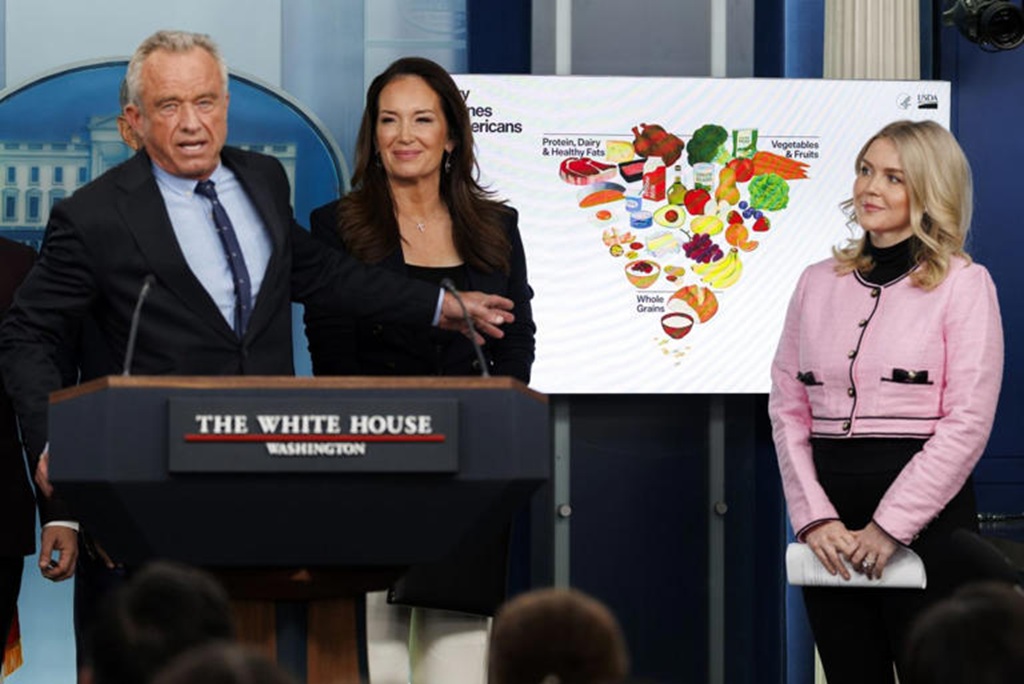
WASHINGTON, D.C. – HHS Secretary Robert F. Kennedy Jr. stepped into a packed briefing room this week to introduce the New Food Pyramid, the “2025-2030 Dietary Guidelines for Americans.” Supporters are calling it the biggest shake-up in federal nutrition advice in decades.
The headline change was hard to miss: a redesigned food pyramid that looks almost flipped. Kennedy didn’t soften his message. He said the old approach helped fuel chronic illness. He also said it’s time to stop treating fat like the enemy and start cracking down on added sugar and ultra-processed foods.
For years, the classic food pyramid, and later the MyPlate graphic, put grains like bread, cereal, and pasta at the base. Fats and oils were pushed to the side with warnings to limit them. The new model reverses that idea.
The broad base of the updated pyramid highlights high-quality proteins and healthy fats. The list includes red meat, eggs, poultry, and full-fat dairy such as whole milk and cheese. Kennedy said these foods were unfairly discouraged for a long time. The guidelines also support cooking with butter and beef tallow, moving away from heavily processed seed oils that became common in American kitchens in the 1990s.
Marty Makary, the FDA head who appeared alongside Kennedy, said schools and parents shouldn’t feel like they have to avoid fat at every turn. He said whole-food fats support brain health and growth.
Food Pyramid Takes a Hard Line on Added Sugar
As protein and fats move to center stage, the space for carbs shrinks. Refined grains, including white bread and crackers, sit at the narrow top of the chart.
The biggest shift is the federal position on sugar. For the first time, the guidance says no amount of added sugar is recommended for a healthy diet, with extra focus on children. The new rules set a limit of 10 grams of added sugar per meal, far lower than past advice.
Kennedy said the government needs to be direct with the public. He blamed added sugar and chemical additives for driving obesity and diabetes rates. He also said the country can’t claim it cares about health while supporting the ingredients that contribute to disease.
What It Means for Schools and SNAP
These guidelines are not just tips for people cooking at home. They shape what federal programs can serve. That includes the National School Lunch Program, which provides meals to about 30 million kids each day. If the guidance holds, school menus will need major updates.
Changes expected in many cafeterias include:
- Whole milk is returning, replacing the fat-free and chocolate options now common
- More main-dish proteins, such as beef and eggs
- An end to sugary fruit drinks and highly processed snack packs
Agriculture Secretary Brooke Rollins, who helped write the report, said the plan is also meant to support American ranchers and farmers who produce what she called real food, not products made to look like food.
The Response Splits Experts
Reaction from scientists and nutrition leaders has been divided. Some, including former FDA commissioner Dr. David Kessler, praised the stronger push toward whole foods and called it a big step forward.
Others warned that putting red meat and saturated fat near the top ignores long-standing research tied to heart disease. Stanford nutrition researcher Christopher Gardner said he was disappointed to see red meat given such a high priority. He said it conflicts with a large body of evidence on cardiovascular risk.
As the event wrapped up, Kennedy held a 10-page guideline document. It’s much shorter than the 164-page report released in 2020. He said the shorter format is intentional.
He argued that the answer to the country’s health problems isn’t found in a new drug. He said it comes down to everyday food choices. He also said the age of the ultra-processed American diet needs to end, with a return to simpler basics.
Trending News:
Medicare Benefit Changes in 2026: 5 Major Updates to Costs, Part D, and Medicare Advantage


Minnesota Lawmakers Push for Federal Subpoena of Ilhan Omar in $250 Million Fraud Probe

Still the Champ: Why the ‘Political Obituary’ of Donald Trump Keeps Getting It Wrong

JD Vance Warns California and Other Blue States Over Medicaid Fraud

Did AOC Really Say She Wants to ‘Take From Americans’ to Fund Illegal Migrant

Tennessee Redistricting War: Democrats Stripped of Power Amid Capitol Chaos

Mamdani Drops Property Tax Hike as Gov. Hochul Delivers $4 Billion Bailout

California Governor Hopeful Katie Porter Admits Democrats Need Illegal Immigrants

Gavin Newsom’s $20 Million Diaper Scam Gets Exposed

Democrats Panic as Trump Mobilizes Massive “Election Army” for Midterms

The Last of the Real Democrats? How John Fetterman is Bucking the Progressive Tide

Thai Billionaire Charged With Lese Majeste Over Facebook Post

Facebook Login Feature – Clash of Clans

Russia Bans Facebook, Meta Says It’ll Do “Everything” To Restore Service

4 Things you can do to take your Facebook Lead Generation to the Next Level

Zuckerberg to Allow Violent Speech on Russia After Facebook Blocked

Facebook Loses $200 Billion as Users Shift to TikTok

Downloading Facebook Videos Anonymously with High Quality Video through Snapsave app

The Best Site to Buy Real Facebook Likes and Followers in 2022

Chinese Man Arrested for Using Facebook to Dupe Cryptocurrency Investor

Google and Facebook Under Huge Pressure Over User Privacy

Jimmy Kimmel Slammed for “Vile” Melania Trump “Expectant Widow” Joke

President Trump Addresses Nation on War with Iran

Trump Warns NATO Allies: America Won’t Protect Slackers After Iran Clash

Senate Hearing on Fraud and Foreign Influence Turns Tense Over Minnesota Scandals

CNN Forced to Backtrack Its Reporting on Trump’s Iran Talks

Joe Rogan Slams Gavin Newsom for Mocking Nick Shirley

Mosque Set Ablaze in Iran a Citizens Revolt Against the Islamic Regime

AOC Accuses Jessie Watters of Fox News of Sexualizing and Harassing Her

JD Vance Exposes Walz’s Fraud and CNN’s Lies in White House Presser

Milestone Card Credit: How the Milestone MasterCard Can Transform Credit
-

 Politics3 months ago
Ilhan Omar’s Connections to Convicted Somali Fraudsters Surface
-

 Politics2 months ago
Rep. Ilhan Omar Faces Heat as Minnesota Voters Seek Change
-

 Politics3 months ago
Calls Mount to Expel Rep. Ilhan Omar from Congress
-

 Politics3 months ago
AOC’s Critique of Rubio’s Speech Turns into an Huge Embarrassment
-

 Crime3 months ago
Erika Kirk Faces Renewed Grooming Allegations Over 2014 Messages
-

 News3 months ago
Austin Tucker Martin Who Was He And Why Was He at Mar-a-Lago?
-

 Business3 months ago
CNN Ratings Collapse As Cable Giants Face Extinction
-
News2 months ago
Ilhan Omar Accused of Leaking U.S. Strike Plans to Iran as Tensions Rise