
News
Facebook’s Artificial Intelligence Errors Questioned by Critics


Facebook, which rebranded itself, Meta, is faced with the daily challenge of balancing supporting free expression while blocking out unwanted material like images of child sexual abuse, violent incitement, and financial scams.
However, Facebook’s artificial intelligence programs that are designed to block and filter out unwanted material are prone to making mistakes and banning users over commonly used words or names.
The social network’s automated system flagged discussions about a common backyard tool as inappropriate sexual talk in a group for gardeners and has even blocked Facebook sign in attempts.
Several years ago, Facebook froze the accounts of Native Americans because its computers mistakenly believed that names like Lance Browneyes were fake.
It repeatedly rejected advertising from businesses selling clothing for people with disabilities, mostly because it confused the product with medical promotions, which are prohibited.
People, businesses, and groups serving the public interest, such as news organisations, suffer when Facebook cuts off their accounts and they cannot find help or figure out what went wrong.
According to the Wall Street Journal, Facebook may make 200,000 mistakes every day.
Facebook essential to companies
Several social network researchers told the Wall Street Journal that Facebook and its peers could do more to make fewer mistakes and mitigate the damage when they do.
There is also a broader question: Are we OK with companies that are so essential that when they make mistakes, we can’t do much?
Facebook has been criticized for not making it easy for users who had their posts deleted, or whose accounts were disabled, to see what rules they broke and appeal decisions made by the company.
The semi-independent Facebook Oversight Board has also said the company needs to make it easier for users to understand what rules they broke, and appeal decisions made. However, Meta has done too little to help.
The researchers want to analyze Facebook’s data to see how it arrives at decisions and how often it makes errors. Facebook opposes that idea saying it’s an invasion of user privacy. Yet Facebook sells users’ data to the highest bidder.
According to Meta, the company is working to be more transparent and spends billions of dollars on computer systems and people to supervise communication in its apps.
Users will always disagree with the company’s decisions regarding posts. Critics, however, argue that the company has not done enough.
This article originally appeared in The New York Times.
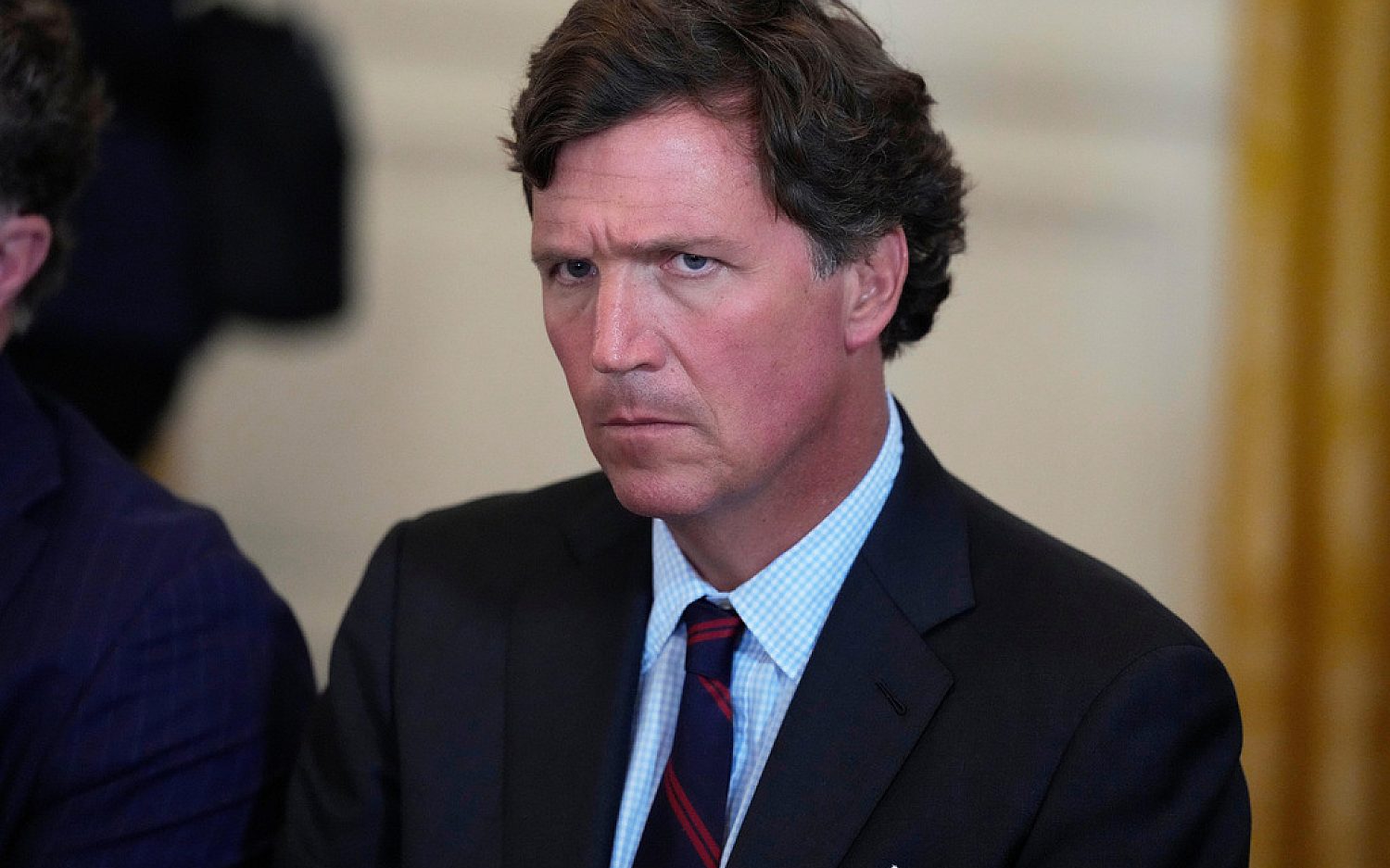
TEL AVIV – A fast-moving dispute has split parts of the American right after political commentator Tucker Carlson said Israeli security officials at Ben Gurion International Airport detained him and members of his production crew. Carlson said the airport incident happened soon after he filmed a tense interview with U.S. Ambassador to Israel Mike Huckabee on February 18, 2026.
Carlson, who often criticizes U.S. foreign policy and continued military and financial support for Israel, called the encounter “bizarre” and hinted it may have been political. Israeli officials, along with Huckabee, rejected that framing and said the interaction followed normal security steps and was handled privately.
The Alleged Incident at Ben Gurion Airport
Carlson said he flew to Israel to record an interview with Huckabee inside the airport. He also said he never left the Ben Gurion complex before boarding a private flight out. In comments shared with outlets including The Daily Mail and The New York Post, Carlson claimed:
- Airport staff took passports from him and his team.
- His executive producer was taken into a separate room.
- Security officers questioned them about the Huckabee interview, including “what we spoke to Ambassador Huckabee about.”
He described the experience as out of the ordinary and suggested it may have been a response to his tough questions during the interview. Later, in a follow-up video posted on his own platform, Carlson repeated the claim and said producers got “the third degree.” He also said officials held their passports while asking about the conversation topics and their political views.
Israeli officials disputed Carlson’s account and offered a different version:
- The Israel Airports Authority (IAA) said Carlson and his group “were not detained, delayed, or interrogated.”
- The authority said staff “politely asked a few routine questions,” consistent with standard procedures used for many travelers.
- According to the IAA, the conversation took place in a VIP lounge for privacy, not as punishment.
On social media, Ambassador Huckabee backed that explanation. He said passport checks and security questions are common for people arriving in or leaving Israel.
Meanwhile, security footage circulated online and spread quickly. The clips show Carlson smiling, signing documents, posing for photos with airport staff, and hugging an employee. Critics say those images clash with the idea of a hostile detention.
Backlash from Pro-Israel Factions
Tucker Carlson’s story triggered a sharp reaction from pro-Israel voices across social media and the press. Many accused him of stretching the facts or making the situation sound worse to stir anti-Israel sentiment.
- Former Israeli Prime Minister Naftali Bennett insulted Carlson and accused him of inventing the harassment claim after only a short airport stop.
- Pro-Israel groups and commentators pointed to the episode as another example of what they call Carlson’s ongoing hostility toward Israel.
- Outlets such as The Jerusalem Post and Times of Israel highlighted the footage and argued it undercuts the “detention” storyline, with some calling the controversy a publicity play.
The argument also revived older claims that Carlson promotes antisemitic ideas, especially because he regularly challenges U.S. aid and support for Israel’s military actions. Critics often cite:
- His comment described Christian Zionism as a “brain virus.”
- His interviews with figures accused of antisemitism.
- He claims that pro-Israel lobbying groups have undue influence in U.S. politics.
In late 2025, one advocacy group labeled Carlson its “Antisemite of the Year” after he criticized Israel’s actions in Gaza and drew attention to AIPAC’s role in Washington. Carlson has rejected the label and says his views come from “America First” politics, not prejudice.
The Contentious Huckabee Interview
The airport dispute soon took over the news cycle, but it was also tied directly to the interview itself, which came out shortly after the travel incident. During the more than two-hour conversation, Carlson pressed Huckabee on several topics, including:
- U.S. military aid to Israel during ongoing conflicts
- Religious arguments used to support territorial claims
- Treatment of Christians in the region
- Risks of wider escalation in the Middle East, including with Iran
At one point, Carlson challenged Huckabee over whether he places Israel’s interests above America’s. That exchange turned heated. Huckabee defended strong, consistent U.S. backing for Israel, while Carlson argued that the alliance can drain resources and pull the United States into conflicts it doesn’t need.
The discussion also put a spotlight on a growing split within Republican and conservative circles over Israel policy. In that debate, Carlson often represents a more isolationist camp that distrusts foreign commitments.
Tucker Carlson’s Evolving Stance on Israel
Carlson has long opposed open-ended U.S. involvement overseas. Since leaving Fox News, he has sharpened his focus on Israel-related topics, including:
- The scale of U.S. aid, which he has described as funding Israel’s “war machine.”
- The influence of lobbying groups on U.S. lawmakers
- Arguments about divided loyalties and how U.S. leaders set foreign policy priorities
Supporters say these are fair questions about spending and alliances. On the other hand, critics say parts of his framing echo old antisemitic themes, especially when he hints at hidden control or undue influence.
Because of that history, the airport claims poured gasoline on an already tense fight. Pro-Israel critics argue Carlson played the victim to attack Israel, while his allies say the backlash proves powerful interests try to shut down dissent.
Reactions and Implications
Online reaction split along familiar lines:
- Pro-Palestinian and anti-intervention users praised Carlson for pushing hard questions.
- Pro-Israel commentators mocked the “detention” claim as routine screening and said he lied.
Overall, the episode shows how divided American conservatives have become on foreign policy, especially when Israel and U.S. aid come up. Carlson still reaches a huge audience, so these clashes keep shaping how people talk about alliances, military support, and political influence.
So far, neither Carlson nor Israeli officials have signaled additional steps. Still, the dispute has reopened scrutiny of Carlson’s rhetoric and where Americans draw the line between criticizing Israel and crossing into prejudice.
Related News:
Tucker Carlson and Staff Allegedly Detained in Israel, Claims Passports Were Taken
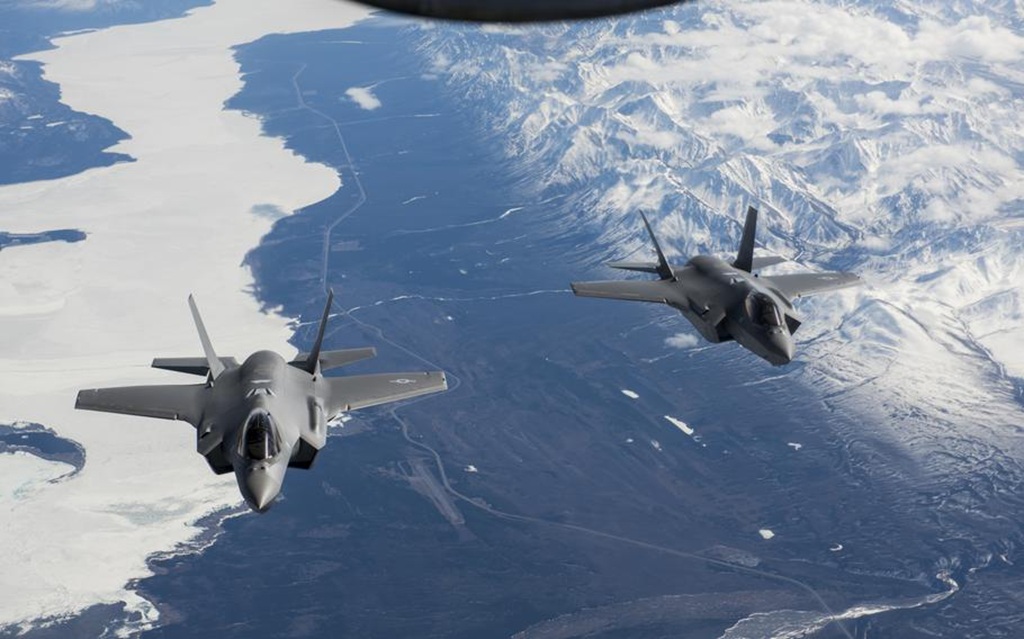
ANCHORAGE, Alaska – NORAD launched U.S. fighter jets and support aircraft Thursday after detecting five Russian military planes operating inside the Alaskan Air Defense Identification Zone (ADIZ).
The encounter took place near the Bering Strait off Alaska’s west coast. Officials said the aircraft did not enter U.S. or Canadian sovereign airspace. Instead, they described the intercept as a regular air defense mission, not an escalation.
What NORAD tracked and intercepted
Early Thursday, NORAD sensors picked up and followed a small Russian formation. The command identified the aircraft as:
- Two Tu-95 Bear long-range bombers
- Two Su-35 fighter jets
- One A-50 airborne early warning and control aircraft (often compared to the U.S. E-3 Sentry)
The planes flew inside the Alaskan ADIZ, a buffer area in international airspace. Aircraft in this zone are expected to identify themselves so North American forces can keep track of activity near the border.

US aircraft involved in the response
After confirming the track, NORAD sent a mix of aircraft from Alaska and other locations, including:
- Two F-16 Fighting Falcon multirole fighters
- Two F-35 Lightning II stealth fighters
- One E-3 Sentry airborne warning and control aircraft
- Four KC-135 Stratotanker aerial refueling aircraft
US crews intercepted the group, visually confirmed each aircraft, and stayed with them until they left the ADIZ. The mission focused on observation and control, with no reported issues.
In its statement, NORAD said Russian flights in the Alaskan ADIZ happen often and are not viewed as a direct threat. The Russian aircraft stayed in international airspace for the full event.

Russian flights near Alaska are a regular pattern.
Intercepts like this have become a familiar part of Arctic and sub-Arctic operations, especially near the Bering Strait. That area matters because Russia and the United States sit only a few miles apart at their closest point.
Recent examples include:
- September 2025: NORAD tracked four Russian aircraft (Tu-95s and Su-35s) in the ADIZ, sending F-16s, an E-3, and KC-135 support.
- August 2025: US forces responded to multiple flights involving a Russian Il-20 reconnaissance aircraft over several days.
- Early 2025: Similar bomber-and-fighter packages operated near the zone during long-range training flights.
Russia often describes these sorties as scheduled training patrols over neutral waters, sometimes supported by aerial refueling. Meanwhile, US and Canadian forces treat them as chances to practice detection, identification, and escort procedures.
This latest intercept comes during a wider global strain and rising interest in the Arctic. Still, officials framed the flight as routine and contained.

Why the Alaskan ADIZ matters
The Alaskan ADIZ adds an early layer of warning beyond national airspace. It gives NORAD time to spot aircraft, confirm what they are, and respond in an organized way.
NORAD is a joint US-Canadian command based at Peterson Space Force Base in Colorado. Its air defense toolkit includes ground-based radars, fighter units, airborne surveillance, and coordination with partners.
The aircraft mix used in this intercept reflects that layered approach:
- F-35 Lightning II: Stealth fighters with advanced sensors for safe intercept and tracking.
- F-16 Fighting Falcon: Flexible fighters commonly used for identification and escort.
- E-3 Sentry: Airborne radar and command platform for broad-area awareness.
- KC-135 Stratotanker: Refueling support that keeps jets on station longer in remote areas.
Together, these assets help NORAD keepan eyes on approaching aircraft without raising the temperature.
What it signals amid rising Arctic attention
Even when flights stay professional, they show how active the Arctic has become. As sea ice changes, interest has grown in new routes and resources, and Russia has expanded its military footprint in the region. That has kept US and NATO planners focused on northern defense.
NORAD’s quick response reinforced that North American approaches will be monitored and managed. Officials reported no unsafe maneuvers and no communication problems, matching the tone of many past intercepts.
The mission ended normally, with the Russian aircraft leaving the ADIZ as expected. This report is based on NORAD’s official release and defense sources confirming details of the February 19-20, 2026, event.
Trending News
Tulsi Gabbard’s Explosive Revelations on Russia Collusion Hoax Shake Washington
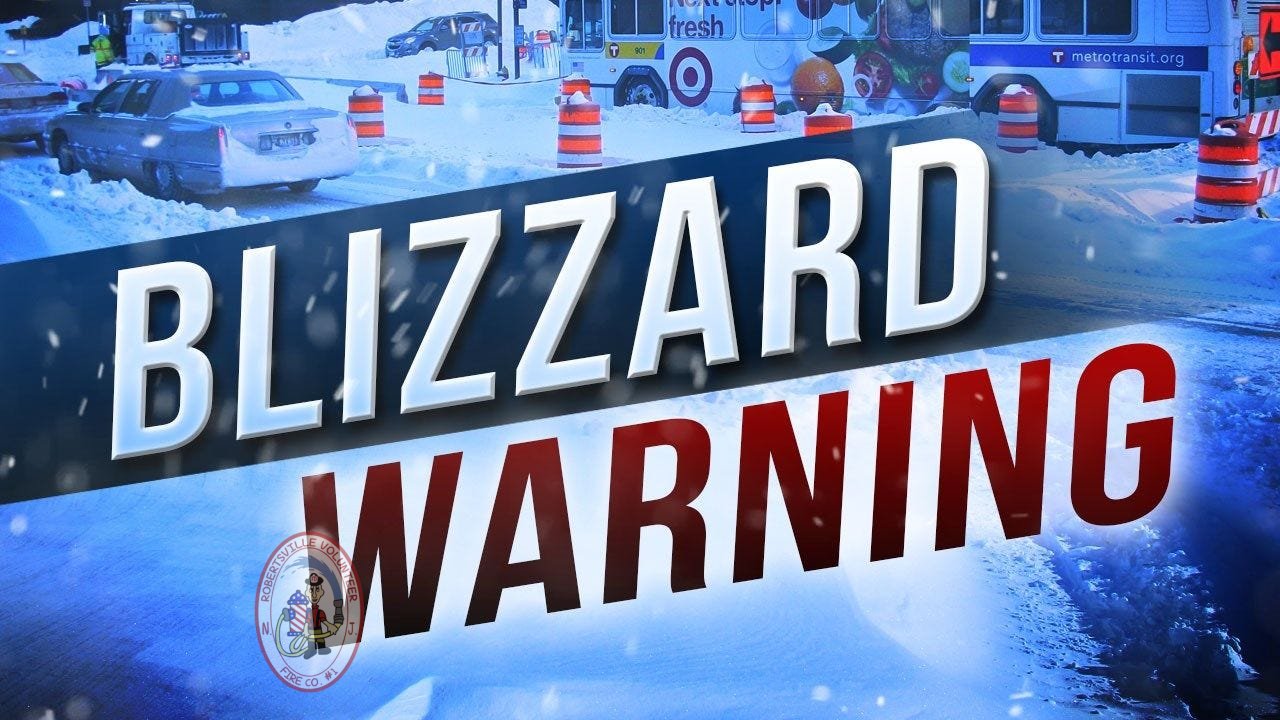
NEW YORK – A strong nor’easter is bringing rare blizzard warnings to a large part of the Northeast, including New York City for the first time in almost 10 years.
The National Weather Service (NWS) expects 12 to 18 inches of heavy, wet snow, with higher totals in a few areas. At the same time, wind gusts could reach 55 mph. As a result, blizzard conditions may develop, with near-zero visibility and travel that turns dangerous fast.
Meteorologists say this coastal storm is strengthening quickly as it pushes north. It could affect tens of millions of people from Delaware to southern New England. Blizzard warnings include: New York City, Long Island, much of New Jersey, southern Connecticut, and nearby coastal areas.
The warning period runs from Sunday morning through Monday afternoon. Because the snow will fall hard and the winds will stay strong, officials want people to prepare now and avoid unnecessary trips.
Storm Timeline and Rapid Strengthening
Snow should start lightly in some places Sunday morning, then ramp up quickly. By Sunday afternoon and into the night, the strongest snow bands move in. Forecasters expect 1 to 2 inches per hour in the heaviest bursts, and some bands could briefly hit 2 to 3 inches per hour.
- Sunday morning (Feb. 22): Light to moderate snow spreads into New York City and nearby areas.
- Sunday afternoon and evening: Snow turns heavier, winds increase, and visibility drops because of blowing snow.
- Sunday night into Monday morning: The storm reaches its worst, with whiteouts, peak totals, and the strongest gusts.
- Monday afternoon and evening: Snow fades from west to east, although impacts linger on Long Island and in some northern spots into Monday night.
Forecasters also expect the system to deepen fast offshore, which can drive very strong wind gusts near the coast.
Expected Snow Totals and Where the Worst Hits
Most projections show 12 to 18 inches across a wide stretch of the Northeast. The highest totals should sit closer to the coast and near the storm’s center. In New York City, many neighborhoods could pick up 13 to 17 inches. A few locations could push closer to 20 inches if the heaviest bands stall.
- New York City metro: 12 to 18 inches, with isolated totals of 20 inches or more possible.
- Long Island and coastal Connecticut: Some of the biggest totals, with pockets above 18 inches.
- Coastal New Jersey and Delaware: About 10 to 18 inches within blizzard warning areas.
- Boston and southern New England: Blizzard warnings expanding, with similar heavy snow expected.
- Farther inland: Winter storm warnings, with slightly lower totals but major travel impacts.
Because temperatures sit close to freezing, the snow should be heavy and wet. That raises the risk of downed branches, power outages, and slow, difficult snow removal.
Blizzard Warning Conditions and Major Travel Problems
Blizzard conditions happen when strong winds and heavy snow combine to keep visibility near or below one-quarter mile for at least three hours. That setup looks most likely Sunday night into Monday morning, when winds and snowfall both peak. In other words, whiteout conditions could appear quickly and linger.
Travel disruptions could be widespread:
- Major routes such as I-95, I-87, and the Long Island Expressway could become unsafe or even impassable.
- Public transit, including MTA subways, buses, and commuter rail lines, could face major delays or shutdowns.
- Airports in New York, Newark, and Boston expect many cancellations and long delays.
- Officials warn travel may turn life-threatening, so people should stay off the roads unless they must go out.
Along the coast, flooding also remains a concern. Higher tides could bring moderate to major flooding to vulnerable shorelines in New York, New Jersey, Connecticut, Massachusetts, and Delaware.
Government Response and Safety Tips
New York Gov. Kathy Hochul said the forecast changed quickly, and she called the storm dangerous and potentially life-threatening. New York City Mayor Zohran Mamdani also urged residents to stay calm, get ready early, and avoid taking chances.
Officials recommend a few simple steps:
- Stock essentials, including food, water, medicine, batteries, and heating fuel.
- Get ready for power outages, charge devices, and plan for safe backup heat.
- Shovel early if you can do it safely, because heavy snow gets harder to move.
- Check on older neighbors and anyone with medical needs.
- Skip nonessential travel, and if you must drive, use extreme caution and carry proper winter gear.
Emergency crews are already on alert, with equipment and teams placed to handle plowing, towing, and stranded drivers.
Why This Storm Stands Out
New York City last saw a blizzard warning in 2017, so this level of alert is unusual for such a crowded area. Over the past two days, forecasts shifted from lighter snow to a major nor’easter, which shows how quickly coastal storms can change.
With Monday closures likely for many schools and some businesses moving to remote work, daily routines could pause across much of the Northeast. Keep an eye on updates from the National Weather Service and local officials, and stay inside if you can. This storm could rank among the region’s biggest in years.
Trending News:
New York Mayor Mamdani Threatens to Raise Property Taxes By 9.5%


Tucker Carlson Attacked By Pro-Israel Groups Over Airport Detention Claims

US Fighter Jets Scrambled to Intercept Russian Military Aircraft Near Alaska

Blizzard Warning for New York and the Northeast

US Treasury Secretary Bessent Says 2026 Tariffs Revenue Won’t Drop

New York Mayor Mamdani Threatens to Raise Property Taxes By 9.5%

Eric Dane, Beloved Grey’s Anatomy and Euphoria Actor, Dies at 53 After ALS Battle

Trump Fires Back at Supreme Court with New 10% Global Tariffs

Sen. Josh Hawley Demands DOJ Probe Into ‘Dark Money’ Network

Supreme Court Orders CNN to Respond in High-Stakes Defamation Case

Starmer Accused of Arresting Andrew to Shift Media Narrative

Thai Billionaire Charged With Lese Majeste Over Facebook Post

Russia Bans Facebook, Meta Says It’ll Do “Everything” To Restore Service

4 Things you can do to take your Facebook Lead Generation to the Next Level

Zuckerberg to Allow Violent Speech on Russia After Facebook Blocked

Facebook Login Feature – Clash of Clans

Facebook Loses $200 Billion as Users Shift to TikTok

Downloading Facebook Videos Anonymously with High Quality Video through Snapsave app

The Best Site to Buy Real Facebook Likes and Followers in 2022

Chinese Man Arrested for Using Facebook to Dupe Cryptocurrency Investor

Google and Facebook Under Huge Pressure Over User Privacy

Mosque Set Ablaze in Iran a Citizens Revolt Against the Islamic Regime

AOC Accuses Jessie Watters of Fox News of Sexualizing and Harassing Her

JD Vance Exposes Walz’s Fraud and CNN’s Lies in White House Presser

Milestone Card Credit: How the Milestone MasterCard Can Transform Credit
-

 Crime2 months ago
YouTuber Nick Shirley Exposes BILLIONS of Somali Fraud, Video Goes VIRAL
-

 China4 weeks ago
China-Based Billionaire Singham Allegedly Funding America’s Radical Left
-

 Politics3 months ago
Ilhan Omar’s Ties to Convicted Somali Fraudsters Raises Questions
-

 News3 months ago
Walz Tried to Dodges Blame Over $8 Billion Somali Fraud Scandal
-

 Crime2 months ago
Somali’s Accused of Bilking Millions From Maine’s Medicaid Program
-

 Crime2 months ago
Minnesota’s Billion Dollar Fraud Puts Omar and Walz Under the Microscope
-

 Politics2 months ago
Ilhan Omar Faces Renewed Firestorm Over Resurfaced Video
-

 Business2 months ago
Tech Giant Oracle Abandons California After 43 Years