Politics
Walz Tried to Dodges Blame Over $8 Billion Somali Fraud Scandal

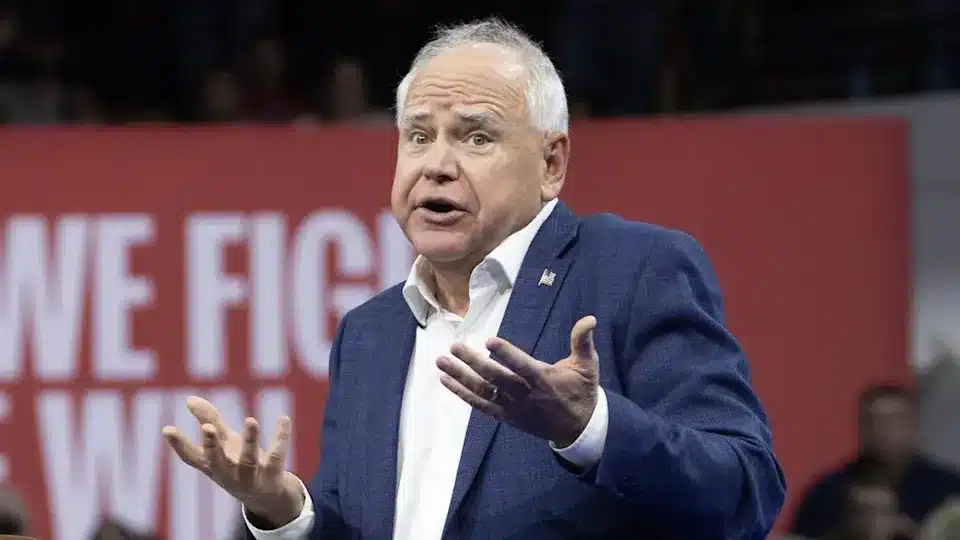
MINNEAPOLIS – Minnesota Governor Tim Walz is facing one of the biggest welfare fraud scandals in American history, with federal officials warning that theft from state and federal aid programmes could top $8 billion.
The alleged fraud, centred on schemes that targeted food assistance, housing support, and services for vulnerable families, has highlighted serious gaps in oversight under Democratic Governor Tim Walz. As the FBI and Department of Justice (DOJ) ramp up investigations,
Tim Walz is under intense pressure for refusing to accept responsibility and instead pointing to federal Covid-era rules and partisan attacks.
What started as a few reports of oddities in child nutrition spending has grown into what prosecutors now describe as the largest Covid fraud case in the country. Shell companies, many reportedly linked to Minnesota’s Somali-American community, are accused of billing for services that never happened, then spending the cash on luxury cars, high-end goods, foreign transfers, and possibly terror-linked transactions.
So far, 78 people have been charged and more than 50 convicted, while the needs of vulnerable children and families were pushed aside in favour of yachts, mansions, and designer labels.
How the Fraud Grew
At the centre of the scandal is the Feeding Our Future case, involving a nonprofit that grew at astonishing speed during the Covid pandemic. The group received federal child nutrition funds that were distributed by the Minnesota Department of Education and meant to pay for meals for low-income children.
Instead, operators are accused of submitting invoices for millions of meals that never existed, with some sites operating as little more than paperwork mills pretending to serve food at $4.50 per fake meal.
DOJ documents outline how the fraud spiralled once rules were loosened in 2020. As pandemic emergency measures relaxed checks and documentation, Feeding Our Future’s annual budget jumped from about $3.4 million to around $200 million.
Insiders at the state agency flagged odd claims as far back as 2019, but meaningful action lagged. A 2022 state audit condemned officials for “creating opportunities for fraud” by brushing aside glaring warning signs, such as meal counts that made no sense and sites listed in strip malls with no proper verification.
The problems were not limited to food programmes. Similar scams cropped up in Housing Stabilization Services (HSS), a scheme created to keep older people and people with disabilities from becoming homeless. Launched in 2020 with a forecast cost of about $2.6 million, it exploded to $104 million in payments by 2024, with investigators now saying most of that money was fraudulent.
Some providers allegedly scraped names from rehab centres, then billed Medicaid for bogus counselling that never took place, pocketing about $61 million in just the first half of 2025. Another group is accused of netting $14 million through false claims for autism therapy, exploiting families desperate for real support.
Unemployment benefits were also hit. During the height of the pandemic, officials say roughly $500 million went out in fake jobless claims. The Centre of the American Experiment’s Minnesota Scandal Tracker now records more than $1.2 billion in confirmed losses since Walz took office in 2019. Even so, whistleblowers and some lawmakers now talk about a much higher figure.
Representative Claudia Tenney (R-N.Y.) has repeated concerns that the true total could reach $8 billion, which she said is “growing by the day”. That would exceed the state’s entire annual corrections budget and comes straight from programmes meant to help the poorest residents.
Critics, including former fraud investigator Kayseh Magan, blame political caution for the slow response. They argue that leading Democrats in Minnesota felt uneasy about targeting fraud in the Somali community, which numbers around 80,000 people and has political influence in the state.
Magan, himself Somali-American, has said it is “uncomfortable and true” that most defendants come from his community, while stressing that the offenders represent a small group exploiting the system. Photos showing convicted offender Abdul Dahir Ibrahim smiling alongside Walz and Representative Ilhan Omar have fuelled public anger and strengthened claims that cosy political relationships gave scammers cover.
Tim Walz’s Pushback: “I Take Responsibility for Putting People in Jail”
Governor Tim Walz, once marketed as an easy-going everyman, has become the political face of the scandal. On NBC’s “Meet the Press“, when asked about his responsibility, Walz replied, “Certainly, I take responsibility for putting people in jail.”
The remark has drawn criticism from both sides of the aisle. An anonymous account claiming to speak for 480 staff members at the Minnesota Department of Human Services called him “100% responsible” and accused his administration of ignoring alarms and punishing whistleblowers.
Walz’s defence has not convinced many sceptics. He has described Minnesota as a “well-run” state with “generous” programmes and has pointed to strong rankings in education and health coverage to argue that the system works overall, even with major fraud cases. Records and court filings tell a different story.
In 2020, a judge reprimanded state officials for cutting off payments to Feeding Our Future without proper procedure, a decision that delayed tougher action. Later, federal authorities asked the state to hold back on some moves to avoid tipping off targets. Even so, state audits have still faulted Walz’s team for earlier failures and poor controls.
On 3 December, House Oversight Committee Chairman James Comer (R-Ky.) opened a formal inquiry and demanded documents from Walz and Minnesota Attorney General Keith Ellison by 17 December. His letter accused the administration of a “cover-up”, citing reports of retaliation against staff who tried to expose fraud.
Comer asked, “What did your administration know, and when?” The U.S. Treasury is also looking at whether money stolen from welfare schemes might have moved to al-Shabaab through hawala networks, a type of informal money transfer, raising fresh concerns about national security.
Walz insists he has nothing to hide and says he welcomes review of the state’s actions, but he has attacked Republican critics for what he describes as anti-immigrant motives and election-year tactics. In a state where Somali voters have helped deliver key wins for Democrats, the political risks are obvious.
Some critics say that focusing on accountability could upset a core voting bloc. Social media is full of anger, with one user writing, “Walz’s Elmer Fudd act isn’t fooling anyone, this happened on his watch.”
Federal Investigators Move In: FBI and DOJ Take the Lead
With trust in state oversight weakening, federal agencies have stepped in as the main force tackling fraud in Minnesota’s welfare system. Since raids on Feeding Our Future sites began in 2022, the FBI and DOJ have brought charges against 78 people tied to that network alone. As recently as August 2025, three more defendants pleaded guilty to about $2.4 million in fake claims.
Acting U.S. Attorney Joseph H. Thompson described the situation as a “far-reaching fraud crisis swamping Minnesota” and praised FBI financial experts for piecing together complex chains of shell companies and bribes.
In September, eight more individuals were indicted in the Housing Stabilization Services case after a joint investigation by the FBI, IRS Criminal Investigation, and the Office of Inspector General at the Department of Health and Human Services. BCA Superintendent Drew Evans said, “Criminals selfishly defraud these programmes, depriving vulnerable Minnesotans,” as investigators tracked stolen money into luxury goods from brands like Louis Vuitton and into foreign business accounts.
In one instance, a defendant is accused of washing about $1.38 million through personal bank accounts.
The investigations are still active and expanding. FBI Special Agent in Charge Alvin M. Winston has promised that investigators are “steadfast in holding accountable those who steal from underprivileged children.”
With questions mounting about possible links to al-Shabaab through hawala transfers, former counterterrorism officials have warned that yes, Covid fraud can feed into extremist networks abroad. Figures in former President Trump’s orbit have seized on the scandal, with ICE raids in Somali neighbourhoods and public comments painting Minnesota as a “fraud hub.”
Pressure on the Somali Community
Minnesota’s Somali community, which has become a central part of life in Minneapolis over the past three decades, now finds itself caught in the middle of a national controversy. Community leaders condemn efforts to “demonise an entire group fleeing civil war”, a line Walz echoed during his NBC interview.
Representative Ilhan Omar, who has faced renewed scrutiny for her connections to some involved figures, told CNN that “these Covid programmes were set up so quickly,” arguing that rushed design and weak controls opened the door to abuse.
Inside the community, tensions are rising. Some Somali Americans say they feel treated as suspects simply because of their background, while others demand a tougher response to those who exploited public trust. Social media comments show how raw the debate has become. One user ranted, “At least 75% of the Somali community on welfare, Walz, Omar, Ellison taking cuts?”
Right-wing commentators have linked the scandal to “open borders and expansive welfare”, while analyst David Asman and historian Victor Davis Hanson have accused Walz of refusing to speak plainly about the scale and nature of the problem.
Tim Walz’s Future in Doubt
As federal investigations press forward and new details emerge, the scandal is reshaping Minnesota’s political outlook. Walz is expected to seek re-election in 2026, but opponents already see an opening. Republicans frame the saga as proof that Democrats have turned Minnesota into a “failed state”.
House Budget Committee Chairman Jodey Arrington (R-Texas) has used the case to hammer home a simple message, asking voters which party they trust with their tax money. Media figures have joined in, with Meghan McCain calling for Walz to resign and calling the welfare scandal “one of the greatest frauds in American history.”
Efforts to claw back stolen funds have moved slowly. So far, only a small part of the billions believed to be lost has been recovered. Policymakers are talking about new guardrails, such as tougher background checks for providers, real-time data tracking, and dedicated fraud units with more independence.
For now, though, many Minnesotans feel punished twice, once when the money was stolen, and again as the state tries to repair broken systems using the same taxpayers’ funds.
The sense of betrayal runs deep. Posts on X warn that “what we uncover will shock America,” and many residents say their faith in state government has sunk to a new low. While lakes and natural beauty still define Minnesota in the public imagination, trust in public institutions seems to sink further every week.
Whether Governor Walz will take full responsibility for what critics call an £8 billion disaster, or continue to argue that federal rules, courts, and political enemies tied his hands, remains at the centre of the fight. Federal agencies keep filing cases, new defendants keep appearing in court, and public outrage continues to grow. For now, the scandal shows no sign of fading from view.
Related News:
Tim Walz’s Weak Racism Fears Cost Minnesota Taxpayers Over $1 Billion


Canada’s $82,000 Per Household Debt Crisis Sparks Outcry

The Fallout of the Omar Raid: Guilty Until Proven Innocent?

DOJ Guidelines on Political Investigations: Rules Explained

RCMP Raids Lion Electric Amid $500M Taxpayer Fraud Probe

Carney’s US Trade War a Failure: Cost Shoppers $100M Weekly

Food Bank Lines Surge in Canada While Carney Pushes Foreign Aid

EU Parliament Erupts Over Canada’s Associate Member Bid

David Eby Campaign Stumbles Amid Mailer Scandal

Alberta Referendum Results Shift as Vote Tally Continues

Fedeal Investigators Obtain Ilhan Omar’s DNA
Opinion: Is Modern Political Empathy Really About Self-Image?
Opinion: Canada’s Combating Hate Act Threatens Free Speech

US Trade Moves Put Massive Pressure on Canada
How Progressivism Replaced Religion With A New Secular Faith
Canada Sheds 68,000 Jobs As Economic Fears Deepen
Uncovering the Truth Behind Inequality: A Bold New Vision
Pierre Poilievre Critiques Reporter Who Questions His Leadership

Opinion: What South America’s Political Shift Means for Canada

Why Alberta Separatist Leaders Say It’s Time to Leave Canada

Quebec Election 2026: Will the Province Leave Canada?


-

 News9 months ago
China-Based Billionaire Singham Allegedly Funding America’s Radical Left
-
Politics10 months ago
2026 Midterms Guide: Candidates, Key Issues, and Battleground States
-
Politics8 months ago
Ilhan Omar’s Connections to Convicted Somali Fraudsters Surface
-
Politics9 months ago
CNN Delivers Stark Reality Check to Democrats Over Voter ID
-
Politics8 months ago
Rep. Ilhan Omar Faces Heat as Minnesota Voters Seek Change
-
Politics9 months ago
Trump Approval Rating (February 2026 Poll Results, Approve vs Disapprove)
-
Politics10 months ago
Who Is Leading the Democratic Party in 2026?
-
United States10 months ago
Mosque Set Ablaze in Iran a Citizens Revolt Against the Islamic Regime