
Politics
Congress Summons Walz and Ellison Over Multi-Billion Dollar Fraud

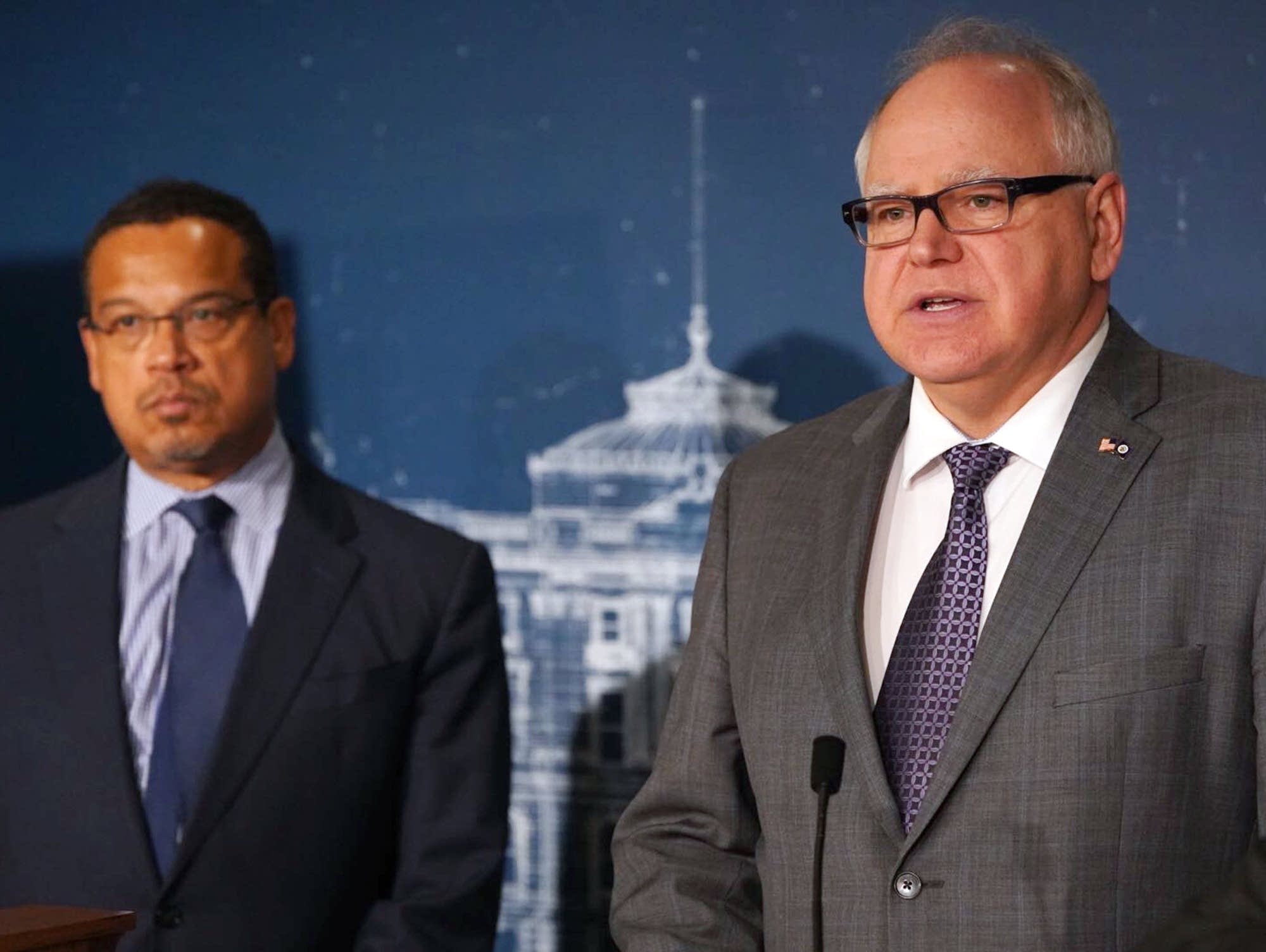
WASHINGTON D.C. – Federal attention on Minnesota’s public benefit programs is intensifying as the U.S. House Oversight and Government Reform Committee has invited Minnesota Governor Tim Walz and Attorney General Keith Ellison to testify amid claims of large-scale fraud tied to state-run social services.
Committee Chairman James Comer (R-Ky.) announced the invitations on December 31, 2025, as prosecutors weighed losses that could reach into the billions. Those numbers have fueled sharp arguments about weak oversight during the two Democratic leaders’ time in office.
The committee is looking at what Comer called widespread fraud in federal programs. That list includes child nutrition funding, Medicaid, and housing assistance. The best-known case involves the Feeding Our Future nonprofit, which prosecutors say took more than $250 million in COVID-era child meal funds.
New disclosures and ongoing cases suggest investigators see bigger problems, including what some have described as industrial-scale schemes across multiple programs.
The current wave of cases grew during the COVID-19 pandemic. Federal rules for child nutrition programs were loosened, which made it easier for nonprofits to claim meal reimbursements. Prosecutors have charged more than 90 people, many tied to Minnesota’s Somali community, with moving public funds into personal spending. Court filings describe purchases such as luxury vehicles, real estate deals, and money sent overseas.
Minnesota Whistleblowers Blame Walz and Ellison
Investigators and auditors say red flags appeared earlier than the pandemic. State audits and whistleblower accounts point to weak controls in programs handled by the Minnesota Department of Education and the Department of Human Services, including concerns raised as early as 2019, soon after Walz took office.
One widely cited pattern involved sites that claimed to feed thousands of kids each day, even though investigators say the meals were not served. Other cases alleged billing for services that were not provided, including autism treatment claims and housing-related services.
U.S. Attorney Joseph Thompson has warned that fraud could touch as much as half of $18 billion billed across 14 Medicaid programs labeled “high-risk” since 2018. That would put possible losses around $9 billion. Walz and other state officials push back on that figure.
They point to court records and reviewed cases that they say show confirmed fraud of closer to $218 million. Reporting by outlets such as the Minnesota Star Tribune has also tracked long-running concerns, including audits that critics say were ignored and claims of retaliation against whistleblowers.
Republican state lawmakers argue early warnings did not get enough attention. Comer has said Walz and Ellison were “asleep at the wheel or complicit,” and he has pointed to allegations involving cover-ups and missing or deleted records.
Committee Hearings Put Fraud Oversight in the Spotlight
The Oversight Committee’s first hearing, “Oversight of Fraud and Misuse of Federal Funds in Minnesota: Part I,” is set for January 7, 2026. It plans to hear from three Republican members of the Minnesota House, Reps. Kristin Robbins, Walter Hudson, and Marion Rarick.
The lawmakers have argued for years that state programs were open to abuse. Robbins, who chairs the state’s Fraud Prevention and Oversight Committee, has been one of the most active voices on the issue.
A second hearing on February 10, 2026, includes direct invitations to Walz and Ellison. Comer said the committee wants clear answers, adding that taxpayers deserve an accounting of how federal money was stolen.
The committee has also requested documents from the governor and attorney general, Treasury Suspicious Activity Reports, and interviews with state officials. Comer has signaled subpoenas could follow if cooperation stays limited.
The new hearings follow Comer’s earlier steps, including letters sent in December 2025 that sought records on what state leaders knew about fraud and how they responded. The probe is also unfolding as the Trump administration takes its own actions, including a freeze on certain federal child care funds to Minnesota, while stricter checks are put in place. Walz has criticized that move as political.
Walz and Ellison Push Back
Tim Walz’s office has said it will work with Congress, but it has also criticized the committee’s approach and warned against turning the issue into a spectacle. A spokesperson pointed to steps the state says it has taken, including hiring more investigators, increasing audits in high-risk areas, closing operations flagged as suspicious, and supporting prosecutions. Walz has said his administration has referred cases to law enforcement and asked lawmakers for stronger tools.
Ellison has highlighted his office’s record on Medicaid fraud. He has pointed to more than 300 prosecutions and about $80 million recovered since 2019. His office is also reviewing legal options tied to federal funding freezes, arguing the cuts affect lawful programs that serve families who rely on assistance.
Supporters of the administration say many schemes took advantage of federal pandemic waivers. They also say state officials alerted federal agencies, including the USDA and FBI, early in some cases. They argue that some actions moved slowly due to court orders and federal requests to avoid interfering with investigations.
Bigger Stakes for Taxpayers and Public Programs
Whistleblowers and Republican critics disagree. They claim politics and relationships slowed tougher oversight. Some defendants have been reported to have donated to Democrats, including Ellison. Critics also say concerns about community tensions, including within Minneapolis’s large Somali-American population, may have shaped enforcement choices.
The Minnesota cases are now a national example of what can happen when large sums move quickly through public programs. With the DOJ bringing charges and claims that money flowed overseas (including allegations in some reports tying funds to terrorist-linked networks), the consequences reach past state politics.
Congressional hearings could also shape future federal policy. Committee leaders say they want tighter controls on how aid is approved and paid out, along with stronger penalties for those who exploit the system.
Walz and Ellison now face a public test of transparency and accountability. The Oversight Committee’s work signals a new phase in how Congress pressures state leaders over federal dollars. The core issue remains unchanged: massive fraud lasted for years, and the public wants proof it won’t happen again.
Related News:
Ilhan Omar’s Finances Under Fire Amid Minnesota’s Massive Fraud Scandal
OTTAWA – The Canadian economy is facing a critical moment as a severe jobs crisis disproportionately impacts the nation’s youth since Mark Carney took office. Recent data reveals a troubling picture for young people stepping into the workforce today. In September 2026, youth unemployment for Canadians aged 15 to 24 officially hit an alarming 13.0 percent.
This double-digit jobless rate is sending shockwaves through communities across the country. Young Canadians are feeling entirely left behind by the current political establishment. Many are now pointing fingers directly at Prime Minister Mark Carney and his Liberal government.
Key Takeaways
- Youth unemployment surged to 13.0% in September 2026, while the overall national rate ticked up to 6.5%.
- Young voters feel the “social contract” is broken due to skyrocketing housing costs, high food prices, and stagnant wages.
- Conservatives are successfully courting this growing demographic of frustrated young voters by focusing on core economic anxieties.
The Harsh Reality of the Job Market Today
The national employment picture looks increasingly grim when you dig into the specific demographic numbers. While the overall Canadian unemployment rate sits at a troubling 6.5 percent, the youth are bearing the absolute worst of this economic downturn. Up slightly from 6.4 percent last month, the national average masks the localized pain felt by young workers.
Over the months of August and September, the Canadian economy suffered a cumulative loss of about 67,000 jobs. What is most shocking is how heavily concentrated these job losses are among young workers and recent graduates. Teens and young adults are finding doors slammed in their faces everywhere they turn.
Canada’s economy feels like it is in a shambles to those just starting out. Entry-level positions are evaporating, and companies are tightening their belts amid broader financial uncertainty. For a generation told that a good education was the ticket to a stable life, these numbers represent a profound betrayal.
Frustration Boils Over on the Streets
Talk to almost any young job seeker today, and you will hear a similar story of endless applications and total silence. Resumes are sent out by the hundreds, but interviews are incredibly scarce. The frustration is palpable and it is starting to turn into outright political anger.
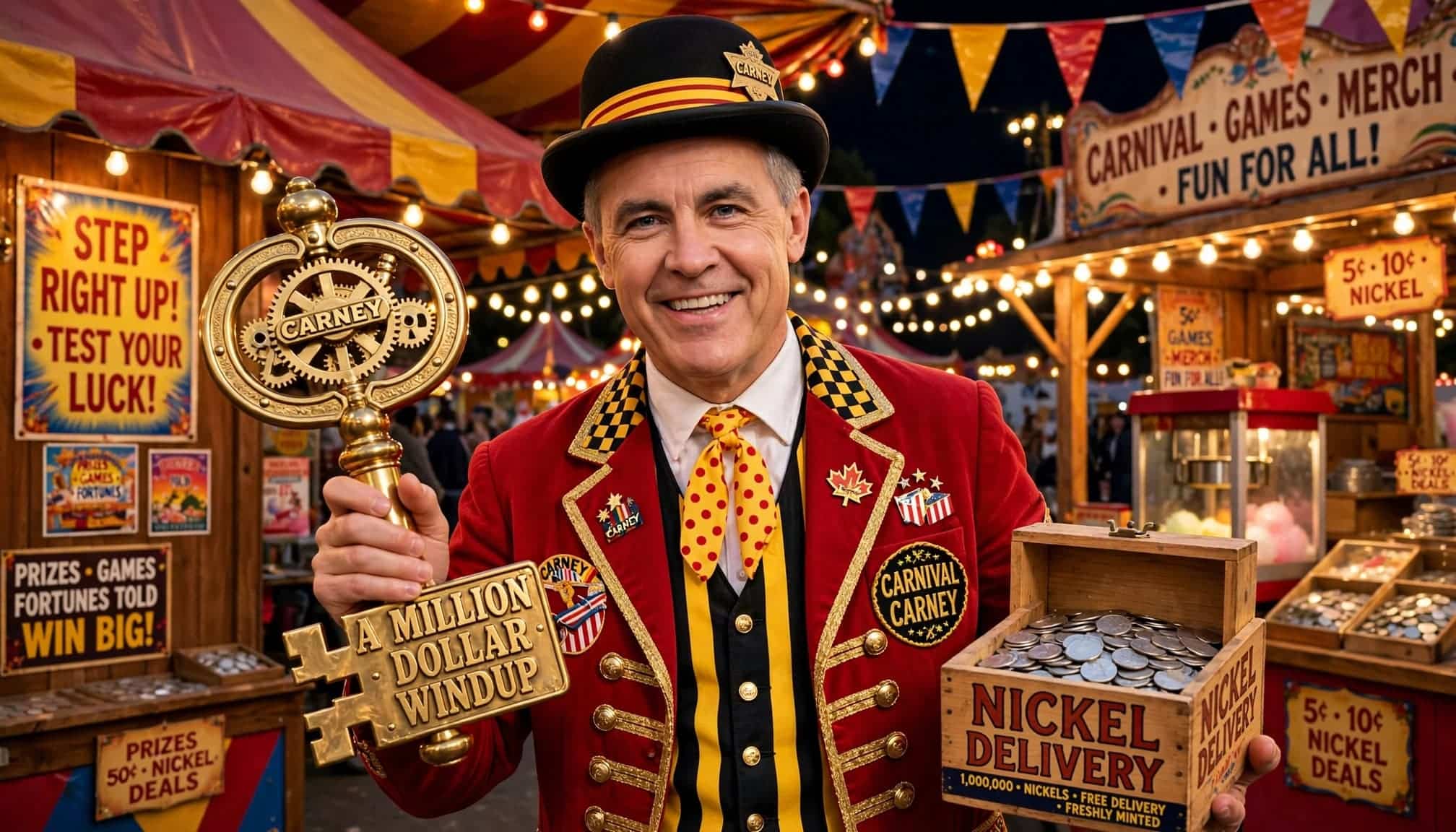
One young job seeker perfectly captured the mood of his generation during a recent local job fair. Expressing his deep disappointment with the Prime Minister, he did not hold back. “Carny is a good name, he’s like a carnival carney, he has a million dollar wind up and a nickel delivery,” the frustrated graduate remarked.
This colorful criticism highlights a growing perception that the government’s grand promises have failed to materialize into real-world results. The polished rhetoric of a former central banker is simply not paying the rent for young Canadians. They want tangible action, not just lofty economic speeches.
A Broken Promise on the Cost of Living
The cost of living crisis is undoubtedly the most pressing issue for young voters today. Prime Minister Mark Carney built his leadership campaign on his stellar reputation as a pragmatic economic manager. However, the reality on the ground feels drastically different for those struggling to buy groceries.
Another young unemployed worker recently voiced his sheer desperation in a viral interview with VORNews. His words echoed the sentiments of thousands of his peers across the country. “Mark Carney promised to fix our economy but since he’s been in office food prices have skyrocketed, the price of fuel is insane and our dollar is tanking,” the worker explained.
These are not isolated complaints from a fringe group of unhappy citizens. They represent a mainstream consensus among young Canadians who feel they are drowning in basic living expenses. When a trip to the grocery store induces panic, political loyalty quickly evaporates.
The Tanking Dollar and Global Pressures
The strength of the Canadian dollar has a direct impact on the daily lives of consumers. A weaker currency means imported goods, including essential groceries and winter clothing, become significantly more expensive. For young people living on tight budgets or dwindling savings, this loss of purchasing power is devastating.
Prime Minister Carney’s background in global finance was supposed to insulate Canada from these very shocks. Yet, many young voters feel the government is entirely disconnected from the struggles of the working class. The economic metrics that matter to the youth are not GDP growth, but the price of milk and gas.
This disconnect is driving a massive wedge between the Liberal government and a demographic they once heavily relied upon. Economic pressures are the absolute primary driver of this political dissatisfaction. Young Canadians are fundamentally unhappy with the current administration’s handling of their financial future.
Housing and the Death of the Canadian Dream
Perhaps no issue illustrates the generational divide better than the current housing crisis. Young people are far more anxious about housing costs than older, established generations. For decades, the Canadian dream involved working hard, saving up, and eventually buying a family home.
Today, that dream feels completely dead and buried for the vast majority of young adults. Home prices have outpaced incomes so significantly since the Liberals took power that homeownership is mathematically impossible for many. Even with a good salary, the down payment requirements in major cities are entirely out of reach.
Many young Canadians no longer believe homeownership is a realistic goal for their future. They are resigning themselves to a lifetime of renting, often in precarious or overcrowded situations. This forced shift in lifestyle expectations is a massive source of deep-seated resentment.
Affordability Defines the Generational Divide
The gap between property owners and renters has created a rigid class system in Canada. Older generations who bought property decades ago have seen their wealth explode entirely on paper. Meanwhile, young workers are handing over half their stagnant paychecks just to keep a roof over their heads.
This dynamic makes it incredibly difficult for politicians to bridge the gap with universal messaging. When Mark Carney speaks about protecting equity and maintaining market stability, young renters hear a commitment to keeping prices high. They want disruptive change that will actually lower the barrier to entry.
Recent housing market data clearly shows that affordability is at its absolute worst level in modern history. It is no wonder that young voters are aggressively rejecting the status quo. If the system cannot provide them with basic shelter, they see no reason to support the system.
A Shattered Social Contract
The psychological toll of this economic environment cannot be overstated or ignored. The traditional “social contract” dictates that getting an education and working hard should naturally lead to a stable, comfortable life. For the youth of 2026, this contract has been torn to shreds.
Young Canadians are reporting unprecedented levels of high anxiety about their immediate futures. They are putting their entire lives on hold because they simply cannot afford to move forward. Delayed family formation is becoming the norm, as couples postpone having children due to financial instability.
Happiness data and psychological surveys show a stark and depressing reality. Younger Canadians are consistently ranking much lower on happiness indexes than their older counterparts. They feel trapped in a cycle of endless work with zero prospect of actual financial advancement.
Economic Pessimism Takes Root
When a generation loses hope, the cultural and economic impacts are profound. Economic pessimism is spreading like a virus across university campuses and entry-level workplaces. Why strive for excellence when the reward is just barely surviving paycheck to paycheck?
This widespread pessimism is incredibly dangerous for the long-term health of the nation’s economy. Innovation and entrepreneurship require a base level of optimism and a willingness to take calculated risks. When young people are terrified of missing a rent payment, they do not start new businesses.
The Liberal government has severely underestimated the depth of this despair. Policy tweaks and modest tax credits feel like an insult to a generation facing systemic economic exclusion. They are demanding radical economic reforms, not just political tinkering around the edges.
Carney’s Pragmatic Pivot Falls Short
Mark Carney assumed leadership with a specific personal brand designed to project competence and stability. As a former central banker, his pragmatic approach appeals strongly to older and more economically focused voters. He promised adult supervision in Ottawa after years of perceived frivolous spending.
However, this exact brand is completely failing to resonate with the youth who are currently suffering. Some younger men appear to have warmed slightly to the Liberals relative to the latter Trudeau era. This is partly because Carney has intentionally shifted away from certain progressive, social-justice messaging.
Yet, this slight shift is nowhere near enough to offset the crushing weight of youth unemployment and housing costs. The youth are divided, but cost-of-living and housing remain the absolute dominant concerns across the board. Cultural politics have taken a back seat to sheer economic survival.
The Limits of Technocratic Leadership
Technocratic leadership relies on data, steady hands, and incremental improvements. But when youth unemployment hits 13 percent, young voters do not want steady hands; they want a lifeline. They view Carney’s measured responses as proof that he simply does not grasp the urgency of their crisis.
The Prime Minister’s speeches often focus on macroeconomic indicators and global investment flows. To a 23-year-old barista with a master’s degree, this language is entirely alienating and frustrating. It reinforces the “carnival carney” narrative—a leader full of high-level talk but lacking grounded delivery.
Overall government approval remains somewhat solid nationally, buoyed entirely by older homeowners and established professionals. But the Liberal coalition is fundamentally fracturing along strict generational lines. The youth vote that once powered the party to massive majorities has almost completely evaporated.
Conservatives Capitalize on the Discontent
In politics, a vacuum is always filled rapidly by the opposition. The Conservative Party has been actively and aggressively courting this specific demographic of discontented youth. They are doing so by relentlessly emphasizing the core issues of housing, jobs, and daily affordability.
Conservative messaging is laser-focused on the economic pain points of young Canadians. They are speaking directly to the 18-to-29-year-old demographic in language that validates their anger. They are promising to build homes, cut taxes, and unleash job creation in the private sector.
This strategy is clearly showing up in recent polling and widespread political commentary. The unhappiness is real, measurable, and highly motivated by economic frustration rather than cultural issues. Young voters are perfectly willing to switch their political allegiances if they believe it will lower their grocery bills.
A Historic Political Realignment?
We are potentially witnessing a historic realignment of Canadian political demographics. Traditionally, the youth vote has skewed heavily toward progressive and left-leaning parties. However, when economic survival is at stake, traditional ideological loyalties break down very quickly.
The Conservatives are successfully pitching themselves as the party of the working class and the economically disenfranchised youth. By focusing on the tangible failures of the Carney administration, they are capturing the protest vote. Young people feel they literally have nothing left to lose by trying a different approach.
If this trend solidifies, it could alter the Canadian political landscape for the next two decades. A generation that enters its prime voting years feeling betrayed by the Liberals will be hard to win back. The political consequences of a 13 percent youth unemployment rate are going to be massive.
The Regional Impact of Job Losses
The pain of this youth unemployment crisis is not distributed evenly across the vast Canadian landscape. Certain regions are experiencing even steeper declines in entry-level job opportunities than the national average suggests. Resource-heavy provinces and manufacturing hubs are seeing hiring freezes that disproportionately hurt young men.
Conversely, major urban centers like Toronto and Vancouver are seeing a different kind of crisis. Here, young professionals are finding jobs, but the wages fall brutally short of the astronomical living costs. Even those who are technically employed feel like they are constantly losing ground financially.
This regional disparity requires a nuanced economic approach that the current government is struggling to provide. Blanket national policies often fail to address the specific localized challenges young workers face. The result is a patchwork of economic misery that unites young Canadians in their shared frustration.
Rural Youth Left With Few Options
For young people living in rural or smaller communities, the situation is increasingly dire. The flight of capital and businesses to larger hubs has left these areas with incredibly sparse job markets. Youth are often forced to choose between leaving their families for the city or remaining unemployed at home.
This forced migration hollows out rural communities and adds intense pressure to urban housing markets. It is a vicious cycle that government policies have entirely failed to interrupt or reverse. The 67,000 jobs lost recently hit these fragile local economies with devastating force.
When a small town loses its primary employer, the youth are always the first to be let go. Their lack of seniority makes them vulnerable, and their lack of savings makes the ensuing unemployment catastrophic. They are crying out for targeted investments that just are not materializing.
The Education Trap and Student Debt
Compounding the unemployment crisis is the massive burden of student debt carried by recent graduates. Young Canadians did exactly what society asked of them by pursuing higher education. Now, they are graduating into a labor market that outright rejects their credentials.
Having to service heavy student loans while surviving on part-time or minimum-wage work is a mathematical nightmare. The interest accumulates, credit scores plummet, and financial independence becomes a distant fantasy. This “education trap” is fueling a massive wave of resentment toward academic and political institutions.
Many young people feel they were sold a false bill of goods by a system that profited from their tuition. They are demanding debt relief, interest freezes, and a fundamental rethinking of how education is funded. So far, the government’s response has been seen as woefully inadequate.
Skills Mismatch or Economic Failure?
Some economists argue that the high youth unemployment rate is partly due to a skills mismatch in the labor market. They claim young people are not training for the trades or technical fields where jobs actually exist. However, this narrative is fiercely rejected by young workers and labor advocates alike.
They point out that even in highly specialized fields, entry-level positions demand unreasonable years of prior experience. Companies are refusing to invest in training new graduates, preferring to import experienced talent or automate tasks. The burden of training has been entirely shifted onto the shoulders of young applicants.
This structural failure in the labor market cannot be blamed on the youth. It is a failure of corporate investment and government regulation. Prime Minister Carney’s administration must find a way to incentivize companies to actually hire and train young Canadians again.
Mental Health Crisis Worsens
The direct correlation between prolonged unemployment and deteriorating mental health is well documented by health experts. For a demographic already struggling with post-pandemic anxiety, this economic downturn is a massive psychological blow. Clinics are reporting surges in young adults seeking help for depression linked directly to financial stress.
The stress of job hunting in a broken market is incredibly isolating and deeply demoralizing. Every rejection email chips away at a young person’s self-worth and confidence. When this personal struggle is multiplied by 13 percent of the youth population, it becomes a severe public health crisis.
The Liberal government has heavily promoted mental health awareness initiatives in the past. However, young people are quick to point out that therapy cannot cure poverty or pay the rent. They need economic stability, not just toll-free hotlines to discuss their financial ruin.
A Generation Looking for Leadership
Ultimately, what young Canadians are desperately seeking is genuine, empathetic leadership that produces real results. They do not want another slick slogan or a patronizing explanation of global economic headwinds. They want a government that treats their economic survival as an absolute national emergency.
Prime Minister Mark Carney is facing a defining test of his political career right now. The youth vote is slipping through his fingers, driven away by skyrocketing costs and evaporating opportunities. If he cannot offer a million-dollar delivery to match his wind-up, the Liberal government will face a harsh reckoning at the polls.
The 13.0 percent youth unemployment rate is not just a statistic on a government spreadsheet. It represents hundreds of thousands of deferred dreams, broken promises, and very angry young citizens. Canada’s youth are officially fed up, and they are preparing to make their voices heard loud and clear.
Trending News:
Mark Carney Faces Ethics Backlash Over Heat Pumps
Why Doesn’t Canada Have a U.S. Trade Deal Yet? Why is Mark Carney Stalling?
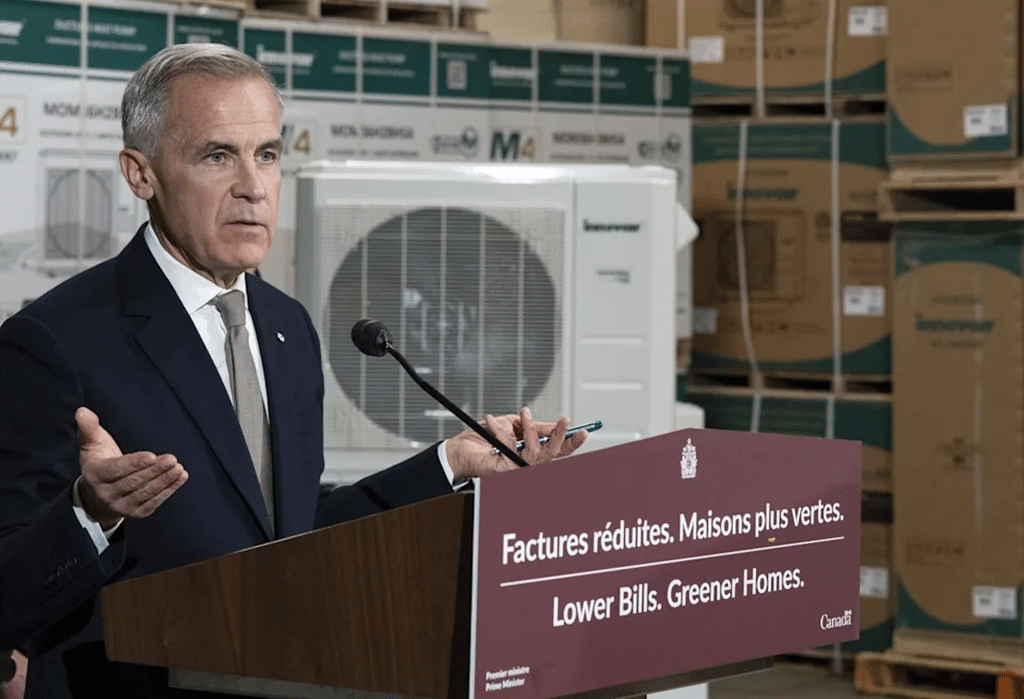
OTTAWA – The Canadian House of Commons has erupted into political chaos this week. Conservative lawmakers are launching heavy accusations against Mark Carney and the Liberal government. They are claiming a massive conflict of interest involving taxpayer funds.
The controversy centers around a new $2 billion public subsidy for residential heat pumps. Critics argue that this policy directly enriches companies connected to Carney’s personal investment portfolio. The ethical storm is threatening to damage public trust ahead of the next federal election.
Key Takeaways
- Conflict of Interest Claims: Mark Carney faces intense scrutiny over a $2 billion heat pump subsidy that allegedly benefits his financial assets.
- Deep Corporate Ties: Carney holds financial interests in Brookfield, Train Technologies, and Schneider Electric, which all operate in the green energy sector.
- Rising Unemployment: The political scandal coincides with severe economic distress, as Canada recently shed 68,000 jobs in just one month.
Deep Financial Ties Raise Alarm
The core of the issue lies in Mark Carney’s extensive financial portfolio. The former central banker currently holds shares in several major green energy corporations. These include Train Technologies and Schneider Electric, both of which manufacture heat pumps.
Furthermore, Carney holds deferred share units and options in Brookfield Corporation. Brookfield Asset Management is a massive global investment firm with vast resources. This firm owns Enterare, a prominent company that actively sells and installs residential heat pumps across Canada.
Conservative leaders argue that this financial setup is a severe breach of public trust. They point out that the Prime Minister’s office is funneling billions of dollars into a specific sector. Meanwhile, key political insiders are perfectly positioned to profit from these subsidized sales.
You can verify some of these corporate ownership structures through financial platforms like Fintel. Records show Brookfield holds millions of shares in Train Technologies. This complex web blurs the line between public policy and private profit.
Conservatives Demand Strict Accountability
In the House of Commons, Conservative MPs did not hold back their frustration. John Brassard loudly criticized the Prime Minister and Mark Carney during a heated session. He described the situation as undeniable cronyism and blatant self-dealing at the highest levels of government.
Brassard stated that the conflict of interest is completely obvious to the average citizen. He questioned how Canadians are supposed to believe this financial overlap is merely a coincidence. The political opposition is demanding immediate transparency and ethical accountability from the ruling party.
Other Conservative voices echoed this intense frustration throughout the parliamentary debates. They accused the government of using the power of the Prime Minister’s office to line the pockets of political elites. The attacks were relentless and highly coordinated across multiple languages.
Interestingly, Liberal ministers have completely avoided using the phrase “conflict of interest” during their public rebuttals. This tactical avoidance has only fueled the opposition’s aggressive line of questioning. The controversy continues to heavily dominate the daily political news cycle.
Liberals Defend The Green Strategy
Despite the heavy criticism, the Liberal government strongly defends the heat pump subsidy. They argue that the $2 billion program is specifically designed to help struggling families. Ministers claim the initiative will save the average household roughly $1,400 a year on their energy bills.
The Minister of Environment stepped up to defend the green program during the debates. She accused the Conservatives of engaging in cheap character assassination instead of focusing on actual policy. She insisted that the government is simply trying to lower daily living costs for Canadians.
Liberal representatives like Kevin Lamoureux also brought high energy to the political defense. They pointed to the government’s economic record over the past 18 months. They highlighted major infrastructure projects and targeted tax breaks meant to boost the struggling national economy.
However, critics remain highly skeptical of these costly environmental initiatives. They argue that heat pumps are often ineffective during harsh Canadian winters when temperatures drop well below freezing. Many homes still require a reliable backup heating source like natural gas or wood.
The Push For Total Electrification
The political push for heat pumps is part of a much larger national strategy. The government wants to move as many citizens as possible away from fossil fuels and toward electricity. This green mandate includes heavily promoting electric vehicles alongside residential heat pumps.
Critics suggest that this massive societal shift heavily benefits corporate giants like Brookfield. These investment companies have deeply cornered the financial market on carbon credits and green infrastructure. When citizens are forced to use electricity, these select corporations stand to make billions.
The ongoing geopolitical conflict in the Middle East is also playing a role in this transition. Rising global oil prices make grid electricity seem like a cheaper alternative in the short term. However, the long-term maintenance costs of dual-heating systems remain a major concern for homeowners.
Many Canadians are already struggling to afford basic daily necessities like groceries and rent. One in four Canadians is reportedly skipping meals just to make ends meet. For these struggling families, a government-subsidized heat pump feels like a completely disconnected luxury.
Canada Faces Harsh Economic Reality
While politicians argue over heat pump subsidies, the Canadian economy is showing signs of severe strain. Recent reports from The Globe and Mail confirm that Canada unexpectedly shed 68,000 jobs in September alone. The national jobless rate has now climbed to a highly concerning 6.5 percent.
This sudden drop in widespread employment is sending shockwaves through the entire country. When combined with August’s numbers, the Canadian economy has lost a staggering 110,000 jobs in just two months. The national labor force participation rate has hit a devastating 29-year low.
Youth unemployment is also surging rapidly, recently hitting a painful 13 percent. A smaller percentage of Canadians are working today than at any point in nearly three decades. Many hardworking citizens are simply losing hope in the current political and economic system.
Conservative MP Garnett Genuis brought these grim statistics directly to the House floor. He demanded that the government immediately answer for these devastating job losses. He asked when the Liberals would reverse policies that are clearly making everyday Canadians much poorer.
Job Losses Hit Certain Provinces Hard
The severe employment crisis is not distributed evenly across the entire country. The latest data reveals a very concerning regional divide in the Canadian job market. Certain provinces are bleeding jobs at an alarming rate while others see slight employment gains.
Quebec has been hit the absolute hardest, losing an incredible 49,000 jobs recently. British Columbia and Ontario also suffered heavily, with each province losing roughly 20,000 respective jobs. Meanwhile, Alberta was the only major bright spot, adding 23,000 jobs to its local economy.
The Liberal government continues to blame this economic volatility on global trade wars. The Minister of Finance argued that global tariffs and international disputes are deeply hurting local employment. They claim to heavily empathize with blue-collar workers who are struggling to keep their jobs.
However, critics quickly argue that these job losses started long before any recent trade wars began. They blame massive government spending, carbon taxes, and heavy business regulations for crushing private industries. The intense debate over how to fix the broken economy is only growing more hostile.
A Growing Crisis Of Public Trust
The toxic combination of ethical scandals and severe job losses is creating a perfect political storm. The Canadian public is growing increasingly tired of stubborn inflation and reckless government debt. People are demanding serious solutions from their elected leaders, not more empty political theater.
The $2 billion heat pump program has quickly become a massive symbol of this everyday public frustration. To the political opposition, it represents everything inherently wrong with the current federal administration. They see it as a clear case of political insiders illegally enriching themselves at the public’s expense.
As the next major election season slowly approaches, this specific controversy will likely remain a central issue. Mark Carney’s extensive financial ties will continue to face extreme scrutiny from both the media and the public. The Liberal government must find a way to restore public confidence quickly before voters head to the polls.
For now, the House of Commons remains fiercely divided on these critical economic issues. Everyday Canadians are left watching the political chaos unfold while desperately trying to manage their own shrinking household budgets. The national demand for ethical leadership and real economic relief has truly never been higher.
Trending News:
Mark Carney’s Pipeline and Pathways Deal Ignites Taxpayer Controversy
If Mark Carney is So Pro Canada Why Are 91% of His Investments U.S.-Based

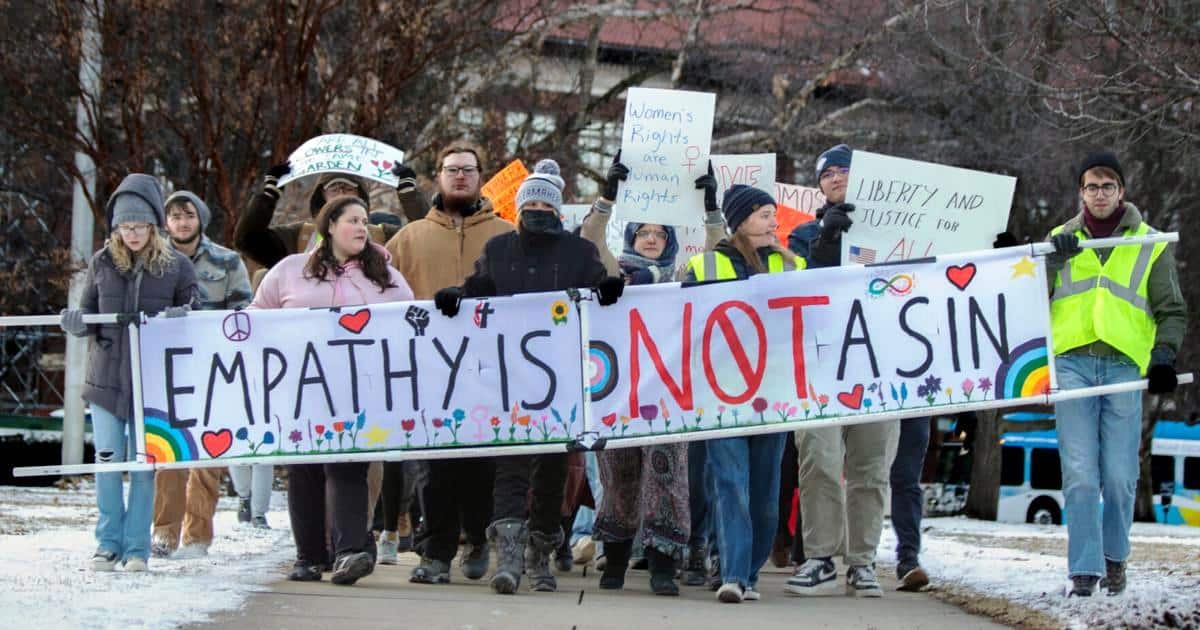
Western society has spent the last decade caught in a heated, highly emotional debate with regards to empathy. People are constantly arguing about whether deep empathy should be our ultimate core value. Some cultural leaders praise it as a vital superpower, while others dismiss it as a dangerous pathology.
This ongoing debate recently reached a massive boiling point in the modern public eye. Books on the topic are currently topping non-fiction bestseller lists all around the world. Meanwhile, famous celebrities and powerful tech billionaires are actively clashing over the true meaning of modern compassion.
Key Takeaways
- Modern political empathy is often used as a moral shield rather than a genuine tool for understanding others.
- Many social policies marketed as pure compassion have actually resulted in negative, measurable real-world consequences.
- Famous historical philosophers constantly warned that abstract pity usually masks deep personal narcissism and a desire for control.
The Billionaires and the Hollywood Elite
In May, author Gad Saad released a highly controversial book titled “Suicidal Empathy.” The provocative book quickly climbed the ranks and went straight to the top of the New York Times bestseller list. This sudden public popularity signaled a massive cultural shift in mainstream political thinking.
Billionaire Elon Musk quickly championed the controversial book on his massive social media platform. He had previously told popular podcast host Joe Rogan that empathy is the fundamental weakness of Western civilization. Musk genuinely believes that unchecked political compassion will inevitably lead to total societal collapse.
However, many influential Hollywood figures strongly disagree with this incredibly harsh and pessimistic assessment. Actor John C. Reilly recently stated the exact opposite in a widely shared public interview. He firmly argued that empathy is absolutely not a trap, but rather a profound human superpower.
The Viral Speech of Anne Hathaway
Recently, a resurfaced video clip of actress Anne Hathaway went incredibly viral across social media. She was speaking passionately at a very high-profile Human Rights Campaign charity dinner. During her emotional speech, she made some very sweeping claims about the structure of modern society.
Hathaway loudly declared that her exact birth circumstances placed her at the center of a damaging cultural myth. She argued that gayness is socially forced to constantly orbit around traditional straightness. Furthermore, she emphatically stated that all minority races are forced to orbit around historical whiteness.
She elegantly closed her speech with a very intense and highly dramatic promise to the captive audience. Hathaway vowed that her wealthy peers would not merely question this damaging cultural myth. Instead, she loudly promised the entire room that they were going to completely destroy it.
When Compassionate Policies Face Harsh Reality
We no longer need to rely purely on grand political rhetoric to settle this ongoing cultural debate. The progressive social policies built on this modern version of empathy now have a very clear track record. Unfortunately, that public record has proven to be quite disastrous in many major metropolitan areas.
For example, safe supply drug programs were originally designed to carefully help highly vulnerable populations. Instead, these costly initiatives have often drastically worsened local addiction rates and downtown homelessness. Cities across the entire country are now desperately struggling to manage these unintended negative consequences.
Similarly, lenient bail and relaxed sentencing reforms were introduced with very noble and good intentions. Optimistic lawmakers wanted to create a significantly fairer and much more compassionate criminal justice system. However, these sweeping changes arrived directly alongside a massive, undeniably destructive wave of urban violent crime.
The Economic Impact on Local Communities
Mass migration policies were also fundamentally built on the lovely promise of boundless global empathy. Yet, these rapid demographic shifts have severely fragmented many traditional, blue-collar working-class communities. Top news outlets like The Wall Street Journal have reported extensively on the heavy economic strain these policies cause.
This rapid population influx has aggressively driven up the basic cost of living in almost all major cities. At the exact same time, it has effectively suppressed hourly wages for the absolute lowest-earning local workers. The struggling people who were originally supposed to heavily benefit are now facing even harder economic times.
Additionally, billions of federal tax dollars have been generously administered on behalf of marginalized indigenous communities. These massive public funds were desperately meant to fix historical wrongs and show true societal empathy. Yet, they have absolutely not fundamentally improved the material living conditions on most poor rural reserves.
Sweeping Massive Political Failures Under the Rug
Another highly controversial area involves young teenagers actively struggling with severe gender dysphoria. Many confused young people were very quickly given life-altering prescription hormones by modern medical professionals. However, this was routinely done on a flimsy scientific evidence base that was never properly established.
These radical policies were all heavily marketed to the trusting public as acts of pure compassion. The passionate creators promised voters that they would easily fix deep, historical societal inequalities. Yet, they have clearly produced almost no tangible, positive societal benefits for the average struggling citizen.
Instead of honestly facing these catastrophic public disasters, many elected leaders are simply hiding them away. These massive, undeniable political failures are now being quietly swept entirely under the rug. Arrogant politicians absolutely do not want to publicly admit that their highly empathetic ideas backfired terribly.
Reframing the Original Political Motive
Some sensible local jurisdictions are slowly starting to finally reverse their legal courses on these complex issues. However, it genuinely seems that almost none of the original policy architects are learning the real lesson. They still stubbornly believe their grand original ideas were completely flawless and morally perfect.
The comforting takeaway for voters would be that these leaders just had genuinely good intentions. We desperately want to believe they operated inside a highly rational worldview to help suffering people. We often safely assume they simply failed the poor people they desperately meant to save.
However, we might need to totally reframe the true psychological motive behind these failed social policies. When you look closely at the results, you could easily argue that these political leaders actually succeeded. Their real underlying goal was never about helping, but rather about entirely destroying the current social system.
The Ultimate Goal of Cultural Destruction
Consider exactly how actress Anne Hathaway boldly finished her viral, highly publicized political speech. The ultimate long-term goal she proudly named to the cheering crowd was pure cultural destruction of the norm. She did not politely ask for slow reform, communal healing, or building a slightly better alternative.
Therefore, the ongoing failure of each individual progressive social policy is now entirely undeniable to voters. The tragic, depressing results are highly visible on the littered streets of nearly every major Western city. Yet, the dangerous, destructive worldview that produced all of them stubbornly remains in full effect today.
Until we completely strip the shiny moral cover of empathy away from this worldview, absolutely nothing will change. This radical ideology will keep conjuring entirely new, creative ways to destroy the societal status quo. It will simply keep falsely marketing its incredibly destructive political goals as profound, saintly human compassion.
The False Historical Quote of Hannah Arendt
Many modern cultural critics have contrasted Elon Musk’s harsh warning with a very famous historical quote. People online often share a quote mistakenly attributed to Hannah Arendt, the great philosopher of totalitarianism. They wrongly claim she once said that the death of human empathy leads directly to societal barbarism.
However, there is one very large and incredibly embarrassing problem with this highly viral internet quote. Absolutely nobody on the internet can actually produce a real, verifiable historical source for it. It simply does not exist anywhere within any of her heavily published philosophical writings.
We cannot even generously call this fake internet quote a simple fib or a loose historical paraphrase. It is actually much closer to a complete, intentional anti-truth meant to manipulate modern readers. It is a total, bizarre inversion of what Arendt actually believed and wrote about during her lifetime.
The Real Philosophy of Hannah Arendt
Hannah Arendt actually wrote about this exact political topic at great length during her incredible academic career. She actually powerfully argued something dangerously close to the exact opposite of that fake viral quote. In her brilliant book “On Revolution,” she famously contrasted the historical American and French revolutions.
Arendt asked a very brilliant, deeply probing question about these two massive historical political events. Why did the famous American Revolution finally produce a very stable, highly functioning democratic republic? And why did the French Revolution quickly produce a horrifying, incredibly bloody reign of terror?
Her historical answer was incredibly insightful and highly relevant to our current, deeply polarized political climate. The American founding fathers focused heavily on carefully building a pragmatic, stable government of strict laws. They relied entirely on realistic checks and balances rather than grand, sweeping emotional political gestures.
The Highly Dangerous Politics of Pity
The French revolutionaries, however, were entirely different in their radical approach to building a new government. They were much more concerned with totally reorganizing human society from the absolute ground up. They desperately wanted to violently enact a perceived form of absolute, perfect social justice.
Instead of carefully using pragmatic political thought, the French Jacobins used raw, untamed human emotion. They successfully implemented what philosopher Hannah Arendt perfectly called a highly toxic “politics of pity.” She deeply understood that this political pity is absolutely not the same thing as true compassion.
Pity inherently relies on the dramatic, highly visible spectacle of deep human suffering in the streets. It is always observed safely from afar by those who do not actually suffer themselves. This quickly creates a terrible, deeply unequal dynamic between the fortunate elites and the unfortunate masses.
The Deep Arrogance of the Empathetic Elite
This twisted dynamic eventually creates a toxic social hierarchy where the pitier gets to feel incredibly morally superior. A very moralizing, highly judgmental brand of strict politics is quickly created directly from this arrogant feeling. This new, emotional system completely ignores the established rule of law and basic universal principles.
Arendt boldly argued that this exact pity is what allowed Maximilien Robespierre to easily justify his bloody terror. His desperate, overwhelming desire to eradicate the suffering of the masses was incredibly dangerous to society. It totally overrode any basic societal respect for individual human rights or standard legal procedures.
She had actually made a brilliant version of this exact same argument many years earlier in her career. In her definitive work on terrifying totalitarianism, she discussed the immense danger of speaking for the oppressed. Once you arrogantly see yourself as speaking on their behalf, you quickly replace them entirely.
Redefining True Empathy in the Modern Age
You are absolutely no longer speaking to the suffering people, but rather speaking directly for them. This historical reality brings us right back to the modern, highly weaponized concept of political empathy. It perfectly explains why empathy is not an accurate description of modern progressive political motivations.
The modern, wealthy preachers of ultimate equality justify their radical beliefs by constantly appealing to public empathy. However, it genuinely seems they do not even truly understand what the word actually means anymore. The Merriam-Webster Dictionary officially defines empathy as truly understanding, safely sharing, and experiencing the feelings of another.
That basic definition is simply not what modern political elites and wealthy progressives are actually doing. They do not truly understand the struggling working-class people they constantly claim to care so much about. Instead, they just lazily project their own idealized, extremely wealthy version of themselves onto everyone else.
The Total Illusion of Understanding Others
These wealthy political elites assume that absolutely everyone on Earth naturally shares their highly specific, cultured values. They then easily treat that incredibly false, arrogant assumption as a deep form of spiritual empathy. They look at a struggling person from a developing nation and happily think, “They are just like me.”
They do this constantly with absolutely zero real, foundational understanding of that foreign person’s complex culture. The absolute best example of this is not even a deep moral issue, but a simple practical one. For instance, some radical people loudly claim it is highly racist to suggest newcomers might struggle with local driving laws.
However, driving cultures and local road rules naturally vary wildly across the entire diverse globe. Someone who spent their whole life driving in the chaotic, crowded streets of a foreign nation has drastically different habits. They will not instantly internalize all complex Western driving etiquette the very moment they finally arrive.
Adam Smith and the Human Chess Pieces
To truly, genuinely empathize with these nervous newcomers would be to honestly understand their incredibly unique experience. It would lead you to quickly and safely recognize that their cultural background is quite different from your own. None of this modern revolutionary, leftist empathy actually survives a real, brutal collision with actual reality.
The famous, highly influential historical economist Adam Smith famously argued that complex human feelings simply do not scale up. He heavily warned the trusting public about the highly dangerous “man of system” in national politics. This is a powerful political leader who is terribly pleased with his own incredibly noble ideas for society.
This arrogant leader wrongly thinks he can effortlessly arrange regular people on a board exactly like little wooden chess pieces. He completely forgets that the living human pieces he is carelessly rearranging have deeply complex emotions. They have their own unpredictable motions, daily desires, and deep cultural habits that simply cannot be ignored.
The Inevitable Total Breakdown of the Game
Believing you can just carelessly take people deeply inculcated in their own incredibly unique society is foolish. You absolutely cannot expect them to easily drop their deeply learned social norms and distinct community behaviors. Importing them into a totally different culture with absolutely no negative consequences is simply a childish, dangerous fantasy.
It is strongly and undeniably akin to trying to illegally move a simple pawn horizontally on a wooden chessboard. If you completely ignore the basic, foundational rules of human nature, the entire political game quickly breaks down. You absolutely cannot force stubborn reality to easily bend to your own grand, sweeping emotional theories.
The great, highly respected Russian author Fyodor Dostoevsky beautifully depicted this exact psychological issue in his famous novels. One of history’s greatest, most insightful writers deeply understood the tragic, fatal flaw of abstract political pity. He absolutely knew that love in empty dreams and grand political ideals is incredibly greedy and ultimately useless.
The Dangerous Trap of Abstract Love
Abstract, theoretical love is very good for easily winning cheap public applause, but it does very little else. True, meaningful love, on the other hand, requires incredibly difficult daily action and immense personal patience. It is incredibly easy to proudly say that one must always love humanity in the abstract.
It is very easy to preach loudly about boundless love in a comfortable, safe college political theory class. However, it is much more difficult to actually practice this when face-to-face with a highly annoying local neighbor. Real, breathing people are often deeply, fundamentally flawed and incredibly hard to genuinely love on a daily basis.
This is the absolute, undeniable totality of the modern leftist revolutionary spirit operating in politics today. They have endless, boundless love and deep care in the safe, abstract realm of grand ideas. Yet, that profound, supposedly life-changing care is almost never actually actualized in the real, incredibly messy world.
The Dark Hypocrisy of Jean-Jacques Rousseau
The highly influential, wildly famous historical leftist Jean-Jacques Rousseau is a perfectly tragic example of this exact flaw. His influential philosophical work famously and permanently birthed the deeply flawed “noble savage” myth into Western culture. He incredibly even wrote an entire massive, detailed book on how to properly raise and educate a perfect child.
However, his actual, hidden personal life eventually revealed a very dark and incredibly hypocritical truth to the world. Rousseau actually cruelly abandoned all five of his own biological children to a bleak, miserable local orphanage. He preached beautifully to the world about perfect childcare while completely failing his own deeply innocent offspring.
Psychological projection and a deep, unshakeable superiority complex explain this common phenomenon much better than true, genuine empathy. A stubborn political worldview that strongly persists despite its unending, highly visible list of failures is very dangerous. It is clearly not interested in discovering the objective truth, but solely in acquiring and keeping raw power.
Blindly Ignoring the Clear Policy Failures
Consider exactly how these modern, wealthy leftists respond to the total, undeniable breakdown of their own progressive policies. They absolutely never simply believe that their grand, sweeping theory of total multiculturalism actually failed the public. Instead, they loudly claim they just did not forcefully implement it hard enough on the unwilling population.
They firmly claim they did not sufficiently propagandize the stubborn host nation into accepting forced, artificial compassion. They completely refuse to admit that eagerly promoting untested, dangerous medical interventions on confused youth might be a mistake. Instead, they loudly argue that traditional society just did not aggressively normalize their radical, progressive ideas enough.
When highly expensive safe supply drug programs fail, they absolutely do not rethink their basic, foundational strategy. They loudly argue that the disastrous, deadly program was simply not scaled up enough with infinite taxpayer money. They wrongly believe that decriminalizing violent crime isn’t a bad idea, but that criminals just need more free public things.
Friedrich Nietzsche’s Warning on Pathological Softness
The famous, highly controversial historical philosopher Friedrich Nietzsche actually put this exact concept into his own brilliant words. He perfectly described this precise, dangerous idea nearly a massive century and a half before Gad Saad finally did. In his legendary, highly studied book “Beyond Good and Evil,” he clearly writes about a crumbling, dying society.
He perfectly describes a failing culture grown so pathologically soft and tender that it eventually destroys itself completely. It slowly begins to foolishly and blindly side even with the very violent criminals who actively harm it. Once a grand civilization reaches this truly tragic stage, Nietzsche noted, lazy mediocrity becomes the absolute highest public achievement.
Anyone who proudly raises themselves above the lazy, unthinking herd or slightly intimidates their neighbor is immediately declared totally evil. A short year later, in the “Genealogy of Morals,” Nietzsche brilliantly took this profound thought even further. He deeply described a manipulative character known simply as the highly dangerous “ascetic priest.”
The Rise of the Manipulative Ascetic Priest
This clever priest figure absolutely does not actually cure the very real suffering of the weak, desperate masses. Instead, he simply redirects their deep emotional pain and cleverly uses it to his own massive personal benefit. He gladly gives the hopeless, angry sufferer a highly convenient political scapegoat to constantly and aggressively blame.
Meanwhile, the manipulative priest’s own immense political authority naturally grows in exact proportion to how totally sick his subjects stay. True, genuine empathy cannot possibly explain a terrible moral system that actively harms those it loudly claims to serve. However, raw human envy and deep, unshakeable political resentment definitely explain it absolutely perfectly.
The brilliant author George Orwell saw the exact same dark, twisting pathology play out in his own historical era. In his classic, highly regarded book “The Road to Wigan Pier,” he extensively wrote about wealthy, middle-class socialists. He astutely noted that while theoretically pining for a perfect classless society, they behaved very differently in actual reality.
Clinging Desperately to Elite Social Prestige
These wealthy socialists would desperately and pathetically cling like superglue to their miserable little fragments of high social prestige. Elsewhere in that very same highly insightful chapter, Orwell casts deep, serious doubt upon their true, hidden motives. He strongly questions the popular notion that the intellectual, wealthy socialist is actually driven by a genuine love of anybody.
He astutely noted that they are completely, physically removed from the gritty working class they loudly claim to passionately defend. Modern, popular author Rob Henderson has recently created a brilliant psychological framework that helps perfectly build on Orwell’s sharp observation. Henderson highly accurately calls these modern, destructive progressive ideas by the perfect name of “luxury beliefs.”
Luxury beliefs are essentially elite opinions and grand ideas that confer incredibly high social status upon those who hold them. However, these exact same popular beliefs directly and violently harm the actual people lower down on the socioeconomic ladder. The Atlantic frequently covers exactly how these elite, wealthy opinions often totally disconnect from brutal, working-class realities.
The Tragedy of Modern Luxury Beliefs
A truly perfect modern example that Henderson frequently and effectively uses is the infamous “defund the police” political movement. Upper-middle-class, highly educated wealthy white citizens loudly supported the radical, dangerous idea online and in the mainstream media. They safely lived in heavily guarded, gated neighborhoods extremely far away from the brutal, bloody real-world consequences.
Meanwhile, completely impoverished minorities were the vulnerable ones who truly and deeply suffered the absolute most from this terrible idea. They were the true, bloody victims of the totally unchecked violent urban crime that immediately followed the disastrous policy change. This terrible dynamic clearly and undeniably shows dark elite resentment cleverly masquerading as genuine, helpful public empathy.
Many everyday, hardworking people have unfortunately experienced this highly toxic fake empathy firsthand in their own daily lives. When you politely disagree with a supposedly highly empathetic wealthy elite, their kind, loving mask inevitably drops instantly. They very quickly resort to brutal, highly classist insults to desperately protect their own fragile, high social standing.
The Mask of Empathy Finally Drops Completely
Consider a highly common scenario where a very wealthy modern socialist is fiercely debating a struggling working-class individual online. The wealthy socialist loudly claims to want a totally new, perfect society entirely reorganized around helping the people at the absolute bottom. They preach constantly and loudly about generously lifting up the deeply uneducated and the truly poor.
However, the exact moment the working-class person bravely disagrees with their grand, sweeping political theories, the friendly tone drastically changes. The angry socialist will very often use the person’s lower education level or meager income as a direct, brutal insult. They will aggressively try to painfully place the dissenter at the very bottom of society to aggressively discount their totally valid perspective.
This is exactly why the term “suicidal narcissism” describes this highly toxic modern political behavior much better than “suicidal empathy.” It is genuinely and truly suicidal even for the wealthy elites, as they are actively, blindly destroying their own host society. They sit incredibly comfortably on top of a grand structure while blindly and arrogantly eroding the foundational safety layers beneath them.
The Devastating Long-Term Consequences of Narcissism
The immediate social status payoff for publicly holding these highly destructive luxury beliefs is incredibly swift and highly rewarding. The wealthy elites get instant, glowing praise and loud applause from their wealthy peers at incredibly fancy, exclusive dinner parties. However, the inevitable, total cultural collapse that ultimately and undeniably follows takes many long decades to fully realize.
They eagerly get absolutely all of the wonderful short-term personal benefits of sounding wonderfully compassionate and highly caring to their friends. Meanwhile, they are carelessly and aggressively collectivizing the long-term, devastating downfall of their entire once-great Western civilization. They are cruelly forcing the absolute poorest among us to finally pay the ultimate, bloody price for their endless elite vanity.
In the end, we as a society must finally learn to safely separate real, demanding human compassion from cheap, performative political pity. True, genuine empathy constantly requires brutal honesty, incredibly difficult personal boundaries, and a brave willingness to face very harsh daily realities. Anything less than that is simply a highly dangerous, totally destructive public exercise in hidden, elite narcissism.
Frequently Asked Questions (FAQ)
What is “suicidal empathy”?
Suicidal empathy is a highly critical term recently popularized by modern author Gad Saad. It perfectly describes a cultural condition where a society becomes so totally obsessed with appearing wonderfully compassionate that it implements terrible policies that ultimately harm or completely destroy the host society itself.
How did Hannah Arendt view political pity?
Hannah Arendt strongly believed that raw political pity is incredibly dangerous to a functioning society. She brilliantly argued that it heavily relies on the dramatic spectacle of public suffering and quickly creates a highly toxic moral hierarchy. This terrible dynamic often allows arrogant leaders to easily bypass standard laws and basic human rights in the name of a grand, sweeping emotional cause.
What are “luxury beliefs”?
Modern author Rob Henderson intelligently coined the term “luxury beliefs” to perfectly describe ideas that give high social status to the wealthy elites who publicly hold them, but inflict terrible real-world harm on lower-income individuals. The disastrous “Defund the police” movement is a highly common and frequently cited example of a dangerous luxury belief.
How is true empathy different from modern political empathy?
True, genuine empathy naturally involves genuinely attempting to honestly understand and safely share the exact personal feelings of another struggling person. Modern political empathy very often involves arrogantly projecting one’s own wealthy values onto a marginalized minority group without actually trying to deeply understand their highly unique culture or harsh daily struggles.
Why do critics argue this behavior is actually narcissism?
Cultural critics firmly argue it is actually deep narcissism because the primary, hidden goal seems to be gaining high social status and feeling incredibly morally superior to others. When the supposedly “empathetic” public policies inevitably fail, the proud leaders often totally refuse to change course, effectively proving they naturally care much more about their own pristine elite image than actual, helpful results.
Trending News:
How Progressivism Replaced Religion With A New Secular Faith
Behind Carney’s $1-Trillion Canada Investment Scheme


H1-B Visa Crackdown Rocks Big Tech and India

Millions of Shoppers Boycott Real Canadian Superstore

Legacy Media Protects Carney After Canada Lost 68,000 Jobs

Mark Carney’s Million Dollar Wind Up and Nickel Delivery

Mark Carney Faces Ethics Backlash Over Heat Pumps

Quebec Election 2026: Will the Province Leave Canada?

Why Alberta Separatist Leaders Say It’s Time to Leave Canada

South America’s Political Shift: A Good Lessons For Canada
Is Modern Political Empathy Actually Just Hidden Narcissism?

US Trade Moves Put Massive Pressure on Canada
Is Modern Political Empathy Actually Just Hidden Narcissism?
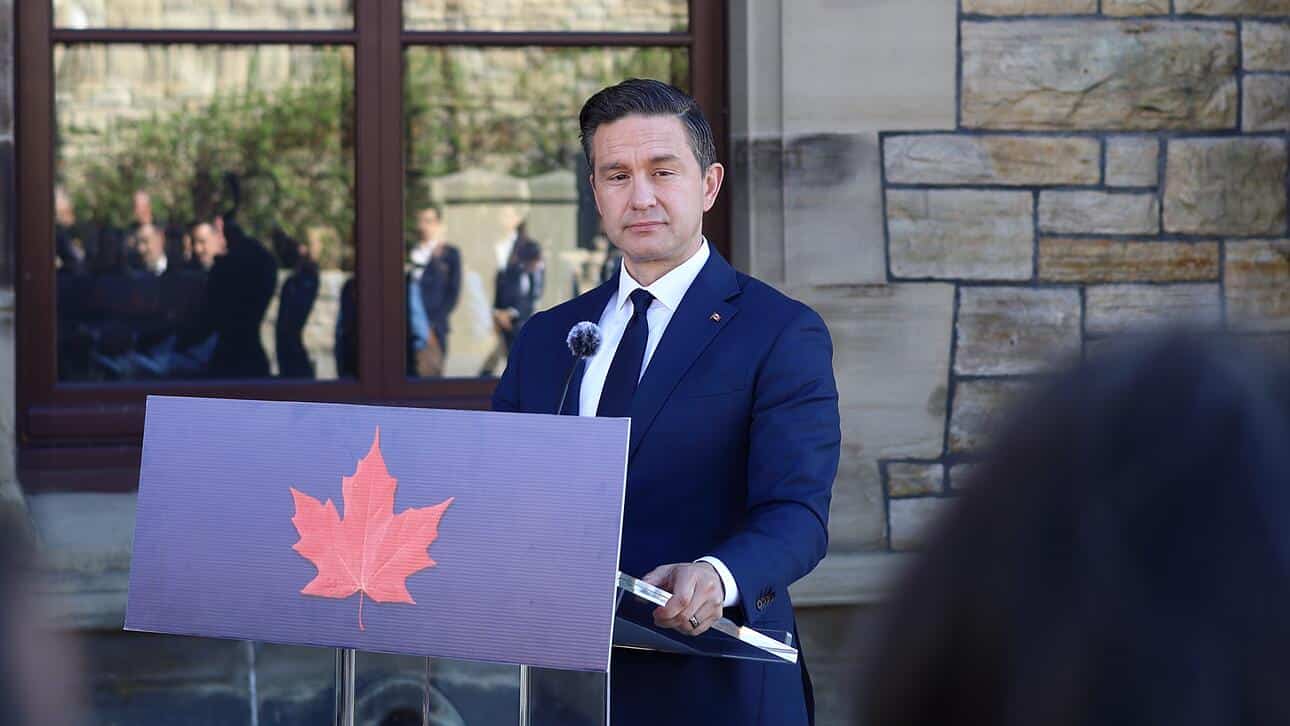
Pierre Poilievre Critiques Reporter Who Questions His Leadership

How Progressivism Replaced Religion With A New Secular Faith
US Trade Moves Put Massive Pressure on Canada

Uncovering the Truth Behind Inequality: A Bold New Vision

How Canada’s Combating Hate Act Stifles Free Speech

Canada Sheds 68,000 Jobs As Economic Fears Deepen
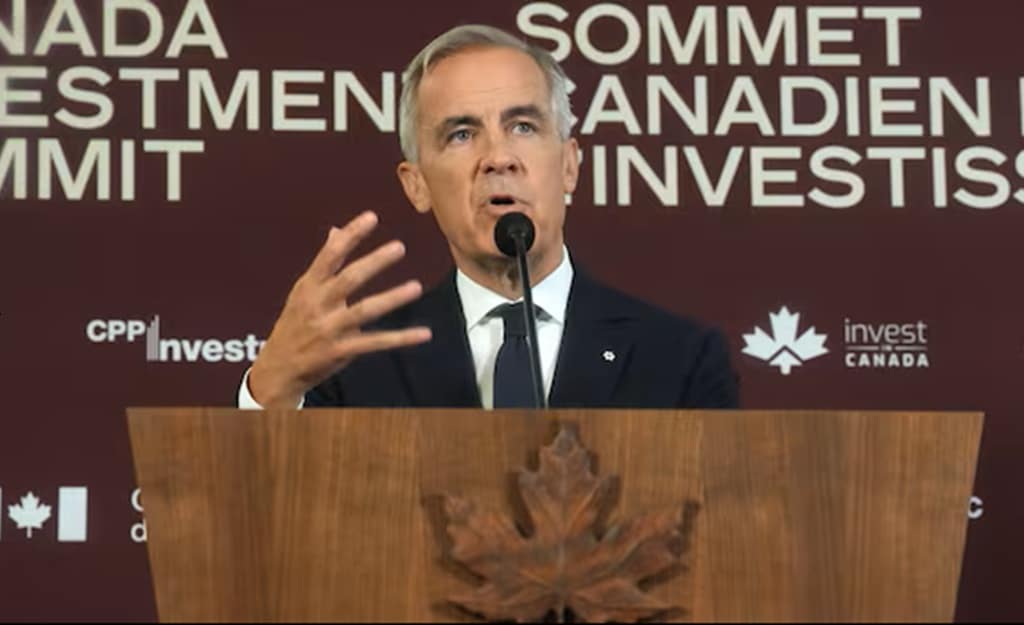
Behind Carney’s $1-Trillion Canada Investment Scheme
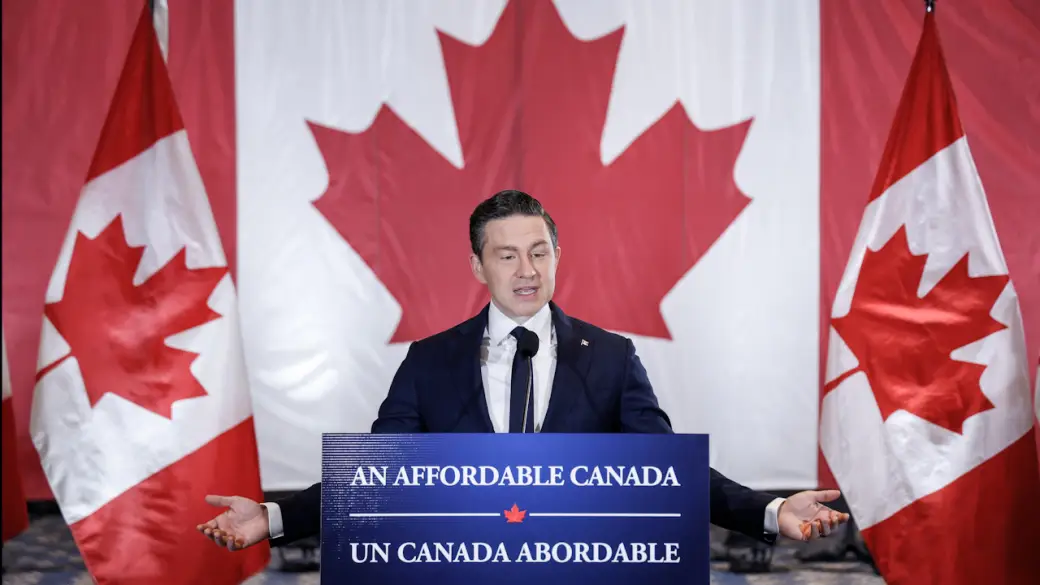
Poilievre Blasts Carney’s Plan To Sell Off Airports

Food Insecurity and Surging Prices: Canada’s Inflation Squeeze

Jimmy Kimmel Slammed for “Vile” Melania Trump “Expectant Widow” Joke

President Trump Addresses Nation on War with Iran

Trump Warns NATO Allies: America Won’t Protect Slackers After Iran Clash

Senate Hearing on Fraud and Foreign Influence Turns Tense Over Minnesota Scandals

CNN Forced to Backtrack Its Reporting on Trump’s Iran Talks

Joe Rogan Slams Gavin Newsom for Mocking Nick Shirley

Mosque Set Ablaze in Iran a Citizens Revolt Against the Islamic Regime

AOC Accuses Jessie Watters of Fox News of Sexualizing and Harassing Her

JD Vance Exposes Walz’s Fraud and CNN’s Lies in White House Presser

Milestone Card Credit: How the Milestone MasterCard Can Transform Credit


-

 News9 months ago
China-Based Billionaire Singham Allegedly Funding America’s Radical Left
-
Crime10 months ago
YouTuber Nick Shirley Exposes BILLIONS of Somali Fraud, Video Goes VIRAL
-
Politics10 months ago
Ilhan Omar Faces Renewed Firestorm Over Resurfaced Video
-
Politics9 months ago
2026 Midterms Guide: Candidates, Key Issues, and Battleground States
-
Politics8 months ago
CNN Delivers Stark Reality Check to Democrats Over Voter ID
-
Politics8 months ago
Ilhan Omar’s Connections to Convicted Somali Fraudsters Surface
-
Politics7 months ago
Rep. Ilhan Omar Faces Heat as Minnesota Voters Seek Change
-
Politics8 months ago
Trump Approval Rating (February 2026 Poll Results, Approve vs Disapprove)