

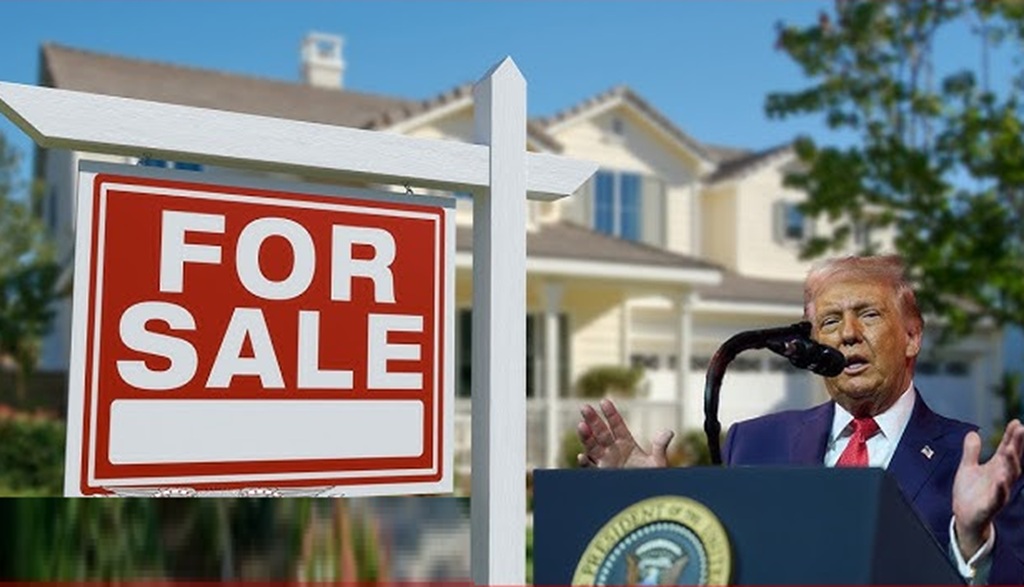


WASHINGTON, D.C. – President Donald Trump is aiming at Wall Street firms, which he says are pushing families out of the housing market. On Wednesday, he announced a plan to block large institutional investors from buying single-family homes. In a sharp Truth Social post, Trump framed the move as a way to protect homeownership and bring the American Dream back within reach.
“For a very long time, buying and owning a home was considered the pinnacle of the American Dream,” Trump wrote. “It was the reward for working hard and doing the right thing.” He said that the goal now feels out of reach for many Americans, and he blamed “Record High Inflation caused by Joe Biden and the Democrats in Congress.”
Trump said he wants to stop large investors, including Blackstone and other hedge funds, from buying homes at scale.
“I am immediately taking steps to ban large institutional investors from buying more single-family homes,” Trump wrote, adding that he will urge Congress to make the policy law. “People live in homes, not corporations.”
Supporters say the message fits Trump’s long-running pitch, taking on big money and putting working families first. Critics in the press have been quick to downplay it, but conservatives call it a direct response to a real problem.
Wall Street Reacts Fast
Markets moved quickly after the post. Shares of major single-family rental companies, including Invitation Homes and American Homes 4 Rent, dropped within hours. Blackstone also fell, reflecting investor concern about what a ban could mean for corporate buying strategies. Some traders were caught off guard, according to sources familiar with the matter.
Many voters won’t be upset to see corporate landlords sweating. Large firms have bought heavily in places like Atlanta, Jacksonville, Charlotte, and Tampa. In some local markets, institutional ownership makes up a large share of single-family rentals. Families often get outbid by cash offers, then end up renting from the same companies that drove prices higher.
Trump’s proposal focuses on “large institutional investors” and avoids targeting smaller landlords. That distinction matters to many renters who rely on local owners and small property managers.
Rare Cross-Party Agreement, Plus Support From Housing Officials
The idea has picked up some unexpected agreement across party lines. California Gov. Gavin Newsom, a Democrat, has also criticized big investors and said he wants to “curb” their role in housing. Trump’s team argues there’s a difference between talk and action.
Bill Pulte, director of the Federal Housing Finance Agency and a Trump appointee, backed the plan and called Trump the “builder-in-chief.” Pulte suggested the administration can take steps that put American homebuyers ahead of large funds.
Some conservative economists point out that institutional investors hold about 2-3% of single-family rentals nationwide. Still, their buying can be heavily focused on Sun Belt markets, where the extra competition can tighten supply. Trump’s goal is to reduce that pressure and give families a fairer shot.
Trump Blames Inflation and Rules That Slow Building
Trump also tied the housing squeeze to inflation and policy choices under President Biden. He argued that higher prices and higher mortgage rates have hit buyers hard. He also pointed to years of rules that make it harder to build new homes, which keeps supply behind demand.
The ban, he says, is only the start. Trump hinted at more housing affordability ideas in an upcoming speech at the World Economic Forum in Davos, where he plans to compare his approach with what he calls failed globalist policies.
Left-leaning critics, including writers at The Washington Post, have dismissed the plan as “populist claptrap.” They say the main issue is underbuilding. Trump’s allies reply that bulk buying by big funds also matters because it pulls homes off the market and changes how neighborhoods function.
He is pitching this as a simple principle: homes are for people who want to live in them, raise kids, and build a life, not for companies chasing returns.
As lawmakers prepare to take up the issue, Republicans are expected to face pressure to move quickly. With affordability sitting near the top of voter concerns, this policy could become a central fight in Congress. Trump is betting that many Americans agree with his core message: housing should serve families first, not corporate balance sheets.