


WASHINGTON, D.C. – A dramatic shift in U.S. foreign policy is sparking street parties across Venezuelan communities from Miami to Madrid. President Donald J. Trump has directed a military mission that captured Venezuelan leader Nicolas Maduro, a move supporters say has ended one of the region’s most feared regimes. As Venezuelan expats celebrate, critics and Democrats are turning their anger toward the president, not the leader they spent years condemning.
The mission, known as “Liberty Dawn,” took place in the early hours of January 5, 2026. U.S. special forces, working alongside Venezuelan opposition contacts, raided Maduro’s secure compound in Caracas. He was detained with little reported resistance.
Maduro has long been accused of holding power through rigged elections, violent repression, and deep ties with hostile governments, including Russia and Iran. Trump approved the operation after returning to office with a decisive win in November 2024. Supporters call it a clear win. Democrats in Congress and many media voices call it reckless, and their response is exposing a sharp political split.
Democrats Spent Years Condemning Maduro
For more than a decade, many Democrats have described Maduro as an authoritarian leader who wrecked Venezuela’s economy and fueled a humanitarian disaster. During the Obama years, early attempts at diplomacy faded as Venezuela’s political crisis worsened after Hugo Chavez died in 2013.
By 2017, Democrats were publicly attacking Maduro’s government. Then-Senator Kamala Harris, among others, used harsh language, calling it a “narco-state” and pointing to corruption and human rights violations.
Under President Joe Biden, that message got louder. In 2021, Biden labeled Maduro’s government “illegitimate” and backed sanctions aimed at limiting oil revenue. Secretary of State Antony Blinken regularly called for Maduro to step aside and stressed the need for real elections.
Democratic leaders on Capitol Hill, including Senate Majority Leader Chuck Schumer and House Minority Leader Hakeem Jeffries, supported measures condemning the regime’s crackdown on dissent. That included the detention of opposition figures such as Juan Guaido, whom the U.S. recognized as interim president in 2019.
High-profile Democrats echoed the theme, even when they disagreed on how the U.S. should respond. Rep. Alexandria Ocasio-Cortez, while warning against U.S. military action in other situations, has pointed to the harm that Maduro’s policies caused and the pressure created by Venezuelan migration. Sen. Bernie Sanders also criticized the government as “authoritarian” and urged international pressure for a return to democracy.
Liberal-leaning outlets, including MSNBC and The New York Times, have published repeated reports on Maduro’s ties to criminal groups, media suppression, and severe shortages affecting millions.
The shared conclusion was simple: Maduro needed to go. Democrats argued for isolation, sanctions, and support for opposition efforts, while also accusing Republicans of being too eager to use force.
Trump Acts, After Years of Pressure
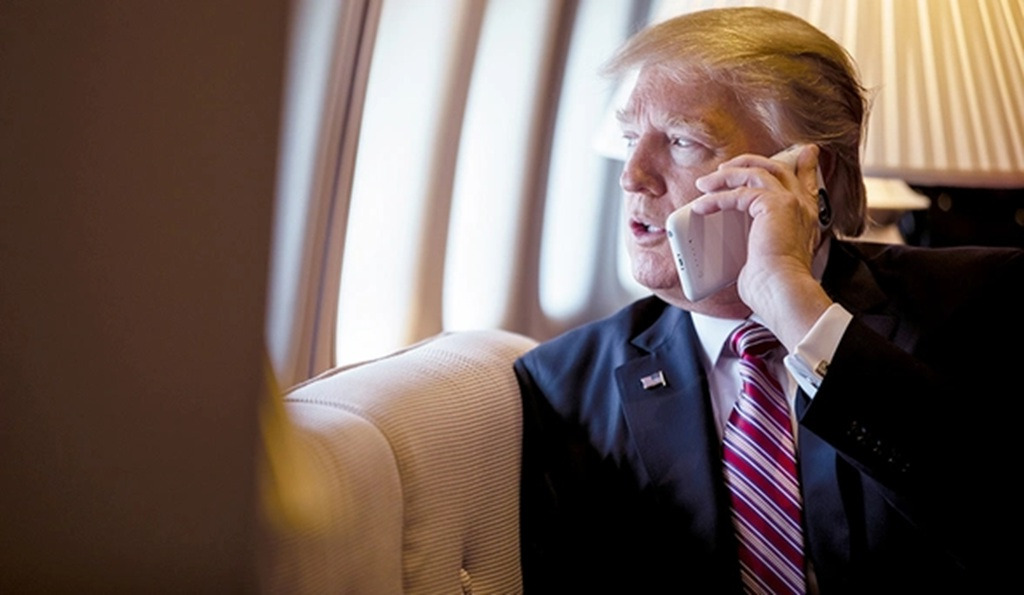
Trump’s second term has leaned hard into direct action abroad. Building on his first-term approach, which included recognizing Guaido and tightening sanctions, Trump approved the raid after intelligence reports claimed Maduro planned to expand ties with China and Russia, including possible military basing that could affect U.S. interests in the Caribbean.
Supporters of the mission say it was tightly executed, caused limited civilian harm, and secured key sites such as oil facilities. Maduro is now in U.S. custody and faces extradition tied to narcoterrorism and corruption charges. Venezuelan interim officials have started transition discussions, with elections promised by mid-2026.
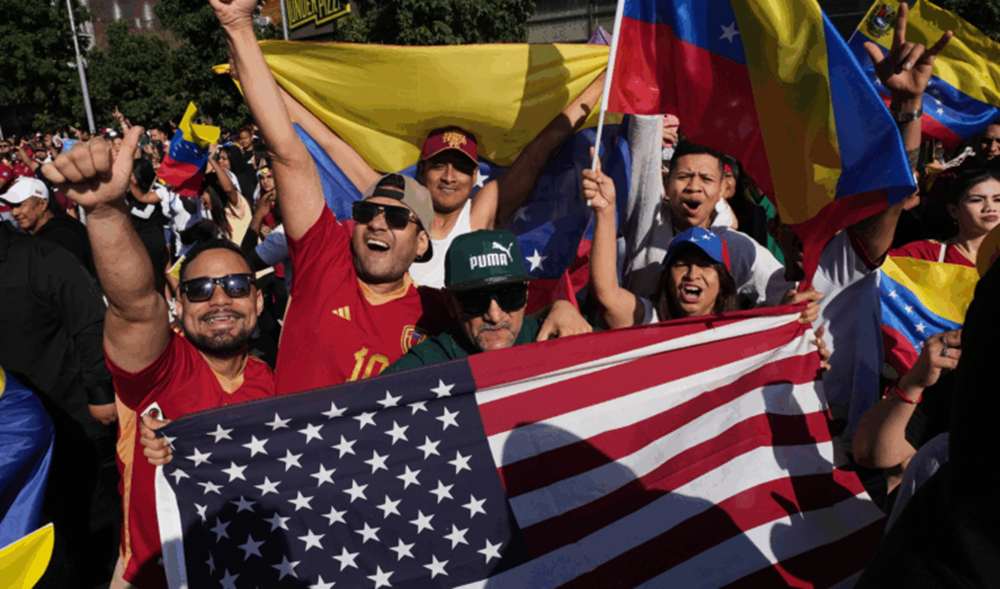
Celebrations followed quickly. In Miami’s Little Havana, crowds gathered for spontaneous parades, waving Venezuelan and American flags together. “Trump did what no one else could,” said Maria Gonzalez, a Venezuelan exile who left in 2018. “We’ve waited years for this freedom.” Similar scenes played out in Bogota and Madrid. In Caracas, opposition supporters reportedly faced brief clashes with loyalists before the balance shifted.
Regional reactions have been mixed but active. Allies, including Colombia and Brazil, praised the move. Mexico, while cautious, acknowledged it could calm a destabilized region. At the United Nations, the Security Council has remained divided, though no broad condemnation has taken hold. U.S. Ambassador Nikki Haley, reappointed by Trump, defended the mission as a necessary action against a failed state tied to terror networks.
Democrats Reverse Course on Venezuela
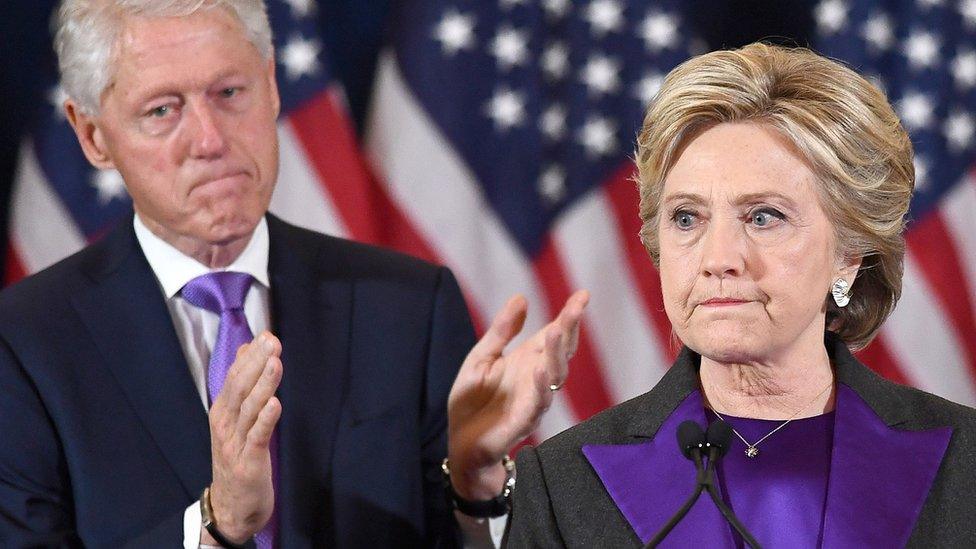
As celebrations spread, Democratic leaders moved fast to denounce the operation. House Democrats, led by Jeffries, introduced a resolution calling the raid “reckless unilateralism” that could inflame tensions with Russia and Iran. Schumer criticized Trump from the Senate floor, calling the action “imperialist adventurism,” even though he and others had long demanded Maduro’s removal.
That shift is the core of the backlash from Trump’s allies. They argue Democrats spent years calling Maduro a tyrant, then attacked the one president who removed him. They also point to reports that the Biden team considered covert steps, based on leaked documents said to be dated to 2023, but stepped back due to political risk.
The media response has shifted, too. Some CNN commentary focused on due process for Maduro, even from voices that previously described him as a violent strongman. The Washington Post editorial board, which in 2022 urged tougher action, now warns about blowback and possible violations of international law.
Trump supporters argue the real issue is personal and political, not policy. They point to long-running clashes over investigations, impeachments, and elections, and say those battles now shape every response. They also cite security claims tied to Maduro’s government, including drug trafficking routes into the U.S., alleged support for Hezbollah-linked operatives, and growing Chinese influence in Latin America.
They connect the moment to the U.S.-Mexico border debate as well. Under Biden, Venezuelan migration surged, adding pressure on cities and federal systems. Trump’s supporters say a stable Venezuela could reduce the flow. They argue Democrats would rather attack Trump than admit the operation may help.
Florida Gov. Ron DeSantis, a Trump ally, summed up that view: “It’s politics over people. Democrats would rather see Maduro free than admit Trump was right.”
Even inside the party, there are signs of disagreement. Former Sen. Joe Manchin, now retired, has offered quiet praise for the result, while progressive leaders, including Ocasio-Cortez, have blasted the operation as a “neo-colonial” move.
To Trump’s supporters, this fight fits a larger trend. They say Democrats demand bold outcomes, fail to deliver them, then attack the results when Republicans succeed. They point to earlier fights over the Abraham Accords, which critics dismissed at the time, and to the battle against ISIS, where Trump’s approach drew heavy debate.
In their view, the Maduro operation is the latest example: call for change, hesitate on execution, then condemn the leader who takes action.
Venezuela’s next chapter is still unclear, and the risks are real. Even so, the capture of Maduro has created a new opening for political transition. Trump’s backers see it as decisive leadership that reshapes the region. Democrats who oppose it may find themselves defending a position that voters, and history, won’t reward.