

WASHINGTON, D.C. – During a press availability at the State Department, U.S. Secretary of State Marco Rubio sharply criticized Iran’s leaders. He accused Tehran of backing terrorist activity across the globe and stressed what he called a deep gap between the clerical government and the Iranian people.
Marco Rubio spoke as the United States weighs possible nuclear talks with Iran. His comments reflected the Trump administration’s tough approach. He argued that Iran, a country with significant wealth and potential, is sending money outward to support proxy forces instead of fixing urgent problems at home. He pointed to issues like water shortages, power problems, and economic strain.
“The Iranian regime is sponsoring terrorism around the world,” Rubio said. He added that Iran’s leaders are “spending all their resources, of what is a rich country, sponsoring terrorism, sponsoring all these proxy groups around the world, exporting as they call it, ‘their revolution.’”
The State Department has labeled Iran a state sponsor of terrorism since 1984. Under Rubio, the department has also moved to renew terrorism designations tied to Iran-aligned militias in Iraq. He has pushed allies to tighten sanctions and has urged partners to designate the Islamic Revolutionary Guard Corps (IRGC) as a terrorist organization.
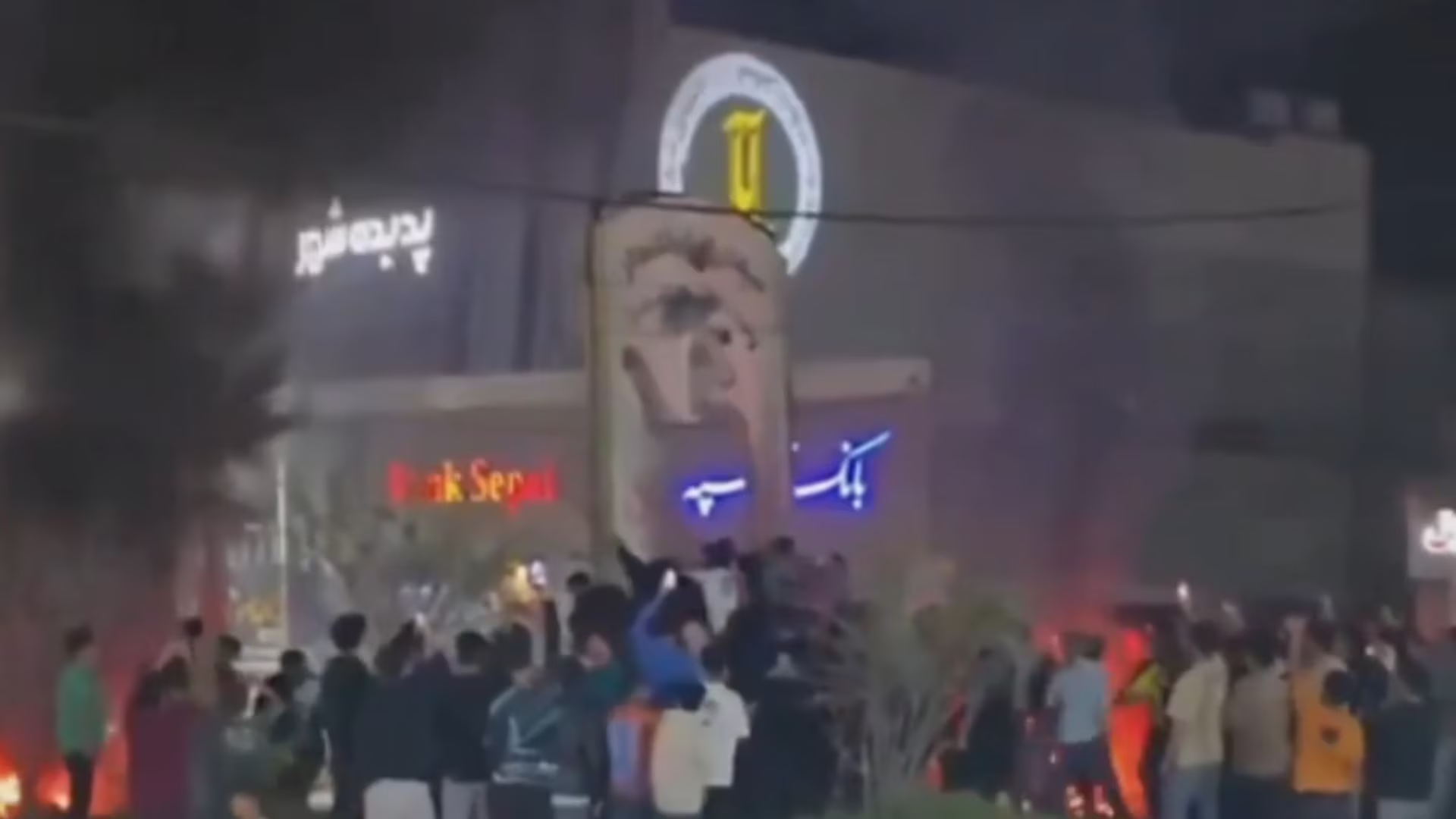
Rubio tied Iran’s foreign activities to the hardship many Iranians face. “One of the reasons why the Iranian regime cannot provide the people of Iran the quality of life that they deserve is because they’re spending all their money” on these operations, he said. He pointed to ongoing domestic unrest, including recent protests tied to the economy and government repression, as signs the state can’t meet basic public needs.
A Wide Gap Between Iran’s Leaders and Its People
A key theme in Rubio’s remarks was his effort to separate the Iranian government from the population. “The Iranian people and the Iranian regime are very unalike,” he said. “In essence, what the Iranian people want, this is a culture with a deep history, these are people that the leadership of Iran at the clerical level does not reflect.”
He argued that the difference is unusually large. “I know of no other country where there’s a bigger difference between the people that lead the country and the people who live there,” Rubio said. He described Iran as a society shaped by a long Persian past, and he suggested the current leadership doesn’t represent that identity.
This message matches Rubio’s past public comments, including statements made during his Senate confirmation process. It also fits a broader U.S. strategy, criticize the regime while showing respect for ordinary Iranians. The goal is to build international support for pressure on Tehran without pushing away internal reformers, dissidents, or civil society voices.
Rubio Lays Out Hard Terms for Any Nuclear Talks
Rubio’s remarks came as the U.S. and Iran explore limited engagement. He confirmed reports that Iran asked to change the location of planned talks that were first expected to take place in Turkey. He said the United States is still open to talks, but he made clear that Washington wants more than a narrow nuclear discussion.
“For talks to actually lead to something meaningful, they will have to include certain things,” Rubio said. “That includes the range of their ballistic missiles. That includes their sponsorship of terrorist organizations across the region. That includes the nuclear program. And that includes the treatment of their own people.”
He said he doubts Tehran will accept a broader agenda, since it appears focused on uranium enrichment and related nuclear issues. Rubio added that President Trump prefers diplomacy and peaceful outcomes, but won’t rule out confrontation.
“Our problem with the Iranian regime isn’t simply, obviously it’s predominantly, their desire to acquire nuclear weapons, their sponsorship of terrorism,” Rubio said, “but it’s ultimately the treatment of their own people.”
He also pointed to recent crackdowns, including arrests tied to alleged spying and assisting foreign actors, as more evidence of repression inside Iran.
What Rubio’s Remarks Signal for U.S. Policy
Rubio’s comments reinforce the administration’s maximum pressure approach. That includes targeting Iran’s proxy groups and working with European partners on sanctions. Critics warn that this kind of rhetoric can raise tensions. Supporters say it’s needed to counter Iran’s influence in the Middle East through groups like Hezbollah, Hamas, and armed factions in Iraq.
With frustration inside Iran driven by economic stagnation and human rights concerns, Rubio’s framing may appeal to dissidents and members of the Iranian diaspora who see the clerical system as separate from Iran’s national identity.
Over the next several days, diplomacy will face the same divides Rubio laid out. For now, the message from the Secretary of State is clear, the U.S. views Iran’s rulers not only as a nuclear risk, but also as a sponsor of instability whose priorities clash with what many Iranians want.