


ANCHORAGE, Alaska – NORAD launched U.S. fighter jets and support aircraft Thursday after detecting five Russian military planes operating inside the Alaskan Air Defense Identification Zone (ADIZ).
The encounter took place near the Bering Strait off Alaska’s west coast. Officials said the aircraft did not enter U.S. or Canadian sovereign airspace. Instead, they described the intercept as a regular air defense mission, not an escalation.
What NORAD tracked and intercepted
Early Thursday, NORAD sensors picked up and followed a small Russian formation. The command identified the aircraft as:
- Two Tu-95 Bear long-range bombers
- Two Su-35 fighter jets
- One A-50 airborne early warning and control aircraft (often compared to the U.S. E-3 Sentry)
The planes flew inside the Alaskan ADIZ, a buffer area in international airspace. Aircraft in this zone are expected to identify themselves so North American forces can keep track of activity near the border.
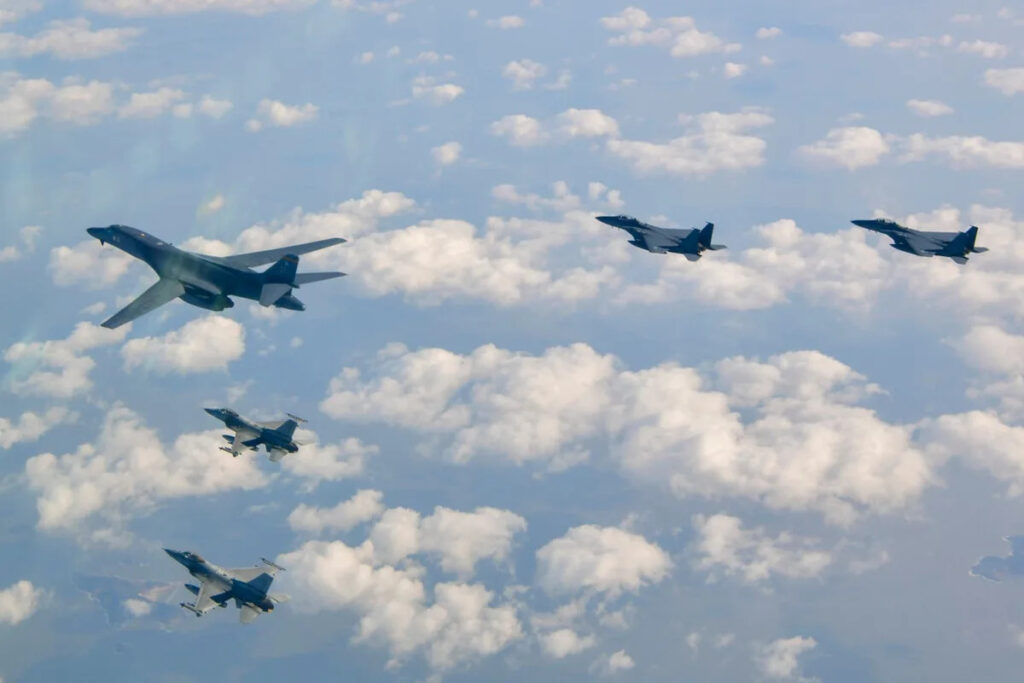
US aircraft involved in the response
After confirming the track, NORAD sent a mix of aircraft from Alaska and other locations, including:
- Two F-16 Fighting Falcon multirole fighters
- Two F-35 Lightning II stealth fighters
- One E-3 Sentry airborne warning and control aircraft
- Four KC-135 Stratotanker aerial refueling aircraft
US crews intercepted the group, visually confirmed each aircraft, and stayed with them until they left the ADIZ. The mission focused on observation and control, with no reported issues.
In its statement, NORAD said Russian flights in the Alaskan ADIZ happen often and are not viewed as a direct threat. The Russian aircraft stayed in international airspace for the full event.
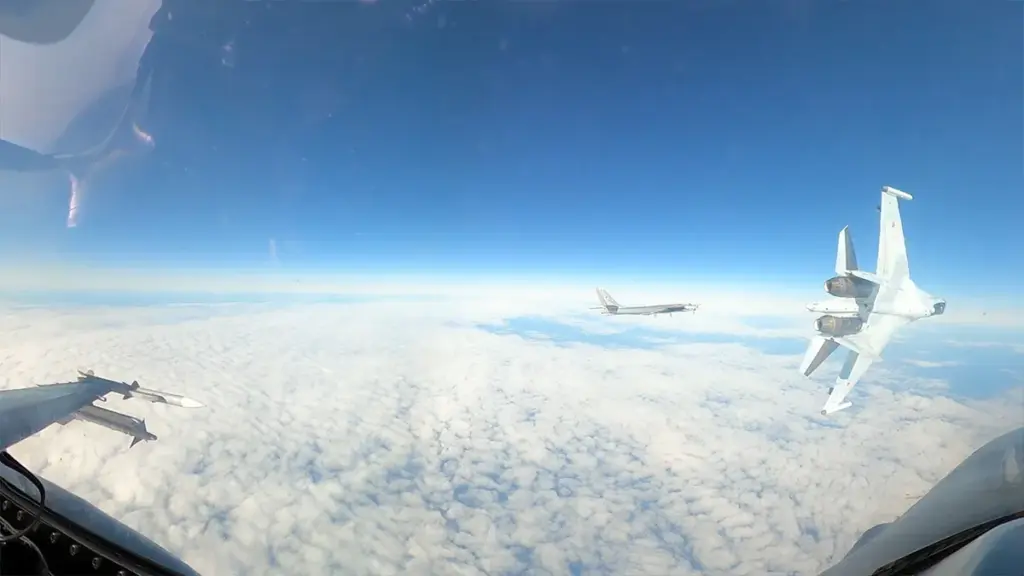
Russian flights near Alaska are a regular pattern.
Intercepts like this have become a familiar part of Arctic and sub-Arctic operations, especially near the Bering Strait. That area matters because Russia and the United States sit only a few miles apart at their closest point.
Recent examples include:
- September 2025: NORAD tracked four Russian aircraft (Tu-95s and Su-35s) in the ADIZ, sending F-16s, an E-3, and KC-135 support.
- August 2025: US forces responded to multiple flights involving a Russian Il-20 reconnaissance aircraft over several days.
- Early 2025: Similar bomber-and-fighter packages operated near the zone during long-range training flights.
Russia often describes these sorties as scheduled training patrols over neutral waters, sometimes supported by aerial refueling. Meanwhile, US and Canadian forces treat them as chances to practice detection, identification, and escort procedures.
This latest intercept comes during a wider global strain and rising interest in the Arctic. Still, officials framed the flight as routine and contained.
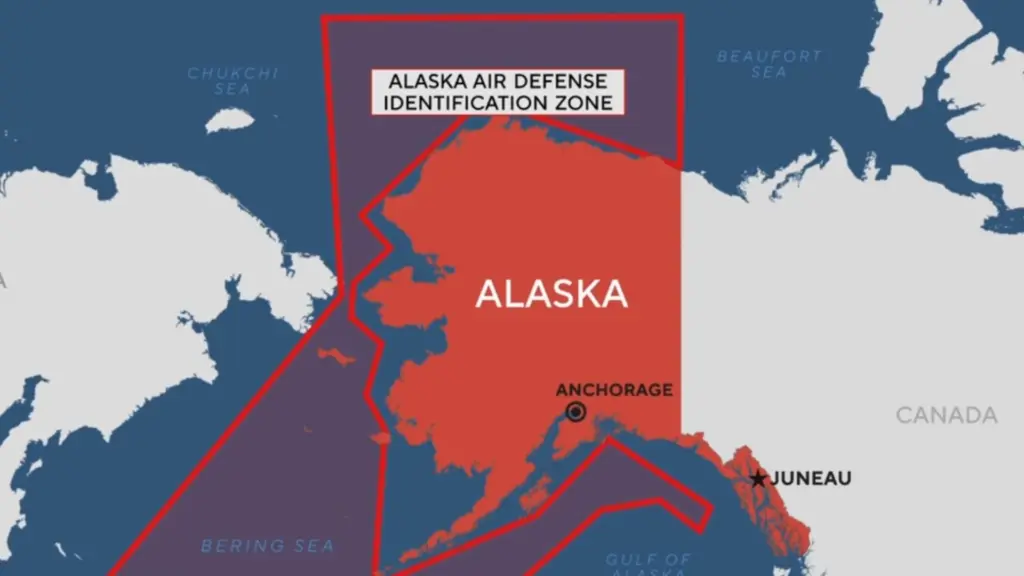
Why the Alaskan ADIZ matters
The Alaskan ADIZ adds an early layer of warning beyond national airspace. It gives NORAD time to spot aircraft, confirm what they are, and respond in an organized way.
NORAD is a joint US-Canadian command based at Peterson Space Force Base in Colorado. Its air defense toolkit includes ground-based radars, fighter units, airborne surveillance, and coordination with partners.
The aircraft mix used in this intercept reflects that layered approach:
- F-35 Lightning II: Stealth fighters with advanced sensors for safe intercept and tracking.
- F-16 Fighting Falcon: Flexible fighters commonly used for identification and escort.
- E-3 Sentry: Airborne radar and command platform for broad-area awareness.
- KC-135 Stratotanker: Refueling support that keeps jets on station longer in remote areas.
Together, these assets help NORAD keepan eyes on approaching aircraft without raising the temperature.
What it signals amid rising Arctic attention
Even when flights stay professional, they show how active the Arctic has become. As sea ice changes, interest has grown in new routes and resources, and Russia has expanded its military footprint in the region. That has kept US and NATO planners focused on northern defense.
NORAD’s quick response reinforced that North American approaches will be monitored and managed. Officials reported no unsafe maneuvers and no communication problems, matching the tone of many past intercepts.
The mission ended normally, with the Russian aircraft leaving the ADIZ as expected. This report is based on NORAD’s official release and defense sources confirming details of the February 19-20, 2026, event.