Politics
Democrats in Turmoil Over Hopeless Impeachment Drive Against HHS Secretary RFK Jr.
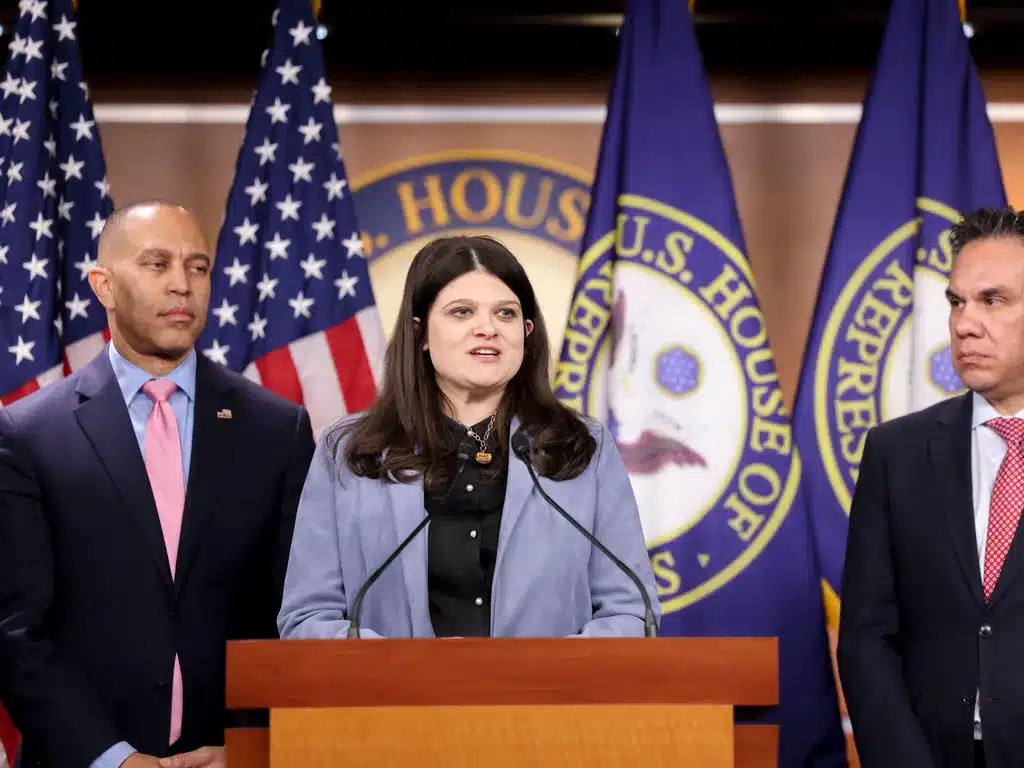
WASHINGTON, D.C. – House Democrats are once again tied up in internal drama, this time over a long-shot attempt to impeach Health and Human Services Secretary Robert F. Kennedy Jr. Rep. Haley Stevens (D-Mich.) has filed articles of impeachment against Kennedy, in a move critics see as political showmanship and a fresh sign of a party at war with itself.
The effort comes on the heels of a bruising 2024 election, where Democrats lost the White House, surrendered the Senate, and failed to gain real ground in the House. The party is still reeling from those defeats, and this impeachment push is already drawing fire from Republicans and skepticism from many Democrats, who see it as a futile gesture that will go nowhere in a GOP-controlled Congress.
Stevens, who is widely believed to be weighing a Michigan Senate bid, accuses Kennedy of “undermining public health” and spreading “dangerous misinformation” on vaccines and other health matters. Her move targets the same RFK Jr., who was confirmed as HHS Secretary earlier this year by a 52-48 Senate vote. At that time, even a few Democrats said they valued his independent outlook on health policy.
Now, with President Trump pushing his “Make America Healthy Again” agenda, Stevens’ attack feels to many Republicans like a throwback to the impeachment-heavy Pelosi years, only weaker and even less likely to succeed.
The Impeachment Push: Political Theater With No Path Forward
Stevens introduced the impeachment articles last week, alleging that Kennedy has “turned his back on science” and violated his oath of office. In a heated statement, she claimed, “Secretary Robert F. Kennedy Jr. has turned his back on science, on public health, and on the American people, spreading misinformation that endangers lives.”
House Republicans barely blinked. With a firm majority, they have already dismissed the move as a non-starter. Speaker Mike Johnson branded it “another witch hunt from the desperate Dems,” a view widely shared in the GOP conference.
Analysts across the spectrum agree that the articles stand no real chance in a House run by Republicans. As The Guardian reported, GOP leadership is highly unlikely to give the measure any oxygen. That leaves the effort as yet another symbolic swipe instead of a serious attempt to remove a cabinet official.
Even among Democrats, enthusiasm is lukewarm at best. Top figures, including Minority Leader Hakeem Jeffries, have stayed silent, which signals that this move is not part of a broader party strategy. Instead, it looks like a solo play from a Senate-minded lawmaker, and it is feeding new talk of internal fractures. Moderate Democrats, speaking privately, have dismissed the effort as self-promotion that distracts from the party’s problems after 2024.
Democrats have been down this road before. Their two impeachments of President Trump failed to remove him from office, but they did help deepen support among his voters and may have fueled his 2024 return. Now, targeting RFK Jr., a onetime Democrat who left the party and later endorsed Trump a only highlights how far the party has drifted from some of its former allies.
Since being sworn in as the 26th HHS Secretary, Kennedy has focused on chronic disease, pharmaceutical transparency, and skepticism toward Big Pharma. Many Americans across party lines share those concerns and are tired of business-as-usual health policy. Stevens’s offensive against him reads to many as the same elitist scolding that helped sink Democrats with working-class voters last year.
A Party in Open Conflict: Fights Spilling Into Public View
The fight over RFK Jr. comes at a terrible moment for Democrats. The party is still dealing with the fallout of the 2024 wipeout and struggling to answer basic questions about what it stands for and who it represents. Post-election reports describe a party locked in a bitter tug of war between its progressive and centrist wings.
An NPR analysis noted that Democrats lost ground “across nearly every demographic,” raising alarms among strategists who once claimed the party’s coalition would be durable for years. The prolonged government shutdown that followed the election only deepened those divides.
The shutdown fight showed just how split the party has become. Representatives Marie Gluesenkamp Perez and Jared Golden sided with Republicans to reopen the government after a 43-day standoff. Progressive leaders and activists erupted, and figures like Rep. Alexandria Ocasio-Cortez blasted the move as a betrayal. A torrent of online backlash followed, with activists accusing moderates of selling out basic principles.
At the same time, party veterans like Senate Majority Leader Chuck Schumer came under heavier scrutiny. Democrats struggled to defend their leadership in media interviews, and the shutdown fight raised fresh doubts about whether the current team at the top is capable of guiding the party out of its slump.
Andrew Yang, now with the Forward Party, summed up the problem bluntly on a recent Fox News segment. He described Democrats as “leaderless,” arguing that they lack a clear, unified message or sense of direction. While Democrats spend time hammering each other, the Trump administration continues to roll out its agenda on immigration, the economy, and health policy with less effective pushback than in previous years.
Strategists across the board say Democrats have drifted away from the working-class voters who once formed their base. Recent polling shows many Americans now see Democrats as “too liberal” and “out of touch,” a point underscored by a Washington Monthly article. Analyst Simon Bazelon warned that clinging to rigid progressive positions on issues like gender identity and the economy is driving away swing voters in key states.
A Newsweek column put it bluntly, saying Democrats “keep face-planting after wins,” noting how often they squander momentum from special elections by doubling down on cultural fights instead of focusing on inflation, wages, and public safety.
Gripped by the Far Left: Progressive Ideology Rules the Roost
Many of these wounds are self-inflicted. Over the past few years, national Democrats have moved sharply left on crime, borders, climate, and social issues. The result is a platform that often sounds like it was written by the Squad, not by a broad-based party trying to win swing states.
From “defund the police” to looser border policies to aggressive climate rules, the party’s brand has hardened around themes that play well with affluent progressives but far less so with working families. A recent report from the center-left group Welcome urged Democrats to drop “progressive rhetoric favored by highly educated and affluent” voters, as Semafor reported. The question is whether party leaders will actually listen.
Inside the party, ideological purity tests are becoming common. Moderates who step out of line often face primary threats from the left, backed by big-name progressives and national activist groups. Progressive power players like Sen. Bernie Sanders are now endorsing challengers to sitting Democrats, such as the left-backed campaign against Rep. Valerie Foushee highlighted in Fox News reporting.
That internal warfare eats up time, money, and attention that could go toward competing with Republicans. Instead of mounting a strong opposition to Trump’s agenda, Democrats are pouring resources into ousting their own incumbents in purity fights.
Meanwhile, the party’s long-running strategy of rallying voters around “Stop Trump” has worn thin. For years, Democrats framed Trump as an existential threat to democracy and made him the centerpiece of their messaging. Voters grew tired of it, and 2024 brought a clear verdict.
As Vox explained, prioritizing “progressive orthodoxy” and anti-Trump rhetoric over core economic and public safety issues left Democrats deeply unpopular. The focus on cultural battles, gender debates, and academic language alienated many swing and working-class voters who wanted relief from rising prices and crime.
Even liberal-leaning commentators have grown frustrated. On his show, Bill Maher blasted the party for ignoring cultural anxiety and joked that Democrats “blew it” by lecturing voters instead of listening to them.
In New York, local Democrats have been blunt about the fallout. Some argue that progressive messaging has made their jobs much harder. As Fox News reported, the “democratic socialist” image associated with Zohran Mamdani dragged down other candidates and helped Republicans make gains in areas that were once safely blue. Similar patterns have shown up in suburbs and small cities across the country, where progressive branding has become a burden.
No Clear Leader, No Clear Direction
The leadership vacuum inside the party is hard to miss. Shortly after the 2024 drubbing, state party chairs gathered in Scottsdale to vent their “anger and exhaustion,” according to Politico. One month after Trump’s sweeping win, Democrats were still pointing fingers, arguing over messaging, and struggling to agree on even basic next steps.
Vice President Kamala Harris’s failed presidential campaign remains a sore spot. Her operation drew heavy criticism for muddled economic messaging, awkward cultural outreach, and an inability to connect with the voters Democrats needed most. The Democratic Autopsy report delivered a harsh verdict, saying party leaders “gravely miscalculated” on strategy and misread the mood of the country.
A BBC analysis described Democrats as standing at a crossroads one year after their defeat. Some want to pivot toward the center on crime, immigration, and cultural issues. Others, led by figures like AOC, argue the party should go even further left and double down on its most progressive ideas. The result is paralysis.
Moderates like Rep. Seth Moulton have called for a reset on economic policy, energy, and transgender issues in an effort to reconnect with middle-of-the-road voters. Those calls often spark outrage from activists who accuse them of “selling out,” which only deepens the divide.
Even basic internal management has become a headache. DNC staff recently erupted over the decision to roll back remote work, igniting a mini-scandal that quickly went public. As Fox News reported, staff complaints about workplace perks drew ridicule online. For many observers, the episode reinforced the image of a party more concerned with office comforts than with winning elections or running the country.
Republicans Stand Back as Democrats Tear Themselves Apart
For Republicans, the turmoil across the aisle is a political gift. As Democrats sink time into internal brawls and doomed impeachment drives, the GOP can focus on policy and governing.
President Trump’s appointments, including RFK Jr., are shaking up Washington in ways many voters demanded in 2024. On health policy, border security, and the economy, Republicans are moving ahead while Democrats argue about process and purity tests.
Stevens’ impeachment push against Kennedy has already become a handy talking point for conservatives. To them, it proves that Democrats have not learned from the last eight years and remain stuck in an impeachment-and-investigation mindset that voters rejected.
Some Americans, including many swing voters, seem almost resigned to the idea that Democrats will keep fighting each other instead of regrouping. The ongoing infighting lays bare what critics have said for years: the party lacks strong leadership, takes its cues from a narrow progressive base, and still cannot move past its “Hate Trump” obsession.
Until Democrats sort out who they are, who they want to represent, and how they plan to talk to everyday voters, Republicans see a clear opening. For now, the GOP path is simple: keep governing, keep passing its agenda, and let Democrats keep burning energy on internal battles and symbolic stunts like the RFK Jr. impeachment bid.

Trending News:
Trump Brokered Belarus Deal Frees 123 Political Hostages, Including Nobel Laureate
Politics
Trump Targets Minneapolis Mayor Say He’s “Playing with Fire”
WASHINGTON, D.C. – A fresh clash over federal immigration enforcement is brewing after U.S. President Donald Trump accused Minneapolis Mayor Jacob Frey of breaking the law by not having city officials help enforce federal immigration rules.
Trump claimed in a Truth Social post on January 28, 2026, adding more pressure to the ongoing dispute between the administration and cities with sanctuary-style policies.
Trump’s post came after Mayor Frey repeated that Minneapolis won’t take on federal immigration enforcement. Trump wrote: “Surprisingly, Mayor Jacob Frey just stated that, ‘Minneapolis does not, and will not, enforce Federal Immigration Laws.’
This is after having had a very good conversation with him. Could somebody in his inner sanctum please explain that this statement is a very serious violation of the Law, and that he is PLAYING WITH FIRE!”
Frey’s comments reflect Minneapolis’ long-standing approach. Under city policy, local police don’t take part in federal immigration enforcement unless it connects to a criminal matter. Frey made his remarks after meeting with Trump’s border czar, Tom Homan, who has been leading expanded ICE activity in the Minneapolis area.
On X (formerly Twitter), Frey argued that city officers should focus on public safety, like stopping homicides, instead of “hunting down a working dad who contributes to MPLS & is from Ecuador.”
Trump hinted there could be consequences if Minneapolis didn’t cooperate, but he didn’t list any specific steps. Still, the message lines up with his broader push to target sanctuary cities and other places that limit help for Immigration and Customs Enforcement (ICE).
Trump and Minneapolis’s Sanctuary-Style Policies
Minneapolis has used sanctuary-leaning rules for years, and they’ve been reinforced under Frey and the city council. In most cases, city workers can’t ask about immigration status. The city also limits when local jails can hold someone for ICE through detainers, unless there’s a judicial warrant.
Supporters say these rules build trust with immigrant communities. They believe people are more likely to report crimes or talk to police when they don’t fear deportation.
Tensions grew in early 2026 as the Trump administration increased ICE deployments in Minnesota, with a focus on the Twin Cities. Reports describe multiple incidents tied to these operations, including fatal shootings involving ICE personnel. Those events sparked protests and lawsuits that claim excessive force and constitutional violations.
Frey has said the federal actions are hurting community safety and wants the operations to end quickly. He has also said he’s open to continued talks with Homan, but he won’t change the city’s core policy of not helping with routine immigration enforcement.
The Legal Fight: Can the Federal Government Force Local Help?
Legal experts have challenged Trump’s claim that Frey is violating federal law. They point to the anti-commandeering doctrine, which says the federal government can’t force state or local officials to carry out federal programs.
The Supreme Court backed that idea in Printz v. United States (1997). In that case, Justice Antonin Scalia wrote that Washington can’t compel state and local officers to enforce federal regulatory schemes.
Under that view, Minneapolis doesn’t have to commit its own staff or funding to support ICE in civil immigration cases. The city’s policies don’t block federal agents from acting on their own. They mainly say the city won’t provide extra help.
Critics of the administration say Trump’s post ignores settled constitutional limits. Supporters argue that refusing to cooperate weakens public safety and national security.
Vice President JD Vance and other allies have echoed the criticism online, also targeting Minnesota Governor Tim Walz for resisting the federal push. Frey pushed back on social media, comparing his position to policies once supported by former New York City Mayor Rudy Giuliani.
What This Means for the Wider Immigration Debate
The dispute shows the deep divide between Trump’s aggressive deportation agenda and Democratic-led cities that support protective local rules. As ICE operations continue, along with town halls, protests, and court fights, the situation highlights how hard it is to run nationwide immigration enforcement without strong local support.
Some observers say Trump has sometimes signaled he wants to cool things down, including after talks with Frey and Walz. His latest post suggests that tone may not last if Minneapolis doesn’t shift course.
For many Minneapolis residents, especially in neighborhoods with large immigrant populations, the issue goes beyond enforcement. It also affects trust in law enforcement and the sense of stability in daily life.
As this plays out, the struggle between federal power and local control remains a central political fight, and Minneapolis is now a major testing ground.
Related News:
President Trump Addresses ICE Actions Amid Minnesota Unrest
Politics
Ilhan Omar Faces Claims of “Staged” Spray Attack at Minneapolis Town Hall
Debate Flares After Reported Assault on Minnesota Congresswoman, Smollett Comparisons Spread
MINNEAPOLIS, Minnesota – A tense moment at a public town hall has sparked a national political fight. U.S. Representative Ilhan Omar (D-Minn.) was reportedly attacked during a Minneapolis event on Tuesday night, January 27, 2026.
Witnesses and video from the room show a man running toward the podium and spraying her with a liquid from a syringe-like device. Security moved fast, restrained him, and the police arrested him.
Most news coverage and law enforcement statements have treated the episode as a real assault. At the same time, conservative commentators and some online groups have pushed a different story, claiming Ilhan Omar set it up herself.
Many of those posts compare it to the 2019 Jussie Smollett case, when the actor was convicted of filing a false police report about an attack he was accused of staging.
The incident happened at a crowded town hall as Omar spoke about immigration. Not long after she called for abolishing U.S. Immigration and Customs Enforcement (ICE) and urged the resignation or impeachment of Homeland Security Secretary Kristi Noem, a 55-year-old man identified as Anthony James Kazmierczak rushed forward.
Footage recorded by attendees and media appears to show him raising a syringe-like tool and squirting a dark, bad-smelling substance in Omar’s direction. Some reports have described the liquid as possibly apple cider vinegar, though officials have not publicly confirmed what it was.
Security tackled Kazmierczak and took him into custody. Early reports said he faced a preliminary third-degree assault charge. The FBI later took the lead on the investigation, and forensic testing is ongoing to identify the substance and check for any health risk.
Omar looked shaken for a moment, then continued speaking for close to half an hour. Later, at a press conference, she blamed a rise in threats against her on what she called “hateful rhetoric” from President Donald Trump and his allies. She said the attacks often target her and the Somali-American community she represents.
Trump Comment Sparks More “Staging” Talk
President Trump added to the fire during a phone interview with ABC News on Tuesday night. Without saying he had watched the video, he called Ilhan Omar a “fraud” and claimed she “probably had herself sprayed, knowing her.” He offered no evidence.
Trump’s remark fit a pattern critics point to: his past attacks on Ilhan Omar’s background, loyalty, and politics. Supporters of the president quickly shared the clip, and it helped push “staged attack” claims into wider circulation.
Kazmierczak’s history has also shaped the public debate. Court records and social media reviews described a criminal background and online posts that appear supportive of Trump, including pro-MAGA content.
Authorities have not alleged any coordination with Omar or suggested the incident was faked. No proof has surfaced to back up claims that it was staged, but Trump’s comment has kept those suspicions alive among his base.
Online Reaction: “Jussie Smollett 2.0” and “False Flag” Claims
On X (formerly Twitter) and other platforms, accusations spread within hours. Some far-right influencers and MAGA-aligned accounts branded the incident a “#Somali False Flag Scam” and “Jussie Smollett 2.0.”
Several posts focused on small moments in the video. YouTuber Anthony B. Logan and others claimed Omar seemed to glance toward Kazmierczak before he sprayed the substance, calling it a pre-planned signal.
Other commentators tied the town hall incident to separate stories about Ilhan Omar, including reports that questioned her finances or business ties, and argued the timing was meant to distract from bad press.
Some posts took an even harder line, arguing the event was fake no matter what. A widely shared comment from Matt Walsh framed it as political theater, even while offering no evidence that Omar arranged it.
These claims have continued despite the lack of corroboration and despite reports about the suspect’s apparent political leanings. Coverage from outlets including PBS, The Washington Post, and Time has emphasized that investigators are treating it as an assault, pointed to the suspect’s reported pro-Trump posts, and noted Omar’s long history of threats that spike during heated political moments.
Ilhan Omar’s Response: “Fear and Intimidation Doesn’t Work”
At a Wednesday press conference, Ilhan Omar did not directly debate the “staged” rumor line by line. Instead, she described the attack as part of a broader pattern. She said the man appeared angry about the deportation policy and claimed he wanted more removals of Somalis under the Trump-era approaches.
“Every time the president has chosen to use hateful rhetoric to talk about me and the community that I represent, my death threats skyrocket,” she said. Ilhan Omar also said she would not be bullied into silence, adding that “fear and intimidation doesn’t work on me.”
Some Republican officials also condemned political violence. Rep. Nancy Mace, for example, said she was disturbed by the reported attack. Even so, the split reaction showed how quickly high-profile incidents turn into political weapons, with people choosing sides before the facts are in.
What This Means for Political Safety and Trust
The Minneapolis town hall episode shows how fast public events can spiral into security threats and conspiracy talk. Omar, one of the first Muslim women elected to Congress and a leading progressive voice, has been a frequent target of right-wing anger for years.
Critics also point to Trump’s repeated insults about her, including calling her “garbage” in recent months, as part of the broader climate that fuels threats.
The FBI investigation is still active. Key facts remain unsettled, including what the substance was, what Kazmierczak intended, and whether prosecutors will add more serious charges.
For now, the story sits in two very different worlds. In one, it is a reported assault on a member of Congress. In the other, it is treated as a made-for-TV stunt by fringe corners of the internet. Either way, the confrontation has put Ilhan Omar back at the center of a national argument about political violence, heated rhetoric, and public trust.
Related News:
Ilhan Omar’s Exploding Wealth Investigated By Federal Authorities
Politics
California Governor Under Fire as Court Freezes Housing Rule
SACRAMENTO – California Governor Gavin Newsom is facing a new round of pushback after a state appellate court ruling that pauses parts of local rent control enforcement. Housing advocates, tenant groups, and political rivals say the decision adds more confusion to California’s housing affordability crisis; at the same time, rents keep climbing in major cities like Los Angeles, San Francisco, and San Diego.
The ruling comes out of a long-running case brought by the California Apartment Association (CAA) against Pasadena’s rent stabilization ordinance. At the center is a set of landlord duties tied to rent increases, including required relocation assistance in certain cases.
The court order blocks some of those requirements when they apply to units that are exempt from local rent limits. Critics say that it undercuts tenant protections when many renters already feel squeezed.
In late December 2025, the California Court of Appeals agreed with the CAA on key issues. The court said a city can’t require relocation payments that are triggered by lawful rent increases on housing that is exempt from those rent controls under state law. That includes certain newer buildings and many single-family homes.
Even though this case focuses on Pasadena, the impact could spread. Other cities, including Los Angeles, have rules that connect relocation benefits to rent increases. The decision puts those policies under pressure and brings the ongoing tension into focus, local tenant protections on one side and state preemption rules on the other.
Newsom has long positioned himself as supportive of renters. He signed the Tenant Protection Act (AB 1482) in 2019, which created statewide limits on rent increases for many units and added just-cause eviction rules.
Now critics argue his broader approach, including efforts to boost housing supply near transit, hasn’t kept up with legal challenges and local resistance. Tenant advocates see the ruling as a sign that rent stability tools are getting weaker. Landlord groups call it a needed check on city overreach that can discourage rental housing investment.
Who Gains and Who Gets Hit in California
Winners: Landlords and property owners in strict rent control cities
Landlords, especially in cities with stronger local rent control rules, appear to benefit most. By limiting relocation assistance requirements tied to rent hikes on exempt units, the ruling can lower costs for property owners.
The CAA, which represents apartment owners and managers, praised the decision as a win for property rights. Small and mid-sized landlords may also see it as relief, after years of COVID-era restrictions and rising costs for insurance, repairs, and maintenance.
Losers: Renters facing higher rents and fewer relocation supports
Renters in affected cities could lose an important safety net. In Los Angeles, where average rents have risen in recent months, and vacancies remain tight, tenants may see fewer relocation benefits when rent increases push them out of a unit that’s exempt from local limits.
Tenant groups say the decision chips away at protections shaped by the Costa-Hawkins Rental Housing Act and AB 1482. AB 1482 limits annual rent increases for covered units to 5 percent plus local inflation, up to a maximum of 10 percent.
Many homes are already exempt, including newer construction and many single-family properties. Critics worry the ruling invites more legal attacks on local tenant safeguards.
Why Critics Say This Could Make Housing Less Affordable
Progressive housing groups and some Democratic lawmakers argue the ruling could speed up displacement in places where rents already outpace wage growth. They point to research and local experience that weaker tenant protections often line up with more forced moves and higher rent burdens.
They also argue that without strong relocation requirements, landlords may have an easier path to move out long-term tenants and reset rents closer to market rates. Over time, that can shrink the supply of lower-cost rentals.
The timing adds to the concern. Efforts to expand statewide rent protections have struggled. Assembly Bill 1157, which would have lowered the rent cap to 5 percent total (2 percent plus inflation), extended protections to more single-family homes and accessory dwelling units, and removed AB 1482’s 2030 sunset, did not move forward in early 2026 after earlier setbacks.
Voters have also rejected broader rent control expansions through Proposition 10 (2018), Proposition 21 (2020), and Proposition 33 (2024), making major changes harder to pass.
Rents Keep Climbing in Los Angeles, San Francisco, and Beyond
Rent pressure hasn’t eased. In Los Angeles, some local adjustments are set to lower caps to 4 percent in certain cases starting February 2026, but in many counties, rent increases are still approaching AB 1482 limits. San Francisco and Oakland have also reported higher rents, tied to limited new construction, a rebound in parts of the tech economy, and continued investor activity.
Newsom highlighted some of those issues in his January 2026 State of the State address. He proposed steps aimed at corporate landlords and large investor purchases of single-family homes, including possible new rules to curb institutional buying.
Critics say the court ruling lands in the middle of a tough cycle. If investor rules tighten, some argue that new supply could slow. If local protections weaken at the same time, renters could be exposed to more risk.
What Could Happen Next in the Pasadena Case
The Pasadena dispute may not be over. While the appellate court ruled for the CAA on major points, the case could still move to the California Supreme Court. As of now, no further appeal has been filed.
The bigger story may be what follows in other cities. The ruling may encourage landlord groups to challenge local ordinances that collide with state law. Tenant organizations may respond with their own legal efforts or push lawmakers to clarify what cities can require around relocation assistance.
Possible Policy Paths for Newsom and State Lawmakers
Newsom and the Legislature still have options to support renters without inviting more legal setbacks. Possible approaches include:
- Tougher enforcement of AB 1482, backed by clearer rules and more funding for tenant legal aid.
- New limits on large corporate ownership, including tax changes or restrictions aimed at entities that own thousands of homes.
- Faster housing production near transit, including policies tied to SB 79, which expands transit-oriented development allowances starting mid-2026, even as some local leaders push back.
- Local incentives for affordable housing, using targeted exemptions or funding to help add below-market units and reduce rent pressure.
Big changes remain difficult in a divided political environment, especially after multiple statewide votes rejected rent control expansion.
What Renters and Landlords Should Track in the Next Few Weeks
For renters
Pay close attention to rent increase notices, especially in February and March 2026, when many annual adjustments take effect. Watch for changes to relocation benefits in places like Pasadena and Los Angeles. Tenant groups recommend keeping records of landlord messages and getting legal help if rent increases appear to exceed AB 1482 limits or if an eviction looks improper. It’s also smart to follow any emergency action from the governor tied to corporate ownership.
For landlords
Continue to follow AB 1482 rules and any new 2026 requirements, including updates tied to habitability and property standards such as working appliances (AB 628) and disaster cleanup responsibilities (SB 610). Track any appeals in the Pasadena case and watch for copycat challenges that could affect relocation obligations across California. Property managers should also stay alert for new proposals tied to rent cap extensions or corporate landlord rules.
California’s housing crisis isn’t slowing down. With homelessness still high and many families leaving expensive areas, this court ruling highlights the fragile balance between tenant protections and property rights. How Newsom responds, through policy changes, enforcement, or new housing proposals, will shape what affordability looks like for millions of renters in 2026.
Related News:
Tesla’s Strategic Retreat From California Due to Red Tape, Costs, and Taxes
-
Crime1 month agoYouTuber Nick Shirley Exposes BILLIONS of Somali Fraud, Video Goes VIRAL
-
Politics2 months agoIlhan Omar’s Ties to Convicted Somali Fraudsters Raises Questions
-
News2 months agoWalz Tried to Dodges Blame Over $8 Billion Somali Fraud Scandal
-
Crime2 months agoSomali’s Accused of Bilking Millions From Maine’s Medicaid Program
-
Asia2 months agoAsian Development Bank (ADB) Gets Failing Mark on Transparancy
-
Politics3 months agoSouth Asian Regional Significance of Indian PM Modi’s Bhutan Visit
-
Crime2 months agoMinnesota’s Billion Dollar Fraud Puts Omar and Walz Under the Microscope
-
Asia3 months agoThailand Artist Wins the 2025 UOB Southeast Asian Painting of the Year Award