Connect with us

Politics

Carney and Starmer’s Iran U-Turn Betrays Their Closest Ally

VORNews

Published

on

carney starmer iran

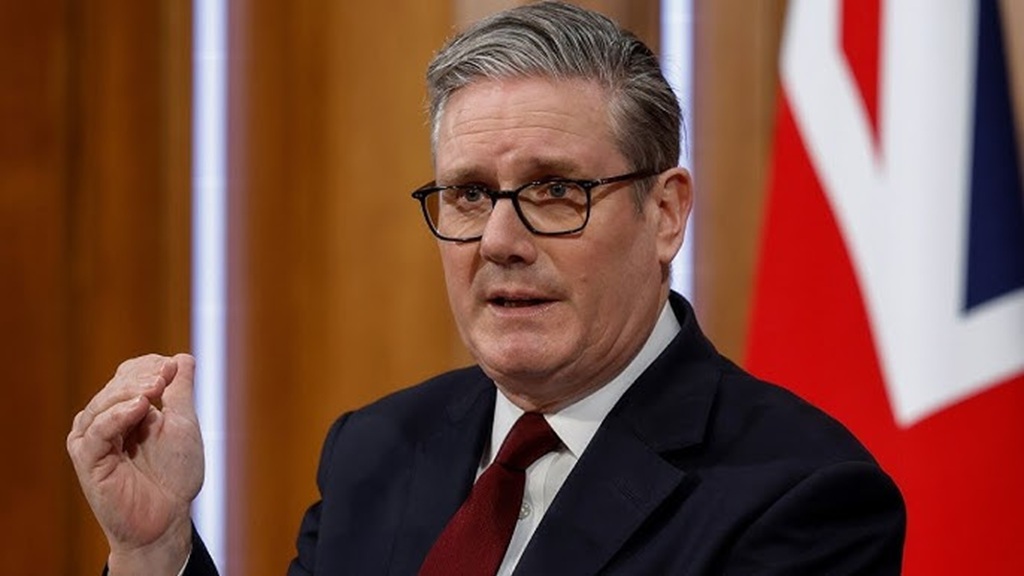
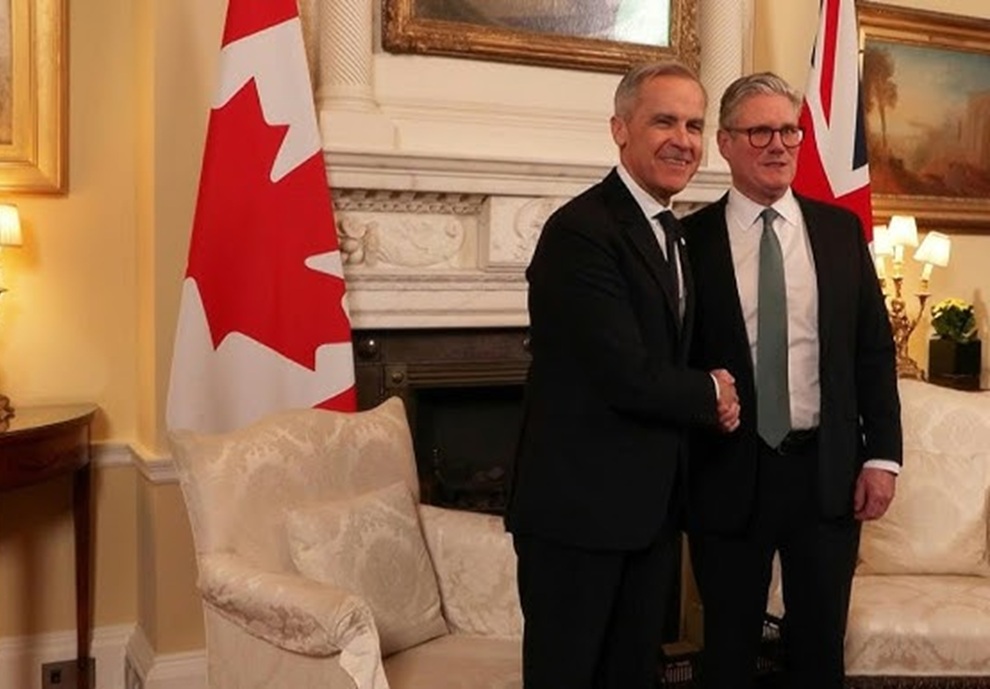
WASHINGTON, D.C. – As the Middle East conflict intensifies, Canadian Prime Minister Mark Carney and UK Prime Minister Keir Starmer face growing backlash over their shifting stances on the joint U.S.-Israeli campaign against Iran.

Early reactions sounded supportive of strikes meant to cripple Iran’s nuclear program and remove senior regime leaders. Soon after, both leaders leaned into calls for restraint, expressed regret, and pointed to international law.

Critics say the change in tone looks like weakness. They also warn that it harms trust with Washington and Tel Aviv. Others argue that both leaders are putting domestic politics ahead of alliance unity.

With Iran firing back and the risk of a wider war rising, their moves have sparked a fresh debate. Are they responding to political pressure at home, or trying to defend global rules?

What Set Off the Iran Conflict

The U.S.-Israeli operation began in late February 2026. It hit Iranian nuclear sites and senior leadership, including Supreme Leader Ayatollah Ali Khamenei. The U.S. and Israel described the strikes as preemptive self-defense tied to Iran’s nuclear ambitions and support for regional militant groups. Iran answered with missile attacks on Israel and U.S. partners, pushing the region closer to a broader conflict.

  • Key events timeline:
    • February 28, 2026: First U.S.-Israeli strikes kill Khamenei and weaken Iran’s military capacity.
    • March 1-2, 2026: Iran launches retaliatory strikes across the region, including at U.S. bases.
    • March 3-4, 2026: Carney and Starmer release statements that mix support with warnings and criticism.

The offensive has split allies. Some countries, including Australia, have raised legal concerns without fully condemning it. Others, like France, have criticized the operation for sidestepping the UN.

Carney’s Early Support, Then a Quick Change in Tone

Mark Carney, newly in office after a Liberal victory, first sounded aligned with Washington. On February 28, Carney and Foreign Affairs Minister Anita Anand said, “Canada supports the United States acting to prevent Iran from obtaining a nuclear weapon and to prevent its regime from further threatening international peace and security.” The message matched Canada’s long-running concerns about Iran’s human rights record and nuclear activity.

Still, Carney softened his approach within days while visiting Australia. At the Lowy Institute in Sydney, he called the crisis “another example of the failure of the international order.” He also said the U.S. and Israel acted “without engaging the United Nations or consulting with allies, including Canada.” Even while keeping broad support for the goal, he added that he backed it “with regret,” and he urged fast de-escalation to reduce the chance of a larger war.

Opponents quickly called it a reversal. Conservative MP James Bezan wrote on Facebook: “Mark Carney’s flip-flops on Iran are leaving Canadians confused. Carney first said he supported U.S. airstrikes, then expresses regret about backing them.” Some analysts point to tension inside the Liberal Party. For example, former Foreign Minister Lloyd Axworthy compared the moment to Canada’s 2003 decision not to join the Iraq invasion.

  • Why Carney may have shifted:
    • Pressure from party voices that want UN involvement and coalition decision-making.
    • Polling suggests Canadians distrust one-sided U.S. military action.
    • A desire to avoid deeper military involvement, since Carney hasn’t ruled out support but keeps stressing diplomacy.

As a result, Canada’s role in global security is under sharper scrutiny. Supporters call it careful and principled. Critics call it turning away from allies when it matters.

Starmer’s Cautious Line and His Refusal to Join the Offensive

Keir Starmer, prime minister since Labour’s 2024 landslide, has kept a steadier but guarded position. On February 28, he said, “The United Kingdom played no role in these strikes but we have been clear, the Iranian regime is abhorrent.” He also condemned Iran’s retaliatory attacks. At the same time, he framed UK involvement as defensive, including support to protect allies under collective self-defense.

By March 3, Starmer told Parliament the UK “does not believe in regime change from the skies.” That statement created distance from U.S. President Donald Trump’s harder line. Starmer also said UK bases in Cyprus and elsewhere would support defense, not offensive strikes. Trump responded by mocking Starmer as “not Winston Churchill,” and he framed Starmer’s approach as weak.

Starmer’s caution reflects lessons many in Labour associate with the 2003 Iraq War. He has called for de-escalation and a negotiated outcome, which also puts him closer to countries like France.

  • Criticism aimed at Starmer:
    • Conservatives say he’s hesitating and damaging UK-U.S. ties.
    • Some critics see him trying to satisfy anti-war voices inside Labour.
    • Trump claimed Starmer is influenced by Muslim voters, after Labour faced setbacks in some Muslim-majority areas.

Even so, Starmer has repeatedly supported Israel’s security. Still, his hesitance on arms sales has added strain to the relationship.

International Law: Real Principle or Handy Cover?

Both leaders often point to international law to explain their positions. Carney said the strikes appear “inconsistent with international law” because the UN wasn’t involved.

At the same time, he supported the goal of stopping Iran from obtaining a nuclear weapon. He also pointed to years of stalled UN resolutions and failed diplomacy, framing the crisis as proof that the system isn’t working well.

Starmer, a former Director of Public Prosecutions, has stressed that UK defensive actions meet international law standards. He backed that up by releasing legal advice. He also pushed back on unilateral regime change, citing UN Charter limits on the use of force without Security Council approval.

  • The case for and against this argument:
    • Pros: It supports multilateral action, may limit escalation, and keeps room for diplomacy.
    • Cons: Critics say it works as an excuse, while ignoring Iran’s alleged breaches tied to the Nuclear Non-Proliferation Treaty and ongoing human rights abuses.
    • Past comparisons, including Iraq, shape the debate. Some fear legal caution leads to drift and instability, while others see it as a guardrail.

So far, supporters praise the legal focus as responsible. Hawks dismiss it as unrealistic when facing an Iran they view as a direct threat.

Domestic Politics: Voters, Party Pressure, and Cabinet Tensions

A repeated charge is that both leaders are responding to politics at home, including worries about backlash from Muslim voters. In the UK, Labour has struggled in several Muslim-heavy constituencies.

In some areas, pro-Palestinian organizing helped Green Party candidates make gains. Starmer’s appearance at a “Big Iftar” event in Westminster, where he spoke about rising anti-Muslim hostility and defended his Iran approach, added fuel to claims he’s trying to placate critics.

Trump said Starmer is “pandering to the UK’s Muslim voters” because he won’t join offensive strikes. Conservative voices, including Priti Patel, have called Starmer weak on major foreign policy tests, and they argue voter politics is shaping his choices.

Carney faces a different kind of pressure. Liberal divisions seem to matter more than any single voting bloc. MPs like Will Greaves have urged restraint in public, with a focus on civilian protection and consistent messaging.

Canada’s diverse population also raises the stakes, including a significant Iranian-Canadian community. One Canadian-Iranian user on X criticized Carney’s emphasis on diplomacy in light of Iran’s treatment of protesters.

  • Signs ideology may be shaping decisions:
    • Starmer leads a party with a strong anti-war streak, even if he has moderated it in office.
    • Carney’s background as an economist ties him to a rules-based approach over unilateral action.
    • Both leaders face internal friction; for Starmer, reports suggest figures like Ed Miliband questioned close alignment with the U.S.

Aides reject claims of voter-driven pandering. Even so, the political math at home keeps shaping how both leaders speak and act.

Credibility Problems at Home and Overseas

The public shifts have come with a cost. In Washington, Trump has attacked Starmer’s response as “feeble,” putting pressure on the “special relationship.” Carney’s mixed messaging has also drawn scrutiny from U.S. commentators, who question whether Canada is reliable in a crisis.

At home, Carney faces Conservative attacks that paint his position as unclear. Polling also shows Canadians are split on how far to support military action. In the UK, critics from the Conservatives and Labour’s left accuse Starmer of making the country look indecisive on the world stage.

  • How allies and rivals may read it:
    • Critics say the U.S. and Israel feel “spat upon,” because support looks delayed or conditional.
    • NATO unity could weaken if major partners hesitate, which may encourage adversaries like Iran or Russia.
    • Online reactions show frustration, with X posts calling Starmer a “flip-flop” on Israel-Iran issues.

Defenders answer with one central point: caution can prevent a repeat of Iraq. From that view, steady diplomacy protects long-term credibility better than rushing into another open-ended fight.

What This Means for Western Alliances

The Carney and Starmer episode shows real strain inside Western alliances at a dangerous moment. As Iran rebuilds and retaliates, shared policy matters more than ever. Their focus on de-escalation could help open talks. Still, critics worry it weakens deterrence and sends the wrong signal.

In Canada, Carney’s Indo-Pacific trip points to deeper work on alliances outside the Middle East. That also hints at a desire to avoid getting pulled into a regional war. In the UK, Starmer has focused on domestic security and community safety, including steps meant to protect both Jewish and Muslim communities during a tense period.

  • Possible paths ahead:
    • Escalation: If Iran widens the fight and partners respond, Canada and the UK could be pulled into defense roles.
    • Diplomatic push: A renewed UN track could support their legal framing, if major powers commit to it.
    • Political fallout: Backlash from voters could shape future policy choices in both countries.

Mark Carney and Keir Starmer are trying to balance alliance ties, international rules, and politics at home. Their shifting language may reflect real concern about legality and escalation.

For critics, it looks like hesitation and betrayal of close partners. As the Iran conflict keeps moving, both leaders will need to choose clarity over mixed signals, and allies will be watching what they do next.

Related News:

Iran’s International Law Claims Ring Hollow Amid Decades of Violations

Politics

Canada’s Carney Betrays the US Condemns Defensive Strikes on Iran

VORNews

Published

on

By

Canada's Carney Betrays the US

Alliances don’t usually break overnight; they thin out over time. In 2026, the U.S.-Canada relationship looks less steady than it used to. Under Prime Minister Mark Carney, Canada has taken several steps that have unsettled Washington. For example, Carney publicly criticized U.S. military strikes on Iran, and he moved ahead with a quiet trade reset with China even after direct warnings from former President Donald Trump.

At the same time, Canada’s defense problems remain hard to ignore. The country depends heavily on U.S. support for North American security. Add reports that former Iranian regime officials have found shelter in Canada, and the trust gap grows wider. The result is a simple concern in U.S. policy circles: Canada still talks like an ally, but its choices don’t always line up that way.

This analysis reviews the main points driving the U.S.-Canada strain in 2026, using public statements, reported policy decisions, and reactions from political figures. With tensions rising worldwide, these disputes could shape North American security for years.

Carney’s Rebuke: Calling the U.S. Out on Iran Strikes

Carney has spoken bluntly about U.S. actions in the Middle East. In early March 2026, at a press conference in Sydney, Australia, he said the U.S.-Israeli strikes on Iran were “inconsistent with international law.” He also said the situation showed a “failure of the international order.” At the same time, he repeated that Canada supports stopping Iran from getting nuclear weapons.

That message shifted quickly from his earlier stance. Only days before, Carney had backed the U.S. operation “with regret,” while describing Iran as the “principal source of instability and terror throughout the Middle East.”

Carney also stressed what Canada did not get from the U.S. He said Canada was “not informed in advance” and “not asked to participate.” Reports tied the strikes to the killing of Iran’s Supreme Leader Ayatollah Ali Khamenei and to attacks on nuclear sites. Even so, Carney urged the U.S. and Israel to “respect the rules of international engagement” and pushed for “rapid de-escalation.”

In a joint statement with Foreign Affairs Minister Anita Anand, Carney kept Canada’s bottom line clear: “Iran must never be allowed to obtain or develop nuclear weapons.” However, he framed decades of failed diplomacy as part of the problem.

Some U.S. observers read this as more than a policy disagreement. They see it as a public scolding at a moment when Washington expected support. Carney’s language also matched themes from his speech to Australia’s Parliament, where he warned that the “U.S.-led global order is shifting.” Critics say that posture makes Canada look less dependable when conflict rises.

  • Key Carney quotes on the Iran strikes:
    • “We were not informed in advance, we were not asked to participate.”
    • “The current conflict is another example of the failure of the international order.”
    • “Canada supports the United States acting to prevent Iran from obtaining a nuclear weapon.”
    • “We implore all parties… to respect the rules of international engagement.”

To many in Washington, the message landed poorly. One U.S. analyst summed it up this way: Canada under Carney looks more willing to lecture the U.S. than stand beside it.

Harboring Enemies: Former Iranian Officials Staying in Canada After the IRGC Listing

Tensions grew sharper because of Canada’s record on Iranian regime-linked figures. Even after Canada listed the Islamic Revolutionary Guard Corps (IRGC) as a terrorist organization in 2024, reports from 2024 and 2025 said hundreds of people tied to the IRGC still lived in Canada. Deportations have appeared limited, even with investigations underway.

Canada’s Immigration and Refugee Protection Act bars senior Iranian officials who served since 2003. It also blocks IRGC members. Still, critics say enforcement has moved slowly. In 2024, five regime figures reportedly faced deportation proceedings. Conservative MP Melissa Lantsman criticized the government for allowing what she called “sanctuary for terrorists.” While Carney’s government has pointed to added steps meant to hold the regime accountable, public results have looked thin. Only one confirmed public removal has been reported alongside dozens of probes.

For U.S. policymakers, this undercuts efforts to isolate Iran, especially after the strikes. If Canada wants to present a united front, critics ask why it continues to host people linked to a regime the U.S. treats as a top threat. Some analysts connect the issue to domestic politics, including claims that Liberal leaders worry about backlash from voters sympathetic to Iran.

  • Timeline of the IRGC designation and fallout:
    • June 2024: Canada lists the IRGC as a terrorist entity.
    • November 2022: Canada expands bans on senior officials.
    • 2025: Reports describe about 700 IRGC-linked residents, along with calls for broad deportations.
    • December 2025: Iran responds by labeling Canada’s navy “terrorist.”

Even without a major policy break, the optics matter. The ongoing presence of Iranian officials in Canada feeds U.S. doubts and may also encourage Iranian proxies.

Quiet Deals With Beijing: Carney’s China Shift Despite Trump’s Warnings

In January 2026, Carney visited China and came back with a preliminary trade agreement. Reports said the deal reduced tariffs on Canadian canola and opened the door for up to 49,000 Chinese electric vehicles (EVs) to enter Canada at a 6.1% rate. The arrangement was described as a “strategic partnership” built around energy, agri-food, and trade. Carney called it a “reset” and said it could unlock $3 billion in exports.

That move came with a clear political cost. President Donald Trump warned Canada not to proceed. In January 2026, Trump threatened 100% tariffs on Canadian goods if the agreement went forward. He also said Canada could become a “drop-off port” for Chinese products trying to dodge U.S. duties. His warning went further: “China will eat Canada alive, completely devour it.” On Truth Social, Trump repeatedly referred to Carney as “Governor,” tied to earlier annexation talk.

Carney still moved ahead and presented the deal as a practical diversification. He also framed it against a broader shift in the “U.S.-led global order.” Yet that approach clashes with U.S. policy, since Washington has kept heavy pressure on Beijing through tariffs and other restrictions. In addition, the reported openness to Chinese investment in EV manufacturing raised security concerns among critics.

  • Reported details of the Canada-China deal:
    • China will lower canola tariffs to 15% by March 2026.
    • China exempts Canadian canola meal, lobsters, crabs, and peas from anti-discrimination tariffs through the end of 2026.
    • Canada allows 49,000 Chinese EVs at a 6.1% tariff, with a possible increase to 70,000.
    • The agreement lists five pillars: trade and investment, multilateral cooperation, finance, public safety, and people-to-people ties.

To U.S. critics, the timing was the point. Canada chose economic upside with Beijing, while friction with Washington was already high.

Weak Without U.S. Support: Canada’s Military Readiness Problems

Canada’s military struggles make this diplomatic drift riskier. In 2026, internal reporting described a force with limited readiness for a NATO crisis. One assessment said only 58% of forces were ready, and nearly half ofthe  equipment was “unavailable and unserviceable.”

In the air, the Royal Canadian Air Force continues to rely on older CF-18 Hornets. F-35 replacements have been delayed. First deliveries were expected in 2026, while full capability was projected for 2028 to 2032. Meanwhile, some aircraft were described as grounded or outdated.

The Navy faces a similar strain. Victoria-class submarines have a long record of issues and are nearing retirement. Canada has looked at German or South Korean firms for replacements. On top of that, ships have spent long stretches in refit, and staffing has remained a challenge.

On land, Canada fields tanks and armored vehicles, but readiness still draws complaints. Numbers on paper do not always translate into usable capacity.

Carney’s government has promised upgrades, including 88 F-35s, MQ-9B drones by 2028, and new multi-role aircraft. Still, spending remains below NATO’s 2% of GDP target. At the same time, tariff threats and political tension with the U.S. could complicate defense cooperation.

  • Canada’s military inventory highlights (2026):
    • Air: 351 aircraft, 66 fighters (mostly older), 145 helicopters.
    • Navy: 73 vessels, including 12 submarines, described as in poor condition.
    • Army: 74 tanks, more than 21,700 armored vehicles, with ongoing readiness issues.
    • Personnel: about 68,000 active-duty members.
    • Plans: F-35s (2026 and beyond), RPAS drones (2028), Victoria modernization (mid-2030s).

Because NORAD depends on tight coordination, Canada’s weaknesses affect the U.S. too. That makes political distancing feel even more reckless to American observers.

Liberal Politics at Home: Claims of Playing to the Muslim Vote

Critics also point to domestic politics, especially Canada’s Muslim electorate. Some argue the Liberal Party’s approach to Iran reflects a desire to avoid alienating Muslim voters. In 2026 polling referenced by critics, Muslim Canadians showed higher opposition to U.S. strikes, and about three in ten reportedly believed the war improved life for Iranians.

The political tension has shown inside the party. Liberal MP Will Greaves broke ranks and criticized Carney’s support for the strikes, saying it backed “unilateral and illegal use of military force.” Other former ministers have voiced similar concerns.

Opponents say the same vote math explains slow enforcement against IRGC-linked residents. In that view, the government delays action to limit community backlash. Supporters of Carney’s approach call it “principled pragmatism.” Critics hear election strategy.

  • Claims cited as signs of pandering:
    • Liberal MPs are engaging with anti-strike posts online.
    • Slow movement on IRGC-linked cases amid community pushback.
    • Carney’s careful, regret-based language on the strikes was aimed at balancing alliance ties and domestic pressure.

Whether those accusations are fair or not, they shape perception in Washington. U.S. officials care less about Canadian politics and more about results.

Carney’s decisions, from public criticism over Iran to trade outreach to China, have built a picture of a Canada less tied to U.S. priorities. With tariff threats hovering and Canada’s defense dependence still high, American leaders may rethink what they expect from their northern partner. Carney keeps saying the global order is shifting, and the U.S. now has to decide how much risk it can accept from an ally shifting with it.

Related News:

Iran’s International Law Claims Ring Hollow Amid Decades of Violations

Continue Reading

Politics

Karoline Leavitt Slams CNN’s Kaitlan Collins Over Killed U.S. Soldiers

VORNews

Published

on

By

Karoline Leavitt brutally shuts down CNN's Kaitlan Collins

WASHINGTON, D.C. – A tense moment erupted at Wednesday’s White House press briefing when Press Secretary Karoline Leavitt snapped back at CNN anchor Kaitlan Collins. The exchange put a spotlight on the widening split between the Trump administration and major news outlets over the U.S.-led campaign against Iran.

At the center of the dispute were six U.S. service members killed after an Iranian drone strike hit a U.S. site in Kuwait. Their deaths came as the administration continues to promote Operation Epic Fury, the joint U.S.-Israeli campaign that began in late February.

Operation Epic Fury began in the early hours of February 28, 2026. The first wave included large U.S. strikes using B-2 stealth bombers, F-22 fighters, and other aircraft. In the first 72 hours, the campaign hit more than 1,700 targets, according to the administration. Those strikes reportedly focused on Islamic Revolutionary Guard Corps (IRGC) facilities, ballistic missile sites, air defenses, naval assets, and command-and-control locations.

White House officials have framed the operation as a major blow to Iran’s leadership and military infrastructure. Reports also claim widespread damage, including the reported death of Supreme Leader Ayatollah Ali Khamenei and other senior Iranian figures.

President Donald Trump has said the strikes reverse what he called “decades of cowardice” in U.S. policy toward Iran, which the U.S. has long accused of backing terrorism and seeking nuclear capabilities.

Still, the campaign has brought U.S. losses. On Sunday, an Iranian drone strike hit a U.S. tactical operations center at Shuaiba Port in Kuwait, killing six service members. The Army has named four:

  • Sgt. 1st Class Nicole Amor (White Bear Lake, Minnesota)
  • Capt. Cody Khork (Lakeland, Florida)
  • Sgt. 1st Class Noah Tietjens (Bellevue, Nebraska)
  • Sgt. Declan Coady (Des Moines, Iowa)

Officials have not released the other two names yet, pending family notification. Reports say the drone hit a temporary office inside a triple-wide trailer used by U.S. personnel.

Trump has said he plans to attend the dignified transfer at Dover Air Force Base in Delaware. Leavitt described it as the president standing “in grief alongside their families.”

Hegseth’s comments set off a backlash

Earlier on Wednesday, Defense Secretary Pete Hegseth, often labeled in administration messaging as “Secretary of War,” spoke to reporters at the Pentagon about the operation. He praised the mission and promised to “avenge” the fallen troops. At the same time, he criticized how the media has covered the deaths.

“When a few drones get through or tragic things happen, it’s front-page news,” Hegseth said. “I get it. The press only wants to make the president look bad. But try for once to report the reality.”

He also pointed to what the administration calls broader gains, including U.S. control of Iranian airspace and waterways without sending ground troops. In his view, outlets focus on setbacks to hurt Trump politically.

Critics responded quickly, saying reporting on U.S. casualties is a basic responsibility of the press, not a partisan act.

Karoline Leavitt versus CNN’s Collins

During the afternoon briefing, Collins pressed Leavitt on Hegseth’s remarks.

“Is it the position of this administration that the press should not prominently cover the deaths of U.S. service members?” Collins asked.

Leavitt fired back and defended Hegseth, saying Collins twisted his meaning.

“That’s not what the secretary said, Kaitlan, and that’s not what the secretary meant, and you know it,” Leavitt replied. “You know you are being disingenuous.”

She argued that news outlets should also report what she called the successes of Operation Epic Fury and the damage done to Iran’s military and leadership. Leavitt then warned that Iran poses a direct threat to Americans.

“If the Iranian regime had their choice, they would kill every single person in this room,” she said. “So we can all be very grateful that we have an administration and that we have men and women in our armed forces who are willing to sacrifice their own lives for the rest of us in this room and for every American across the country.”

Collins continued, quoting Hegseth’s words and saying he appeared to be “complaining” that the soldiers’ deaths made front-page news. Karoline’s response grew more pointed.

“The press does only want to make the president look bad. That’s a fact,” she said. “Especially you, and especially CNN.”

Karoline Leavitt also said Hegseth “cares deeply about our warfighters” and travels around the country to meet with service members. She added that CNN rarely highlights those visits.

In response, Collins again read Hegseth’s quote and questioned whether the White House wanted to minimize the sacrifices. Karoline rejected that framing and returned to her message of gratitude and mission focus.

Karoline Leavitt and the mainstream media

The dispute reflects the long-running conflict between Trump’s White House and major media outlets. Supporters say news coverage leans negatively to weaken the administration. On the other hand, critics say the White House attacks reporters to avoid tougher scrutiny, especially when the military faces losses.

Clips of the exchange spread quickly online. Some conservative voices praised Leavitt’s pushback, while others said the moment crossed a line and chilled press freedom.

Meanwhile, Operation Epic Fury continues with no clear end date. The six deaths have become a painful reminder of the cost of this conflict. The administration says the campaign stays focused on dismantling Iranian threats, yet questions keep building around strategy, congressional approval, and long-term stability in the region.

Trump has signaled no quick pullback, saying operations will continue until threats are neutralized. Leavitt echoed that stance and said the fallen service members’ sacrifices won’t be in vain.

For now, the White House has not shared details on the next phase, although officials say they will keep providing updates, with an emphasis on progress as well as setbacks. The briefing room argument may fade, but it shows how the battle over public narrative is running alongside the fighting overseas.

Related News:

CNN’s Harry Enten Calls the 2028 Democratic Primary a  Clown Car 

Karoline Leavitt Slams CBS News Over ICE Deportation Numbers

Continue Reading

Politics

Jasmine Crockett’s Loses Democratic Texas Senate primary

VORNews

Published

on

By

Jasmine Crockett’s Loses

AUSTIN, Texas – Texas Democrats woke up to a primary result few expected. State Rep. James Talarico beat U.S. Rep. Jasmine Crockett in the March 3, 2026, Democratic primary for U.S. Senate, a win that quickly shifted party hopes for a rare statewide breakthrough.

Talarico, a 36-year-old former middle school teacher and Presbyterian seminarian from the Austin area, pulled in about 52 to 53% of the vote. Crockett, a Dallas-based congresswoman, finished with roughly 45 to 46%. A third candidate, Ahmad Hassan, received about 1.3%. Those figures came from near-final tallies from the Texas Secretary of State, along with projections from major outlets such as the Associated Press, NBC News, CBS News, and CNN.

Because Talarico cleared 50%, the race skipped a May runoff. Crockett conceded the next morning on social media, congratulated him, and urged Democrats to unite ahead of the November 3 general election.

“This morning I called James and congratulated him on becoming the Senate nominee,” Crockett wrote on X. She also said “Texas is primed to turn blue,” and asked Democrats to rally behind the nominee to end the GOP’s long run in statewide contests.

A hard-fought primary that put style and electability on display

This race became one of the priciest and most-watched Democratic primaries Texas has seen in years. It also showed a clear split in how each candidate thought Democrats could win statewide.

Jasmine Crockett, 44, is a former public defender who built a national profile with sharp, combative moments that often went viral. Her plan focused on turning out the base, especially Black voters, urban progressives, and younger activists. Her campaign put heavy emphasis on big-city turnout in places like Dallas, Houston, and Austin.

Talarico took a different route. He ran on a top-versus-bottom populist pitch that also spoke openly about Christian faith. At the same time, he cast himself as someone who could connect with moderates, independents, and even some unhappy Republicans. That message mattered in a state where Democrats have not won statewide in more than 30 years.

Polling before Election Day was mixed. Some surveys showed Crockett with a strong edge among Black voters and seniors. Others pointed to growing Talarico support among Hispanic and white Democrats. In the end, Talarico’s wider coalition carried him, including unusual crossover participation from independents and Republicans in Texas’s open primary system.

Both sides also sparred over what it takes to flip a Senate seat in Texas. Jasmine Crockett argued Talarico came off as too moderate to fire up Democratic voters. Talarico countered that Crockett’s confrontational style could push away the swing voters needed to beat the Republican nominee. That GOP nominee will be either incumbent John Cornyn or challenger Ken Paxton, since the Republican primary heads to a May 26 runoff.

  • Key primary takeaways
    • Democratic turnout jumped in urban and suburban areas.
    • Electability arguments drove much of the debate in a red-leaning state.
    • Talarico’s faith-focused message connected with many moderates.
    • Crockett led overwhelmingly among Black primary voters (estimates near 80 to 87%).
    • Both campaigns drew major national donors and spent heavily.
    • The race included minor issues, including confusion at some Dallas polling locations.

Talarico’s quick rise from the Legislature to a Senate nomination

Talarico’s win caps a fast climb for the Austin-area lawmaker. He first drew attention for pushing progressive priorities on health care, public education, and criminal justice reform. Still, he stood out in this race because he paired those goals with direct religious language, including scripture references when arguing for compassion and economic fairness.

After his primary victory, analysts said his approach could match up well against a divided Republican field. Cornyn and Paxton have been locked in a tense runoff fight, and Talarico has already started framing November as a choice between “common-sense solutions” and “extreme partisanship.”

In his victory remarks, Talarico pointed to the mix of voters who backed him. “Texans from all walks of life came together because they believe in a politics of hope and unity,” he said. He also described the result as something that “shocks the nation,” and said it offers “a little bit of hope” for Democrats across the country.

Jasmine Crockett concedes and signals the unit.y

Jasmine Crockett entered the Senate race in late 2025, after other possible candidates, including former Rep. Colin Allred, stepped aside. She ran with a national reputation as a forceful critic of former President Donald Trump and Republican policies. For many progressives, she was the kind of fighter they believed could boost enthusiasm.

Even with the loss, her supporters credited her for elevating issues such as criminal justice reform and racial equity. In her concession, Jasmine Crockett said she would support Talarico, a quick step toward party unity.

Whadoes t the result mean for November in Texas

Texas Democrats have not won a U.S. Senate seat since 1988. They also have not won a statewide office since 1994. With Talarico as the nominee, Democrats now see a clearer path to making the general election competitive, especially if Republicans nominate Paxton instead of the more establishment Cornyn.

Now the test shifts to November. Talarico will need to show that his cross-party appeal can overcome TTexas’sRepublican lean. With national attention already locked on the race, the contest could also shape how Democrats campaign in red and purple states going forward.

For Texas Democrats, the celebration is brief. Next comes the harder task, turning a surprise primary win into a statewide victory on November 3.

Related News:

CNN Warns 58% of Americans Say Democrats Have Moved Too Far Left

Continue Reading

Get 30 Days Free

Express VPN

Create Super Content

rightblogger

Flight Buddies Needed

Flight Volunteers Wanted

Trending