


Connect with us

News

Mamdani Wants $229M From New York Employee Retirement Fund

VORNews

Published

on

Mamdani Wants $229M From New York Employee Retirement Fund

NEW YORK – For decades, the deal for New York City public servants was simple: you work hard for the city, and in return, the city takes care of you in your golden years. But for thousands of retired police officers, firefighters, teachers, and sanitation workers, that promise is feeling a little shaky this week.

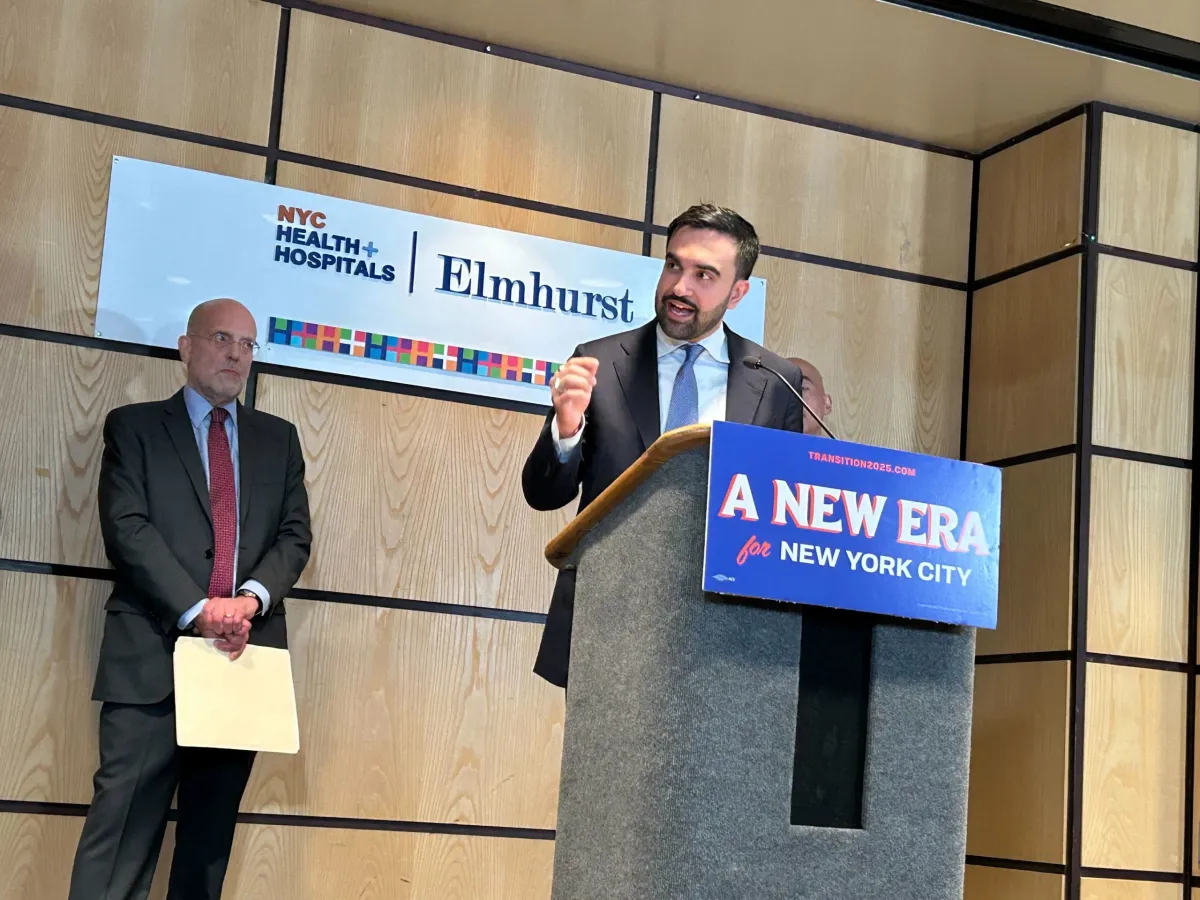
Mayor Zohran Mamdani’s latest budget proposal includes a plan to withdraw $229 million from the Retiree Health Benefits Trust (RHBT). While the administration frames this as a necessary step to balance the city’s books, those who rely on these funds see it as a “raid” on their healthcare security.

What is Mamdani’s $229 Million Proposal?

At the heart of the debate is the Retiree Health Benefits Trust. This is essentially a savings account meant to pay for the future healthcare costs of people who have already retired from city service.

In his Fiscal Year 2027 Preliminary Budget, Mayor Mamdani suggested taking $229 million out of this trust to help bridge a massive budget gap. The city is currently facing a shortfall of roughly $6 billion over the next two years. To make the numbers work legally, the Mayor is looking at several tough options:

  • Raising property taxes by 9.5%.
  • Tapping into the city’s “Rainy Day” reserves.
  • Withdrawing the $229 million from retiree health funds.

The administration argues that since the city is legally required to pass a balanced budget, these “one-time” withdrawals are better than making deep cuts to active services like schools or trash collection.

Why Retirees and Employees Are Worried

Retirees aren’t just worried about the money; they are worried about the precedent. The trust was designed to ensure that even if the city hits hard times, there is money set aside specifically for healthcare.

When the city starts dipping into that pot to pay for general expenses, it creates a “slippery slope.” Here is why many find the move alarming:

  • Insolvency Risks: Recent audits from the NYC Comptroller’s office have already signaled that other health-related funds are struggling. Adding more withdrawals could shorten the lifespan of these protections.
  • Cost Shifts: There is a fear that if the trust runs low, the city will eventually force retirees into cheaper, less flexible healthcare plans—like the controversial Medicare Advantage shift that has been tied up in courts for years.
  • Broken Trust: Many workers took lower pay during their careers because they were promised “premium-free” healthcare for life.

The Bigger Budget Picture

Mayor Mamdani took office during a period of intense financial pressure. The city is dealing with the end of federal pandemic aid, rising costs for migrant care, and a cooling real estate market.

To tackle the $6 billion gap, the Mayor has proposed a “New Revenue” strategy. This includes a mix of wealth taxes and property tax hikes. However, these plans face stiff opposition in Albany and from local homeowners.

“We cannot fund the City’s needs on the backs of homeowners or by digging into emergency reserves,” said City Council Speaker Julie Menin in a recent statement.

The City Council has offered an alternative path that avoids taking the $229 million from the health trust. They suggest finding savings through “government efficiencies” and re-estimating tax revenues, but the Mayor’s office remains cautious.

The Impact on Current Workers

It isn’t just the 250,000 current retirees who are watching this closely. If you are a current NYC teacher or paramedic, this trust represents your future.

The health fund acts as a safety net. If that net is thinned out today to pay for today’s bills, there might not be enough left when current employees reach retirement age. This creates a ripple effect of anxiety across the entire municipal workforce.

Key Budget Figures at a Glance

Fund Source Proposed Withdrawal Purpose
Rainy Day Fund $980 Million FY 2026 Budget Balance
Retiree Health Trust $229 Million FY 2027 Budget Balance
Property Tax Increase 9.5% Long-term Revenue

A History of “Raiding” the Funds

This isn’t the first time a Mayor has looked at health funds as a “piggy bank.” For years, the city and municipal unions have agreed to move money out of stabilization funds to pay for things like wage increases or to avoid layoffs.

Critics say this “off-budget” spending is exactly why the city is in a crunch now. A recent audit found that over $4 billion has been transferred out of similar funds since 2001. Each time a withdrawal is made, the long-term stability of the system weakens.

The budget isn’t final yet. Over the next few months, the Mayor and the City Council will enter intense negotiations. Retiree advocacy groups are expected to flood City Hall with protests, urging the administration to find the $229 million elsewhere.

For the men and women who kept New York City running through blizzards, blackouts, and pandemics, the message is clear: their healthcare shouldn’t be a line item used to balance a spreadsheet.

As the April and June budget deadlines approach, all eyes will be on Mayor Mamdani to see if he stands by the withdrawal or finds a way to keep the city’s promises intact.

Trending News:

Republicans Gain Ground in California While Businesses Flee Blue States



News

Stacey Abrams $2B Nonprofit Faces Alleged Fraud Allegations

VORNews

Published

on

By

Stacey Abrams $2B Nonprofit

WASHINGTON, D. C.- The intersection of high-stakes politics and federal billionaire-scale grants has once again placed former Georgia gubernatorial candidate Stacey Abrams in the eye of a national storm.

Over the last several months, social media platforms and political corridors have been abuzz with a staggering claim: that a nonprofit entity linked to Abrams is facing allegations of fraud involving $2 billion in taxpayer funds.

As with most stories involving figures of national prominence, the truth is far more nuanced than a viral headline. Investigating these claims requires peeling back layers of federal grant applications, nonprofit structures, and the shifting political landscape of 2026.

The figure at the heart of this controversy—$2 billion—is not a random number. It stems from a massive federal grant awarded by the Environmental Protection Agency (EPA) under the Biden administration’s Inflation Reduction Act.

The grant was awarded to a coalition known as Power Forward Communities (PFC). This group is a partnership of several prominent national organizations, including:

  • Rewiring America
  • Habitat for Humanity International
  • United Way Worldwide
  • Enterprise Community Partners
  • Local Initiatives Support Corporation (LISC)

The mission of the $2 billion award is to fund energy-efficient housing upgrades, such as solar panels and heat pumps, specifically for low-income communities across the United States.

The Stacey Abrams Connection

Critics and social media posts have frequently characterized this as “Stacey Abrams’ $2 billion.” However, public records and organization rosters tell a different story.

Stacey Abrams served as Senior Counsel for Rewiring America—one of the five partners in the coalition—from March 2023 until December 2024. While she was a high-profile advisor for one of the member groups, she did not lead Power Forward Communities, nor did she have a formal role in the entity that directly manages the $2 billion.

Tim Mayopoulos, CEO of Power Forward Communities, recently addressed the rumors directly. “Stacey Abrams has not received a penny of this EPA grant,” Mayopoulos stated in an interview. “It was never the plan for her to receive any money from this grant.”

Breaking Down the Fraud Allegations

If the money was awarded to a coalition of established nonprofits, where do the “fraud” allegations come from? The pushback has primarily come from the current administration’s EPA leadership and conservative watchdog groups.

Key Concerns Raised by Investigators:

  • Organizational Maturity: The EPA’s current leadership, led by Administrator Lee Zeldin, has questioned why such a massive sum was awarded to PFC, which reported very little revenue in the year it was founded (2023).
  • Timing of the Award: Officials have scrutinized the “last-minute” nature of the grant transfers, which occurred toward the end of the previous administration’s term.
  • Conflicts of Interest: Watchdog groups like the Foundation for Accountability and Civic Trust (FACT) have filed complaints alleging that Abrams-founded groups often blur the lines between social welfare and political campaigning.

In early 2025, the EPA moved to terminate the grant funding, citing “potential fraud and misalignment with agency priorities.” However, this move was temporarily blocked by a federal judge who described the government’s assertions of fraud as “vague and unsubstantiated.”

The Financial Health of Fair Fight Action

While the $2 billion EPA grant is the most sensational headline, Abrams’ primary nonprofit, Fair Fight Action, has faced its own separate set of financial hurdles.

Once a powerhouse of Democratic fundraising, Fair Fight Action reported significant financial strain in late 2024 and 2025. According to tax filings and internal reports:

  1. Legal Debt: The organization spent over $37 million on legal fees between 2019 and 2021, largely tied to voting rights litigation.
  2. Staff Layoffs: In early 2024, the group laid off roughly 75% of its staff to manage a $2.5 million debt.
  3. IRS Complaints: FACT filed a complaint with the IRS in August 2025, alleging that Fair Fight Action functioned more for Abrams’ personal political benefit than for the general public good.

What the Future Holds

Currently, the $2 billion in federal funds remains in a state of legal limbo. The money is reportedly held by Citibank, with distribution paused as the court battle between the EPA and Power Forward Communities continues.

For Stacey Abrams, who has distanced herself from the daily operations of these groups to focus on other projects, the controversy remains a persistent political shadow. Supporters view the allegations as a coordinated “witch hunt” designed to dismantle clean energy initiatives and discredit a prominent voting rights advocate. Critics, meanwhile, see it as a necessary audit of how billions in taxpayer dollars are distributed to politically connected organizations.

As the 2026 midterms approach, the resolution of these fraud allegations will likely serve as a major talking point for both sides of the aisle. For now, the “gold bars” of the EPA grant remain locked away, pending a final verdict from the courts.

Related News:

Vice President JD Vance Accuses Ilhan Omar of Immigration Fraud


Continue Reading

News

Justice Jackson’s Bizarre Birthright Citizenship Analogy Leaves America Stunned

VORNews

Published

on

By

Supreme Court Justice Jackson'

WASHINGTON, D.C. – The Capitol is buzzing about Supreme Court Justice Jackson’s childish explanation and defense of birthright citizenship after the United States Supreme Court opened its doors for oral arguments in Trump v. Barbara — a landmark case that could fundamentally redefine what it means to be an American citizen.

The case is the second time the nation’s highest court has heard arguments about birthright citizenship, although truly only the first time it has done so in earnest. In an extraordinary and almost theatrical moment, President Donald Trump attended the oral arguments in person — a highly unusual move from a president who has repeatedly suggested the majority-conservative court should rule in his favor.

At the center of the legal battle is a single, loaded phrase tucked into the 14th Amendment of the U.S. Constitution: “subject to the jurisdiction thereof.” The 14th Amendment states: “All persons born or naturalized in the United States, and subject to the jurisdiction thereof, are citizens of the United States and of the State wherein they reside.”

It is the kind of case that demands the sharpest legal minds in the country. But one exchange during the proceedings sent shockwaves far beyond the marble walls of the Supreme Court — and straight into the global news cycle.

Justice Ketanji Brown Jackson Comment Broke the Internet

Liberal Supreme Court Justice Ketanji Brown Jackson faced viral backlash from conservatives over a comment during oral arguments about birthright citizenship, where she floated an analogy comparing the issue to stealing a wallet in Japan.

In her own words, Jackson explained her thinking to the courtroom: “I was thinking, you know, I’m a U.S. citizen and visiting Japan, and what it means is that, you know, if I steal someone’s wallet in Japan, the Japanese authorities can arrest me and prosecute me.

Its allegiance means they can control you as a matter of law. I can also rely on them if my wallet is stolen, to, you know, under Japanese law, go and prosecute the person who has stolen it. So there’s this relationship based on, even though I’m a temporary traveler, I’m just on vacation in Japan, I’m still locally owing allegiance in that sense.”

The analogy was intended to illustrate how even a temporary visitor remains “subject to the jurisdiction” of a foreign country — and therefore, by extension, how babies born in the U.S. to non-citizen parents could still be considered subject to U.S. jurisdiction under the 14th Amendment. The internet, however, was having none of it.

Conservative Backlash: “I Cannot Believe This Woman Is on the Court.”

The reaction from conservatives was immediate, fierce, and deeply personal.

Conservatives and Republican politicians quickly seized on Jackson’s comment equating territorial jurisdiction with political allegiance, arguing that her analogy fundamentally misreads the 14th Amendment’s birthright-citizenship clause.

“I don’t think KBJ knows what words mean,” conservative communicator Steve Guest posted online.

Turning Point USA’s Andrew Kolvet wrote: “Leave it to Justice Jackson to defend the suicide pact of birthright citizenship for illegals by not understanding the difference between territorial jurisdiction (obeying local laws), and political allegiance. If territorial jurisdiction means allegiance, every tourist is a US citizen, which is insane. The whole thing is so low IQ and embarrassing for the Court.”

Florida Governor Ron DeSantis summed up his feelings in three words: “Oh, good grief, come on now!”

Perhaps the most biting critique came from journalist Miranda Devine, who pointed out a glaring flaw in Jackson’s choice of example country. “Not sure if she’s aware but of all the countries to mention, Japan is probably the least helpful to her cause,” Devine wrote. “Babies born in Japan can only become citizens if they have Japanese blood and are born to registered Japanese citizens whose names appear in a special book.”

In other words, Japan — the very country Justice Jackson chose to illustrate inclusive territorial jurisdiction — operates one of the most restrictive birthright citizenship systems in the developed world.

“I cannot believe this woman is on the court, and I cannot believe anyone on the left thinks letting her air these thoughts out loud does them any favors,” wrote Real Clear Investigations senior writer Mark Hemingway.

What Justice Jackson Was Actually Arguing

To be fair to Justice Jackson, the wallet analogy was not her only contribution to the day’s proceedings. She also pressed the Trump administration on the deeply practical consequences of the executive order it was defending.

Jackson was more direct on the question of enforcement: “Are we bringing pregnant women in for depositions? How do we figure this out?” she asked incredulously.

Solicitor General Sauer responded that the government would likely issue Social Security numbers to every baby but then figure things out afterward.

Jackson’s broader legal point, while awkwardly expressed, was not without merit. She argued that the phrase “subject to the jurisdiction thereof” has long been understood to mean the exclusion only of the children of diplomats — and that any American would be subject to the jurisdiction of a foreign country while traveling there. The wallet-in-Japan scenario was meant to illustrate this concept.

Justice Alito and Justice Jackson had also earlier offered a possible explanation for the court’s use of the term “domicile” in a key 19th-century precedent, suggesting that the original ruling had wanted to help the public accept the outcome by emphasizing that the plaintiff’s parents were settled members of society.

A Landmark Case With Enormous Consequences

Whatever one thinks of Jackson’s analogies, the stakes of this case could not be higher.

Trump’s executive order, signed on January 20, 2025, would end birthright citizenship — the guarantee of U.S. citizenship to virtually everyone born in the country. The order ended birthright citizenship for the children of undocumented immigrants, as well as those of immigrants who are in the United States legally but temporarily, for example, on a student or work visa.

The consequences of the executive order going into effect would be enormous. It would prevent about a quarter-million children each year from gaining citizenship going forward. It would also mean that every family that gives birth to a child — that’s 3.5 million families a year — would have to prove their ancestry and lineage before their child would be recognized as a citizen.

An estimated 2.7 million additional people would be unauthorized by 2045, and 5.4 million additional people by 2075, according to projections published by the Migration Policy Institute and Pennsylvania State University.

How the Court Appears to Be Leaning

Despite the controversy over Justice Jackson’s comments, the broader picture from oral arguments was relatively clear.

Nearly every member of the court expressed skepticism of the administration’s revisionist version of a long-established and core American principle. The skepticism was notably bipartisan.

Justice Neil Gorsuch noted that the Trump executive order focuses on parents, but the 14th Amendment focuses on birthright for the child. Justice Amy Coney Barrett questioned the practicality of the Trump proposal, asking: “How would you adjudicate these cases? You’re not going to know at the time of birth whether they have the intent to stay or not, including U.S. citizens by the way.”

Solicitor General Sauer argued that, contrary to the law as understood for 160 years, the 14th Amendment does not confer automatic citizenship on every baby born in the U.S., and that the true meaning of the amendment was to grant citizenship to former slaves and their children, no more.

The ACLU’s Cecillia Wang pushed back forcefully, arguing that “We can’t take the current administration’s policy considerations into account to try to re-engineer and radically re-interpret the original meaning of the 14th Amendment.”

The Supreme Court is expected to issue its ruling in the coming months. The decision will shape not only the legal identity of hundreds of thousands of children born on U.S. soil each year, but will also signal how far the current court is willing to go in reinterpreting constitutional provisions that have stood unchallenged for over a century.

As for Justice Ketanji Brown Jackson, her wallet will be remembered long after the ruling is handed down.

Whether she meant to or not, in searching for a simple, relatable analogy to defend one of America’s most foundational legal principles, she may have inadvertently handed her opponents their most memorable line of the entire debate.

Related News:

Trump Tariffs Supreme Court Ruling, What Changed in 2026

Continue Reading

News

Hegseth Ousts Army’s Top General in Latest Pentagon Shakeup

VORNews

Published

on

By

Hegseth Ousts Army's Top General in Latest Pentagon Shakeup

WASHINGTON D.C. – Defense Secretary Pete Hegseth shocked the US military on Thursday. He asked General Randy George, the Army’s top officer, to retire right away. Hegseth gave no public reason for the sudden move.

Sean Parnell, the Pentagon’s main spokesperson, shared a short statement on X. “General Randy A. George retires as the 41st Chief of Staff of the Army effective immediately,” Parnell said. “The Department of Defense thanks General George for his decades of service. We wish him well.”

The Pentagon offered no more info. An Army official told Fox News that Hegseth called George personally. He asked for the four-star general’s immediate exit but skipped any explanation. A top Defense official just said it was time for new Army leadership.

This firing marks a big step in Hegseth’s push to change top military roles. He started in January 2025. Now, he has removed almost all original Joint Chiefs of Staff members. Only Marine Corps Commandant General Eric M. Smith and Space Force head General B. Chance Saltzman remain.

General George’s Career

General Randy George began as an infantry officer. West Point commissioned him in 1988. President Joe Biden nominated him in 2023. The Senate confirmed him then. Most people thought he would finish a full four-year term. Instead, he leaves over a year early.

He served in key operations. Those include Desert Shield, Desert Storm, Iraqi Freedom, and Enduring Freedom in Afghanistan. Later, he became the Army vice chief and then top general.

Sources told CBS News, which broke the story first. They said Hegseth wants a leader who matches President Donald Trump’s and his own Army plans. George’s past work with former Defense Secretary Lloyd Austin hurt him. He served as Austin’s top military aide from 2021 to 2022. Hegseth also targets generals linked to Austin or ex-Joint Chiefs Chairman Mark Milley. He sees them as out of step with Trump’s priorities.

Hegseth fired two other Army officers, too. General David Hodne led the Army’s Transformation and Training Command. Major General William Green headed the chaplains. Recently, Hegseth announced big changes to the chaplain group. They cut faith codes from over 200 down to 31.

People in Washington noticed the timing. Trump spoke to the nation one day earlier about the Iran war. He said the US would ramp up strikes. Right now, thousands from the 82nd Airborne Division deploy to the Middle East. They support combat there. George helped lead Army readiness during this conflict.

General Christopher LaNeve takes over as acting Army chief. He was the vice chief. LaNeve once served as Hegseth’s personal military aide. Then Hegseth made him vice chief. Many see that as a plan to replace George. Parnell called LaNeve a proven leader with years of combat experience. Hegseth trusts him fully to follow administration goals.

Hegseth’s Tension with the Army Secretary

The firing highlights issues between Hegseth and Army Secretary Daniel Driscoll. Reports say Hegseth removed Army officers from a promotion list himself. Driscoll would not act. This rare step got White House notice. George and Driscoll worked closely. Together, they started the Army Transformation Initiative last year. It merged commands and cut old vehicles and aircraft.

Hegseth’s changes keep coming. He removed Joint Chiefs Chairman General C.Q. Brown, Navy Chief Admiral Lisa Franchetti, Air Force Vice Chief General James Slife, Defense Intelligence Agency head Lt. Gen. Jeffrey Kruse, and NSA/Cyber Command head General Timothy Haugh. Others went too.

Earlier this week, Hegseth overruled the Army on a helicopter crew. They flew Apaches over Kid Rock’s Nashville home. He posted on his account: “No punishment. No investigation. Carry on, patriots.” Sources say George’s exit had no link to that.

This fast military leadership shakeup sets a new pace. Former defense secretaries worry. They include Lloyd Austin, William Perry, Chuck Hagel, Leon Panetta, and James Mattis from Trump’s first term. Each has warned about risks. They say firing experts during war hurts readiness.

George’s exit closes one era. It starts another under Hegseth. Can this team handle wartime needs? That’s the big question now.

Trending News:

Trump Calls for the Release of ‘Credible’ Epstein Information

CBS Caught Making Deceptive EDIT to 60 Minutes Interview With Hegseth


Continue Reading

Get 30 Days Free

Express VPN

Create Super Content

rightblogger

Flight Buddies Needed

Flight Volunteers Wanted

Trending