
Politics
Swalwell Panics Demands FBI Halt Release of Fang Fang Spy Files
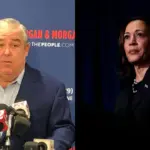
WASHINGTON, D.C. – Rep. Eric Swalwell from California battles FBI Director Kash Patel in a heated Washington showdown. Swalwell acts fast to stop the FBI from sharing files on a 10-year-old probe.
Those files link him to Christine “Fang Fang” Fang, a woman suspected of spying for China. She got close to several California Democrats back in the early 2010s.
Swalwell’s lawyers fired off a cease-and-desist letter to Patel on Monday. They demand he drop all plans to release the records right away. The probe never led to charges against Swalwell. For example, the Associated Press got a copy of the letter.
Top lawyers Sean Hecker and Norm Eisen signed it. They warn that Patel risks big legal trouble for himself, the FBI, and others. “You aim to smear him and hurt his run for California governor,” they state. They add that sharing the files breaks federal laws in key ways.
The letter sets a deadline. It asks Patel and the FBI to confirm in writing by Wednesday that they won’t release anything. So far, no public reply has come out.
Old Spy Probe Comes Back to Life
This story goes back over 10 years. Fang helped Swalwell raise funds. She also placed an intern in his office during his 2014 campaign. She first connected with his team in 2012 as he ran for Congress. Federal agents warned Swalwell in 2015.
They also briefed Congress then. Swalwell cut ties after that, he says.
No one ever charged him with anything wrong. A House Ethics probe started in 2021. It ended two years later with no action. The Justice Department skipped charges, too.
However, the case stirs again now. Critics point to the timing as no accident. FBI staff in California collect and edit documents now. They prep them for top Trump officials, says the New York Times. It cites three sources who know. The Washington Post broke the story first. They note this public release would break norms for cases without charges.
In addition, the Post reports something wild. The FBI eyes a visa for Fang to visit the U.S. She could talk to agents about Swalwell. Agents rarely do that with accused foreign spies.
Eric Swalwell Calls It Election Meddling
Swalwell speaks out strongly. He leads in the June 2 California governor’s primary. He sees the FBI push as a Trump White House trick to sway the race.
“It’s just 34 days until voting starts in California,” he told CNN’s Brianna Keilar on Monday. “Polls show us out front. The president wants his pick out West.”
On CNN, he calls any file release straight corruption. He compares it to J. Edgar Hoover’s FBI days, known for dirty politics.
Swalwell hits harder online. “Great reporting shows how far the White House goes after rivals,” he posted. “Trump fights me because I’m the frontrunner now, not just because of the governor race. Still, Trump and Patel don’t choose our governor. Voters do.”
Why Swalwell’s Team Says It’s Illegal
His lawyers list clear reasons to block the release. First, it breaks the 1974 Privacy Act. It also hits Swalwell’s First Amendment rights. “He helped the FBI in a closed case with no charges against him,” they write. “No real law enforcement need exists here.” Plus, it could harm sources and methods.
They call it pure politics, too. “You target him for his views. That violates the First Amendment,” the letter states.
The Justice Department sticks to a rule. It skips public shares on no-charge probes. Experts say changing that before a big primary would shock history.
Patel and Swalwell clashed before. In his 2023 book “Government Gangsters,” Patel named Swalwell among Trump’s foes. Now Patel controls those FBI files.
Patel mocked Swalwell publicly in December on Fox News. He joked about Swalwell dating Fang Fang again. Democrats slammed it as a personal grudge, not cop work.
The FBI defends its steps carefully. “This FBI shares more than ever,” a spokesperson says. “We prep docs for reviews by other agencies on old cases from past admins.” They skip details on Swalwell files or timelines.
Democrats Back Swalwell Hard
Top Democrats blast the moves. They see it as Trump using cops against enemies. Rep. Jamie Raskin leads the House Judiciary Democrats. “FBI smears a congressman, governor hopeful, and Trump foe,” he says. “How does that serve cops? It’s just partisan weapon use.”
Sen. Adam Schiff agrees. “Trump and his team hit DOJ foes again,” he posted on X. “Patel will do anything to pick California’s governor.”
This hits during California’s huge governor fight. Ten big names run: eight Democrats, two Republicans. Primary’s June 2. The top two advance to November, party aside. Polls this month put Swalwell high among Democrats. He even tops one Republican. That sets him up for the general.
Swalwell faces a DOJ referral, too, over alleged mortgage fraud. He calls it another attack. He dropped a suit on a housing official lately. Last September, he said he expected Trump to prosecute him. Patel’s book lists him as a “gangster.”
No one knows if files drop or when. Yet this Fang Fang fight spotlights big issues. It questions FBI independence, government attacks on rivals, and election-year power limits.
Swalwell risks his whole shot. Patel seems to plan it. California voters start early mail ballots in May. Who shapes the story might matter most in this race.
Related News:
Democrat Megadonor Exposes How Clueless Harris Campaign Really Was
Trump Signs Executive Order Tightening Mail-In Ballot Rules Before 2026 Midterms
Politics
Virginia Attorney General Jay Jones’s Fails to Restore Congressional Map
WASHINGTON, D.C – In a massive political blow to Virginia Democrats, the United States Supreme Court has officially rejected an emergency request to restore a controversial, voter-approved congressional map. The decision essentially kills the new map and locks in the state’s current political boundaries for the upcoming 2026 midterm elections.
The rejected appeal, spearheaded by Virginia Attorney General Jay Jones, aimed to revive a redistricting plan that voters easily approved in an April 2026 referendum. However, a stunning 4-3 decision by the Virginia Supreme Court declared the voter-approved map null and void, citing a technicality in how the state legislature passed it. When Attorney General Jones took the fight to the nation’s highest court, the justices declined to step in.
As the dust settles, Virginia will move forward with a congressional map that limits the Democratic Party’s hopes for a sweeping advantage, leaving national political strategists scrambling to adjust their game plans.
The Ruling That Brought Down the Map
To understand how a map approved by millions of Virginians was thrown out, you have to look at the state’s rules for constitutional amendments. Under the Virginia Constitution, any new amendment must pass the state legislature twice. Crucially, there must be a general election between those two votes so that citizens can weigh in on their representatives before the final passage.
The state legislature passed the new map during the 2025 election cycle. But here is where the legal trouble started: lawmakers passed the measure after early voting had already begun. More than a million Virginians had already cast their ballots before the legislature gave the map its final green light.
The Virginia Supreme Court ruled 4-3 that this timeline broke the rules. They decided that early voting counts as part of the “election.” Because the legislature acted after the voting period started, the court declared the April referendum null and void.
Attorney General Jay Jones heavily criticized this decision. He argued that the state court was misreading the law and stealing power from the voters. According to his office, the ruling:
- Ignored the federal definition of Election Day, which points to a single day in November, not a weeks-long early voting period.
- Silenced the voice of over 3 million Virginians who showed up to vote in the April 2026 referendum.
- Stripped the state legislature of its rightful power to manage federal elections.
Attorney General Jay Jones’s Legal Hail Mary
Refusing to back down, Attorney General Jones filed an emergency petition to the U.S. Supreme Court, asking the justices to pause the state court’s ruling. He was joined by top Democratic leaders, including House Speaker Don Scott and Senate Majority Leader Scott Surovell.
Jones and his team argued that the Virginia Supreme Court made a massive error by confusing federal election laws with state election timelines. They pointed out that federal law clearly marks Election Day as a specific, single day, not a rolling period that includes September and October early voting.
The legal team also used a fascinating and somewhat ironic legal strategy. They tapped into a narrower version of the “independent state legislature” theory. Usually, this theory is championed by conservative politicians to argue that state courts cannot interfere with a state legislature’s election rules.
In this case, Virginia Democrats used it to argue that the state Supreme Court had completely overstepped its bounds by tossing out a map crafted by lawmakers and approved by the public.
Despite these creative arguments, the U.S. Supreme Court rejected the emergency request on Friday, May 15, 2026. As is common with emergency appeals, the high court did not provide a detailed breakdown of its reasoning. However, legal experts note that federal courts generally avoid getting involved in disputes over state constitutions unless there is a glaring violation of federal rights.
The Stakes for the 2026 Midterm Elections
The stakes of this legal battle could not have been higher. If the U.S. Supreme Court had sided with Attorney General Jones, Virginia’s congressional map would have shifted dramatically.
Under the voter-approved map, Democrats were expected to gain a massive advantage. Political analysts projected that the new districts would have likely shifted Virginia’s congressional delegation to a 10-1 Democratic supermajority. For a party looking to offset gerrymandering efforts by Republicans in other states, Virginia was seen as a golden opportunity.
Instead, the state will use the current map, which features a much more competitive 6-5 Democratic edge.
Following the Supreme Court’s refusal to intervene, Virginia Governor Abigail Spanberger made it clear that the state must move on. With critical election administration deadlines fast approaching, Spanberger announced that Virginia will proceed with the old congressional map for the 2026 midterms.
For local election officials, the finality brings relief. Changing congressional districts at the last minute forces election workers to quickly reassign voters, reprint ballots, and update voter registration systems—a recipe for chaos.
A National Fight Over Political Boundaries
The failure of Virginia’s redistricting plan is part of a much larger national battle over voting maps. Both major political parties are constantly looking for legal ways to draw districts that favor their candidates, a practice known as gerrymandering.
Recently, Republican-led states across the South, including Alabama and Tennessee, have aggressively redrawn their maps to secure more GOP seats in Congress. Virginia Democrats saw their new map as a necessary defense against these southern gerrymanders. They argued that if Republicans were going to play hardball in red states, Democrats needed to do the same in blue states.
With the Virginia map officially dead, the Democratic Party loses a key piece of its national midterm strategy. They will now have to fight for control of the U.S. House of Representatives on much tougher terrain, fighting seat-by-seat under the older, more evenly divided map.
What Happens Next?
For Attorney General Jay Jones, the loss is a tough pill to swallow, but he has vowed to continue fighting for fair elections. “The Court overrode the will of the people who ratified the amendment,” Jones argued in his filings, making it clear that he views the state court’s actions as deeply undemocratic.
Moving forward, Virginia voters will head to the polls this November under the familiar 6-5 district lines. While the political maps will look the same as before, the energy around the upcoming elections will undoubtedly be higher. The battle over the map has sparked intense debates about voting rights, court power, and the true meaning of election rules.
While the legal fight is over, the political fallout is just beginning. Both parties will now focus entirely on campaigning, knowing that every single congressional district in Virginia will matter in the race for control of Congress.
To learn more about the legal steps taken in this redistricting battle, watch this FOX 5 D.C. news report on the Attorney General’s appeal. This video provides helpful context on the state’s emergency filing straight from a legal correspondent.
Trending News:
Virginia Supreme Court Throws Out New Election Maps
Supreme Court Crushes Democrats’ Racial Gerrymandering in 6-3 Decision
Politics
Still the Champ: Why the ‘Political Obituary’ of Donald Trump Keeps Getting It Wrong
WASHINGTON, D.C. – For years, mainstream media outlets have raced to be the first to publish Donald Trump’s political obituary. From the pages of The Guardian to the editorial boards of The Washington Post, the narrative has been consistent: the MAGA movement is slowing down, and the former President’s grip on the Republican Party is slipping.
However, as the dust settles on the latest round of primary elections, those predictions look less like analysis and more like “wishful thinking.” On the latest episode of The Ingraham Angle, host Laura Ingraham argued that despite constant headwinds, Trump remains the most powerful force in global politics today.
The most recent evidence of this enduring influence comes from the Hoosier State. Late last year, several Indiana State Senators made headlines for bucking Trump’s preferences on redistricting. At the time, critics were quick to claim that Trump had been handed one of his “biggest defeats yet,” with some even suggesting he left the state with a “black eye.”
The reality of the primary results tells a very different story:
- The Sweep: Five out of the eight Republican incumbents who stood against Trump lost their seats to challengers he endorsed.
- The Holdout: A sixth race remains too close to call, potentially increasing that margin.
- The Message: Voters in Indiana sent a clear signal that the MAGA endorsement still carries massive weight in local GOP politics.
Ingraham pointed out that this isn’t a new phenomenon. She compared the situation to former Representative Liz Cheney’s 2022 primary defeat in Wyoming, noting that Trump often understands the pulse of the base better than the “establishment” figures who represent them.
A Rejection of the “Old” GOP
A significant portion of the current political friction stems from a nostalgic desire—largely among Democrats and “Never-Trump” Republicans—for a return to a specific type of opposition. Former President Barack Obama recently expressed his wish for a “loyal opposition”—a Republican Party that adheres to the traditional norms of the pre-2016 era.
However, Ingraham argues that this version of the GOP is exactly what voters rejected. She noted that the “old” party was one that suffered major losses in 2006, 2008, and 2012. According to Ingraham, the left only “loves” Republicans who cave and lose, whereas the MAGA movement is built on a refusal to be “political roadkill.”
The debate over Trump’s influence isn’t just about personalities; it’s about results. The article highlights a growing divide between the governance of major Democratic-led cities and the booming “Red State” model.
- Urban Struggles: Ingraham cited declining conditions in cities like San Francisco, Chicago, Seattle, and Portland as evidence that modern liberalism is failing to provide safety and affordability.
- The Red State Boom: Conversely, states aligned with MAGA principles are seeing population increases and economic growth.
Why the Left is “Vexed”
The central reason Trump remains a thorn in the side of the political establishment is his refusal to follow their playbook. He didn’t rise through the traditional ranks, and he doesn’t use the standard political jargon. By calling out the failures of both the left and the right, he created a unique lane that neither side has successfully closed.
As the 2024 cycle ramps up, the “wishful thinking” of a post-Trump Republican Party seems further away than ever. Whether it’s in the cornfields of Indiana or on the national stage, the MAGA movement continues to prove that rumors of its demise have been greatly exaggerated.
Trending News:
Victory for Trump as Appeals Court Shuts Down Boasberg
Democrats Panic as Trump Mobilizes Massive Election Army for Midterms
Politics
Tennessee Redistricting War: Democrats Stripped of Power Amid Capitol Chaos
NASHVILLE — The political temperature in Tennessee has reached a boiling point. In a fast-moving and highly controversial special session, the state’s Republican supermajority has successfully pushed through a brand-new congressional map. This move effectively strips Democrats of their only remaining stronghold in the state and cements total conservative control over the state’s federal representation.
The political warfare quickly spilled out of the legislative chambers and into the marble halls of the state Capitol. The resulting scenes were filled with blaring air horns, aggressive chanting, and intense physical clashes that some partisan critics and onlookers have described as a violent riot. As heavily armed state troopers rushed in to maintain order, the future of Tennessee’s political landscape was rewritten in a matter of days.
The Redistricting War Heats Up
The battle lines were quickly drawn following a recent U.S. Supreme Court decision that significantly weakened specific minority protections under the landmark Voting Rights Act. Wasting no time, Tennessee Governor Bill Lee called a special legislative session. The goal was very clear: redraw the state’s congressional maps immediately, just months ahead of the highly anticipated 2026 midterm elections.
At the center of this fierce redistricting war is the city of Memphis. For nearly two decades, the area has been represented by Democrat Rep. Steve Cohen. It has proudly stood as the state’s only majority-Black, majority-Democratic congressional district.
The new map, approved by the GOP leadership, aggressively carves Shelby County into three separate districts. By splitting this vital Democratic voting bloc into rural, deeply conservative surrounding areas, the new lines give Republicans a massive advantage. They now have a clear and unobstructed path to winning all nine of the state’s U.S. House seats.
Protests, Chaos, and Clashes at the Capitol
As the legislation moved forward at lightning speed, public outrage exploded. Hundreds of angry protesters descended on the Tennessee Capitol building. What started as a vocal demonstration quickly escalated into a chaotic scene that disrupted the normal flow of government business.
Tensions boiled over during standard committee hearings. Demonstrators chanted loudly, blew air horns, and beat aggressively on the heavy wooden doors of the meeting rooms.
- Locked Arms and Defiance: Democratic lawmakers, including State Sen. Charlane Oliver, stood on their desks and linked arms in protest of what they called a “Jim Crow” effort to silence Black voters. Some members clapped, danced, and refused to follow the standard rules of decorum.
- State Trooper Intervention: The situation grew so intense and loud that Republican leaders had to completely suspend the hearings. State troopers were brought in to physically clear protesters from the rooms and hold back shouting crowds in the hallways, leading to tense standoffs.
- Fiery Symbols: Just outside the chamber doors, State Rep. Justin Jones took a lighter and set fire to a small image of the Confederate flag, repeatedly shouting the chant, “We will not go back.”
While organizers and local activists maintain that the protests were a necessary, peaceful stand for civil rights, the aggressive tactics, building disruptions, and sheer volume of the unrest led some conservative commentators to label the event a riot. Regardless of the label applied to the chaos, the disruptions did not stop the Republican supermajority from swiftly passing the map.
Democrats Stripped of Power
The passage of the new map is a crushing, historic blow to the Tennessee Democratic Party. Despite the loud protests, the walkouts, and the attempts to stall the final vote, Democrats found themselves completely powerless to stop the legislation.
Because Republicans hold a massive supermajority in both the state House and Senate, they did not need a single Democratic vote to pass the new boundaries. Furthermore, to make this mid-decade map change legal, the GOP first had to repeal a 50-year-old state law that strictly banned redrawing districts in the middle of a ten-year census cycle. They did exactly that, easily overriding any loud objections from the minority party.
The result is a total loss of power for Democrats in the state’s congressional delegation. The map effectively erases their one reliable seat in Washington, leaving left-leaning voters in Memphis feeling entirely disenfranchised.
The Legal Fight: NAACP Steps In
With their legislative power stripped away, Democrats and civil rights groups are now turning to the courts as their last line of defense. The NAACP Tennessee State Conference filed an emergency lawsuit just hours after Governor Bill Lee officially signed the map into law.
The lawsuit aims to block the new map from being used in the upcoming 2026 elections. Here are the main arguments driving the high-stakes legal battle:
- Special Session Rules: The NAACP strongly argues that Governor Lee did not clearly state that the special session would be used to repeal the 50-year-old law preventing mid-decade redistricting. Because state law requires special sessions to stick to a strict agenda, they claim the repeal is completely void.
- Voter Confusion: Changing district lines so incredibly close to an election causes massive chaos. County election commissions now have to scramble to update voter rolls, reprogram machines, and mail out notices to citizens regarding their new polling places.
- Candidate Chaos: The official candidate qualifying deadline had already passed back in March. The new law extends that deadline to May 15, forcing candidates who had already spent hundreds of thousands of dollars campaigning in their old districts to essentially start over from scratch.
State attorneys have pushed back hard against these claims. They argue that the state has sovereign immunity from these types of lawsuits and that the governor has every legal right to call a special session to make necessary statutory changes for the election.
What This Means for the 2026 Elections
The fallout from this bitter redistricting war stretches far beyond the borders of Tennessee. Control of the U.S. House of Representatives hangs in a very delicate balance, and every single seat matters on a national scale.
Former President Donald Trump publicly urged state leaders to take action and correct what he viewed as unconstitutional flaws in the old map. By securing an extra, safe seat for the GOP in Tennessee, Republicans are actively strengthening their grip on power ahead of the November midterms.
For everyday voters living in the state, the situation is incredibly murky and stressful. With early voting deadlines quickly approaching, many residents are left wondering which district they actually live in and who will be on their ballot when they show up to vote. Election officials are currently working overtime to update their complex systems, but the risk of widespread voter confusion remains extremely high.
Ultimately, the chaotic scenes at the Capitol and the bitter legal battles highlight a deeply divided state. The Democrats may have been successfully stripped of their power in the legislature, but the fight over Tennessee’s political future is far from over.
As the multiple court cases play out over the coming weeks, the entire nation will be watching closely to see if the new map stands, or if the judges will force lawmakers right back to the drawing board.
Trending News:
Democrats Panic as Trump Mobilizes Massive Election Army for Midterms
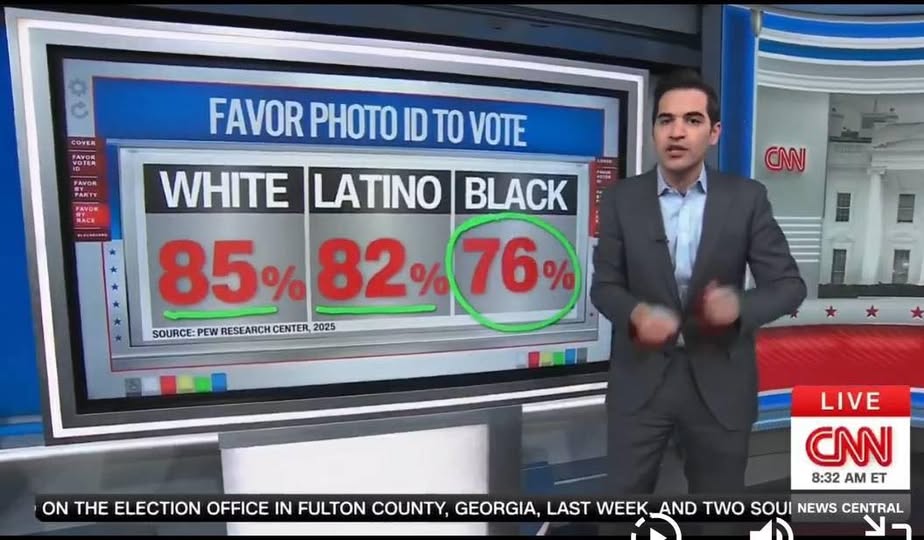
Democrats Push Back on the SAVE Act Despite 85% of Voters Backing Voter ID
-
Politics3 months agoIlhan Omar’s Connections to Convicted Somali Fraudsters Surface
-
Politics2 months agoRep. Ilhan Omar Faces Heat as Minnesota Voters Seek Change
-
Politics3 months agoCalls Mount to Expel Rep. Ilhan Omar from Congress
-
News3 months agoAustin Tucker Martin Who Was He And Why Was He at Mar-a-Lago?
-
Business3 months agoCNN Ratings Collapse As Cable Giants Face Extinction
-
News3 months agoIlhan Omar Accused of Leaking U.S. Strike Plans to Iran as Tensions Rise
-
News2 months agoNATO Chief Says 22 Nations Working With US to Keep the Strait of Hormuz Open
-
Politics2 months agoCNN Reveals Trump Has a Perfect 100% Approval Rating Among MAGA Voters