


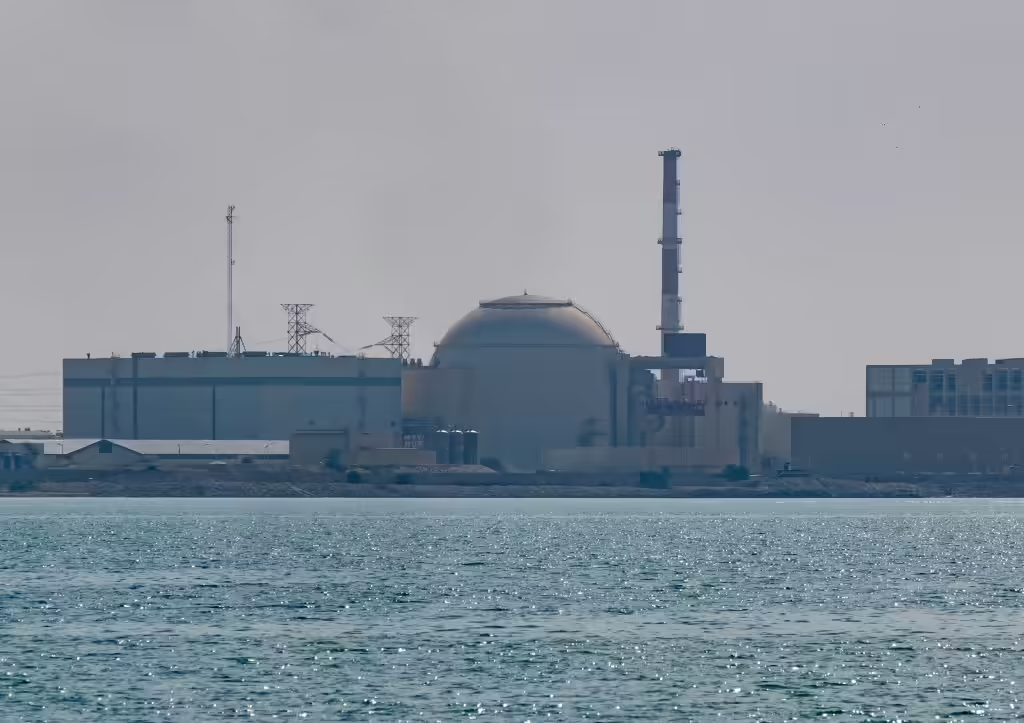


BUSHEHR, IRAN – The geopolitical landscape in the Middle East reached a fever pitch this week as Russia began a mass evacuation of its nuclear technicians from the Bushehr Nuclear Power Plant.
This move follows a direct 48-hour “ultimatum” from U.S. President Donald Trump, who warned the Islamic Revolutionary Guard Corps (IRGC) to meet American demands or face devastating air strikes.
The evacuation of nearly 200 Russian specialists marks a significant shift in the regional conflict, signaling that Moscow—traditionally a key ally of Tehran—may be preparing for a major escalation.
On Saturday, the Russian state nuclear corporation, Rosatom, confirmed the departure of 198 employees from the Bushehr facility. The plant, located on Iran’s southern coast, is a critical piece of the country’s energy infrastructure and was built with extensive Russian assistance.
Recent reports indicate that the evacuation was not just a precaution but a response to immediate danger. A projectile fragment recently struck near the plant, killing a security guard and causing minor structural damage.
Key details of the evacuation include:
- Safe Passage: Workers are being transported via bus toward the Armenian border.
- Coordination: Reports suggest Russian officials may have coordinated the exit with the Israel Defense Forces (IDF) to ensure the safety of the convoy.
- The “Worst-Case” Scenario: Rosatom Director General Alexey Likhachev stated that the situation near the plant is unfolding in a way that suggests high-intensity conflict is imminent.
Trump’s 48-Hour Warning: “Hell Will Reign Down.”
The exodus of Russian staff coincided with a blunt message from the White House. President Trump issued a 48-hour deadline for Iran to reopen the Strait of Hormuz—a vital global shipping lane—and reach a new security deal.
In a social media post that sent shockwaves through global markets, the President warned that if the deadline passes without compliance, “all hell will reign down” on the IRGC and Iranian infrastructure.
Potential Targets for U.S.-Israeli Strikes
Military analysts suggest that if the deadline expires, the U.S. and Israel may target several strategic locations:
- Power Grids and Bridges: Aims to disrupt internal logistics and the Iranian economy.
- IRGC Command Centers: Designed to degrade the military’s ability to respond.
- Oil and Gas Facilities: Intended to cut off the regime’s primary source of revenue.
The Risk of Nuclear Contamination
The most concerning aspect of the tension at Bushehr is the risk of radioactive fallout. Iranian Foreign Minister Abbas Araghchi has warned that any direct hit on the nuclear facility would not just affect Iran. He stated that contamination could drift across the Persian Gulf, threatening the capitals of neighboring countries like Kuwait, Qatar, and Bahrain.
While the plant is currently operational, the loss of Russian technical expertise makes it harder for Iran to manage the facility safely under the stress of a potential bombardment.
Russia’s Strategic Retreat
Russia’s decision to pull its workers highlights the limits of its support for Tehran. While Moscow has benefited from Iranian military aid in the past, it appears unwilling to risk the lives of its citizens or engage in a direct military confrontation with the U.S.-Israeli coalition.
Observers note that by evacuating now, Russia is “hedging its bets”—preserving its technical assets while maintaining enough distance to avoid being drawn into a second high-intensity war alongside its domestic commitments.
As the 48-hour clock ticks down, the international community is watching for any signs of a diplomatic breakthrough. President Trump has signaled there is a “good chance” for a deal, but Iranian commanders have remained defiant, promising a “crushing” response to any strikes.
For now, the buses carrying Russian engineers toward Armenia are a somber reminder that the window for a peaceful resolution is closing fast.
Related News:
Russia Tells Iran to Scale Back Hostilities Toward the United States