
Opinion
Carney’s Trade Strategy: The Risk of Waiting Out Trump

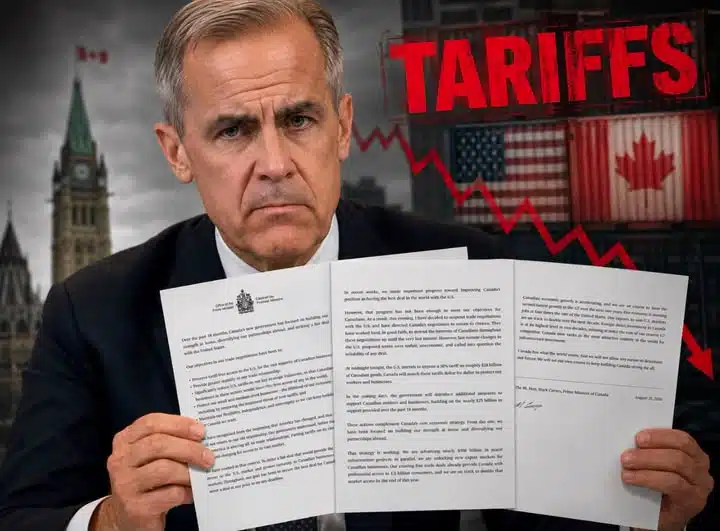
OTTAWA – Waiting for a different political balance in Washington won’t guarantee Canada a better trade deal. That’s Elliot Daigneault’s central argument on The Right Call, where he challenges what he describes as the Liberals’ strategy of waiting for the U.S. midterms before reaching an agreement with President Donald Trump.
If you’re judging the government’s response by its results, Daigneault argues, the same question applies at home: whether its announcements produce measurable progress. His criticism begins with trade negotiations, then turns to the housing construction pledge and Alberta’s sovereignty debate.
Waiting for the Midterms Doesn’t Settle Canada’s Trade Problems
Daigneault describes a Liberal calculation built around Democrats gaining control of Congress and creating better conditions for negotiations with the United States. He argues that Canadian businesses and workers bear the cost while Ottawa waits for that political change.
His objection is to treating the U.S. midterm elections as a dependable turning point in a Canadian trade dispute. Past polling misses, he says, show why an expected election outcome is a weak foundation for economic policy.
The criticism also reaches beyond which party wins. Even if Democrats gain more power, Daigneault doubts that helping Canada will become their priority.
He connects that uncertainty to the unresolved Canada-U.S. trade negotiations. In his view, Ottawa should pursue an agreement rather than assume American voters will create a more favorable negotiating partner.
The episode doesn’t establish that the Liberal government has formally adopted a wait-for-the-midterms policy. That is Daigneault’s characterization of its approach.
A Democratic Congress Would Have Its Own Priorities
A commentator featured in the episode offers another reason to question the waiting strategy: congressional Democrats could spend their political energy investigating Trump and his business dealings.
That would leave less attention for reclaiming congressional control over tariffs. The commentator also argues that Trump could continue relying on executive actions while Congress focuses elsewhere.
Daigneault adds that Democrats have their own protectionist instincts. A change in congressional control, therefore, wouldn’t automatically produce a free-trade agenda favorable to Canada.
A Democratic victory would still leave Canada dependent on American priorities, which may have little to do with resolving Canada’s tariff complaints.
His broader criticism is that the Liberals benefit politically from keeping Trump at the center of the discussion. He portrays the U.S. president as a convenient explanation for domestic failures that, in his view, Ottawa should address directly.
That accusation is part of Daigneault’s political argument. It doesn’t establish the government’s motive for the pace of negotiations.
Global Instability Becomes a Longer-Term Explanation
The episode then turns to comments suggesting that a different U.S. administration wouldn’t immediately make the world safer.
A speaker argues that both major American parties have become less interested in acting as the world’s policeman. She also points to uncertainty over tariffs and says Canada will need stronger defense, greater security, and more capacity at home regardless of who governs in Washington.
Daigneault hears a political escape route in that argument. Once Trump leaves office, he says, the explanation for Canada’s difficulties could shift to a generally unstable world.
He objects to the repeated use of “a more dangerous and divided world” because he believes it draws attention away from domestic policy choices. His position is that Canadians can’t wait for international conditions to improve before dealing with problems created at home.
That distinction runs through the episode: external pressure may be real, but Daigneault rejects treating it as a complete explanation for Canada’s economic and political troubles.
The Economist Cover Draws a Sharp Response
Daigneault contrasts his assessment of Carney’s record with an enthusiastic Economist cover featuring the prime minister, a maple leaf in his mouth, and the words “Not sorry.”
The accompanying message, “What Carney and Canada can teach the world,” prompts his response that Canada could also teach lessons about what to avoid.
His criticism covers several policy areas:
- Immigration levels, he argues, have exceeded the country’s capacity to absorb population growth.
- Housing promises have raised expectations without delivering the promised construction pace.
- He criticizes the Canadian dollar’s weakness and Ottawa’s handling of relations with Canada’s largest customer.
- Foreign spending, including assistance to Ukraine, troubles him while Canadians rely heavily on food banks.
- He disputes the economic value of carbon capture and net-zero policies.
These are Daigneault’s objections, rather than findings established by the magazine cover or the episode.
His larger complaint concerns the gap between favorable coverage and demonstrated results. He describes Carney’s record as heavy on slogans, announcements, and photo opportunities, while arguing that the public should judge the government by outcomes.
What the Housing Promise Said
Housing provides Daigneault’s main example of that gap.
The Liberal housing plan promised to double the pace of construction to almost 500,000 new homes a year. In a clip featured in the episode, Carney describes public-private cooperation on a scale not seen in generations.
Daigneault also plays remarks dated October 22, 2025, in which Carney describes doubling the pace of housing construction within a decade through new factory technology. Carney cites potential reductions of 50% in building time, 20% in costs, and 20% in emissions.
The government had also announced the launch of Build Canada Homes, with an initial $13 billion in capitalization.
The promise concerned a much higher annual construction pace over time. Daigneault’s challenge is whether the government’s later approach still gives Canadians a clear way to judge progress toward that commitment.
The Reported Shift Away From Counting Housing Starts
Daigneault cites a report that Housing Minister Gregor Robertson’s department would shift its focus away from tracking housing starts or unit counts. He interprets that change as a retreat from the election pledge.
The distinction between the original promise and the reported measurement change is central to his criticism.
| Commitment or development | What it means in the episode |
| Almost 500,000 new homes annually | The construction pace promised during the election |
| Doubling construction within a decade | The longer-term goal Carney describes |
| Less focus on housing starts or unit counts | The reported departmental change Daigneault treats as a walkback |
The construction target and the way a department measures its work are separate issues. Daigneault’s argument is that moving away from the most recognizable count makes public accountability harder.
He compares it to turning up a car radio to drown out an alarming mechanical noise. The problem remains, even if the driver stops hearing it.
For him, counting homes matters because Canadians need a consistent measure against which to judge the original pledge.
Announcing an Agency Doesn’t Show How Many Homes Exist
The episode includes television coverage describing Carney as making good on an election promise by announcing Build Canada Homes.
Daigneault objects to giving the government that credit at the announcement stage. A new agency, he argues, doesn’t demonstrate that Canada has reached the promised construction pace.
Carney describes the agency as reducing upfront building costs through flexible financial incentives intended to attract private capital. News coverage also emphasizes prefabricated homes and faster construction.
Daigneault then raises a separate allegation about the presentation of a housing announcement. He says wall panels created the appearance of active homebuilding at a press-conference site, but that someone visiting afterward found the panels gone. He presents this as evidence of political staging; the episode doesn’t independently establish the circumstances of their removal.
His concern is the practical consequence for younger Canadians. He argues that existing owners may continue benefiting from scarce housing while prospective buyers face an affordability crisis that announcements alone won’t resolve.
Carney’s Alberta Appeal Centers on Staying Together
The episode describes Carney campaigning in Alberta for the province to remain in Canada ahead of a sovereignty referendum.
At a gathering, supporters ask him for an energetic pep talk. Carney responds with a message about unity and turnout:
“Polls don’t vote. People vote.”
He says Canadians are stronger together and that the country is worth fighting for. He also argues that there couldn’t be a worse time for the referendum because the world is dangerous and divided.
Daigneault finds the speech flat. More importantly, he sees the familiar warning about global danger as a repeated political device.
He argues that the phrase can be attached to different positions, including national unity, defense spending, and Canada’s relationships with other powers. His objection is to using an international threat as a recurring justification without answering the domestic complaints driving Alberta’s discontent.
The Competing Messages About Alberta and Ottawa
A pro-unity commentator featured in CBC coverage argues that cooperation with Ottawa can work. He says Carney has visited Alberta more frequently over the preceding 18 months than the prime ministers he dealt with during his own time in provincial government.
The commentator points to federal announcements and describes a revival in the Alberta-Ottawa relationship.
Daigneault rejects the idea that frequent visits prove a deeper commitment to the province. He argues that keeping Alberta in Canada gives Carney a strong political and economic reason to be there.
Meanwhile, a sovereignty supporter interviewed by CTV describes frustration with the Liberal government and federal restrictions on Alberta’s industries. He argues that Alberta and Canada would benefit if the province could produce more oil and develop its economy more freely.
Those complaints are central to Alberta separatists’ arguments for independence.
Daigneault agrees with the supporter’s message but criticizes its presentation. He contrasts a shaky interview recorded in a car with the professional studio setting given to the unity argument, saying those differences affect how audiences receive each side.
Voting Leave as a Bargaining Strategy
Daigneault then discusses a Calgary Herald argument that even Albertans who oppose separation could support the leave option to strengthen Premier Danielle Smith’s position with Ottawa.
As he presents it, the proposal treats a leave vote as a way to press for constitutional reform and greater provincial authority.
He connects that argument to structural disputes. Ottawa controls federal taxation, cross-border pipelines, and criminal law, while Alberta’s past referendums and court victories haven’t resolved every underlying complaint.
The legal consequence of a referendum remains important. A provincial vote doesn’t automatically remove Alberta from Canada. A clear majority on a clear question would create an obligation to negotiate within Canada’s constitutional framework.
Daigneault’s political comparison is Quebec. He points to its 1980 and 1995 referendums, along with later threats of another vote, as part of a long effort to extract more autonomy from Ottawa.
The continuing Quebec sovereignty debate gives him a model for how Alberta might seek more control while ultimately remaining in the federation.
Quebec’s Immigration Powers and Settlement Funding
Daigneault says his research identified 45 arrangements that distinguish Quebec’s relationship with Ottawa. He highlights 10 in the episode, beginning with immigration.
A larger role in selecting economic immigrants
Quebec has its own immigration ministry and a larger role in selecting economic immigrants than other provinces. Daigneault describes a provincial selection process followed by federal processing.
He credits that authority with helping Quebec experience less immigration pressure than some other provinces. He also connects it to housing conditions, cultural continuity, and public safety.
Those comparisons are his interpretation of Quebec’s experience. His constitutional argument is that provincial control gives Quebec more influence over the pace and shape of immigration.
A protected stream of settlement funding
Daigneault cites federal immigration settlement funding approaching $900 million annually.
His point is that Quebec combines substantial selection authority with a major federal funding arrangement. In his view, that combination illustrates how a province can negotiate greater independence in administering programs without giving up federal support.
Quebec’s Tax Arrangements Give It More Administrative Control
Daigneault identifies three tax and funding arrangements as further examples of Quebec’s autonomy.
The federal income tax abatement
Quebec’s federal income tax abatement comes from historical federal program opt-outs. Daigneault explains that Quebec residents pay less federal income tax under that arrangement while the province collects revenue to operate more of its own programs.
His argument concerns where control sits. More money and program responsibility remain with the provincial government rather than Ottawa.
Federal transfers with different conditions
He also points to asymmetrical federal transfers, under which Quebec can receive federal funding while retaining greater control over some program delivery.
Daigneault doesn’t present provincial control as a guarantee of good management. He criticizes Quebec’s own record of overspending and underdelivering, while maintaining that local authority still matters.
Separate tax administration
Quebec administers its own provincial taxation, so individuals and corporations face separate provincial and federal filing requirements.
Daigneault acknowledges the extra paperwork. He nevertheless sees the arrangement as another example of Quebec accepting administrative burdens in exchange for more direct government control.
Pensions, Student Aid, and Parental Benefits Add to Quebec’s Autonomy
The next three examples concern programs that affect residents throughout their working and family lives.
The Quebec Pension Plan
Quebec operates the Quebec Pension Plan separately from the Canada Pension Plan.
Daigneault notes that he has contributed to both because he previously lived in Alberta. He expresses a preference for Quebec’s arrangement and criticizes the management and overhead of the federal system.
He also acknowledges that Quebec has made poor decisions of its own. His support for a separate plan rests on provincial control, rather than a claim that Quebec always manages public money well.
Student financial assistance
Quebec administers its own student financial assistance system and receives alternative federal payments.
For Daigneault, this is another example of a province maintaining its own program rather than participating in the standard federal arrangement.
The Quebec Parental Insurance Plan
Quebec also operates its own maternity and parental benefits system through the Quebec Parental Insurance Plan, outside the regular federal Employment Insurance framework.
Daigneault describes its benefits as more generous than the federal program. He acknowledges the possible tax cost but keeps his focus on Quebec’s authority to make those choices.
Court Representation and an International Voice
Daigneault’s final two examples concern Quebec’s place in national institutions and its activities abroad.
Three Supreme Court seats
Three of the Supreme Court of Canada’s nine judges must come from Quebec. Justice Canada’s description of the courts connects that requirement to representation of Quebec’s civil law system.
Daigneault argues that guaranteed representation strengthens Quebec’s position within the federation. He also speculates that Quebec judges could be sympathetic to provincial arguments in disputes with Ottawa, while acknowledging that judges are supposed to be impartial.
That speculation is his political interpretation, not a rule governing how the court decides cases.
International representation and trade promotion
Quebec maintains offices and trade delegations abroad and has arrangements connected to UNESCO and La Francophonie.
Daigneault distinguishes those activities from Canada’s authority to ratify treaties. His point is that a province can promote trade and maintain international relationships without being an independent country.
He connects that authority to statements about Quebec pursuing discussions with the United States rather than waiting entirely on Ottawa.
Taken together, these examples support his argument that Alberta could seek more room to act within Canada. They don’t establish that every Quebec arrangement would transfer directly to another province.
Mail-In Ballot Figures Raise Questions About Participation
Daigneault closes the referendum discussion with figures he cites for mail-in voting.
He says nearly 700,000 ballots had been requested, with approximately 418,000 returned and accepted. He contrasts those totals with roughly 60,000 requests and 51,000 filed mail-in ballots in Alberta’s 2023 provincial election.
| Ballot activity cited in the episode | Referendum figures | 2023 provincial election |
| Mail-in ballots requested | Nearly 700,000 | About 60,000 |
| Returned and accepted, or filed | About 418,000 | About 51,000 |
Daigneault offers two interpretations of the increase: unusually strong participation or a reason to scrutinize the voting safeguards.
He expresses hope that high participation could benefit the sovereignty side, but the figures don’t identify how those voters voted. His concern about interference is an allegation, not an established finding about Alberta’s process.
He also recalls allegations surrounding Quebec’s narrow 1995 referendum result. The episode provides no evidence establishing misconduct in the Alberta vote.
Related Episodes and Support for The Right Call
Daigneault points viewers to an earlier episode about what he describes as a warning from the U.S. ambassador concerning possible Canadian involvement in American midterm politics. The discussion is available through The Right Call’s YouTube channel.
The show also publishes on Spotify’s The Right Call feed and The Right Call on Apple Podcasts.
He closes by thanking Linda, a senior who says she plans to contribute monthly through PayPal. Daigneault emphasizes that her support and regular viewing matter more than the amount. The show’s support options include Patreon membership for The Right Call and PayPal donations to the host.
Paid Rumble Wallet promotion
The episode includes a compensated advertisement for the Rumble Wallet signup offer, using code RightCall10.
The promotion offers $10 in USA₮ for eligible users. Promotional funds can only tip creators on Rumble; they can’t be withdrawn, transferred, or cashed out.
The description limits eligibility to U.S. residents age 18 or older, excludes New York State, and limits the offer to the first 500 wallets activated and funded during the promotion. No purchase is necessary, and restrictions apply under Rumble’s official promotional rules.
Canada’s Commitments Need Measurable Results
Daigneault’s strongest criticism is that Canada can’t judge its progress by expectations about American elections or by the number of government announcements. Trade negotiations and housing construction require results that can be measured.
His Alberta argument applies the same concern to provincial power. He sees Quebec’s arrangements as evidence that negotiating authority matters, while acknowledging the costs and compromises of greater autonomy.
Waiting for Washington to change leaves Canada dependent on decisions made elsewhere. That is the risk at the center of his criticism of Carney’s approach.
Trending News:
Mark Carney’s Million Dollar Wind Up and Nickel Delivery
Opinion: Media Went Easy on Carney After Canada Lost 68,000 Jobs


Historian Victor Davis Hanson Exposes Mark Carney’s Agenda

Canadian Podcaster Jasmin Laine Unmasks Carney’s Tariff Lies

Are Liberal Voters Now Regretting Voting for Mark Carney?

Carney’s Trade Strategy: The Risk of Waiting Out Trump

US Treasury Warns Canada Banks Over Iran Sanctions

US-Canada Tensions: Elections Interference Warning

U.S. Investigation Uncovers Canadian Banks Debanking Conservatives

Tesla Halts Model 3 Orders in Canada as Tensions Rise

Why Alberta Is Voting on a Future Independence

Alberta Votes on Independence: Advance Polls Open

Opinion: Is Modern Political Empathy Really About Self-Image?

US Trade Moves Put Massive Pressure on Canada

Opinion: Canada’s Combating Hate Act Threatens Free Speech

Pierre Poilievre Critiques Reporter Who Questions His Leadership

How Progressivism Replaced Religion With A New Secular Faith

Uncovering the Truth Behind Inequality: A Bold New Vision

Canada Sheds 68,000 Jobs As Economic Fears Deepen

Opinion: What South America’s Political Shift Means for Canada

Opinion: Canada’s Economy Is Under Pressure From Debt, a Weak Dollar and Steel Tariffs

Why Alberta Separatist Leaders Say It’s Time to Leave Canada

Jimmy Kimmel Slammed for “Vile” Melania Trump “Expectant Widow” Joke

President Trump Addresses Nation on War with Iran

Trump Warns NATO Allies: America Won’t Protect Slackers After Iran Clash

Senate Hearing on Fraud and Foreign Influence Turns Tense Over Minnesota Scandals

CNN Forced to Backtrack Its Reporting on Trump’s Iran Talks

Joe Rogan Slams Gavin Newsom for Mocking Nick Shirley

Mosque Set Ablaze in Iran a Citizens Revolt Against the Islamic Regime

AOC Accuses Jessie Watters of Fox News of Sexualizing and Harassing Her

JD Vance Exposes Walz’s Fraud and CNN’s Lies in White House Presser

Milestone Card Credit: How the Milestone MasterCard Can Transform Credit


-

 News9 months ago
China-Based Billionaire Singham Allegedly Funding America’s Radical Left
-
Crime10 months ago
YouTuber Nick Shirley Exposes BILLIONS of Somali Fraud, Video Goes VIRAL
-
Politics10 months ago
Ilhan Omar Faces Renewed Firestorm Over Resurfaced Video
-
Politics10 months ago
2026 Midterms Guide: Candidates, Key Issues, and Battleground States
-
Politics8 months ago
Ilhan Omar’s Connections to Convicted Somali Fraudsters Surface
-
Politics8 months ago
CNN Delivers Stark Reality Check to Democrats Over Voter ID
-
Politics7 months ago
Rep. Ilhan Omar Faces Heat as Minnesota Voters Seek Change
-
Politics8 months ago
Trump Approval Rating (February 2026 Poll Results, Approve vs Disapprove)















