
Opinion
US-Canada Tensions: Elections Interference Warning


OTTAWA – Relations between the United States and Canada are facing unprecedented scrutiny as political and economic tensions escalate. Recent allegations suggest that Canadian political activists have crossed the border to influence key US battleground states. This has sparked fierce debate in Washington about foreign interference in domestic elections.
At the same time, discussions surrounding former central bank governor Mark Carney and his critiques of the US dollar have added economic fuel to the diplomatic fire. Some political commentators are now questioning if these combined factors could eventually lead to unprecedented US trade penalties or sanctions against its northern neighbor.
Key Takeaways
- Election Controversy: Allegations of Canadian political activists assisting Democratic campaigns in US swing states have triggered warnings about foreign interference.
- Currency Debates: Mark Carney’s past proposals to reduce global reliance on the US dollar are being framed by critics as a direct threat to American economic dominance.
- Sanction Risks: While highly unlikely, hypothetical US economic sanctions would severely disrupt bilateral trade, impacting Canadian industries and key political figures.
The Core of the Diplomatic Dispute
The alliance between the US and Canada is traditionally considered one of the most stable in the world. They share the longest demilitarized border and heavily integrated economies. However, the current political climate has introduced new friction points that threaten this historic stability.
The controversy began when reports surfaced about foreign volunteers participating in US grassroots campaigning. American political leaders have always been highly sensitive to outside influence in their electoral processes. Consequently, any hint of organized cross-border political activity quickly becomes a national security talking point.
Conservative voices in the US argue that foreign activists are actively trying to tip the scales in crucial swing states. They view these actions as a violation of sovereignty and a breach of diplomatic norms. Meanwhile, defenders argue that informal volunteering by private citizens is a standard, globally accepted practice.
This political friction is happening against a backdrop of complex economic shifts. Global markets are currently evaluating the long-term dominance of the US dollar as the world’s primary reserve currency. These intertwined political and economic narratives are creating a perfect storm for diplomatic turbulence.
Allegations on the Campaign Trail
The specific allegations center on Canadian political staffers and activists reportedly traveling to the United States. Observers claim these individuals are knocking on doors and organizing voters for the Democratic Party. This activity has drawn sharp criticism from Republican lawmakers and campaign officials.
According to election laws overseen by the FEC, foreign nationals are strictly prohibited from making financial contributions to US campaigns. However, they are generally allowed to volunteer their time, provided they are not compensated. Despite this legal loophole, the optics of foreign political operatives working in battleground states are highly controversial.
Critics argue that when these volunteers are closely tied to foreign political parties, it crosses an ethical line. They suggest this organized effort represents soft interference by allied nations who prefer specific electoral outcomes. This has led to demands for stricter oversight of border crossings during election seasons.
In response, some Democratic organizers have downplayed the impact of these international volunteers. They maintain that a handful of foreign citizens cannot sway the vast, complex machinery of an American presidential election. Nevertheless, the narrative has gained significant traction in conservative media outlets.
The Ambassador’s Stern Warning
The escalating rhetoric prompted a response from US diplomatic officials stationed in Canada. The US Ambassador to Canada has emphasized the importance of maintaining strict neutrality in American electoral affairs. This serves as a reminder that the US government closely monitors cross-border political dynamics.
Diplomatic warnings of this nature are rare between such close allies. The message underscores the extreme sensitivity surrounding election integrity in the modern political era. It also signals that the State Department is willing to publicly address actions that could be perceived as foreign meddling.
Experts suggest this warning was designed to deter Canadian political parties from officially endorsing or supporting these volunteer efforts. By drawing a clear line, the US aims to prevent individual activism from evolving into institutional interference. Maintaining this boundary is crucial for preserving bipartisan goodwill.
For the Canadian government, managing these optics is a delicate balancing act. Officials must respect the free speech and movement of their citizens while ensuring they do not antagonize their most important trading partner. Any misstep could have immediate economic and diplomatic repercussions.
Mark Carney and the US Dollar
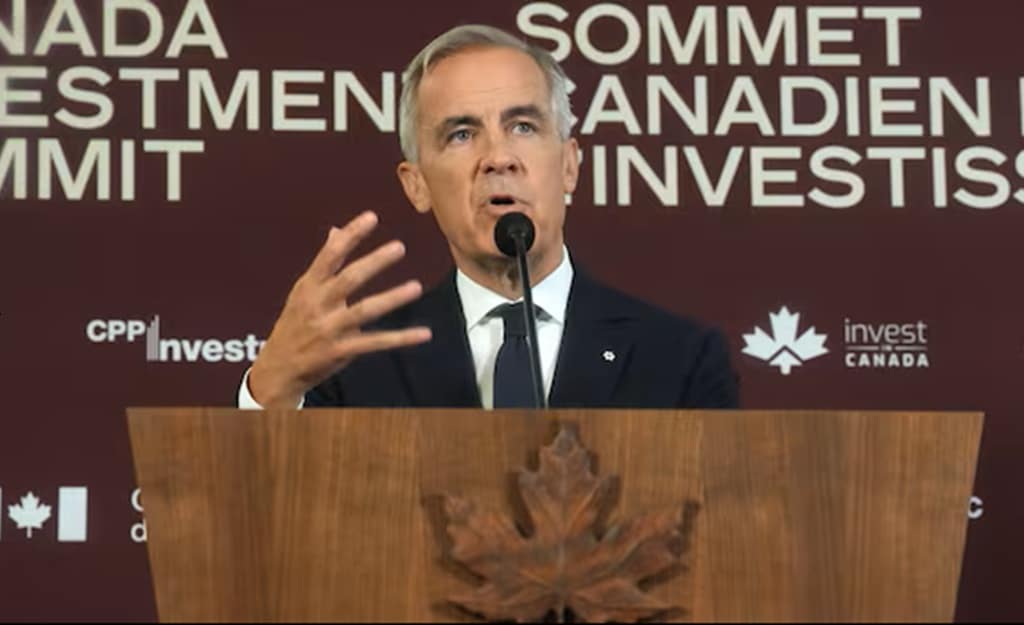
While election controversies dominate the political headlines, an economic debate is brewing in the background. Mark Carney, the former Governor of both the Bank of Canada and the Bank of England, is at the center of this storm. His views on the global financial system have drawn intense scrutiny from American economic nationalists.
Carney has long argued that the global economy’s heavy reliance on the US dollar is inherently risky. During a landmark speech at the Jackson Hole Economic Symposium in 2019, he suggested the world needs to transition away from USD hegemony. He proposed the creation of a “synthetic hegemonic currency” supported by a network of central banks.
Critics have sensationalized these academic economic theories, labeling them as a “personal war” on the American currency. They argue that any coordinated effort to de-dollarize the global economy is a direct attack on US economic power. For these critics, Carney represents a globalist agenda seeking to weaken American financial independence.
However, economists often view Carney’s proposals as practical risk management rather than targeted malice. A multipolar financial system could theoretically reduce the impact of US domestic monetary policy on emerging markets. Regardless of intent, his statements have made him a lightning rod for US economic anxiety.
Rethinking the Global Currency
To understand the backlash against Carney, one must understand the immense power of the US dollar. As the world’s primary reserve currency, the dollar allows the US government to borrow money at lower rates. It also provides Washington with unparalleled leverage to enforce global financial sanctions.
If a new, digital reserve currency were to emerge, as Carney once suggested, this power would naturally diminish. A basket of currencies could offer international markets an alternative safe haven during crises. This would directly limit the reach of American financial influence and foreign policy tools.
Some American lawmakers view these proposals as a coordinated threat from international financial elites. They fear that close allies, including Canada, might quietly support de-dollarization to protect their own economies from US inflation. This paranoia feeds into broader narratives about global economic warfare.
Carney, currently a highly influential figure in global finance and climate policy, continues to advocate for systemic reforms. His prominent status ensures that his critiques of the dollar are heard in the highest corridors of power. This ongoing advocacy guarantees that the currency debate will remain a friction point in US-Canada relations.
The Threat of Economic Sanctions
The combination of alleged election interference and threats to the dollar has led to radical speculation. Some fringe political commentators have openly pondered whether the US might deploy economic sanctions against Canada. While traditional sanctions are usually reserved for hostile nations, trade penalties are a known tactic.
During previous administrations, the US has shown a willingness to use tariffs as a blunt diplomatic instrument. Citing national security concerns, Washington previously imposed tariffs on Canadian steel and aluminum. This historical precedent makes the threat of economic retaliation a tangible fear for Canadian policymakers.
If the US were to aggressively retaliate against perceived Canadian overreach, the tools would likely be trade-based. Harming Canadian exports through targeted tariffs or border delays would immediately impact the Canadian economy. It would serve as a powerful warning to Ottawa to rein in its citizens and political figures.
However, implementing such penalties would also inflict massive collateral damage on the United States. Supply chains between the two nations are deeply intertwined, particularly in the automotive and energy sectors. Any disruption at the border would quickly raise prices for American consumers and businesses.
Impact on Canada and Carney
If the United States were to implement severe economic penalties, the impact on Canada would be devastating. Roughly 75% of all Canadian exports are destined for the American market. A prolonged trade war would likely trigger a deep recession, causing widespread job losses across multiple provinces.
The political fallout in Ottawa would be equally severe. The current government would face immense pressure to mend the relationship or face electoral defeat. Navigating a hostile Washington requires careful diplomacy, and perceived failures could end political careers overnight.
For Mark Carney, direct US sanctions are highly improbable, but reputational attacks are already occurring. As a prominent figure in global climate finance, his ability to work with American institutions could be hindered. If he is successfully painted as an adversary of the US economy, his political and financial influence may wane.
Ultimately, these tensions highlight the fragile nature of international relations in a polarized world. While full-scale sanctions remain a distant hypothetical, the rhetoric alone is damaging. Both nations must carefully navigate these turbulent waters to preserve the historic alliance that underpins North American prosperity.
Trending News:
Tesla Halts Model 3 Orders in Canada as Tensions Rise
U.S. Investigation Uncovers Canadian Banks Debanking Conservatives


US Treasury Warns Canada Banks Over Iran Sanctions

US-Canada Tensions: Elections Interference Warning

U.S. Investigation Uncovers Canadian Banks Debanking Conservatives

Tesla Halts Model 3 Orders in Canada as Tensions Rise

Why Alberta Is Voting on a Future Independence

Alberta Votes on Independence: Advance Polls Open

Opinion: Is Canada in a Deep Crisis Over Trade and Defense

Canadian Manufacturers Face Bankruptcy Amid U.S. Tariffs

Opinion: Canada’s Economy Is Under Pressure From Debt, a Weak Dollar and Steel Tariffs

H1-B Visa Crackdown Rocks Big Tech and India

Opinion: Is Modern Political Empathy Really About Self-Image?

US Trade Moves Put Massive Pressure on Canada

Opinion: Canada’s Combating Hate Act Threatens Free Speech

How Progressivism Replaced Religion With A New Secular Faith

Pierre Poilievre Critiques Reporter Who Questions His Leadership

Uncovering the Truth Behind Inequality: A Bold New Vision

Opinion: What South America’s Political Shift Means for Canada

Canada Sheds 68,000 Jobs As Economic Fears Deepen

Food Insecurity and Surging Prices: Canada’s Inflation Squeeze
Behind Carney’s $1-Trillion Canada Investment Scheme

Jimmy Kimmel Slammed for “Vile” Melania Trump “Expectant Widow” Joke

President Trump Addresses Nation on War with Iran

Trump Warns NATO Allies: America Won’t Protect Slackers After Iran Clash

Senate Hearing on Fraud and Foreign Influence Turns Tense Over Minnesota Scandals

CNN Forced to Backtrack Its Reporting on Trump’s Iran Talks

Joe Rogan Slams Gavin Newsom for Mocking Nick Shirley

Mosque Set Ablaze in Iran a Citizens Revolt Against the Islamic Regime

AOC Accuses Jessie Watters of Fox News of Sexualizing and Harassing Her

JD Vance Exposes Walz’s Fraud and CNN’s Lies in White House Presser

Milestone Card Credit: How the Milestone MasterCard Can Transform Credit


-

 News9 months ago
China-Based Billionaire Singham Allegedly Funding America’s Radical Left
-
Crime10 months ago
YouTuber Nick Shirley Exposes BILLIONS of Somali Fraud, Video Goes VIRAL
-
Politics10 months ago
Ilhan Omar Faces Renewed Firestorm Over Resurfaced Video
-
Politics10 months ago
2026 Midterms Guide: Candidates, Key Issues, and Battleground States
-
Politics8 months ago
CNN Delivers Stark Reality Check to Democrats Over Voter ID
-
Politics8 months ago
Ilhan Omar’s Connections to Convicted Somali Fraudsters Surface
-
Politics7 months ago
Rep. Ilhan Omar Faces Heat as Minnesota Voters Seek Change
-
Politics8 months ago
Trump Approval Rating (February 2026 Poll Results, Approve vs Disapprove)















