

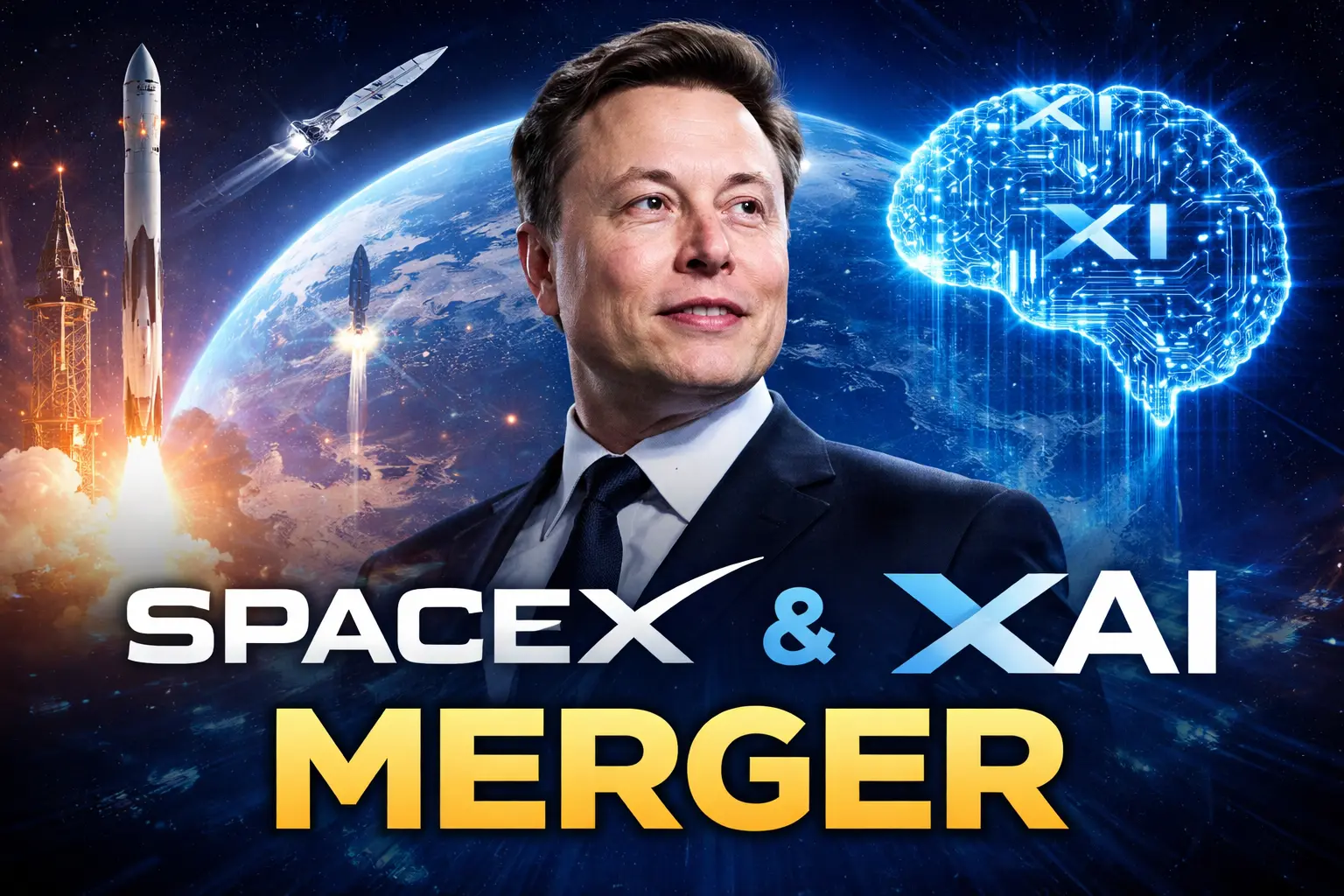


HUSTON, Texas – Elon Musk said Monday that SpaceX is acquiring his AI startup, xAI, in an all-stock deal that puts the combined company at $1.25 trillion. The announcement rippled across tech and finance, since it creates what appears to be the most valuable private company ever. Musk called it “the most ambitious, vertically-integrated innovation engine on (and off) Earth.”
Based on the terms shared, the merger pegs SpaceX at about $1 trillion, up from recent secondary market estimates near $800 billion. It values xAI at $250 billion, a bit above its January 2026 funding round, when it raised $20 billion. xAI investors will receive SpaceX shares through an exchange ratio that converts their holdings into stock of the new combined company. Reports citing banking materials and people familiar with the documents put the implied price at roughly $527 per share.
By size alone, this is the biggest merger ever reported. It lands just months after xAI’s rapid rise, driven by its Grok chatbot lineup and big spending on compute, including the Colossus supercluster. SpaceX, at the same time, continues to lead commercial space with reusable Falcon rockets, ongoing Starship work, and the growing Starlink satellite internet network, now used by millions worldwide.
A deliberate link between AI and space
In a memo posted to SpaceX’s website, Musk framed the acquisition as a logical step for two companies he already treats as connected. “This marks not just the next chapter, but the next book in SpaceX and xAI’s mission: scaling to make a sentient sun to understand the Universe and extend the light of consciousness to the stars!” he wrote. He also pointed to practical overlap, including using Starlink for low-latency data movement that can support AI training and inference.
The merger also puts fresh attention on Musk’s long-running idea of data centers in orbit. With xAI’s model work combined with SpaceX launch capacity and space hardware, the new company could place large compute systems in space. Supporters say that could help with Earth-based limits like power use and land needs for giant AI clusters. Analysts have floated the idea that this approach could strengthen Musk’s hand versus rivals such as OpenAI, Google DeepMind, and Anthropic.
This deal also follows earlier consolidation across Musk’s companies. In 2025, xAI bought the social platform X (formerly Twitter) in a separate stock swap, giving xAI access to a huge stream of real-time posts and conversations that can feed Grok training. With SpaceX now taking in xAI, the structure pulls rockets, satellites, social media, and advanced AI into one company. Some watchers have started calling it the “Muskonomy,” now fully assembled.
Market buzz and worries from some investors
The reaction was quick. On Tuesday, shares of public space-related firms moved higher, as investors priced in more momentum for the sector. Still, the news didn’t land the same way for everyone. Some SpaceX minority holders raised concerns that SpaceX may be rescuing a high-spend AI company. Reports say xAI has been burning about $1 billion per month. Those critics also point to dilution, since SpaceX is issuing stock to complete the purchase, right before a possible public listing.
Multiple reports say SpaceX is preparing for an initial public offering as soon as June 2026. If that happens, the post-merger company could price above $1.25 trillion, with talk reaching $1.5 trillion or higher. A listing on that scale would rank among the largest IPOs ever and put the company in the same market-cap conversation as Apple, Microsoft, and Nvidia.
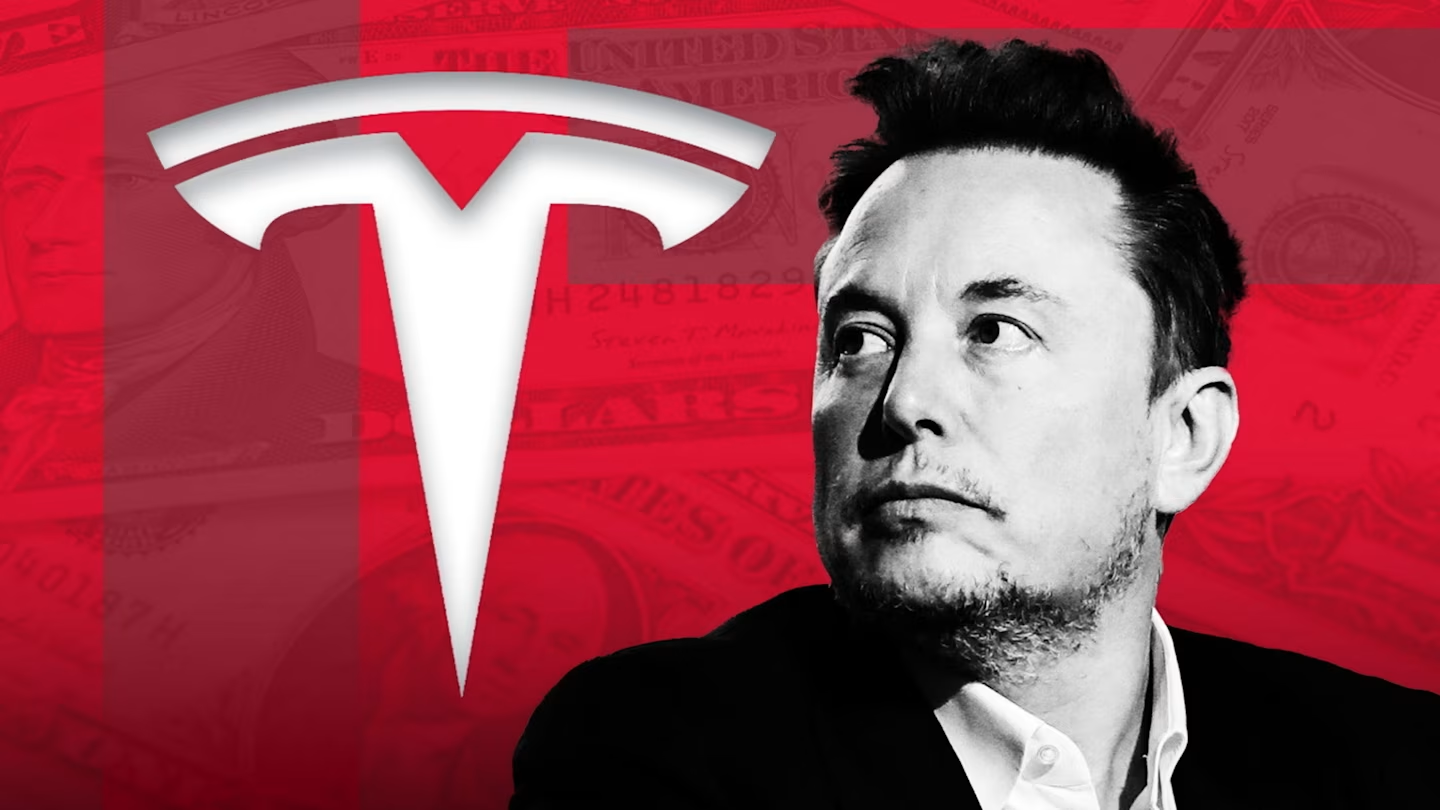
Musk’s personal net worth could climb sharply on paper as well. He reportedly holds about 43% of SpaceX, which now includes xAI. That stake boosts his position as the value of the combined business rises, especially as Tesla’s market cap sits around $1.58 trillion. The SpaceX-xAI combination now looks like a serious challenger in the private-to-public storyline.
Big promises, big execution risk
The upside is clear, but so are the headaches. A company that spans space launch, satellite internet, AI models, and social media is likely to draw more regulatory attention. Expect closer review around competition, data access, and how much influence one owner has across several key industries.
There’s also the basic work of combining two intense cultures. xAI has scaled fast, powered by heavy spending on chips and data centers. SpaceX runs on tight engineering discipline and mission schedules. Bringing those priorities under one roof will test management, timelines, and focus.
Supporters see the deal as a direct expression of Musk’s long-term plan: use AI to speed up space progress, and use space infrastructure to push AI forward. As one industry insider put it, “If anyone can make space-based AI a reality, it’s the man who’s already revolutionized rockets and electric cars.”
Now that the merger is out in the open, attention turns to what comes next. If the IPO arrives this summer, it could reset expectations for how private giants enter public markets, and it could lock in Musk’s boldest corporate structure yet.