


Connect with us

News

Democratic Party is Facing an Existential Crisis as it Hemorrhages Voters

Jeffrey Thomas

Published

on

Democratic Party

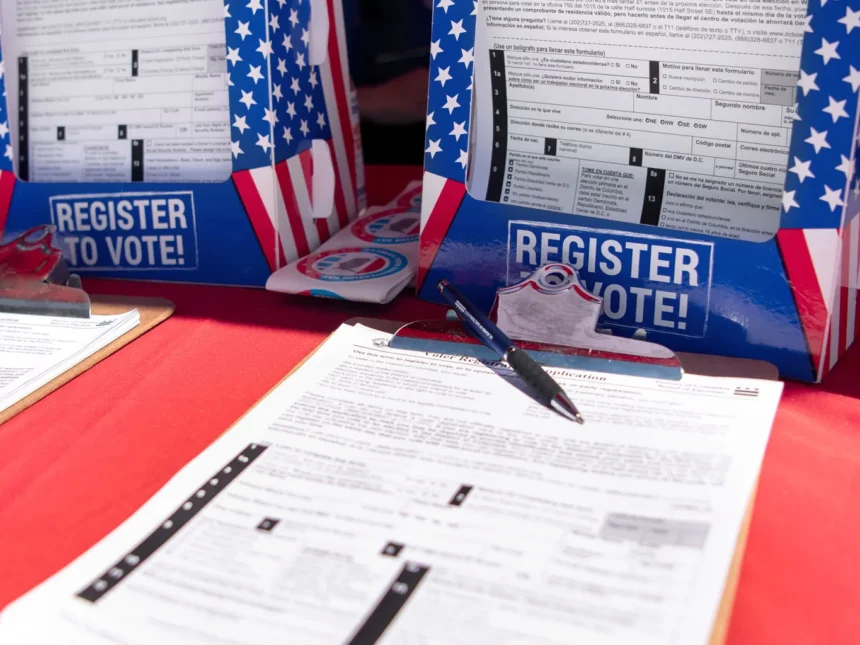
NEW YORK – The Democratic Party is facing a tough moment, with party registration numbers falling in every state that reports political affiliation. Across the United States, Democrats are losing registered voters at an accelerating pace, with many switching to the Republican Party or becoming independents.

The decline is especially steep among single men (including Black and Hispanic men), voters under age 35, and working-class men, all groups that once made up the core of the Democratic coalition. Major donors are also starting to step back, frustrated by the party’s focus on policies that appeal to only a small fraction of voters. If the Democrats don’t change course, they risk slipping into long-term irrelevance.

Shrinking Democratic Voter Base from Coast to Coast

Recent numbers show just how serious the situation is. A New York Times analysis found that in all 30 party-registration states (and Washington, D.C.), the share of registered Democrats dropped from 2020 to 2024. In those states, Republicans either pulled further ahead or closed gaps with the Democrats. Between 2020 and 2024, Democrats lost 2.1 million registered voters, while Republicans gained 2.4 million. That’s a shift of 4.5 million voters in the GOP’s favour.

Battleground states are seeing the sharpest drops. In North Carolina, Republicans erased almost all of the Democrats’ 2020 registration advantage. In Nevada, Democrats experienced the largest percentage decline outside of West Virginia, with Republicans even overtaking them for a period in 2024.

Florida and New Hampshire now have more registered Republicans than Democrats. Even in traditional Democratic strongholds like Pennsylvania and Nevada, the gap is closing, with Nevada showing just under 4,000 more Democrats than Republicans by August 2025.

This problem is widespread, not just regional. Back in 2018, Democrats made up about 34% of new voter registrations versus 20% for Republicans. Fast forward to 2024,

Republicans have not only closed the gap, but now claim a larger share of new registrants. The GOP’s share jumped by 9 percentage points, while the Democratic share fell by nearly 8. For new party registrants, Democrats’ portion dropped from almost two-thirds to under half. This is especially noticeable since most new voters are young and nonwhite—groups once solidly in the Democratic camp—that now are picking the GOP or declining any affiliation.

There’s another trend adding to the party’s trouble: more people are registering as unaffiliated or independent than ever before. Since 2000, the share of unaffiliated American voters has grown by nearly 9 percentage points, mostly at the expense of Democrats. In 2023, a record 43% of adults described themselves as independents, while only 27% identified as Democrats. This shows growing dissatisfaction with the party and a move away from traditional labels.

Key Demographics Walk Away from the Party

This isn’t just about numbers. The core groups that used to keep the Democratic Party strong are now leaving. Economic worries, cultural issues, and a disconnect with the party’s current focus are pushing these voters to reconsider their loyalty.

Single Men, Including Black and Hispanic Men

Few trends stand out more than the shift among single men, especially in Black and Hispanic communities. In 2020, nearly half of newly registered men who picked a major party chose the Democrats. By 2024, it was only 39%. More than 60% chose the Republicans in 2024, flipping a gender gap that once favoured Democrats.

This change is especially clear among Black men. Gallup reports that the Democrats’ advantage among Black adults hit a record low of 47 points in 2023, down from 66 points only three years earlier. In 2014, almost 8 in 10 Black men identified as Democrats or leaned left.

By 2023, that had dropped to just under 6 in 10. Black voters still largely support Democrats in presidential races, but the party is seeing more and more Black men step away. Younger Black men seem especially skeptical, with a little over half rating President Joe Biden positively.

Hispanic men are moving as well. Florida saw the Democratic share of new Latino party registrants fall from 52% in 2020 to 33% in 2024. In North Carolina, the drop was from 72% to 58%.

Many Hispanic voters, especially in places like Starr County, Texas (the nation’s most Latino county), named everyday economic struggles like gas and rent prices as their main reasons for supporting Donald Trump. The Democrats’ focus on progressive social issues over immediate pocketbook concerns hasn’t brought these voters back.

Voters Under 35

Young voters, once a solid base for the party, are shifting away as well. In 2018, about two-thirds of new voters under 45 choosing a party went with the Democrats. By 2024, Republicans will lead within this age group.

In Nevada alone, Republicans registered nearly twice as many voters under 35 as Democrats did last year. The Democrats’ share among new voters under 45 dropped much faster than it did for older age groups.

Young voters are also less likely to identify with any political party. Only about half of voters under 25 consider themselves allied with a party, compared to over three-quarters of those aged 80 and up.

If the Democratic Party can’t make stronger connections, it risks raising a generation of voters who don’t feel drawn to any party or who lean right. Experts warn that this could weaken the party’s ability to recruit strong candidates and keep its organization active in future elections.

Working-Class Men: The Lost Foundation of the Democratic Party

For decades, working-class men—often white voters without a college degree—were a big part of the Democratic base. These men have steadily shifted to the GOP, and the pace has only quickened recently. In 2024, almost two-thirds of white men without a college degree were with the Republicans. Just a third aligned with the Democrats.

This trend now includes blue-collar Hispanic and Black men. Exit polls from 2024 show non-college-educated and lower-income voters, including many Latinos, breaking heavily for Trump, pushed by worries over the cost of living and job security.

Democratic leadership, like Chris Deluzio in Pennsylvania, have admitted that the party’s focus didn’t connect with working-class voters on bread-and-butter issues. Many see the party’s messaging as distant or focused on priorities that do not relate to everyday struggles.

Trouble with Messaging and Ideology

Much of the current trouble can be traced back to choices about which policies and messages the party prioritizes. Moderate Democrats believe the party has gone too far left, focusing on issues that resonate mostly with activists, not everyday voters. These include things like expanded immigration policies, climate agendas, and certain social topics.

Figures like Representative Henry Cuellar say the party’s approach to issues like border security has backfired, especially with Latino voters concerned about migration. Progressive leaders, such as Alexandria Ocasio-Cortez, excite a small slice of the base, but their brand of politics has turned off many traditional voters.

In 2020, Republicans made “socialism” a dirty word in places like South Florida, helping them flip seats and narrow Democratic margins among Hispanic voters.

The party’s focus on issues like transgender rights and abortion is important to some, but it hasn’t reached working-class and minority voters who are focused on paying bills and keeping stable jobs.

One Democratic strategist summed up the problem: when the party addresses people in ways that feel out of touch with everyday experiences, even great ideas get ignored. In the current party base, only about 8% consider themselves “very liberal,” but party strategy seems to focus on this small group instead of trying to appeal more widely.

Money Problems and Donor Fatigue

The struggle doesn’t stop with voters. Democrats are having a harder time raising money. Reports suggest the party is “broke” compared to the Republicans, who are benefitting from a big rush of grassroots donations. Some of the party’s biggest donors have pulled back, blaming this on the party’s leftward move and the loss of connection with mainstream voters.

Registering new voters is costly, with each sign-up costing somewhere between $30 and $80. In 2020, recruiting a new Black voter for the Democrats cost an estimated $575 per vote.

Now, with donor support drying up, large-scale registration drives have slowed dramatically. Advocacy leaders like Héctor Sánchez Barba warn that cutting funds for Latino voter outreach is a mistake, but it has been hard to bring donors back on board.

A rising number of funds now flow through outside groups and super PACs, which act independently and have little coordination with the national party. This takes resources away from official Democratic efforts and weakens the party’s role in organizing, raising questions about leadership and strategy.

A Party Forced to Reconsider Its Future

The registration crisis is a warning sign of bigger problems that go beyond numbers or fundraising. Democrats need to reconnect with working-class communities and men by focusing on real economic priorities, not only progressive social policies.

The party also has to address the concerns of Black and Hispanic voters, many of whom have lost faith that it can deliver results. It will need a way to show donors that there’s a concrete path forward without leaving regular voters behind.

Some party leaders believe a backlash against Republican policies, especially with Trump back in the picture, could bring voters back, but there’s no sign of this happening yet. As of August 2025, Democrats continue to fall behind. Across the 30 states with party registration, Democrats counted 160,000 fewer voters than on Election Day 2024, while Republicans grew by another 200,000.

Disagreement over the way forward is growing. Moderates like Representative Cuellar push for a centre-left approach that appeals to everyday people, while progressives like Representative Pramila Jayapal call for big changes, acknowledging the party has become too focused on well-educated elites. Veteran strategist Maria Cardona says it’s simple: “We fell asleep at the switch.”

The Democratic Party stands at a key turning point. The drop in registered voters—driven by the loss of single men, youth, and working-class men—shows the party’s message no longer lands with its base.

Focusing tightly on far-left policies draws activists, but drives away swing voters needed for future wins. Add the party’s money problems and shrinking donor trust, and the challenge grows. If these trends keep going, the Democrats will lose even more ground to Republicans and independents, putting their chances for 2028 and later races at risk. The party has a choice: change strategy or face even more losses in the years ahead.
Related News:

Mainstream Media Bias Against Trump Persists Six Months Into Second Term

News

Ilhan Omar’s ‘Exploding’ Wealth Investigated By Federal Authorities

VORNews

Published

on

By

Ilhan Omar, Wealth, Investigation

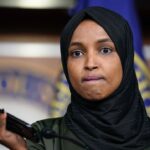
WASHINGTON, D.C. – The House Oversight Committee, chaired by Rep. James Comer (R-Ky.), has started an inquiry into Rep. Ilhan Omar (D-Minn.) and her husband, Tim Mynett.

The review centers on a steep rise in the couple’s reported household wealth and whether their financial disclosures meet congressional ethics rules. Federal authorities are also said to be involved, though the exact scope is still unclear.

Republicans point to Omar’s 2024 congressional financial disclosure as the trigger. In that filing, assets connected to Mynett’s business interests appear to rise sharply in a short period. Lawmakers say they want to understand where the money came from and whether the reporting was accurate.

Committee staff are reviewing Omar’s disclosures and related records. The main focus is on spousal assets tied to Mynett’s ventures that moved from low or near-zero values to multi-million-dollar ranges.

Chairman Comer called the increase unusual and said the committee may subpoena Mynett as part of the review. The committee is looking at disclosure accuracy, any outside income, business ties, and whether the filings meet federal ethics and transparency standards.

Reported assets that rose quickly

Public filings show large changes tied to two entities:

  • Rose Lake Capital LLC, a venture capital firm Mynett co-founded, was listed at $1 to $1,000 in 2023, then reported at $5 million to $25 million in 2024.
  • eStCru LLC, described as a California-based winery, moved from $15,001 to $50,000 to $1 million to $5 million during the same period.

Minnesota fraud

Those shifts led to estimates placing the couple’s combined net worth at roughly $6 million to $30 million. Earlier disclosures painted a very different picture, including periods around 2019 where Omar reported limited resources and debt, such as student loans.

Investigators also note that Omar’s House salary, about $174,000 per year, doesn’t explain the jump on its own.

The Oversight inquiry is unfolding while Minnesota faces a major fraud investigation tied to alleged misuse of federal funds in child nutrition and social services programs. Reports have linked the alleged wrongdoing to parts of the state’s Somali-American community, including areas in and around Omar’s district. Some coverage has suggested potential losses as high as $9 billion, including schemes connected to the Feeding Our Future program.

No public evidence has linked Omar or Mynett directly to that fraud case. Still, Republicans have pointed to the timing and location as part of a wider argument about weak oversight in programs Omar has supported.

President Donald Trump also commented publicly, calling Omar “crooked” and tying the wealth jump to the broader Minnesota fraud headlines. Conservative commentators and online influencers have echoed calls for answers.

Omar’s background and earlier scrutiny

Omar, a progressive member of the group often called the “Squad,” has represented Minnesota’s 5th District since 2019. She came to the United States as a Somali-born refugee and later became a U.S. citizen.

She has faced earlier criticism over campaign spending tied to Mynett’s former consulting firm, E Street Group, which received millions during her 2020 re-election effort. Their relationship began during a period when both were married to other people, which also drew public attention and ethical questions.

Omar has repeatedly said she is not a millionaire, calling those claims “categorically false” and framing them as part of misinformation efforts. In prior statements, she pointed to her husband’s independent business activity as the source of any asset changes. Her office has not given a detailed response to the latest Oversight review, and allies have described the probe as partisan pressure on progressive lawmakers.

Mynett’s ventures, including Rose Lake Capital, are now getting more attention. Reports say the firm removed advisor biographies from its website as scrutiny increased, including profiles tied to former Obama administration figures.

Other past business issues have also resurfaced in coverage, including a winery investment that has been accused in lawsuits of financial mismanagement.

What happens next and why it matters

House Republicans say the investigation is about ethics and transparency, and they argue that Congress has to hold members to clear standards. Critics see it as a political move in a GOP-led House.

So far, there are no charges, and the work appears to be in early stages, centered on document reviews and possible subpoenas. Some reports say the FBI was briefed on related suspicions in a prior administration, but public details remain limited.

With the 2026 midterm cycle nearing, the story is likely to keep growing. It sits at the intersection of debates over government oversight, fraud in federal programs, and financial reporting by elected officials. Oversight Committee members, including Rep. Byron Donalds (R-Fla.), have said they plan to push for answers on both the wealth questions and any Minnesota fraud concerns.

Omar remains active in Congress and continues to focus on foreign policy, social justice, and constituent services in the Minneapolis-area district she represents.

Related News:

Daily Mail Questions Ilhan Omar’s Citizenship, Is She Really an American?

Continue Reading

News

Candace Owens Vindicated Over Erika Kira Ft. Huachuca Claim With New Evidence

VORNews

Published

on

By

Candace Owens VINDICATED Over Ft. Huachuca

TUCSON, Arizona – Claims circulating online and on social media and talk on conservative podcasts are vindicating Candace Owens and are now pushing a growing claim that Erica Kirk, the widow of conservative activist Charlie Kirk and the current CEO of Turning Point USA, has connections to Fort Huachuca in Arizona, a U.S. Army base known for its CIA intelligence training.

In many versions, the story claims she was at or near the base in the days just before Charlie Kirk’s assassination in September 2025. Some posts also repeat a label used online that calls Fort Huachuca a “CIA Training Camp.” Other threads add a side claim that her presence was tied to people connected to an unmade film project about defense and advanced technology.

Where the Allegations Came From

Much of the attention traces back to an exclusive interview on Candace Owens’ podcast in mid-December 2025. Owens interviewed a guest introduced as Mitch Snow, described as a retired U.S. Army staff sergeant and former combat medic. Snow said he had once pursued Special Forces training, but an injury ended that path.

Snow claimed he went to Fort Huachuca around September 8 to 9, 2025, because a long-standing gag order had expired and he wanted access to older personal records. He said he accidentally walked into a restricted area, was detained for hours, and then released.

In the interview, Snow said he noticed people he believed were linked to Turning Point USA. He claimed, with “95 to 99% certainty,” that he recognized Erica Kirk in the lobby of a hotel or nearby facility. He described her based on an older photo and said she wore her hair in a ponytail. Snow added that she was with a man he connected to the organization, possibly someone in security or a similar role.

He also claimed he saw Brian Harpole, described as Charlie Kirk’s head of security, leaving what looked like a high-level meeting. Owens and supporters later framed these sightings as happening the evening before, or the day before, Charlie Kirk was fatally shot in Utah.

How Candace Owens Has Framed the Base

Candace Owens has described Fort Huachuca as more than a normal military post. She has pointed out that it hosts military intelligence courses, often shortened in military use to MIT (Military Intelligence Training). In her telling, that kind of setting can include programs where civilians might be trained and used as intelligence assets.

Across several discussions, Candace Owens has stressed a difference between standard bases and installations focused on intelligence work. She has suggested the base could support quiet meetings and activities tied to defense-related topics.

Online discussion has also tried to connect the Fort Huachuca story to a dropped film or media project. In those threads, people mention defense contractors, fears about technology weaknesses (like EMP threats or power grid security), and claims about psychological operations training.

Some of those talk points refer to older material, including unrelated footage where Erica appeared in a 2013 documentary clip alongside former intelligence figures. Still, no public proof has confirmed that Erica Kirk had a direct role in any film project tied to Fort Huachuca.

Much of what circulates comes from forum posts, X threads, and clipped podcast segments that build on each other.

The allegations have sparked loud arguments online. Supporters, including Candace Owens, say the eyewitness story should be taken seriously, especially with ongoing questions about timelines, alibis, and the larger set of events around Charlie Kirk’s death.

Owens has said she prefers verified facts over emotional reactions. She has also said she checked parts of Snow’s account before running the interview, mentioning metadata, receipts, and other review steps.

Candace Owens has addressed why she did not challenge Erica Kirk about Fort Huachuca during a private multi-hour meeting in late 2025, saying she was still checking details and planned to follow up later.

Pushback and Questions

Critics, including some conservatives and mainstream outlets, have pushed back hard. Much of the response has focused on Snow himself, not on independently confirming or disproving the travel and location claims he made.

Detractors have pointed to his personal history, his medical discharge, and the limits of a “95% sure” identification. Some reports have grouped his story with wider conspiracy narratives around the assassination, calling it unverified and sensational.

Other coverage has also noted that rumors about Erica Kirk have spread since Charlie Kirk’s death, including claims tied to unrelated scandals or made-up stories, often without evidence.

Erica Kirk has publicly responded to conspiracy claims in social media posts and interviews. She has rejected what she described as disrespect from figures like Candace Owens and has said her focus is on protecting her family and running Turning Point USA.

She has also shared details, including flight records for associates, to push back on certain timeline accusations.

As of early 2026, no official findings have confirmed the Fort Huachuca sightings or any link to a film project. The story remains a major flashpoint in online conservative debate, showing how a single eyewitness account can spread fast after a tragedy, especially in a tense political moment.

Related News:

Candace Owens Alleges FBI Was Involved in Kirk Assassination Coverup

Continue Reading

News

Former CNN Anchor Don Lemon Facing Charges Under Ku Klux Klan Act

VORNews

Published

on

By

Don Lemon Facing Ku Klux Klan Act

MINNESOTA – The latest dispute involving former CNN anchor Don Lemon and activists linked to Black Lives Matter (BLM) has sparked a loud national argument. On January 19, 2026, the U.S. Department of Justice (DOJ), led by the Trump administration, said it plans to seek federal charges tied to Don Lemon and others involved in a disruptive protest at Cities Church in St. Paul, Minnesota.

Investigators are reviewing possible civil rights violations, including the Ku Klux Klan Act (the Enforcement Act of 1871) and, in some public commentary, the Freedom of Access to Clinic Entrances (FACE) Act.

The protest took place during a Sunday service at Cities Church. Reports say a pastor at the church has a role connected to Immigration and Customs Enforcement (ICE). Demonstrators, including people tied to BLM Minnesota, walked into the sanctuary during worship.

They demanded answers over the death of Renee Good, a Minneapolis woman killed by an immigration officer earlier in January. The group disrupted the service, confronted people in attendance, and called for ICE to be removed from the area.

Don Lemon, now working as an independent journalist, livestreamed the moment on social media. He entered the church with activists and recorded what was happening as it unfolded.

Don Lemon later said he was doing his job, adding that he knew the protest was planned and went there to cover it. Critics said his actions looked less like reporting and more like taking part. Some described the scene as frightening for churchgoers, including families and children who were present.

Videos shared by BLM Minnesota and Lemon show protesters shouting demands and accusing the church community of backing “white supremacist” policies because of the alleged ICE link. Some parishioners said they felt scared, and one called it a brazen insult to their place of worship.

DOJ Response and Claims Tied to the KKK Act

Assistant Attorney General for Civil Rights Harmeet Dhillon spoke publicly about the case and said the DOJ intends to bring charges. She pointed to Don Lemon’s presence and argued he looked involved in what she described as a “criminal conspiracy,” not protected press activity.

Dhillon referenced the Ku Klux Klan Act, passed in 1871 after the Civil War, to fight violence and intimidation by groups like the KKK. The law was meant to protect basic rights, including voting and worship.

The statute bars conspiracies that use threats, intimidation, or force to block people from exercising constitutional rights. Here, DOJ officials say the church disruption may have interfered with the free exercise of religion, which is protected under federal civil rights law.

Dhillon said interrupting worship and violating the sanctity of a house of worship could meet that standard.

Some people have also brought up the FACE Act, which is more often tied to access to reproductive health clinics. Minnesota Attorney General Keith Ellison rejected that idea, saying it doesn’t fit this situation. The DOJ has put the spotlight on civil rights protections related to religious practice.

President Donald Trump boosted calls for accountability by reposting messages online that pushed for tough penalties. Some posts compared the situation to cases where pro-life activists faced severe consequences under related laws. Conservative commentators described the incident as an “attack on Christians,” while others noted the irony of using a law associated with fighting KKK intimidation.

What This Could Mean for Don Lemon

Don Lemon has rejected the accusations and said he was doing legitimate reporting tied to immigration enforcement. In interviews, he criticized the church’s reported ICE connections and called the DOJ review political.

BLM Minnesota and other activists have defended the protest as a necessary response to immigration-related harm. Still, the protest split public opinion. Some see it as protected speech, while others view it as crossing a clear line by interrupting worship inside a church.

The situation sits at the crossroads of activism, immigration enforcement, and religious freedom. Legal analysts say using the KKK Act for modern protest cases is unusual, though it has been used in civil rights matters before. If federal charges move forward, the outcome could shape how the government handles future disruptions at places of worship.

As the investigation continues, the case highlights sharp divides over race, immigration, and the limits of protest. Don Lemon, once a major cable news figure, now faces possible federal scrutiny that could change the next chapter of his career after CNN.

Related News:

Pentagon Readies 1500 Soldiers for Deployment in Minnesota

Continue Reading

Get 30 Days Free

Express VPN

Create Super Content

rightblogger

Flight Buddies Needed

Flight Volunteers Wanted

Trending