News
Jasmine Crockett Faces Backlash as Texans Question Her Authenticity and Conduct
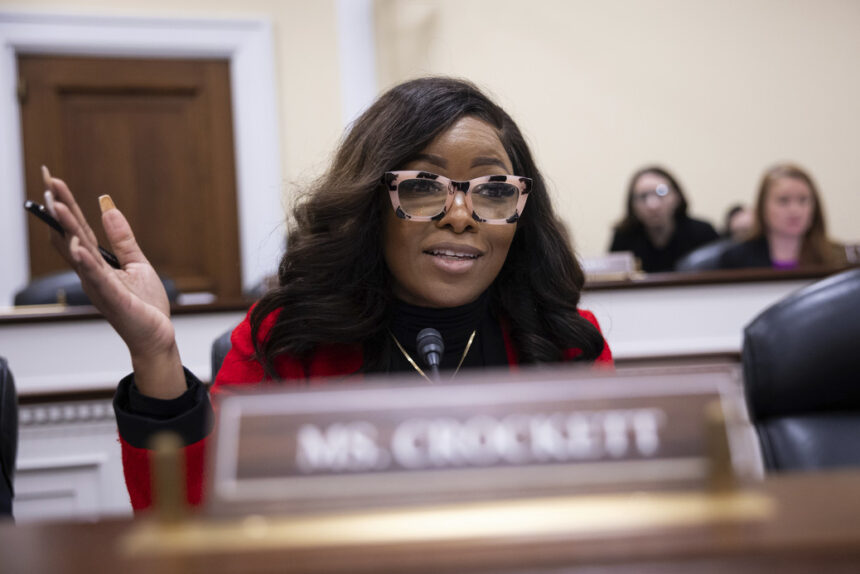
DALLAS, TX – Representative Jasmine Crockett (D-TX) is facing mounting criticism from both Texans and political analysts over questions about her background and workplace behaviour.
Once seen as a promising new face within the Democratic Party, Crockett now finds herself under heavy scrutiny, with claims about a privileged upbringing, an affected accent, and serious staff complaints threatening her political career. To complicate matters, a new congressional map could soon put her district at risk.
Jasmine Crockett represents Texas’s 30th Congressional District and has built her political image around her ties to everyday, working-class people. She frequently describes herself as a “ghetto girl from the hood” in speeches that connect with many voters.
Recent reports, though, paint another picture. Public records show Jasmine Crockett grew up in St. Louis and attended Mary Institute and St. Louis Country Day School, where annual tuition runs higher than $35,000.
She later earned degrees from Rhodes College and the University of Houston Law Center, both known for their high academic standards and tuition. Conservative pundits, like Benny Johnson, have called her story an example of “working-class stolen valor,” saying her real background does not match her public persona.
In one widely shared video, Johnson claimed, “She grew up in Republican suburbs with mansions and country clubs, not the hood.”
These reports have spread on social media, with influencers on X accusing Crockett of manufacturing her working-class image to appeal to voters in Dallas and Tarrant Counties, areas facing significant economic challenges.
Comments have criticized her for being more interested in media coverage than representing local concerns, likening her to other progressive leaders accused of overstating their hardships. Critics have also focused on Crockett’s speaking style. Some accuse her of putting on a “ghetto hood accent” that, in their view, does not match her upbringing.
These criticisms have grown louder after several of Crockett’s comments in congressional hearings went viral. Rep. Marjorie Taylor Greene (R-GA) mocked Crockett’s vocal style during a recent appearance on The Megyn Kelly Show, saying, “She’s as fake as her eyelashes.” Crockett has not directly commented on these claims. Supporters argue that her language reflects her culture and that code-switching is common among Black Americans.
Further complicating Crockett’s image are recent accusations about her treatment of staff. A report by the New York Post, citing unnamed former employees, depicted her as “rude” and “disengaged,” claiming she rarely appears in her Washington office except for the cameras.
Staffers alleged they faced public scolding, emotional distress, and demands for luxury car rides. Some also claimed she brushed off concerns from LGBTQ staffers during a viral disagreement with Greene. One source reportedly said, “She treats her staff like they are beneath her.”
Crockett rejected these accusations, calling them racially motivated attacks. She told CBS News, “There’s a lot of scrutiny that comes with being a young Black woman… This is just more slander, more nonsense.” Crockett suggested her outspokenness against former President Trump makes her a target.
Despite her rebuttals, the controversy spread online, with more X users calling her a “diva” who focuses more on online clout than on addressing district needs. Social posts described her as absent from the office and more interested in being a media figure.
Redistricting Threatens Jasmine Crockett’s Position
On top of these troubles, Jasmine Crockett faces a significant challenge due to redistricting by Texas House Republicans. The new maps, which could favour Republican interests and cost Democrats as many as five seats, place Crockett’s residence outside her current 30th Congressional District. She may have to run in the adjacent 33rd District, where Rep. Marc Veasey currently serves.
Crockett labelled the redistricting a “power grab to silence voters” and accused Republicans of aiming to remove Black lawmakers, including herself and Rep. Al Green. “It’s a hot mess, and it’s sad that these people have no integrity,” Jasmine Crockett said in a video response.
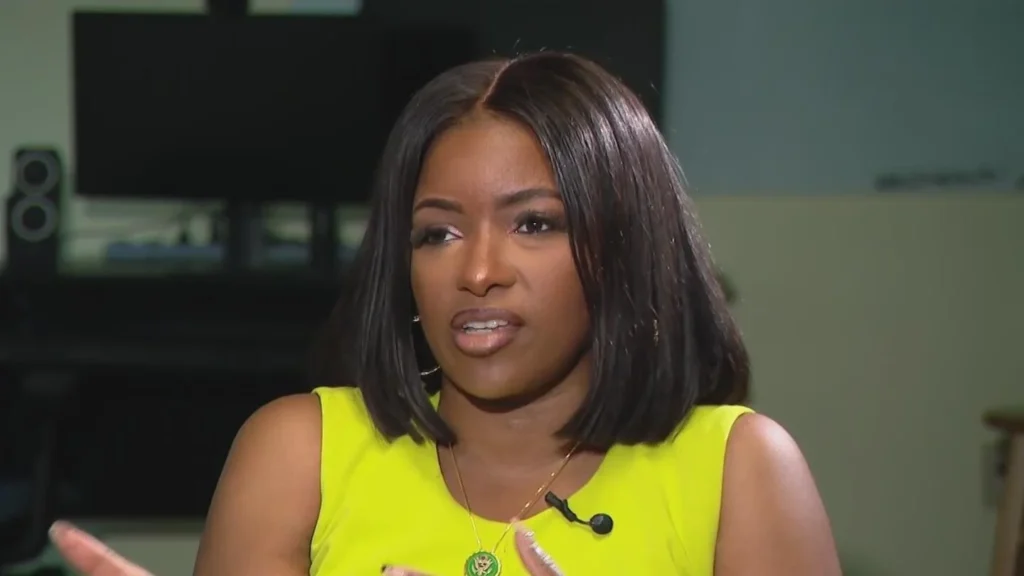
She acknowledged how the new map could force tough choices, mentioning her home mortgage and low interest rate. “I’m debating where I will run… I have a mortgage and a 3% interest rate. Do I sell my home and get a higher rate?” she told CBS News.
The new district map stirred up strong reactions in Austin. In protest, Texas Democrats briefly fled the state to block the vote, a move Crockett supported as a stand against gerrymandering. Still, Republicans are expected to approve the draft, putting Jasmine Crockett in a tough spot as she decides her next move.
Jasmine Crockett’s Reputation at a Turning Point
Jasmine Crockett’s fast rise in national politics included being elected Freshman Leadership Representative and serving as a co-chair for the 2024 Harris-Walz campaign.
Her pointed remarks and headline-making exchanges—especially with Greene, along with her outspoken criticism of Trump—have helped her stand out. Supporters highlight her civil rights work and efforts for voter protections and justice reform across her district, which serves residents in Dallas, Grand Prairie, DeSoto, and surrounding suburbs. Critics, however, say she’s more focused on her public image than on delivering for local communities.
As the 2026 primaries approach, Jasmine Crockett’s future remains uncertain. She continues to push back against critics, telling CBS News, “If they’re not talking about you, then you must not be doing anything,” echoing a line from Beyoncé. But as more Texans voice their doubts, Jasmine Crockett finds herself at a pivotal moment that will shape her career.
This article relies on public sources and reflects opinions from a range of cited individuals. Readers are encouraged to review original reports and make up their minds about the ongoing controversy.

Related News:
The Democratic Party is facing an Existential Crisis as it Hemorrhages Voters
News
Google News Bias Exposed in Left-Leaning Top Stories
SAN FRANCISCO – A recent investigation suggests that Google News bias, defined as the systematic favoring of certain ideological perspectives over others through automated curation, is shaping the digital information landscape.
The Media Research Center reports that only 2 percent of top morning stories featured on the platform in February came from right-leaning sources. This finding has sparked significant backlash regarding the prevalence of left-wing bias within the platform’s top stories.
This discrepancy is significant because Google remains one of the most powerful information gatekeepers globally. As these tech giants continue to refine their algorithms, the news feed directly influences the headlines millions of people encounter each morning. When a feed appears consistently one-sided, readers are forced to question whether the issue lies within the algorithm, the underlying source selection, or deeper editorial choices, a debate that has also followed Google’s search ranking decisions.
The provided statistics represent only a portion of the broader narrative. The underlying challenge remains a matter of public trust and the increasingly blurred line between neutral curation and algorithmic bias.
Key Takeaways
- Algorithmic Skew: Recent audits from organizations like the Media Research Center and AllSides indicate that top stories on Google News consistently lean toward left-leaning sources, with one report showing right-leaning outlets accounting for only 2% of morning headline placements.
- The Power of Placement: As a primary information gatekeeper, Google’s curation process exerts significant influence over public perception; the headlines users see first are often interpreted as the most important, creating a feedback loop that shapes political discourse.
- Systemic vs. Intentional Bias: While Google maintains its results are determined by neutral signals like relevance and authority, critics argue that the underlying design choices and ranking metrics inherently favor certain ideological perspectives over others.
- The Risks of AI Curation: The rise of AI-driven news summaries adds a layer of complexity to bias, as these tools can produce content that sounds neutral and objective while omitting critical context or favoring specific, narrow viewpoints.
- Personal Responsibility: Because automated feeds can create filter bubbles, the most effective way to maintain a balanced perspective is to actively compare reporting from diverse sources across the political spectrum rather than relying on a single news aggregator.
What the latest Google News bias reports are saying
The latest reports point in the same direction: Google News still shows a left-leaning mix in its top stories. As one of the most prominent news aggregators on the internet, the platform plays a major role in information consumption, making these claims about bias particularly significant. This assessment comes from both broad tracking and narrower spot checks, which makes the overall picture difficult to ignore.
The numbers behind the claims
The Media Research Center stated that in February, only 2% of the top morning stories featured on Google News originated from right-leaning outlets. That is a remarkably small share for a platform that shapes what millions of readers see first each day. The group also argued that the story mix was not just slightly tilted, but heavily skewed.
AllSides has made a similar case over time. In its 2023 audit, the organization noted that 63% of Google News articles came from left-leaning sources, an increase from 61% the year before. Consequently, the organization officially rated Google News as Lean Left in its media bias chart. You can see that broader rating framework in the AllSides media bias chart.
These figures are trying to measure source balance in top stories, not every piece of content Google shows. That distinction matters. A news feed can have thousands of items across many topics, but critics focus on the stories pushed to the top, where human attention is concentrated.
A simple way to read the data:
| Report | What it looked at | Main takeaway |
|---|---|---|
| MRC February sample | Top morning Google News stories | Only 2% came from right-leaning sources |
| AllSides 2023 audit | Google News over time | 63% of articles came from left-leaning sources |
| AllSides overall rating | Google News as a source mix | Rated Lean Left |
The pattern is clear enough for critics to press the issue, and for defenders to argue that sampling methods matter.
Why sample size matters
A small sample can still reveal a real problem, but it does not tell the whole story. One morning feed can look very different from the next, because topic choices, search terms, location, and even the time of day all shape what appears.
That is why both sides can point to evidence. Critics see a repeated left tilt and say the pattern is baked in. Defenders say a few snapshots do not prove a permanent bias across all Google News content.
The right comparison is not one headline against another; it is the overall mix across a specific time window, topic set, and location. In other words, the feed is not a single fixed list. It changes with context, which makes broad claims harder to prove but impossible to dismiss. For more background on how a search algorithm influences traffic, see Search Algorithm Visibility Impact on right-leaning outlets.
Why Google News feels so powerful to readers
Google News feels powerful because it does more than collect headlines. It puts a story in front of you, sets the order, and repeats that choice across searches, phones, and daily habits. When that happens, the feed starts to feel like the news itself.
That power matters even more in the US, where many people use Google Search and Google News as a shortcut to keep up with current events. If a headline appears first, it gets treated as the headline. If the same view shows up again and again, it starts to feel normal.
How news placement shapes what people believe
Most readers do not compare ten outlets before forming an opinion. They scan the first few results, skim a headline, and move on. That habit gives top placement a lot of weight, because the first stories often feel like the most important ones.
A headline can do a lot of work on its own. Short wording, story order, and repeated exposure all shape what sticks in a reader’s mind. When the algorithm creates filter bubbles by showing the same perspective repeatedly, one point of view can feel more credible simply because it is familiar.
That is why placement matters as much as the article itself. Google News does not need to tell people what to think in plain language. It only needs to decide which stories rise first, and which ones stay buried lower down.
One report from AllSides’ media bias ratings found a strong left-leaning tilt in its article mix, which is why placement debates keep getting louder. A feed that keeps foregrounding similar sources can shape public judgment before readers even open a story.
The first story often becomes the story people remember.
That effect gets stronger when readers return several times a day. A repeated headline can make one version of events feel settled, even when the broader picture is more mixed.
Why big tech bias is more than a media issue
This goes beyond one website favoring certain outlets. Google is a gatekeeper for information, and gatekeepers shape what people see, what they miss, and what feels worth talking about. When millions of readers rely on the same feed, small ranking choices can have a large reach.
That matters for politics, elections, and major breaking news. A shift in visibility can send more attention to one side of a debate and less to another. This imbalance often leaves conservative media struggling for equivalent exposure, which in turn fuels concerns regarding political polarization. Over time, that affects which voices sound mainstream and which ones sound fringe.
Google Search works the same way for many people. A quick search for a candidate, a policy fight, or a breaking event often becomes the first stop for context. If the top results lean in one direction, that frame can color the entire conversation.
Big tech companies also control the pipes that deliver information at scale. The issue is not just who publishes a story, but who gets amplified. In a system this concentrated, a ranking choice is never just a ranking choice. It helps decide which version of reality most readers notice first.
For readers who want to track how algorithm changes affect visibility, Google shadow banning allegations show how fast these disputes spill beyond news feeds and into broader trust issues.
Google News feels powerful because it acts like a filter, a sorter, and a loudspeaker at the same time. That combination gives it a much bigger role than a simple news page, and it explains why bias claims around Google News never stay small for long.
How Google responds when bias accusations come up
Google rarely admits political favoritism when claims of Google News bias arise. Instead, the company maintains that its systems are built to rank useful, relevant, and trustworthy information rather than backing any specific party or viewpoint. In plain terms, Google argues that criticism often stems from a misunderstanding of how its underlying ranking systems function.
This response is critical because the debate concerns more than just intent. It centers on how a massive ranking system feels to the people who use it daily. A feed can appear skewed even when the company insists the underlying process is neutral.
The company’s defense in plain English
Google characterizes its news aggregation as an outcome of algorithmic filtering rather than editorial choice. The company frequently points to the following factors to explain how its platform functions:
- Relevance and Freshness: The system prioritizes content that is timely and aligns with user search intent.
- Source Authority: Google utilizes concepts like PageRank to determine the authority of a domain, which helps filter for high-quality information.
- Engagement Signals: User behavior, such as clicks and reading time, acts as a popularity algorithm that can boost specific stories above others.
- Dynamic Content: Because the web is constantly changing, search results evolve throughout the day, making it difficult to conclude a single snapshot of a news feed.
Google maintains that it does not handpick winners or losers. When critics point toward a perceived anti-conservative bias in a results mix, Google typically frames these outcomes as a reflection of the available content on the web rather than a deliberate political strategy.
For readers who want a closer look at the broader dispute around visibility, this report on algorithmic censorship and search results ranking disputes shows how these complaints extend far beyond individual news headlines.
Google also points to outside research to defend its position. One widely cited Stanford study found no clear partisan tilt in Google search results for political candidates, which the company uses to support its argument that the system is built around relevance rather than ideology.
Why do denials not end the debate?
Even if Google does not intend to favor one side, bias can manifest through the design of the system itself. Ranking systems rely on specific choices, and those choices inevitably shape outcomes. If a platform places heavy weight on certain metrics, the result can lean in one direction without anyone writing a political memo.
The dispute persists because critics are not only asking whether Google has an agenda. They are also questioning whether its design choices reward some voices more than others. Several technical factors can influence the final output:
- Source selection: The specific domains Google chooses to index can narrow the diversity of available perspectives.
- Ranking signals: The mathematical weight given to certain signals can inadvertently push one type of story above another.
- Freshness rules: Algorithms that favor outlets publishing at a high frequency may marginalize slower, more in-depth reporting.
- Editorial review: Human intervention within news products can occasionally shape what is highlighted, introducing subjective elements to the automated feed.
Each choice may seem harmless individually. Combined, however, they can create a feed that feels consistently tilted. A platform can deny intent and still produce a skewed result.
The problem remains difficult to judge from the outside. Because Google does not disclose every rule in its ranking logic, users are often left to guess whether the output is the result of a popularity algorithm, the underlying source pool, or the specific way the news product is built. This uncertainty ensures that concerns regarding Google News bias will remain a central part of the conversation as long as the company acts as a primary gatekeeper for global information. The real debate is not just about what Google says, but about how much trust users are willing to place in a system they cannot fully see.
Why AI could make news bias even harder to spot
AI search and chat tools change the way people read news. A short answer can feel clean, balanced, and complete, even when it leaves out key details. That is what makes bias harder to catch, because the summary looks neutral on the surface.
Traditional bias is easier to spot when a headline is obviously slanted. AI bias can hide in the gaps instead. It may use calm language, mention both sides, and still tilt the picture by choosing which facts to include first, which quotes to skip, and which sources to pull from. By curating content in this way, the AI may mask the true reliability of the underlying news sources it draws upon.
When an answer sounds neutral but is not
AI often sounds confident, even when it is filtering the story in a narrow way. A user might ask about a political issue and get a polished summary that seems fair, yet the model may have drawn mostly from one kind of source or one set of talking points. That makes the output feel objective, which is exactly why it can be misleading.
A summary can also omit important context without saying so. For example, it may mention a policy debate but leave out the strongest opposing argument, or it may quote one side heavily and barely mention the other. The result is a summary that reads smoothly while still steering the reader.
That risk shows up in both training data and source selection. AI systems can reflect patterns in the material they learn from, and they can also inherit bias from the links or documents they rank most highly. As the Reuters Institute has noted, journalists need to watch for this kind of AI bias because it can hide inside normal-looking output, not just obvious errors in fact.
Here are a few ways that bias can slip through:
- Source selection can favor one viewpoint and crowd out others.
- Framing can make the same event sound more partisan.
- Missing context can make a partial truth feel complete.
- False confidence can make a weak answer sound settled.
A clean summary is not the same thing as a full one.
What careful readers should do instead?
The safest move is simple: compare the AI answer with reputable reporting. Check the links, open the source articles, and look at who is quoted. If one side appears often and the other barely appears at all, that gap matters.
It also helps to compare more than one outlet before you settle on a view. A Reuters write-up may emphasize different facts than a local paper or an opinion site, and that difference can reveal what the AI left out. For quick checks on media slant, tools like AllSides’ media bias chart can help you practice better media literacy and spot patterns faster.
Keep one rule in mind: do not trust AI alone for political news. Treat it as a starting point, then verify the facts, the sourcing, and the missing pieces yourself. When the topic is charged, that extra step matters more than the polished answer on your screen.
What this means for readers who want a fuller picture
A left-leaning tilt in Google News does not mean every story is biased or false. It does mean you should treat any single feed as one slice of the story, not the whole thing. If you rely on one source for political news, you may miss the facts that sit outside its frame.
The better habit is simple: compare before you decide. Read the same story from left, right, and center outlets, then look for the details they agree on. That overlap is usually where the strongest facts live.
Simple habits that reduce media blind spots
Small habits make a big difference. They keep one feed from doing all the work for you.
- Check more than one outlet. Read the same event from across the political spectrum, using both left-leaning, right-leaning, and center sources. Tools like an AllSides media bias chart can help you identify these lanes quickly so you can verify the information you consume.
- Read past the headline. Headlines are built for speed, and they often leave out the part that changes the meaning.
- Notice repeat framing. If one source always casts the same side as the villain or the hero, that pattern matters.
- Use bias-check tools. A reliable media bias chart can help you visualize where a publication stands, while resources like FAIR media literacy tips provide frameworks to spot loaded language and missing context.
- Watch your own habits. If you only click stories that match your views, your feed will tighten around those views.
A fuller picture usually comes from comparison, not volume. Ten headlines from one angle still leave you with one angle.
Questions worth asking about any news feed
You don’t need to be a media analyst to spot a narrow feed. A few basic questions can tell you a lot about what you are seeing.
Start with the voices in the story. Who is quoted, and who is missing? If a political story keeps pulling from the same kind of source, the article may be showing one side more than the full field.
Then look at the source mix. Is the feed drawing from a wide range of outlets, or does it keep recycling the same viewpoint? When the same framing shows up again and again, the feed may be shaping your view before you have a chance to compare.
Ask yourself these questions when you scan a story:
- Who benefits from this framing?
- Which facts are pushed to the top?
- What context is left out?
- Would a reader on the other side see the story the same way?
If one feed always tells the story the same way, your view of the issue will shrink with it.
You should also watch for missing disagreement. A solid political story does not hide the strongest counterpoint. It shows you where the debate actually is.
The safest approach is to keep your news diet broad and steady. Do not trust Google News, or any single feed, to give you the full truth on political topics. Compare sources over time, look for patterns instead of one-off headlines, and keep checking what is missing as well as what is shown.
Frequently Asked Questions
Why does Google News often seem to favor left-leaning sources?
Google attributes its results to objective ranking signals like relevance, source authority, and user engagement, arguing that the news feed reflects the broader online media landscape. However, critics suggest that the specific mathematical weights assigned to these signals, combined with the selection of domains indexed, result in a systemic, if not intentional, ideological tilt.
Is it possible for Google to be biased without having a political agenda?
Yes, bias can manifest as a byproduct of system design choices rather than a conscious effort to favor one party. For example, algorithms that prioritize high-frequency publishing or specific engagement metrics may inadvertently sideline diverse or slower-moving viewpoints, creating a consistent ideological pattern without an explicit editorial mandate.
How does AI-generated news content impact bias?
AI search tools can make bias harder to detect because they often synthesize information into a calm, authoritative, and seemingly neutral tone. This polish can mask the underlying source selection or missing context, leading users to believe they have received a comprehensive summary when they may have only encountered a narrow perspective.
What is the best way to avoid falling into a news filter bubble?
To avoid echo chambers, users should actively diversify their information intake by regularly comparing the same news stories across left-leaning, right-leaning, and center-aligned outlets. Utilizing independent media bias charts and consciously seeking out perspectives that contradict your initial feed can help you maintain a more accurate, objective view of current events.
Conclusion
The latest reports concerning Google News bias point to a clear pattern, even if observers still disagree on the root cause. Data from the Media Research Center and long-running audits from AllSides raise the same core concern: Google News consistently surfaces a selection of top stories that skews left, significantly impacting what millions of readers see at the start of each day.
This situation matters because Google is not just another news website. It functions as a primary filter for political reporting, and its immense reach gives it outsized power over public attention. The real issue is broader than any single study or automated feed. It involves the profound influence that Google and other tech giants exert over what information people notice, trust, and eventually repeat.
To navigate this landscape, the safest response is both steady and simple. You should stay alert, actively compare sources, and treat algorithm-driven news as only one slice of the broader story rather than the final word. When an algorithmic feed appears one-sided, the most effective check remains cultivating a wider, more diverse news diet. By taking personal responsibility for the sources you consume, you can bypass the limitations of automated filtering and gain a fuller picture of the events that shape our world.
Trending News:
Google Accused of Shadow Banning Thousands of Websites
The Google Search Engine Now Allows You to Select Your Top Sources
News
Tulsi Gabbard Reveal Massive Global Biolab Network Linked to U.S. Funding
WASHINGTON, D.C. – Newly declassified documents have shed light on an extensive network of biological research laboratories funded by American taxpayers across the globe. Director of National Intelligence (DNI) Tulsi Gabbard announced these findings this week, sparking intense discussion regarding government oversight and international safety standards.
Key Takeaways:
- Newly declassified intelligence confirms U.S. taxpayer money supported over 120 biological research facilities across 30 nations.
- Specific concerns were raised regarding high-risk facilities in Ukraine, which faced potential threats during the ongoing conflict with Russia.
- DNI Tulsi Gabbard has initiated a sweeping review to track specific pathogens and terminate dangerous “gain-of-function” projects abroad.
The disclosures reveal that more than 120 facilities operating in over 30 countries have received significant U.S. financial support. This global footprint, often obscured from the public eye, now faces a rigorous vetting process under the new directive from the Office of the Director of National Intelligence (ODNI).
The report places significant emphasis on research facilities located within Ukraine. Intelligence analysts had previously issued several warnings regarding the presence of dangerous pathogens at these sites.
These warnings became particularly urgent following the outbreak of the war between Russia and Ukraine. Security experts expressed deep fears that these vulnerable locations could be compromised, potentially leading to the accidental or intentional release of hazardous biological agents.
A Shift in Policy: Ending High-Risk Research
Director Gabbard has made it clear that business as usual is no longer an option. She stated that the intelligence community will now move aggressively to identify every lab in the network.
The primary goal is to track exactly what pathogens are stored or studied at these locations. Furthermore, the administration plans to officially end all funding for “gain-of-function” research conducted overseas.
Gain-of-function research typically involves modifying viruses to make them more transmissible or potent. Critics have long argued that such work poses an unacceptable risk to global health, even when performed under strict laboratory conditions.
The move represents a major change in how the United States handles its international biological partnerships. By bringing these projects into the light, the administration aims to ensure greater accountability for taxpayer dollars.
For years, the nature of these labs has been a subject of speculation and geopolitical tension. The new transparency effort seeks to address these concerns by clarifying the purpose of each site and ensuring they follow international safety norms.
The ODNI will work closely with international partners to monitor these sites. This coordination is intended to prevent the mishandling of dangerous materials and protect local populations from potential outbreaks.
Next Steps for National Security
The process of auditing 120 different labs will be a complex and time-consuming operation. Officials suggest that this work will require high levels of cooperation with host nations.
Gabbard’s team is now focused on dismantling the infrastructure that supports the most dangerous forms of research. By doing so, the government hopes to reduce the global risk of accidental laboratory leaks.
This initiative marks a significant turning point in national security strategy. It reflects a growing consensus that the benefits of biological research must be weighed carefully against the catastrophic potential of a containment failure.
Trending News:
Tulsi Gabbard Opens Investigation into USAID 2024 Election Plot
Tulsi Gabbard Sends Criminal Referral to DOJ Over 2019 Trump Impeachment
News
California Elections Expose the Mainstream Media Bias Over Election Integrity
LOS ANGELES – California elections are once again firmly under the glaring national spotlight. The recent Los Angeles mayoral race has sparked a massive debate about election integrity and media bias. Furthermore, many frustrated voters feel that the mainstream media is actively ignoring their legitimate concerns to strictly protect left-wing politicians.
Key Takeaways
- Late surges in mail-in ballots dramatically shifted the expected outcome of the recent Los Angeles mayoral runoff.
- Thousands of voters are openly expressing frustration, claiming the current electoral system feels completely rigged against outsider candidates.
- The mainstream media’s aggressive defense of the voting process highlights a perceived strong bias against Republicans and President Trump.
- Public trust in traditional news organizations has rapidly plummeted to historic, unprecedented lows across the entire country.
The Sudden Shift in the Los Angeles Mayoral Race
The recent runoff election for the mayor of Los Angeles was highly anticipated by citizens across the entire state. Outsider candidate Spencer Pratt ran a surprisingly strong campaign that resonated deeply with voters looking for a major political change. On election night, the initial returns from in-person voting showed Pratt holding a very strong and commanding lead over his opponent.
However, the mood quickly shifted in the days following the election as mail-in ballots began to be slowly counted. Massive batches of late-arriving mail-in votes overwhelmingly favored the establishment Democratic candidate, completely erasing Pratt’s hard-fought early lead. Consequently, this sudden and drastic shift ended Spencer Pratt’s chances in the runoff and left his supporters feeling incredibly stunned.
Many political analysts noted that the extreme one-sided nature of these late mail-in ballots was statistically unusual and highly surprising. Observers watched as a clear victory on election night slowly evaporated over the course of several confusing and frustrating weeks. Ultimately, the drawn-out counting process created an atmosphere of deep suspicion among voters who simply wanted a fair and transparent election.
Why Mail-In Ballots Spark Suspicion Among Voters
The widespread use of universal mail-in ballots in California has fundamentally changed how state and local elections are actively conducted. Instead of having a single election day, the state now experiences an extended election month that stretches out the counting process. Because ballots can arrive days after the election, the final results are often severely delayed, causing massive public anxiety.
For many everyday citizens, this prolonged counting period completely undermines their basic faith in the overall integrity of the election. When late ballot dumps consistently and overwhelmingly favor one specific political party, voters naturally begin to ask very difficult questions. Furthermore, simple transparency seems to be lacking, making it incredibly hard for the average person to trust the final certified results.
You can read more about how California processes these late-arriving ballots on the official California Secretary of State website. Despite official assurances, the sheer volume of mail-in votes that heavily lean toward Democrats continues to fuel widespread public skepticism. Voters simply want to know that their voices are being heard and that every legal vote is counted fairly and accurately.
Cries of a Rigged System from the Electorate
Across Los Angeles and the broader state, countless voters are loudly crying foul and expressing deep anger over the election results. Social media platforms are currently flooded with angry messages from citizens who firmly believe that the entire political system is rigged. These frustrated voters argue that the establishment will do absolutely anything to prevent an outsider like Spencer Pratt from taking power.
Local community meetings have been packed with concerned residents demanding comprehensive audits and much stricter oversight of the ballot-counting process. People are deeply tired of feeling entirely disenfranchised by a confusing system that seemingly always benefits the entrenched political elite class. Consequently, the lack of clear answers from local election officials has only served to deeply intensify the public’s growing outrage.
Many grassroots organizations are now actively mobilizing to demand an immediate return to traditional, in-person voting on a single election day. They strongly argue that the current mail-in system is dangerously vulnerable to manipulation and destroys basic public confidence. Ultimately, these passionate voters are simply fighting for a transparent system where the true will of the people is accurately reflected.
The Mainstream Media’s Rushed Defense of the Process
Instead of actively investigating these serious voter concerns, the mainstream media immediately jumped to fiercely defend California’s election integrity. Major news networks and large national newspapers quickly published countless articles declaring the Los Angeles mayoral race completely flawless and secure. Journalists routinely dismissed any valid questions about the mail-in ballot discrepancies as dangerous conspiracy theories that threaten our modern democracy.
This incredibly rushed defense by the press felt highly coordinated and deeply partisan to millions of everyday American voters. Whenever citizens pointed out the strange statistical anomalies in the mail-in vote dumps, media pundits quickly mocked and completely silenced them. Instead of acting as a neutral watchdog for the people, the press seemingly acted as a strict public relations firm for the government.
Historically, investigative journalism was specifically designed to boldly question authority and demand transparency from powerful government institutions and local officials. However, in this highly contested Los Angeles race, reporters showed absolutely zero interest in looking into the extended ballot-counting delays. This glaring lack of journalistic curiosity is exactly why so many people believe the media is actively hiding the real truth.
Exposing the Deep-Seated Bias Against Republicans and Trump
The mainstream media’s aggressive reaction to the Los Angeles election perfectly exposes their undeniable left-wing bias and deep partisan loyalties. Many critics strongly argue that this behavior is deeply rooted in a profound, lingering hatred for Republicans and President Donald Trump. Any candidate or citizen who questions election integrity is immediately unfairly branded as a dangerous, right-wing extremist by these liberal networks.
For the past several years, the media has consistently used President Trump as a convenient scapegoat to completely dismiss legitimate conservative concerns. Because Trump famously questioned the use of mass mail-in voting, the press now automatically attacks anyone who shares those same worries. Consequently, the media refuses to objectively cover election issues because they are absolutely terrified of accidentally validating any of Trump’s previous arguments.
This intense hatred for conservative politicians completely blinds mainstream journalists to the very real flaws in the modern voting process. Instead of fairly reporting the daily news, they are actively fighting a partisan culture war against anyone who leans politically right. Ultimately, this deep-seated bias completely prevents the media from accurately reporting on the massive frustrations of half of the American population.
How the Press Runs Cover for Democratic Candidates
In addition to unfairly attacking conservatives, the mainstream media consistently runs political cover for powerful Democratic candidates across the country. Whenever a Democrat wins a highly questionable or extremely tight race, the media quickly shuts down any formal investigations. They frame the victorious Democratic candidate as a noble champion of democracy, while totally ignoring the valid complaints of the opposing side.
In the case of the Los Angeles mayoral race, the press completely shielded the Democratic establishment from any serious public scrutiny. Reporters simply accepted the late mail-in ballot surges as normal, without demanding any actual proof or conducting any independent voter verification. This glaring double standard is incredibly obvious to voters who vividly remember the media aggressively questioning elections won by conservative candidates.
If a Republican candidate had suddenly won a major race due to massive late-night ballot dumps, the media reaction would be entirely different. Journalists would loudly demand immediate federal investigations, heavily scrutinize every single ballot, and strongly question the basic legitimacy of the entire election. This blatant hypocrisy clearly proves that mainstream news organizations are actively working to directly support and protect the modern Democratic Party.
Plunging Trust: Why the Public is Tuning Out the Media
Because of this overwhelming political bias, public trust in the mainstream media has officially plummeted to an absolute record low nationwide. According to a recent and highly respected Gallup poll, Americans’ confidence in television news and print newspapers is completely collapsing. People are simply tired of being constantly lied to and aggressively talked down to by wealthy, out-of-touch partisan television anchors.
Voters are increasingly abandoning traditional cable news networks and large national newspapers in favor of independent, alternative media online sources. Podcasts, independent journalists on social media, and grassroots news websites are rapidly becoming the primary source of truth for many Americans. These independent platforms are actually willing to ask the tough questions and seriously investigate the election issues that the mainstream completely ignores.
The traditional media industry is currently facing a massive existential crisis that they entirely brought upon its own failing organizations. By choosing to act as political activists instead of objective truth-tellers, they have completely alienated millions of hardworking, everyday American citizens. If the media truly wants to slowly rebuild public trust, they must immediately abandon their blatant left-wing bias and return to honest reporting.
The highly controversial Los Angeles mayoral race serves as a perfect, glaring example of our deeply broken modern political system. Late mail-in ballots and extended counting periods have destroyed the basic public confidence in our once highly respected democratic process. Furthermore, the massive failure of the press to honestly investigate these issues highlights a profound crisis in modern American journalism.
Until we completely secure our elections and fundamentally reform our deeply biased media, massive public outrage will only continue to severely grow. Voters simply demand basic transparency, simple fairness, and complete honesty from both their local elected officials and their daily news providers. Ultimately, the incredible power of the American people will strongly outlast the fading influence of the deeply biased mainstream media machine.
Trending News:
China’s Billions Are Buying the Western Media Narrative
Many California Voters Side With Trump and Musk Over Voter Fraud Claims
-
News3 months agoNATO Chief Says 22 Nations Working With US to Keep the Strait of Hormuz Open
-
Politics3 months agoCNN Reveals Trump Has a Perfect 100% Approval Rating Among MAGA Voters
-
Crime3 months agoMissing Virginia High School Coach Update, March 2026
-
Politics3 months agoCNN Shows Shocking 2028 Polling Numbers for Marco Rubio
-
Entertainment3 months agoChuck Norris Dies at 86, Family Withholds Official Cause
-
News2 months agoStacey Abrams $2B Nonprofit Faces Alleged Fraud Allegations
-
News3 months agoIs Ilhan Omar at Risk of Deportation? The Facts and U.S. Immigration Law
-
Politics3 months agoAdam Schiff Told to ‘Resign’ After Whistleblower Claims, FBI Opens Investigation