
News
New Detail Emerge on Alex Pretti Minneapolis Shooting

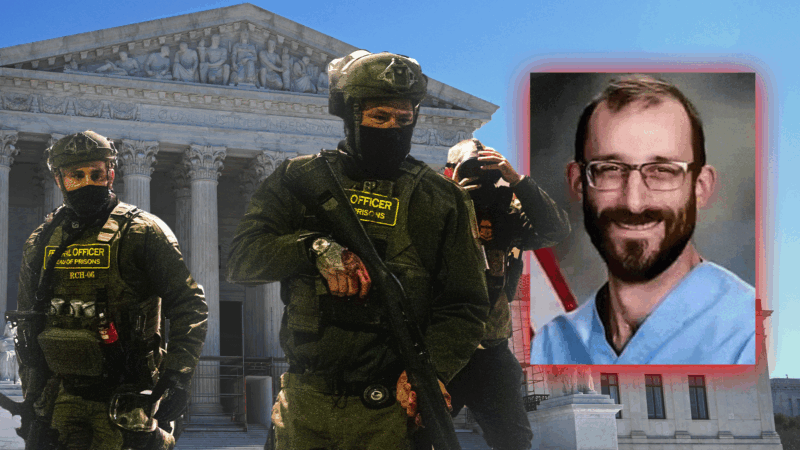
MINNESOTA – A major investigative report has surfaced new information about Alex Pretti’s final days. Sources cited in a CNN exclusive say Pretti had a previously unreported run-in with Immigration and Customs Enforcement (ICE) agents just a week before he was killed.
In that earlier incident, he reportedly left with a broken rib after a physical struggle with federal officers during protest activity in Minneapolis. The disclosure adds a new layer to what happened on Saturday, January 24, 2026, when Pretti, a 37-year-old intensive care nurse, was shot and killed by Border Patrol agents.
The shooting happened during the Trump administration’s broad immigration enforcement push, described by federal officials as the largest operation in U.S. history. The crackdown has led to thousands of arrests and sharp backlash, especially in sanctuary-leaning cities such as Minneapolis.
Alex Pretti’s death was the third shooting involving federal immigration agents in the city in under three weeks, following the January 7 death of Renee Nicole Good.
Alex Pretti’s Prior Encounter
People familiar with federal records and witness statements say the earlier clash took place during a protest tied to immigration raids. Witnesses and Alex Pretti reportedly described a scene in which five agents tackled him while he watched officers chase a family on foot.
During the restraint, one agent allegedly put a heavy weight on Alex Pretti’s back, which led to a fractured rib. He was released at the scene and was not charged, but he later told people close to him that he thought he might die during the encounter.
The Department of Homeland Security (DHS) has tracked contacts with protesters through internal paperwork described as “intel collection non-arrests.” Pretti’s name appeared in those records, according to the report, which suggests agents could have recognized him when they crossed paths again on January 24. That matters because it means Pretti may not have been viewed as a stranger at the scene, but as someone already known to immigration enforcement.
The new reporting also pushes back on early descriptions of Alex Pretti as a random troublemaker or only a “First Amendment witness,” a phrase used by Minnesota Governor Tim Walz. Instead, it paints a picture of repeated friction between Pretti and federal agents, with tensions that may have carried into the final encounter.
Shooting Video and Official Claims Collide
On the morning of January 24, near 26th Street and Nicollet Avenue in Minneapolis’s Whittier neighborhood, Alex Pretti was filming federal agents on his cellphone as they tried to enter a local business (reported as a donut shop) during protests.
Bystander video reviewed and verified by outlets including The New York Times and BBC Verify shows Pretti holding his phone in one hand while lifting his other, empty hand. The footage also appears to show him trying to protect a woman after agents pushed her down and used pepper spray.
Videos from multiple angles show agents taking Alex Pretti to the ground before shots were fired. Pretti, who held a legal firearm permit, had a gun on him, and agents tried to remove it during the struggle. Witnesses who later submitted affidavits with the ACLU said they did not see Pretti point or display the weapon.
A preliminary internal Customs and Border Protection review, leaked to congressional sources and reported by NPR, says Pretti resisted arrest, but it does not describe him attacking agents or making a lethal threat. That stands in contrast to early statements from the Trump administration that labeled him a “would-be assassin” planning to kill agents.
Alex Pretti’s family has strongly rejected those claims. In a statement, they called the government’s version “sickening lies” and pointed to a video that appears to show him unarmed in the moments before agents tackled him.
Megyn Kelly Truthful on Pretti
The new details have intensified debate across political media. Conservative commentator Megyn Kelly, host of The Megyn Kelly Show, drew widespread criticism after discussing the case on Monday. “I know I’m supposed to feel sorry for Alex Pretti, but I don’t,” Kelly said.
She argued that Pretti chose to “inject himself” into law enforcement activity, and she framed the outcome as “FAFO” (f*** around and find out). Kelly also called him an “agitator” and “subversive,” suggesting that staying away from federal operations could have prevented the death.
The remarks triggered accusations of cruelty, especially because Alex Pretti worked as an ICU nurse at a VA hospital caring for veterans.
Her response reflects the deep split over immigration enforcement. Supporters of tougher tactics see the earlier confrontation as proof that Pretti repeatedly interfered. Critics view the broken-rib incident as another example of excessive force by masked federal agents operating in city neighborhoods.
With the earlier ICE clash now public, the case looks less like a single confrontation and more like a series of escalating encounters between a committed protest observer and heavily armed federal agents.
The new context raises fresh concerns about training, de-escalation, and whether prior knowledge about Pretti affected how agents handled the January 24 scene.
Calls for an independent investigation have grown, including from some Republican lawmakers on Capitol Hill. Minnesota leaders continue pressing for federal agents to leave, while protests continue and memorials expand at the site of the shooting.
As the country argues over the costs of aggressive immigration enforcement on city streets, the report about Pretti’s earlier injury adds a troubling detail. It also may reshape how many Americans think about accountability during a period of mass arrests and deportation efforts.
Related News:
President Trump Addresses ICE Actions Amid Minnesota Unrest


ATLANTA, Ga – Paramount Skydance, led by CEO David Ellison, has locked in a blockbuster deal to buy Warner Bros. Discovery (WBD), CNN’s parent company, for about $111 billion.
The agreement came together after Netflix suddenly stepped out of the drawn-out bidding contest in late February 2026. Now, the Ellison family, backed by Oracle co-founder Larry Ellison‘s deep pockets, is set to take control of a massive mix of entertainment and news brands.
The purchase values WBD at roughly $110 to $111 billion in enterprise value, with cash terms near $31 per share. It covers major properties like HBO, Warner Bros. studios, DC Comics, and, most importantly for journalists, CNN.
The deal still needs sign-off from the Department of Justice and other regulators. If approvals come through, the merger could close later in 2026, possibly in the third quarter.
Inside CNN, the reaction has been tense. Many employees fear a reset of the network’s editorial tone, a possible tie-up with CBS News, and another round of layoffs. People familiar with the mood describe it as “horrific,” “devastated,” and “beyond bleak.” On top of that, the ownership’s political associations have added to staff unease.
CNN’s Falling Ratings and Trust Problems
CNN has struggled for years as the cable news audience splinters and streaming pulls viewers away. At the same time, Fox News, MSNBC, and a flood of digital outlets have squeezed prime-time attention. As a result, CNN’s ratings have slipped hard, and the network often trails its main rivals in key audience groups. Compared with its highs in the late 2010s and early 2020s, the drop has been steep.
Many critics also say CNN has damaged its reputation. They point to perceived bias, public stumbles, and more programming that feels like opinion rather than straight reporting. In turn, some former viewers say they stopped watching because they don’t trust the coverage anymore. All of this leaves CNN exposed while media habits keep changing.
- Steep ratings slide: CNN’s audience share has dropped sharply since the 2020 highs.
- Trust concerns: Ongoing claims of political tilt have pushed some viewers away.
- Money pressure: Debt from earlier deals and weaker ad sales keep squeezing the business.
Fear Inside CNN, and Fewer Places to Go
At CNN headquarters and in its newsrooms, worry has turned into open dread. Reports describe staff as “shaken” and “panicking,” with many expecting job cuts soon after the merger closes. Since CNN has already gone through multiple layoffs under prior ownership, employees say they feel worn down and exposed.
There’s another problem, too. Traditional media jobs have been drying up, so plenty of experienced producers and reporters don’t see many safe exits. That’s why talk of consolidation, especially a possible blend of CNN and Paramount’s CBS News operations, has hit so hard. If leaders combine teams, overlapping roles could disappear fast.
- Layoff anxiety: Many staffers expect “brutal” cuts as owners chase savings.
- Limited options: Mid-career employees often see few openings elsewhere.
- Low morale: People describe the atmosphere as “depressing” and “horrific,” even as leaders ask for patience.
CNN CEO Mark Thompson has urged employees not to “jump to conclusions.” He has also pointed to CNN’s strong reporting operation. Still, those messages haven’t calmed many nerves.
The Ellison Angle, Trump Links, and Editorial Worries
The financial force behind the deal, Larry Ellison, has openly praised Donald Trump and supported him politically. Meanwhile, David Ellison now runs Paramount Skydance following its merger with Paramount. For CNN staff, that mix raises a sensitive concern: whether the new owners will push CNN’s coverage in a different direction.
For years, CNN has taken a tough line on Trump. Now, some employees fear a shift toward more centrist or conservative framing, especially if the owners want a tone that fits their views or business ties. That’s why promises of independence, even when stated clearly, have not erased the skepticism.
David Ellison has said CNN will keep editorial freedom. Speaking on CNBC, he said, “we want to be in the truth business,” and he framed the deal as good for both CNN and CBS News. Even so, doubts linger, in part because CBS News has seen disruptions tied to leadership changes and the placement of voices that criticize mainstream coverage.
At the corporate level, a CNN and CBS News partnership could bring shared resources and cost savings. However, it could also blur CNN’s identity if teams and priorities merge too tightly. Executives have discussed possible “synergies” in private, highlighting CNN’s global reach while also looking for efficiencies.
What Happens Next for CNN, and Why It Matters
The deal now moves into a review phase, including antitrust scrutiny and other oversight that could shape final terms. If regulators approve it, the combined Paramount-WBD company would control a huge library of shows and films, major streaming services, and a powerful set of news brands. That kind of consolidation could change how competitors fight for viewers, ad dollars, and distribution.
For CNN employees, the near-term outlook feels unstable. David Ellison talks about investing in news, but merger math often brings cuts. Add in weaker ratings and the politics around the new ownership, and many staffers expect a rough stretch. People want clarity, yet they’re preparing for disruption.
This takeover also reflects a bigger pattern in media. Legacy companies keep combining, wealthy owners carry more influence, and politics keeps shaping trust in journalism. Whether CNN comes out stronger or simply different may be one of the biggest media stories of 2026.
Trending News:
CNN Host Abby Phillip Forced to Apologize Over New York Attack Claims
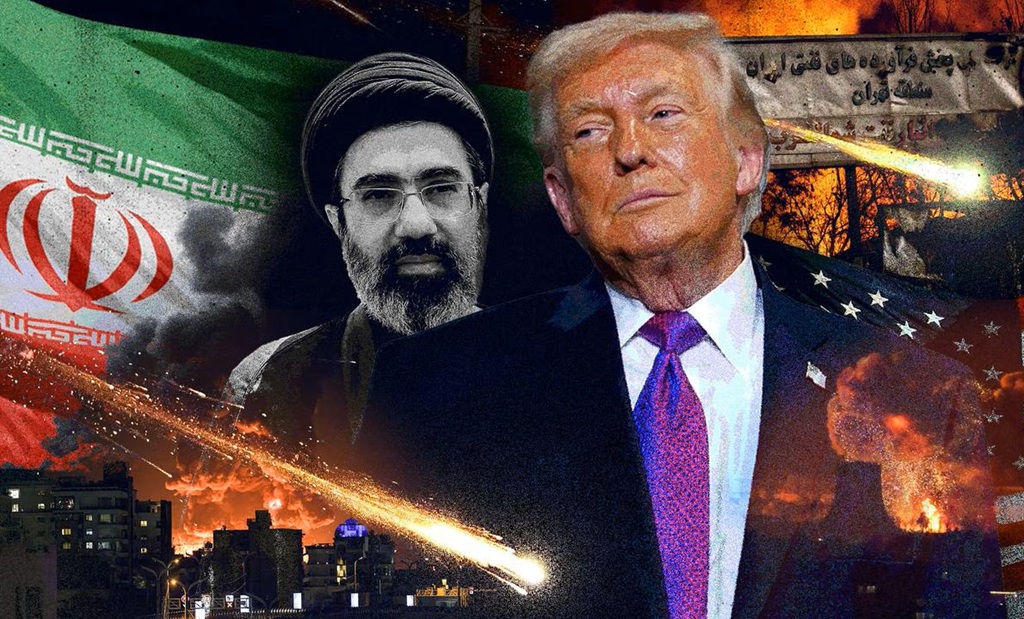
TERRAN – Iran is reeling after a wave of US-Israeli strikes that started on February 28, 2026. The operation killed long-time Supreme Leader Ayatollah Ali Khamenei and threw the Islamic Republic into crisis.
Days later, clerics quickly elevated his son, Ayatollah Mojtaba Khamenei, as the next supreme leader. Now, US President Donald Trump says Mojtaba is likely dead or severely incapacitated.
At the same time, the government is holding on through force. The Islamic Revolutionary Guard Corps (IRGC) has intensified violence inside Iran to crush dissent and stop a broader revolt.
Reports describe mass arrests, executions, and threats of deadly retaliation against protesters. Meanwhile, repeated airstrikes have badly damaged Iran’s air defenses and other key military systems.
Ali Khamenei Killed, Then a Fast and Controversial Succession
On February 28, 2026, US and Israeli forces launched a major attack on high-value targets across Iran. The strikes hit the supreme leader’s compound in Tehran early in the campaign. Ayatollah Ali Khamenei, Iran’s leader since 1989, died in the first wave. Several family members reportedly died as well.
Soon after, the Assembly of Experts, an 88-member clerical body, met under emergency conditions. On March 8, it named Mojtaba Khamenei, 56, as the new supreme leader. That rapid father-to-son handoff broke long-standing clerical norms that reject dynastic rule. It also ran against what many Iranians expected.
Even then, Mojtaba kept a low profile. He released only written statements and never appeared on video. As a result, rumors about his status spread quickly.
Trump Says Mojtaba Khamenei Is “Most Likely Dead”
In interviews and on social media, President Donald Trump has repeatedly cast doubt on Mojtaba Khamenei’s survival. Trump said he is “hearing he’s not alive” and called the reports credible. He also said that if Mojtaba is alive, he should “surrender” for the good of the country.
Earlier, Trump criticized the appointment as “unacceptable.” He also suggested Mojtaba would not last without US approval. Other US officials echoed parts of that message. Defense Secretary Pete Hegseth, for example, said Mojtaba was wounded and “likely disfigured” during the strikes that killed his father.
Iranian leaders reject those claims. Foreign Minister Abbas Araghchi said there is “no problem” with the supreme leader and insisted Mojtaba is carrying out his role. Still, there have been no verified public appearances. Because of that, speculation has only grown, including claims that he is in a coma or in hiding.
With no clear proof either way, top-level decision-making has slowed. That uncertainty also leaves Iran more exposed as the attacks continue.
Unrest Spreads Across Iran as Security Forces Crack Down
Iran is seeing broad unrest. Protests broke out after Ali Khamenei’s death, and security forces responded with harsh crackdowns. The IRGC and the Basij have reportedly killed dozens. Officials have also warned they will escalate further if demonstrations return.
- Threats, arrests, and executions: Authorities have warned that public criticism could bring immediate death, framing dissent as “wartime treason.”
- Internet shutdowns: Nationwide blackouts have disrupted communication, while thousands have reportedly been detained.
- Growing splits inside society: State-backed crowds have held rallies and chanted “Death to America.” At the same time, opposition voices have praised the strikes and called them a step toward freedom.
The government appears focused on stopping a mass uprising. As military losses rise, some IRGC commanders have promised reprisals “stronger than January 8” if protests surge again.
US-Israel Strikes Hit Iran’s Military, Missiles, and Command Structure
The US-Israeli campaign has targeted Iran’s military backbone in a steady series of raids.
- Missile forces weakened: Strikes reportedly destroyed many launchers and production sites, cutting ballistic missile launches by as much as 86% from early levels.
- Air and naval assets damaged: Attacks hit hundreds of sites, including air defenses, naval bases, and vessels such as the IRGC frigate Jamaran. Iran’s air force and navy are now widely described as largely neutralized.
- Senior leaders killed: Dozens of high-ranking commanders reportedly died. The strikes also hit parts of Iran’s nuclear and missile programs that had been rebuilt after earlier 2025 clashes.
- Key facilities destroyed: Trump said a raid “totally obliterated” military facilities on Kharg Island, disrupting oil exports and logistics routes.
US defense assessments say Iran still has some missile stockpiles. Even so, its ability to strike back appears sharply reduced. The Strait of Hormuz remains a concern, although Iran’s capacity to enforce threats there looks weaker.
These attacks follow the 2025 strikes on nuclear-linked sites. Taken together, they have left Iran’s defenses in their worst shape in decades.
Where Iran Goes From Here
As the war moves into its third week, the regime’s grip looks less secure. With no visible supreme leader and major defenses damaged, internal power struggles could intensify. Hardliners still depend on the IRGC to keep control, yet prolonged instability increases the risk of revolt or state fragmentation.
President Trump has signaled he could end the conflict quickly. However, he has also pushed for major concessions or a change in Iran’s leadership. Israel, for its part, says it will keep striking until it removes the threats it sees.
For everyday Iranians, conditions are deteriorating fast. Disrupted oil flows raise the risk of economic collapse. Airstrikes continue to cause casualties, and repression at home remains severe. Whether Mojtaba Khamenei is alive or dead, the Islamic Republic is facing its most dangerous test in decades.
Related News:
Trump Announces U.S. Forces Totally Obliterate Iran’s Kharg Island
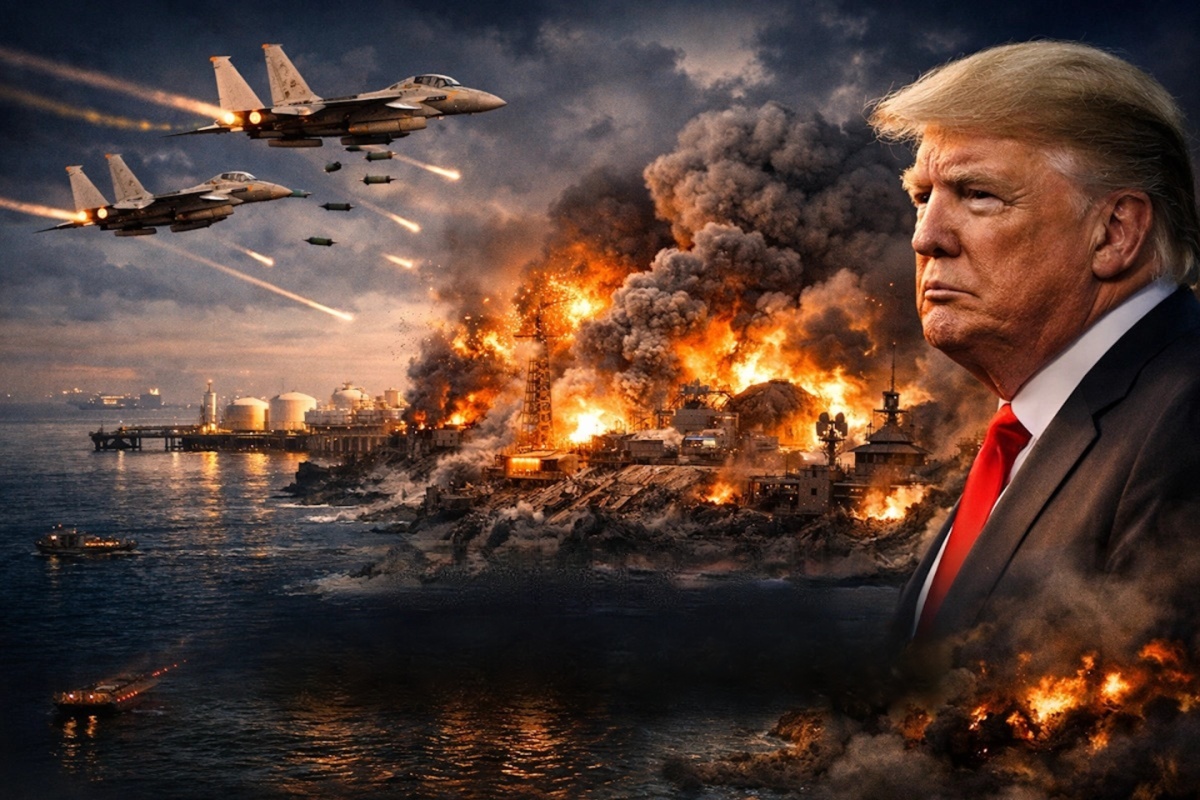
WASHINGTON, D.C. – President Donald Trump said late Friday that U.S. forces launched a large bombing operation on Iranian military positions on Kharg Island, a small but high-value site in the Persian Gulf.
In his statement, Trump claimed the strikes “totally obliterated every MILITARY target” on what he described as Iran’s “crown jewel.” He also warned that Kharg’s key oil facilities could be hit next if Iran threatens shipping routes.
“Moments ago, at my direction, the United States Central Command executed one of the most powerful bombing raids in the history of the Middle East, and totally obliterated every MILITARY target in Iran’s crown jewel, Kharg Island,” Trump wrote on Truth Social.
He said U.S. forces did not hit oil infrastructure “for reasons of decency.” Still, he added that he could reverse that choice if Iran interferes with maritime traffic. “Should Iran, or anyone else, do anything to interfere with the Free and Safe Passage of Ships through the Strait of Hormuz, I will immediately reconsider this decision.”
The statement landed as the two-week U.S.-Israel war against Iran grows sharper. Reports described blasts on the island and heavy smoke over the struck areas, while Iranian officials promised a response. U.S. officials said the operation focused on military assets, and for now, the oil export terminal remains intact.
What Is Kharg Island? A Key Link in Iran’s Oil Exports
Kharg Island is a dry, compact island of about 20 square kilometers (around 7.7 square miles). It sits roughly 25 to 30 kilometers (15 to 19 miles) off Iran’s southwestern coast in Bushehr province. It’s often called the “forbidden island” because of tight security and long-standing military restrictions. For decades, it has served as the core of Iran’s oil export system.
- Main oil export terminal: Kharg handles 90 to 95% of Iran’s crude exports. Under normal conditions, it can move about 1.3 to 1.6 million barrels per day. In recent months, reports said volumes surged as high as 3 million barrels per day during war preparations.
- Major infrastructure: The island includes deepwater jetties that can load supertankers, large storage tanks holding millions of barrels (including backups up to 18 million barrels), and pipelines tied to key onshore and offshore fields.
- Why it matters to Iran’s finances: Oil sales, mostly to China, bring in cash that supports government spending and activities tied to the Islamic Revolutionary Guard Corps (IRGC). If Kharg goes offline, Iran’s economy could take a severe hit, and money for military operations could shrink.
Analysts often describe Kharg as Iran’s most exposed economic target. One expert called it “the artery connecting the Iranian economy to the global economy.” The facilities can load up to 10 supertankers at once, placing it among the world’s largest offshore crude terminals.
Kharg rose to global importance during Iran’s oil growth years in the 1960s. It also took damage during the Iran-Iraq War (1980 to 1988) but continued operating. Even with newer options, including Iran’s push to expand capacity at terminals like Jask outside the Strait of Hormuz, Kharg remains central to Tehran’s energy plans.
Why the U.S. Hit Kharg’s Military Defenses
Kharg is more than an oil hub. Iran also stations defensive forces there to shield the export system. Reports from multiple sources said U.S. strikes hit air defenses, command sites, and other military positions tied to protecting the island.
- Why start with military targets? Many analysts see this as a measured step. It shows U.S. reach and firepower, while avoiding an immediate shock to global oil supply by holding off on strikes against export facilities.
- A direct message on the Strait of Hormuz: Trump tied future decisions to Iran’s behavior around the waterway, where about 20% of global oil flows. Iran has reportedly placed mines and threatened disruptions as the wider conflict unfolds.
- How this fits the broader campaign: The attack follows U.S. and Israeli strikes on Iranian military and nuclear sites, and some energy-related targets. Until now, Kharg had not been hit, and many experts have warned that damaging it could trigger severe economic fallout and raise the risk of rapid escalation.
Trump said U.S. Central Command (CENTCOM) carried out the operation, which he described as historic in size. At the same time, the U.S. is sending more forces into the region, including 2,500 Marines and an amphibious assault ship. That has fueled talk about possible ground action, although Trump has said taking the island isn’t “high on the list.”
What This Could Mean for Oil Prices and the Risk of Escalation
Energy markets reacted quickly. Oil prices have already risen about 40% since the war began, and they could climb again if Kharg’s oil terminal becomes a target. Because Kharg plays such a large role in Iranian exports, a long disruption could squeeze supply, even if most Iranian crude goes to China.
- Early warnings from Iran: Iranian leaders have warned they could strike U.S. and allied energy assets if Iran’s own facilities are attacked.
- More signs of a widening conflict: The strikes came alongside reports of explosions in Tehran and public rallies showing defiance against the U.S.-Israel campaign.
- Growing international concern: Many analysts warn that hitting Kharg’s export infrastructure could set off a chain reaction, including regional instability and serious humanitarian consequences.
Iranian officials, including parliament speaker Mohammad-Bagher Ghalibaf, have previously said attacks on southern islands like Kharg would end “all restraint.”
What Comes Next for Kharg Island
As the war moves into its third week, Kharg Island is now a central pressure point. Trump’s warning leaves open the possibility of new strikes, while Iran’s next steps may decide whether the “crown jewel” keeps operating or turns into a direct battlefield target.
For now, the world is watching closely because this small island in the Persian Gulf could shape the direction of one of the biggest Middle East crises in decades.
Related News:
Trump Praises Albanese Over Giving Iranian Women Footballers Asylum


Panic Engulfs CNN as Ellison’s Paramount Skydance Wins Takeover Bid

Iran in Turmoil as New Supreme Leader Mojtaba Khamenei Most Likely Dead

Rep. Ilhan Omar Faces Heat as Minnesota Voters Seek Change

Trump Announces U.S. Forces Totally Obliterated of Iran’s Kharg Island

Democrat Heavyweight James Carville Urges Ilhan Omar to Leave the Party

CNN Host Abby Phillip Forced to Apologize Over New York Attack Claims

Musk’s Chilling Warning to Senate About the SAVE Act Goes Viral

U.S. Forces Hit and Destroy 16 Iranian Mine-Laying Boats Near the Strait of Hormuz

Democrat Voters Sick of Anti-Trump Rhetoric Want More Moderate Leaders

CBS Caught Making Deceptive EDIT to 60 Minutes Interview With Hegseth

Thai Billionaire Charged With Lese Majeste Over Facebook Post

Russia Bans Facebook, Meta Says It’ll Do “Everything” To Restore Service

Facebook Login Feature – Clash of Clans

4 Things you can do to take your Facebook Lead Generation to the Next Level

Zuckerberg to Allow Violent Speech on Russia After Facebook Blocked

Facebook Loses $200 Billion as Users Shift to TikTok

Downloading Facebook Videos Anonymously with High Quality Video through Snapsave app

The Best Site to Buy Real Facebook Likes and Followers in 2022

Chinese Man Arrested for Using Facebook to Dupe Cryptocurrency Investor

Google and Facebook Under Huge Pressure Over User Privacy

Mosque Set Ablaze in Iran a Citizens Revolt Against the Islamic Regime

AOC Accuses Jessie Watters of Fox News of Sexualizing and Harassing Her

JD Vance Exposes Walz’s Fraud and CNN’s Lies in White House Presser

Milestone Card Credit: How the Milestone MasterCard Can Transform Credit
-

 Crime3 months ago
YouTuber Nick Shirley Exposes BILLIONS of Somali Fraud, Video Goes VIRAL
-

 China2 months ago
China-Based Billionaire Singham Allegedly Funding America’s Radical Left
-

 Politics3 months ago
Ilhan Omar Faces Renewed Firestorm Over Resurfaced Video
-

 Politics1 month ago
CNN Delivers Stark Reality Check to Democrats Over Voter ID
-

 Business3 months ago
Tech Giant Oracle Abandons California After 43 Years
-

 Midterm Elections2 months ago
2026 Midterms Guide: Candidates, Key Issues, and Battleground States
-

 Crime3 months ago
Minnesota Fraud Scandal EXPANDS, $10 Billion in Fraudulent Payments
-

 Politics3 months ago
Accusations Fly Over Alleged Zionist Takeover of (TPUSA) Turning Point USA