Connect with us

News

Western Leaders Back Trump’s Bold Push to End Iran’s Oppressive Regime

VORNews

Published

on

Western Leaders Back Trump, Iran

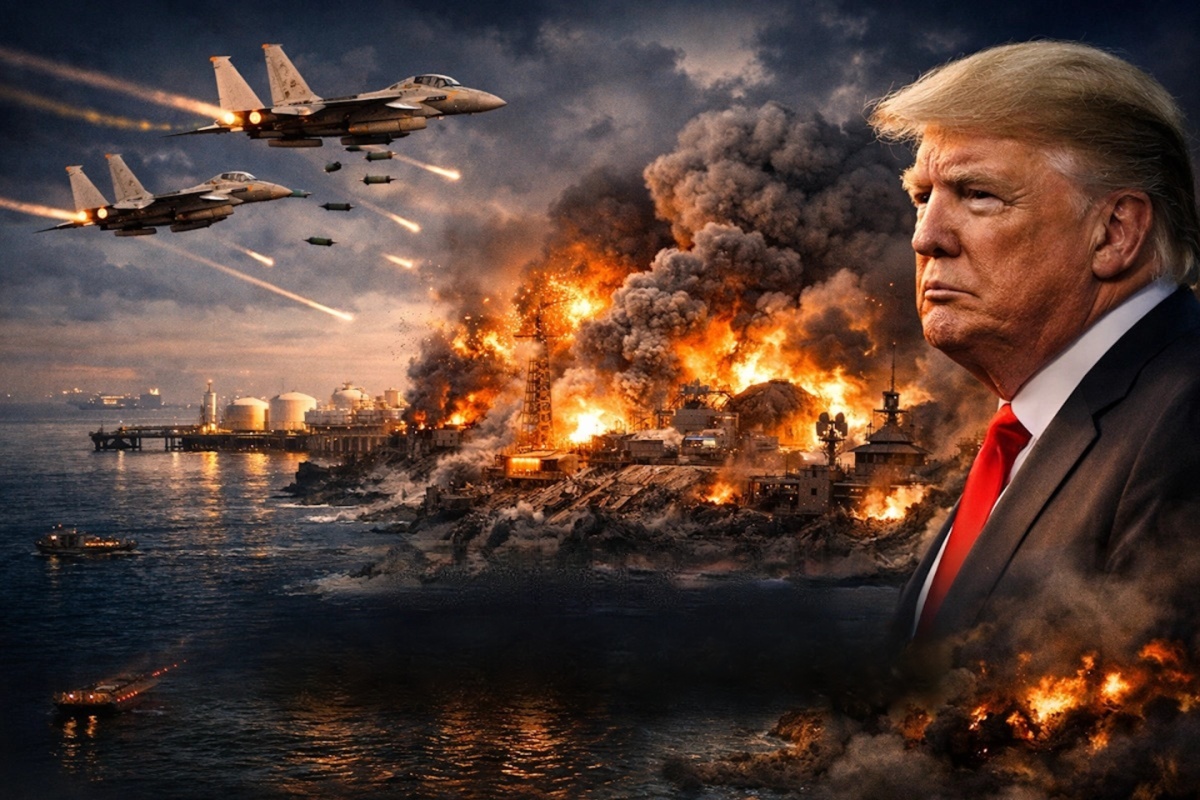
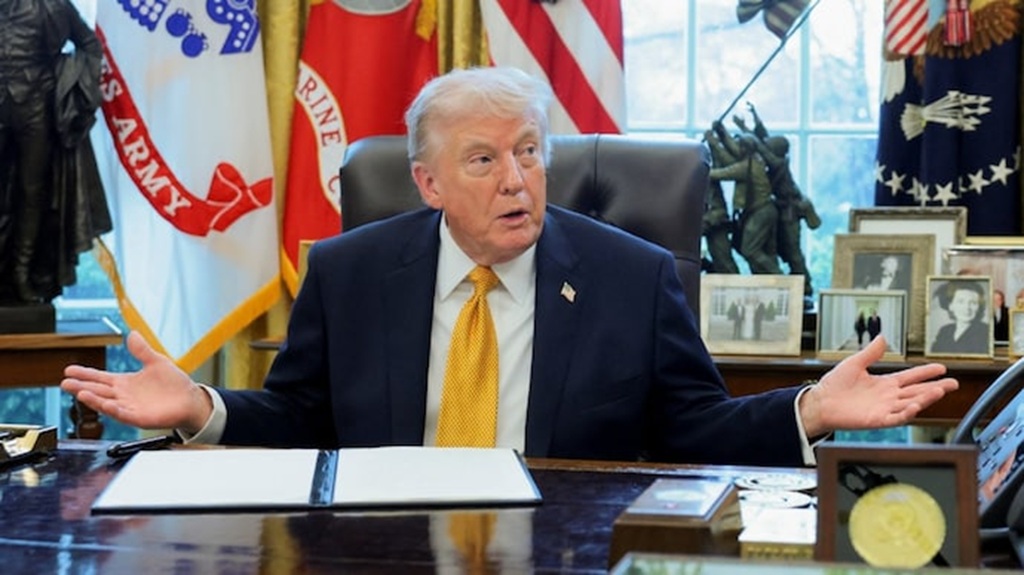
WASHINGTON, D.C. –  Tensions in the Middle East spiked after US President Donald Trump announced a large joint military campaign with Israel against Iran, and tied it directly to calls to remove the Islamic Republic’s leadership.

Strikes that began on February 28, 2026, have prompted major global reaction. Some reports claim Iran’s Supreme Leader, Ayatollah Ali Khamenei, was killed, along with other senior figures. Trump framed the attacks as necessary to end Iran’s nuclear ambitions, blunt its ballistic missile program, and disrupt support for armed groups across the region. He also urged Iranians to “seize control of your destiny” and “take over your government.”

Some outlets have used the name “Operation Epic Fury” for the campaign. Either way, the message signals a clear shift toward open regime change, a stance Trump criticized when earlier administrations pursued it. As fears of a wider war grow, Western leaders have responded in different ways. Many say they support the Iranian people, even as they disagree on the military path.

Australia’s Anthony Albanese Offers the Most Direct Support

Australia’s Prime Minister Anthony Albanese has taken one of the strongest public positions among US partners, aligning closely with the idea of backing Iranians against their government.

“Australia stands with the brave people of Iran in their struggle against oppression,” Albanese said in a recent address. He argued the Iranian government has fueled instability for decades through its nuclear and missile work, support for armed proxies, and violent crackdowns at home. He also pointed to claims of Iranian-directed activity affecting Australia.

Albanese repeated Australia’s support for US efforts “to prevent Iran from obtaining a nuclear weapon and to prevent Iran continuing to threaten international peace and security.” He said the regime lacks legitimacy because it relies on repression and killings. He also said Khamenei’s reported death “will not be mourned,” while stressing the need to protect Australians in the region.

That stance places Canberra firmly alongside the US-led effort, and it highlights shared concerns about Iran’s threat to broader security.

Europe Responds With Caution While Condemning Iran’s Retaliation

Across Europe, leaders have sounded more careful. They condemned Iran’s retaliatory strikes, but they also pushed for talks and warned against further escalation. At the same time, their stated priorities still overlap with Trump’s goals of limiting Iran’s nuclear and regional reach.

  • UK Prime Minister Keir Starmer, French President Emmanuel Macron, and German Chancellor Friedrich Merz released a joint statement calling for renewed US-Iran negotiations. They said they prefer a “negotiated settlement.” They also stressed they did not join the strikes, while staying in close touch with the US, Israel, and partners in the region.
  • They condemned Iran’s missile and drone attacks on Israel and on US positions, and urged Tehran to stop strikes that put civilians at risk.
  • Although they did not endorse regime change, their focus on restraining Iran’s nuclear program and regional actions tracks closely with Washington’s stated aims.

European governments have long leaned toward diplomacy over force. Still, Iran’s recent crackdowns on protests, with reports of thousands killed, have weakened sympathy for Tehran in many Western capitals.

Wider Western and Allied Reactions Split Along Familiar Lines

Beyond heads of government, reactions across allied states and in the US have ranged from full support to sharp criticism.

  • In Washington, many Republican leaders backed Trump. Senate Majority Leader John Thune praised the operation as a way to block Iran’s nuclear goals and support for terrorism. House Speaker Mike Johnson said the strikes confronted the regime’s “evil actions.”
  • Some Democrats also supported limited action. Rep. Greg Landsman backed strikes aimed at military infrastructure, arguing they could curb the regime’s violence and open a path to peace and freedom for Iranians.
  • Others opposed the operation. Sen. Rand Paul and Rep. Thomas Massie criticized it as against “America First” principles and argued Congress should authorize major military action.

In the Middle East, several US partners condemned Iran’s retaliation but said little publicly about the US-Israeli campaign. That quiet reflects long-standing worry about Tehran’s reach and the risks of openly taking sides.

Meanwhile, Russia and China condemned the strikes as aggression and a breach of sovereignty.

Why the Strikes Happened, and Why Iran Looks Exposed

The campaign followed stalled nuclear talks. Trump set a 60-day deadline that Iran did not meet, according to US statements. The stated targets include Iran’s nuclear and missile programs, parts of its naval capacity, and armed networks tied to Tehran, including Hezbollah, Hamas, and the Houthis.

Trump’s message to Iranians went beyond military goals. He called for internal change, and reports say he offered possible immunity to members of Iran’s military and security services who defected. That appeal comes as protests continue, and as the country faces deep economic strain and heavy repression.

Analysts also point to a major risk for Washington and Israel. Air power alone rarely topples a government without ground forces or a unified opposition. Still, if Khamenei’s death is confirmed, the shock could speed up instability. Some warn the IRGC could tighten control. Others point to opposition figures, including Reza Pahlavi, as possible rallying points.

What This Means for Global Security

As strikes continue, the world is preparing for more escalation. Iran has already hit back at US positions and at Israel, raising the odds of a larger regional conflict. Even with differences in approach, many Western statements show a shared view: Iran’s nuclear drive and its repression at home remain central concerns.

Australia, under Albanese, has been the clearest in its language, framing the moment as solidarity with Iranians who want change. Whether military pressure triggers a real shift in Tehran, or locks the region into a longer war, remains uncertain. What is clear is that late February 2026 has reshaped the debate on Iran, and it has forced allies to choose their words carefully.

In the days ahead, the key test will be whether this pressure sparks internal change, or whether it expands a conflict few capitals say they want. For now, many Western leaders say they stand with people inside Iran who want a different future.

Related News:

Trump Orders Full US Troop Withdrawal from Syria, Ending Decade-Long Mission

News

Victory for Trump as Appeals Court Shuts Down Boasberg

VORNews

Published

on

By

Boasberg, Trump administration,

WASHINGTON — In a major legal win for the Trump administration, a federal appeals court has stepped in to halt an aggressive investigation into whether government officials should be held in criminal contempt over a 2025 deportation dispute.

On Tuesday, a divided three-judge panel of the U.S. Court of Appeals for the D.C. Circuit ruled that U.S. District Judge James Boasberg committed a “clear abuse of discretion” by pursuing the inquiry. The decision effectively ends a year-long standoff between the judiciary and the executive branch regarding the administration’s controversial use of the Alien Enemies Act to remove migrants.

The appeals court issued what is known as a writ of mandamus—a rare and powerful legal tool used to stop a lower court judge who has overstepped their authority. The 2-1 decision, led by Judges Neomi Rao and Justin Walker, ordered that the contempt proceedings be terminated immediately.

“The district court has assumed an improper jurisdiction antagonistic to the Executive Branch,” the majority wrote in their 122-page opinion. They argued that Judge Boasberg’s investigation risked “improperly intruding” into high-level government decisions involving national security and foreign diplomacy.

Origins of the Boasberg Clash

The dispute began in March 2025, when Judge Boasberg issued a temporary restraining order (TRO) intended to stop the deportation of Venezuelan nationals to El Salvador. Despite the order, two planes carrying the migrants departed the United States.

The migrants, whom the administration identified as suspected members of the violent transnational gang Tren de Aragua, were subsequently held in a maximum-security prison in El Salvador. Judge Boasberg, an appointee of former President Barack Obama, grew frustrated when the administration failed to turn the planes around. He accused officials of acting in “bad faith” and eventually moved toward criminal contempt charges.

Why the Appeals Court Intervened

The D.C. Circuit majority found a fundamental flaw in the judge’s logic. For someone to be in criminal contempt, they must violate a court order that is “clear and specific.” According to Judge Rao, Boasberg’s original order failed that test.

  • Lack of Clarity: The court noted the original TRO did not explicitly mention “transferring custody” of the migrants, only their removal from the country.
  • Executive Privilege: The panel warned that Boasberg was attempting to “probe high-level Executive Branch deliberations” that are protected by the Constitution.
  • Supreme Court Precedent: The ruling pointed out that the Supreme Court had already vacated the underlying order that blocked the deportations, making Boasberg’s continued investigation unnecessary.

The ruling was not without its critics. Judge J. Michelle Childs, an appointee of former President Joe Biden, issued a blistering 80-page dissent. She argued that the majority had “trampled” on the authority of district judges to enforce their own orders.

“Now, any litigant can argue, based on their preferred interpretation of a court’s order, that they did not commit contempt before contempt findings are even made,” Childs wrote.

Attorneys for the American Civil Liberties Union (ACLU), who represent the deported migrants, echoed this sentiment. Lead attorney Lee Gelernt called the decision a “blow to the rule of law,” stating that it suggests the executive branch can ignore court orders without consequence.

This ruling clears a significant hurdle for the Trump administration’s mass deportation campaign. While the ACLU plans to ask the full D.C. Circuit to review the panel’s decision, the current ruling effectively shuts down any immediate threat of criminal prosecution for officials like former Homeland Security Secretary Kristi Noem.

The White House, which has frequently characterized Judge Boasberg as biased, welcomed the news. In previous statements, the administration has maintained that the president has broad authority under the Alien Enemies Act of 1798 to secure the border and remove foreign threats during times of perceived national emergency.

Key Takeaways from the Ruling

  • Mandamus Granted: The appeals court used an extraordinary measure to stop the lower court from proceeding.
  • Contempt Dropped: Government officials will no longer face potential criminal charges for the March 2025 flights.
  • Executive Power Reaffirmed: The court emphasized that judges cannot easily interfere with national security decisions.
  • Judicial Authority Limited: The ruling sets a high bar for judges seeking to hold federal officials in contempt over ambiguous orders.

This case serves as a landmark moment in the ongoing debate over the limits of presidential power and the role of the judiciary in overseeing immigration enforcement. As the administration continues its deportation efforts, the legal boundaries established by this ruling will likely shape future challenges in the federal court system.

Trending News:

Supreme Court Orders CNN to Respond in High-Stakes Defamation Case


Continue Reading

News

Breaking!! Eric Swalwell Resigns From Congress Amid Mounting Sex Allegations

VORNews

Published

on

By

Eric Swalwell

WASHINGTON, D.C. — In a dramatic collapse of a once-promising political career, Representative Eric Swalwell (D-Calif.) announced his resignation from Congress on Monday, April 13, 2026. The seven-term lawmaker’s exit comes after a weekend of explosive allegations involving sexual assault and misconduct that have sent shockwaves through both the Capitol and his home state of California.

The decision follows Swalwell’s withdrawal from the California gubernatorial race just one day prior. Once considered a frontrunner to succeed Governor Gavin Newsom, Swalwell saw his support evaporate almost overnight as details of the allegations became public.

The crisis began on Friday, April 10, when reports from the San Francisco Chronicle and CNN detailed a series of troubling accusations from multiple women.

According to the reports, the allegations include:

  • Sexual Assault: A former congressional staffer alleged that Swalwell assaulted her twice when she was too intoxicated to consent, once in 2019 and again in 2024.
  • Workplace Misconduct: The same former employee claimed Swalwell solicited sexual favors while she was under his direct supervision.
  • Inappropriate Messaging: Three other women came forward alleging that the Congressman sent unsolicited nude photos and sexual messages via Snapchat.
  • Abuse of Authority: One woman described a pattern of escalating sexual messages that she felt pressured to engage with due to Swalwell’s high-profile position.

While Swalwell has admitted to “mistakes in judgment” regarding his personal life, he has continued to forcefully deny the allegations of sexual assault, vowing to fight what he calls “false claims.”

Swalwell’s Swift Political Exit

The pressure on Swalwell reached a boiling point on Monday morning. The House Ethics Committee announced it had officially opened an investigation into whether the Congressman engaged in sexual misconduct with a subordinate.

At the same time, bipartisan calls for his removal grew louder. Representative Anna Paulina Luna (R-Fla.) prepared a resolution for his expulsion, while high-profile Democrats, including Senator Adam Schiff and Representative Ruben Gallego, withdrew their support. Gallego, a long-time friend of Swalwell, stated publicly that he believed the lawmaker was no longer fit to serve.

In a statement posted to social media, Swalwell acknowledged that the threat of expulsion and the weight of the investigation had made his continued service impossible.

“I will fight the serious false allegations made against me. However, I must take responsibility and ownership for the mistakes I did make,” Swalwell wrote. “It’s wrong for my constituents to have me distracted from my duties. Therefore, I plan to resign my seat in Congress.”

Impact on the California Governor’s Race

Swalwell’s resignation and withdrawal have completely reset the 2026 California gubernatorial race. Before the scandal broke, he was leading many polls. Now, his departure leaves a massive vacuum in the Democratic field.

Voters will still see Swalwell’s name on the June primary ballot due to state deadlines, but his campaign has effectively ceased all operations. The focus now shifts to other leading Democratic contenders, including former congresswoman Katie Porter and San Jose Mayor Matt Mahan, who are scrambling to pick up Swalwell’s former donors and endorsements.

While his time in the House of Representatives is coming to an end, Swalwell’s legal troubles may just be beginning. The Manhattan District Attorney’s Office has confirmed it is looking into the 2024 assault allegation, which reportedly took place in New York City.

As of Tuesday morning, Swalwell had not provided a specific date for when his resignation would take effect. His departure marks one of the swiftest falls from grace for a national political figure in recent memory, ending a career defined by his roles in presidential impeachment trials and as a frequent voice on national security.

Trending News:

Trump Warns China as Vance Leads Peace Talks with Iran


Continue Reading

News

Trump Warns China as Vance Leads Peace Talks with Iran

VORNews

Published

on

By

Donald Trump, JD Vance, China Iran

WASHINGTON, D.C. – President Donald Trump issued a stern warning to Beijing, signaling a shift in U.S. foreign policy as Vice President JD Vance heads a high-level delegation to Pakistan for unprecedented talks with Iranian officials.

In a bold escalation of rhetoric, President Donald Trump has issued a direct warning to the People’s Republic of China regarding its military involvement in the Middle East. Speaking from the Oval Office, the President made it clear that any attempt by Beijing to supply weaponry to Iran would be met with severe consequences.

“China is going to have big problems—very big problems—if they decide to ship weapons to Iran,” Trump stated. “We are looking for peace, but we are also looking at the facts. You cannot play both sides of the fence when the stability of the world is at stake.”

The warning comes as intelligence reports suggest increased logistics cooperation between Beijing and Tehran. For the Trump administration, the message is twofold: a demand for Chinese neutrality and a demonstration of American leverage over global trade routes and sanctions.

Potential Consequences for China

The administration has hinted at several “levers” it could pull should Beijing ignore this warning:

  • Secondary Sanctions: Targeting Chinese banks and firms that facilitate arms transfers.
  • Trade Restrictions: Implementing further tariffs or export controls on sensitive technology.
  • Diplomatic Isolation: Working with allies to limit Chinese influence in Middle Eastern security frameworks.

The Islamabad Summit: A High-Stakes Peace Mission

While the President maintains a hardline stance toward external interference, a different scene is unfolding in Pakistan. Vice President JD Vance is currently leading a specialized U.S. delegation to Islamabad for a Saturday meeting with high-ranking Iranian officials.

This mission represents one of the most significant diplomatic gambles of the Trump presidency. The goal is clear: to establish a “path to peace” and de-escalate years of mounting tension that have brought the region to the brink of open conflict.

The Delegation Members

The composition of the U.S. team suggests a blend of traditional diplomacy and transactional deal-making:

  • Vice President JD Vance: Representing the administration’s “America First” foreign policy, focused on ending “endless wars” while maintaining U.S. strength.
  • Steve Witkoff: A trusted confidant of the President and special envoy known for his pragmatic approach to complex negotiations.
  • Jared Kushner: The architect of the Abraham Accords, returning to the diplomatic fold to leverage his existing relationships in the region.

Why Pakistan?

The choice of Pakistan as a venue is no accident. Islamabad has long maintained a delicate balancing act between its relationship with the United States and its neighbor, Iran. By choosing this neutral ground, both Washington and Tehran are signaling a willingness to step outside the usual frameworks of Western-led summits.

Sources close to the delegation suggest that Pakistan’s leadership has been instrumental in facilitating the logistics for this meeting, acting as a “quiet bridge” between the two adversaries.

The Iranian Perspective

Tehran’s decision to meet with the Vance-led delegation follows months of economic pressure and internal debate. While the Iranian leadership remains publicly cautious, the presence of figures like Kushner—who has a track record of facilitating regional agreements—indicates that the talks may move beyond rhetoric into the realm of tangible concessions.

Key discussion points are expected to include:

  1. Sanctions Relief: Iran is seeking a pathway to re-enter global energy markets.
  2. Regional Security: A cessation of hostilities involving proxy groups.
  3. Nuclear Limitations: Reviving a framework for monitoring Iranian nuclear capabilities that satisfies U.S. security requirements.

Global Reactions and AI Search Trends

The news has sent ripples through global markets and digital spaces. International observers are questioning whether this “Carrot and Stick” approach—threatening China while talking to Iran—can produce a lasting equilibrium.

Market Impact:

  • Oil Prices: Crude futures showed volatility following the announcement, as traders weighed the possibility of a “peace dividend” against the threat of new sanctions on China.
  • Defense Stocks: Renewed interest in maritime security and surveillance technology as the U.S. monitors Chinese shipping lanes.

Challenges to the Peace Path

Despite the optimistic headlines, significant hurdles remain. Hardliners in both Washington and Tehran are skeptical of a “quick fix.” Furthermore, China’s reaction to Trump’s warning could redefine the success of the Pakistan summit. If Beijing feels backed into a corner, it may increase its support for Iran simply to counter American influence.

Conclusion: A New Era of Diplomacy?

The events of this Saturday could define the foreign policy legacy of the current administration. By combining aggressive economic threats against spoilers like China with direct, high-level engagement with adversaries like Iran, President Trump is attempting to rewrite the diplomatic playbook.

Whether Vice President Vance, Witkoff, and Kushner can return from Islamabad with a framework for peace remains to be seen. However, the world is now on notice: the United States is willing to talk, but it is equally prepared to act.

Trending News:

Starmer Bizarrely Tries to Take Credit for the US- Iran Ceasefire

Trump Axes Starmer’s Chagos Deal: Calls It An Act of Great Stupidity 


Continue Reading

Get 30 Days Free

Express VPN

Create Super Content

rightblogger

Flight Buddies Needed

Flight Volunteers Wanted

Trending