



WASHINGTON, D.C. – Iran’s nationwide protests have entered a third week, and President Donald Trump is stepping up the U.S. military posture in the Middle East. Key U.S. assets are shifting closer to Iran as Trump issues sharp warnings to Tehran.
The moves come as human rights groups describe an exceptionally violent crackdown, with reports that security forces have killed thousands.
Trump’s comments, often posted on Truth Social, have fueled talk of possible U.S. action. At the same time, he has signaled he may pause strikes after claims that the killing has slowed.
Anti-government protests spread across all 31 Iranian provinces in late December 2025. Demonstrations began amid economic collapse, hyperinflation, and anger over corruption. Many protests later turned into open demands to end clerical rule. Large numbers of Gen Z protesters and people from different ethnic communities have joined, calling for freedom and democracy.
The state response has been severe. Reports say security forces, including the Islamic Revolutionary Guard Corps (IRGC) and police, have used live fire, metal pellets, and beatings against crowds described as mostly peaceful. A near-total internet blackout since early January has made verification harder, but accounts from exiled groups and witnesses describe widespread bloodshed.
Death toll estimates vary and remain difficult to confirm. The U.S.-based Human Rights Activists News Agency has reported more than 2,500 deaths. Iran International, citing internal documents, reported claims of up to 12,000 killed over two nights, January 8 to 9, 2026, during the peak of the crackdown.
Norway-based Iran Human Rights said it documented at least 3,428 protester deaths by mid-January, including children, along with thousands injured and more than 18,000 arrests. Amnesty International and Human Rights Watch have condemned what they describe as unlawful lethal force, arbitrary arrests, and attacks on medical sites, warning these could amount to crimes against humanity.
Footage said to be smuggled out shows people running from gunfire, bodies stored in makeshift morgues, and families grieving. Iranian officials have labeled protesters as foreign-backed “rioters” and warned of rapid trials and executions. One reported case involves 26-year-old Erfan Soltani, who was said to receive a death sentence shortly after being detained.
The violence builds on a long pattern of repression, including the 2022 Mahsa Amini protests and earlier crackdowns. Many observers now describe the current unrest as potentially the deadliest since the 1979 Revolution.
Trump’s Warning to Iran
Trump has used blunt language in public statements. On Truth Social, he urged Iranians to “KEEP PROTESTING” and “TAKE OVER YOUR INSTITUTIONS.” He also promised “HELP IS ON ITS WAY” and said those responsible for the killings would “pay a big price.” He warned of “very strong action” if the government began hanging protesters or continued large-scale killings.
In interviews, Trump said Iran’s leaders face “tremendous” economic pressure and repeated that the U.S. was “locked and loaded.” He pointed to the June 2025 U.S. strikes on Iran’s nuclear facilities as proof of U.S. willingness to act. Trump also said he had “very important sources” indicating the killings had paused, and he suggested that helped him hold off on immediate strikes. Still, he emphasized that “all options remain on the table.”
His messaging has lifted morale for some protesters, but it has also worried regional partners who fear a wider conflict.
U.S. Military Buildup
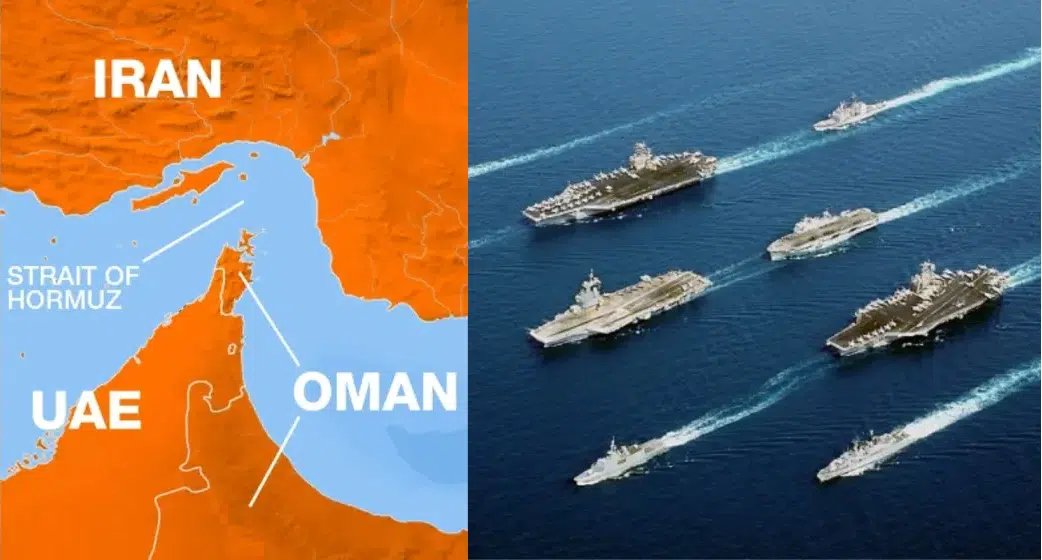
The U.S. military posture is shifting in visible ways. Sources say at least one U.S. aircraft carrier strike group is moving toward the Middle East. More air, ground, and naval assets are expected to follow in the coming days and weeks. The repositioning gives Trump a broader menu of options, from limited strikes on regime command sites to larger operations.
This comes after a recent drawdown that left fewer major assets close by. Some carriers, including the USS Gerald R. Ford, were redirected to the Caribbean after prior missions. The U.S. has also evacuated nonessential personnel from locations such as Al Udeid in Qatar, a sign officials are preparing for possible Iranian retaliation against U.S. bases. Defense planners say these steps keep choices open without committing the U.S. to a full war.
Analysts note that the on-station force level is smaller than during the 2025 Israel-Iran clashes. Even so, the U.S. can still act quickly, including with long-range bombers flying from the United States. The current U.S. aircraft carrier movement and broader Iranian military buildup appear aimed at deterrence, while also signaling support for protesters without direct involvement on the ground.
Congress Responds With Caution
Lawmakers in Washington are split. Leading Republicans have voiced support for Iranian protesters while pushing caution on military steps. Senators, including Kevin Cramer and Roger Wicker, have pointed to sanctions and diplomacy as preferred tools, and they have said they were not fully briefed on any plan for strikes.
Democrats have raised sharper objections. Senate Minority Leader Chuck Schumer stressed that major military action would require congressional approval under the War Powers Act. Other Democrats warned that strikes could backfire and push some Iranians to rally around the regime.
Polling suggests the public remains uneasy. Many Americans oppose U.S. strikes on Iran and say Trump should seek congressional approval first. Recent U.S. actions in Venezuela have also added to bipartisan concerns about the scope of presidential power overseas.
Related News:
Trump Takes Bold Stand on Corporate Giants Snapping Up American Homes