Connect with us

Politics

Trump Threatens Minnesota With Insurrection Act Over ICE Protests

VORNews

Published

on

Trump Threatens Insurrection Act

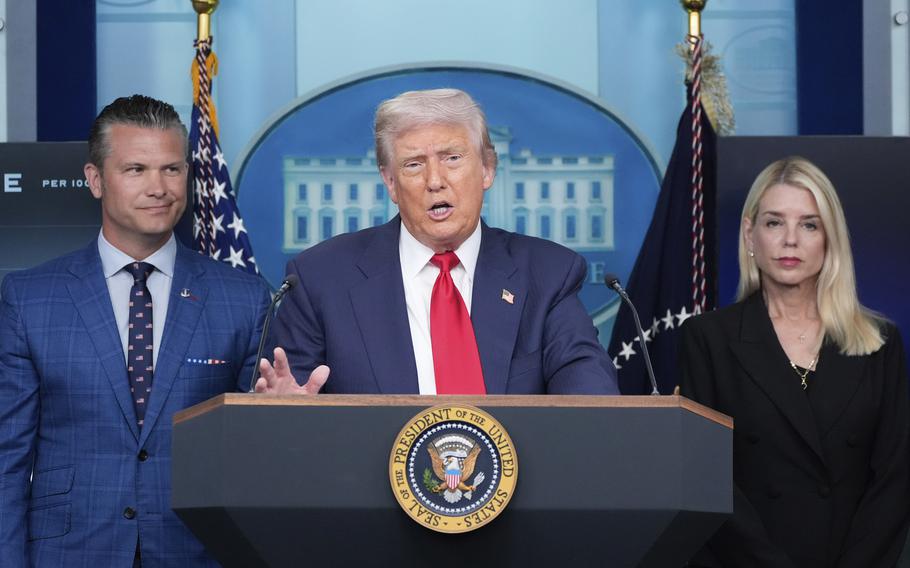
WASHINGTON, D.C. – Tensions in Minnesota have spiked after President Donald Trump warned he may use the Insurrection Act to send U.S. military forces in response to protests tied to federal immigration enforcement.

The warning comes as Minneapolis sees clashes between demonstrators and Immigration and Customs Enforcement (ICE) agents after two widely reported shootings. At the same time, federal investigators say they are still uncovering large-scale fraud in state-run programs.

Republicans argue Democrats are pushing the ICE story to pull attention from the fraud cases, while state leaders such as Governor Tim Walz say the federal response is fueling fear and disorder. The White House, meanwhile, says local officials are letting unrest grow.

Rising Tensions in Minneapolis

The latest unrest grew after an ICE agent fatally shot 37-year-old Renee Nicole Good, a U.S. citizen and mother of three, during an immigration enforcement action in Minneapolis. Her death set off protests across the area, with critics accusing federal agents of using excessive force and overstepping their role during Trump’s immigration crackdown.

A second ICE-related shooting followed on January 14. A federal officer shot a man in the leg during an attempted arrest in north Minneapolis. The Department of Homeland Security (DHS) said the officer was attacked. Witnesses and local officials disputed that account and described the event as part of a wider pattern of aggressive enforcement.

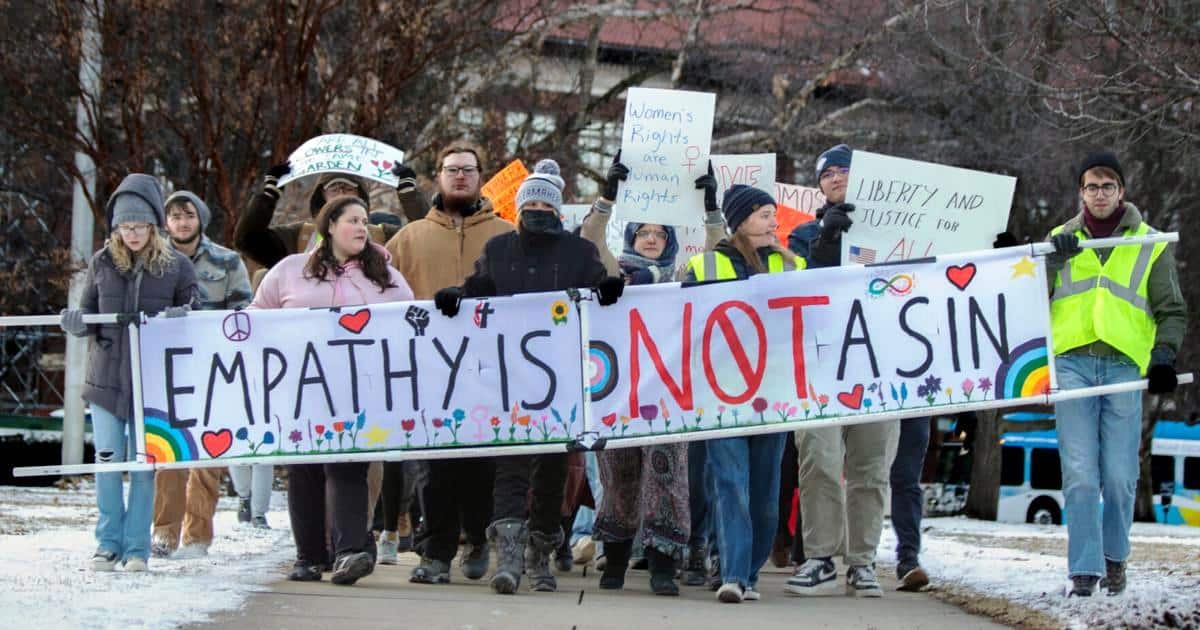
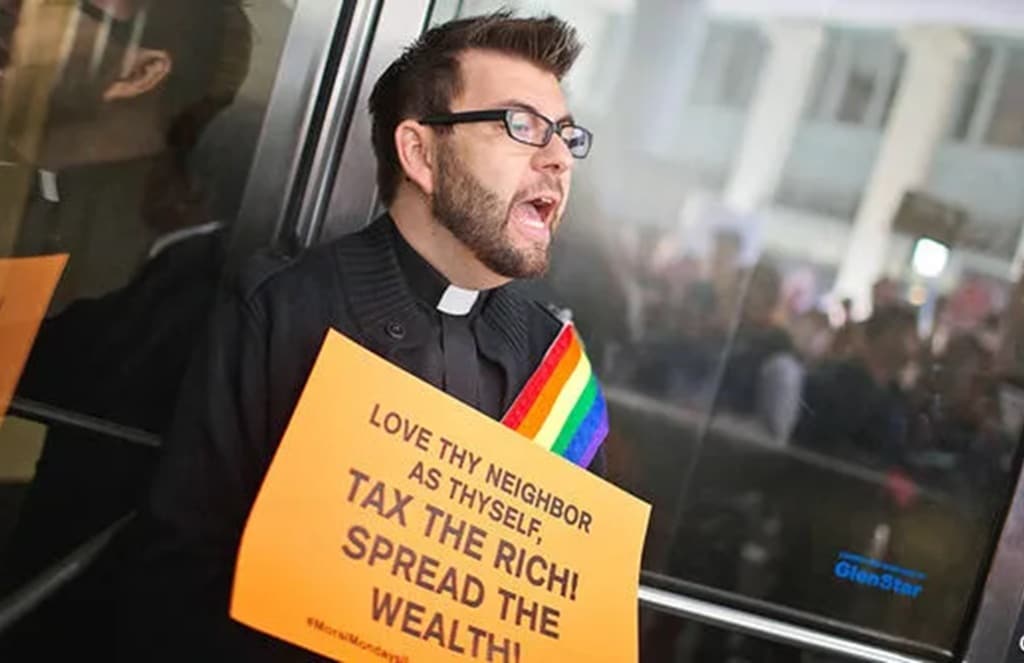
Since then, protests have escalated into confrontations, including outside federal buildings such as the Bishop Henry Whipple Federal Building. Streets have been blocked, arrests have been reported, and some accounts describe agents using force against protesters, including smashing car windows and detaining bystanders.

Minnesota officials estimate 2,000 to 3,000 armed federal agents are now in the Twin Cities, a presence they say exceeds local police staffing. Walz called the surge a “federal invasion,” urged residents to document ICE actions for possible future legal cases, and asked people to keep protests peaceful.

White House Press Secretary Karoline Leavitt defended the operations, saying ICE is targeting “heinous criminals,” including child abusers and drug traffickers. She accused Democratic leaders, including Walz and Minneapolis Mayor Jacob Frey, of using public statements in ways that encourage violence toward federal officers. DHS officials also reported rising threats against agents, including alleged ambush attempts and interference during arrests.

Trump’s Insurrection Act Warning

On January 15, Trump posted on Truth Social that he would invoke the Insurrection Act if Minnesota’s “corrupt politicians” did not stop what he called “professional agitators and insurrectionists” from attacking ICE agents.

The Insurrection Act, passed in 1807, gives a president authority to deploy military forces inside the United States to suppress uprisings or enforce federal law when local authorities cannot or will not do so. Trump pointed to earlier uses of the law by other presidents and said federal agents are “only trying to do their job.”

Trump has raised the Insurrection Act before. He weighed it during the 2020 protests after George Floyd’s death, also in Minneapolis. Legal experts say the law has been used around 30 times in U.S. history, but using it in a modern major city could trigger major legal fights over federal power and civil rights.

Walz responded by urging Trump to lower the tension and stop what he called a “campaign of retribution.” Minnesota has also sued the Trump administration to block the federal agent surge, arguing it is creating chaos and spreading fear across communities.

Fraud Investigations Expand

While the ICE protests dominate headlines, federal investigators have kept pushing forward on fraud cases tied to Minnesota social services programs. Prosecutors estimate up to $9 billion may be fraudulent out of roughly $18 billion spent since 2018 across programs such as child care assistance, Medicaid-funded housing, and pandemic relief.

The investigations began surfacing in 2021 and include allegations that providers billed for services that never happened. Many cases have been linked to the state’s Somali community. So far, 98 defendants have been charged and 64 have been convicted, with investigators also looking into possible links to elected officials and terrorist financing.

The Trump administration has frozen $10 billion in child care funding for Minnesota and four other Democratic-led states (California, Colorado, Illinois, and New York), citing “extensive and systematic fraud.”

A viral video from influencer Nick Shirley, which accused Somali-run day cares of fraud, added fuel to the issue, though some of its claims have been debunked. Republicans in Congress have also held hearings, with House Oversight Committee Chairman James Comer calling for stronger accountability.

Under rising pressure, Walz announced on January 5 that he will not run for re-election, saying he needs to focus on the scandal instead of campaigning. He has admitted his administration had a “culture of being a little too trusting” and says new anti-fraud steps are now in place. Republicans argue that those changes came too late and claim the problem was allowed to grow for political reasons.

Distraction Claims Deepen

Republicans say Democrats, major news outlets, and Walz are giving the ICE protests outsized attention to draw focus away from the fraud findings. Rep. Greg Steube tied attacks on ICE agents to what he called Democratic “demonizing” of federal officers.

Vice President JD Vance praised Shirley’s video and suggested it provided stronger reporting than much of the protest coverage. The White House has also highlighted Minnesota fraud efforts in official messaging, implying that Democratic-led states share blame, and administration officials have pointed to immigrants as drivers of the schemes without offering evidence.

Democrats respond that the fraud investigations are serious but started well before the current ICE surge. They say the protests are driven by real anger over federal use of force. Walz has challenged the $9 billion estimate and says his administration helped spot problems early.

Major outlets, including The New York Times and CNN, have reported on both the protests and the fraud investigations, with live protest updates appearing alongside coverage of fraud hearings. Advocates say ICE actions have intensified under Trump and point to data showing more shootings involving immigration agents.

Both issues now sit at the center of a sharp political fight. Republicans frame the fraud as proof of Democratic failures in blue states. Democrats argue the ICE surge is meant to punish political opponents.

As investigations continue, Minnesota residents are demanding answers on both fronts, including independent reviews of ICE actions and stronger controls to prevent fraud. Another Insurrection Act move could push tensions even higher and test the limits of federal authority.

Minnesota may also preview Trump’s approach in other Democratic strongholds. The administration has already broadened fraud probes and funding freezes to states such as California and New York. Supporters say the pressure is needed to stop waste and abuse. Critics warn the strategy may weaken trust in public aid programs.

With Walz stepping aside, the 2026 governor’s race is now wide open, and the state’s political future looks less predictable. Community leaders continue to call for calm, with Walz warning against violence that could be used to justify more federal action. As national attention stays fixed on Minnesota, the state’s overlapping crises show how immigration policy, public spending, and political messaging can collide fast in Trump’s second term.

Continue Reading

Politics

Hillary Clinton Calls for Transparency Wants Televised Congressional Hearing

VORNews

Published

on

By

Hillary Clinton Calls for Transparency

WASHINGTON, D.C. – In a sharp twist in the House investigation into Jeffrey Epstein’s sex-trafficking network, former Secretary of State Hillary Clinton is calling for her testimony, and that of her husband, former President Bill Clinton, to happen in a public, televised hearing.

She says it shouldn’t take place in a closed-door setting.

Her demand comes only days after the Clintons agreed to sit for depositions with the House Oversight Committee, a move that helped them avoid a possible contempt of Congress vote.

On February 5, 2026, Hillary Clinton posted on X and directly challenged Rep. James Comer (R-KY), who leads the House Oversight and Government Reform Committee. She wrote: “Let’s stop the games. If you want this fight, @RepJamesComer, let’s have it, in public.

You love to talk about transparency. There’s nothing more transparent than a public hearing, cameras on. We will be there.” The message landed hard because it contrasted with the Clintons’ earlier stance. When the committee issued subpoenas in August 2025, they pushed back and fought them.

What the Committee Is Investigating

The House Oversight Committee’s Epstein probe has looked at Epstein’s ties to powerful people and how the government handled related cases. Lawmakers have been reviewing items like flight logs, visitor records from Epstein’s properties, and actions taken by officials across multiple administrations.

The focus has stayed on who knew what, when they knew it, and whether opportunities to act were missed.

Comer’s committee subpoenaed both Clintons last summer. The subpoenas were part of a larger sweep that also targeted former attorneys general, FBI directors, and records tied to the Department of Justice.

The committee wants answers about any knowledge of Epstein’s conduct. Bill Clinton’s connection has drawn attention because he is documented as having taken flights on Epstein’s private jet and had a social relationship with Epstein before Epstein died in federal custody in 2019.

At first, the Clintons challenged the subpoenas. They argued the requests lacked a real legislative purpose and were driven by politics. The conflict escalated in January 2026, when the committee advanced steps toward holding both Clintons in contempt of Congress. That effort had some bipartisan support, including votes from a few Democrats. A contempt vote could have sent the issue to the Justice Department for possible prosecution.

On February 2, the Clintons changed course. Their attorneys told Comer they would comply. Hillary Clinton’s deposition is set for February 26, and Bill Clinton’s is scheduled for February 27. Both sessions are expected to be transcribed and video-recorded, but held privately.

Why Comer Wants Closed-Door Depositions

Comer has said private depositions are routine in investigations like this. He argues they allow detailed questioning without the pressure of live coverage. He has also left the door open to a public hearing later if the depositions justify it.

He has framed the approach as a way to deliver “transparency and accountability” while keeping the process controlled, especially when sensitive information could come up.

Clinton Tries to Flip the Script

By demanding an open hearing, Hillary Clinton is trying to reset the story. She is casting the Clintons as willing to show up on camera, while suggesting Republicans are only “pro-transparency” when it suits them.

Her criticism echoes what many Democrats have been saying. They question why the committee is putting so much attention on the Clintons, while other well-known people connected to Epstein, across both parties, have not faced the same level of focus in this specific House probe.

The Politics Around Epstein Still Burn Hot

Epstein’s case remains explosive. In recent years, unsealed court filings have described parts of his network and included the names of prominent figures. Still, for many of those people, the documents have not led to new criminal charges.

Ghislaine Maxwell, Epstein’s convicted associate, is still serving her sentence. At the same time, public anger continues over why more cases were not brought, and why the system seemed to stall for so long.

Supporters of the Clintons say the subpoenas look like a partisan hit job under a Republican-led House. Critics, including some conservatives, say a public hearing is the best way to test the Clintons’ statements about their Epstein ties and expose any gaps or contradictions.

Comer’s allies have pushed back on Clinton’s demand. They describe it as a way to turn the process into a media spectacle. Some Republicans on the committee argue private sessions help protect sensitive details while still creating a full record.

What Happens Next

With the February deposition dates close, the fight over format could grow louder. If Comer keeps the depositions private, the Clintons may still appear as planned while continuing to call for cameras. If either side backs out, the threat of contempt could return, though the recent agreement makes that less likely.

The Epstein investigation has already produced document releases and witness interviews. So far, it has not produced major new public findings beyond what has surfaced through civil lawsuits and reporting.

For now, Hillary Clinton’s demand has added fresh tension to an already charged debate, and it puts a spotlight on what Congress means when it says “transparency.”

Related News:

Democrats Join Republicans to Advance Contempt Resolution Against Bill Clinton

Continue Reading

Politics

CNN Delivers Stark Reality Check to Democrats Over Voter ID

CNN Polling Numbers Clash With “Jim Crow” Claims in the SAVE Act Fight

VORNews

Published

on

By

CNN Delivers Stark Reality Check to Democrats Over Voter ID

WASHINGTON, D.C – CNN chief data analyst Harry Enten laid out polling this week that challenges Senate Minority Leader Chuck Schumer’s claim that strict voter ID rules amount to modern “Jim Crow” policy.

The discussion aired as Congress argues over the Safeguard American Voter Eligibility (SAVE) Act. Enten’s numbers point to broad public support for photo ID at the polls, and that support holds across race, ethnicity, and party.

The SAVE Act has cleared the House and now sits at the center of Senate talks. The bill would require proof of U.S. citizenship when registering to vote in federal elections. It would also strengthen photo ID requirements in many places.

Republicans say the bill is about election integrity and stopping non-citizen voting. Schumer and other Democrats say it would block eligible voters, hitting minority communities and low-income voters hardest, especially people who may not have easy access to ID documents.

Schumer’s “Jim Crow” Warning

Speaking on the Senate floor, Schumer said he would oppose any package that includes the SAVE Act. He called it “Jim Crow type laws” pushed nationwide and described it as a “poison pill” that could blow up bipartisan deals. He framed Democratic resistance as a stand against voter suppression.

Enten’s Take: The Public Is Mostly On Board

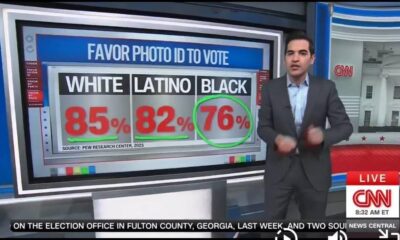
Enten pointed to recent Pew Research Center polling that CNN has used in its coverage. The top-line number was clear: 83% of Americans support requiring a photo ID to vote. He noted that support has stayed high for years, sitting around the mid-70s since 2018 and rising to the current level.

Party Numbers Show Rare Agreement

Enten also broke down support by party, and it wasn’t the sharp split many expected on election policy.

  • 95% of Republicans support photo ID requirements.
  • 71% of Democrats support them.

Talking with anchor John Berman, Enten said this kind of overlap is unusual on a political issue that gets so much attention. His point was simple: the gap exists, but the common ground is bigger than many assume.

Support Holds Across Racial and Ethnic Groups

Enten also highlighted the racial and ethnic breakdown from Pew. These figures cut against the claim that voter ID is broadly seen as unfair in communities of color.

  • 85% of White Americans support photo ID requirements.
  • 82% of Latino Americans support them.
  • 76% of Black Americans support them.

Enten described photo ID as a low-drama issue for most Americans. He said it isn’t a major point of conflict by party or race, based on what the polling shows.

A Pop Culture Moment That Helped the Segment Travel

The segment picked up extra attention after a reference to rapper Nicki Minaj, who has voiced support for voter ID on social media. Enten joked that the public is “with Nicki Minaj,” which helped the clip spread beyond the usual political crowd.

A Tough Spot for Democrats on Messaging

For Schumer and other Democratic leaders, the numbers create a messaging problem. Democrats often argue that opposing voter ID laws protects voters who face higher hurdles.

But when majorities of Black, Latino, and Democratic voters say they support photo ID, that framing gets harder to sell. Enten’s segment stood out because it used straightforward polling to challenge a familiar party argument, and it happened on a network many viewers see as friendly to progressive viewpoints.

Where the Fight Goes Next

The SAVE Act debate is happening while election integrity remains high on many voters’ lists, shaped by disputes from recent cycles and renewed attention under the current administration. The bill includes more than photo ID, especially the proof-of-citizenship requirement, but Enten’s polling breakdown suggests verification policies still have strong backing, including from many Democrats.

Enten’s analysis is a reminder for both parties that public opinion does not always match the loudest talking points in Washington. Schumer has drawn a hard line, and Senate procedure gives him ways to slow or block action.

Still, the data Enten highlighted adds pressure to explain why a policy with wide voter ID support is being described in the starkest terms.

As Congress moves through funding deadlines and broader policy fights, the voter ID debate shows something that gets overlooked: on some election rules, voters are more aligned than the politicians who speak for them.

The polling doesn’t decide the SAVE Act’s future, but it does narrow the gap between claims and what many Americans say they want.

Trending News:

Senate Democrats and White House Strike Deal to Head Off Shutdown

Continue Reading

Politics

Dan Bongino Blast MEGA Grifters as Dipshits Bums and Losers

VORNews

Published

on

By

Dan Bongino Has a Brutal Message for MAGA Grifters

FLORIDA – Former FBI Deputy Director Dan Bongino stormed back into conservative media with a message aimed at his own side. In his first show since leaving government, the longtime podcaster and Trump ally said parts of the MAGA movement are being used by people chasing money and attention. He accused them of turning real frustration into clicks, donations, and chaos, and he said he’s done staying quiet.

Bongino’s comeback episode aired live in early February 2026. It was his first full broadcast since his rocky run as the FBI’s second-in-command under Director Kash Patel. The stream started late because of technical problems, but once it began, Bongino went straight into attack mode.

He called himself the “podfather” again and promised to “take back this movement.”

“I want to address the grifters out there who mistakenly thought I wasn’t coming back,” he said during the livestream. He also claimed the MAGA movement “has been hijacked by a small group of dipshits and bums and losers,” adding that they sell doom under the frame of accountability.”

Those comments matched what he posted online when he left the FBI. At the time, he said he wouldn’t let the movement be handed to “black-pillers, life-losers, grifters and bums.” In pro-Trump circles, “black-pillers” is slang for people who push nonstop defeat and cynicism, the opposite of the action-first attitude Bongino says the base needs.

Dan Bongino is back

Bongino’s time at the FBI drew heat from day one. He’s a former Secret Service agent who became a right-wing commentator with a huge audience. For years, he built his brand by attacking the “deep state” and promoting claims about election interference, January 6, and other flashpoint topics. When he landed the job in 2025, critics pointed to his lack of Fan BI background and his history of conspiracy-leaning commentary.

While in the role, he dealt with internal friction and outside pressure. Reports described disputes tied to high-profile issues, including review and release decisions around files connected to Jeffrey Epstein. Some online MAGA voices blasted Bongino and the bureau for not producing the kind of shocking disclosures they wanted. Bongino now says that outrage wasn’t all organic; he framed a lot of it as bad-faith attacks.

On the relaunch episode, he defended how the FBI handled sensitive cases, then pivoted hard toward his critics. He said too many influencers are more focused on drama, merch, and fundraising than on helping conservatives win, especially with midterm elections getting closer. President Trump also called into the show, praising Bongino and hinting that his media platform might matter more than his time in government.

A fresh fight over “grifting” inside MAGA

Bongino’s rant reopened a long-running argument in the pro-Trump world. Claims of “grifting,” meaning cashing in on outrage with products, subscriptions, or constant fundraising without real results, have followed the movement for years. Other figures have made similar complaints, but Bongino’s former insider status and blunt tone gave this round extra punch.

Many supporters applauded him and said someone needed to call out the worst actors. Others saw it as rich coming from a host who’s earned big money in the same media space, often covering the same themes.

The show also put a spotlight on a bigger split, expectations for what the Trump administration should deliver, and how fast. Some supporters say progress has been too slow on promises like draining the swamp or launching major investigations, and that frustration feeds the “doomer” attitude Bongino attacked. He pushed back by calling for unity and action, saying internal fights only help the opposition.

What it means for the midterms and the movement’s direction

Bongino framed his return as a push to get focused again. He wants Republicans thinking about winning elections, not tearing each other apart online. He said the movement should stick to core conservative beliefs instead of chasing the latest outrage cycle or turning on its own people.

It’s still unclear if his push will weaken the voices he’s targeting. The MAGA world is spread across podcasts, social media, and independent outlets, and no single person controls it. Still, Bongino has a loyal audience built overthe years, and that gives him real influence.

For now, he’s made his position clear. He sees an internal threat to MAGA that’s as serious as any outside enemy. And even without naming every target directly, he signaled that his post-FBI chapter won’t just be commentary; it’ll be a fight over what MAGA becomes next.

Related News:

FBI Deputy Director and Patriot Dan Bongino to Step Down

Continue Reading

Get 30 Days Free

Express VPN

Create Super Content

rightblogger

Flight Buddies Needed

Flight Volunteers Wanted

Trending