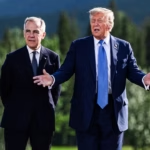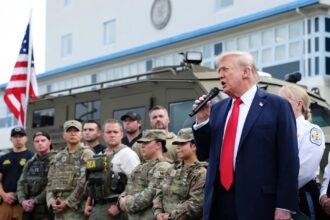


WASHINGTON, D.C. – US President Donald Trump took fresh aim at UK Prime Minister Keir Starmer on Saturday, brushing off reports that Britain may send two Royal Navy aircraft carriers to the Middle East. Trump said any move would come “too late” as the conflict with Iran continues.
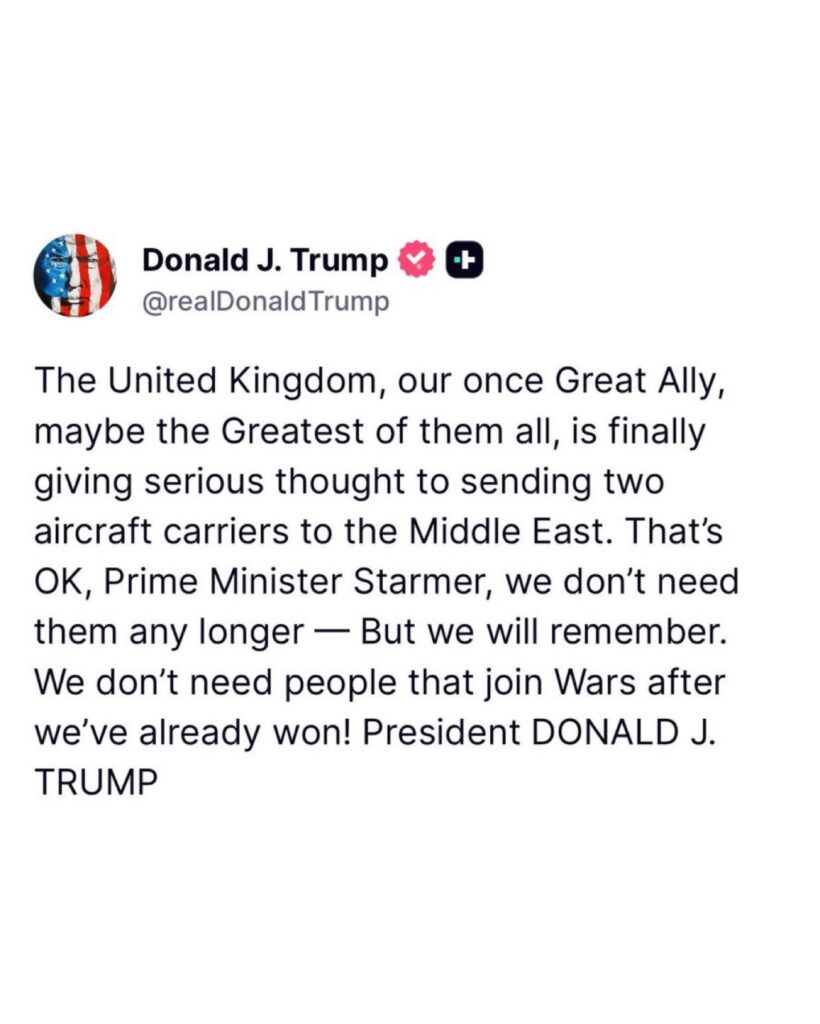
Trump delivered the jab on Truth Social, where he framed the UK offer as an attempt to show up after the United States and its allies had already secured the outcome.
Trump’s Harsh Truth Social Message
Trump wrote: “The United Kingdom, our once Great Ally, maybe the Greatest of them all, is finally giving serious thought to sending two aircraft carriers to the Middle East. That’s OK, Prime Minister Starmer, we don’t need them any longer, But we will remember. We don’t need people that join Wars after we’ve already won!”
His post followed reports that the UK Ministry of Defence had put HMS Prince of Wales on higher readiness for a possible deployment. Those preparations could reportedly cut the normal sailing notice time. HMS Queen Elizabeth, Britain’s other Queen Elizabeth-class carrier, also came up in talks about boosting naval presence during the crisis.
At the same time, Trump’s comments highlighted a widening gap between Washington and London since the US-Israel campaign against Iran began on February 28. The operation has targeted Tehran’s nuclear and missile capabilities, while also tying the effort to regime change goals.
What’s Driving the Iran Conflict
Tensions climbed after Iranian actions that included missile strikes on targets in the region, followed by Iranian responses to US-Israeli attacks on key sites in Tehran and other locations. During the campaign, the United States has used British facilities, including RAF Fairford in Gloucestershire and Diego Garcia in the Indian Ocean. London described that access as for “specific and limited defensive purposes.”
However, Britain did not fully back offensive action at the start, and that stance repeatedly drew Trump’s criticism. In recent days, he has mocked Starmer and questioned the strength of the special relationship, while also contrasting him with historic leaders such as Winston Churchill.
Starmer’s Mixed Signals on the US and Israel
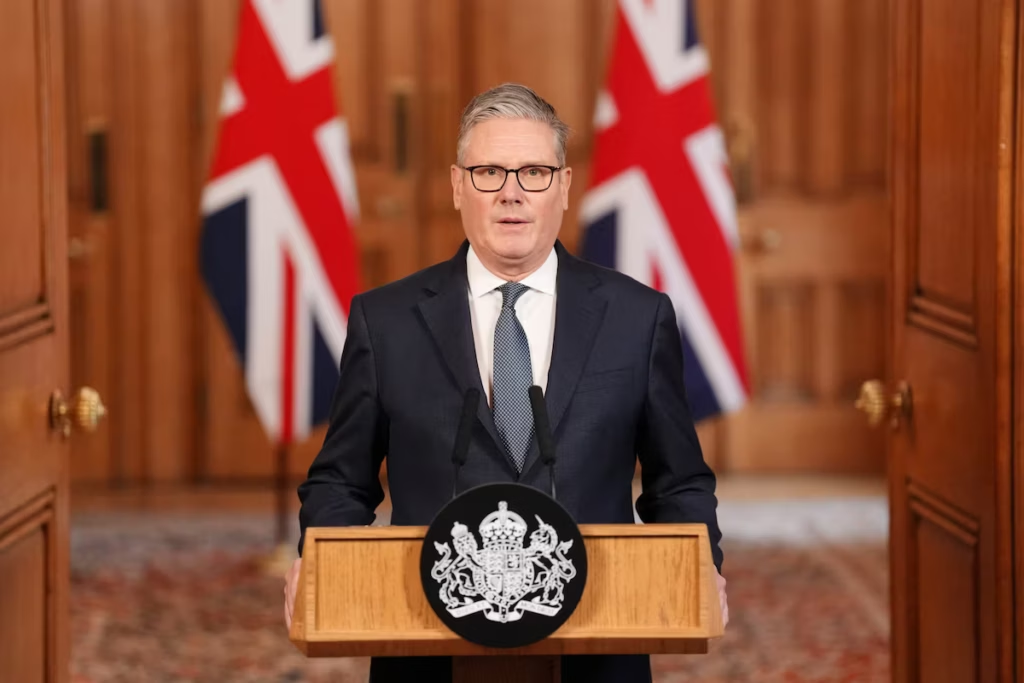
Opponents of Starmer have pointed to what they describe as shifting messages on the Middle East. Early in the crisis, Starmer stressed restraint and called for a “negotiated settlement” aimed at getting Iran to abandon its nuclear ambitions. He also declined to join the first wave of US-Israeli strikes.
Later, Starmer approved access to UK bases, but he framed it as defensive support rather than direct involvement in bombing runs. Throughout, he has leaned on international law, saying any action should meet global standards and avoid widening the conflict.
Critics say that the approach has looked inconsistent:
- Early resistance: Starmer held back immediate use of British bases for strikes, raising concerns about escalation and legality.
- Limited approval later: After pressure, the UK allowed restricted defensive operations from its facilities.
- Carrier readiness reports: New talk of aircraft carrier preparations suggests a step toward deeper involvement, although no final deployment has been confirmed.
Starmer has argued that the pace and limits were intentional. He has said the UK backs Israel’s right to self-defense, but still prefers diplomacy over open-ended military action.
International Law Focus, and Iran’s Record
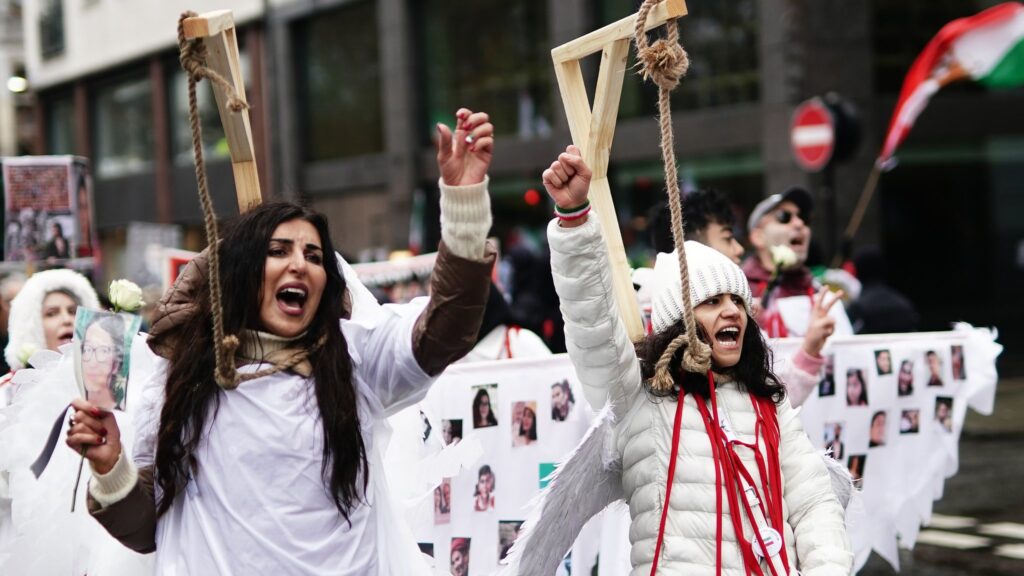
Starmer has repeatedly urged all sides to follow international law. He has also called on Iran to respect global rules and avoid actions that could expand the conflict.
Still, his critics say the legal messaging sounds one-sided, given Iran’s long record of defying international norms. Iran has faced UN Security Council resolutions and sanctions tied to its nuclear program. It has also faced scrutiny over support for proxy militias, ballistic missile development, and attacks on shipping and regional neighbors. Many countries view those actions as clear violations of international law.
Because of that history, detractors say Starmer’s tougher legal expectations for allies, while Iran has ignored similar rules for years, have fed claims of uneven standards. Trump and his supporters have used that argument to paint Starmer as hesitant, saying the legal focus slowed meaningful help when it mattered most.
What This Means for US-UK Ties
The public clash adds pressure to the US-UK relationship at a tense moment. Trump’s warning that “we will remember” suggests he could weigh the dispute in future decisions on alliances, trade, or security cooperation.
Meanwhile, UK officials have played down the exchange. They have repeated the UK’s commitment to NATO and transatlantic ties, while also stressing an independent foreign policy. As of publication, Starmer’s office had not issued a direct reply to the Truth Social post.
As the Iran conflict continues, with reports of Iranian apologies for some regional attacks and US promises to keep up pressure, the dispute shows how Western allies remain split on timing, scope, and legal framing. Trump’s sharp tone may energize his base at home, while also pushing European partners to line up more closely with US goals in the Middle East.