



WASHINGTON, D.C. – Minnesota is under intense pressure after the Pentagon directed about 1,500 active-duty troops based in Alaska to get ready for a possible move to the state. The order comes as protests spread in response to a large federal immigration enforcement effort led by Immigration and Customs Enforcement (ICE). The operation has brought thousands of federal agents into Minneapolis and nearby communities for raids and related actions.
The troops are mainly from the Army’s 11th Airborne Division, stationed at Fort Wainwright in Fairbanks, Alaska. They are trained for extreme cold and harsh conditions. Defense officials, speaking on background, said the units are on a “prepare-to-deploy” posture. They stressed that no final call has been made to send them to Minnesota.
The move follows repeated warnings from President Donald Trump that he may invoke the rarely used Insurrection Act, a 19th-century law that can allow active-duty forces to be used in domestic law enforcement, if state and local leaders can’t control protests that have sometimes slowed or blocked federal agents.
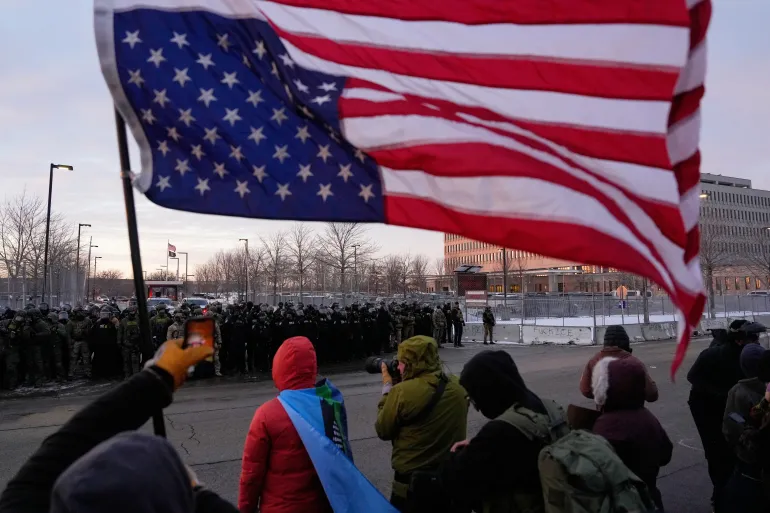
The current unrest began in early January after an ICE officer fatally shot Renee Nicole Good, 37, during an encounter in Minneapolis. The death sparked immediate anger. Demonstrations quickly expanded into larger protests aimed at ICE sites, hotels used by federal teams, and staging areas.
Many protesters, including people from Somali, Hmong, and Mexican communities hit hard by the raids, say federal agents have used aggressive tactics. They point to tear gas and pepper balls during clashes as proof that the response has gone too far.
As tensions rose, Minnesota Governor Tim Walz activated the Minnesota National Guard over the weekend to support local law enforcement and emergency management. Guard members have not yet been sent into street operations.
Minneapolis Mayor Jacob Frey has repeatedly described the arrival of about 3,000 ICE and Border Patrol agents as an “occupying force” that has “invaded” the city. He has warned that sending in the military would escalate the situation and cross constitutional lines.
DOJ Opens Inquiry Into Walz and Frey
The crisis has also moved into the legal arena. The Department of Justice (DOJ) has launched a criminal investigation into Governor Walz and Mayor Frey over allegations they worked together to obstruct federal immigration enforcement.
Sources familiar with the case, reported by outlets including CBS News, CNN, and The New York Times, say the inquiry is tied to public comments by the two Democratic leaders. In those statements, they urged residents to protest peacefully, record ICE activity, and push back against what they called unlawful raids.
Federal officials, including Deputy Attorney General Todd Blanche, have accused Walz and Frey of “encouraging violence” and helping create unrest that interferes with federal officers. That kind of conduct can be charged as a felony under conspiracy-related statutes. A grand jury is also said to have issued subpoenas, although neither Walz nor Frey had confirmed receiving formal notice as of late last week.
Both leaders have responded sharply. Walz called the investigation a “dangerous, authoritarian tactic,” saying it uses the justice system to punish political opponents. Frey described it as “an obvious attempt to intimidate” him for speaking out in defense of Minneapolis residents and local public safety officials amid what he called federal “chaos and danger.” Frey said he will comply if subpoenaed and insists he and Walz “have done nothing wrong.”
The DOJ step adds fuel to a growing federal-state standoff. Critics see it as payback against Democratic leaders who have challenged the Trump administration’s mass deportation push. Minnesota has also filed a lawsuit against the federal government, arguing the enforcement actions violate state authority under the Tenth Amendment.
What This Could Mean for Minnesota
The Pentagon Minnesota deployment preparation highlights just how serious this moment has become. Using active-duty troops inside the United States is rare and highly contested. It would also bring fresh comparisons to past domestic deployments, including the 1992 Los Angeles riots. Civil rights groups warn that troop involvement could raise the risk of excessive force and push the protests toward even more confrontation.
As of January 19, 2026, demonstrations continue in subzero weather. Rival rallies have appeared, and security is heavier around federal buildings and operational sites. The White House has signaled it will keep moving forward with Operation Metro Surge, the name tied to the Minneapolis-focused enforcement effort.
Whether the standby order turns into an actual deployment may depend on what happens next on the streets, including any spike in violence or a drop in protests through talks and cooling tensions. For now, Minnesota remains a central front in the wider fight over immigration enforcement, federal power, and the limits of protest during a deeply divided time.
The days ahead will keep attention on civil rights, executive authority, and the military’s role at home. Watchers across the country are also tracking any new federal actions, including a possible Insurrection Act Trump Minnesota move tied to the ongoing Minneapolis immigration raids protests 2026.
Related News:
Trump Threatens Minnesota With Insurrection Act Over ICE Protests