News
Republicans Can’t Quit Discussing Joe Biden. That May Be An Issue.
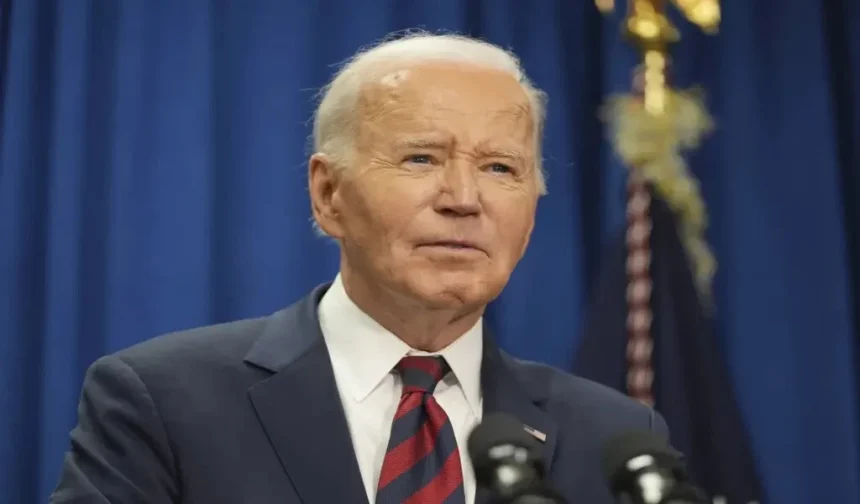
(VOR News) – Joe Biden left the White House six months ago. President Trump and Republicans often discuss him.
The House is investigating claims that Biden’s closest advisors downplayed mental and physical decline throughout his administration. His mental health was debated in the Senate.
Trump called the Biden administration’s use of the presidential autopen “one of the biggest scandals in our country’s history,” and his White House is investigating. It matches Trump’s inclination to blame predecessors for national issues. Obama blamed Biden and others last week to deflect criticism of his Jeffrey Epstein sex trafficking case.
Both parties may target the ex-president before 2026 midterms. Talking about Biden makes it harder for Republicans and Democrats to debate Trump’s administration, especially his massive tax cut and spending plan that is changing the federal government.
Republican pollster Whit Ayres said most Americans consider Joe Biden old.
Republicans expect Biden’s autopen to cause issues.
Trump questioned Biden’s age and fitness in 2024 to avenge his 2020 loss.
Like other Republicans, he promoted their new tax, spending, and policy package all summer. Despite health difficulties, 79-year-old Trump and party buddies endorse Biden.
NY GOP Representative Nick Lalota says his people “are curious as to what was happening during President Joe Biden days,” while WI GOP Derrick Van Orden labeled the Biden White House’s autopen use “a massive scandal.”
Karoline Leavitt, White House press secretary, said the Biden administration’s presidential autopen use will be scrutinized. Republicans like Trump have questioned Joe Biden leadership and said aides exploited a standard method for signing president-approved legislation.
“We have a right to know the truth,” Leavitt said. Claims that Biden didn’t make decisions throughout his presidency “is ridiculous and false.” The House Oversight Committee is probing Joe Biden eligibility and Capitol Hill’s autopen use. Van Orden said Article II gives the president exclusive power.
Nobody listed as staff chief. His words: “It doesn’t say an autopen.”
House investigators called Jill Biden’s doctor and chief of staff. Both said the Fifth Amendment prevented forced judicial testimony. Wesley Bell, Missouri Democratic Representative, called it “an extraordinary waste of time” and “There was no there there.”
Representative James Comer, the committee’s chairman, wants to interview former White House chiefs of staff Ron Klain and Jeff Zients, senior advisers Mike Donilon and Anita Dunn, and top staffers Bruce Reed, Steve Ricchetti, and Annie Tomasini. Republicans added session dates through September to keep it in
GOP Trump support may fade amid investigations.
The GOP and both parties want to define Trump’s second term. He termed his “One Big Beautiful Bill.” it secures borders, slashes taxes, and reforms Medicaid. Polls show some GOP plans are more popular than others, and the project is hard to sell.
The AP-NORC Center for Public Affairs Research reports that 25% of Americans think Trump’s measures have helped them, while two-thirds feel the law helps the wealthiest. The government spending, immigration, economic, and health care policy survey did not favor him. Immigration boosted Trump’s election.
Bell called Biden-pursuing Republicans “rather tone deaf.”
Most Americans suffer exorbitant costs of life, food, housing, and health care, which Bell called the GOP “distracting” from. Trump and his allies disagree on the Justice Department’s Epstein record release.
GOP pollster Ayres said “his base cares more about the Epstein saga than whatever happened to Joe Biden.”
Lalota did say Joe Biden questions need finesse.
“Public safety and affordability are the two issues that my constituents care about the most,” said. “However, this is still a significant issue.”
Dems won’t discuss Biden.
Republicans’ narrow House majority may make every controversial issue essential in 2026.
In 2024, Black and Hispanic voters—particularly men—supported Trump over Republicans, putting Republicans under pressure to maintain his coalition. Without Trump on the ballot, it’s harder. Biden’s unpopularity among Trump’s ardent supporters may explain Republican interest.
Democrats allude to Trump’s first-term 2018 election victory, when moderate voters, including unhappy Republicans, gave them the House majority. They believe some voters despise Republicans’ Biden-fighting.
Democrats privately don’t want to confront Joe Biden, who left office with dismal approval ratings and forced his party to make a last-minute, difficult change at the top.
Although Biden “was not at the top of his game because of his age,” Virginia Democratic Representative Don Beyer said he was productive. He thinks Dems want House and Senate.
“So, in 2028, who will be our standard bearer?””With what we have, how do we minimize Trump’s damage?”
SOURCE: AP
SEE ALSO:
Trump Follows Biden’s Early Travel Schedule, But With More Sports and Golf.
Parents Are Alarmed By An Immigration Arrest Outside Of An Oregon Preschool.

News
CNN Host Abby Phillip Forced to Apologize Over New York Attack Claims
NEW YORK – CNN anchor Abby Phillip was forced to issue a public apology Wednesday after she misstated key details about an ISIS-inspired attempted attack in New York City. Phillip said on air that the incident targeted Mayor Zohran Mamdani. In fact, investigators said suspects threw improvised explosive devices into a crowd of anti-Muslim protesters gathered near Gracie Mansion, not at the mayor himself.
Phillip’s comment aired Tuesday on CNN NewsNight and quickly drew criticism online. Viewers and media watchers said the wording blurred the facts in a tense story already tied to political arguments about Islamophobia.
Before a commercial break, Phillip teased the segment by saying: “Two Republicans say Muslims don’t belong here after an attempted terror attack against New York’s Mayor Zohran Mamdani, and the House Speaker, Mike Johnson, says nothing, really, to condemn those comments.”
That line made it sound like the mayor was the target. Mamdani is New York City’s first Muslim mayor, so the framing also carried added weight in the broader debate over anti-Muslim rhetoric.
Phillip Issues a Clarification and Apology
Later that day, Phillip corrected herself on X (formerly Twitter). She wrote that her wording was wrong and that she missed the error before it aired.
“I want to correct something I said last night. The bombs thrown in New York City over the weekend by ISIS inspired attackers was thrown into a crowd of anti-Muslim protestors and not specifically targeted at Mayor Mamdani. That wording was inaccurate and I didn’t catch it ahead of time. I apologise for the error.”
Phillip did not share more details about how the mistake happened. Still, people familiar with TV production often point out that show teases come together quickly, sometimes minutes before air.
What Happened Outside Gracie Mansion
Authorities said the attempted attack took place Saturday during a protest outside Gracie Mansion in Manhattan. Anti-Muslim demonstrators were gathered near the mayor’s official residence when two suspects allegedly threw homemade IEDs into the crowd.
Officials said no one was hurt. Even so, the situation raised alarms because investigators described the devices as potentially deadly.
Key details released by law enforcement included:
- Suspects: Emir Balat, 18, and Ibrahim Kayumi, 19, both US citizens from the Philadelphia suburbs.
- Charges: Federal authorities charged both men with terrorism-related offenses. Investigators said one suspect yelled “ISIS” during the arrest. They also said the other admitted he pledged allegiance to the Islamic State.
- Investigation: The NYPD and FBI labeled the case “ISIS-inspired terrorism.” One device reportedly ignited but did not fully detonate. Authorities said the explosives could have caused serious injury or death.
- Motive: Court documents say the suspects wanted an attack bigger than the 2013 Boston Marathon bombing, which killed three people.
Afterward, Mayor Mamdani condemned the attempt as “heinous” terrorism and praised first responders. At the same time, his early remarks avoided the phrase “radical Islamic terror,” a choice that echoed older political fights over language and blame.
Wider Fallout and Media Pressure
The on-air mix-up landed during intense coverage of Mamdani, a progressive Democrat who took office in January 2026. He is also described as the city’s youngest mayor in more than a century, plus its first Asian American and Muslim leader. Since his election, his rise and policy agenda have drawn both support and pushback, including remarks from some Republicans about Muslims in American public life.
CNN also faced criticism in related coverage of the New York terror attack. The network deleted a social media post and added an editor’s note to an online story after critics said the framing minimized what happened. CNN said the original presentation did not meet its editorial standards.
Phillip’s correction sparked mixed reactions. Some commentators demanded stronger accountability, including calls for her to be pulled off the air. Others treated it as a standard correction and said she handled it the right way by addressing it quickly.
Media analysts often warn that breaking-news pressure can lead to mistakes, especially when early details shift and politics heat up fast. Still, critics argue that terrorism coverage leaves little room for sloppy wording, because small errors can change how the public understands what happened.
Mayor Mamdani has not addressed Phillip’s remarks directly. He has continued to stress a focus on stopping extremism and hate across the city.
In the end, the episode shows how quickly a single line can reshape a story, and why accuracy matters most when reporting on terrorism and public safety.
Related News:
Karoline Leavitt Slams CNN’s Kaitlan Collins Over Killed U.S. Soldiers
News
U.S. Forces Hit and Destroy 16 Iranian Mine-Laying Boats Near the Strait of Hormuz
Washington, D.C.- U.S. forces destroyed 16 Iranian mine-laying vessels near the Strait of Hormuz near Iran, according to U.S. Central Command (CENTCOM). The strikes took place on March 10 and focused on boats officials said posed a near-term risk to commercial and military traffic in the area.
CENTCOM shared the announcement on X (formerly Twitter) and posted a video of the operation. The footage shows repeated precision hits on Iranian naval craft, with clear impacts and blasts. Several targets look stationary in the clips. The message from the U.S. is clear: it intends to keep shipping moving through the Strait of Hormuz, where about one-fifth of the world’s crude oil travels each day.
The operation followed strong public warnings from President Donald Trump, who said Iran must not mine the waterway. On Truth Social, Trump wrote that the U.S. had already “hit, and completely destroyed, 10 inactive mine laying boats and/or ships, with more to follow.” He also said any mines placed in the strait must be removed right away. Otherwise, he warned of “military consequences at a level never seen before.”
Those statements came as reports circulated that Iranian forces had begun placing naval mines. Soon after, Defense Secretary Pete Hegseth backed up the White House position on X. He said CENTCOM was “eliminating inactive mine-laying vessels” with “ruthless precision” under the president’s direct orders. He added that the U.S. won’t allow “terrorists to hold the Strait of Hormuz hostage.”
Key takeaways from the strike
- Timing and scale: The strikes happenedon March 10, 2026, and hit multiple Iranian vessels, including 16 mine-layers.
- CENTCOM confirmation: CENTCOM posted about the action on X and included video of the strikes near the Strait of Hormuz.
- Trump’s role: Trump first reported 10 destroyed vessels, then later statements and reporting reflected a total of 16.
- Why it matters: The action targets a mine threat that could endanger or slow commercial shipping in a major energy route.
- Wider conflict: The strikes fit into broader U.S.-Iran fighting, with reports of thousands of U.S. strikes on Iranian targets since late February 2026.
- Iran’s position: Tehran has threatened to block Gulf oil exports in response, raising concerns about a wider regional crisis.
The Strait of Hormuz sits between Iran and Oman and remains one of the most tense hotspots in the Middle East. If traffic there gets blocked or tightly restricted, oil prices could spike fast, and the shock could spread through the global economy.
What the video shows and why the targets mattered
In the footage CENTCOM released, U.S. munitions hit several Iranian vessels one after another. Fires and secondary blasts follow some impacts, which suggests heavy damage. Officials described the targets as mine layers that could place naval mines in shipping lanes. Although some were labeled “inactive,” U.S. leaders treated them as a ready threat because they could move quickly once ordered.
U.S. forces have hit Iranian maritime assets in the region before. One often-cited example is the 1988 Operation Praying Mantis, when the U.S. Navy attacked Iranian platforms and vessels after a mine damaged a U.S. frigate.
By knocking out the mine-laying boats, the U.S. says it’s protecting freedom of navigation through the Strait of Hormuz. Officials have also signaled they may escort commercial tankers if threats continue. Meanwhile, energy markets have moved sharply as traders watch for the next step on both sides.
Iran’s Revolutionary Guards have promised countermoves, including threats to choke off Gulf oil routes. If disruptions drag on, analysts warn crude prices could climb quickly, and supply chains could face a new strain.
Related News:
Trump Praises Albanese Over Giving Iranian Women Footballers Asylum
Canada’s Carney Betrays the US, Condemns Defensive Strikes on Iran
News
CBS Caught Making Deceptive EDIT to 60 Minutes Interview With Hegseth
WASHINGTON, D.C.– CBS is taking heat over an edit in its 60 Minutes interview with Defense Secretary Pete Hegseth. The dispute centers on a segment that aired March 8, 2026, during the ongoing U.S. conflict with Iran. In the broadcast, correspondent Major Garrett pressed Hegseth on U.S. foreign policy priorities.
On March 9, Megyn Kelly opened The Megyn Kelly Show on SiriusXM by pointing to what she called a key change. She said CBS replaced Garrett’s original question, which referenced criticism from “America First” voices (including Kelly), with a version framed around Israel and Prime Minister Benjamin Netanyahu. In Kelly’s view, that swap changed the meaning of Hegseth’s answer and could have given viewers a different impression of what was being discussed.
The Interview Setting: The U.S.-Iran War and Hegseth’s Message
The 60 Minutes segment featured Hegseth, a former Fox News host who now serves as Defense Secretary under President Donald Trump. He spoke about the escalation tied to “Operation Epic Fury.” By the time the episode aired, U.S. and Israeli strikes on Iranian assets had entered their second week. During the interview, Hegseth stressed resolve, said more casualties were likely, and predicted Iran would eventually surrender.
CBS also posted a longer version of the interview online. That extended cut includes more on possible American losses, risks tied to Russia, and the administration’s wider goals.
What Kelly Says CBS Changed
Kelly said she compared the on-air segment with the longer online interview and found a major difference in one exchange.
- Broadcast version (aired on 60 Minutes): In the edited segment, Garrett’s question (or narration around it) referenced criticism that Israel, or Netanyahu, was pulling the United States into conflict. Hegseth’s response then appeared to address concerns linked to Israel’s role.
- Online extended version (full exchange): Garrett asked, “You mentioned America First. Some who identify with that movement, Megyn Kelly, Tucker Carlson, Candace Owens, Marjorie Taylor Greene, have said, from their perspective, this isn’t an America First campaign. Do you want to address that criticism?”Hegseth answered, “All I know is I’m in the room every day, and I see how President Trump operates and what he’s putting first, and it’s America, Americans, and American interests at every level.”
Kelly said the broadcast edit pushed Israel into a moment that, in the longer cut, had nothing to do with Israel. She argued that the new framing made it sound like Hegseth was defending Israel’s part in the war, instead of answering “America First” critics. Kelly called the change “deceptive” and said it looked like an attempt to “rehabilitate” public views of Israel’s involvement in the Iran fight.
“What kind of bulls–t is this?” Kelly reportedly said, accusing CBS of shaping the narrative through editing.
CBS Editing Choices Get Fresh Scrutiny
As of March 10, 2026, CBS had not released a formal statement addressing the claim. Still, the network’s decision to publish the extended interview online made it easy for viewers to compare both versions. That side-by-side access helped drive the backlash.
Kelly and other critics tied the issue to bigger arguments about media bias. Some also pointed to CBS News leadership under editor-in-chief Bari Weiss, whom they described as having pro-Israel views. Kelly argued the edit fit an agenda that casts U.S. actions as tied closely to Israeli interests, even when the original exchange did not focus on that angle.
60 Minutes has faced similar complaints before. Past disputes have accused the program of selective editing in political interviews, which has kept questions about transparency alive.
Reactions and the Bigger Stakes
The clip dispute quickly spread across media outlets and social platforms.
- Conservative voices praised Kelly and said the edit showed how mainstream outlets treat “America First” views.
- Others defended CBS, saying edits are normal when a long interview must fit a tight broadcast window.
- Some supporters of the administration said it looked like another attempt to weaken Trump’s foreign policy message.
Because the U.S. military campaign is active, the timing matters. Hegseth’s appearance was meant to project strength and certainty. Instead, the argument over editing shifted attention to media trust and how much framing can change what viewers take away.
Kelly ended by urging people to watch both versions. She stressed that, in her view, “The Q&A you saw never mentioned Israel at all,” and said CBS changed the question to make it about Israel.
What It Means for Media Trust
With audiences already split along political lines, even small shifts in wording can fuel bigger mistrust. When a network changes the framing of a question, it can look like agenda-driven editing, even if the rest of the answer stays the same. CBS’s release of the full interview gives the public a way to verify what happened. At the same time, it shows how a broadcast cut can reshape the story people think they heard.
As the Iran conflict continues, both the war itself and the coverage around it will draw more scrutiny. For now, the Hegseth interview has become another flashpoint in the fight over fairness, accuracy, and where editing ends and manipulation begins.
Related News:
Karoline Leavitt Slams CBS News Over ICE Deportation Numbers
AOC Accuses Jessie Watters of Fox News of Sexualizing and Harassing Her
-
Crime3 months agoYouTuber Nick Shirley Exposes BILLIONS of Somali Fraud, Video Goes VIRAL
-
China1 month agoChina-Based Billionaire Singham Allegedly Funding America’s Radical Left
-
Politics3 months agoIlhan Omar Faces Renewed Firestorm Over Resurfaced Video
-
Business3 months agoTech Giant Oracle Abandons California After 43 Years
-
Politics1 month agoCNN Delivers Stark Reality Check to Democrats Over Voter ID
-
Midterm Elections2 months ago2026 Midterms Guide: Candidates, Key Issues, and Battleground States
-
Crime3 months agoMinnesota Fraud Scandal EXPANDS, $10 Billion in Fraudulent Payments
-
Politics2 months agoAccusations Fly Over Alleged Zionist Takeover of (TPUSA) Turning Point USA