Politics
Chicago’s Mayor Puts Partisan Poison Over People’s Safety as Trump Troops Roll In

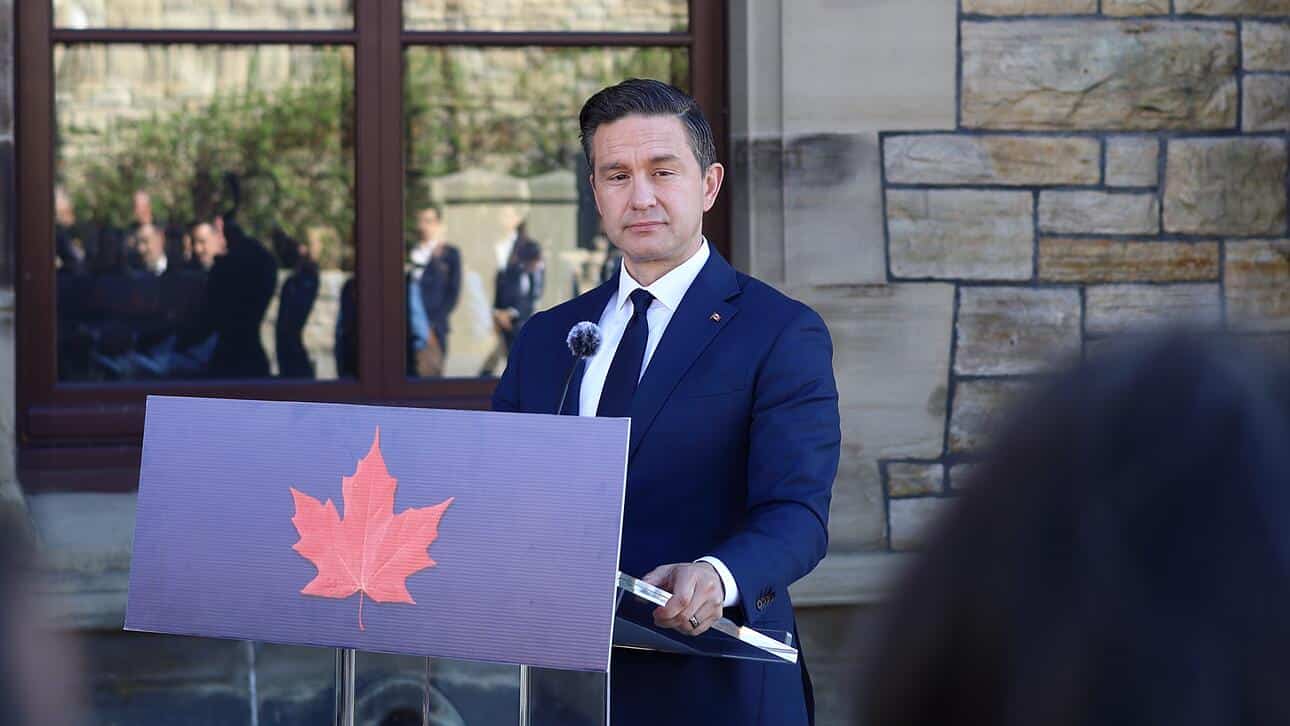
CHICAGO — Beneath the city’s shining skyline, a new crisis is unfolding. President Donald Trump’s decision to send 500 National Guard troops to the Chicago area this week, over the outrage of local Democratic leaders, has torn open an old wound. A progressive mayor is more intent on defying the heir to Reagan than protecting his own residents from spiralling violence.
With 331 homicides recorded by early October 2025, Chicago’s streets remain deadly, and Mayor Brandon Johnson is grandstanding while the toll rises. The talking points from City Hall do not change the numbers.
The murder rate sits at 28.7 per 100,000 residents, seventh-highest among major U.S. cities, trailing places like St. Louis and Baltimore in a bleak table no one wants to top. That is not real progress. Johnson’s quick move to undercut Trump’s offer of help looks like election-year theatre, not leadership.
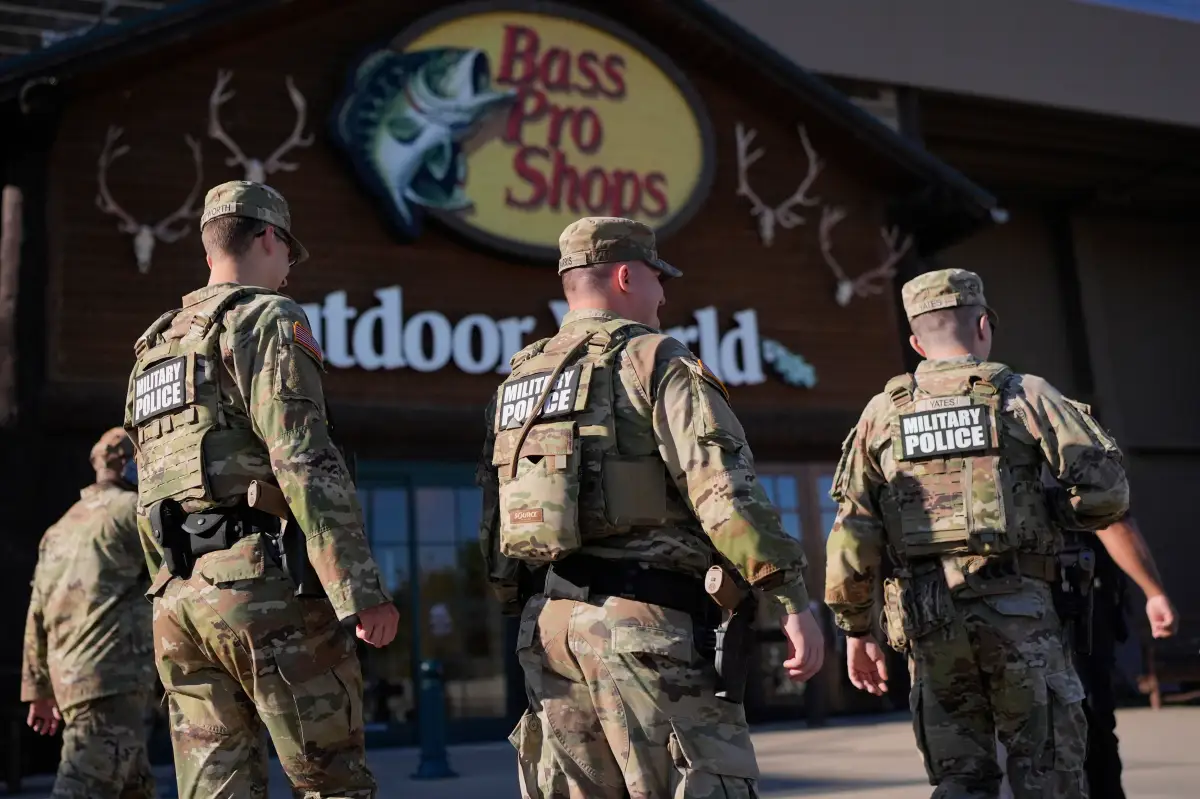
Here is how it escalated. On 8 October, Trump approved a Guard deployment, pulling in 300 Illinois troops and 200 from Texas. The mission, the White House said, was to protect ICE staff and federal property after a spike in anti-deportation riots and attacks on officers.
Trump saw a clear problem, rising migrant-linked unrest and gangs flexing on the streets, and then sent a response. He used similar tactics when unrest flared in Portland and Los Angeles. The political backlash was instant. Illinois Governor J. B. Pritzker, a billionaire with White House ambitions for 2028, raced to the microphones.
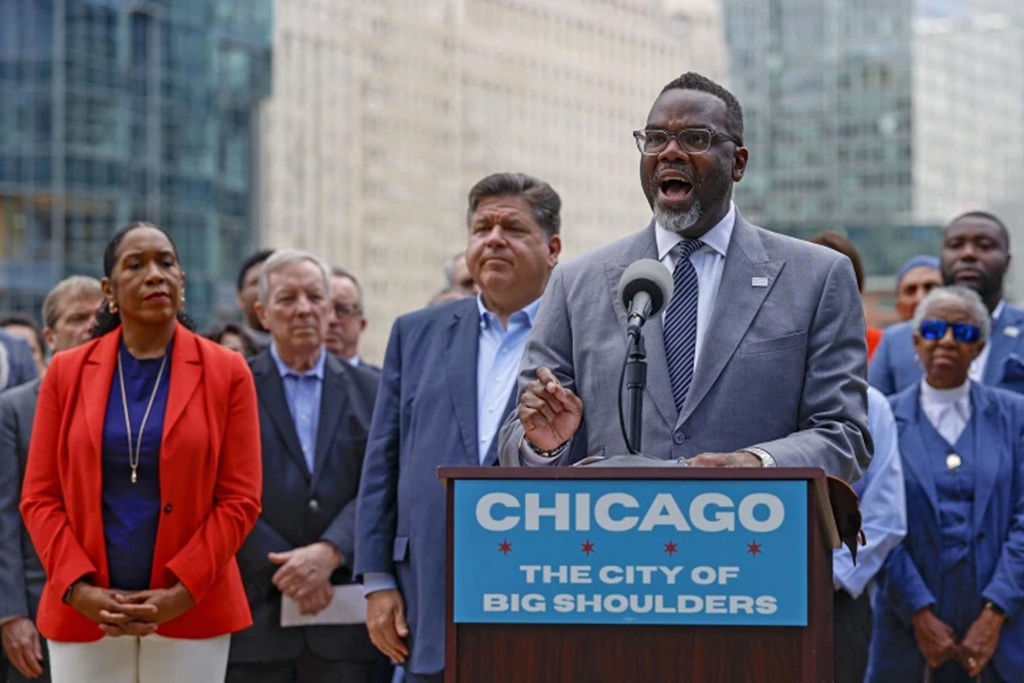
Chicago an IICE-FreeZone
He called it an unconstitutional invasion and filed a lawsuit almost at once. Johnson followed with an executive order declaring Chicago an IICE-FreeZone. He said city police would not assist federal operations and told them to detain any Guard member who refused to reveal their identity in the field.
It was a coordinated offensive that fits a familiar pattern: block Trump at any price, even if it leaves residents exposed. Pritzker refuses to rule out a presidential run, telling NBC last month, I can’t rule anything out. He sees this clash as a launch pad. Picture the Hyatt heir, testing lines in Iowa diners in 2027, casting himself as Trump’s foil.
He is already working in New Hampshire, firing shots at the administration while his own state struggles. Johnson, a self-described socialist who flirted with cutting police budgets, accused Trump of using militarized forces for profit. Last year, he even pinned teen shootings on capitalism. His boasts about historic declines sound thin in context.
Yes, homicides fell 32 percent in the first half of 2025, to 188 dead, but that still outstrips the annual totals of many cities. Carjackings dropped 51 percent, yet critics say offenders are moving to deadlier crimes. His invest in communities mantra reads like a cover for leniency, while families in Englewood and moms in Austin bolt their doors at night.
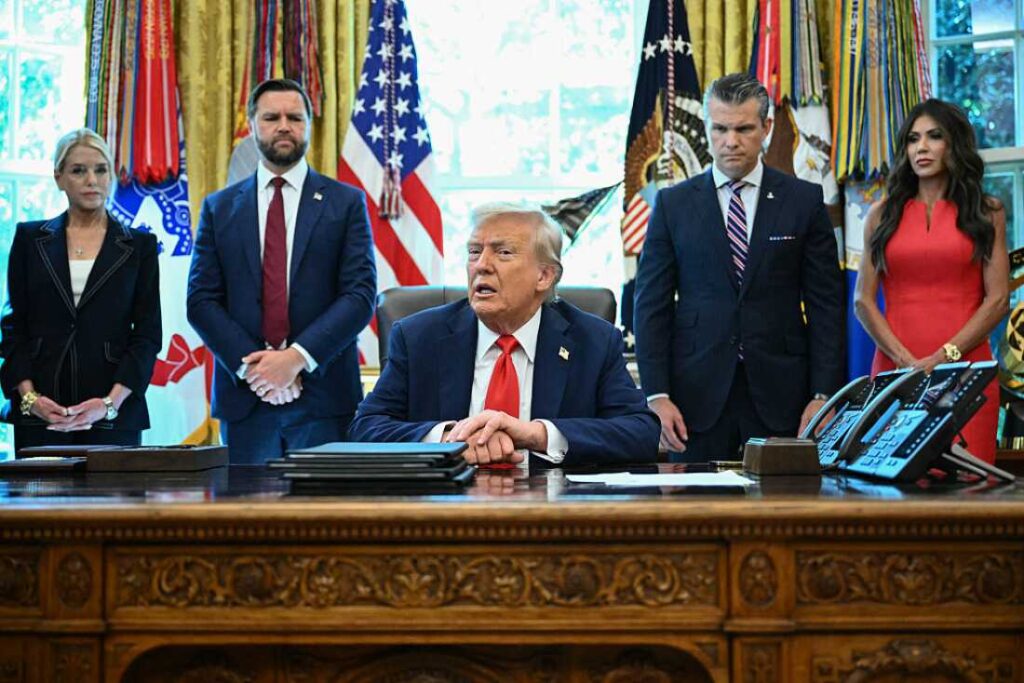
Trump Will Protect ICE Agents
This is not governing. It is posturing. Trump’s call to shield ICE during a deportation push that has already netted thousands of felons came after a weekend of similar unrest, with protests turning violent and ICE sites under pressure. Local police even pulled back from guarding federal staff.
Trump wrote on Truth Social, Chicago is the worst and most dangerous city in the World, by far. It might be exaggerated, but with 331 killings this year, far above the summer’s safest since the 60s spin at 123, it is not wildly off. Critics say Chicago is not the murder capital. True, St. Louis leads that list. Per capita, though, Chicago sits in the top tier, a case study in blue-state mismanagement.
Here is the real outrage. Cameras come before coffins. Pritzker’s suit, filed on 6 October, brands Trump’s Guard plan a long-declared war on Chicago. Yet who is waging war on whom? The governor is polishing a national profile, launching a third-term bid laced with anti-Trump hits, instead of asking for the help his state needs.
Johnson touts constitutional policing, then turns City Hall into a fortress against federal aid. His order blocks federal staging on public property and threatens charges for troops who breach city rules.
This is Trump’s war on Chicago, he yelled at a press conference, with Pritzker beside him, both playing to the crowd. The real war rages on their watch, with gangs flush with guns and new arrivals caught in chaos, while Englewood feels like a command post for street crews.
The double standard is glaring. Johnson slams Trump’s stunts, then signs orders to escalate the showdown and urges residents to resist the supposed occupation. Pritzker repeats the script, no emergency warrants this. Tell that to the families of the 331 dead, or the 665 wounded this year. Trump is not the arsonist in this story.
He is the firefighter kicking down the door at a blaze started by Democratic policy. By blocking the Guard, refusing to coordinate, and deploying lawyers to stall the feds, these leaders are trading safety for headlines.
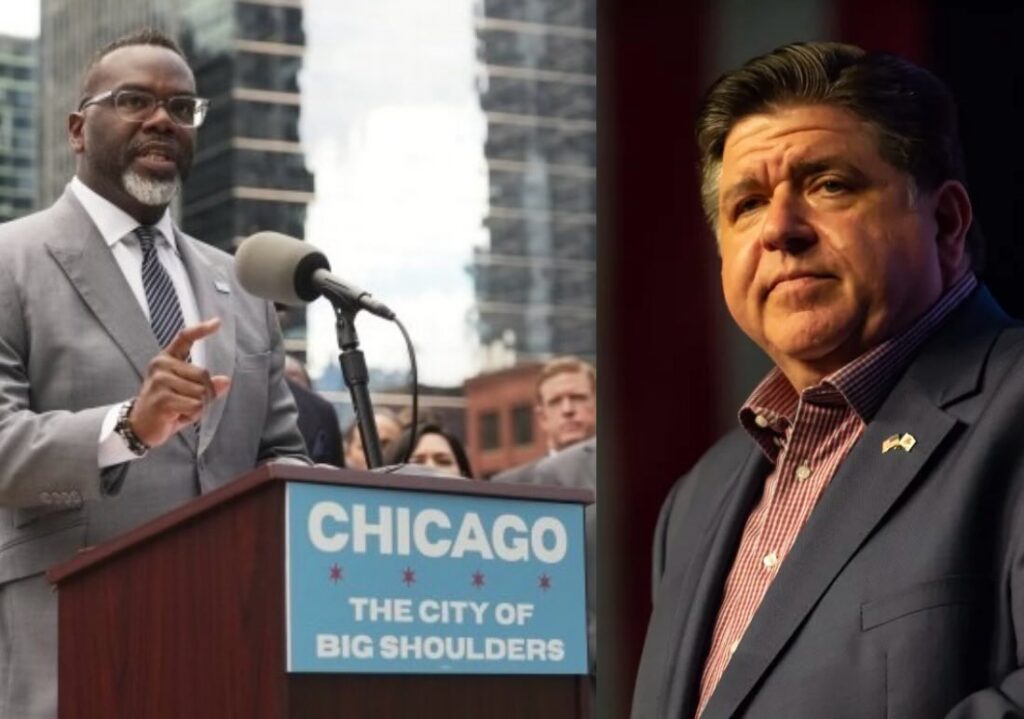
Possible Obstruction Charges
Chicago has seen this drama before. From the 1968 riots to the Rahm Emanuel years, the pattern is familiar. Yet this moment feels like the peak of progressive denial. A mayor who once framed shooters as a public health issue now treats federal troops like invaders. A governor chasing national glory prefers lawsuits to solutions. Their alliance, Pritzker the operator and Johnson the ideologue, hides a shared choice, politics over people.
Trump hit back hard. The Chicago Mayor should be in jail for failing to protect ICE Officers! Governor Pritzker also! Tough words, yes. But when 331 people are dead, tensions climb by the week, and leaders plead their case in court instead of in roll calls, it sounds less like bluster and more like a reckoning. A federal judge set a hearing for Thursday. Either way, the Guard mission is set to continue because America First includes Chicago.
The fallout lands on ordinary people. Barbers in Bronzeville, nurses in North Lawndale, shopkeepers in Little Village. They did not vote for vendettas. They voted for safety. Johnson’s invest in people slogan is a mirage when the murder rate shames a major city. Pritzker’s presidential polish only gleams if voters forget the victims left behind.
Trump’s troops are not occupiers. They are a stabilising force in a city on edge. If Democratic power brokers keep playing politics with public safety, Chicago’s powder keg will not simmer. It will blow, and the blast will bury their ambitions. Time to step back. The city needs help, not a show.
Related News:
Democrat Mayors Reject Trump’s Help as Crime Explodes in Blue Cities

Politics
CNN Data Analyst Harry Enten Flags a “Red State Boom” and a “Blue State Slump”
CNN senior data analyst and chief data reporter Harry Enten is spotlighting a clear demographic shift: the fastest-growing states so far this decade are the ones Donald Trump carried in the 2024 presidential election.
Using fresh U.S. Census Bureau population estimates, Enten described it as a “red state boom” alongside a “blue state slump.” In his view, this wave of internal migration could bring major political effects that last well beyond one election cycle.
Enten walked through the numbers on CNN Newsroom in early February 2026. He focused on mid-decade changes, comparing the 2020 Census baseline with mid-2025 estimates. His main point was simple: the states posting the biggest gains, both by percent and by raw numbers, largely sit in Trump’s 2024 column.
He highlighted five standouts since 2020: Texas, Florida, North Carolina, Georgia, and Arizona.
Top Growth States: All Trump-Won in 2024
Based on Census Bureau Vintage 2025 data and Enten’s review:
- Texas and Florida lead the country in overall population gains, adding a large share of the national increase.
- North Carolina, Georgia, and Arizona also show strong growth, including solid percentage jumps.
- Beyond those, other red-leaning states such as South Carolina, Idaho, and Utah have posted high growth rates in 2024 and 2025.
As Enten put it, the biggest population growth this decade has come from five states, and all five backed Trump in 2024. He also stressed that the gains are not only about births or international arrivals. A big driver is domestic migration, with Americans relocating from one state to another.
The Other Side of the Trend: “Blue State Slump” and Out-Migration
On the other hand, Enten contrasted those gains with slower growth, or even losses, in several long-time Democratic strongholds. He described a “blue state slump,” pointing to places where more residents leave than arrive.
Among the states he flagged for net domestic out-migration:
- California, Vice President Kamala Harris’s home state, has posted the largest net loss, with hundreds of thousands leaving each year.
- New York, Illinois, New Jersey, and Massachusetts also rank among the biggest domestic migration losers.
In Enten’s summary, Americans are “voting with their feet.” He linked the movement to common quality-of-life and cost concerns, including lower taxes, cheaper housing, fewer business hurdles, and warmer weather, factors many people associate with Republican-led states.
While this pattern has existed for years, he suggested it picked up speed after 2020. Remote work made moving easier, pandemic-era shifts changed where people wanted to live, and rising costs in major coastal metros pushed more families to look elsewhere. Policy differences also play a role for some movers, including views on crime, schools, and regulation.
What’s Pushing People Out of Blue States
People and analysts often point to a mix of pressures behind the move away from some blue states:
- High living costs: Home prices and taxes in places like California and New York can put ownership out of reach.
- Policy frustrations: Some residents cite concerns about public safety, school performance, and heavy regulation in large cities.
- Lifestyle changes: Many want more space, less density, and fewer day-to-day restrictions.
- Job opportunities: States such as Texas and Florida continue to attract workers in fields like tech, energy, finance, and manufacturing.
At the same time, red states offer clear pull factors. For example, Florida and Texas have no state income tax. Many of these states also promote business growth and market themselves as easier places to build a life, whether you’re raising a family or planning retirement.
Political Stakes: Reapportionment and the Electoral College
Enten warned that if these trends hold through the 2030 Census, the impact could show up in congressional seats and presidential elections. House seats shift after each census, based on population. Because the Electoral College ties to House seats (plus two senators per state), changes in representation can change the math for winning the White House.
Analysts reviewing Census trends have suggested:
- Red states could pick up 8 to 13 House seats after the 2030 reapportionment.
- Blue states, especially California, New York, and Illinois, could lose a similar number.
- As a result, Electoral College votes could move more toward the South and West, which would often help Republican-leaning states.
Enten called the pattern a warning sign for Democrats and good news for Republicans. He also noted that familiar Democratic paths, including relying on the “blue wall” states such as Michigan, Pennsylvania, and Wisconsin, could get harder if population-weighted advantages shrink elsewhere.
In one simulation based on mid-2025 estimates, Enten said Trump would have had more electoral votes in a hypothetical 2024 rerun, which could reduce the need for razor-thin swing-state wins.
A Bigger Picture: Migration, Polarization, and Power
These population shifts also reflect a deeper split in where Americans choose to live. When people move, they bring their values, habits, and political views with them. Over time, that can change states in both directions. Some observers point to new arrivals in places like Texas and Florida as a reason those states could become more competitive.
Still, Enten focused on the near-term imbalance. Growing states gain more political weight. Shrinking states lose it.
In other words, this “red state boom” and “blue state slump” show how choices about housing, jobs, and lifestyle can change American politics almost as much as campaigns do. The 2030 Census will give the clearest answer. Until then, Enten’s takeaway is straightforward: demographics can redraw the map, even before a single vote is cast.
Related News:
Supreme Court Orders CNN to Respond in High-Stakes Defamation Case
Politics
Sen. Josh Hawley Demands DOJ Probe Into ‘Dark Money’ Network
Missouri Republican Repeats Call for Investigations and Prosecutions After Heated Senate Hearing on Fraud, Foreign Influence, and Political Funding
WASHINGTON D.C.– U.S. Sen. Josh Hawley (R-MO) is again pushing the federal government to act on what he describes as secretive “dark money” networks. He says these groups help drive division, protests, and possible fraud across the United States.
During a recent Senate hearing, he led, Hawley pointed to operations he tied to billionaire-linked networks connected to George Soros and Neville Roy Singham. He urged the Department of Justice to open wide-ranging investigations and bring charges if the evidence supports it.
Hawley made the remarks during a Homeland Security subcommittee hearing that focused on fraud in state and federal programs, along with foreign influence inside the country. He described nonprofit groups and funding pipelines that he says operate with limited public visibility. In his view, those networks help finance what he called radical political activity on U.S. streets.
What Hawley Said in the Hearing
At the February 10, 2026, hearing, titled “Examining Fraud and Foreign Influence in State and Federal Programs,” Hawley pressed witnesses about large funding structures tied to nonprofit grants. He leaned on testimony from Seamus Bruner, vice president of the Government Accountability Institute, who tracks nonprofit money flows.
According to Hawley, researchers compiled a large database with “hundreds of thousands of rows” of grant information. He said the data includes funding connected to:
- the Soros network
- The Arabella funding network
- The Neville Roy Singham funding network
- other similar organizations
When Hawley asked about the size of these operations, Bruner pointed to what he called massive NGOs with billions available for organized activity. He described spending tied to coordinated protests and, in some cases, riot activity.
Hawley argued that the money often moves through multiple layers of groups. He claimed that structure can make it hard to track who pays for what. He also pointed to protests in Minnesota, saying reports show more than $60 million went to about 14 groups, including national and local organizations. He tied that to broader claims of state-level fraud involving hundreds of millions in public funds.
Hawley said he sees the same patterns again and again, with funding routed through similar channels and then appearing around protests and unrest. He also said prosecutions should follow where investigators find criminal conduct.
Near the end of the hearing, Hawley repeated his request to the Justice Department. He asked prosecutors to investigate the groups, map out the funding web, and pursue charges when possible. He said Americans should be able to trust that their government is not being shaped by hidden money.
The People and Networks Hawley Named
George Soros, a Hungarian-American billionaire and philanthropist, has long drawn criticism from conservative lawmakers and commentators. His Open Society Foundations and related organizations support progressive causes. Critics often point to the way 501(c)(3) and 501(c)(4) nonprofit structures can allow donors to remain anonymous. They argue this can hide major political spending behind legal nonprofit activity.
Neville Roy Singham, a U.S.-born tech entrepreneur who now lives in Shanghai, has also faced increased scrutiny. Reports have raised concerns about his alleged ties to Chinese Communist Party propaganda efforts. Those reports claim his money supports groups that promote left-wing causes in several countries, including organizations accused of repeating Beijing-aligned messaging. Hawley referenced Singham in the context of foreign influence and protest support inside the United States.
During the hearing, Hawley and witnesses suggested that some of these networks may overlap at times. They also described similar methods, such as sending money through intermediary groups to make the source harder to see.
Part of a Bigger Fight Over “Dark Money”
Hawley’s latest push follows earlier steps this month. In early February 2026, he sent a letter to Attorney General Pam Bondi asking for investigations into left-leaning dark money groups tied to anti-ICE protests across the country. Organizers described those demonstrations as grassroots, but Hawley argued that large donors, routed through less transparent channels, helped fund them.
He also connected the issue to larger cases, which he says show deep problems in public spending oversight. That includes allegations of major fraud in Minnesota tied to taxpayer dollars and pandemic-related programs. He also raised broader concerns about foreign actors taking advantage of U.S. systems.
In Hawley’s framing, the problem goes beyond politics and into public safety and national security. He argued that taxpayers lose huge sums to fraud, while foreign-linked efforts can help stir conflict and disorder at home. He said federal authorities should focus on shutting down illegal funding pipelines and stopping foreign influence where it crosses legal lines.
How People Are Responding and What Could Happen Next
Reactions to Hawley’s statements have split along familiar lines. Supporters say he is calling attention to hidden funding and demanding accountability from powerful networks. Critics respond that he focuses on left-leaning donors while downplaying conservative dark money, and they add that much nonprofit political spending remains legal and protected under free speech rules.
As of this reporting, the Department of Justice has not publicly responded to Hawley’s specific requests involving networks tied to Soros or Singham. If federal investigators move forward, they would likely review a mix of issues. That could include tax compliance, foreign agent registration rules, and possible criminal violations tied to fraud or money laundering.
Meanwhile, Hawley’s subcommittee continues its oversight work, and he has suggested that more hearings are coming. He also pointed back to the database of grant records referenced at the hearing, signaling that additional research could lead to more claims about funding links and organizational relationships.
Why This Story Matters in US Politics
Dark money, meaning political spending tied to donors who are not publicly disclosed, has concerned lawmakers and voters on both sides for years. The debate intensified after the 2010 Citizens United decision. Since then, Democrats and Republicans have traded accusations about nonprofits being used to influence elections, policy, and public opinion while shielding donors from view.
Hawley’s campaign fits with a broader Republican message about elite power and foreign influence. By naming Soros and Singham, he is trying to put faces on a larger argument about secrecy in political funding. He also hopes that public pressure will push federal agencies toward stronger enforcement and more transparency.
Hawley closed his argument with a familiar point: Americans should be able to control their own government. Whether the DOJ acts on his renewed call remains unclear, but Hawley’s continued focus keeps dark money, protest funding, and foreign influence in the spotlight.
Trending News:
Supreme Court Orders CNN to Respond in High-Stakes Defamation Case
Politics
Megyn Kelly Slams Hillary Clinton For “Extraordinary Hypocrisy”
NEW YORK – Megyn Kelly went after Hillary Clinton during a heated segment on Sky News Australia, accusing the former secretary of state of blatant hypocrisy. Kelly argued that Clinton is trying to tie President Donald Trump and his Department of Justice to a Jeffrey Epstein file “cover-up” while ignoring how often Bill Clinton shows up in the same material.
The clash comes as renewed attention hits the ongoing release of millions of pages tied to Jeffrey Epstein, the late financier and convicted sex offender. Speaking to the BBC during the Munich Security Conference in mid-February 2026, Hillary Clinton claimed the Trump administration had dragged its feet on full disclosure. She also alleged the DOJ has kept key names out of view through redactions and has resisted congressional requests.
“Get the files out. They are slow-walking it,” Clinton said, framing the delays as an effort to protect powerful people, with Trump implied in her remarks.
On Sky News host Paul Murray’s show, Kelly said Clinton’s comments look like a distraction. She pointed to Bill Clinton’s history with Epstein and argued that Hillary Clinton’s attacks on Trump don’t hold up when her husband’s name appears so often in the record.
Megyn Kelly’s blunt message: Bill Clinton shows up again and again
Megyn Kelly didn’t soften her point during the interview.
“There are few in the Epstein file as many times as Bill Clinton,” she told Murray. “There is a long, long history between those two.”
Over the years, court filings, flight logs from Epstein’s private jet (often called the “Lolita Express”), and witness accounts have repeatedly referenced Bill Clinton’s travel and connections to Epstein after Clinton left office.
No criminal charges have ever been brought against the former president tied to Epstein’s crimes. Still, Kelly stressed that his name appears frequently in unsealed materials, more often than many other prominent figures.
From Megyn Kelly’s view, that context undercuts the Clintons’ posture in the current debate.
“They folded like cheap tents because they knew they didn’t have a leg to stand on,” she said, arguing that efforts to keep the spotlight on Trump fade fast once Bill Clinton’s links come up.
That theme matches a wider conservative argument. Critics say Democrats push Trump-Epstein angles hard while minimizing or brushing past Bill Clinton’s documented association with Epstein.
The Epstein files fight, and why it won’t go away.
Epstein died by suicide in a New York jail in August 2019 while awaiting trial on federal sex trafficking charges. After his death, public pressure grew for transparency about his circle of wealthy and influential contacts, which included political figures, business leaders, scientists, and celebrities.
Several developments have kept the issue alive, including:
- Rolling releases of court records from civil cases, including Virginia Giuffre’s defamation lawsuit involving Ghislaine Maxwell.
- Congressional action in late 2025orderedg the Department of Justice to declassify and release remaining Epstein-related materials.
- A large document release in early 2026 that totaled millions of pages, although critics on both sides say heavy redactions remain.
During Trump’s current term, the DOJ under Attorney General Pam Bondi has overseen the latest round of releases. Supporters of the process say the DOJ must protect victim privacy and follow legal rules. Opponents, including Clinton, argue the government is shielding elites connected to the current president.
Clinton’s BBC interview added fuel to the partisan fight. She said potential congressional subpoenas for her and Bill Clinton were meant to distract from Trump.
“Why do they want to pull us into this? To divert attention from President Trump. This is not complicated,” she said.
In response, the White House said the administration has “done more for the victims” than previous administrations and remains committed to transparency.
The hypocrisy argument, and the broader political fallout
Megyn Kelly’s comments highlight a familiar pattern in US politics, where each side accuses the other of playing favorites in major scandals.
Critics point to Bill Clinton’s Epstein connections, including:
- Multiple trips on Epstein’s plane.
- Shared social circles and overlap in philanthropic settings.
- No proven criminal wrongdoing, but ongoing questions raised by unsealed documents.
At the same time, Trump’s Epstein-related history has also drawn attention, including:
- Past social ties in New York and Palm Beach circles.
- A 2002 comment describing Epstein as a “terrific guy” who liked “beautiful women… on the younger side.”
- Later separation from Epstein, including a ban from Mar-a-Lago.
- Mentions in released files, though Kelly and other commentators claim they appear less often than Bill Clinton’s.
Megyn Kelly’s central claim is that Hillary Clinton’s focus on Trump ignores that imbalance. She argues Clinton can’t credibly demand answers from others while sidestepping her own family’s exposure in the same story.
The debate also reflects a split in coverage. Right-leaning outlets, including Sky News Australia, have highlighted Kelly’s pushback. Meanwhile, many mainstream US outlets have placed more focus on Clinton’s claims of a cover-up and on congressional efforts aimed at the Clintons.
What it could mean for 2026 politics
As Trump’s second term moves forward, the Epstein files remain a political flashpoint. Each new release risks naming more people and reshaping public opinion across party lines.
For Democrats, Clinton’s public push for more transparency may rally supporters, but it also risks pulling Bill Clinton’s past back into headlines. For Republicans, Kelly’s comments offer a ready counterattack, framing Democratic criticism as selective and self-serving.
Above all, the fight shows how little trust many voters have in institutions handling cases that touch powerful people. Full, unredacted disclosure still isn’t guaranteed, and the argument over what’s being held back keeps growing.
Megyn Kelly’s bottom line, that the Clintons “didn’t have a leg to stand on,” captures the tone of the moment. As more documents surface and pressure continues, the Epstein saga remains a tool in ongoing political warfare, and neither side seems ready to let it drop.
Related News:
Megyn Kelly Talks With Buck Sexton About Left-Wing Brainwashing
-
Crime2 months agoYouTuber Nick Shirley Exposes BILLIONS of Somali Fraud, Video Goes VIRAL
-
China4 weeks agoChina-Based Billionaire Singham Allegedly Funding America’s Radical Left
-
Politics3 months agoIlhan Omar’s Ties to Convicted Somali Fraudsters Raises Questions
-
News3 months agoWalz Tried to Dodges Blame Over $8 Billion Somali Fraud Scandal
-
Crime3 months agoSomali’s Accused of Bilking Millions From Maine’s Medicaid Program
-
Crime3 months agoMinnesota’s Billion Dollar Fraud Puts Omar and Walz Under the Microscope
-
Politics2 months agoIlhan Omar Faces Renewed Firestorm Over Resurfaced Video
-
Business2 months agoTech Giant Oracle Abandons California After 43 Years