
News
Trump Critics Fume as Iranians Around the World Celebrate
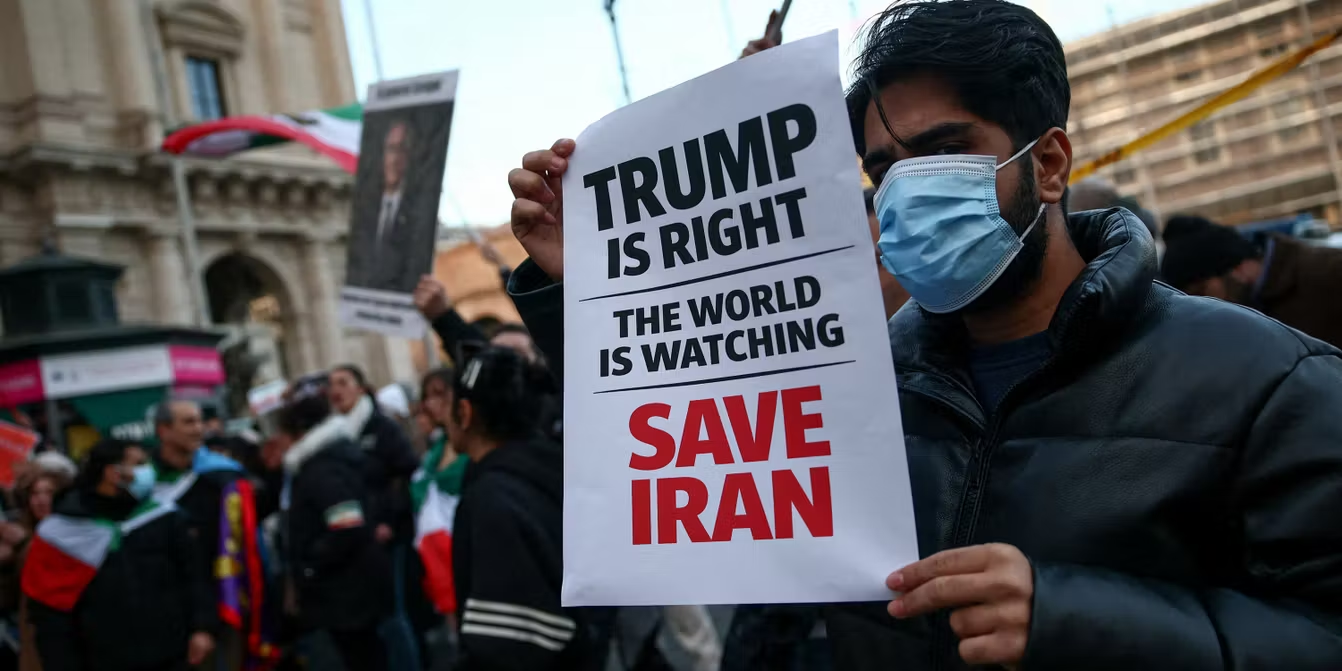
WASHINGTON D.C. – Leftists are losing their minds after President Trump announced Iran’s Supreme Leader, Ayatollah Ali Khamenei, was killed in a joint U.S.-Israeli operation. Almost immediately, Iranian dissidents and many Iranian expats responded with public celebration. At the same time, many anti-Trump voices in the West erupted in anger, warning the move could ignite a wider conflict.
That split has played out in real time online. From Tehran to Toronto, social feeds are filled with cheering posts, street videos, and a meme that keeps popping up, the so-called “Trump dance,” a fist-pumping, hip-swaying routine associated with Donald Trump’s rallies.
To supporters, it’s not just a joke; it’s a symbol that something they thought was impossible just happened.
On Truth Social, Trump posted, “No wars started on my watch, just bad guys taken out. Iran is free at last!” Critics called the message provocative. Many Iranians saw it as validation that pressure on the regime finally hit the top.
Iranian Diaspora Celebrations Spread Across Major Cities
Across the Iranian diaspora, long-running grief and frustration turned into open gatherings within hours. Many expats blame Khamenei’s decades in power for economic collapse, harsh policing, human rights abuses, and years of proxy conflict across the region. Because of that history, the public mood in many exile communities has looked less like mourning and more like relief.
Here’s what people shared from key cities:
- Los Angeles, USA: Crowds gathered at Pershing Square, waving pre-revolution Iranian flags and chanting against the Islamic Republic. Several clips show families doing the “Trump dance” to remixed rally music, including “Y.M.C.A.”
- Toronto, Canada: Iranian-Canadians organized flash mobs at Yonge-Dundas Square. Some wore Trump hats while speaking on camera about relatives jailed under the regime.
- London, UK: Demonstrations outside Iran’s embassy shifted into celebrations, with expats posing for photos near Israeli flags, a scene that would have felt unlikely years ago.
- Sydney, Australia: Beach barbecues, fireworks, and short speeches praised Trump as a “liberator.” Local posts pushed hashtags like #TrumpSavesIran.
Many interviews and captions point to the same message: people don’t see this as an ending; they see it as a crack in the system. “For years, we lived under his iron fist,” said Mina Azadi, a 32-year-old activist in Berlin. “Trump and Israel did what others wouldn’t. They gave us hope.”
Social Media Lights Up as the “Trump Dance” Goes Viral
Most of the celebration has moved fastest on social platforms. Hashtags like #IranFree, #ThankYouTrump, and #TrumpDanceIran jumped across X (formerly Twitter), Instagram, and TikTok within hours. What began as scattered posts quickly became a shared online moment, mixing political relief with meme culture.
Common themes include:
- Viral clips: Short videos show Iranians in Tehran filming quietly while doing the “Trump dance.” Several posts describe it as a playful copy of Trump’s rally movements. Users claim some clips passed tens of millions of views on TikTok. One widely shared video shows young women in hijabs moving to “Macho Man,” captioned, “From oppression to celebration, thanks to Trump!”
- Memes and edits: Some users swapped Khamenei’s portraits with images of Trump, paired with jokes like “the real supreme leader.” On X, threads collected reactions from Iranian influencers praising the strike as “justice.”
- Live streams: Expat groups streamed gatherings live, while commenters inside Iran wrote they joined using VPNs. “We’re dancing because our nightmare is over,” one streamer from Isfahan said.
- Iranian-Israeli collaborations: Israeli users also joined in, sharing split-screen videos that show Iranians and Israelis doing the same dance in sync, framed as a sign of shifting attitudes.
Digital analyst Dr. Reza Kiani described the trend as more than entertainment. “Social media is giving a megaphone to voices the regime tried to silence,” he said. “The Trump dance is fun, but it’s also defiance.”
Trump Opponents Lash Out, Warning of Escalation
While many Iranians posted celebration videos, Trump’s critics in the U.S. and Europe responded with alarm. Commentators called the reported operation reckless, and some argued it could trigger retaliation across the region. Online, political feeds are filled with warnings about a wider war.
Key reactions included:
- Media backlash: CNN’s Jake Tapper wrote, “This is how wars start, Trump’s ego over global stability.” Similar takes ran across outlets, including BBC and Al Jazeera, where coverage focused on the risks of assassination and blowback.
- Political condemnation: Democratic leaders, including President Kamala Harris, criticized the move in a White House statement, saying “unilateral actions risk escalation.” Protests in Washington, D.C., followed, with signs calling Trump a “war criminal.”
- Celebrity posts: Several Hollywood figures, including Mark Ruffalo, posted angry messages accusing Trump of “bloodlust.” For a short time, #StopTrumpWar trended before celebration hashtags flooded the timeline.
- Online fight clubs: Reddit and other forums turned into argument zones. Supporters were called “fascists,” while counter-posts mocked the outrage and pointed to years of Iranian repression.
Conservative commentator Ben Shapiro framed the clash bluntly on his podcast, saying Trump’s critics “can’t admit he got it right.” His clip spread quickly, especially in threads celebrating the reported strike.
Trump’s Foreign Policy Image: Peace Claims Versus Strike Tactics
The argument now centers on how people read Trump’s record. Critics call him reckless. Supporters claim he used pressure and targeted action to avoid large wars. That debate resurfaced fast because the latest report echoes earlier moments tied to Trump-era Iran policy.
Supporters point to several talking points:
- No new major war during his term: Trump often said he didn’t start new wars. His administration also pushed troop reductions in places like Syria and Afghanistan, while promoting deals like the Abraham Accords.
- Targeted operations: The 2020 killing of Iranian General Qasem Soleimani remains a reference point. Back then, supporters said it weakened Iran’s networks without launching a full war. Many Iranians celebrated that strike too, which some people now cite as a preview of today’s reaction.
- “Maximum pressure” sanctions: Trump pulled the U.S. out of the Obama-era nuclear deal and tightened sanctions. Allies argued it squeezed the regime’s finances, even as critics said it raised tensions.
- Close coordination with Israel: Israeli officials and pro-Israel voices often credit Trump with giving Israel more room to act. One Israeli official, speaking anonymously, said Trump “gave us the green light to defend ourselves.”
Middle East scholar Dr. Amir Hosseini described the strategy in plain terms. “He’s not trying to start a war,” Hosseini said. “He’s trying to remove threats in a controlled way. The celebrations show how many Iranians see it.”
What Happens Next: Iran’s Power Struggle and Regional Ripples
Beyond the street parties and online shouting matches, the bigger question is what follows inside Iran. With Khamenei’s successor unclear, hardliners may scramble to lock down power. Meanwhile, reform-minded voices may see an opening, even if the path stays dangerous.
Regional groups tied to Iran, including Hezbollah and the Houthis, issued threats after the reports spread. At the same time, some analysts say years of sanctions and pressure weakened their capacity to strike at scale, at least in the short term.
Markets reacted fast. Oil prices reportedly jumped about 15% early on, then cooled as traders weighed whether the shock would lead to disruption or reduced Iranian interference. Meanwhile, diplomats pushed calls for talks, and some observers floated the possibility of a new nuclear framework.
Online, Iranians kept pushing their own message. “This is our Arab Spring, Trump-style,” one user posted from Mashhad. In many videos, the dance looks silly on the surface. Still, the captions show a deeper point: people feel they can breathe again.
The Personal Stories Driving the Moment
Behind the headlines are the stories that make the reactions easier to understand. Farah Najafi, a 45-year-old mother in New York who left Iran in 1989, posted a video that spread widely. She said her brother died in prison under the regime. In the clip, she cried, smiled, and danced in the same minute. “Trump and Israel avenged us,” she said.
Inside Iran, posts carried a different risk. A young activist, Karim Shiraz, i in Tehran, wrote, “No more supreme leader, only supreme freedom.” Supporters shared the line widely, while others warned it could bring arrest if traced.
The contrast remains sharp. Trump’s critics rage online, while many Iranians celebrate and share hope, one clip at a time.
In the end, this moment has become more than a single report or a single leader. It’s a snapshot of a deep divide in how the world sees Iran, Trump, and what “peace” looks like. For many Iranians posting from exile and inside the country, the message is simple: the fear is cracking, and they plan to keep going.
Related News:
Western Leaders Back Trump’s Bold Push to End Iran’s Oppressive Regime
News
Trump Slams UK’s Starmer Over ‘Too Late’ Aircraft Carrier Offer
WASHINGTON, D.C. – US President Donald Trump took fresh aim at UK Prime Minister Keir Starmer on Saturday, brushing off reports that Britain may send two Royal Navy aircraft carriers to the Middle East. Trump said any move would come “too late” as the conflict with Iran continues.
Trump delivered the jab on Truth Social, where he framed the UK offer as an attempt to show up after the United States and its allies had already secured the outcome.
Trump’s Harsh Truth Social Message
Trump wrote: “The United Kingdom, our once Great Ally, maybe the Greatest of them all, is finally giving serious thought to sending two aircraft carriers to the Middle East. That’s OK, Prime Minister Starmer, we don’t need them any longer, But we will remember. We don’t need people that join Wars after we’ve already won!”
His post followed reports that the UK Ministry of Defence had put HMS Prince of Wales on higher readiness for a possible deployment. Those preparations could reportedly cut the normal sailing notice time. HMS Queen Elizabeth, Britain’s other Queen Elizabeth-class carrier, also came up in talks about boosting naval presence during the crisis.
At the same time, Trump’s comments highlighted a widening gap between Washington and London since the US-Israel campaign against Iran began on February 28. The operation has targeted Tehran’s nuclear and missile capabilities, while also tying the effort to regime change goals.

What’s Driving the Iran Conflict
Tensions climbed after Iranian actions that included missile strikes on targets in the region, followed by Iranian responses to US-Israeli attacks on key sites in Tehran and other locations. During the campaign, the United States has used British facilities, including RAF Fairford in Gloucestershire and Diego Garcia in the Indian Ocean. London described that access as for “specific and limited defensive purposes.”
However, Britain did not fully back offensive action at the start, and that stance repeatedly drew Trump’s criticism. In recent days, he has mocked Starmer and questioned the strength of the special relationship, while also contrasting him with historic leaders such as Winston Churchill.
Starmer’s Mixed Signals on the US and Israel
Opponents of Starmer have pointed to what they describe as shifting messages on the Middle East. Early in the crisis, Starmer stressed restraint and called for a “negotiated settlement” aimed at getting Iran to abandon its nuclear ambitions. He also declined to join the first wave of US-Israeli strikes.
Later, Starmer approved access to UK bases, but he framed it as defensive support rather than direct involvement in bombing runs. Throughout, he has leaned on international law, saying any action should meet global standards and avoid widening the conflict.
Critics say that the approach has looked inconsistent:
- Early resistance: Starmer held back immediate use of British bases for strikes, raising concerns about escalation and legality.
- Limited approval later: After pressure, the UK allowed restricted defensive operations from its facilities.
- Carrier readiness reports: New talk of aircraft carrier preparations suggests a step toward deeper involvement, although no final deployment has been confirmed.
Starmer has argued that the pace and limits were intentional. He has said the UK backs Israel’s right to self-defense, but still prefers diplomacy over open-ended military action.
International Law Focus, and Iran’s Record
Starmer has repeatedly urged all sides to follow international law. He has also called on Iran to respect global rules and avoid actions that could expand the conflict.
Still, his critics say the legal messaging sounds one-sided, given Iran’s long record of defying international norms. Iran has faced UN Security Council resolutions and sanctions tied to its nuclear program. It has also faced scrutiny over support for proxy militias, ballistic missile development, and attacks on shipping and regional neighbors. Many countries view those actions as clear violations of international law.
Because of that history, detractors say Starmer’s tougher legal expectations for allies, while Iran has ignored similar rules for years, have fed claims of uneven standards. Trump and his supporters have used that argument to paint Starmer as hesitant, saying the legal focus slowed meaningful help when it mattered most.
What This Means for US-UK Ties
The public clash adds pressure to the US-UK relationship at a tense moment. Trump’s warning that “we will remember” suggests he could weigh the dispute in future decisions on alliances, trade, or security cooperation.
Meanwhile, UK officials have played down the exchange. They have repeated the UK’s commitment to NATO and transatlantic ties, while also stressing an independent foreign policy. As of publication, Starmer’s office had not issued a direct reply to the Truth Social post.
As the Iran conflict continues, with reports of Iranian apologies for some regional attacks and US promises to keep up pressure, the dispute shows how Western allies remain split on timing, scope, and legal framing. Trump’s sharp tone may energize his base at home, while also pushing European partners to line up more closely with US goals in the Middle East.
Trending News:
Trump Outmaneuvers the British Empire in the Strait of Hormuz
News
Trump Outmaneuvers the “British Empire” in the Strait of Hormuz
WASHINGTON, D.C. – President Donald Trump has ordered the U.S. government to offer political risk insurance and naval escorts for commercial ships moving through the Strait of Hormuz. The directive follows a pullback by major marine insurers, led by Lloyd’s of London, after threats to Persian Gulf shipping drove war-risk costs higher or pushed coverage off the market.
Supporters say the plan keeps oil and LNG moving and strengthens energy security. Critics say it also challenges a long-standing center of global marine insurance power in London.
The Strait of Hormuz is a narrow 21-mile passage between Iran and Oman. It carries about 20 to 30% of the global seaborne oil trade and a large share of LNG exports from Gulf producers.
After U.S. and Israeli strikes against Iran in late February 2026 (called “Operation Epic Fury” in some reports), threats and attacks around the waterway drove risk levels up fast.
- By early March, traffic through the strait fell by more than 80%. On some days, tankers did not move at all.
- Major Protection and Indemnity (P&I) clubs, including Gard (Norway), Skuld, NorthStandard (UK), the London P&I Club, and the American Club, sent 72-hour cancellation notices for war-risk add-ons that took effect March 5.
- Lloyd’s Joint War Committee widened the “high-risk” area to include the full Persian Gulf. As a result, many underwriters canceled coverage or raised premiums sharply, sometimes two to five times normal levels.
In practice, shipping slowed because money, not missiles, set the limit. Without workable war-risk insurance, shipowners and charterers would not send high-value tankers into danger. That left hundreds of vessels waiting and raised fears of a global energy squeeze.
Lloyd’s holds a major share of marine cargo and war-risk business, and it has long handled complex, high-loss exposures. Its marine roots go back centuries to Britain’s early merchant trade.
Trump’s Response: The U.S. Steps Into Maritime Insurance
On March 3, Trump posted on Truth Social that he had instructed the U.S. International Development Finance Corporation (DFC) to provide “political risk insurance and guarantees” for Gulf maritime trade at a very reasonable price.”
The plan includes:
- Political risk insurance covering losses tied to war, terrorism, or government actions.
- Financial guarantees aimed at backing shipowners, charterers, and private insurers.
- U.S. Navy escorts for tankers when needed, echoing past U.S. protection missions in the region.
- A later announcement of a $20 billion reinsurance facility meant to steady prices and help restore traffic.
Trump framed the goal in simple terms: “No matter what, the United States will ensure the free flow of energy to the world.”
Using the DFC this way stands out because the agency usually supports development-related financing in emerging markets. Still, there is a recent parallel. In 2023, an insurance effort helped support Ukraine grain exports with participation from Lloyd’s and other firms.
What This Could Mean for Lloyd’s of London and the UK
Lloyd’s remains a global hub for specialty insurance and brings billions into the UK economy each year through premiums, jobs, and related services. Around 50,000 people work in insurance and connected roles in the City of London. Marine and energy coverage sit at the center of that system, and war-risk insurance, while niche, can carry real geopolitical weight.
Some analysts think Trump’s move could pull business away from London over time:
- If U.S.-backed coverage stays dependable and priced well, some shippers may favor it after the crisis.
- British headlines have floated the idea that Trump could weaken a roughly £50bn insurance giant.
- Lloyd’s has taken a cooperative tone with the DFC and says it still leads on war-risk expertise. It also argues coverage is still available, even at higher rates, and that some traffic has started to return.
Even so, the message is hard to miss. A private insurance market in London has long been able to slow trade with pricing and capacity. Now, a state backstop is trying to remove that pressure point.
Bigger Ripple Effects for Energy, Alliances, and Markets
This standoff shows how finance, military power, and energy supply connect in real time.
- Energy security and prices: By pushing shipments to resume, the U.S. reduces the risk of price spikes at home and helps allies that depend on Gulf oil and LNG.
- Tension with close partners: In London, some see the policy as a direct hit to a key national industry.
- Oil market reaction: Prices jumped at first, then eased after Trump’s announcement. Still, war-risk costs remain high, and sentiment is shaky.
- Limits of insurance alone: Shipping leaders warn that guarantees only help up to a point. If attacks continue, fear can outrun price. At the same time, more naval activity can raise the sense that the route is a live conflict zone.
The administration’s approach blends money, security promises, and military readiness. In effect, the U.S. is presenting itself as the backstop for key sea lanes.
What Comes Next for Hormuz Shipping and War-Risk Coverage
Results will hinge on execution. That includes the fine print of DFC coverage, how it coordinates with private insurers, and whether Navy escorts become routine. Lloyd’s has signaled it can work with the U.S. effort, so a shared model may emerge instead of a clean replacement.
Still, the larger shift is clear. Where private underwriters once had near veto power over a critical chokepoint, direct government support is moving in to keep tankers sailing.
For now, the U.S. has acted to prevent a supply shock, and it has turned an insurance freeze into a test of who guarantees global energy flows.
Related News:
Trump Says He’s Very Disappointed in Starmer Over Iran
News
CNN Reveals Trump’s GOP Approval Tops Obama and Bush at the Same Point
ATLANTA – CNNsenior writer and chief data analyst Harry Enten walked through polling that shows President Donald Trump holding unusually strong support inside the Republican Party. Using CNN survey averages and side-by-side comparisons, Enten said Trump’s current approval among Republicans sits well above where Barack Obama and George W. Bush stood with their own parties at a similar stage of their presidencies.
The discussion came up while the panel talked about Trump’s influence in GOP primaries and the impact of his endorsements. According to Enten, the numbers suggest Trump’s pull with Republican voters remains firm. As he put it, Trump’s “magic touch has not seemed to wear off yet when it comes to the Republican base.”
Main Takeaways From Enten’s Breakdown
- Very high Republican approval: CNN polling averages show Trump at 86% approval among Republicans at this point in his second term.
- Higher than recent presidents at the same stage: At a comparable moment, George W. Bush was at 77% with Republicans, and Barack Obama was at 77% with Democrats.
- More intense support, too: 53% of Republicans strongly approve of Trump’s performance. By comparison, Obama measured 48% and Bush 47% on strong approval at the same point.
- Endorsement power tied to base loyalty: Enten compared Trump’s primary influence to famous athletes like Tom Brady and Babe Ruth. He also said Trump-backed candidates have posted 95% to 99% win rates in recent cycles, helped by tight party loyalty.
- Standout own-party support in the modern era: Enten summed it up plainly, saying Republicans support Trump more than any 21st-century president’s party supporters at this point.
Even as Trump’s overall national approval moves up and down, the Republican core stays steady. That gap between base support and broader approval is a major part of the story.
Own-Party Approval, Side-by-Side
Here’s the same comparison Enten shared, focused on approval within each president’s own party at roughly the same point in their second terms:
| President | Party Approval Rating (%) | Strong Approval (%) | Time Period Context |
|---|---|---|---|
| Donald Trump | 86 | 53 | Current (second term, early 2026) |
| Barack Obama | 77 | 48 | Similar point in the second term |
| George W. Bush | 77 | 47 | Similar point in the second term |
Source: CNN polling averages and historical figures as cited by Harry Enten. Timelines reflect approximate equivalents across presidencies.
Enten stressed that this level of party unity stands out. In many presidencies, overall approval sits in the 40% to 50% range because the country splits along party lines. In contrast, Trump’s near-unified backing from Republican voters gives him a strong base even when national debates heat up.
Why These Numbers Matter for Trump’s Influence
High own-party approval usually turns into real power inside a party, and Enten argued that’s exactly what’s happening here. Because Republicans approve of Trump at such a high rate, his endorsement often carries major weight in primary elections. Since 2020, Trump-supported candidates have won GOP primaries at a pace that goes far beyond what most endorsements can deliver.
As a result, challenges to Trump-aligned candidates often struggle to gain traction. Even when Trump’s broader public numbers soften, Republican enthusiasm hasn’t dropped in the same way.
Enten’s tone stayed data-focused, but he made clear the size of the gap surprised him. “Look at this: 86% of Republicans approve,” he said, while pointing back to the 77% figures for Obama and Bush.
A Quick Look at Party Loyalty Over Time
Presidents often begin terms with strong support from their party, then see it slip when controversies build or conditions change. In that context:
- Bush held about 77% party approval at a similar second-term point, before later drops tied to the Iraq War and economic concerns.
- Obama also measured 77% among Democrats at the same stage, showing solid support but less intensity than Trump’s current numbers.
Trump’s 86% approval, paired with higher strong approval, signals a more locked-in base. That kind of support can cushion a president from pressures that hit other administrations harder.
What to Watch Next
With the 2026 midterms on the horizon, the data suggests Trump still holds major influence within the Republican Party. It’s still unclear how long that strength will last or how it will shape policy fights and candidate choices, but the polling shows little sign of fatigue among GOP voters.
Enten’s segment also highlights something many headline polls miss. National approval matters, but internal party support can say even more about a president’s staying power. After the clip aired, the comments spread quickly on social media and conservative outlets, mainly because the contrast between Trump’s GOP numbers and his broader national approval remains so sharp.
Related News:
Karoline Leavitt Slams CNN’s Kaitlan Collins Over Killed U.S. Soldiers
-
Crime2 months agoYouTuber Nick Shirley Exposes BILLIONS of Somali Fraud, Video Goes VIRAL
-
China1 month agoChina-Based Billionaire Singham Allegedly Funding America’s Radical Left
-
Politics2 months agoIlhan Omar Faces Renewed Firestorm Over Resurfaced Video
-
Crime3 months agoSomali’s Accused of Bilking Millions From Maine’s Medicaid Program
-
Crime3 months agoMinnesota’s Billion Dollar Fraud Puts Omar and Walz Under the Microscope
-
Business2 months agoTech Giant Oracle Abandons California After 43 Years
-
Politics1 month agoCNN Delivers Stark Reality Check to Democrats Over Voter ID
-
Crime3 months agoMinnesota Fraud Scandal EXPANDS, $10 Billion in Fraudulent Payments