

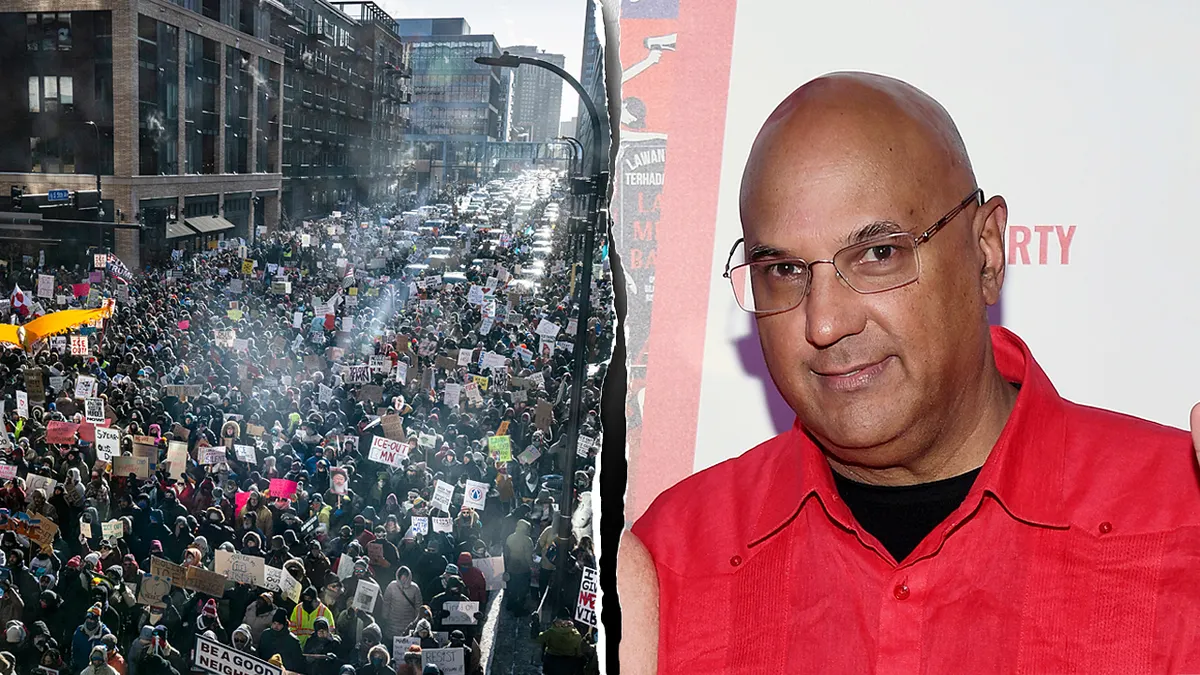

NEW YORK – Neville Roy Singham is a US-born tech entrepreneur who sold his software firm, Thoughtworks, for close to $1 billion in 2017. Since then, he has moved to Shanghai and has become a key name in claims of foreign influence tied to US activism.
Critics and congressional investigators say he has sent millions of dollars to left-leaning groups in the United States, including groups involved in protests against Immigration and Customs Enforcement (ICE).
Investigators allege the funding supports goals aligned with the Chinese Communist Party (CCP), and they point to public reporting that describes Singham attending CCP workshops focused on overseas messaging. Other reports say he has shared office space with organizations such as the Maku Group, a media company that has displayed banners praising Xi Jinping.
Singham has been active in political causes since the 1970s, but his work after 2017 has drawn the most attention. Reports describe money moving through layers of shell companies, donor-advised funds, and nonprofits, including the United Community Fund and the Justice Education Fund.
These groups have little public presence, which critics say makes it easier to move money quietly into activist and media efforts. One example raised in public reporting is that nearly $1.8 million from related funding streams went to Chinese media outlets that echo CCP messaging. His wife, Jodie Evans, a co-founder of Code Pink, is also connected to this ecosystem, and Code Pink has reportedly received a large share of its donations from sources tied to Singham.
Supporters of Singham-funded groups often describe the network as values-driven, not just financial. Some groups have called him a “Marxist comrade,” and critics say the model matches a CCP approach sometimes described as a “Strategy of Sowing Discord,” meant to deepen divisions inside rival countries.
The concern is that money and organizing support can amplify protests, strain local systems, and harden social conflict, while still flowing through tax-exempt structures that reduce oversight.
Claims Around Singham Funding Anti-ICE Protests
The biggest flashpoint is Singham’s alleged role in bankrolling anti-ICE protests across the US. Reports and committee statements have named organizations such as The People’s Forum, Code Pink, and the Party for Socialism and Liberation (PSL) as major beneficiaries.
The People’s Forum is said to have received more than $20 million from Singham between 2017 and 2022, with funds routed through intermediaries that keep the source hard to trace. The New York-based group has been accused by critics of encouraging aggressive protest tactics aimed at ICE, including disruptions in large cities and actions on college campuses.
In Los Angeles, riots linked to PSL, described by some reports as Singham’s “main backer,” led President Trump to deploy the National Guard after federal officers were attacked. In Minneapolis, investigators and critics have also pointed to activists tied to these funding lines, saying they coordinated efforts to pressure or harass ICE during enforcement actions.
Protests in Minnesota and other places, including Buffalo, have featured calls to abolish ICE. Some participants have discussed tactics on encrypted apps, according to reporting cited by critics.
These actions are not limited to immigration. They also overlap with pro-Palestine campus occupations and wider anti-capitalist organizing. Critics argue that some messaging in these circles lines up with CCP-friendly narratives, including defenses of China’s actions toward Uyghurs.
The overall funding totals cited in public claims are large, with reports saying Singham has directed as much as $250 million into connected organizations and projects. The People’s Forum has also hosted events that praise China and promote Leninist ideas, which critics say support the argument that this is coordinated influence work, not simple grassroots activism.
Capitol Hill Pressure: Multiple Investigations
Singham and his network have drawn attention from several congressional committees. The House Ways and Means Committee, chaired by Rep. Jason Smith (R-MO), has pointed to The People’s Forum as a possible CCP-linked propaganda hub operating under tax-exempt status.
In a September 2025 letter, Smith requested records and described the group as tied to unrest while receiving large sums linked to Singham. The committee framed the issue as protecting the tax code from abuse and keeping nonprofit benefits from being used against US interests.
The House Oversight Committee, led by Rep. James Comer (R-KY) and joined by Rep. Anna Paulina Luna (R-FL), opened an inquiry in June 2025 focused on funding connected to the Los Angeles riots. The committee subpoenaed Singham for records tied to his relationship with PSL and warned that failure to comply could trigger contempt steps.
Oversight also raised concerns about possible Foreign Agents Registration Act (FARA) violations, which can apply when someone acts in the US on behalf of a foreign principal. In September, the committee went further and asked Treasury Secretary Scott Bessent to review options such as sanctions, asset freezes, or seizures tied to Singham-connected entities.
The Senate Judiciary Committee, led by Sen. Chuck Grassley (R-IA), has also focused on The People’s Forum and Code Pink. Grassley’s April 2025 letter raised concerns about possible FARA duties tied to CCP-linked funding and influence. He also pointed to appearances by leaders of these groups in state-owned Chinese media as part of the broader picture.
Together, these inquiries show growing concern about foreign influence, even if the loudest push has come from Republicans in the current Congress.
Why the Story Hasn’t Broken Through in Mainstream Media
Despite the seriousness of the claims, coverage in major outlets has been limited. Critics point out that CNN, MSNBC, and The Washington Post have spent extensive time on Donald Trump’s policies and personal controversies, while giving far less attention to the Singham story. They argue that this gap is not random. Anti-ICE protests often fit into progressive political narratives, and a deeper look at possible CCP ties could complicate the way those protests are framed in public debate.
A few outlets have given the topic more airtime. Bill O’Reilly’s No Spin News has run segments focused on Singham and featured Rep. Jason Smith discussing claims that violence is being fueled through tax-exempt channels. NewsNation has also covered the subpoenas and the broader claims about money supporting campus actions and anti-ICE protests.
Critics say the uneven attention leaves the public with an incomplete picture. They argue that when headlines focus on familiar political drama, quieter stories about foreign meddling can fade into the background, even when the national security stakes are high.
Bessent Signals a Push for Oversight
As congressional pressure builds, Treasury Secretary Scott Bessent has moved toward stronger enforcement. Appointed in the Trump administration, Bessent has been recruiting a senior enforcement official, described as a new “top cop,” to watch for nonprofits that misuse 501(c)(3) status.
The plan includes an interagency task force aimed at groups that cross legal lines through heavy political activity, improper lobbying, or fraud. Supporters of the effort say this approach speaks directly to concerns raised in the Singham-related probes.
This shift follows requests from congressional Republicans, including lawmakers on Ways and Means, who have called for tougher action against nonprofits they say promote “anti-American” goals or help fund terrorism. Oversight’s letter to Bessent also pressed Treasury to review steps like sanctions or asset actions tied to Singham-linked entities. Bessent has framed the effort as a way to trace money flows and reduce waste, fraud, and abuse.
If Treasury follows through, the impact could extend well past one donor network. A more aggressive review could disrupt how political money moves through nonprofit structures. Legal fights may still follow, including disputes over FARA requirements and any attempt to freeze or seize assets.
US Sovereignty and Public Trust
The Singham story highlights pressure points in US systems, including tax rules, free speech protections, and the way political movements are covered. Committees can investigate, and Treasury can tighten enforcement, but the public also depends on clear reporting to understand what is happening and why.
Supporters of the investigations say the goal is simple: protect lawful protest while stopping foreign-backed influence campaigns that use US freedoms as cover. With the Treasury building new enforcement capacity and Congress asking sharper questions, the next phase may bring more records into the open and more accountability for groups that used secrecy to avoid scrutiny.