
Politics
Ilhan Omar’s Connections to Convicted Somali Fraudsters Surface
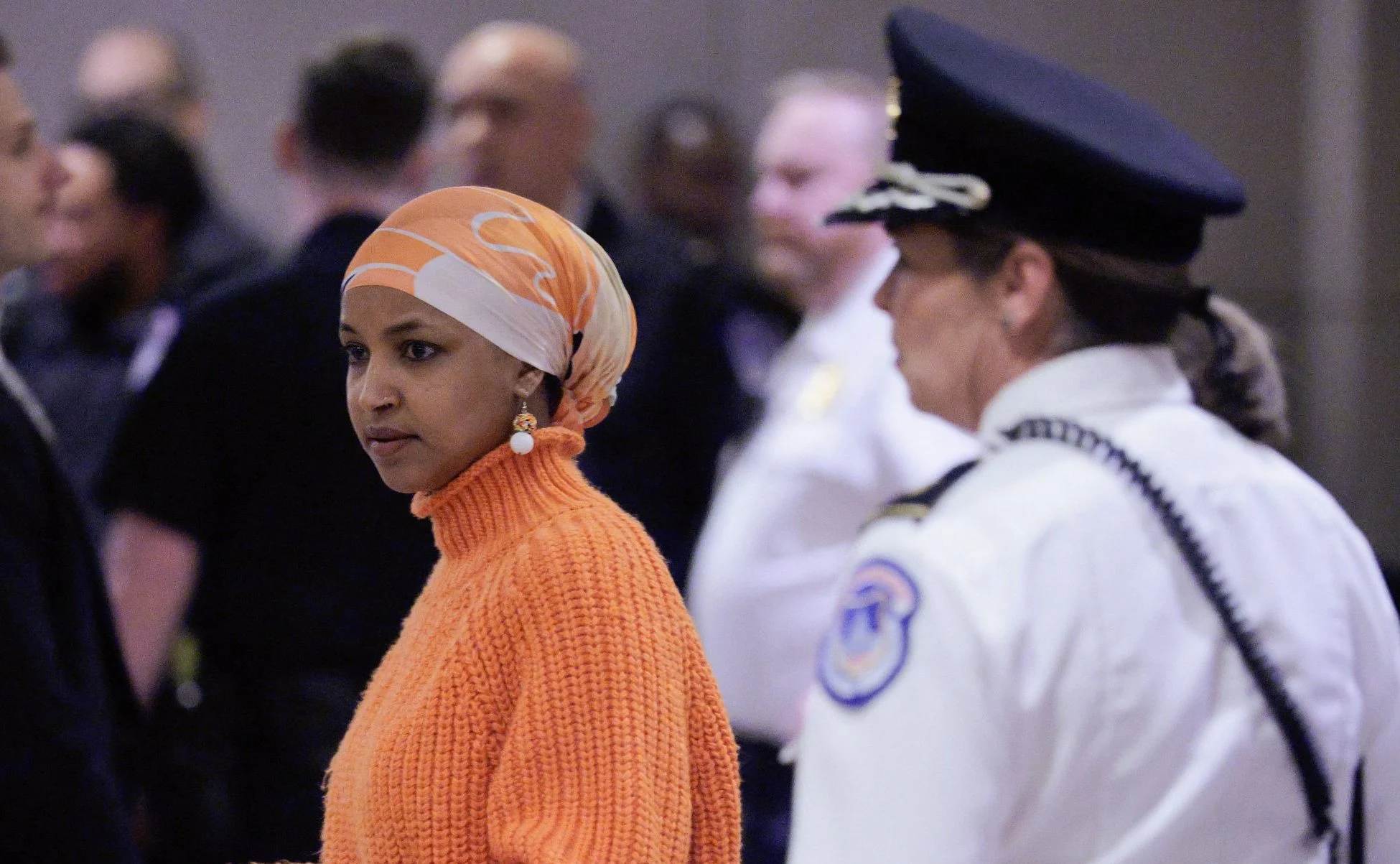
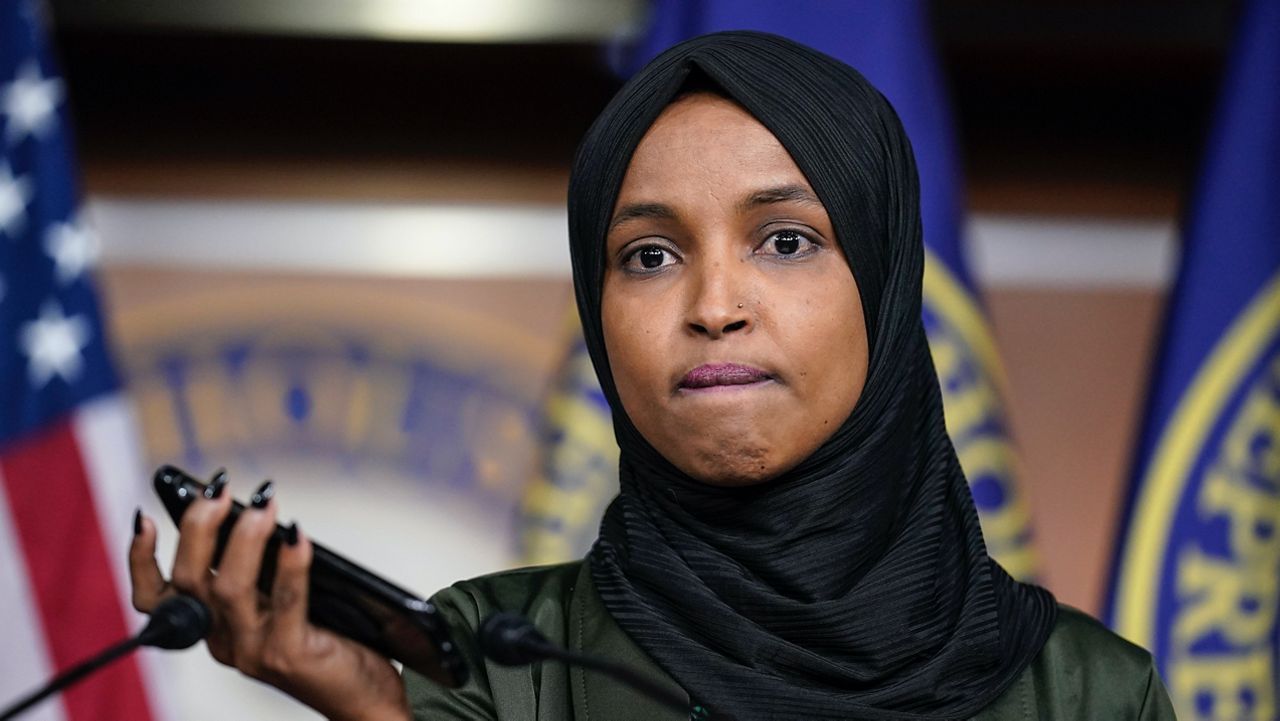
WASHINGTON, D.C. – New reporting and congressional activity have brought fresh attention to Rep. Ilhan Omar (D-Minn.) and people later convicted in a sweeping Minnesota welfare fraud case.
Ilhan Omar has not been charged, and federal prosecutors have not accused her of taking part in the scheme. Still, recent disclosures and media reports point to personal and campaign-level ties between Omar and at least two individuals convicted in the Feeding Our Future case.
At the same time, the Trump administration has expanded its focus to claims that stolen public funds may have moved overseas, including allegations tied to Al-Shabaab. Alongside that effort, House Republicans have also increased scrutiny of Omar’s husband, Tim Mynett, and business activity linked to multiple countries.
Supporters and critics now frame the story in sharply different ways. Omar and her allies call the attention a political attack, and they say it distracts from prosecuting the people who committed fraud. Republicans argue the connections, oversight failures, and money trails deserve deeper review, including beyond the United States.
Trump returned to the White House in January 2025 and has repeatedly pointed to Minnesota as a fraud hot spot. Omar, a member of the progressive “Squad,” has pushed back and urged investigators to focus on proven wrongdoing. Even so, with House Republicans driving several inquiries, the situation keeps widening, and Mynett’s companies have drawn a global spotlight.
The Minnesota Somali Fraud Scandal: A Billion-Dollar Problem
The core case involves large-scale fraud in Minnesota that targeted government programs during the COVID-19 era. The best-known prosecution centers on Feeding Our Future, a Twin Cities nonprofit that said it provided meals to children. Prosecutors say it became a pipeline for stealing hundreds of millions in public funds instead.
Key points often cited in coverage and hearings include:
- Size of the fraud: Prosecutors have put total losses across multiple schemes above $1 billion. They say Feeding Our Future accounts for at least $300 million, with false meal claims, fake invoices, and kickbacks.
- Charges and convictions: Since 2022, more than 75 people have been charged, and many have been convicted. Because many defendants are Somali immigrants or the children of immigrants, the case has also fueled debate about community stigma.
- Other alleged schemes: Reports and testimony have also highlighted Medicaid-related fraud claims reaching into the billions, including assisted living and autism services. Assistant U.S. Attorney Joseph Thompson described the system as easy to exploit, saying it drew fraud “tourists.”
Critics have blamed poor oversight during the Biden administration and under Minnesota Gov. Tim Walz. Indictments began in September 2022, and the public record has continued to grow through late 2025 and early 2026. In December 2025, a U.S. House hearing pressed officials on how billions in public dollars were lost, and some testimony described coordinated networks that knew how to work the system.
Minnesota’s Somali community, often described as the largest in the country with more than 100,000 residents, has felt the fallout. Local leaders have condemned fraud while also warning against backlash. Omar addressed the issue on CBS’s Face the Nation in December 2025, saying alarms had been raised and that fraudsters should be prosecuted and jailed.
Ilhan Omar’s Reported Links: Donations, Photos, and Community Overlap
Federal prosecutors have not accused Omar of fraud. Even so, a mix of campaign finance records, photographs, and public appearances has driven a steady stream of headlines about her proximity to people later convicted.
Reports have highlighted several areas:
- Campaign donations that were returned: Coverage from outlets including 77 WABC and OpenTheBooks has said Omar’s campaign received $7,400 tied to individuals later convicted in the Feeding Our Future case, and that the campaign later returned those funds. The timing has raised questions about donor screening.
- Photos tied to convicted individuals: Media reports, including the New York Post, have circulated images that show Omar with at least two people later convicted in the case. One report described one of them as an undocumented immigrant with a fraud record who was arrested in December 2025, and it also referenced ties to Minnesota Democrats, including Gov. Walz.
- Advocacy and public promotion claims: OpenTheBooks commentary has pointed to statements and posts during the period when fraud expanded, including claims that Omar backed looser oversight and promoted a site later connected to fraud convictions. Some critics also point to changes in her personal financial picture during that period, although public reports have not shown prosecutors tying her finances to stolen funds.
- Close community networks: Other coverage, including a December 2025 Daily Mail report, framed Omar’s Somali background as part of why public interactions and shared events have drawn attention, especially in a tight-knit community.
Omar has denied wrongdoing and has argued that the public should not paint Somali Americans with a broad brush. In a Fortune interview, she urged aggressive prosecution of fraud while also warning against confusion and chaos driven by political motives. Meanwhile, critics such as Rep. Clay Higgins (R-La.) have used the reported connections to press for more answers, and social media claims have amplified accusations tied to immigration and theft.
The story has advanced through court filings, media reporting, congressional statements, and commentary from watchdog groups. Local coverage, including Fox 9 Minneapolis, has described the fraud environment as large and persistent, even as prosecutions continue.
Trump Administration Review: Claims About Al-Shabaab and Overseas Money Flows
The issue has taken on a national security angle as the Trump administration reviews allegations that some Minnesota fraud money may have moved overseas, including claims tied to Al-Shabaab, an Al-Qaeda affiliate in Somalia.
Publicly reported elements of that push include:
- Treasury involvement: In December 2025, Treasury Secretary Scott Bessent announced an inquiry into allegations that taxpayer dollars may have been diverted to Al-Shabaab. He pointed to a City Journal report that claimed millions from fraud schemes may have ended up connected to the group, citing federal counterterrorism sources.
- Disputes over evidence: Some officials and reports have pushed back on the claim. Former U.S. Attorney Andy Luger has said investigators have not found direct evidence that fraud dollars were sent to terrorist groups. A Minnesota Reformer report from December 2025 suggested much of the money appeared to fund luxury spending, while also noting that indirect flows can be hard to trace.
- Related actions by the administration: Reports have said the administration paused certain federal child care funding to Minnesota, described the state as a center of money laundering, and sent more than 2,000 immigration agents to Minneapolis. Trump also ended Temporary Protected Status for Somalis, affecting about 1,100 people, and cited fraud concerns.
- Congressional and agency steps: In December 2025, House Oversight Chairman James Comer (R-Ky.) announced a separate probe tied to widespread fraud. Other reports said HUD sent staff to review aid programs, and Treasury lowered reporting thresholds for money transfers to look for overseas links.
Trump has used Truth Social posts to highlight the Minnesota cases and to promise deportations tied to fraud. Civil liberties groups, including the ACLU, have criticized the approach as targeting immigrants without proof. Reuters, in a January 2026 explainer, reported that the scandal began under Biden but has become a major Trump talking point.
Growing Scrutiny of Tim Mynett and Business Deals Abroad
Omar has also faced questions tied to her husband, Tim Mynett, a political consultant she married in 2020. Republican investigators have focused on financial disclosures that show large swings in the stated value of his business interests. Those disclosures have fueled claims of opaque funding and concerns about who may be seeking access to Omar through investments.
Reported developments include:
- Sharp valuation changes: Omar’s financial disclosures list holdings tied to eStCru LLC, described as a California winery, and Rose Lake Capital LLC, described as a venture capital firm. House Oversight Republicans, led by Comer, have questioned an increase in reported value up to $30 million, compared with a much smaller figure reported in 2023. Comer requested documents with a deadline of February 19, 2026.
- Prior lawsuit tied to an investment promise: A 2023 lawsuit accused Mynett of promising a 200 percent return on a $300,000 investment in eStCru and not repaying until legal action was filed. Media coverage has pointed to that dispute when questioning the later jump in valuation.
- International scope of the inquiry: In a February 2026 letter, Comer sought records tied to Mynett’s dealings in Somalia, Kenya, and the United Arab Emirates, including travel, communications, and business outreach tied to mergers, debt work, and capital raising.
- Influence concerns raised by investigators: Comer has argued that undisclosed investors could seek influence over Omar. Reports have also described Rose Lake Capital as having limited public information. Some coverage, including the New York Post, has suggested a possible subpoena for Mynett.
- Omar’s response: Omar has framed the investigation as political. In a TikTok video, she said valuations reflect full business costs and do not represent Mynett’s personal share. She has also noted that a prior Justice Department review during the Biden era ended without action.
Several outlets have portrayed the inquiry as extending beyond Minnesota because Rose Lake Capital has described itself as having global interests. Some reports have mentioned possible FBI involvement, although public confirmation has been limited. Fox News coverage has also tried to connect the Mynett review to the broader Minnesota fraud story, suggesting possible overlap.
What It Could Mean Next: Politics, Community Impact, and Legal Risk
The combined controversies have created pressure on several fronts. Somali community leaders in Minnesota have warned that fraud headlines can lead to harassment and stereotyping. Politically, Republicans have used the cases to support tougher immigration and oversight proposals ahead of the 2026 midterms, and some commentary has suggested the fallout could touch Walz’s plans.
Several themes continue to stand out:
- Backlash and stigma: Reports and surveys have described increased hostility toward Somalis in Minnesota as the cases stay in the news.
- Policy tightening: Trump agencies have moved to tighten Medicaid billing controls and increase scrutiny of money transfers, aiming to reduce fraud risk.
- Ethics and legal exposure: If investigators uncover undisclosed conflicts or improper benefits, Omar could face ethics complaints or more serious allegations. Supporters call the effort a partisan hunt, while critics say transparency is the point.
As of February 2026, no charges have been filed against Omar or Mynett. Still, House Oversight demands continue, and Trump allies keep calling for aggressive enforcement. With federal reviews, congressional probes, and intense media attention all running at once, the story remains active, and the next wave of findings could shape Omar’s career and Minnesota politics for years.
Related News:
Ilhan Omar’s Exploding Wealth Investigated By Federal Authorities
Politics
Karoline Leavitt Slams CBS News Over ICE Deportation Numbers
WASHINGTON D.C. – During a tense White House press briefing on February 11, 2026, Press Secretary Karoline Leavitt criticized CBS News and several other outlets for what she called a dishonest read of Department of Homeland Security (DHS) data on Immigration and Customs Enforcement (ICE) arrests and deportations.
The back-and-forth put the long-running strain between the Trump administration and major newsrooms back in the spotlight. Leavitt argued that reporters selected the numbers that fit their preferred storyline, then used them to weaken support for the president’s hardline immigration enforcement plans.
The clash followed a CBS News report published earlier in February 2026. The network said fewer than 14% of nearly 400,000 immigrants arrested by ICE during President Trump’s first year back in office faced charges or convictions for violent crimes. CBS said the figures came from an internal DHS document the outlet obtained.
The story suggested the administration’s promise to focus on “dangerous and violent criminals” did not match the results, because many arrests involved people with minor offenses or no criminal record at all. After the report spread, immigration advocates and Democratic lawmakers pointed to it as proof that deportation operations reached too broadly.
Karoline Leavitt rejected that framing at the briefing. She said the reporting treated “violent” as the only category that matters, while brushing aside other crimes that still hurt real people.
“Just because a crime is not violent in nature, doesn’t mean that crime is not victimless,” she said, based on transcripts and video from the event. She also stressed that the administration has said from the start it will remove illegal immigrants who break US law, not only those with violent records.
How CBS News Framed the DHS Numbers
CBS titled its story, “Less than 14% of those arrested by ICE in Trump’s 1st year back in office had violent criminal records, document shows.” The report highlighted several points from the DHS figures, including:
- Less than 2% of arrests involved homicide or sexual assault charges or convictions.
- About 40% of those arrested had no criminal history.
- Most criminal records involved non-violent offenses, including immigration violations such as illegal re-entry.
After the story ran, critics said the presentation gave readers the wrong impression. The Center for Immigration Studies (CIS), for example, published a February 12, 2026, analysis calling the coverage misleading.
CIS argued that CBS downplayed non-violent crimes and also glossed over the fact that immigration violations alone can make someone removable under US law. The group said the reporting showed “a deep misunderstanding of immigration law,” because ICE enforcement depends heavily on legal status, not only criminal history.
Leavitt made a similar point in the briefing. She accused CBS of narrowing the discussion to one label to shrink the administration’s claims about progress. She also pointed to what she said were more than 622,000 deportations since January 20, 2025. Leavitt said many of those deported had records tied to crimes such as drug trafficking or burglary.
While those offenses are not always listed as violent under Bureau of Justice Statistics categories, she said they still cause harm in local communities. When reporters pressed her on the “non-violent” label, she responded, “Tell that to the victims,” a line that drew praise from supporters and anger from critics who said the administration was sidestepping due process concerns.
CBS has faced similar criticism before. A June 2025 CBS analysis claimed only 8% of ICE detainees had violent convictions. At the time, administration officials pushed back, saying the focus on “non-criminal” immigrants ignored wider border and public safety concerns.
Karoline Leavitt as the Administration’s Main Counterpunch to Unfriendly Coverage
Since taking the press secretary job in January 2025, Karoline Leavitt has built a reputation for combative briefings and quick pushback. At 28, she became the youngest press secretary in US history. Her earlier work as a Trump campaign spokesperson shaped a direct style that often challenges reporters on the spot.
Several moments stand out:
- January 15, 2026, briefing on an ICE shooting: Leavitt called a reporter a “left-wing hack” after he cited statistics showing 32 deaths in ICE custody in 2025 and questioned the agency’s handling of the fatal shooting of Renee Nicole Good in Minneapolis. Leavitt shifted the focus to crimes linked to illegal immigrants, including the murders of Laken Riley and Jocelyn Nungaray. She argued the press highlights isolated ICE incidents while giving less attention to American victims.
- April 2025 questions about a dip in deportation totals: When reporters asked about March deportations slipping slightly from the year before, Leavitt said a Supreme Court pause on certain cases drove the change. She also accused the press of pushing a “fake story” by leaving out that context.
- February 2026 repeated disputes about enforcement priorities: Across multiple briefings, Leavitt corrected what she called misleading claims about who ICE targets. She said Trump’s supporters, including “80 million voters,” backed him to remove “criminal illegals” and tighten border control.
Supporters say Karoline Leavitt’s approach forces news outlets to answer for weak framing and missing context. Critics, including HuffPost and The Guardian, have described her exchanges as “meltdowns” or deflections. Either way, the confrontations keep the media divide front and center.
A Wider Complaint About Media Spin on the Trump Administration
The ICE data argument fits a broader administration claim that major outlets shape facts to make Trump look bad. Since Trump returned to office in 2025, the White House and its allies have pointed to many examples.
The White House even launched a Media Bias Tracker in November 2025. The tool flags stories it calls misleading and tags them with labels such as “bias,” “lie,” or “left-wing lunacy.” The tracker has listed more than 200 examples of what it describes as media malpractice.
Administration allies often point to a few major themes:
- Stories about immigration “overreach”: Beyond CBS, outlets such as The New York Times have faced accusations of overstating the impact of deportation operations. In January 2026, a Times fact-check said Trump exaggerated a decline in migration. The administration responded that the paper ignored context, including halted cooperation from Venezuela. The White House tracker later labeled the coverage a “falsehood-fueled” attack.
- Disputes over economic reporting: In December 2025, PBS and NPR faced funding cuts after reports that the administration said minimized Trump’s tariff results. PolitiFact labeled 2025 the “Year of the Lies” for Trump statements, while administration allies said that label showed political imbalance because most fact-checks focused on Republicans.
- Coverage of lawsuits as “press freedom” conflicts: CNN and MSNBC have described Trump’s legal fights with news outlets as threats to free speech. The administration has said the lawsuits respond to defamation claims. Officials and supporters cite a $16 million settlement with Paramount tied to a “60 Minutes” edit, and a $15 million settlement involving ABC and George Stephanopoulos. They also cite suits against The Wall Street Journal and The New York Times tied to coverage involving Epstein connections and stories about Trump’s rise to power.
- Changes to the Pentagon press setup and the press pool: In 2025, the Pentagon removed dedicated workspaces for NPR, PBS, and other outlets and replaced them with conservative-leaning organizations. Critics said the move punished independent journalism. The administration said it corrected long-running bias in defense coverage, and it pointed to reporting on ICE raids as an example of hostile framing.
- Claims of broadcast and social media bias: Trump’s 215-plus anti-media posts in 2025 highlighted coverage he described as unfair, including reporting by NBC and ABC on diversity programs. Fox News also compiled a “top 10 worst examples” list. The list included claims that protests were described as peaceful, while Trump’s policy wins, including job numbers, received less attention.
Administration sources often describe these trends as a herd mindset in major newsrooms, where negative angles win because they satisfy anti-Trump audiences. Meanwhile, a Poynter report noted journalists have faced harassment and legal pressure. Trump allies respond that the pushback reflects years of what they see as unfair coverage going back to his first term.
Civil liberties groups, including the ACLU and the Committee to Protect Journalists, have warned that the Media Bias Tracker looks like a tool that could chill speech. The Trump team answers that it serves as a shield against storylines it says twist public debate.
What the Dispute Means for Immigration Policy and Trust in the Press
With deportations reaching what the administration calls record highs in 2025, officials insist the goal remains public safety. Leavitt’s comments reflect that message, yet the constant fights with national outlets also deepen public distrust. Pew surveys from late 2025 found only 32% of Americans trusted national news, and the partisan split kept widening.
As legal battles over states’ rights continue in places such as Minnesota and Illinois, the administration and the press appear set for more public clashes. Leavitt has said she will keep defending ICE and the administration’s approach. “The brave men and women of ICE are making our communities safer,” she said, pushing back on coverage she believes distorts the results.
The larger debate remains unresolved. Some see the media as shaping facts to fit a political goal. Others see the administration as trying to avoid tough scrutiny. In 2026, the divide shows no sign of easing.
Related News:
CNN Ratings Collapse As Cable Giants Face Extinction
Politics
AOC’s Critique of Rubio’s Speech Turns into an Huge Embarrassment
MUNICH, Germany – At the Munich Security Conference in 2026, every line mattered. U.S. Secretary of State Marco Rubio delivered a speech that drew heavy applause and ended with a standing ovation. He framed the United States as steady and committed to its allies.
Rep. Alexandria Ocasio-Cortez (D-N.Y.) tried to push back with a pointed critique. Instead, her comments came out uneven and sparked fresh questions about her command of foreign policy. The moment also showed a wider split in how each party wants the US to act on the world stage.
Rubio’s keynote focused on reassurance. He spoke to European leaders who have worried about US politics and long-term reliability. He promised a “new century of prosperity” built with partners, not apart from them.
He told the room, “America is charting the path for a new century of prosperity and that once again, we want to do it together with you, our cherished allies and our oldest friends.”
The crowd responded with frequent applause that built to a standing ovation. Rubio also urged European countries to guard their sovereignty, defend their “Christian heritage,” and turn away from what he called “self-destructive” choices. He pointed to issues like unchecked migration and deindustrialization. Even critics described the tone as calming, especially for attendees who feared a new strain across the Atlantic.

Key takeaways from Rubio’s address included:
- Backing alliances: Rubio said the US has “no interest in being polite caretakers of the West’s managed decline,” and he cast America as a leader with a clear direction.
- Shared culture and history: He used historical links, including the roots of American cowboy culture, to underline common ties.
- Border and economic themes: Stronger borders and renewed industry earned nods from leaders facing similar pressures at home.
With that performance, Rubio strengthened his position as a central voice in the administration’s foreign policy, mixing MAGA-style themes with older conservative ideas.

AOC’s Response: Big Expectations, Uneven Delivery
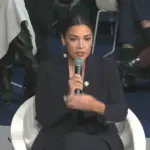
Ocasio-Cortez, often discussed as a possible 2028 contender, appeared on a panel focused on populism and inequality. When a moderator joked about her presidential future, she moved past it and steered toward domestic themes.
She called for a wealth tax and argued that rising inequality can feed authoritarian politics.
However, when she turned to Rubio’s speech, her critique stumbled. Viewers noticed long pauses, repeated filler words, and moments where she seemed unsure of key details. That contrast stood out because she usually sounds sharper in her online messaging.
The clip that traveled fastest came from her response to Rubio’s cowboy reference. Ocasio-Cortez said, “My favorite part was when he said that American cowboys came from Spain,” then added, “And I believe the Mexicans and descendants of African enslaved peoples would like to have a word on that.”
Her point aimed at inclusion, and it spoke to real parts of the story. Still, historians noted that Rubio’s core claim lines up with the record. The roots of cowboy culture trace to Spanish vaqueros, including Indigenous Mesoamericans trained by Spanish colonizers after their arrival in Mexico in 1519.
The word “vaquero” ties to the Spanish “vaca” (cow). In addition, common tools and terms carry Spanish origins, including lassoing (from “lazo”) and chaps (from “chaparreras”).
Ocasio-Cortez focused on later chapters of that history, not the starting point. After Texas’s independence and US annexation, Anglo settlers adopted many vaquero traditions.
Black cowboys also played a major role, with some estimates placing them at up to one-fourth of the workforce in the 19th century. Over time, Hollywood often pushed a whiter version of the cowboy story. Even so, Rubio’s reference centered on early European influence.
Online, the debate split quickly. Some praised her for highlighting groups often erased. Others called it a preventable error that exposed weak preparation on cultural history, a topic that often matters in diplomacy.

Taiwan Question: Halting Answer, Fast Backlash
Ocasio-Cortez faced another tough moment when asked about the US commitment to defending Taiwan. Her response came out broken up and uncertain: “You know… I think that this is such a, you know, I think that this is a, this is of course a very long-standing policy of the United States.” She expressed hope for peace, but she didn’t offer a clear position.
Clips spread quickly, and critics compared the answer to a pageant-style response. The House Foreign Affairs Committee posted a sharp message, saying she “sounded like a third-grader in class attempting to give a report on a book she never read.”
A few reasons the Taiwan exchange landed poorly:
- Choppy pacing: Repeated “you know” and “I think” interrupted her point.
- Thin detail: She leaned on “long-standing policy” without explaining what it requires or where it draws lines.
- Instant memes: Social users pushed nicknames like “Mumble in Munich,” which kept the clip alive.
Across her panel, Ocasio-Cortez kept her focus on inequality. She argued that economic pain can drive populism, and she promoted global ideas like wealth taxes. She also connected Rubio’s themes to Vice President JD Vance’s earlier speech, calling both rooted in “cultural nostalgia.” In her view, the administration risks “tearing apart the transatlantic partnership” and treating the world as a “personal sandbox.”
Still, her broader argument got buried under the stumbles. While Rubio drew loud approval, her session received a quieter response. Some attendees also said she didn’t address specific flashpoints in enough depth, including Iran and Ukraine.
What People Said Afterward
Reaction came fast from all sides:
- Republicans cheered Rubio: Many GOP voices framed his remarks as proof of leadership and used the moment to boost his 2028 image.
- Democrats defended Ocasio-Cortez: Supporters said the coverage fixated on delivery, not her values or her critique of inequality.
- Media replayed the contrast: Outlets, including Fox News, highlighted the back-and-forth and treated it as a test of global credibility.
- Historians weighed in on cowboys: Scholars, including Pablo A. Rangel, pointed to how cowboy myths became romanticized and racialized over time. They supported her inclusion point while still affirming her Spanish origins.
Former Bush-era official Michael Allen also commented on the split visions, with tensions involving Iran hanging over the broader discussion.
What It Could Mean for US Politics and 2028
The Munich episode captured a shifting fight over US foreign policy. Rubio presented a forceful, heritage-focused approach. Ocasio-Cortez pushed an equity-first view tied to economic reform.
For Ocasio-Cortez, the clips may feed an “unready for the world stage” storyline, especially with early polling that shows her competing well against possible rivals such as Vance in hypothetical matchups. Meanwhile, European leaders left Munich still watching for signs of steadiness from Washington. Rubio’s reception suggested his message landed. Her rough moments may pressure her team to tighten her international talking points.
With 2028 getting closer, appearances like this can shape how voters and allies judge a candidate’s global credibility. Ocasio-Cortez has shown strength in domestic fights, but Munich highlighted how different the foreign policy spotlight can be.
Munich offered a clear contrast. Rubio delivered a speech that lifted the room and signaled renewed commitment to allies. Ocasio-Cortez tried to challenge that message, but pauses and a disputed history critique pulled attention away from her larger argument.
Whether the moment sticks as a lasting gaffe or fades into a learning step depends on what comes next. On the international stage, preparation shows fast, and so do mistakes.
Related News:
Rubio Slaps Visa Ban on 5 Europeans Over US Tech Censorship
Politics
The House Ways and Means Committee Probes Foreign Funding of Far-Left Nonprofits
Republican-led hearing points to gaps that may let foreign money flow through tax-exempt groups, fueling activism, protests, and political influence
WASHINGTON, D.C. – February 16, 2026, House Republicans used a recent Ways and Means Committee hearing to press a warning they call urgent. They say foreign adversaries can exploit America’s nonprofit system to move huge sums into U.S. activist networks.
In their view, that money helps drive protests, sharpen social divides, and push overseas interests inside the United States.
Rep. Jason Smith (R-Mo.) led the February 10 hearing, titled “Foreign Influence in American Non-profits: Unmasking Threats from Beijing and Beyond.” The discussion focused on alleged links between some nonprofit funding streams and the Chinese Communist Party (CCP), along with other foreign donors.
Republicans and several witnesses argued that weak oversight makes it easier to route money through 501(c)(3) and 501(c)(4) groups. They also said these pathways can sidestep campaign finance limits and create risks tied to propaganda, disruption, and election interference.
Key claims raised during the Ways and Means Committee hearing
Lawmakers and witnesses pointed to a mix of specific examples and broader trends.
- Neville Roy Singham and an alleged network of groups: Neville Roy Singham, a U.S.-born tech entrepreneur now based in Shanghai, drew heavy attention. Ways and Means Committee Chairman Smith described what he called a “Singham CCP network.” He and other Republicans alleged that Singham has moved more than $100 million, and possibly more, through U.S. nonprofits. They said the goal is to amplify pro-CCP messaging and support far-left causes. Groups mentioned in connection with this claim included:
- The People’s Forum (a New York-based organizing space tied to anti-ICE protests and pro-Palestinian actions)
- CodePink
- BreakThrough News
- Tricontinental: Institute for Social Research
- ANSWER Coalition
- Party for Socialism and Liberation
Witnesses also said some of these groups work alongside organizations such as the Democratic Socialists of America to mobilize demonstrations. They argued that these protests can overwhelm local authorities and inflame unrest.
- Swiss billionaire Hansjorg Wyss and the 1630 Fund: Testimony highlighted Wyss’s giving, including $280 million to the left-leaning 1630 Fund, a major 501(c)(4). Republicans also cited claims that foreign sources have sent about $2.7 billion through parts of the nonprofit sector. They contrasted that figure with right-leaning groups, who they say block foreign funds.
- Other overseas foundations supporting U.S. activism: Americans for Public Trust referenced nearly $2 billion from five foreign charities. Examples named during the hearing included the Quadrature Climate Foundation and the Oak Foundation. According to the testimony, the money supported U.S. climate litigation, protest activity, and policy advocacy. Republicans said some of that work targets U.S. energy independence.
In his opening remarks, Smith said tax-exempt status is “a privilege, not a right.” He argued that some groups receive the benefits of U.S. tax policy, including deductions, while pushing what he described as foreign propaganda. He also raised concerns about alleged ties to extremist activity.
Testimony, pushback, and party-line friction
Most witnesses came from conservative-leaning groups, which shaped the tone and focus of the hearing.
- Scott Walter of the Capital Research Center said both parties agree foreign money should not shape U.S. politics.
- Caitlin Sutherland of Americans for Public Trust described how foreign “dark money” can move through donor-advised funds and fiscal sponsors.
- Peter Schweizer and others pointed to reported Singham links, including claims about shared office space with Chinese state media and attendance at pro-CCP events.
Democrats challenged the framing and the witness selection. They pointed out that one witness from Public Citizen had received Wyss funding. Members also argued that Republicans centered the hearing on left-leaning groups while downplaying other forms of foreign influence. As the debate sharpened, Democrats warned that the effort could slide into political targeting. Republicans said oversight is necessary when national security is at stake.
Calls for DOJ and IRS enforcement
The hearing did not stop at criticism. Republicans urged federal agencies to take action, including the Department of Justice (DOJ), the IRS, and the Treasury Department. They called for reviews of possible violations of the Foreign Agents Registration Act (FARA), nonprofit tax rules, and election laws.
Several recent moves fed that push:
- Late in 2025, Republican state attorneys general asked the DOJ to investigate foreign funding tied to more than 150 climate groups.
- The Trump administration has signaled broader scrutiny of left-leaning NGOs. That includes groups linked to George Soros’s Open Society Foundations. Republicans said tools such as FBI task forces and IRS reviews should focus on alleged support for “political violence.”
- Smith has also urged the IRS to revoke tax-exempt status for groups such as Alliance for Global Justice, citing alleged terror-related links.
Even so, no formal DOJ action followed the hearing. Critics say aggressive investigations could chill speech protected by the First Amendment. Progressive nonprofits responded by defending their work as lawful advocacy and civic engagement.
Legal and practical hurdles also remain. Nonprofits can mask sources of money through layered structures, and investigators often need strong proof of direct foreign control or illegal coordination.
What it means for the nonprofit sector
The hearing highlighted a long-running tension in the U.S. nonprofit system. The country offers broad tax benefits to support charities and civic groups. Republicans argue that the same system can be misused by foreign actors, including China, to influence public debate and politics.
Republicans floated several policy options, including:
- tougher disclosure rules for foreign grants tied to 501(c)(4) groups
- Closing gaps that allow foreign nationals to shape elections through indirect routes
- more IRS audits of politically active nonprofits
As a result, the hearing became a flashpoint in a wider fight over foreign interference, domestic activism, and civil liberties. With claims of billions in play and national security concerns driving the debate, pressure on federal agencies continues to build.
-
Crime2 months agoYouTuber Nick Shirley Exposes BILLIONS of Somali Fraud, Video Goes VIRAL
-
China3 weeks agoChina-Based Billionaire Singham Allegedly Funding America’s Radical Left
-
Politics2 months agoIlhan Omar’s Ties to Convicted Somali Fraudsters Raises Questions
-
News2 months agoWalz Tried to Dodges Blame Over $8 Billion Somali Fraud Scandal
-
Crime2 months agoSomali’s Accused of Bilking Millions From Maine’s Medicaid Program
-
Asia3 months agoAsian Development Bank (ADB) Gets Failing Mark on Transparancy
-
Crime2 months agoMinnesota’s Billion Dollar Fraud Puts Omar and Walz Under the Microscope
-
Politics2 months agoIlhan Omar Faces Renewed Firestorm Over Resurfaced Video