News
Virginia Supreme Court Throws Out New Election Maps
RICHMOND, Virginia – In a major shakeup ahead of the 2026 midterm elections, the Virginia Supreme Court has struck down a newly drawn congressional map. In a 4-3 decision handed down on Friday, the court ruled that state lawmakers did not follow the proper rules when they created the map.
This ruling throws out the results of a recent special election where voters narrowly approved the new maps. For Democrats, this decision is a crushing blow. For Republicans, it is a massive victory that could help them keep or grow their power in the U.S. House of Representatives.
Here is everything you need to know about the ruling, why the judges made this choice, and what it means for voters heading to the polls this November.
Why Did the Court Strike Down the Maps?
The fight over the maps comes down to a very specific rule in the Virginia state constitution.
To change the rules for elections, lawmakers cannot just pass a normal bill. They have to pass a constitutional amendment. The state constitution says a new amendment must be passed by the state legislature twice. Crucially, there must be a general election in between those two votes. This gives voters a chance to weigh in and elect different lawmakers if they do not like the proposed changes.
According to reporting by the Associated Press, Democrats in the state legislature passed the amendment for the first time last fall. But there was a problem. They passed it less than a week before Election Day, long after early voting had already started.
In their 4-3 ruling, the majority of the Supreme Court judges said this timing violated the rules. Justice D. Arthur Kelsey wrote the majority opinion. He stated that passing the amendment after people had already started voting was unfair. Because the process was flawed, the court declared the April 21 voter referendum “null and void.”
The Political Stakes: A Fight for Control
To understand why this court case was such a big deal, you have to look at the math. The maps dictate how the state is divided into 11 congressional districts.
Under the current maps, Virginia’s delegation is fairly split:
- 6 Democrats
- 5 Republicans
The new map, designed by Democrats and passed in the recent referendum, would have drastically changed those numbers. Political experts estimated that the new map would have given Democrats a massive advantage, potentially shifting the balance to 10 Democrats and only 1 Republican.
The court noted this extreme shift in its ruling. The judges pointed out that about 47% of Virginia voters supported Republican candidates in recent elections. However, under the newly proposed map, those voters would only control about 9% of the state’s representation in Congress.
If the new map had survived, it would have changed the shape of several key areas:
- Northern Virginia: Five districts would have been heavily anchored in this Democratic stronghold.
- Rural Areas: One of those northern districts was drawn to stretch far out and absorb rural, conservative voters, watering down their voting power.
- College Towns: In western Virginia, the map grouped three college towns to outvote conservative residents in the same district.
Because the court threw out this new map, Virginia will now use the older, more balanced map from 2021 for the upcoming elections.
How We Got Here: A Brief History of Virginia Redistricting
This recent legal battle is just the latest chapter in a long, messy fight over election maps in Virginia.
Usually, states draw new voting maps every ten years after the U.S. Census. In 2021, Virginia tried to use a new bipartisan commission to draw fair maps. The goal was to take the power away from politicians and stop “gerrymandering”—the practice of drawing crazy map shapes to help one political party win.
But the commission failed. The Democrats and Republicans on the panel could not agree on anything. Because they were deadlocked, the job of drawing the maps was handed over to the Virginia Supreme Court. The court hired two outside experts to draw a fair map. That 2021 map is the one that gave the state its current 6-5 split.
Democrats were not happy with that map. They wanted a chance to draw new lines to fight back against Republican maps in other states. This led to the push for the mid-decade constitutional amendment, the April special election, and eventually, this week’s court ruling.
Reactions from Both Sides
As expected, the court’s decision sparked strong reactions from both political parties.
Republicans celebrated the ruling as a win for fairness and the rule of law. They argued that Democrats tried to cheat the system to gain unfair power.
- Representative Jen Kiggans, a Republican whose district would have been changed by the new map, called the ruling a “victory for Virginians’ right to fair and adequate representation.”
- Former Virginia Governor Glenn Youngkin also praised the decision. He said that Democrats knowingly broke the Constitution to silence millions of voters in the state.
On the other side, Democrats were furious. They pointed out that voters actually approved the new maps in the April election, and they accused the court of ignoring the will of the people.
- Representative Suzan DelBene, who leads the Democratic Congressional Campaign Committee, said that “four unelected judges decided to cast aside the will of the voters,” according to The Washington Post.
- Governor Abigail Spanberger, a Democrat, expressed deep disappointment but said her focus is now on making sure voters turn out in high numbers this November.
The National Picture: A Country Divided
You cannot look at the Virginia ruling in a bubble. It is part of a massive, nationwide war over election maps.
Right now, the U.S. House of Representatives is narrowly divided. Every single seat matters. In recent years, both parties have tried to redraw maps in the middle of the decade to gain an edge.
Republicans have successfully pushed for new, highly favorable maps in states like Florida, North Carolina, and Texas. Democrats tried to do the same thing in states like New York and Virginia to cancel out the Republican gains.
This map-drawing war recently got even more intense. The U.S. Supreme Court recently issued a ruling that weakened the Voting Rights Act. This made it much easier for state legislatures to draw maps that heavily favor one party without facing pushback from federal judges. Because of that ruling, several Southern states are already moving to draw new maps that will likely help Republicans win more seats.
Virginia was supposed to be the Democrats’ big counter-attack. By winning four extra seats in Virginia, they hoped to balance out the seats they were losing in the South. Friday’s ruling by the Virginia Supreme Court destroys that strategy.
What Happens Next for Voters?
So, where does this leave the voters of Virginia?
First, the maps are locked in. The state will use the 2021 congressional map for the 2026 midterm elections. If you live in Virginia, your district lines will remain the same as they were in the last election cycle.
Second, Democrats might try to appeal the decision to the U.S. Supreme Court. However, legal experts say this is a massive long shot. The U.S. Supreme Court rarely steps in to tell a state supreme court how to interpret its own state constitution.
Finally, this ruling turns up the heat on the upcoming November elections. Virginia has several highly competitive “swing” districts. Because the court blocked the map that would have protected Democratic candidates, those politicians now have to fight tough, expensive battles to keep their jobs. Both parties are expected to pour millions of dollars into the state to win over undecided voters.
The battle over the maps is finally over, but the fight for control of Congress is just getting started.
Trending News:
FBI Raids Virginia State Senator Louise Lucas’s Office
Supreme Court Crushes Democrats’ Racial Gerrymandering in 6-3 Decision

News
AOC Clueless Says Billionaires Never Earned Their Money
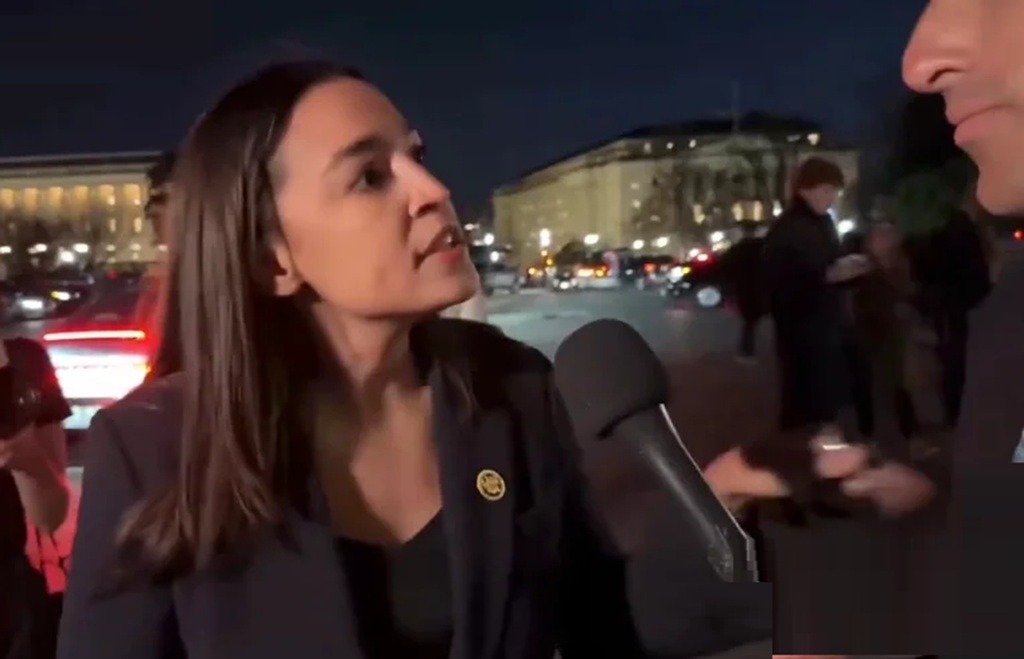
WASHINGTON, D.C.– Democrat Rep. Alexandria Ocasio-Cortez has never been one to shy away from bold statements, but her unyielding stance on extreme wealth has touched a very raw nerve in American politics. Her famous claim that “no one ever makes a billion dollars. You take a billion dollars,” continues to spark a fiery, ongoing debate across the country.
It is a simple, striking phrase that questions the very foundation of the modern American dream. With living costs rising and everyday families feeling the squeeze of inflation, the conversation around income inequality has never been more relevant. Is extreme wealth a sign of hard work, genius, and innovation? Or is it the result of a broken system that exploits the working class?
The Core Claim: Are Billionaires a Policy Failure?
To truly understand this fierce debate, we have to look closely at what the New York congresswoman is actually arguing. Ocasio-Cortez has repeatedly suggested that billionaires do not earn their vast fortunes through sheer hard work alone. Instead, she claims they build their empires on the backs of everyday workers who are frequently paid less than a living wage.
During a widely discussed public interview, Ocasio-Cortez painted a grim picture of American capitalism. She addressed a hypothetical “widget” billionaire, asking whether they actually made the products that brought them their massive fortune. She argued that billionaires sit comfortably on a couch while their employees endure “modern-day slave wages.” You can read more about her specific remarks in Business Insider’s coverage of her comments on wealth and labor.
This ties into a broader progressive slogan often associated with her political movement: “Every billionaire is a policy failure.” According to this view, a society that allows a few individuals to hoard massive amounts of capital while others struggle to afford basic healthcare, groceries, and housing has fundamentally failed its citizens.
The Progressive Stance: Wealth Inequality in the Spotlight
For millions of progressive voters, Ocasio-Cortez is simply stating an uncomfortable truth that many politicians are too afraid to say out loud. They argue that the rules of the economy are rigged to benefit those already at the very top.
Supporters point to glaring economic statistics to back up their claims. For example, international reports frequently highlight that a tiny fraction of the world’s richest individuals own more wealth than billions of the poorest people combined. Global News has reported on how Ocasio-Cortez questions the basic morality of such an unbalanced system.
Progressives use this data to argue for massive economic overhauls. Some of their proposed solutions include:
- Implementing a Wealth Tax: Taxing not just the yearly income of the ultra-rich, but their total accumulated assets.
- Higher Marginal Tax Rates: Pushing for taxes as high as 70% on every dollar earned over $10 million.
- Raising the Minimum Wage: Ensuring that the workers who physically build and operate massive companies are paid enough to live comfortably without government assistance.
- Strengthening Labor Unions: Giving workers more collective power to negotiate better pay and safer working conditions.
For her supporters, targeting billionaires is not about punishing success. It is about ensuring basic fairness, providing equal opportunity, and maintaining human dignity for everyone.
The Pushback: Critics Defend Wealth Creation and Innovation
However, economists, business leaders, and conservative critics have fiercely pushed back against Ocasio-Cortez’s claims. They argue that her rhetoric fundamentally misunderstands how wealth is created in a free-market economy. Critics point out that becoming a billionaire usually requires creating immense value that benefits society as a whole.
The Foundation for Economic Education (FEE) noted that her arguments turn the definition of theft on its head. They argue that founders of massive companies do not “take” money from the public; rather, consumers voluntarily give them money in exchange for goods and services they value and enjoy.
Critics often highlight the following counterpoints:
- Driving Innovation: Billionaires often get rich by inventing products that make life easier, faster, and better for the masses—from personal computers to next-day shipping.
- Mass Job Creation: Large corporations employ millions of people worldwide, offering salaries, health benefits, and career growth opportunities that might not otherwise exist.
- The Reality of Net Worth: A billionaire’s wealth is usually tied up in company stock, meaning their money is actively invested in growing the business and the economy, not sitting uselessly in a giant vault.
- The Element of Risk: Entrepreneurs take massive financial and personal risks to start companies. The potential for a large financial reward is exactly what drives people to take those high-stress risks in the first place.
Is the Economy a Fixed Pie?
At the heart of this fierce debate is a simple economic question: Is the economy a “fixed pie”? Ocasio-Cortez’s comments often imply that if one person has a billion dollars, they must have taken that slice of the pie away from someone else. This view treats wealth as a finite, limited resource.
Economists who disagree with her argue that the economy is constantly growing and expanding. When an entrepreneur creates a successful new business or invents a groundbreaking technology, they are baking a bigger pie for everyone. By this logic, the wealth of a successful founder does not cause the poverty of a worker. Instead, free-market advocates argue that capitalism, despite its flaws, has lifted more people out of absolute poverty globally than any other economic system in human history.
What This Means for Everyday Americans
So, why does this debate matter to the average person simply trying to pay their bills? Because the outcome of this ongoing argument will shape the future of American laws and government policies.
If the general public begins to fully agree with Ocasio-Cortez, we are likely to see aggressive new tax laws, stricter regulations on large corporations, and a massive shift in how the government redistributes wealth to fund social programs.
On the other hand, if voters side with her critics, the political focus will remain on encouraging free enterprise, protecting private investments, and allowing the free market to drive technological innovation. Both sides truly believe they are fighting for the soul and the future of the American economy.
As we look ahead, this conversation is only going to get louder and more intense. Whether you view billionaires as a symptom of a deeply broken system or as the powerful engines of global progress, one thing is certain: Alexandria Ocasio-Cortez has successfully forced the entire nation to talk about the true cost—and the true value—of extreme wealth.
Trending News:
AOC Says the US May Have Already Had a Gay President, Obama, Buchanan?
AOC Faces Bipartisan Backlash Over Munich Security Conference Gaffes
News
Ilhan Omar Refuses to Turn Over Documents to Minnesota Fraud Committee
ST. PAUL, MN — A high-stakes political showdown is intensifying in Minnesota as Representative Ilhan Omar faces mounting pressure over her response to a legislative inquiry.
At the center of the storm is a demand for documents related to the “Feeding Our Future” scandal—a massive alleged fraud scheme that has already led to dozens of federal charges and millions in stolen taxpayer funds.
The controversy reached a boiling point this week when members of a Minnesota oversight committee accused the Congresswoman of stalling. Critics argue that her refusal to provide requested internal communications hinders the state’s ability to prevent future exploitation of social safety nets.
The “Feeding Our Future” case is often described as the largest COVID-19 pandemic relief fraud in the United States. Federal prosecutors allege that a network of individuals exploited a USDA-funded child nutrition program to steal an estimated $250 million intended to feed hungry children.
Investigators are now looking into how the fraud went undetected for so long and whether political influence played any role in shielding the nonprofit from earlier scrutiny.
What the committee is looking for:
- Correspondence between Rep. Omar’s office and Feeding Our Future executives.
- Internal memos regarding the nonprofit’s expansion within her district.
- Records of any advocacy or support provided to the organization during the state’s initial audits.
Omar’s Pattern of Refusal
Rep. Omar has consistently pushed back against the committee’s requests, citing various legal and jurisdictional reasons. Her legal team argues that the state committee lacks the authority to subpoena a sitting member of Congress for federal records. They further contend that the request is a “politically motivated fishing expedition” designed to damage her reputation rather than solve policy issues.
However, state legislators point out that while the funding was federal, the administration of the program happened at the state level through the Minnesota Department of Education (MDE). They argue that any official who may have vouched for the nonprofit must be transparent about their involvement.
The standoff is not just about a few emails; it represents a broader debate over accountability and oversight. Here is a breakdown of why this issue has remained in the headlines:
- Financial Scope: With $250 million missing, taxpayers are demanding to know where the oversight failed.
- Political Ties: Some individuals charged in the scheme have previously appeared at political events with various local leaders, raising questions about “soft” influence.
- Jurisdictional Jousting: The clash highlights a murky legal area regarding when a state-level committee can compel a federal official to cooperate with an investigation.
Response from the Congresswoman’s Office
In a recent statement, a spokesperson for Rep. Omar emphasized her commitment to “justice and the proper use of public funds.” The office maintains that they have already cooperated with federal authorities where appropriate and that the state’s demands are redundant and overreaching.
“Representative Omar has been a vocal supporter of feeding families, not fraudsters,” the statement read. “Attempts to link her office to the criminal actions of private individuals are based on conjecture, not evidence.”
As the committee weighs its next steps, which could include a formal subpoena or a referral for legal action, the political climate in Minnesota remains tense. The “Feeding Our Future” case has become a symbol of pandemic-era mismanagement, and voters are increasingly sensitive to how their representatives handle the fallout.
If the committee decides to move forward with a subpoena, it could trigger a lengthy court battle that tests the limits of legislative privilege. For now, the documents remain under lock and key, and the questions surrounding one of the state’s biggest scandals remain unanswered.
What This Means for Minnesotans
For the average citizen, the bickering in St. Paul is a distraction from the real tragedy: millions of meals that never reached the children who needed them most.
Summary of the “Feeding Our Future” Fallout:
- 70+ Defendants: Dozens of people have been charged by the Department of Justice.
- Asset Seizures: Federal agents have seized luxury cars, real estate, and jewelry bought with stolen funds.
- Legislative Reform: New bills are being introduced to tighten the “fine print” of how nonprofits receive government grants (Homan & Lantis, 2022).
As this story develops, all eyes remain on the 5th District representative. Whether the standoff ends in a compromise or a courtroom, the demand for transparency isn’t going away.
Trending News:
Rep. Ilhan Omar Under Fire Over Multimillion-Dollar Disclosure Error
Ilhan Omar’s Husband Dissolves California Winery Amid Congressional Probe
News
James Comey Slammed Over Alleged Threat in Seashell Post
WASHINGTON, D.C. – A simple beach photo featuring seashells has landed former FBI Director James Comey in hot federal water, raising sharp questions about where free speech ends and criminal incitement begins.
A federal grand jury has indicted former FBI Director James Comey following a controversial Instagram post that authorities allege constitutes a threat against the President of the United States.
The post, which appears to show seashells arranged in a specific numerical pattern, has sparked a firestorm of debate over coded messaging and the limits of political expression.
The Numbers Behind the Allegation
The controversy centers on a photo Comey shared last year, showing shells on a beach forming the numbers “86” and “47.” While the caption simply read, “Cool shell formation on my beach walk,” federal prosecutors are looking past the surface.
According to legal experts and commentators, the numbers carry a heavy weight in political and cultural slang:
- “86” is a common term used in the service industry and general slang meaning to eject, get rid of, or eliminate someone or something.
- “47” refers to Donald Trump, who is the 47th President of the United States.
Critics argue that for a man with Comey’s background in high-level intelligence and law enforcement, the arrangement is far from a coincidence. Rowan Dean, host of Outsiders, noted during a recent Sky News Australia interview that Comey would be intimately familiar with “secret coded messages,” drawing parallels to counter-espionage tactics.
The case has invited comparisons to the world of spy fiction. Rowan Dean pointed out that Comey, as a former top official, would understand how signals are sent in the intelligence community. He referred to this as the “Bond Martini Test,” suggesting that the idea of the shells being a random occurrence “beggars belief.”
“For James Comey to put a secret coded message on a beach… and not know what he was doing—I just don’t buy it,” Dean stated. He argued that since the message was posted on social media, it was effectively broadcast to the entire world, potentially serving as a “signal.”
A Nation Divided on Intent
The indictment has split public opinion along familiar political lines. On one side, supporters of the indictment argue that given the history of political tensions and previous threats, such “coded” messages are dangerous and constitute incitement to violence. They point to:
- The specific use of “86,” a term rarely associated with accidental shell patterns.
- The clear reference to the 47th presidency.
- The potential for such posts to encourage “lone wolf” actors.
Conversely, some lawmakers and civil liberties advocates worry about the precedent this sets. Democrat Senator Mark Kelly expressed concern on CNN, suggesting that if a perceived enemy can be jailed over a photo of seashells, the justice system may be overreaching.
The Broader Cultural Context
The discussion around Comey’s post also touched on a broader perceived double standard in media and corporate culture. During the same broadcast, commentators highlighted other instances of controversial speech, such as:
- Jimmy Kimmel’s Jokes: A recent joke by the late-night host regarding Melania Trump was criticized by some as being in poor taste or even inciting.
- Disney’s Corporate Shift: While Disney defended Kimmel’s right to satire, the company has simultaneously moved toward “gender-neutral” greetings in its parks, such as “Hello everyone” instead of “Boys and girls.”
These examples highlight a growing tension in society: what one person considers a joke or a “cool shell formation,” another may see as a “godless” lack of morality or a direct threat to the safety of the Commander in Chief.
The upcoming trial will likely hinge on the concept of “intent.” A jury will have to decide if Comey was simply enjoying a morning stroll or if he was using his platform to “codify” a signal for violence. As the legal battle unfolds, it remains a landmark case for the digital age, testing the boundaries of how we interpret symbols and speech in an increasingly polarized world.
Related News:
Tim Walz Accused of “Enabling Fraud” By Minnesota State Lawmaker
Damaging DOJ Report Exposes Biden FBI of Targeting Christians
Former FBI Director James Comey Indicted for Threatening an Instagram Post
-
Politics3 months agoIlhan Omar’s Connections to Convicted Somali Fraudsters Surface
-
Politics3 months agoTrump Approval Rating (February 2026 Poll Results, Approve vs Disapprove)
-
Politics3 months agoAOC’s Critique of Rubio’s Speech Turns into an Huge Embarrassment
-
Politics2 months agoRep. Ilhan Omar Faces Heat as Minnesota Voters Seek Change
-
Crime3 months agoErika Kirk Faces Renewed Grooming Allegations Over 2014 Messages
-
Politics2 months agoCalls Mount to Expel Rep. Ilhan Omar from Congress
-
Business3 months agoCNN Ratings Collapse As Cable Giants Face Extinction
-
Midterm Elections3 months agoMidterm Election Predictions: Where Do President Trump and the Republicans Stand?