
Business
Alex Jones Announces the Shutdown of Infowars Amid Billion-Dollar Legal Battles

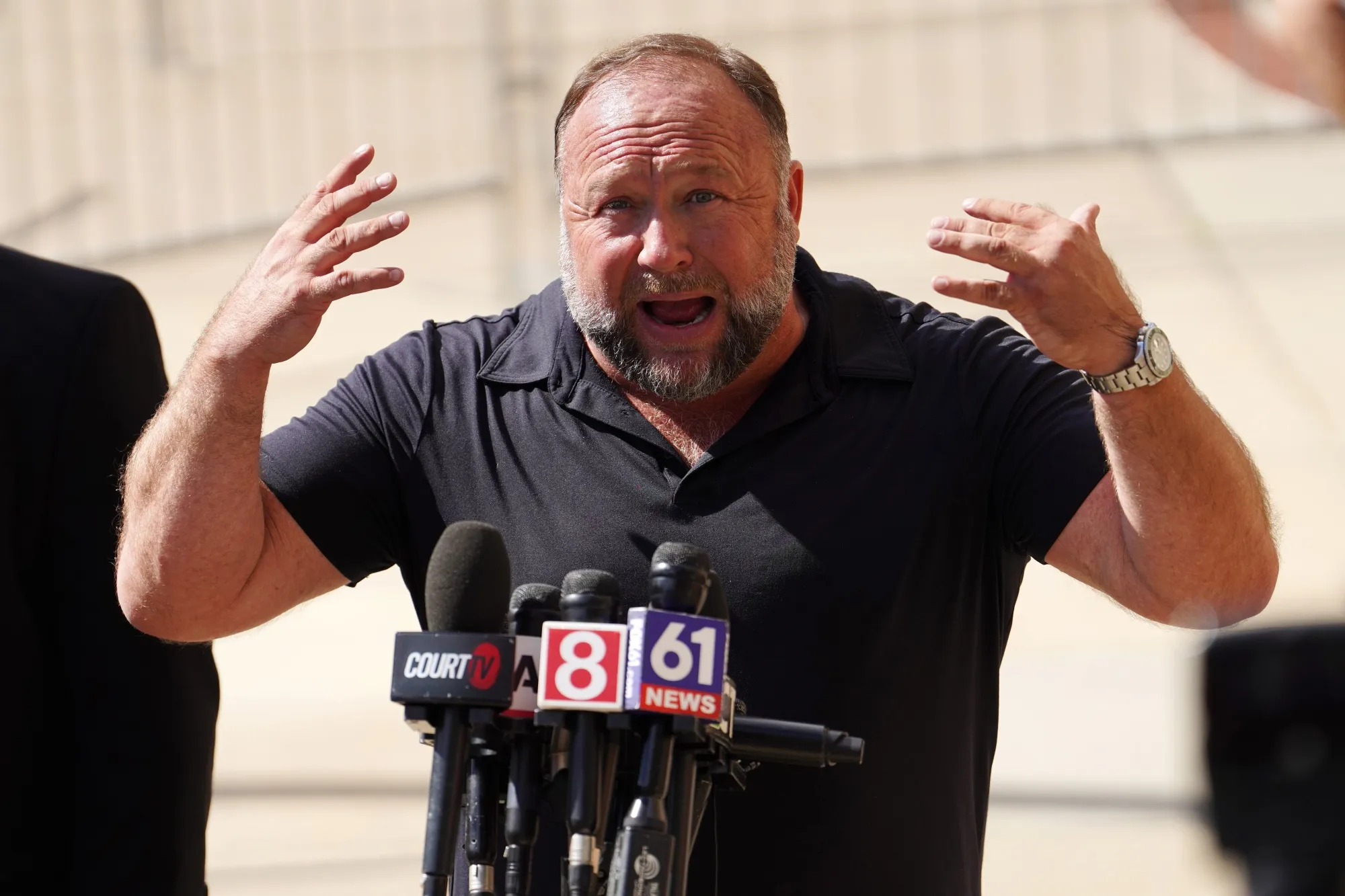
AUSTIN, Texas – For nearly three decades, Alex Jones used a microphone and a camera to broadcast some of the most bizarre and harmful conspiracy theories on the internet. But on Thursday night, the lights finally went out. In a dramatic final broadcast, Jones announced the shutdown of Infowars, his massive media empire that raked in millions while spreading dangerous misinformation. Today, visitors to the Infowars website are met with a simple, bleak message: “Off Air.”
The sudden closure marks the end of an era for the far-right influencer. According to Jones, a court-appointed state receiver forced him and his broadcasting crew out of their Austin, Texas, headquarters.
The receiver, who currently controls the company’s assets to help pay off massive legal debts, simply stopped paying the bills. Without rent, internet, or satellite connections, Infowars had no choice but to power down.
“He’s not paying the bills, like the rent or the Internet, the satellite, so we have to shut down,” Jones told his audience during his final hours on air, as reported by Bloomberg Law. He packed up his desk, raised a glass to the camera, and declared it the last official Infowars show.
The Final Broadcast and the Studio Lockout
The final days of Infowars were exactly what you would expect from the chaotic network. In the hours leading up to the shutdown, a massive clock counted down on the screen. Jones spent his remaining time bouncing between wild, paranoid rants and aggressive sales pitches.
Even as the network collapsed around him, he was still trying to sell his audience on survival gear and alternative health products. The final commercial breaks featured heavy pitches for dietary supplements, sleeping aids, and tactical knives etched with the words “liberty or death.”
But behind the loud bravado, the reality of the situation was completely clear. Jones had run out of road. A court-appointed receiver, Gregory S. Milligan, had been placed in charge of Free Speech Systems, the parent company of Infowars. The receiver’s primary job is to protect the company’s overall value and sell off assets to pay the people Jones owes money to. By cutting off the funds for the studio’s daily overhead, the receiver essentially evicted Jones from his own creation.
On Friday morning, Jones posted a video to social media from outside the studio, confirming the end of the line. “It’s locked up and that’s it, and so we’re gone,” he said. While he expressed a faint hope that a sudden court order might let him back into the building, he admitted it was highly unlikely.
The Billion-Dollar Defamation Judgments
To understand why Infowars is shutting down today, you have to look back at the devastating lies Jones told about the 2012 Sandy Hook Elementary School shooting. For years, Jones used his massive platform to claim that the horrific massacre, which claimed the lives of 20 young children and six educators, was a massive government hoax.
He told his millions of listeners that the grieving parents were “crisis actors.” As a direct result of these cruel broadcasts, the families of the victims faced relentless harassment, stalking, and death threats from angry Infowars followers.
The harassment the families endured was unimaginable. Grieving parents were confronted on the street by strangers who accused them of faking their own children’s deaths. Many families had to move multiple times to escape the relentless stalking. Some even faced death threats from people who genuinely believed the government was staging mass shootings to take away their guns. The sheer cruelty of these actions shocked the public and eventually pushed the legal system to take unprecedented action against a media entity.
The families fought back in court and won. In 2022, juries in Connecticut and Texas ordered Jones to pay roughly $1.4 billion in defamation damages. Because he could not pay this massive sum, the legal system stepped in to dismantle his business piece by piece.
Here is a quick look at the legal fallout that led to the shutdown:
- The Defamation Trials: Juries found Jones legally liable for severe emotional distress caused by his Sandy Hook lies.
- The Bankruptcy Filing: Facing over a billion dollars in debt, Jones and his company, Free Speech Systems, filed for bankruptcy in late 2022.
- The Liquidation Order: In 2024, a federal judge ordered the complete liquidation of Jones’s personal and business assets to begin paying the families.
- The Receivership: A state court in Texas appointed a receiver to take physical control of the Infowars business and prepare it for a final sale.
These legal battles completely drained the company’s resources. More importantly, they held Jones accountable in a way that permanently crippled his ability to operate freely.
The genius—and the ultimate danger—of Infowars was always its highly profitable business model. Jones did not just sell controversial ideas; he sold the cure for the fear he created.
After terrifying his audience with stories of contaminated water supplies, impending civil wars, and government-engineered diseases, he would cut to a commercial break. There, he would offer a solution in the form of high-priced water filters, storable emergency food buckets, and brain-enhancing pills. It was a closed-loop system of panic and profit.
At its peak, this merchandise machine brought in tens of millions of dollars a year. The seizure of this retail operation by the courts is what ultimately broke the company’s back. Without the store bringing in cash, there was no money to keep the lights on in the studio.
The Onion’s Bid to Take Over Infowars
Adding a surreal twist to the shutdown is the involvement of The Onion, the famous satirical news website. For months, The Onion has been trying to take over the Infowars brand, website, and social media accounts. Their goal is to turn the site into a comedy parody platform that openly mocks the very conspiracy theories Jones spent decades building.
Initially, The Onion won a bankruptcy auction to buy the assets outright. However, a judge threw out the results of that auction, citing procedural issues. Undeterred, The Onion returned with a new strategy: a licensing deal.
Under this new proposal, backed by the Sandy Hook families, a company affiliated with The Onion agreed to pay $81,000 a month to lease the Infowars intellectual property. The rent money would go directly to the victims’ families. The Onion even hired well-known comedians to start producing content for the revamped parody site.
But the legal system is rarely simple. Just hours before the deal was supposed to be finalized, a Texas appeals court put a temporary pause on the licensing agreement. Despite this legal hurdle, The Onion’s CEO, Ben Collins, expressed total confidence that the transition would happen eventually. He noted that the legal stalling was just another tactic by Jones to avoid paying the families. Regardless of the pause, the fact remained: the rent wasn’t being paid, and Jones had to pack his bags.
What Happens to Alex Jones Now?
The loss of the Infowars studio and website is a massive blow to Jones, but it might not be the complete end of his broadcasting career. Jones has repeatedly vowed to rebuild his daily show under a completely new name and a different website.
However, doing so will be incredibly difficult. Without the established Infowars brand, his massive email subscriber lists, and the dedicated merchandise store that funded his lavish lifestyle, Jones is starting entirely from scratch. Furthermore, any new income he generates will still be subject to the billion-dollar judgments hanging over his head. The Sandy Hook families have made it very clear they will pursue his earnings for the rest of his natural life.
Jones also faces a drastically changing media landscape. Many mainstream social media platforms banned him years ago. While he still has a presence on platforms like X, his daily reach is a fraction of what it once was. Rebuilding an empire without the infrastructure he spent 25 years creating is a monumental, perhaps impossible, task.
The Legacy of a Disinformation Empire
While the Infowars studio doors are firmly locked, the impact of the platform will linger for a very long time. When Alex Jones started Infowars on public access television in 1999, he was a fringe figure shouting about government mind control. Over time, he built a sophisticated media machine that normalized extreme paranoia.
Infowars helped lay the groundwork for modern political disinformation. By blending legitimate news events with baseless, wild conspiracies, Jones created an alternative reality for millions of loyal followers. His tactics of exploiting public fear to sell expensive dietary supplements became a basic blueprint for other online grifters.
Today, the conspiracy theories that Infowars popularized are no longer confined to the dark corners of the internet. They have bled into mainstream political discourse, heavily influencing elections and public health decisions. From false claims about election fraud to baseless rumors about vaccines, the DNA of Infowars is everywhere.
The shutdown of the physical studio and the loss of the website domain are a major victory for the families who suffered terribly because of his lies. This proves that there can be severe financial and legal consequences for spreading harmful disinformation. But it also serves as a stark warning. The platform may be completely dead, but the culture of alternative facts it helped create is still very much alive. The battle against online misinformation is far from over.
Trending News:
BMR California Explained: Rules, Income Limits, and How to Apply
Democrats Join Republicans to Advance Contempt Resolution Against Bill Clinton


Business
FCC Targets Disney’s ABC Licenses Over DEI and Workplace Discrimination
FCC Chairman Brendan Carr escalates a year-long investigation into Disney’s diversity programs, demanding an early review of broadcast licenses amid accusations of political retaliation.
WASHINGTON, D.C. – The Federal Communications Commission is turning up the heat on one of the world’s largest entertainment companies. The agency has officially ordered an early review of broadcast licenses for Disney-owned ABC television stations. This aggressive move stems from an ongoing investigation into Disney’s workplace discrimination practices and its diversity, equity, and inclusion (DEI) policies.
FCC Chairman Brendan Carr announced the escalation this week. He claims the agency possesses “concerning evidence” that Disney’s corporate policies violate federal anti-discrimination laws. If proven true, these violations could threaten Disney’s legal right to operate local news stations across the country.
This is a massive story with high stakes. It involves a beloved American brand, a powerful federal agency, and a brewing political firestorm involving former President Donald Trump and late-night host Jimmy Kimmel.
Let’s break down exactly what is happening, why the FCC is involved, and what it means for the future of broadcast television.
The Core Allegations: What the FCC is Investigating
To understand the current showdown, we have to look back to March 2025. That is when Chairman Carr first launched a formal investigation into Disney and ABC.
In a direct letter to Disney CEO Bob Iger, Carr outlined his concerns. He accused the company of using its DEI initiatives to promote what he called “invidious forms of discrimination.” Under the Communications Act, broadcasters who hold federal licenses must follow strict equal employment opportunity (EEO) guidelines. They are explicitly banned from discriminating based on race, color, religion, national origin, age, or gender.
Carr alleges that Disney went too far with its diversity programs. The FCC’s investigation is specifically targeting several controversial practices at the company:
- Racial and Identity Quotas: The FCC claims ABC’s “Inclusion Standards” forced hiring quotas at every level of television production. This allegedly required that 50% or more of writers, directors, and crew members come from underrepresented groups.
- Segregated Spaces: The agency points to whistleblower reports suggesting Disney created racially segregated affinity groups and workspaces.
- Race-Based Hiring Tools: Investigators are looking into whether ABC used race-based hiring databases. They are also examining corporate fellowship programs that were allegedly restricted to select demographic groups.
- Executive Compensation: The FCC is scrutinizing whether Disney tied executive bonuses directly to the success of these specific diversity metrics.
According to Carr, these policies do not promote fairness. Instead, he argues they violate federal law. During a recent podcast interview, Carr warned that these practices “could fundamentally go to their character qualifications to even hold a license.”
An Unprecedented Move: The Early License Review
Broadcast licenses usually run on a predictable schedule. The FCC grants them, and they come up for routine renewal every few years. Disney’s local ABC station licenses were not scheduled for review until 2028 at the earliest.
However, the FCC just changed the rules of the game.
The agency recently ordered Disney to file for early license renewals within 30 days. This is a rare and aggressive regulatory tactic. It effectively puts Disney’s right to broadcast in major markets like New York and Los Angeles on the chopping block immediately.
Why the sudden rush? According to Carr, Disney forced the agency’s hand by stonewalling investigators.
During a press conference on Thursday, Carr told reporters that Disney submitted insufficient documentation during the discovery phase of the investigation. He claimed the company was not forthcoming with the required paperwork.
“There is a view that Disney was not forthcoming with the agency in terms of its document production last week,” Carr explained. He added that the FCC felt Disney was “hitting us up with the ‘Okey-Doke,'” prompting the agency to take the dramatic next step of an early license review.
The Jimmy Kimmel Connection: Enforcement or Politics?
While the FCC insists this investigation is purely about workplace discrimination, critics see a much darker motive. They argue the DEI investigation is a smokescreen for political retaliation.
The timing of the early license review is certainly raising eyebrows. The FCC’s order came just days after an explosive public feud between Donald Trump and late-night comedian Jimmy Kimmel.
During a monologue, Kimmel made a sharp joke about former First Lady Melania Trump, comparing her glow to that of an “expectant widow.” The joke aired just two days before a highly publicized security incident at the White House Correspondents’ Dinner. The Trumps were reportedly furious. Following the broadcast, the President publicly demanded that ABC fire Kimmel.
Almost immediately after these demands, the FCC announced the early review of Disney’s licenses.
This sequence of events has sparked intense backlash. Media watchdogs and political opponents are accusing the FCC of acting as the speech police for the White House.
Anna M. Gomez, the lone Democratic commissioner on the FCC, did not hold back. She slammed the early review process. “This is unprecedented, unlawful, and going nowhere,” Gomez stated. “It is a political stunt and it won’t stick. Companies should challenge it head-on. The First Amendment is on their side.”
First Amendment advocates are equally alarmed. Seth Stern, the chief of advocacy for the Freedom of the Press Foundation, warned about the dangerous precedent this sets.
“The First Amendment and the FCC’s mandate do not permit the agency to use broadcast licenses as weapons to punish broadcasters for constitutionally protected content they air,” Stern said. He warned that using regulatory power to threaten networks over late-night comedy is “corrosive to democracy.”
Even some Republicans have expressed discomfort. Senator Ted Cruz of Texas criticized earlier comments by Carr regarding broadcast licenses, comparing the Chairman’s aggressive tactics to a mafia shakedown.
Brendan Carr Denies White House Pressure
Despite the mounting criticism, Chairman Carr is standing his ground. He strongly denies that the White House ordered the license review to punish Jimmy Kimmel.
In comments to the press, Carr stressed that the investigation into Disney’s DEI policies has been running for over a year. He argued that the early review was the logical next step after Disney failed to produce the requested documents.
“I understand that anything that we do is now framed as ‘in the wake of’ in the headlines, and I understand that’s how it is,” Carr told reporters. “But we got to make these decisions based on where we are in the investigations and what is best for next steps in that enforcement proceeding.”
Carr maintained that his actions are driven entirely by the facts surrounding Disney’s workplace practices, not by any specific television broadcast or comedian’s joke.
Disney Strikes Back
Disney is not taking this threat lying down. The entertainment giant is gearing up for a massive legal battle.
In a public statement released shortly after the FCC’s order, a Disney spokesperson confirmed that the company had received the notice. They also made it clear that Disney intends to fight the early review with everything it has.
“ABC and its stations have a long record of operating in full compliance with FCC rules and serving their local communities with trusted news, emergency information, and public-interest programming,” the spokesperson said.
The company firmly believes that its track record proves its qualifications to hold broadcast licenses. Disney’s legal team is expected to rely heavily on the First Amendment and the Communications Act to defend against the FCC’s actions.
“We are confident that the record demonstrates our continued qualifications as licensees… and are prepared to show that through the appropriate legal channels,” the company added.
What Happens Next?
The road ahead is going to be long, messy, and expensive. Revoking a broadcast license is an incredibly difficult process. Historically, the FCC rarely denies license renewals.
The last major instance happened decades ago, in 1975. Back then, the agency pulled five radio station licenses after discovering the owner ordered the stations to air biased coverage of two Senate candidates. Taking away the licenses of eight major television stations owned by a massive corporation like Disney would be completely unprecedented.
Legal experts predict that this battle will be tied up in the courts for years. Disney has deep pockets and a team of top-tier lawyers. They will likely drag out the early review process, challenge the FCC’s authority, and file First Amendment lawsuits.
However, some industry insiders worry that the FCC doesn’t actually need to win the legal fight to achieve its goals.
The investigation itself acts as a punishment. The early review process will cost Disney millions of dollars in legal fees. It will drain corporate resources and distract executives. More importantly, it sends a chilling message to other media companies.
The National Association of Broadcasters recently issued a warning about the FCC’s actions. The trade group stated that the license renewal process must be grounded in “predictability, fairness, and transparency.” They argued that weaponizing the process creates dangerous uncertainty for every broadcaster in America.
If the FCC can force Disney to jump through regulatory hoops over its corporate diversity policies—or over a late-night comedian’s monologue—smaller broadcasters might simply fall in line to avoid the hassle.
For now, the clock is ticking. Disney has until the end of May to file its early renewal applications. Once those papers are filed, the FCC will have to decide just how far it is willing to push this fight. The entire media industry will be watching closely.
Trending News:
Ohio Man Charged Over Alleged Death Threat Against Vice President JD Vance
Mainstream Media Bias Against Trump Persists Six Months Into Second Term
 DUBAI – The United Arab Emirates (UAE) announced on Tuesday, April 28, 2026, from its capital in Abu Dhabi, that it is officially leaving the OPEC oil group.
Starting May 1, the major oil producer will withdraw entirely from OPEC and the larger OPEC+ alliance. The UAE is taking this historic step to gain full control over its oil production and protect its national economy.
This major decision comes during a severe global energy crisis, largely driven by ongoing conflicts in the Middle East that have disrupted normal trade routes.
For decades, the UAE has followed OPEC rules, which set strict limits on how much oil each country can pump. Now, the UAE wants the freedom to produce and sell oil on its own terms.
The world is currently facing major energy shortages. Much of this crisis stems from the ongoing conflict involving the United States and Iran. This war has effectively blocked the Strait of Hormuz, a crucial waterway used to ship a large portion of the world’s fuel.
Because of these shipping delays and security threats, the UAE wants to act independently. Instead of waiting for group approvals, the country wants to adjust its output to match what buyers actually need.
UAE Energy Minister Suhail al-Mazrouei noted that leaving the group gives the country the flexibility it needs to survive these challenges. You can read more about the official statement in this Reuters report on the UAE quitting OPEC.
Rising Tensions in the Gulf
This sudden exit also highlights growing problems between neighboring countries. For a long time, the UAE and Saudi Arabia worked closely together to guide OPEC policies. However, the two nations have recently disagreed on several key issues. They have argued over how much oil should be pumped and how to handle regional safety.
Furthermore, the UAE has felt frustrated by the response of its allies to recent security threats. UAE officials believe their neighbors did not provide enough political or military support during the recent crises. Therefore, by stepping away from the oil group, the UAE is choosing to put its own long-term economic goals first.
What Happens Next for Oil Markets?
The UAE is the third-largest oil producer in the organization. Naturally, its departure is a heavy blow to the group. Without the UAE, OPEC’s ability to control global fuel prices might decrease significantly. For years, OPEC relied on a united front to convince the world that it had strong control over fuel supplies.
Losing a major player like the UAE shatters that image. Other member countries might now wonder if they should also leave the group to pursue their own interests. If more countries decide to walk away, the entire organization could face a serious threat to its survival.
In the short term, everyday fuel prices might not drop immediately. This is because so much global oil is still trapped behind blocked shipping lanes. However, as trade routes slowly reopen, the UAE plans to gradually increase its oil output.
Key Takeaways from the UAE’s Decision:
- More Freedom: The UAE will no longer follow strict group limits on oil production.
- Economic Growth: The move helps the UAE boost its national income and speed up energy investments.
- Changing Friendships: The exit shows a clear split between the UAE and traditional partners like Saudi Arabia.
- Market Balance: The UAE promises to add extra oil to the market carefully to avoid causing sudden price crashes.
The UAE first joined OPEC in 1967. Leaving after nearly 60 years represents a massive change in how the country plans for its future. Moving forward, the UAE no longer wants to rely on a massive group to make its choices. Instead, the country aims to be an independent, reliable supplier for the entire world.
This independence might also help the UAE build stronger relationships with major buyers, such as the United States and China. As the world enters a new and uncertain era of energy needs, the UAE clearly believes that standing alone is the best way to secure its future.
Trending News:
China Upset Over Hormuz Blockade As Oil Supply Line Cut
US Slaps Heavy Sanctions on Major Chinese Oil Refinery
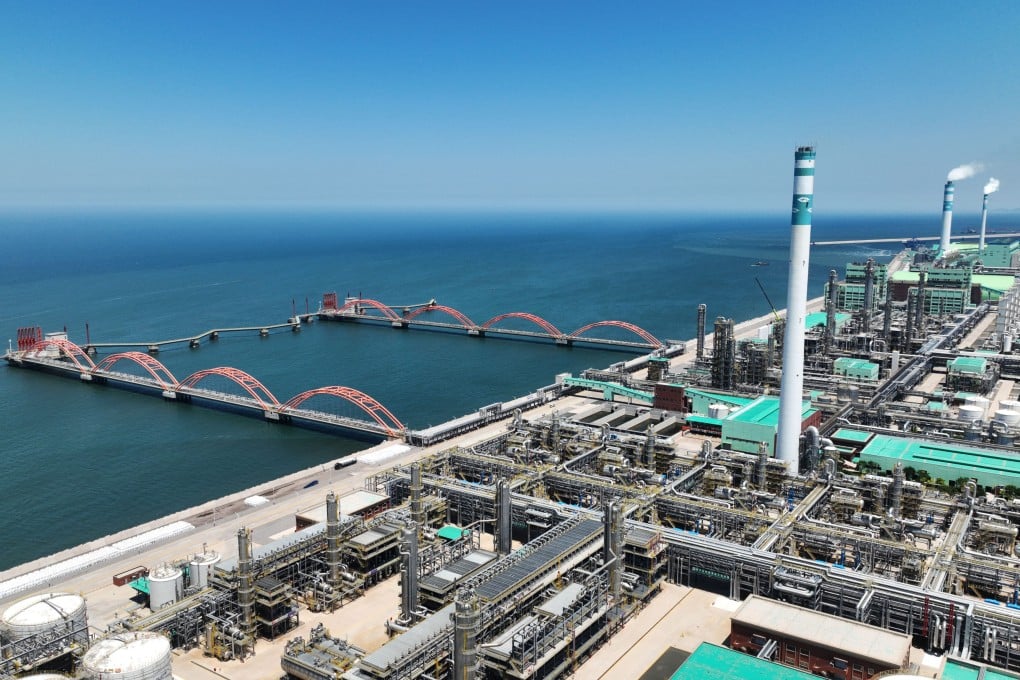
WASHINGTON, D.C. – The United States took a major step on Friday to squeeze Iran’s economy. The US Treasury Department announced strict new sanctions targeting a massive Chinese oil refinery.
The main target is Hengli Petrochemical (Dalian) Refinery Co Ltd. Washington accuses this company of buying vast amounts of crude oil from Iran, helping to fund the Iranian military.
This aggressive move comes at a highly sensitive time. Right now, the US and Israel are involved in a nearly two-month-old conflict with Iran. Because of this ongoing war, Washington wants to cut off the cash flow that supports the Iranian government and its armed forces.
By targeting a major Chinese business, the US is sending a clear message to the world. Anyone who helps Iran sell its oil will face serious consequences. However, this decision is also creating fresh tension between the US and China.
Here is an in-depth look at what these new sanctions mean, how the secret oil trade works, and why this matters for the global economy.
What is Hengli Petrochemical?
To understand the impact of these sanctions, we first need to look at the company involved. Hengli Petrochemical is not just a small, unknown business. It is China’s second-largest independent oil refinery.
In the oil industry, these independent Chinese refineries are often called “teapots.” Unlike the massive, state-owned energy companies in China, teapot refineries operate with more freedom. This freedom allows them to take on more political risk. As a result, they have become the main buyers of discounted oil from heavily sanctioned countries like Iran and Russia.
According to the US Treasury, Hengli Petrochemical is one of Tehran’s most valuable customers. The facts are striking:
- Massive Purchases: The refinery has bought billions of dollars’ worth of Iranian oil products.
- Long-Term Deals: Hengli has been receiving these secret Iranian oil cargoes since at least 2023.
- Military Ties: The oil shipments were directly overseen by the oil sales group of Iran’s Armed Forces General Staff. This group is known as the Sepehr Energy Jahan Nama Pars Company.
Because Hengli buys directly from the Iranian military’s oil branch, hundreds of millions of dollars have flowed straight into Iran’s defense budget. For the US government, shutting down this pipeline of cash is a top priority.
Operation Economic Fury and the “Shadow Fleet”
The sanctions against Hengli Petrochemical are part of a much larger US strategy. The US government calls this effort “Operation Economic Fury.” The goal of this operation is simple: to place a financial chokehold on the Iranian regime.
However, Hengli is not the only target. The US Treasury also announced sanctions against roughly 40 shipping companies and vessels. These ships make up what experts call Iran’s “shadow fleet” or “ghost fleet.”
How the Shadow Fleet Works
The shadow fleet is a hidden network of ships that transports Iranian oil around the world, mostly to Asia. They use clever tricks to avoid getting caught by international authorities. Some of their methods include:
- Turning off tracking devices: Ships will turn off their automatic tracking systems so they cannot be seen on digital maps.
- Falsifying documents: They use fake paperwork to hide where the oil came from.
- Offshore transfers: Ships will meet in the middle of the ocean to pump oil from one vessel to another. This makes it incredibly hard to track the true origin of the crude oil.
The US Treasury identified specific ships that delivered oil to the Hengli refinery. For example, vessels named BIG MAG, GALE, and ARES alone delivered over five million barrels of Iranian crude oil to the Chinese company. Another ship, the SEEKER 8, moved over four million barrels of crude oil to China earlier this year.
US Treasury Secretary Scott Bessent was very clear about the US government’s position. He stated that the Treasury will continue to hunt down the network of ships, middlemen, and buyers that Iran relies on. “Any person or vessel facilitating these flows—through covert trade and finance—risks exposure to US sanctions,” Bessent warned.
The Geopolitical Context: The US-Israel War on Iran
To fully grasp why these sanctions are happening now, we must look at the broader picture in the Middle East. For nearly two months, a severe conflict has been raging between the US, Israel, and Iran.
In response to the violence, President Donald Trump’s administration has launched a “maximum pressure” campaign against Tehran. The strategy is to drain Iran of the funds it uses to support its military and proxy groups across the region.
The US military has also taken direct action on the water. Since mid-April, the US Navy has enforced a maritime blockade to stop ships from entering and leaving Iranian ports. Furthermore, US forces have actually started seizing ships. Just recently, US authorities seized a sanctioned vessel called the Touska after a tense standoff. They also seized two other ships in the Indian Ocean carrying nearly 4 million barrels of Iranian crude.
These physical blockades and ship seizures are rare and highly risky. They show just how far the US is willing to go to stop Iran’s oil trade.
China’s Angry Reaction and Trade Tensions
Naturally, the decision to sanction a massive Chinese company has not gone over well in Beijing. China has been Iran’s main economic lifeline for years. In fact, China buys more than 80% of all the oil that Iran exports.
The Chinese government quickly pushed back against the new US sanctions. Officials in Beijing have long argued that unilateral US sanctions are illegal. The Chinese embassy in Washington released a strong statement asking the US to stop using trade as a weapon. They demanded that the US stop “abusing various kinds of sanctions to hit Chinese companies.”
This disagreement creates a very complicated situation for global politics. The timing is especially tricky because President Trump is scheduled to meet with Chinese President Xi Jinping at a major summit in Beijing in mid-May.
The meeting was already delayed once because of the ongoing war with Iran. Now, these new sanctions—and the physical seizure of Chinese-linked vessels like the Touska—will likely make the upcoming peace and trade talks much more difficult.
What Does This Mean for the Global Oil Market?
Beyond politics, these sanctions have a real impact on the global economy and oil prices.
First, the sanctions make life much harder for China’s independent refineries. Because of the US-Israel conflict with Iran, the cost of doing business has already gone up. Moving oil through conflict zones is dangerous and expensive. Now, with the threat of severe US financial penalties hanging over them, teapot refineries are facing intense pressure.
If these independent refineries stop buying Iranian oil, they will have to look for oil somewhere else. This sudden shift in demand could cause global oil prices to rise. Furthermore, it creates a tricky situation for China’s energy supply, which relies heavily on stockpiling cheap oil from sanctioned countries to keep its economy running smoothly.
However, completely stopping the shadow trade is easier said than done. In the past, when the US sanctioned similar teapot refineries, it caused short-term headaches. Companies had to change their branding and find new shipping routes, but they rarely stopped operating completely. Independent Chinese refineries have very few connections to the US banking system. This means that traditional US financial sanctions sometimes struggle to shut them down for good.
Still, by targeting the second-largest teapot refinery in China, the US is trying to strike fear into the market. Washington wants to make the penalties so painful that other companies will refuse to touch Iranian oil.
Looking Ahead: A High-Stakes Strategy
The new sanctions against Hengli Petrochemical and the shadow fleet represent a massive escalation in the US strategy against Iran. By officially targeting a major Chinese buyer, Washington is showing that it will not back down in its effort to financially isolate Tehran.
As the war in the Middle East continues, the global energy market remains on edge. The US is determined to cut off Iran’s oil money to stop its military ambitions. Meanwhile, China is determined to protect its companies and its energy supply.
In the coming weeks, the world will be watching closely. The success of “Operation Economic Fury” will depend on whether the US can actually enforce these rules on the high seas, and whether China decides to comply or fight back.
Trending: China Upset Over Hormuz Blockade As Oil Supply-Line Cut




AOC Says the US May Have Already Had a Gay President, Obama, Buchanan?

Former FBI Director James Comey Indicted for Threatening Instagram Post

FCC Targets Disney’s ABC Licenses Over DEI and Workplace Discrimination

Trump and Merz Clash Bitterly Over Iran and ‘Broken’ Germany

Alex Jones Announces the Shutdown of Infowars Amid Billion-Dollar Legal Battles

Supreme Court Crushes Democrats Racial Gerrymandering in 6-3 Decision

Trump Shakes Up NATO: Major US Troop Drawdown in Germany

Trump Embarrasses CNN’s Kaitlan Collins in Brutal Swipe at The White House

Trump Assassin’s Selfie: New Details Emerge in Hotel Attack
UAE Stuns Global Markets and Quits OPEC
Thai Billionaire Charged With Lese Majeste Over Facebook Post
Russia Bans Facebook, Meta Says It’ll Do “Everything” To Restore Service

Facebook Login Feature – Clash of Clans

4 Things you can do to take your Facebook Lead Generation to the Next Level
Zuckerberg to Allow Violent Speech on Russia After Facebook Blocked
Facebook Loses $200 Billion as Users Shift to TikTok

Downloading Facebook Videos Anonymously with High Quality Video through Snapsave app
The Best Site to Buy Real Facebook Likes and Followers in 2022

Chinese Man Arrested for Using Facebook to Dupe Cryptocurrency Investor
Google and Facebook Under Huge Pressure Over User Privacy

Jimmy Kimmel Slammed for “Vile” Melania Trump “Expectant Widow” Joke

President Trump Addresses Nation on War with Iran

Trump Warns NATO Allies: America Won’t Protect Slackers After Iran Clash

Senate Hearing on Fraud and Foreign Influence Turns Tense Over Minnesota Scandals

CNN Forced to Backtrack Its Reporting on Trump’s Iran Talks

Joe Rogan Slams Gavin Newsom for Mocking Nick Shirley

Mosque Set Ablaze in Iran a Citizens Revolt Against the Islamic Regime

AOC Accuses Jessie Watters of Fox News of Sexualizing and Harassing Her

JD Vance Exposes Walz’s Fraud and CNN’s Lies in White House Presser

Milestone Card Credit: How the Milestone MasterCard Can Transform Credit
-
 Politics3 months ago
CNN Delivers Stark Reality Check to Democrats Over Voter ID
-

 Politics2 months ago
Ilhan Omar’s Connections to Convicted Somali Fraudsters Surface
-

 Entertainment3 months ago
CNN Admits Melania Documentary is HUGE Box Office Success
-
 News3 months ago
China Backed US Billionaire Singham Allegedly Funding of Anti-ICE Protests
-
 Politics3 months ago
Trump Approval Rating (February 2026 Poll Results, Approve vs Disapprove)
-
 Politics3 months ago
AOC’s Critique of Rubio’s Speech Turns into an Huge Embarrassment
-
 Crime3 months ago
Erika Kirk Faces Renewed Grooming Allegations Over 2014 Messages
-
News2 months ago
Ilhan Omar Accused of Leaking U.S. Strike Plans to Iran as Tensions Rise