News
Trump Shakes Up NATO: Major US Troop Drawdown in Germany
WASHINGTON, D.C. — In a move that has sent shockwaves through the halls of European diplomacy and NATO, President Donald Trump has officially moved to slash the number of American troops stationed in Germany.
The decision, which marks a significant shift in decades of U.S. military strategy, comes as the President escalates a long-standing public feud with German Chancellor Friedrich Merz over global security and trade.
The announcement isn’t just about troop numbers; it’s a clear signal of the deepening divide between Washington and Berlin. From disagreements over the Iran nuclear deal to debates about NATO defense spending, the relationship between these two allies has reached a historic low.
President Trump has ordered the Pentagon to reduce the U.S. military footprint in Germany by nearly 9,500 personnel. Currently, about 34,500 active-duty soldiers are stationed there. Under the new plan, the cap for U.S. troops in the country would be set at 25,000.
The President’s reasoning is straightforward: he believes Germany is not paying its fair share. For years, Trump has criticized NATO members—and Germany in particular—for failing to meet the 2% of GDP defense spending target.
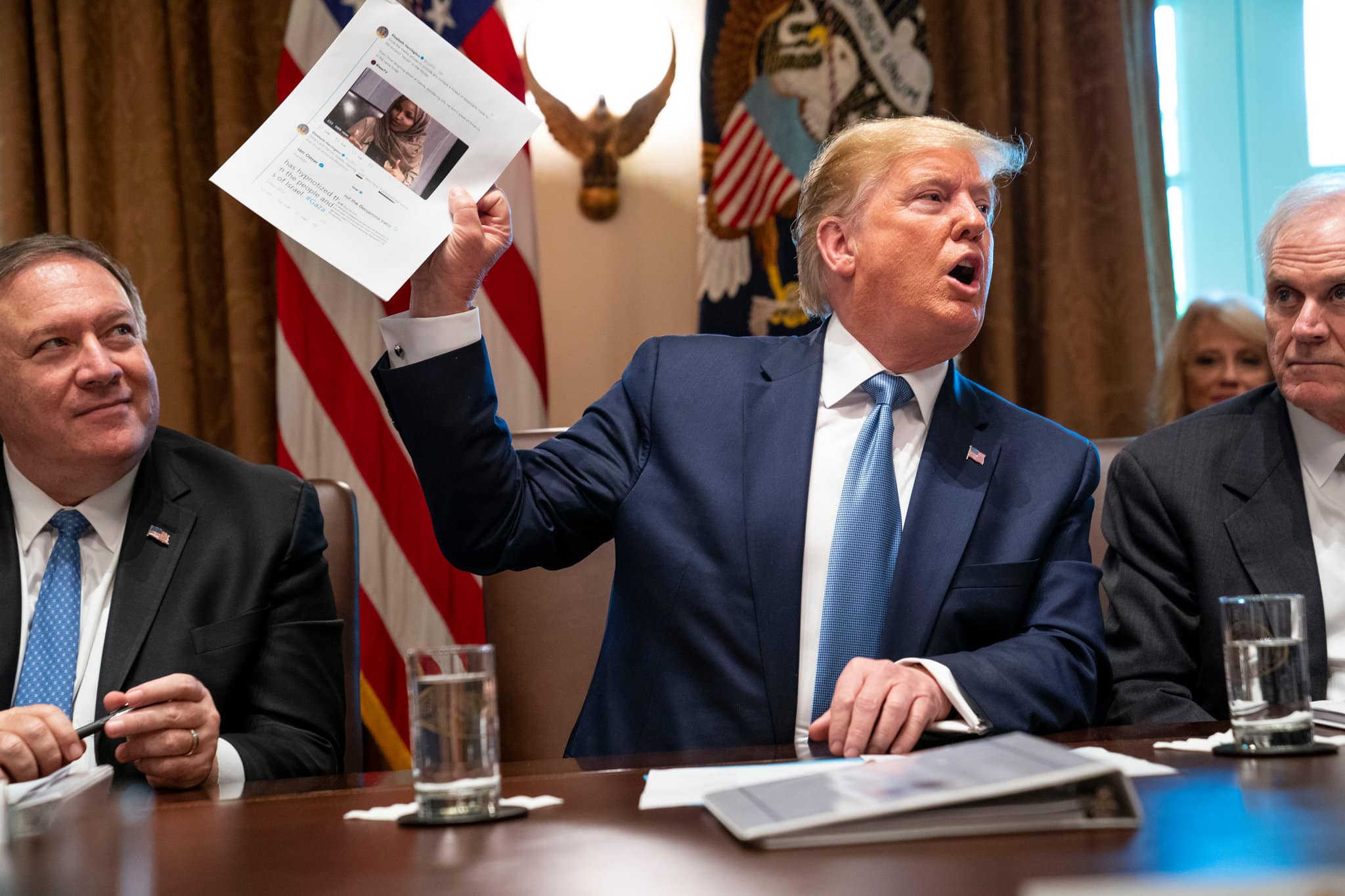
During a recent meeting at the White House, Trump was blunt about the situation. He questioned why the United States should “protect” Germany from Russia while Berlin continues to pay billions to Moscow for energy through projects like the Nord Stream 2 pipeline.
Key Takeaways from the Drawdown Plan:
- The Numbers: A reduction of roughly 9,500 soldiers, dropping the total to 25,000.
- The Relocation: Some troops may return to the U.S., while others could be moved to allies like Poland.
- The Cost: Trump has frequently called the U.S. presence “expensive” and unfair to American taxpayers.
- The Infrastructure: This affects major hubs like Ramstein Air Base and the Landstuhl Regional Medical Center.
The Iran Factor: A Widening Atlantic Gap
While money is a major talking point, the “Iran problem” is the underlying friction point. Chancellor Friedrich Merz has remained a staunch supporter of the 2015 Iran nuclear deal (JCPOA), which Trump famously withdrew from in 2018.
The U.S. has since implemented a “maximum pressure” campaign, including a naval blockade designed to halt Iranian oil exports. This blockade has caused significant tension in the Persian Gulf, where Iran’s Supreme Leader has recently issued defiant warnings against American presence.
The View from Tehran
The situation has been further complicated by recent comments from Iran’s leadership. In a defiant address, the Supreme Leader vowed to protect Iran’s nuclear and missile capabilities at all costs. He described the U.S. presence in the Persian Gulf as a “malice” and suggested that Americans have no place in the region except “at the bottom of its waters.”
These tensions put Germany in a difficult spot. Berlin wants to maintain the nuclear deal to prevent a regional arms race, but Washington sees this as being “soft” on a regime that continues to threaten global stability.
Impact on Global Security
Critics of the troop withdrawal argue that this is a “gift to Russia.” Germany has served as the backbone of U.S. military operations in Europe, Africa, and the Middle East since World War II.
Military experts note that these bases aren’t just for defending Germany; they are essential for:
- Deterrence: Keeping Russian expansion in check.
- Logistics: Providing a staging ground for operations in the Middle East and Africa.
- Medical Support: Treating wounded soldiers from various global “hot spots.”
Many U.S. lawmakers from both parties have expressed concern. Former Republican Senator Mitt Romney called the plan a “slap in the face” to a crucial ally, while others warn that it could weaken the NATO alliance at a time when global threats are rising.
Is This the End of the Transatlantic Alliance?
It is unlikely that the U.S. and Germany will part ways entirely, but the “business as usual” era of the alliance is clearly over. Chancellor Merz has historically been patient with Trump’s rhetoric, but this move feels different. It is a tangible policy change, not just a post on social media.
Interestingly, the German public is split. Recent polls suggest that nearly half of Germans actually support a reduction in American troops. Many younger Germans view the U.S. presence as a relic of the Cold War rather than a modern necessity.
What Happens Next?
- Congressional Review: The U.S. Congress may attempt to block the funding for the withdrawal.
- NATO Summitry: Expect tense meetings as other European leaders try to bridge the gap between Trump and Merz.
- Regional Shifts: Watch for increased U.S. military cooperation with Poland and the Baltic states, which are eager for more American “boots on the ground.”
The world is watching to see if this is a temporary “public feud” or a permanent shift in how America views its role in the world. For now, the message from the White House is clear: the days of “free-riding” on American security are over.

Related News:
Trump Issues NATO ‘Ultimatum’ After High-Stakes White House Meeting
Trump Issues Stark Warning to NATO After Iran War Snub
Allies Abandoning US Over Iran Sparks Fears of Trump Dumping NATO
News
Supreme Court Crushes Democrats Racial Gerrymandering in 6-3 Decision
WASHINGTON, D.C. – In a series of landmark 6-3 rulings that have reshaped the American electoral landscape, the Supreme Court of the United States has delivered significant legal victories to Republican-led legislatures.
The Court’s recent decisions, particularly in cases involving South Carolina and Louisiana, have effectively raised the bar for challengers who argue that voting maps are racially discriminatory.
These rulings signal a shift in how the judiciary handles the messy intersection of race and politics. By emphasizing that partisan gerrymandering is a political issue beyond the reach of federal courts, the justices have provided a robust legal shield for mapmakers who claim their goal was to gain a party advantage rather than to target voters based on their race.
The South Carolina Decision: A Shield for Partisanship
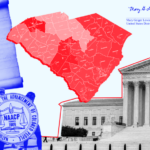
In Alexander v. South Carolina State Conference of the NAACP, the Supreme Court reversed a lower court’s finding that South Carolina’s 1st Congressional District was an unconstitutional racial gerrymander. The case centered on the movement of tens of thousands of Black voters out of a swing district to make it “safely Republican.”
Writing for the 6-3 majority, Justice Samuel Alito argued that the lower court failed to provide sufficient evidence that race—rather than party loyalty—was the “predominant factor” in the map’s design. The Court emphasized several key points that now serve as a roadmap for future redistricting:
- Presumption of Good Faith: Courts must start with the assumption that state legislatures act in good faith when drawing lines.
- The “Alternative Map” Requirement: Challengers are now largely expected to produce an alternative map that achieves the same partisan goals without the same racial results to prove their case.
- Correlation vs. Causation: Because race and party affiliation often overlap, the Court ruled that a map that looks like it targets race might actually just be targeting Democrats or Republicans.
Louisiana and the Narrowing of the Voting Rights Act
The legal momentum continued into 2026 with the Court’s intervention in Louisiana’s redistricting battle. In a 6-3 decision, the Court struck down a map that would have created a second majority-Black district in the state.
The justices ruled that the state’s use of race to create the new district constituted an unconstitutional racial gerrymander. This decision is particularly striking because the map had originally been drawn to comply with Section 2 of the Voting Rights Act (VRA). By striking it down, the Court has signaled that the VRA does not give states a “blank check” to prioritize race over traditional districting principles, such as keeping communities together or following geographic boundaries.
Key Takeaways from Recent Rulings
- Federal Oversight Recedes: Federal courts are now less likely to intervene in redistricting unless there is “smoking gun” evidence of intentional racial bias.
- Partisan Advantage is Permissible: Following the precedent set in Rucho v. Common Cause, the Court maintains that drawing maps for partisan gain is a “non-justiciable” political question.
- Higher Burden of Proof: Civil rights groups face a much steeper climb in proving that a legislature used race as a proxy for party.
The National Impact: A “Gerrymandering Arms Race”
These decisions have triggered what analysts call a nationwide “gerrymandering arms race.” With the legal guardrails loosened, both parties are looking to solidify their power through mid-decade redistricting.
- Republican Strategy: In states like Alabama and Florida, GOP lawmakers are emboldened to maintain or create maps that maximize their seat count, confident that “partisan intent” will serve as a valid legal defense.
- Democratic Response: While the rulings have been seen as a blow to Democratic interests in the South, some blue states are looking to use the same logic to protect their own majorities, though they often face different state-level constitutional restrictions.
- Voter Impact: The primary losers in this legal tug-of-war are often minority communities whose voting power can be diluted or “packed” into single districts under the guise of political strategy.
The shift in the High Court’s approach suggests a “post-racial” view of the law that prioritizes the constitutional authority of state legislatures. Justice Elena Kagan, in her dissenting opinions, has warned that these rulings “greenlight” the systematic dilution of minority voting power.
As the 2026 midterm elections approach, these maps will play a decisive role in determining which party controls the U.S. House of Representatives. For now, the Supreme Court has made one thing clear: in the eyes of the law, “playing politics” with maps is perfectly legal, even if it changes the racial makeup of a district in the process.
Related News:
Trump Tariffs Supreme Court Ruling, What Changed in 2026
Supreme Court Orders CNN to Respond in High-Stakes Defamation Case
News
Trump Embarrasses CNN’s Kaitlan Collins in Brutal Swipe at The White House
WASHINGTON, D.C. — In a room filled with the nation’s top space explorers and the cutting-edge technology of the Artemis program, the atmosphere shifted from the lunar horizon to political combat. President Donald Trump used a White House media briefing on Friday to laud the upcoming Artemis II mission but took a sharp, characteristic detour to criticize CNN correspondent Kaitlan Collins.
The event, held in the Roosevelt Room, was intended to showcase the administration’s commitment to returning American boots to the moon. However, the technical details of space travel were briefly eclipsed by the ongoing friction between the executive branch and the press corps.
The briefing began on a high note. President Trump was joined by the four astronauts selected for the Artemis II mission, the first crewed flight to orbit the moon in over fifty years. Standing alongside NASA Administrator Jared Isaacman, the President praised the “courage and brilliance” of the team.
The tone shifted during the Q&A portion of the event. When Kaitlan Collins attempted to ask a question regarding recent developments in the Department of Justice, the President interrupted, dismissing the query and the network.
- The Comment: Trump referred to the reporter’s line of questioning as “nasty” and “unimportant” compared to the scientific milestones being discussed.
- The Context: The exchange highlights the persistent tension between the administration and mainstream media outlets, even during non-partisan events like NASA briefings.
- The Reaction: Collins attempted to follow up, but the President moved quickly to another reporter, effectively ending the interaction.
Artemis II: The Mission to the Lunar Far Side
Despite the brief verbal sparring, the primary focus of the day remained the ambitious goals of the Artemis II mission. This mission is a critical precursor to Artemis III, which aims to land the first woman and the next man on the lunar surface.
Key Mission Details
- The Crew: The team includes Commander Reid Wiseman, Pilot Victor Glover, Mission Specialist Christina Koch, and Mission Specialist Jeremy Hansen.
- The Goal: A 10-day flight test to ensure the Orion spacecraft’s life-support systems are ready for long-term deep-space travel.
- The Technology: The mission utilizes the Space Launch System (SLS), the most powerful rocket ever built by NASA.
Administrator Jared Isaacman emphasized that this isn’t just a repeat of the 1960s. “We aren’t just going back to the moon; we are going there to stay and to prepare for the journey to Mars,” Isaacman told the press.
The Strategic Importance of Space Under the Trump Administration
The White House has consistently framed the Artemis program as a matter of national security and economic dominance. By involving private sector leaders like Isaacman—a billionaire adventurer and tech CEO—the administration is leaning heavily into the “New Space” economy.
During the briefing, Trump noted that the U.S. is currently in a “fierce competition” with China. He argued that American leadership in space is essential to maintaining global influence. The President’s brief swipe at the media seemed to serve as a reminder of his stance: that domestic “distractions” should not overshadow American achievements on the world stage.
The exchange with Kaitlan Collins is not an isolated incident. For years, the President and CNN have maintained a volatile relationship. Critics argue that these public rebukes are a tactic to avoid difficult questions, while supporters suggest the President is merely holding “biased” media accountable.
Journalism ethics experts often note that the White House press room is a unique environment where the First Amendment meets executive authority. When a President “swipes” at a reporter, it often goes viral, sometimes drowning out the very policy or news the President intended to promote.
As the astronauts prepare for their journey, the technical work continues at Kennedy Space Center. The Artemis II mission is currently scheduled for late next year, provided all safety checks and hardware integrations remain on track.
The White House indicated that more briefings will follow as the launch date nears. Whether those briefings will focus purely on the stars—or continue to feature the sparks of earthly politics—remains to be seen.
Trending Washington News:
Trump Assassin’s Selfie: New Details Emerge in Hotel Attack
Democrats Push Back on the SAVE Act Despite 85% of Voters Backing Voter ID
News
Trump Assassin’s Selfie: New Details Emerge in Hotel Attack
WASHINGTON, D.C. – Cole Allen, a 31-year-old teacher from California, allegedly attempted to assassinate President Donald Trump at the Washington Hilton on Saturday night just after 8:30 p.m.
According to court filings detailed by the Bangkok Post, Allen charged past hotel security with a pump-action shotgun in a desperate effort to reach a basement ballroom where Trump was attending a large media gala. Prosecutors state his motive was strictly political, driven by a deep disagreement with the current government administration.
Before the chaos unfolded, Allen spent his final quiet moments in his hotel room preparing for what prosecutors now describe as an act of “unfathomable malice.” First, he actively monitored various news websites that tracked the president’s exact movements. Next, he carefully armed himself with an array of dangerous weapons.
In a striking detail from the ongoing investigation, Allen posed for a mirror selfie using his cell phone just minutes before the attack. The photograph showed him fully prepared for violence.
The image revealed the following chilling details about his appearance and gear:
- He wore a dark, all-black outfit paired with a striking red tie.
- He carried a visible, large knife.
- He wore a sturdy shoulder holster designed to hold a concealed handgun.
- He strapped on a bag that authorities later identified as an ammunition pouch.
As he finally left his room to carry out the attack, Allen did not just walk away in silence. He had previously set up a system to automatically distribute a political manifesto. This long document, sent via scheduled emails to his close friends and family members, outlined his exact plans and motivations.
He explicitly listed members of the Trump administration as his targets, ranking them carefully from highest to lowest priority. Interestingly, he made sure to note in the email that he hoped to avoid harming regular hotel guests, Secret Service agents, and local law enforcement officers during the assault.
A Scenic Journey to Washington
The court documents also paint a strange, calm picture of the days leading up to the violent attack. Allen did not take a quick flight to Washington. Instead, he packed a large, heavy arsenal—which included the shotgun, a handgun, and multiple knives—and traveled across the country by train. He chose a famously scenic route that passed through Chicago.
During this long train ride, Allen appeared unusually peaceful. He even used his mobile phone to record his personal thoughts on the beautiful scenery passing by his train window. For instance, he warmly wrote that the thick woods in Pennsylvania looked like “vast fairy lands filled with tiny trickling creeks.”
However, this calm mindset shifted upon his arrival. When he finally walked into the Washington Hilton, he quickly noticed a surprising lack of heavy security. He wrote down his shock, noting that he had easily walked straight into the large building carrying multiple weapons. He seemed genuinely surprised that nobody in the lobby viewed him as a possible threat.
The Chaos at the Hotel Entrance
The quiet preparation was violently shattered when Allen decided it was time to strike. According to the court filing, he casually discarded his long coat near the main hotel entrance area. Then, he sprinted straight through a set of metal detectors with his pump-action shotgun raised and ready to fire.
Allen allegedly fired his weapon directly down the staircase leading toward the busy basement ballroom. In a rapid response, a nearby Secret Service agent quickly fired five shots back at the suspect.
None of the agent’s bullets actually hit Allen. However, the suspect fell hard during the chaotic scramble and suffered a minor knee injury. Security guards quickly swarmed, tackled, and detained him. Thankfully, despite the loud gunfire and mass panic, no one was killed during the terrifying event.
A History of Political Violence
This frightening incident officially marks the third alleged assassination attempt against President Trump in less than two years. The ongoing violence clearly highlights the intense and dangerous political climate currently gripping the country.
The White House has quickly blamed extreme rhetoric from political opponents and media outlets for inspiring such violent attacks. Meanwhile, critics point out that Trump, who is now 79 years old, frequently uses harsh and aggressive language against his own rivals, journalists, foreign leaders, and immigrants.
Currently, federal prosecutors are strongly urging a court in Washington to deny Allen any chance of bail. They argue that his strong political motivations make him a serious, ongoing danger to the general public. As long as he fiercely disagrees with the government, they warn, the risk of another attack remains extremely high. For now, Allen will remain securely in police custody as he awaits his upcoming trial.
Trending News:
Jimmy Kimmel Slammed for Vile Melania Trump Expectant Widow Joke
President Trump and Melania Evacuated After Gunshots Disrupted Historic Dinner
-
Politics3 months agoCNN Delivers Stark Reality Check to Democrats Over Voter ID
-
Politics2 months agoIlhan Omar’s Connections to Convicted Somali Fraudsters Surface
-
Entertainment3 months agoCNN Admits Melania Documentary is HUGE Box Office Success
-
News3 months agoChina Backed US Billionaire Singham Allegedly Funding of Anti-ICE Protests
-
Politics3 months agoTrump Approval Rating (February 2026 Poll Results, Approve vs Disapprove)
-
News3 months agoFBI Investigates Who’s Funding and Coordinating ICE Protests and Attacks
-
Politics2 months agoAOC’s Critique of Rubio’s Speech Turns into an Huge Embarrassment
-
Crime3 months agoErika Kirk Faces Renewed Grooming Allegations Over 2014 Messages